usa

Trump's new travel ban to take effect amid rising immigration tensions
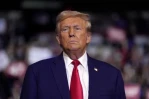
President Donald Trump's new ban on travel to the U.S. by citizens from 12 mainly African and Middle Eastern countries is set to take effect Monday amid escalating tension over the president's unprecedented campaign of immigration enforcement.
The new proclamation, which Trump signed on Wednesday, applies to citizens of Afghanistan, Myanmar, Chad, the Republic of Congo, Equatorial Guinea, Eritrea, Haiti, Iran, Libya, Somalia, Sudan and Yemen. It also imposes heightened restrictions on people from Burundi, Cuba, Laos, Sierra Leone, Togo, Turkmenistan and Venezuela who are outside the U.S. and don’t hold a valid visa.
Musk risks losing billions as tensions with Trump escalate
The new ban does not revoke visas previously issued to people from countries on the list, according to guidance issued Friday to all U.S. diplomatic missions. However, unless an applicant meets narrow criteria for an exemption to the ban, his or her application will be rejected starting Monday. Travelers with previously issued visas should still be able to enter the U.S. even after the ban takes effect.
Haitian-American Elvanise Louis-Juste, who was at the airport Sunday in Newark, New Jersey, awaiting a flight to her home state of Florida, said many Haitians wanting to come to the U.S. are simply seeking to escape violence and unrest in their country.
“I have family in Haiti, so it’s pretty upsetting to see and hear,” Louis-Juste, 23, said of the travel ban. “I don’t think it’s a good thing. I think it’s very upsetting.”
Unrest over raids on undocumented migrants: Trump sends National Guard to LA
Many immigration experts say the new ban is designed to beat any court challenge by focusing on the visa application process and appears more carefully crafted than a hastily written executive order during Trump's first term that denied entry to citizens of mainly Muslim countries.
In a video posted Wednesday on social media, Trump said nationals of countries included in the ban pose “terrorism-related” and “public-safety” risks, as well as risks of overstaying their visas. He also said some of these countries had “deficient” screening and vetting or have historically refused to take back their citizens.
His findings rely extensively on an annual Homeland Security report about tourists, businesspeople and students who overstay U.S. visas and arrive by air or sea, singling out countries with high percentages of nationals who remain after their visas expired.
Trump also tied the new ban to a terrorist attack in Boulder, Colorado, saying it underscored the dangers posed by some visitors who overstay visas. The man charged in the attack is from Egypt, a country that is not on Trump’s restricted list. U.S. officials say he overstayed a tourist visa.
Republicans urge Donald Trump and Elon Musk to end their feud
The ban was quickly denounced by groups that provide aid and resettlement help to refugees.
“This policy is not about national security — it is about sowing division and vilifying communities that are seeking safety and opportunity in the United States,” said Abby Maxman, president of Oxfam America, a nonprofit international relief organization.
Venezuela President Nicolás Maduro’s government condemned the travel ban, characterizing it in a statement as a “stigmatization and criminalization campaign” against Venezuelans.
11 months ago
Unrest over raids on undocumented migrants: Trump sends National Guard to LA
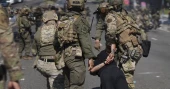
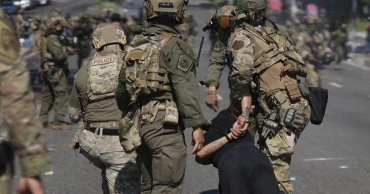
PARAMOUNT, Calif. (AP) — President Donald Trump has ordered 2,000 members of the California National Guard to be deployed to Los Angeles, overriding opposition from Governor Gavin Newsom.
The deployment follows escalating protests on Saturday that led to clashes between demonstrators and immigration officials.
In a statement, the White House said the troops were being sent to address what it described as “lawlessness” that has been allowed to grow in the state.
Governor Newsom, a Democrat, criticized the decision on X (formerly Twitter), calling it “deliberately provocative” and warning that it would only heighten tensions.
Tensions flared in the southern part of Los Angeles for a second day, with tear gas and smoke filling the air as confrontations continued. President Trump also hinted that the federal government might take further action if the unrest persists.
11 months ago
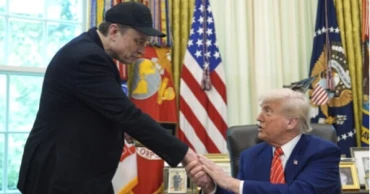
Republicans urge Donald Trump and Elon Musk to end their feud
As the Republican Party braces for aftershocks from President Donald Trump's spectacular clash with Elon Musk, lawmakers and conservative figures are urging détente, fearful of the potential consequences from a prolonged feud.
At a minimum, the explosion of animosity between the two powerful men could complicate the path forward for Republicans' massive tax and border spending legislation that has been promoted by Trump but assailed by Musk, reports AP.
“I hope it doesn’t distract us from getting the job done that we need to,” said Rep. Dan Newhouse, a Republican from Washington state. "I think that it will boil over and they’ll mend fences.”
As of Friday afternoon, Musk was holding his fire, posting about his various companies on social media rather than torching the president. Trump departed the White House for his golf club in Bedminster, New Jersey, without stopping to talk to reporters who shouted questions about his battle with Musk.
“I hope that both of them come back together because when the two of them are working together, we’ll get a lot more done for America than when they’re at cross purposes,” Sen. Ted Cruz, a Texas Republican, told Fox News host Sean Hannity on Thursday night.
Sen. Mike Lee, a Republican from Utah, sounded almost pained on social media as Trump and Musk volleyed insults at each other, sharing a photo composite of the two men and writing, "But … I really like both of them.”
“Who else really wants @elonmusk and @realDonaldTrump to reconcile?” Lee posted, later adding: “Repost if you agree that the world is a better place with the Trump-Musk bromance fully intact.”
So far, the feud between Trump and Musk is probably best described as a moving target, with plenty of opportunities for escalation or detente.
US defence secy warns Indo-Pacific allies of 'imminent' threat from China
One person familiar with the president’s thinking said Musk wants to speak with Trump, but that the president doesn’t want to do it – or at least do it on Friday. The person requested anonymity to disclose private matters.
In a series of conversations with television anchors Friday morning, Trump showed no interest in burying the hatchet. Asked on ABC News about reports of a potential call between him and Musk, the president responded: “You mean the man who has lost his mind?”
Trump added in the ABC interview that he was “not particularly” interested in talking to Musk at the moment.
Still, others remained hopeful that it all would blow over.
“I grew up playing hockey and there wasn’t a single day that we played hockey or basketball or football or baseball, whatever we were playing, where we didn’t fight. And then we’d fight, then we’d become friends again,” Hannity said on his show Thursday night.
Acknowledging that it “got personal very quick,” Hannity nonetheless added that the rift was “just a major policy difference.”
House Speaker Mike Johnson projected confidence that the dispute would not affect prospects for the tax and border bill.
“Members are not shaken at all,” the Louisiana Republican said. “We’re going to pass this legislation on our deadline.”
He added that he hopes Musk and Trump reconcile, saying “I believe in redemption” and “it's good for the party and the country if all that's worked out.”
But he also had something of a warning for the billionaire entrepreneur.
“I’ll tell you what, do not doubt and do not second-guess and don’t ever challenge the president of the United States, Donald Trump,” Johnson said. "He is the leader of the party. He’s the most consequential political figure of this generation and probably the modern era.”
11 months ago
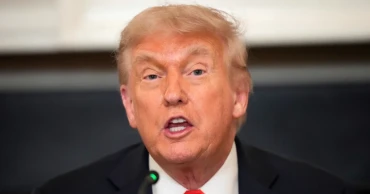
US, Chinese officials to meet in London next week for new round of trade talks
Senior US administration officials will meet with a Chinese delegation on Monday in London for the next round of trade negotiations between Washington and Beijing, President Donald Trump said Friday.
The meeting comes after a phone call between Trump and Chinese leader Xi Jinping on Thursday, which the US president described as a “very positive” conversation as the two countries attempt to break an impasse over tariffs and global supplies of rare earth minerals, reports AP.
Treasury Secretary Scott Bessent, Commerce Secretary Howard Lutnick and US Trade Representative Jamieson Greer will represent the US side in the trade talks.
“The meeting should go very well,” Trump wrote on his social media platform Friday afternoon.
Speaking to reporters on Air Force One Friday, Trump said Xi had agreed to restart exports of rare earth minerals and magnets to the US which China had slowed, threatening a range of US manufacturers that relied on the critical materials. There was no immediate confirmation from China.
China's market remains a magnet for foreign investment: FM spokesperson
The Thursday conversation between Trump and Xi, who lead the world's two biggest economies, lasted about an hour and a half, according to the US president. The Chinese foreign ministry has said Trump initiated the call.
The ministry said Xi asked Trump to “remove the negative measures” that the US has taken against China. It also said that Trump said “the US loves to have Chinese students coming to study in America,” although his administration has vowed to revoke some of their visas.
11 months ago
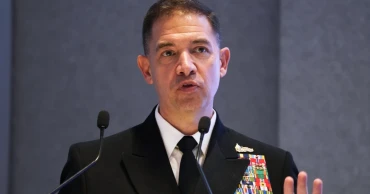
Trump nominates new leaders for U.S. Commands in Middle East and Africa
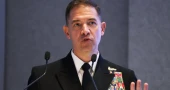
President Donald Trump has nominated Vice Adm. Brad Cooper as the next commander of U.S. Central Command (CENTCOM), making him only the second Navy admiral to be selected for the role, the Pentagon announced Wednesday.
Trump also put forward Air Force Lt. Gen. Dagvin Anderson to lead U.S. Africa Command (AFRICOM), which would make him the first Air Force officer to head the command since its formation in 2007, according to Defense Secretary Pete Hegseth.
Currently serving as deputy commander of CENTCOM, Cooper brings extensive experience in the region. He previously led the Navy’s 5th Fleet in Bahrain for nearly three years before becoming CENTCOM’s second-in-command in February 2024. He would replace Army Gen. Erik Kurilla, who is set to retire after more than three years at the helm.
CENTCOM oversees military operations in 21 countries across Central and South Asia and Northeast Africa. The command plays a critical role as the region remains volatile due to conflicts such as the ongoing war in Gaza and ongoing nuclear negotiations with Iran. Historically, the position has been held primarily by Army and Marine generals. Notably, former Army Gen. Lloyd Austin and former Marine Gen. Jim Mattis, both past CENTCOM commanders, later served as defense secretaries. The only previous Navy officer in the role, Adm. William Fallon, served briefly before resigning amid speculation about his stance on U.S. policy toward Iran.
Cooper, a 1989 graduate of the U.S. Naval Academy and son of a career Army officer, has served on a range of vessels including cruisers, destroyers, carriers, and amphibious ships. He previously commanded a destroyer and a cruiser. During his tenure with the 5th Fleet, he launched the Navy’s first task force focused on unmanned systems and artificial intelligence, oversaw naval operations against Houthi rebels in Yemen, and led U.S. efforts in Operation Prosperity Guardian, a coalition aimed at stopping Houthi attacks on commercial vessels in the Red Sea. Cooper has also led U.S. Naval Forces Korea and commanded Naval Surface Force Atlantic. He holds a master’s degree in strategic intelligence from the National Intelligence University.
Trump announces ban on travel to US from 19 countries
Anderson, Trump’s nominee for AFRICOM, is an experienced pilot with over 3,400 flight hours, including 738 in combat. He has flown aircraft such as the KC-135 tanker, C-130 transport, and U-28A surveillance plane, frequently used in special operations. Anderson currently serves as director of joint force development on the Joint Staff.
His leadership background includes commanding special operations and expeditionary squadrons, as well as a special operations wing and task forces. He led Special Operations Command Africa from 2019 to 2021 and was responsible for coordinating the U.S. troop repositioning from Somalia. If confirmed, he will become the seventh leader of AFRICOM, following four Army generals and two Marines. Anderson hails from Ypsilanti, Michigan, and is a graduate of Washington University in St. Louis via the ROTC program.
AFRICOM, the Pentagon’s newest geographic command, is focused on combating extremist threats and supporting local military training efforts across much of the African continent.
11 months ago
US vetoes UN security council call for immediate Gaza ceasefire
The United States on Wednesday vetoed a U.N. Security Council resolution calling for an immediate and lasting ceasefire in Gaza, citing the resolution’s failure to tie a truce to the release of hostages held by Hamas.
Fourteen of the council’s 15 members supported the resolution, which described the humanitarian crisis in Gaza as "catastrophic" and urged Israel to lift restrictions on aid for the 2.1 million Palestinians in the enclave.
The proposed resolution did not meet several U.S. conditions, including explicit condemnation of Hamas’ October 7, 2023, attack on Israel, and calls for the group to disarm and exit Gaza.
Speaking ahead of the vote, Acting U.S. Ambassador Dorothy Shea said the resolution would jeopardize Israel’s security and ongoing diplomatic efforts toward a ceasefire “grounded in the realities on the ground.”
U.S. Secretary of State Marco Rubio echoed that sentiment, arguing the resolution would have emboldened Hamas. “Hamas could end this brutal conflict today by surrendering its weapons and releasing all hostages,” he said.
Israel’s U.N. envoy Danny Danon expressed gratitude for the U.S. veto, stating the resolution would have shifted pressure onto Israel without demanding hostage releases, giving Hamas “time, leverage and political cover.”
Widespread Criticism of U.S. Veto
The veto—Washington’s fifth since the war began—drew strong condemnation from other Security Council members. Critics accused the U.S. of shielding Israel from accountability.
China’s U.N. Ambassador Fu Cong said Israel had violated international humanitarian law, and those violations continued due to protection from “one country.”
Britain, typically a U.S. ally, also distanced itself. Ambassador Barbara Woodward criticized Israel’s expanding operations in Gaza and aid restrictions, calling them “unjustifiable, disproportionate and counterproductive.”
Pakistan’s Ambassador Asim Iftikhar Ahmad described the veto as a “green light” for further devastation. “The world was expecting action, but one member again blocked this council from fulfilling its duty,” he said.
Slovenia’s Ambassador Samuel Žbogar, representing the council’s elected members, said the resolution was focused on humanitarian needs, not political friction. “Inflicting widespread suffering on civilians cannot be justified by any war aim,” he added.
Palestinian Ambassador Riyad Mansour called for international action, warning of what he described as an Israeli plan “to destroy our people.” He said Palestinians will now take a similar resolution to the U.N. General Assembly, where no country has veto power—though resolutions there are non-binding.
The Biden administration previously vetoed a similar ceasefire resolution in November for the same reason: the absence of a direct link to hostage releases. The current proposal also demanded hostages be freed but did not make that a precondition for a ceasefire.
Aid Distribution and Ongoing Crisis
The vote came amid further delays in food deliveries to Gaza. A U.S.- and Israeli-backed group suspended aid shipments after reports of deadly shootings this week. Israel and the U.S. argued that the new system was necessary to prevent aid from being seized by Hamas.
However, the U.N. criticized the change, insisting its original aid system had worked well during a previous ceasefire and was properly monitored.
Gaza remains heavily dependent on outside assistance, as most of its food infrastructure has been destroyed. A blockade imposed on March 2 halted aid deliveries, though limited relief began trickling in again late last month under international pressure.
The conflict erupted on October 7, 2023, when Hamas-led militants attacked southern Israel, killing about 1,200 people and kidnapping 251. Some 58 hostages remain in captivity; about a third are believed to be alive.
Israel’s military response has resulted in the deaths of over 54,000 Palestinians, according to Gaza’s Health Ministry. The ministry, overseen by the Hamas-run government, does not distinguish between civilians and fighters in its figures, but the data is generally considered credible by U.N. agencies and independent observers, despite Israeli skepticism.
11 months ago
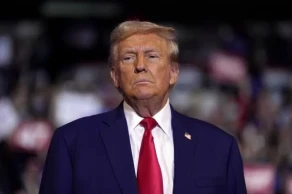
Trump announces ban on travel to US from 19 countries
US President Donald Trump on Wednesday announced a new travel ban that will block entry to the U.S. for citizens from 12 countries and impose restrictions on visitors from seven others.
The measure, set to take effect at 12:01 a.m. Monday, marks a revival of one of Trump’s most controversial first-term policies — this time with advance notice to avoid the airport disruptions seen during the 2017 rollout.
Among the 12 nations facing a full travel ban are: Afghanistan, Myanmar, Chad, the Republic of Congo, Equatorial Guinea, Eritrea, Haiti, Iran, Libya, Somalia, Sudan, and Yemen. Meanwhile, travelers from Burundi, Cuba, Laos, Sierra Leone, Togo, Turkmenistan, and Venezuela will be subject to additional restrictions.
In a social media video, Trump linked the decision to a recent terrorist attack in Boulder, Colorado, highlighting visa overstays as a national security concern.
The suspect in that incident is from Egypt, which is not among the countries listed in the new policy. According to the Department of Homeland Security, the individual had overstayed a tourist visa.
Trump had hinted at reintroducing the ban after returning to office in January, and with backing from a prior Supreme Court ruling, he is seen to have a stronger legal footing this time.
1 year ago
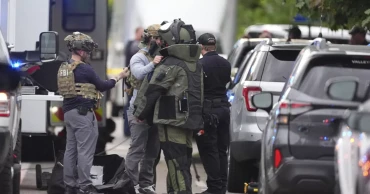
6 injured, possibly with burns, in a Colorado attack the FBI is investigating as terrorism
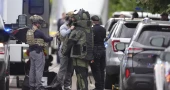
Six people were injured Sunday in what the FBI immediately described as a “targeted terror attack” at an outdoor mall in Boulder, Colorado, where a group had gathered to raise attention to Israeli hostages held in Gaza.
The suspect, identified as 45-year-old Mohamed Sabry Soliman, yelled “Free Palestine” and used a makeshift flamethrower in the attack, said Mark Michalek, the special agent in charge of the Denver field office. Soliman was taken into custody.
No charges were immediately announced but officials said they expect to hold him “fully accountable.”
Soliman was also injured and was taken to the hospital to be treated, but authorities didn’t elaborate on the nature of his injuries.
Video from the scene showed a witness shouting, “He’s right there. He’s throwing Molotov cocktails," as a police officer with his gun drawn advanced on a bare-chested suspect with containers in each hand.
The attack took place at the popular Pearl Street pedestrian mall, a four-block area in downtown Boulder, where demonstrators with a volunteer group called Run For Their Lives had gathered to raise visibility for the hostages who remain in Gaza as a war between Israel and Hamas continues to inflame global tensions and has contributed to a spike in antisemitic violence in the United States. It occurred more than a week after the fatal shooting of two Israeli embassy staffers in Washington by a Chicago man who yelled "I did it for Palestine, I did it for Gaza” as he was being led away by police.
FBI leaders in Washington said they were treating the Boulder attack as an act of terrorism, and the Justice Department — which leads investigations into acts of violence driven by religious, racial or ethnic motivations — decried the attack as a "needless act of violence, which follows recent attacks against Jewish Americans."
US defence secy warns Indo-Pacific allies of 'imminent' threat from China
“This act of terror is being investigated as an act of ideologically motivated violence based on the early information, the evidence, and witness accounts. We will speak clearly on these incidents when the facts warrant it,” FBI Deputy Director Dan Bongino said in a post on X.
Israel's war in Gaza began when Hamas-led militants stormed into southern Israel on Oct. 7, 2023, killing some 1,200 people, mostly civilians, and abducting about 250 others. They are still holding 58 hostages, around a third believed to be alive, after most of the rest were released in ceasefire agreements or other deals.
Israel’s military campaign has killed over 54,000 people in Hamas-run Gaza, mostly women and children, according to Gaza’s Health Ministry, which does not say how many of the dead were civilians or combatants. The offensive has destroyed vast areas, displaced around 90% of the population and left people almost completely reliant on international aid.
Police in Boulder were more circumspect about a motive. Police Chief Steve Redfearn said it “would be irresponsible for me to speculate” while witnesses were still being interviewed but noted that the group that had gathered in support of the hostages had assembled peacefully and that injuries of the victims — ranging from serious to minor — were consistent with them having been set on fire.
The violence comes four years after a shooting rampage at a grocery store in Boulder, about 25 miles (40 kilometers) northwest of Denver, that killed four people. The gunman was sentenced to life in prison for murder after a jury rejected his attempt to avoid prison time by pleading not guilty by reason of insanity.
2 Israeli Embassy staff shot dead near Jewish Museum in Washington
Multiple blocks of the pedestrian mall area were evacuated by police. The scene shortly after the attack was tense, as law enforcement agents with a police dog walked through the streets looking for threats and instructed the public to stay clear of the pedestrian mall.
Colorado Gov. Jared Polis said in a statement that he was “closely monitoring” the situation, adding that “hate-filled acts of any kind are unacceptable.”
1 year ago
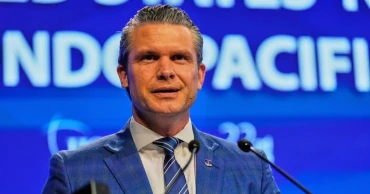
US defence secy warns Indo-Pacific allies of 'imminent' threat from China
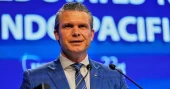
US Defence Secretary Pete Hegseth reassured allies in the Indo-Pacific on Saturday that they will not be left alone to face increasing military and economic pressure from China, while insisting that they also contribute more to their own defence.
He said Washington will bolster its defences overseas to counter what the Pentagon sees as rapidly developing threats by Beijing, particularly in its aggressive stance toward Taiwan.
China has conducted numerous exercises to test what a blockade would look like of the self-governing island, which Beijing claims as its own and the US has pledged to defend, reports AP.
China's army “is rehearsing for the real deal,” Hegseth said in a keynote speech at a security conference in Singapore. “We are not going to sugarcoat it — the threat China poses is real. And it could be imminent.”
China has a stated goal of having its military have the capability to take Taiwan by force if necessary by 2027, a deadline that is seen by experts as more of an aspirational goal than a hard war deadline.
Hamas still weighing US ceasefire proposal as Israeli airstrikes continue in Gaza
But China also has built sophisticated man-made islands in the South China Sea to support new military outposts and developed highly advanced hypersonic and space capabilities, which are driving the United States to create its own space-based “Golden Dome” missile defenses.
Speaking at the Shangri-La Dialogue, a global security conference hosted by the International Institute for Security Studies, Hegseth said China is no longer just building up its military forces to take Taiwan, it's “actively training for it, every day.”
Hegseth also called out China for its ambitions in Latin America, particularly its efforts to increase its influence over the Panama Canal.
He urged countries in the region to increase defense spending to levels similar to the 5% of their gross domestic product European nations are now pressed to contribute.
“We must all do our part,” Hegseth said.
1 year ago
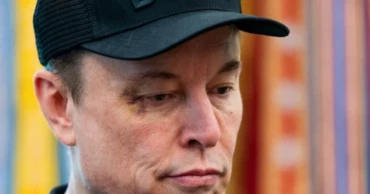
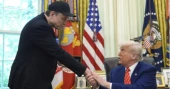
Elon Musk appears with black eye at White House farewell, offers explanation
Billionaire Elon Musk drew widespread attention when he appeared at the White House with a black eye during his farewell with U.S. President Donald Trump on Friday.
The tech billionaire offered a light-hearted explanation for the bruise, attributing it to a playful moment with his son.
"I was just horsing around with lil' X, and I said, 'go ahead punch me in the face,'" Musk, 53, told reporters.
"And he did. Turns out even a five-year-old punching you in the face actually is..." he continued, before pausing.
"I didn't really feel much at the time but I guess it bruises up."
The event marked Musk's final day leading the Department of Government Efficiency (DOGE), a role he previously said had grown frustrating.
Despite stepping down, Musk stated he would continue to serve as a "friend and advisor."
The farewell was partly overshadowed by a New York Times report alleging Musk used drugs heavily while campaigning alongside Trump in 2024. Trump, however, appeared unconcerned. "I didn't notice" the bruise, he said, adding, "X could do it, if you knew X."
Musk’s son, X Æ A-Xii, was a familiar figure in the White House during Musk’s tenure at DOGE, even sitting on his father’s shoulders during an Oval Office appearance in February and once being seen picking his nose near the Resolute Desk.
During the press conference, Musk also joked about French President Emmanuel Macron after a video emerged of Macron’s wife seemingly pushing the French leader’s face."I've got a little shiner here," Musk quipped with a laugh.
Wearing a DOGE baseball cap and a T-shirt reading "The Dogefather," Musk repeated the story behind the injury with humor when asked again about the bruise.
Source: NDTV
1 year ago