usa
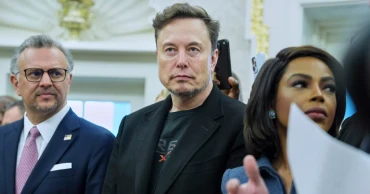
Elon Musk quits Trump administration after leading effort to slash federal govt
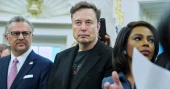
Elon Musk is leaving his government role as a top adviser to President Donald Trump after spearheading efforts to reduce and overhaul the federal bureaucracy.
His departure, announced Wednesday evening, marks the end of a turbulent chapter that included thousands of layoffs, the evisceration of government agencies and reams of litigation, reports AP.
Despite the upheaval, the billionaire entrepreneur struggled in the unfamiliar environment of Washington, and he accomplished far less than he hoped.
He dramatically reduced his target for cutting spending — from $2 trillion to $1 trillion to $150 billion — and increasingly expressed frustration about resistance to his goals. Sometimes he clashed with other top members of Trump's administration, who chafed at the newcomer's efforts to reshape their departments, and he faced fierce political blowback for his efforts.
Musk's role working for Trump was always intended to be temporary, and he had recently signalled that he would be shifting his attention back to running his businesses, such as the electric automaker Tesla and the rocket company SpaceX.
But administration officials were often vague about when Musk would step back from his position spearheading the Department of Government Efficiency, known as DOGE, and he abruptly revealed that he was leaving in a post on X, his social media website.
“As my scheduled time as a Special Government Employee comes to an end, I would like to thank President @realDonaldTrump for the opportunity to reduce wasteful spending,” he wrote. “The @DOGE mission will only strengthen over time as it becomes a way of life throughout the government.”
A White House official, who requested anonymity to talk about the change, confirmed Musk's departure.
Trump admin cancels $766m Moderna contract to fight pandemic flu
Musk announced his decision one day after CBS released part of an interview in which he criticised the centerpiece of Trump’s legislative agenda by saying he was “disappointed” by what the president calls his “big beautiful bill.”
The legislation includes a mix of tax cuts and enhanced immigration enforcement. Musk described it as a “massive spending bill” that increases the federal deficit and “undermines the work” of his Department of Government Efficiency, known as DOGE.
“I think a bill can be big or it could be beautiful,” Musk said. “But I don’t know if it could be both.”
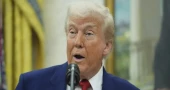
Trump, speaking in the Oval Office on Wednesday, defended his agenda by talking about the delicate politics involved with negotiating the legislation.
“I’m not happy about certain aspects of it, but I’m thrilled by other aspects of it,” he said.
Trump also suggested that more changes could be made.
“We’re going to see what happens,” he said. “It’s got a way to go.”
Republicans recently pushed the measure through the House and are debating it in the Senate.
Musk's concerns are shared by some Republican lawmakers. “I sympathize with Elon being discouraged,” said Wisconsin Sen. Ron Johnson.
Speaking at a Milwaukee Press Club event on Wednesday, Johnson added that he was “pretty confident” there was enough opposition “to slow this process down until the president, our leadership, gets serious” about reducing spending. He said there was no amount of pressure Trump could put on him to change his position.
Speaker Mike Johnson has asked senators to make as few changes to the legislation as possible, saying that House Republicans reached a “very delicate balance” that could be upended with major changes. The narrowly divided House will have to vote again on final passage once the Senate alters the bill.
On Wednesday, Johnson thanked Musk for his work and promised to pursue more spending cuts in the future, saying “the House is eager and ready to act on DOGE’s findings.”
1 year ago
US court blocks Trump’s sweeping tariffs, citing overreach of executive power
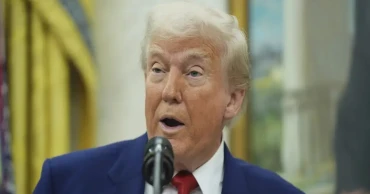
In a major blow to a key part of President Donald Trump’s economic policy, a US federal court has blocked a sweeping set of tariffs he imposed, ruling that he exceeded his legal authority.
The decision by the Court of International Trade strikes down key trade measures that were central to Trump’s "America First" agenda, reports BBC.
Trump admin to cut $100 million in federal contracts for Harvard
The court, based in Manhattan, found that the emergency law cited by Trump — the International Emergency Economic Powers Act (IEEPA) of 1977 — does not authorise the president to unilaterally impose broad tariffs on nearly every country.
The ruling emphasised that the US Constitution grants Congress exclusive powers to regulate international commerce, which cannot be overridden by the executive branch under the pretext of economic safeguarding.
Within minutes of the decision, the Trump administration filed an appeal. The ruling also blocks a separate set of levies targeting China, Mexico, and Canada, which the administration reintroduced after returning to the White House, citing concerns over drug trafficking and illegal immigration.
"It is not for unelected judges to decide how to properly address a national emergency," White House deputy press secretary Kush Desai said in response.
"President Trump pledged to put America First, and the Administration is committed to using every lever of executive power to address this crisis and restore American Greatness," he added.
The lawsuit, spearheaded by the Liberty Justice Center on behalf of five small businesses that import goods from countries affected by the tariffs, marks the first major legal challenge to what the administration called "Liberation Day" tariffs.
Twelve US states, including New York, supported the legal challenge.
"The law is clear: no president has the power to single-handedly raise taxes whenever they like," said New York Attorney General Letitia James.
"These tariffs are a massive tax hike on working families and American businesses that would have led to more inflation, economic damage to businesses of all sizes, and job losses across the country if allowed to continue," she added.
Trump pardoning a Virginia sheriff convicted on bribery charges
In its decision, the three-judge panel stated that Trump’s tariff orders exceeded the authority granted by the IEEPA.
"The Worldwide and Retaliatory Tariff Orders exceed any authority granted to the President by IEEPA to regulate importation by means of tariffs. The Trafficking Tariffs fail because they do not deal with the threats set forth in those orders," the panel wrote.
The ruling is one of seven ongoing legal challenges against the Trump administration’s trade policies, including actions brought by 13 US states and various small business groups.
1 year ago
Trump admin cancels $766m Moderna contract to fight pandemic flu
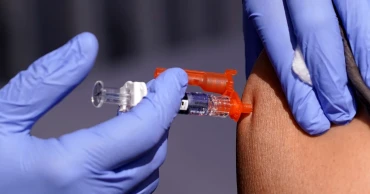
The Trump administration has cancelled $766 million awarded to drugmaker Moderna Inc to develop a vaccine against potential pandemic influenza viruses, including the H5N1 bird flu.
The company said it was notified Wednesday that the Health and Human Services Department had withdrawn funds awarded in July 2024 and in January to pay for development and purchase of its investigational vaccine.
The funds were awarded through the Biomedical Advanced Research and Development Authority, or BARDA, a program that focuses on medical treatments for potential pandemics.
The new vaccine, called mRNA-1018, used the same technology that allowed development and rollout of vaccines to fight Covid-19 in record time.
Health Secretary Robert F Kennedy Jr has expressed deep skepticism regarding mRNA vaccines, despite real-world evidence that the vaccines are safe and saved millions of lives.
The cancelation came as Moderna announced positive interim results from an early-stage trial of the vaccine that targeted H5 bird flu virus, tested in 300 healthy adults.
Donald Trump halts all new student visa interviews
“While the termination of funding from HHS adds uncertainty, we are pleased by the robust immune response and safety profile observed in this interim analysis," the company said in a statement.
H5N1 bird flu viruses spilled from wild bird into cattle in the US last year, infecting hundreds of animals in several states. At least 70 people in the US have been sickened by bird flu infections, mostly mild.
One person died. Scientists fear that continued mutation of the virus could allow it to become more virulent or more easily spread in people, with the possibility that it could trigger a pandemic.
Moderna received $176 million in July 2024 and $590 million in January. The January award would have supported a late-stage clinical trial that could have determined the vaccine's efficacy against pandemic viruses, including bird flu, a company spokesman said.
1 year ago
Donald Trump halts all new student visa interviews
The Trump administration has implemented a halt on all new student visa interviews at U.S. embassies and consulates as it considers a policy to mandate social media screening for foreign applicants, officials confirmed to the Associated Press.
A cable dated Tuesday, signed by Secretary of State Marco Rubio, outlines upcoming changes to the vetting process. One proposal under consideration would require all international students applying to U.S. schools to undergo social media background checks.
“We’ve previously stated that students do not pose a national security risk. Framing them this way is misleading, as they make up only about 6% of total U.S. enrollment,” said Fanta Aw, executive director and CEO of NAFSA: Association of International Educators, in an interview with Newsweek.
Newsweek reached out to both the State Department and the Department of Homeland Security (DHS) for further comment.
Why It Matters
Halting this visa category—which saw over 400,000 issuances in fiscal year 2024—marks a significant development in the Trump administration's immigration policy. It could substantially slow the international student application process and reduce funding for institutions that depend on them.
What to Know
The State Department cable reads: “Effective immediately, in preparation for broader mandatory social media vetting, consular offices must not add new appointment slots for student or exchange visitor (F, M, and J) visas until further instructions are issued via separate communication.”
USCIS began plans in early March to enhance immigrant social media screening, citing national security reasons.
Foreign Secretary discusses student visa backlog with German Ambassador
Applicants for green cards or U.S. citizenship from within the country are already required to provide social media details. Expanding this to those seeking to immigrate would impact about 2.5 million individuals annually.
The State Department's role includes assessing visa eligibility during embassy or consular interviews. Temporary halts like this often occur when new policies are being introduced, but this action follows months of heightened scrutiny of international students.
Authorities have moved to revoke visas of students currently studying in the U.S., particularly those allegedly tied to pro-Palestinian demonstrations on campuses. Rubio has argued that some of these protests were pro-Hamas and against U.S. foreign policy.
Recently, the administration attempted to strip Harvard of its right to enroll international students—a move that faced legal pushback and was paused. President Trump later demanded a list of all foreign students at Harvard, criticizing that many of their countries do not contribute financially to their U.S. education.
Public Reaction
At a Tuesday briefing, State Department spokesperson Tammy Bruce emphasized that the U.S. will continue to use all available tools to assess visa applicants: “That includes students and other categories.”
Bangladeshis can now apply for student visa at Romanian embassies in Hanoi and Bangkok
Fanta Aw told Newsweek that NAFSA would urge Congress to demand more transparency and warn of the likely impacts on the upcoming academic term.
Aaron Reichlin-Melnick of the American Immigration Council wrote on X (formerly Twitter) that halting student visa interviews could jeopardize approximately $44 billion in economic activity and over 370,000 jobs, citing NAFSA figures. “If the U.S. ceases accepting foreign students, the economic fallout could be severe,” he said.
Homeland Security Secretary Kristi Noem stated last week in regard to the Harvard case: “Allowing universities to admit international students is a privilege, not a right, especially when those students help bolster large endowments through higher tuition.”
What’s Next
A U.S. official speaking anonymously to the AP clarified that the freeze is intended to be temporary and won’t affect individuals who already have scheduled interviews. However, a prolonged pause could disrupt enrollment for summer and fall semesters and hinder the plans of college, boarding school, and exchange students.
Many universities, which have increasingly relied on international students paying full tuition to balance shrinking federal research funds, could face financial pressure if enrollments decline.
Source: With inputs from Newsweek
1 year ago
Trump pardoning a Virginia sheriff convicted on bribery charges
President Donald Trump said Monday that he is pardoning a former Virginia sheriff who was sentenced to 10 years in prison after a jury convicted him on federal bribery charges for deputizing several businessmen in exchange for cash payments.
Former Culpeper County Sheriff Scott Jenkins, 53, was found guilty on fraud and bribery charges and sentenced in March. But on Monday, Trump posted on his social media platform Truth Social that Jenkins and his family “have been dragged through HELL by a Corrupt and Weaponized Biden DOJ."
“This Sheriff is a victim of an overzealous Biden Department of Justice, and doesn’t deserve to spend a single day in jail. He is a wonderful person, who was persecuted by the Radical Left “monsters,” and “left for dead,” Trump said in the post. “He will NOT be going to jail tomorrow, but instead will have a wonderful and productive life."
Messages seeking comment were left with Jenkins' lawyers. The U.S. Attorney's Office for the Western District of Virginia was closed for the Memorial Day holiday.
Jenkins is the latest pardon Trump has given to loyal supporters. In April, he pardoned Nevada Republican Michele Fiore, who was awaiting sentencing on federal charges that she used money meant for a statue honoring a slain police officer for personal costs, including plastic surgery.
In January, Trump pardoned Ross Ulbricht, the founder of Silk Road, an underground website for selling drugs. Ulbricht had been sentenced to life in prison in 2015 after a high-profile prosecution that highlighted the internet's role in illegal markets.
He also pardoned, commuted the prison sentences or vowed to dismiss the cases of all of the 1,500-plus people charged with crimes in the Jan. 6, 2021, U.S. Capitol riot, including people convicted of assaulting police officers.
Former Austrian Chancellor Sebastian Kurz Cleared of Perjury Charges by Court
Jenkins was indicted in 2023 on 16 counts — including conspiracy, wire fraud and bribery — concerning programs receiving federal funds. In December, a jury found him guilty of one count of conspiracy, four counts of honest services fraud, and seven counts of bribery.
Jenkins took the stand in his own defense and said there was no connection between the payments he received and the badges he handed out, according to news reports. Testifying against Jenkins were two undercover FBI agents who were sworn in as auxiliary deputies in 2022 and immediately thereafter gave Jenkins envelopes with $5,000 and $10,000 cash, respectively.
Jenkins appealed his conviction in April.
Trump said Jenkins tried to offer evidence in his defense, but U.S. District Judge Robert Ballou, a Biden appointee, “refused to allow it, shut him down, and then went on a tirade.”
Trump hints at ‘good news’ on Gaza
Acting United States Attorney Zachary T. Lee said at the time that Jenkins violated his oath of office “and this case proves that when those officials use their authority for unjust personal enrichment, the Department of Justice will hold them accountable.”
1 year ago
The US military spent $6 billion in the past 3 years to recruit and retain troops
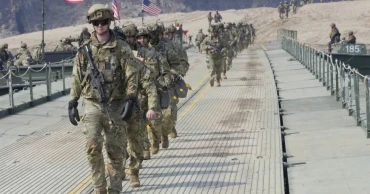
The U.S. military spent more than $6 billion over the past three years to recruit and retain service members, in what has been a growing campaign to counter enlistment shortfalls.
The financial incentives to reenlist in the Army, Navy, Air Force and Marines increased dramatically from 2022 through last year, with the Navy vastly outspending the others, according to funding totals provided by the services. The overall amount of recruiting bonuses also rose steadily, fueled by significant jumps in spending by the Army and Marine Corps.
The military services have routinely poured money into recruiting and retention bonuses over the years. But the totals spiked as Pentagon leaders tried to reverse falling enlistment numbers, particularly as COVID-19 restrictions locked down public events, fairs and school visits that recruiters relied on to meet with young people.
Coupled with an array of new programs, an increased number of recruiters and adjustments to enlistment requirements, the additional incentives have helped the services bounce back from the shortfalls. All but the Navy met their recruiting targets last year and all are expected to do so this year.
President Donald Trump and Defense Secretary Pete Hegseth repeatedly point to Trump’s election as a reason for the recruiting rebound. But the enlistment increases began long before last November, and officials have tied them more directly to the widespread overhauls that the services have done, including the increased financial incentives.
The Army, the military's largest service, spent more on recruiting bonuses in 2022 and 2024 than the other services. But it was significantly outspent by the Navy in 2023, when the sea service was struggling to overcome a large enlistment shortfall.
As a result, even though the Navy is a smaller service, it spent more overall in the three years than the Army did.
Vance arrives at US military base in Greenland following uproar over uninvited visit
The Navy also has spent considerably more than the others to entice sailors to reenlist, doling out retention bonuses to roughly 70,000 service members for each of the past three years. That total is more than double the number of troops the Army gave retention bonuses to each year, even though the Army is a much larger service.
“Navy is dedicated to retaining our most capable sailors; retention is a critical component of achieving our end-strength goals,” Adm. James Kilby, the vice chief of naval operations, told a Senate Armed Services subcommittee in March.
He said reenlistment for enlisted sailors “remains healthy” but officers are a challenge in specific jobs, including aviation, explosive ordnance disposal, surface and submarine warfare, health professionals and naval special operations. He added that the Navy has struggled to fill all of its at-sea jobs and is using financial incentives as one way to combat the problem.
The Army has seen the greatest recruiting struggles over the past decade, and by using a range of new programs and policies has had one of the largest comebacks. The Navy has had the most trouble more recently, and took a number of steps to expand those eligible for service and spend more in bonuses.
While the Army spends hundreds of millions each year to recruit troops, it also has relied on an array of new programs and policies to woo young people. A key driver of the Army's rebound has been its decision to create the Future Soldier Prep Course, at Fort Jackson, South Carolina, in August 2022.
That program gives lower-performing recruits up to 90 days of academic or fitness instruction to help them meet military standards and move on to basic training. It has resulted in thousands of enlistments.
The Air Force increased its spending on recruiting bonuses in 2023 as it also struggled to overcome shortfalls, but lowered the amount the following year. The payments were for jobs including munitions systems, aircraft maintenance and security forces. The Space Force does not currently authorize enlistment bonuses.
The Marine Corps and the tiny Space Force have consistently hit their recruiting goals, although the Marines had to dig deep into their pool of delayed entry candidates in 2022 to meet their target. The Corps, which is much smaller than the Army and Air Force, spends the least on bonuses and tends to spread the amount among a larger number of service members.
What to know about the US military's Pituffik Space Base in Greenland
Maj. Jacoby Getty, a Marine spokesman, said the spike in retention bonuses from $126 million in 2023 to $201 million in 2024 was because Marines were allowed to reenlist a year early for the first time. More than 7,000 Marines got bonuses as a result, a jump of nearly 2,200 over the previous year.
When asked about bonuses in 2023, Gen. Eric Smith, the Marine commandant, famously told a naval conference that “your bonus is you get to call yourself a Marine.”
“That’s your bonus, right?" he said. "There’s no dollar amount that goes with that.”
The services tailor their recruiting and retention money to bolster harder-to-fill jobs, including cyber, intelligence and special operations forces. The Army and Marine Corps also use the money to woo troops to some combat, armor and artillery jobs.
1 year ago
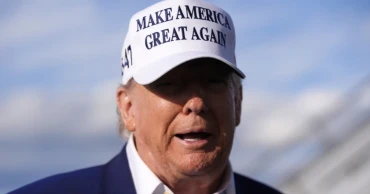
President Donald Trump says Russian leader Vladimir Putin 'has gone absolutely CRAZY!'
President Donald Trump made it clear he is losing patience with Vladimir Putin, leveling some of his sharpest criticism at the Russian leader as Moscow pounded Kyiv and other Ukrainian cities with drones and missiles for a third straight night.
“I’ve always had a very good relationship with Vladimir Putin of Russia, but something has happened to him. He has gone absolutely CRAZY!” Trump wrote in a social media post on Sunday night.
Trump said Putin is “needlessly killing a lot of people,” pointing out that “missiles and drones are being shot into Cities in Ukraine, for no reason whatsoever.”
The attack was the largest aerial assault since Russia’s full-scale invasion of the country in February 2022, according to Ukrainian officials. At least 12 people were killed and dozens injured.
The U.S. president warned that if Putin wants to conquer all of Ukraine, it will “lead to the downfall of Russia!” But Trump expressed frustration with Ukrainian President Volodymyr Zelenskyy as well, saying that he is “doing his Country no favors by talking the way he does.”
“Everything out of his mouth causes problems, I don’t like it, and it better stop,” Trump wrote on social media.
Trump says he will call Putin, then Zelenskyy, on Monday to push for Ukraine ceasefire
The president has increasingly voiced irritation at Putin and the inability to resolve the now three-year-old war, which Trump promised he would promptly end as he campaigned to return to the White House.
He had long boasted of his friendly relationship with Putin and repeatedly stressed that Russia is more willing than Ukraine to reach a peace deal.
But last month, Trump urged Putin to “STOP!” assaulting Ukraine after Russia launched another deadly barrage of attacks on Kyiv, and he has repeatedly expressed his frustration that the war in Ukraine is continuing.
“I’m not happy with what Putin’s doing. He’s killing a lot of people. And I don’t know what the hell happened to Putin,” Trump told reporters earlier Sunday as he departed northern New Jersey, where he spent most of the weekend. “I’ve known him a long time, always gotten along with him, but he’s sending rockets into cities and killing people and I don’t like it at all. ”
A peace agreement between Russia and Ukraine remains elusive. Trump and Putin spoke on the phone this past week, and Trump announced after the call that Russia and Ukraine will “immediately” begin ceasefire talks. That conversation occurred after Russian and Ukrainian officials met in Turkey for the first face-to-face talks since 2022. But on Thursday, the Kremlin said no direct talks were scheduled.
Trump downplays Putin decision to skip Istanbul talks with Zelenskyy
The European Union has slapped new sanctions on Russia this month in response to Putin's refusal to agree to a ceasefire. But while Trump has threatened to step up sanctions and tariffs on Russia, he hasn’t acted so far.
1 year ago
5th anniversary of George Floyd’s murder observed in Trump's America
Police reform and civil rights activists joined thousands of ordinary people Sunday to mark the fifth anniversary of George Floyd’s murder at religious services, concerts and vigils nationwide and decry the Trump administration for setting their efforts back decades.
The Rev. Al Sharpton said at a Houston graveside service that Floyd represented all of those “who are defenseless against people who thought they could put their knee on our neck.”
He compared Floyd’s killing to that of Emmett Till, a 14-year-old Black child who was abducted and lynched in Mississippi in 1955 after being accused of offending a white woman.
“What Emmett Till was in his time, George Floyd has been for this time in history,” Sharpton said.
Cat found smuggling drugs into prison
In a park about 2 miles (3.2 kilometers) away from the gravesite, a memorial service was set to take place, followed by five hours of music, preaching and poetry readings and a balloon release.
Events started Friday in Minneapolis with concerts, a street festival and a “self-care fair,” and culminate with a worship service, gospel music concert and candlelight vigil on Sunday.
The remembrances come at a fraught moment for activists, who had hoped the worldwide protests that followed Floyd’s murder on May 25, 2020, would lead to permanent police reform across the U.S. and a continued focus on racial justice issues.
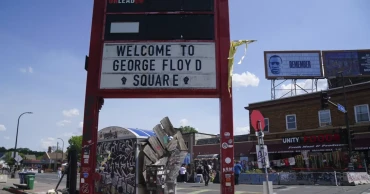
Events in Minneapolis center around George Floyd Square, the intersection where police Officer Derek Chauvin used his knee to pin Floyd’s neck to the pavement for 9 1/2 minutes, even as the 46-year-old Black man’s cried “I can’t breathe.” Even with Minneapolis officials’ promises to remake the police department, some activists contend the progress has come at a glacial pace.
Russia and Ukraine swap hundreds more prisoners hours after a massive attack on Kyiv
“We understand that change takes time,” Michelle Gross, president of Communities United Against Police Brutality, said in a statement last week. “However, the progress being claimed by the city is not being felt in the streets.”
The Trump administration moved Wednesday to cancel settlements with Minneapolis and Louisville that called for an overhaul of their police departments following the Floyd’s murder and the killing of Breonna Taylor. Under Democratic President Joe Biden, the U.S. Justice Department had aggressively pushed for aggressive oversight of local police it had accused of widespread abuses.
9 of a doctor's 10 children killed in Israel's latest strikes in Gaza
Trump has also declared an end to diversity, equity and inclusion initiatives within the federal government and his administration is using federal funds as leverage to force local governments, universities and public school districts to do the same. Republican-led states also have accelerated their efforts to stamp out DEI initiatives.
1 year ago
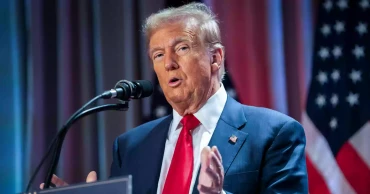
Judge halts Trump administration’s attempt to ban foreign student at Harvard
A federal judge on Friday temporarily blocked the Trump administration’s move to prevent Harvard University from enrolling international students—a measure Harvard condemned as unconstitutional retaliation for resisting the White House’s political pressure.
Harvard filed a lawsuit earlier the same day in Boston federal court, arguing that the government's action violates the First Amendment and would cause immediate and severe harm to the university and its over 7,000 international students.
“The government is trying to erase a quarter of our student body with a single decision,” the university stated in its complaint, emphasizing that Harvard’s identity and mission are closely tied to its global student body.
U.S. District Judge Allison Burroughs issued an order pausing the government’s action while the legal process continues.
Harvard said the administration’s decision had created chaos just days before graduation. The affected students include those managing research labs, teaching, supporting faculty, and taking part in athletics. They now face the choice of transferring to other institutions or risking their legal status in the U.S.
The move would be especially damaging to graduate programs such as the Harvard Kennedy School, where about half the students are from abroad, and Harvard Business School, where international students make up a third of the enrollment. It would also prevent thousands of new students from joining summer and fall programs.
Harvard warned the policy could deter top international talent in the future, with applicants possibly avoiding the university out of fear of future government retaliation. If the policy were enforced, Harvard said it wouldn’t be able to admit new international students for at least two academic years, as schools whose certification is revoked must wait a year before reapplying.
The university currently hosts about 6,800 foreign students, mostly in graduate programs, from over 100 countries.
The Department of Homeland Security (DHS) justified its action by claiming Harvard fostered an unsafe campus environment, citing incidents involving “anti-American, pro-terrorist agitators” targeting Jewish students. DHS also accused Harvard of collaborating with the Chinese Communist Party and training Chinese paramilitary members as recently as 2024.
Harvard President Alan Garber responded earlier this month, saying the school had implemented governance reforms and was actively addressing antisemitism. However, he reaffirmed Harvard’s commitment to its “core, legally-protected principles,” regardless of political pressure. The university has pledged to respond separately to allegations raised by House Republicans concerning ties with the Chinese government.
Former Harvard president and ex-U.S. Treasury Secretary Lawrence Summers criticized the administration’s move on social media, warning that it could alienate future global leaders and calling the policy “madness.”
The enrollment threat stems from an April 16 request by Homeland Security Secretary Kristi Noem, who demanded data on foreign students potentially involved in protests or violence. Harvard said it submitted thousands of data points in response, but DHS claimed the university did not comply—without offering specifics.
Harvard’s lawsuit alleges the administration failed to follow its own rules for revoking a school’s certification under the Student Exchange and Visitor Program, which typically occurs for administrative failures like loss of accreditation or inadequate facilities—not for political reasons.
Noem has said Harvard could regain its certification if it submits extensive records within 72 hours, including audio or video of international students involved in protests or hazardous behavior.
This lawsuit is separate from another legal battle in which Harvard is challenging more than $2 billion in federal funding cuts imposed by the Trump administration.
1 year ago
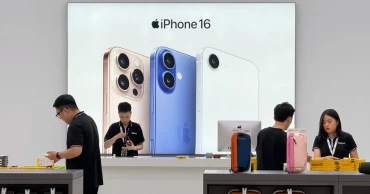
Trump threatens 25% import tax on Apple unless iPhones made in US
President Donald Trump on Friday threatened to put a 25% tariff on Apple products unless iPhones are manufactured in the United States.
The threat delivered over social media could dramatically increase the price of iPhones, potentially hurting sales and the profits of one of America's leading technology companies, reports AP.
The company now joins Amazon, Walmart and other major companies as being in the White House's crosshairs as they try to respond to the uncertainty and inflationary pressures unleashed by the import taxes being imposed by Trump.
Trump downplays Putin decision to skip Istanbul talks with Zelenskyy
“I have long ago informed Tim Cook of Apple that I expect their iPhone’s that will be sold in the United States of America will be manufactured and built in the United States, not India, or anyplace else,” Trump posted on Truth Social. “If that is not the case, a Tariff of at least 25% must be paid by Apple to the US”
Apple, led by CEO Tim Cook, in response to Trump's tariffs on China was looking to shift iPhone manufacturing to India as it adjusts supply chains. That plan has become a festering source of frustration for the US president, who also brought it up last week during his Middle East trip.
1 year ago