usa
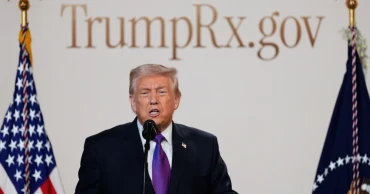
Trump administration launches TrumpRx website to promote discounted drugs
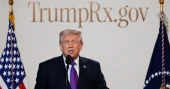
The Trump administration on Thursday unveiled TrumpRx, a new government-backed website it says will help Americans access prescription drugs at lower prices, as rising health care expenses and living costs remain a major concern for households.
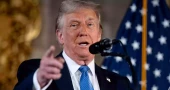
President Donald Trump, speaking at the launch event, said the initiative would significantly reduce costs for patients and benefit the broader health care system. “You’re going to save a fortune,” he said, adding that the move would have a positive impact on overall care.
TrumpRx does not sell medicines directly. Instead, the website serves as a hub that directs consumers to pharmaceutical companies’ direct-to-consumer platforms, where drugs can be purchased, and also offers discount coupons for use at retail pharmacies. At launch, the site features more than 40 medications, including popular weight-loss drugs such as Ozempic and Wegovy.
Trump urges US to move on from Epstein amid ongoing scrutiny
The rollout is part of the administration’s broader effort to demonstrate action on affordability, an issue that has become politically sensitive ahead of the November midterm elections, as Americans continue to worry about the costs of housing, food, utilities and other essentials.
Trump said the lower prices were achieved by pressing drugmakers to charge Americans the same prices as those offered in other developed countries. He argued that this would end what he described as the United States subsidizing cheaper medicines abroad, even if prices rise in foreign markets as a result.
While the administration is highlighting what it calls substantial discounts, the real impact on household spending remains uncertain. The website notes that listed prices reflect out-of-pocket costs and that people with insurance may pay less. It also acknowledges that some patients may find cheaper options through generic alternatives.
Dr. Mehmet Oz, administrator of the Centers for Medicare and Medicaid Services, praised the initiative, describing it as a major shift in access to care. He claimed that lower prices for weight-loss drugs could lead to significant health improvements nationwide and suggested that reduced costs for fertility treatments could boost birth rates.
Trump first announced plans for TrumpRx in September, alongside the first of more than 15 agreements with pharmaceutical companies aimed at lowering U.S. drug prices to match the lowest levels in comparable countries. In December, he said the platform would offer “massive discounts,” though it remains unclear whether prices on manufacturers’ sites will consistently undercut what many insured consumers already pay.
The website’s launch followed several delays that the administration has not publicly explained. Initial expectations last year pointed to a release before the end of 2025, with another planned launch in late January also postponed.
In recent months, Trump has repeatedly highlighted his administration’s efforts to curb prescription drug prices, including agreements with major manufacturers such as Pfizer, Eli Lilly and Merck. Under these deals, some Medicaid drug prices are set to align with “most favored nations” rates, and certain new medicines are to be introduced to consumers at discounted prices through TrumpRx.
US launches plan to reduce reliance on China for critical minerals
However, many details of the agreements remain unclear, and drug costs in the United States continue to vary widely based on factors such as insurance coverage and market competition. Most Americans are shielded from full prices through employer-based insurance, private plans or government programs like Medicare and Medicaid.
Separately, the administration has also secured lower prices for several drugs for Medicare beneficiaries through a direct negotiation program established under a 2022 law.
1 month ago

Trump urges US to move on from Epstein amid ongoing scrutiny
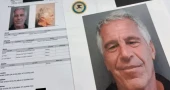
President Donald Trump has called for the United States to move on from the Jeffrey Epstein case as the Justice Department concludes its review of millions of documents related to the convicted sex offender’s sex-trafficking network. Deputy Attorney General Todd Blanche said the review, mandated by Congress in November, found no grounds for new prosecutions.
While the Justice Department’s review has ended, the House of Representatives continues its own investigation into Epstein. Former President Bill Clinton and former Secretary of State Hillary Clinton are scheduled to testify later this month, after Republicans threatened contempt of Congress for noncompliance. Members of Congress and Epstein’s survivors continue to demand additional disclosures, citing documents they claim have not been released.
Trump, who has denied any wrongdoing in connection with Epstein, said at the White House on Tuesday that it was “really time for the country to get on to something else.” However, his name appears over 6,000 times in the released files, often mentioned by Epstein and his associates, although no evidence has directly implicated him in criminal activity.
Other high-profile figures named in the documents, including Prince Andrew, former UK ambassador Peter Mandelson, and former US Treasury Secretary Larry Summers, have faced scrutiny and personal consequences for their ties to Epstein. Tech billionaires like Bill Gates and Elon Musk have also had to address references to them in the files.
The documents include unverified FBI tips from 2016, some naming Trump, Epstein, and other prominent figures. The Justice Department said these tips were unfounded and many contain false or sensational claims. A few new photographs and emails were released, but none substantially changed the narrative regarding Trump’s involvement.
Epstein’s victims, including Lisa Phillips, expressed dissatisfaction with the Justice Department’s actions, citing incomplete disclosure and the release of survivors’ names. Despite the president’s call to move on, Democrats in Congress have signaled they may issue similar subpoenas for Trump and other Republicans if they regain control of the House in the November midterm elections.
The Epstein saga, years after the financier’s death, continues to attract legal and political attention, highlighting ongoing calls for transparency and accountability in one of the most high-profile criminal cases involving powerful figures in the United States.
With inputs from BBC
1 month ago

Last US-Russia nuclear pact expires, raising fears of renewed arms race
The final remaining nuclear arms agreement between the United States and Russia expired on Thursday, eliminating limits on the world’s two largest nuclear arsenals for the first time in over 50 years. Experts warn that the end of the New START Treaty could trigger an unchecked nuclear arms race.
Russian President Vladimir Putin had previously expressed willingness to extend the treaty for another year if Washington agreed, but U.S. President Donald Trump has remained noncommittal. Trump has suggested including China in any future deal, an idea Beijing has rejected.
Kremlin adviser Yuri Ushakov said Putin discussed the treaty’s expiration with Chinese President Xi Jinping on Wednesday, noting that the U.S. has not responded to Russia’s extension proposal. “Russia will act in a balanced and responsible manner based on thorough analysis of the security situation,” Ushakov added.
Russia’s Foreign Ministry stated Wednesday night that, under the current circumstances, both parties are no longer bound by any obligations under the New START Treaty and are free to choose their next steps.
US launches plan to reduce reliance on China for critical minerals
Signed in 2010 by President Barack Obama and Russian President Dmitry Medvedev, New START limited each side to 1,550 nuclear warheads and 700 delivery systems, including missiles and bombers. The treaty, originally set to expire in 2021, was extended for five years and included on-site inspections to verify compliance, which halted in 2020 due to the COVID-19 pandemic.
In February 2023, Putin suspended Russia’s participation in inspections, citing concerns over U.S. and NATO statements regarding Russia’s defeat in Ukraine, while emphasizing that Moscow would still respect the warhead limits. In September, he proposed adhering to New START’s limits for one more year to allow negotiations on a successor pact, warning that the treaty’s expiration could destabilize global security and fuel nuclear proliferation.
New START follows a series of previous U.S.-Russia nuclear arms reduction agreements, all of which have since ended. While Trump has expressed a desire to maintain nuclear limits, he insists China be included in any new treaty. Beijing, which has a smaller but expanding nuclear arsenal, has refused to participate in nuclear disarmament talks, urging the U.S. to resume dialogue with Russia.
US seeks critical minerals trading bloc with allies to counter China
“China’s nuclear forces are not on the same scale as those of the U.S. and Russia, and thus China will not participate in nuclear disarmament negotiations at the current stage,” Foreign Ministry spokesperson Lin Jian said Thursday, calling on Washington to respond positively to Russia’s suggestion to continue observing the treaty’s core limits.
1 month ago
US launches plan to reduce reliance on China for critical minerals
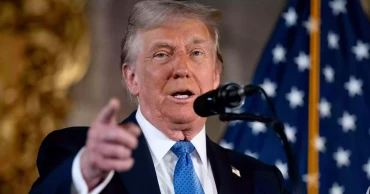
The United States has unveiled a new initiative to form a trade zone for critical minerals, aiming to reduce global dependence on China, which dominates the supply of materials essential for products ranging from smartphones to weapons.
On Wednesday, the State Department hosted the first Critical Minerals Ministerial, attended by representatives from the UK, European Union, Japan, India, South Korea, Australia, and the Democratic Republic of Congo. Delegates discussed access to key minerals used in manufacturing electric vehicle batteries, computer chips, and other high-tech applications.
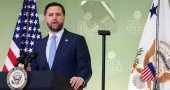
China currently leads in the mining and processing of many of these critical minerals, including rare earths. Although US officials did not explicitly name China, Vice President JD Vance referred to the "foreign supply" of minerals affecting global markets, making it difficult for other nations with mineral deposits to secure funding for production.
Washington Post slashes one-third of staff in sweeping layoffs
The US plans to use tariffs to prevent critical mineral prices from falling too low, which could discourage investment, according to Vance. David Copley, a special assistant to President Donald Trump, said the US intends to "deploy hundreds of billions of dollars into the mining sector" to jumpstart projects. Investments are already underway in companies such as rare earth magnet maker MP Materials and Lithium Americas, a producer of materials vital for rechargeable batteries.
US Trade Representative Jamieson Greer said the US, Japan, and the European Commission are coordinating trade policies to collectively safeguard access to critical minerals. Ahead of the meeting, a spokesperson for the Chinese Foreign Ministry called for adherence to market principles and international trade rules, urging countries to strengthen communication and dialogue.
The ministerial is part of broader US efforts to counter China’s leverage over the critical minerals industry, including the recent creation of a $12 billion reserve called “Project Vault,” announced by Trump on Monday. Industry experts welcomed the move, highlighting the importance of securing reliable domestic and allied supplies.
Iran, US to hold nuclear talks in Oman amid tensions; Trump issues warning to Khamenei
The ministerial coincided with a phone call between Trump and Chinese President Xi Jinping, described by the US president as “very positive.” Analysts note that while China eased some recent export curbs on rare earths, its dominance remains a strategic tool in trade negotiations with Washington.
#With inputs from BBC
1 month ago
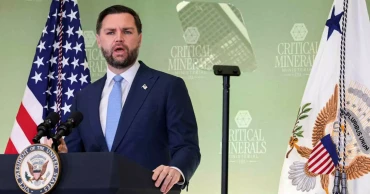
US seeks critical minerals trading bloc with allies to counter China
The United States has announced plans to form a critical minerals trading bloc with its allies and partners, aiming to reduce dependence on China and secure stable supplies of key materials used in products ranging from smartphones to fighter jets.
Vice President JD Vance said the past year’s U.S.-China trade tensions highlighted how heavily many countries rely on China for critical minerals, making collective action essential. Speaking at a meeting hosted by Secretary of State Marco Rubio with officials from dozens of European, Asian and African countries, Vance said the proposed bloc would use coordinated trade policies and tariffs to maintain minimum prices and protect supply chains.
Under the plan, member countries would work together to ensure steady production, stable prices and shared access to financing and minerals, while limiting China’s ability to undercut competitors by selling materials cheaply and later raising prices. Vance said the goal is to create diversified production centers and supply chains that are less vulnerable to external shocks.
The initiative comes as Washington takes broader steps to strengthen its access to critical minerals after China tightened export controls in response to President Donald Trump’s tariffs last year. Although both sides later eased some trade measures, China’s restrictions remain tougher than before.
US officials said several countries have already agreed to join the proposed bloc. Allies including France and the United Kingdom attended the Washington meeting, though Denmark and Greenland — home to large mineral resources — were not present.
Experts caution that enforcing the bloc could be challenging, particularly in preventing companies from sourcing cheaper Chinese materials outside the agreement. However, defense-related supply chains may be easier to regulate due to Pentagon oversight.
Alongside the diplomatic push, the Trump administration is investing heavily at home. This week, Trump announced “Project Vault,” a plan to build a strategic U.S. stockpile of rare earth elements, backed by a $10 billion loan from the Export-Import Bank and private funding. The government has also invested billions of dollars in domestic mining and processing projects over the past year.
China currently dominates the sector, accounting for about 70% of global rare earth mining and 90% of processing.
The European Union, Japan and Mexico separately announced agreements with the United States to coordinate trade policies and price floors for critical minerals, with plans to bring in other like-minded countries.
Meanwhile, the US House of Representatives approved legislation to speed up mining on federal land, aiming to boost domestic production of minerals vital for energy, defense and high-tech industries. The bill now heads to the Senate.
1 month ago
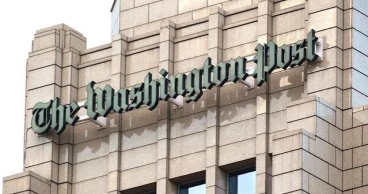
Washington Post slashes one-third of staff in sweeping layoffs
The Washington Post has laid off around one-third of its workforce, shutting down its sports section, several foreign bureaus and its long-running books coverage in a move that has shaken one of America’s most storied news organizations.
Executive Editor Matt Murray described the decision as painful but necessary, saying the paper must adapt to changing technology and audience habits. “We can’t be everything to everyone,” he told staff, adding that the changes are aimed at putting the newspaper on firmer ground.
The scale of the cuts stunned employees and the wider journalism community. Layoff notices were sent across nearly all newsroom departments, ending decades of coverage areas that helped define the Post’s identity.
Former Post editor Martin Baron strongly criticized the decision, calling it “near-instant, self-inflicted brand destruction,” while Columbia University journalism professor and former Post columnist Margaret Sullivan said the move was “devastating for anyone who cares about journalism.”
Former U.S. House Speaker Nancy Pelosi also condemned the layoffs, warning that corporate decisions are “hollowing out newsrooms across the country” and weakening democracy. Speaking at the Washington Press Club Foundation, she said a free press cannot survive without proper resources.
The Post’s owner, billionaire Jeff Bezos, did not comment publicly. In recent weeks, journalists had urged him to intervene as rumors of layoffs spread. The paper has reportedly lost subscribers, partly due to controversial decisions such as pulling back from endorsing Kamala Harris in the 2024 presidential election and shifting the tone of its opinion pages.
Specific cuts continued to emerge throughout the day. The Post’s Cairo bureau chief confirmed that all Middle East correspondents and editors were laid off, while reporters covering conflicts in Ukraine and other regions also lost their jobs.
Founded nearly 150 years ago, The Washington Post is famed for its Watergate investigation and influential reporting on politics, culture and society. Critics fear the latest cuts threaten that legacy.
Murray said the paper will now focus on areas where it has the most impact, including politics, national affairs and security. He acknowledged that the Post has struggled to keep pace with digital formats like video and that its overall story output has declined in recent years.
The layoffs come amid wider turmoil in U.S. media. On the same day, the Atlanta Journal-Constitution announced cuts affecting about 15% of its staff as it continues its shift to an all-digital model.
For many journalists, the Post’s decision signals a troubling moment for American journalism — one where even the most iconic newsrooms are no longer immune to deep cuts.
1 month ago
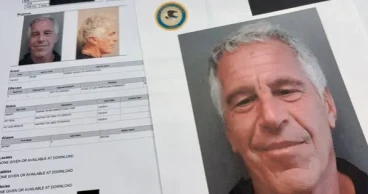
New Epstein document release sparks controversy over redactions, high‑profile names
The ongoing release of millions of pages of documents related to convicted sex offender Jeffrey Epstein has continued to draw international attention, with advocates, survivors and world leaders weighing in as new material is made public by the U.S. Justice Department.
The latest tranche of more than 3 million pages of records, including emails, photographs and videos, was released earlier this year under the Epstein Files Transparency Act, a U.S. law requiring the publication of files connected to Epstein’s criminal cases. The release includes previously unseen communications between Epstein and wealthy or influential figures, though officials stress that inclusion in the files does not imply wrongdoing.
Advocates for survivors have criticised the release, saying that many documents remain heavily redacted or withheld, and that crucial material that could clarify Epstein’s network and the extent of abuse has yet to be published. Some lawyers for victims have raised concerns that improper redactions exposed personal information, prompting authorities to remove thousands of files for further review.
Who Was Jeffrey Epstein? A Look at the Controversial Financier
The release has also forced public responses from prominent individuals whose names appear in the material. Melinda French Gates addressed allegations linking her ex‑husband, billionaire Bill Gates, to Epstein in the files, calling the situation “unbelievable.”
Political and criminal fallout abroad
Revelations from the documents have triggered political and legal reactions overseas. In the United Kingdom, former Labour politician Peter Mandelson resigned from the House of Lords and now faces a police criminal investigation over allegations that he shared sensitive government information with Epstein during his time as a senior official — accusations he denies.
In neighbouring Poland, Prime Minister Donald Tusk announced a government probe into possible links between Epstein and Russian intelligence services, saying the files raised questions about national security that warrant investigation.
Unanswered questions and continued scrutiny
Despite the volume of material now made public, many key questions remain unresolved. Critics argue that the partial redaction and withholding of records obscure the full scope of Epstein’s operations and connections, limiting public understanding of how he maintained his network of contacts and evaded more serious legal consequences for years. Lawmakers and advocates continue to call for greater transparency and comprehensive disclosure.
The Justice Department says it is working to protect victims’ identities while complying with the law and continues to review and correct documents flagged for improper redaction. The controversy over the Epstein files is expected to persist as legal and political pressure mounts for further releases and accountability.
#From Agencies
1 month ago
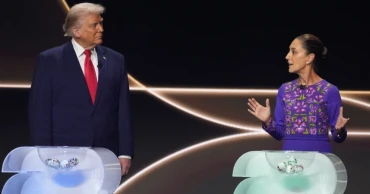
Mexico agrees to ensure steady annual water deliveries to US
Mexico and the United States on Tuesday announced an agreement under which Mexico will provide a guaranteed minimum amount of water to the US each year, aiming to make cross-border water deliveries more predictable.
Under the deal, Mexico will send at least 350,000 acre-feet of water annually to the United States during the current five-year cycle. An acre-foot is the volume of water required to cover one acre of land to a depth of one foot.
The agreement follows months of negotiations and came after US President Donald Trump threatened to impose a 5% tariff on Mexican imports if water deliveries were not increased.
The new arrangement marks a shift from the terms of the 1944 Water Treaty, which requires Mexico to deliver a total of 1.75 million acre-feet of water to the US from six tributaries over a five-year period. While the treaty averages out to the same annual amount, US officials have complained that Mexico often delays deliveries early in the cycle, creating water shortages for farmers in Texas before settling the obligation later.
US, India strike trade deal after Trump–Modi call
In exchange, the United States supplies Mexico with a larger volume of water from other sources along the western stretch of their shared border. The latest agreement is intended to smooth Mexico’s deliveries and prevent the accumulation of water debt.
Mexico’s ministries of foreign affairs, environment and agriculture confirmed the deal in a joint statement, though they did not disclose the exact figure. The statement said Mexico had agreed to guarantee an annual minimum water delivery acceptable to both countries.
While US authorities welcomed the agreement, the issue remains politically sensitive in Mexico, particularly in drought-hit northern states. Farmers in Tamaulipas, which borders Texas, have recently warned that water shortages have forced some of them to refrain from planting crops.
The deal followed a phone call last week between President Trump and Mexican President Claudia Sheinbaum. In December, Sheinbaum had indicated that Mexico would increase water deliveries to reduce its existing shortfall under the treaty.
1 month ago
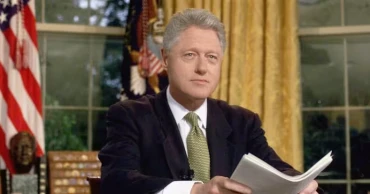
Clintons to testify in Epstein investigation ahead of contempt vote
Former US President Bill Clinton and his wife Hillary Clinton, a former secretary of state, have agreed to testify before a congressional committee investigating the late financier and convicted sex offender Jeffrey Epstein, just days before lawmakers are due to vote on whether to hold them in criminal contempt of Congress.
The decision follows months of standoff with the Republican-led House Oversight Committee, which late last month approved a motion to hold the Clintons in contempt for failing to comply with subpoenas. Several Democrats backed the move.
Confirmation of the Clintons’ agreement came on Monday evening from Bill Clinton’s deputy chief of staff, Angel Ureña, who said the couple would appear before the panel. However, it remains unclear when the depositions will take place.
If it goes ahead, the testimony would mark the first time a former US president has appeared before a congressional committee since Gerald Ford did so in 1983.
Bill Clinton has acknowledged past contact with Epstein, who died in a New York jail in 2019 while awaiting trial on federal sex trafficking charges, but has consistently denied any knowledge of Epstein’s crimes. He has said he severed ties with Epstein more than 20 years ago and has never been accused of wrongdoing by survivors of Epstein’s abuse.
Ureña said the Clintons had previously cooperated by providing sworn written statements and sharing what they described as limited information they possessed about Epstein. He criticised the committee’s approach, accusing it of acting in bad faith and pursuing partisan objectives.
The Clintons have dismissed the subpoenas as an attempt to embarrass political opponents, alleging the move was politically motivated. In a letter sent last month to House Oversight Committee Chairman James Comer, they accused him of mishandling the investigation and said the panel’s actions had hindered efforts to uncover facts about the government’s role in the Epstein case.
Comer, a Republican from Kentucky, has rejected those claims, noting that the subpoenas were authorised by a bipartisan vote and insisting that no one is above the law. He said the committee had given Clinton’s legal team multiple opportunities to appear voluntarily, accusing them of repeatedly delaying.
Epstein’s private jet flight logs show that Bill Clinton took four international trips aboard the financier’s aircraft in 2002 and 2003. Photographs released by the US Department of Justice last December also show Clinton at Epstein’s estate, including images of him swimming in a pool and relaxing in what appears to be a hot tub. Clinton’s spokesman said the images were decades old and predated any public knowledge of Epstein’s criminal activities.
The Oversight Committee’s investigation forms part of a broader congressional effort to review government handling of Epstein’s case, following the release of large volumes of previously sealed records mandated by law.
With inputs from BBC
1 month ago
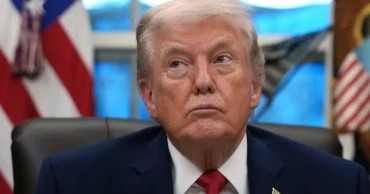
Trump says US is 'starting to talk to Cuba' as oil pressure mounts
US President Donald Trump said Saturday that the United States has started discussions with Cuban leaders as his administration intensifies pressure on the island by restricting key oil supplies.
The comments came while Trump was traveling to Florida, following recent moves to block Cuba’s access to oil from Venezuela and Mexico.
Trump indicated that these measures are intended to push Cuba toward negotiations. “We’re starting to talk to Cuba,” he told reporters, without providing details on the level or scope of the outreach. He suggested that the Cuban government is close to collapse and predicted a potential deal with the U.S., saying Washington would be “kind” in any negotiations.
The restrictions on oil imports have strained Cuba’s economy. Trump signed an executive order this week imposing tariffs on any country supplying oil to the island, targeting Mexico after U.S. actions halted Venezuela’s shipments following the capture of its former President Nicolás Maduro in early January. Mexican President Claudia Sheinbaum warned that the measures could trigger a humanitarian crisis and said her government is exploring alternatives to continue supporting Cuba.
Trump’s shift toward Cuba follows broader efforts to confront nations seen as U.S. adversaries in the region. His recent policies reflect a strategy to isolate Havana economically while signaling that negotiations are possible under pressure.
Read More: Trump says Iran negotiating with U.S.
The president has not detailed the objectives of the talks but suggested that U.S. pressure on oil supplies will compel Cuba to negotiate. Observers say the latest actions mark a significant escalation in U.S. policy toward Cuba, combining economic restrictions with the opening of limited diplomatic channels.
1 month ago