usa
At least seven killed, 800,000 lose power as severe winter storm hits US
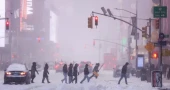
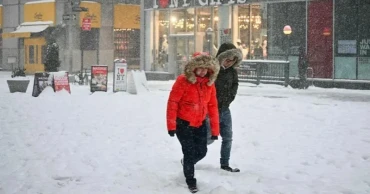
A heavy winter storm sweeping across the United States has killed at least seven people and left more than 800,000 homes and businesses without electricity, triggering widespread disruptions to daily life.
The storm brought heavy snow, sleet and freezing rain, forcing authorities to close schools and roads and cancel thousands of flights. The National Weather Service (NWS) warned that “life-threatening” conditions stretched from Texas to New England.
Officials said two people died of hypothermia in Louisiana, while storm-related deaths were also reported in Texas, Tennessee and Kansas. In New York City, Mayor Zohran Mamdani said at least five people died on Saturday, although the exact causes were still being investigated. He noted that extreme cold remains a serious seasonal threat for residents.
More than 800,000 customers were without power by Sunday afternoon, according to PowerOutage.us. Meanwhile, FlightAware reported that over 11,000 flights were cancelled nationwide.
Meteorologists said the storm could last several days and affect about 180 million people more than half of the US population. Freezing rain, which instantly turns into ice on contact with surfaces, was described as one of the most dangerous elements of the storm due to its ability to damage trees, down power lines and make roads extremely slippery.
National Weather Service meteorologist Allison Santorelli said,“The snow and ice will melt very slowly and won’t go away anytime soon, which will hinder recovery efforts.”
Read More: Winter storm leaves millions without power across US
New York Governor Kathy Hochul urged residents to stay indoors, calling it the coldest and most severe winter storm the state has experienced in years. Kentucky Governor Andy Beshear said ,the state was seeing more ice than initially forecast, increasing the risk of accidents.
Nearly half of US states have declared emergencies, while many schools cancelled classes through Monday. The US Senate also postponed a scheduled vote due to the severe weather.
Massive US winter storm cancels thousands of flights
The storm has also affected Canada, where heavy snowfall has led to hundreds of flight cancellations. Ontario is expected to receive between 15 and 30 centimetres of snow.
Weather experts said the storm was caused by a weakened polar vortex, allowing Arctic air to move southward. The extreme cold is forecast to persist into early February.
With inputs from BBC
1 month ago
Winter storm leaves millions without power across US
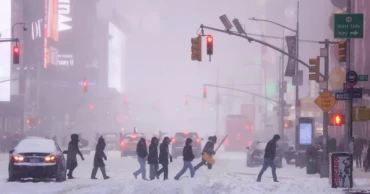
A powerful winter storm sweeping across the United States has left hundreds of thousands of households without electricity, disrupted air travel and caused multiple deaths, as authorities warned of life-threatening conditions from Texas to New England.
Snow, ice and freezing rain have affected a vast stretch of the country, with around 180 million people, more than half of the US population, facing dangerous weather, according to the National Weather Service. Officials said the extreme conditions could persist for several days.
At least two people died of hypothermia in Louisiana, while another weather-related death was reported in Texas. In New York City, Mayor Zohran Mamdani said at least five people died over the weekend, though the causes were still being determined.
PowerOutage.us reported that more than one million households lost electricity by Sunday afternoon, as ice damaged trees and power lines. Air travel was also heavily disrupted, with more than 10,000 flights canceled nationwide, according to FlightAware.
Several states declared emergencies as the storm intensified. Schools closed across large parts of the country, and the US Senate postponed a scheduled vote. In Washington, DC, Mayor Muriel Bowser said the capital was experiencing its heaviest snowfall in a decade.
Governors warned residents to stay indoors and off roads, citing hazardous travel conditions. Weather experts said ice posed the greatest danger, contributing to hundreds of vehicle crashes, including more than 200 reported in Virginia.
Meteorologists linked the storm to a weakened polar vortex, allowing Arctic air to plunge southward. Forecasts warned of prolonged cold and heavy snowfall continuing into early February.
With inputs from BBC
1 month ago
Massive US winter storm cancels thousands of flights
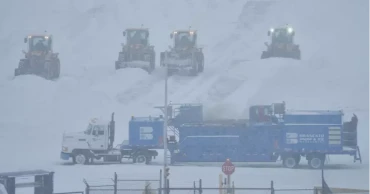
A powerful winter storm battered air travel across the United States on Sunday, triggering widespread flight cancellations and delays at many of the country’s busiest airports.
The National Weather Service said snow, sleet and freezing rain threatened nearly 180 million people, more than half of the US population, across a vast corridor stretching from the southern Rocky Mountains to New England. After moving through the South, the storm advanced into the Northeast on Sunday, with forecasts calling for roughly 1 to 2 feet of snow from Washington to New York and Boston.
Flight-tracking website FlightAware reported that more than 11,400 flights were canceled on Sunday. Aviation analytics firm Cirium said the disruption marked the largest cancellation event since the Covid-19 pandemic.
By Sunday afternoon, cancellations dominated flight schedules at major airports, particularly in the Northeast. New York’s LaGuardia Airport suspended operations until 8pm, according to the Federal Aviation Administration. In Philadelphia, 94 percent of flights were canceled, while LaGuardia saw 91 percent of flights grounded. John F. Kennedy International Airport in New York canceled about 80 percent of its flights. All departing flights were also canceled at Ronald Reagan Washington National Airport.
Major hubs in Dallas-Fort Worth, Charlotte and Atlanta also reported significant disruption.
American Airlines canceled more than 1,790 flights, while Delta, Southwest, United and JetBlue also reported heavy losses to their schedules.
Aviation expert Vikrant Vaze said recovery could take days, warning that cascading delays may affect travelers even outside storm-hit regions.
1 month ago
US Border Patrol shooting in Minneapolis kills ICU nurse, family says
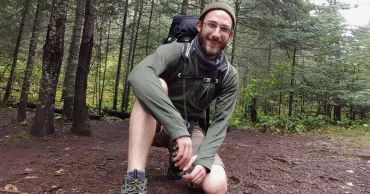
Alex Jeffrey Pretti, 37, an intensive care nurse at a VA hospital, was shot and killed by a U.S. Border Patrol officer in Minneapolis on Saturday, his family said. Pretti, a U.S. citizen from Illinois, was known for his compassion, love for the outdoors, and concern over immigration policies under President Donald Trump.
Pretti had participated in protests following the Jan. 7 killing of Renee Good by an ICE officer. Family members said he never had a criminal record beyond minor traffic tickets and had a concealed carry permit, though they had never seen him carry a handgun in public.
The Department of Homeland Security said Pretti was shot after he “approached” officers with a 9 mm handgun, but family and bystander videos show him holding a phone and shielding a woman from pepper spray, with no visible weapon.
Neighbors described Pretti as quiet, warmhearted, and helpful, who enjoyed cycling and spending time with his dog. His parents expressed heartbreak and anger over top officials labeling him a “domestic terrorist,” calling the claims “reprehensible.”
Authorities have not provided detailed information, and the family continues to seek answers regarding the circumstances of his death.
1 month ago
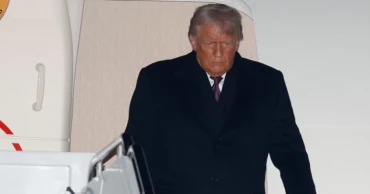
Trump threatens 100% tariff on Canada over China deal
President Donald Trump on Saturday threatened to impose a 100% tariff on goods imported from Canada if America's northern neighbor went ahead with its China trade deal, intensifying a feud with Prime Minister Mark Carney, a rising voice in the West's pushback to Trump new world order.
Trump said in a social media post that if Carney “thinks he is going to make Canada a ‘Drop Off Port’ for China to send goods and products into the United States, he is sorely mistaken.”
While Trump has waged a trade war over the past year, Canada this month negotiated a deal to lower tariffs on Chinese electric vehicles in return for lower import taxes on Canadian farm products.
Trump initially had said that agreement was what Carney “should be doing and it’s a good thing for him to sign a trade deal.”
Carney’s office did not immediately respond to a request for comment.
Trump’s threat came amid an escalating war of words with Carney as the Republican president’s push to acquire Greenland strained the NATO alliance. Trump had commented while in Davos, Switzerland, this week that “Canada lives because of the United States.” Carney shot back that his nation can be an example that the world does not have to bend toward autocratic tendencies. “Canada doesn’t live because of the United States. Canada thrives because we are Canadian,” he said.
Trump later revoked his invitation to Carney to join the president's “Board of Peace” that he is forming to try to resolve global conflicts.
Trump's push to acquire Greenland has come after he has repeatedly needled Canada over its sovereignty and suggested it also be absorbed the United States as a 51st state. He posted an altered image on social media this week showing a map of the United States that included Canada, Venezuela, Greenland and Cuba as part of its territory.
In his message Saturday, Trump continued his provocations by calling Canada's leader “Governor Carney.” Trump had used the same nickname for Carney's predecessor, Justin Trudeau, and his first use of it toward Carney was the latest mark of their soured relationship.
Daniel Béland, a political science professor at McGill University in Montreal, said “there was a sense Trump showed more respect for Carney than for Trudeau. Now, after Carney’s visit to China and, even more, his widely celebrated Davos speech, which clearly outshined and upset Trump, the gloves are off.”
Carney has emerged as a leader of a movement for countries to find ways to link up and counter the U.S. under Trump. Speaking in Davos before Trump, Carney said, “Middle powers must act together because if you are not at the table, you are on the menu” and he warned about coercion by great powers — without mentioning Trump’s name. The prime minister received widespread praise and attention for his remarks, upstaging Trump at the World Economic Forum.
The prime minister even spoke of a “rupture” between the U.S. under Trump and its Western allies that would never be repaired.
Trump, in his Truth Social post Saturday, also said that “China will eat Canada alive, completely devour it, including the destruction of their businesses, social fabric, and general way of life.” In a later post, the president said: “The last thing the World needs is to have China take over Canada. It’s NOT going to happen, or even come close to happening!”
Carney has not yet reached a deal with Trump to reduce some of the tariffs that he has imposed on key sectors of the Canadian economy. But Canada has been protected by the heaviest impact of Trump’s tariffs by the Canada-U.S.-Mexico Agreement. That trade agreement is up for a review this year.
In the fall, the Canadian province of Ontario aired an anti-tariff ad in the U.S. that prompted Trump to end trade talks with Canada. The television ad used the words of former President Ronald Reagan to criticize U.S. tariffs. Trump pledged to increase tariffs on imports of Canadian goods by an extra 10%. He did not follow through.
As for China, Canada had initially mirrored the United States by putting a 100% tariff on electric vehicles from Beijing and a 25% tariff on steel and aluminum. China had responded by imposing 100% import taxes on Canadian canola oil and meal and 25% on pork and seafood.
But as Trump’s pursued pressure tactics, Canada’s foreign policy has been less aligned with the U.S., creating an opening for an improved relationship with China. Carney made the tariff announcement earlier this month during a visit to Beijing.
“The China trade deal is quite limited as is the U.S. deal with China on (semiconductor) chips. The China deal may grow, however. I expect Chinese interest in funding a pipeline to northern British Columbia,” said Nelson Wiseman, professor emeritus of political science at the University of Toronto.
Carney has said that Canada's relationship with the U.S. is complex and deeper and that Canada and China disagree on issues such as human rights.
Canada is the top export destination for 36 U.S. states. Nearly $3.6 billion Canadian (US $2.7 billion) worth of goods and services cross the border each day. About 60% of U.S. crude oil imports are from Canada, as are 85% of U.S. electricity imports.
Canada is also the largest foreign supplier of steel, aluminum and uranium to the U.S. and has 34 critical minerals and metals that the Pentagon is eager for and investing in for national security.
1 month ago

4 shot dead in US, 3 children escape hiding in closet
Four people were shot dead early Friday in Lawrenceville, Georgia of United New, in what authorities said appeared to be a family dispute.
The suspected shooter has been taken into custody.
The Indian Consulate in Atlanta expressed grief over the incident, saying on X that the alleged shooter had been arrested and that all possible assistance was being provided to the bereaved family.
“We are deeply grieved by a tragic shooting incident linked to an alleged family dispute, in which an Indian national was among the victims. The alleged shooter has been arrested, and all possible assistance is being extended to the bereaved family,” the consulate said.
Local media identified the suspect as Vijay Kumar, 51, of Atlanta.
The victims were identified by Gwinnett County police as Kumar’s wife Meemu Dogra, 43, Gourav Kumar, 33, Nidhi Chander, 37, and Harish Chander, 38.
Kumar has been charged with four counts each of aggravated assault, felony murder, and malice murder, as well as one count of first-degree cruelty to children and two counts of third-degree cruelty to children.
Police responded to a call around 2:30 am local time at a residence on the 1000 block of Brook Ivy Court. Officers found the four adults dead inside the home from gunshot wounds.
Three children were present during the shooting. They hid in a closet to protect themselves, and one managed to call 911, providing crucial information that allowed police to reach the scene within minutes.
US labels three Muslim Brotherhood branches as terrorist groups
The children were unharmed and have since been taken into the care of a family member.
1 month ago

What Trump officials, immigration lawyers say about ICE detaining a 5-year-old
The detention of a 5-year-old boy from Ecuador alongside his father outside their Minnesota home has intensified national debate over immigration enforcement under the Trump administration.
Federal authorities, the family’s attorney, neighbors and school officials have offered sharply conflicting accounts over whether the parents were given a real chance to place the child in someone else’s care.
According to neighbors and school officials, immigration officers involved the child directly by instructing him to knock on his home’s door in an attempt to draw his mother outside.
The Department of Homeland Security has rejected that claim, calling it an “abject lie.” Officials say the father, Adrian Alexander Conejo Arias, ran from officers and left his son, Liam Conejo Ramos, alone in a running vehicle parked in the driveway.
The conflicting versions surfaced just weeks after the fatal shooting of Renee Good in Minneapolis by an ICE officer — an incident witnesses described as an abuse of authority but which federal officials defended as self-defense.
The father and son are currently being held at a family detention center in Dilley, Texas, near San Antonio.
Federal authorities say Conejo Arias was in the United States illegally, though they have not provided further details. White House deputy chief of staff Stephen Miller said he entered the country unlawfully in December 2024.
The family’s lawyer countered that Conejo Arias had a pending asylum application that allowed him to remain in the U.S.
Both claims may be accurate. Officials could have moved to deport him after determining he entered illegally, while he simultaneously exercised his legal right to seek asylum, temporarily halting removal until a judge decides the case.
Online court records show the asylum case was filed on Dec. 17, 2024, and assigned to the immigration court inside the Dilley detention facility.
Below is a breakdown of what officials, lawyers and others are saying:
School officials say ICE used the child as ‘bait’
Columbia Heights Public Schools Superintendent Zena Stenvik said officers instructed the boy to knock on the door to check whether anyone else was inside, “essentially using a 5-year-old as bait,” she said.
Stenvik said the father told the child’s mother not to open the door.
School officials also said agents refused requests to leave the child with other adults.
A widely shared photo of the boy wearing a beanie and a Spiderman backpack has fueled public reaction.
“Why detain a 5-year-old?” Stenvik asked. “You cannot tell me that this child is going to be classified as a violent criminal.”
Other adults offered to take care of the child
School officials said several adults present offered to care for the boy but were ignored, including a neighbor who said she had documentation authorizing her to take custody of him on behalf of the parents.
Columbia Heights school board chair Mary Granlund said she also told agents she could care for the child.
ICE rejects claims from school officials and neighbors
“ICE did NOT target, arrest a child or use a child as ‘bait,’” said Homeland Security spokeswoman Tricia McLaughlin. “ICE law enforcement officers were the only people primarily concerned with the welfare of this child. ”
McLaughlin said the child had been abandoned and officers made repeated efforts to have the mother take custody. “Officers even assured her she would NOT be taken her into custody.”
She added that officers “abided by the father’s wishes to keep the child with him."
ICE and Border Patrol criticize media coverage
Border Patrol Commander at Large Greg Bovino said at a Friday news conference that reporting on the case was based on a “false media narrative.”
Marcos Charles, acting executive associate director of ICE enforcement and removal operations, said the father was responsible for “abandoning his child in the middle of winter in a vehicle.” He said one officer stayed with the child while others arrested the father, later providing food and attempting to reunite him with family.
“Tragically, when we approached the door of his residence, the people inside refused to take him in and open the door. ... Fortunately, Conejo Arias eventually requested that his child stay with him," Charles said.
Charles said he did not know the whereabouts of the child’s mother.
Conditions at the Texas detention center
The father and son are being held at the Dilley family detention center, where advocacy groups say conditions for children have deteriorated.
Leecia Welch, chief legal counsel at Children’s Rights, said after visiting the facility last week that conditions are worse than ever.
“The number of children had skyrocketed and significant numbers of children had been detained for over 100 days,” Welch said, adding that the administration acknowledged in December that about 400 children had faced extended detention.
“Nearly every child we spoke to was sick,” she said.
Bovino argued that child-parent separation occurs when U.S. citizens are jailed by local police.
“I challenge any other law enforcement agency anywhere nationwide to show me the fantastic care that ICE and the U.S. Border Patrol provide children,” Bovino said.
He added that without his father, the boy could have ended up in social services custody.
Charles said families in detention receive “top-notch care. They have medical care. The food is good. They have learning services. They have church services available. They have recreation.”
Lawyer unable to contact family
Family attorney Marc Prokosch said Thursday he believed the father and son were being held together but had not been able to communicate with them.
“We’re looking at our legal options to see if we can free them either through some legal mechanisms or through moral pressure,” he said.
Prokosch was unavailable for comment on Friday, according to his office.
Administration policy on detaining children
The child’s immigration status remains unclear and could be decisive. Charles said the family entered the U.S. together, indicating the boy was not born in the country.
Trump border czar Tom Homan has said parents of U.S.-born children may choose whether to take their children with them or leave them behind.
“This is parenting 101. You can decide to take that child with you or you can decide to leave the child with a relative or another spouse,” Homan said last year on CBS’ “Face the Nation.”
The Trump administration issued a “Detained Parents Directive” last July stating that ICE “should under no circumstances take custody of children or transport them” when minors are encountered during enforcement actions, with certain exceptions.
The directive instructs ICE to give parents time to arrange alternative care for children before detention but does not clarify what happens if parents request that children remain with them.
Read More: Trump’s immigration crackdown fuels anxiety among child care workers
“If a parent is arrested while with their child, the government is not required to arrest the child, regardless of the child’s immigration status,” said Neha Desai, managing director at Children’s Human Rights and Dignity at the National Center for Youth Law. “When ICE detains a parent, its own policy requires them to allow time for arrangements to be made for the child’s care.”
1 month ago
US officially leaves WHO, ending major global health role
The United States has formally withdrawn from the World Health Organization (WHO), removing itself as one of the UN agency’s largest donors and a key participant in global health initiatives.
The decision stems from an executive order signed by US President Donald Trump a year ago, after he repeatedly criticised the WHO for being overly “China-centric” during the Covid-19 pandemic. The US Department of Health and Human Services said the withdrawal was due to the WHO’s alleged mishandling of the pandemic, its inability to implement meaningful reforms, and political influence from certain member states.
WHO Director-General Tedros Adhanom Ghebreyesus rejected the US claims, saying the withdrawal is a “loss for both the United States and the world.” The organisation highlighted its global contributions, including efforts to eradicate polio, combat HIV and AIDS, reduce maternal mortality, and enforce its international treaty on tobacco control.
Following the pandemic, WHO member states worked on an international pandemic treaty to ensure fair sharing of vaccines and treatments and strengthen preparedness for future outbreaks. The treaty, finalised in April 2025, was agreed upon by all member states except the US.
Traditionally, the United States has been one of the largest financial contributors to the WHO, but Washington did not pay its membership fees for 2024 and 2025, causing significant job losses within the organisation. While WHO lawyers maintain that the US is obliged to pay the arrears—estimated at $260 million—Washington has refused, stating there is no reason to do so.
As part of the withdrawal, all US government funding to the WHO has been terminated, US personnel and contractors recalled from Geneva headquarters and offices worldwide, and hundreds of engagements with the agency have been suspended or discontinued. US Health Secretary Robert F. Kennedy and Secretary of State Marco Rubio said in a joint statement that the WHO “tarnished and trashed everything that America has done for it” and “abandoned its core mission,” acting against US interests. They added that future US engagement with the WHO will be limited strictly to safeguard the health and safety of Americans.
Officials noted that the US will continue disease surveillance and pathogen-sharing programs through bilateral relationships with other countries, but they did not specify which countries or partnerships have been established so far. In response to questions about US participation in global health initiatives like polio and HIV programmes, officials said partnerships would continue through NGOs and faith-based groups, though no specific arrangements have been disclosed. US engagement in global flu vaccine development and information-sharing remains uncertain.
After Trump signed the withdrawal order at the start of his second term, the WHO expressed hope that the US would reconsider, stating that “the WHO and the USA have saved countless lives and protected Americans and all people from health threats.” The agency said reconsideration would serve the “health and well-being of millions worldwide.”
The WHO confirmed on Friday that the US withdrawal would be discussed during its upcoming board meeting scheduled from February 2-7. Its secretariat said it will act according to the guidance provided by its governing bodies.
The US exit could remove nearly one-fifth of the WHO’s budget. The defunding and withdrawal come amid criticism of pandemic responses worldwide, including in highly developed countries like the US and the UK, where delays in imposing lockdowns and mask mandates contributed to rapid virus spread. Drew Altman, former US public health official, said the federal government’s inconsistent Covid-19 guidance, politicisation of policy, and failure to implement nationwide preventive measures contributed to one of the highest death rates in the world.
A 2020 study in the British Medical Journal accused the Trump administration of failing to provide national guidance and allowing state-level responses to diverge along political lines. Another research paper published in the UN National Library of Medicine labelled the US federal response as “slow and mismanaged.”
The US withdrawal marks a significant moment for global health governance, highlighting tensions between national interests and multilateral cooperation in pandemic preparedness and response.
With inputs from BBC
1 month ago
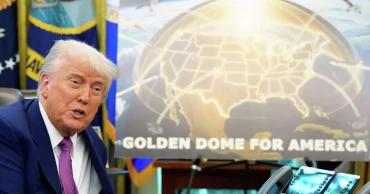
Greenland’s strategic role in nuclear defense comes into focus amid Trump’s ‘Golden Dome’ push
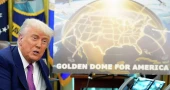
Greenland’s location in the Arctic places it at the heart of global nuclear defense planning, a reality highlighted anew by U.S. President Donald Trump’s renewed push for his proposed “Golden Dome” missile defense system.
In any hypothetical nuclear conflict involving the United States, Russia and China, intercontinental ballistic missiles would likely travel along the shortest routes, over the Arctic. That trajectory makes Greenland a critical point for early detection and potential interception.
Trump has argued that U.S. ownership of Greenland is essential for the success of the multibillion-dollar “Golden Dome,” a layered missile defense system he claims will be operational before 2029. He has said modern offensive and defensive weapons systems make control of the territory especially important, sparking alarm in Denmark and among Greenlanders.
A key element of Greenland’s importance is the Pituffik Space Base, formerly known as Thule Air Base. Located above the Arctic Circle, the base hosts a powerful early-warning radar capable of detecting and tracking ballistic missile launches from thousands of kilometers away, including missiles fired from Russia or China toward the United States.
Defense analysts note that the base gives Washington valuable extra minutes to assess and respond to potential attacks. The radar can monitor large swaths of the Arctic and detect objects as small as a car, according to the U.S. Air Force.
However, experts question Trump’s claim that U.S. ownership of Greenland is necessary. The United States has operated at Pituffik for decades under a 1951 defense agreement with Denmark, without sovereignty over the island. Analysts also point out that other allied locations, such as early-warning radar sites in the United Kingdom, play similar roles without any U.S. ownership claims.
Some experts argue that emerging space-based sensors planned under the “Golden Dome” could eventually reduce Greenland’s strategic importance. They also note that Denmark has historically been a highly cooperative U.S. ally, making expanded military access possible without drastic political steps.
As debates continue, Greenland remains a pivotal, and sensitive, crossroads in global nuclear defense calculations.
1 month ago
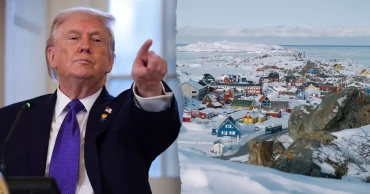
Can US Congress block Trump’s bid to take over Greenland?
President Donald Trump’s renewed push to acquire Greenland has triggered resistance from Republicans in Congress, with lawmakers increasingly uneasy about US military involvement overseas.
However, it remains uncertain whether enough Republicans would join Democrats to stop a takeover of the island territory, or whether Trump would ignore Congress and move ahead on his own, as he has done repeatedly during a second term marked by deeper US entanglements abroad.
What began as a debate over Greenland has now widened into a broader argument over the Trump administration’s unilateral use of military force, as well as diplomatic and economic pressure, to project American power in places such as Venezuela, Iran and beyond.
Read More: Pro-Greenland protesters mock Trump's MAGA slogan with 'Make America Go Away' caps
Republicans have largely supported Trump’s foreign policy since his return to the White House. But a growing number are now siding with Democrats in Congress and Nato allies who say that any attempt to take over Greenland would breach both US and international law, reports BBC.
In recent days, several senior Republicans have said there is little appetite in Washington for buying Greenland or seizing it by force. Some GOP lawmakers have also joined Democrats in opposing Trump’s proposal to impose tariffs on countries that refuse to back his bid for the territory, which is self-governing but remains under Danish control.
The proposed tariffs would be “bad for America, bad for American businesses, and bad for America’s allies,” Senator Thom Tillis of North Carolina wrote on social media, warning that the move would benefit China and Russia. “It’s great for Putin, Xi and other adversaries who want to see Nato divided.”
Other Republicans said Trump’s ambition to annex Greenland risked weakening the Nato alliance, of which both the United States and Denmark are members, at a time of growing strain between Washington and its European partners.
Read More: US forces seize seventh Venezuela-linked oil tanker amid Trump oil crackdown
“Respect for the sovereignty of the people of Greenland should be non-negotiable,” said Senator Lisa Murkowski, co-chair of the Senate Arctic Caucus.
Trump has argued that the US must control the territory to compete more effectively with China and Russia in the Arctic and has vowed to take it “one way or another”.
On Tuesday, he brushed aside concerns that the issue could damage Nato. Asked by the BBC whether he was prepared to see the decades-old security alliance collapse over Greenland, Trump repeated his view that ownership of the island was vital for US and global security.
“We need [Greenland] for national security and even world security,” he said.
Despite Trump’s insistence, the plan is becoming increasingly unpopular on Capitol Hill.
If Republicans and Democrats decide to confront the president, Congress has several tools at its disposal. Lawmakers control federal spending and, in theory, would have to approve any funding used to buy Greenland, according to experts. Denmark and Greenland have both made clear that the island is not for sale.
“If Trump wants to buy Greenland it would require an act of Congress to provide the funds to do so,” said Daniel Schuman, executive director of the American Governance Institute and a specialist in congressional procedure. He added that it would be unlikely for Congress to redirect existing funds for such a purchase.
At the same time, the administration has expanded its use of executive power to implement Trump’s immigration and tariff agenda. Schuman said the White House might attempt to claim new authority to seize Greenland in a way that bypasses congressional opposition.
Read More: Greenland, tariffs and Trump dominate Davos talks
Lawmakers worried about a possible military move have signalled support for measures that would ban any US action in Greenland without congressional approval. But it is unclear whether those proposals have enough Republican backing to pass in either chamber.
Earlier this month, five Senate Republicans joined Democrats to advance a bill aimed at blocking further US military action in Venezuela, following the December attack that removed former president Nicolás Maduro.
That war powers resolution ultimately failed in the Senate, but it highlighted growing frustration among both Republicans and Democrats over Trump’s use of military force abroad, after he campaigned in 2024 on a pledge to scale back US involvement in foreign conflicts. Last week, a bipartisan congressional delegation visited Denmark in a symbolic show of support for Greenland.
Questions also remain over how the Senate would respond if Washington and Copenhagen reached an agreement over part or all of Greenland. The US already has a 1951 defence agreement with Denmark allowing it to expand its military presence on the island. Murkowski and other Republicans argue that this arrangement is sufficient to meet US security needs in the region.
The Senate could also try to block Trump by rejecting any treaty with Denmark. Treaties require a two-thirds majority for ratification, a threshold Republicans currently fall well short of.
Some Republicans have already indicated they may break with Trump over Greenland. Senator Mitch McConnell of Kentucky, the former Senate majority leader, told reporters that a US takeover of the territory would “shatter the trust of allies”.
Faced with growing unease within his own party, Trump could attempt to strike a deal that stops short of a formal treaty and avoids Senate approval. But analysts say it is unclear whether a president has the authority to conclude such an agreement without Congress.
“Plenty of international agreements are concluded in forms other than treaties,” said Josh Chafetz, a law professor at Georgetown University, but added, “I’m sceptical that something of this magnitude could be concluded as a pure executive agreement.”
On Tuesday, Trump declined to say whether he believed there were any limits on his pursuit of Greenland. Asked how far he was willing to go, he told reporters to wait and see.
“I think something is going to happen that’s going to be very good for everybody,” Trump said.
1 month ago