Others
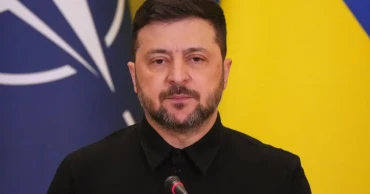
US sets June deadline for Ukraine-Russia war deal: Zelenskyy
The United States has given Ukraine and Russia a deadline until June to reach an agreement to end the nearly four-year war, Ukrainian President Volodymyr Zelenskyy said, as fresh Russian attacks severely damaged the country’s energy infrastructure.
Speaking to reporters, Zelenskyy said the Trump administration wants the war to end by early summer and is likely to pressure both sides if no deal is reached by then.
“The Americans want to do everything by June. They want a clear schedule and will push both sides according to this timeline,” Zelenskyy said. His comments were made on Friday but released on Saturday.
He said the US has proposed holding the next round of trilateral talks involving Ukraine, Russia and the United States next week, possibly in Miami. Ukraine has confirmed its participation, he added.
Zelenskyy also said Russia has submitted a massive $12 trillion economic proposal to the US, referred to as the “Dmitriev package,” named after Russian envoy Kirill Dmitriev. Economic cooperation with the US is part of the broader negotiation process, he noted.
Meanwhile, Russian forces launched more than 400 drones and around 40 missiles overnight, targeting Ukraine’s energy grid, power generation facilities and distribution networks, Zelenskyy said in a post on X.
Ukraine’s state energy operator Ukrenergo said the strikes forced nuclear power plants to reduce output after key high-voltage substations were hit. Eight energy facilities in eight regions were damaged in what it called the second major attack on energy infrastructure this year.
As a result, Ukraine’s power shortage has worsened significantly, leading to extended scheduled power outages across the country, the operator said.
The June deadline follows US-brokered trilateral talks in Abu Dhabi that failed to produce progress, as both sides maintained firm and opposing positions. Russia continues to demand Ukraine’s withdrawal from the Donbas region, a condition Kyiv has repeatedly rejected.
“Ukraine has once again confirmed its position on Donbas. We stand where we stand,” Zelenskyy said, adding that the most difficult issues should be discussed directly at the leaders’ level.
He said no agreement was reached on the management of the Russian-held Zaporizhzhia nuclear power plant and voiced doubts about a US proposal to turn the Donbas into a free economic zone as a compromise.
Zelenskyy said the talks also covered how a potential ceasefire would be monitored, with the US reaffirming its role in that process.
He added that Washington again proposed a ceasefire banning attacks on energy infrastructure. Ukraine is ready to accept such a deal if Russia complies. However, he noted that a previous US-backed pause was broken by Russia after just four days.
27 days ago
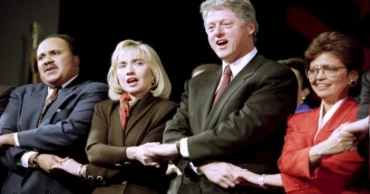
Bill, Hillary Clinton want Epstein testimony held in public
Former US president Bill Clinton and his wife, Hillary Clinton, have called for their testimony before Congress over their past links to convicted sex trafficker Jeffrey Epstein to be held in public.
The Clintons were asked to give closed-door depositions to the House Oversight Committee, which is investigating Epstein’s ties with powerful people and how authorities handled information about his crimes. Epstein died in jail in 2019 in what was ruled a suicide.
The couple said private hearings could allow Republicans to use the issue for political attacks. Democrats have also accused Republicans of turning the probe into a political tool against critics of President Donald Trump. Trump was known to have associated with Epstein in the past but has not been asked to testify.
House Republicans earlier warned they could vote to hold the Clintons in contempt if they refused to appear. The couple has since agreed to testify but insists it should be done openly.
Bill Clinton said on Friday that a closed-door deposition would be unfair. He compared it to a “kangaroo court” and urged Congress to hold a public hearing instead. Writing on X, he said the process should be transparent and free of political games.
Hillary Clinton, a former US secretary of state, said the couple has already shared what they know with the Republican-led committee. She said if there is to be a political fight, it should take place in public view.
The committee is reviewing more than three million documents, photos and videos linked to the Epstein investigation. Bill Clinton’s name appears in the files, but there has been no evidence showing that either Bill or Hillary Clinton was involved in any criminal activity.
Millions of new Epstein files name global figures
Bill Clinton has previously admitted that he flew on Epstein’s private plane in the early 2000s for humanitarian work linked to the Clinton Foundation. However, he has said he never visited Epstein’s private island.
Hillary Clinton, who ran against Trump in the 2016 presidential election, said she had no meaningful contact with Epstein. She said she never flew on his plane and never went to his island.
Source: NDTV
27 days ago

How a sugar factory retiree built a library with 2 million books
Anke Gowda, a retired sugar factory worker from southern India, has spent five decades assembling what may be one of the country’s most remarkable private libraries, a collection of around two million books that anyone can freely read or borrow.
The 79-year-old from Karnataka’s Mandya district was honoured last month with the Padma Shri, one of India’s top civilian awards, recognising his lifelong commitment to literacy and learning, reports BBC.
Gowda grew up in a farming family where books were rare, but his curiosity pushed him to seek them out from an early age. As a child, he balanced school with farm work and saved whatever money he could to buy books, often choosing them over food. Stories about Indian freedom fighters and spiritual leaders sparked a passion that never faded.
After briefly working as a bus conductor, Gowda returned to education at the urging of a former teacher, eventually earning a postgraduate degree in Kannada. He later joined the Pandavapura sugar factory as a timekeeper, a job he held for 33 years. During that time, he spent most of his modest salary on books, supplementing his income by raising cows, selling milk and working as an insurance agent.
Ekushey Book Fair to begin on Feb 20, reaffirms Bangla Academy
His collection grew rapidly through purchases and donations, including discounted books from conferences of the Kannada Sahitya Parishat. Finding space soon became a challenge. What began with trunks and home bookshelves eventually overwhelmed his house.
A turning point came when businessman Hari Khoday agreed to fund the construction of a dedicated library building after seeing the scale of Gowda’s collection. The library now spans about 15,800 square feet, with additional structures later funded by the state government.
Located in Pandavapura town, the library has no formal cataloguing system and no hired librarian. Books are stacked on shelves and floors, while hundreds of thousands more remain packed in sacks outside. Yet regular visitors say Gowda knows exactly where everything is.
The library is open every day and draws students, teachers and book lovers from across Karnataka. Gowda, his wife and son live in a corner of the building, making it both a home and a public space for learning.
Now, Gowda says his energy is fading and hopes others will carry his work forward. He believes he has done his part, leaving the future of the vast collection in the hands of the public and the authorities.
27 days ago
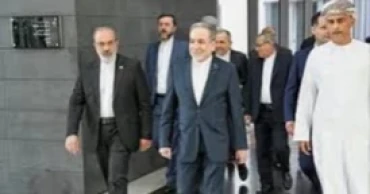
Iran and US hold indirect talks in Oman as top American military commander joins discussions
Iran and the United States conducted indirect negotiations in Oman on Friday, with talks seemingly returning to the initial stage of determining how discussions on Tehran’s nuclear program should proceed. Notably, the United States included its senior military commander for the Middle East in the talks for the first time.
U.S. Navy Admiral Brad Cooper, head of Central Command, attended the meetings in full uniform in Muscat, underscoring the heightened military posture as the aircraft carrier USS Abraham Lincoln and other U.S. warships remain positioned near Iran in the Arabian Sea.
President Donald Trump described the talks as “very good” and said additional meetings are planned for early next week. However, he also issued a warning, saying Iran would face severe consequences if it failed to reach an agreement on its nuclear program.
Speaking to reporters aboard Air Force One late Friday, Trump said Iran appeared eager to strike a deal and hinted that Tehran may be willing to offer more than in past negotiations, though he did not provide specifics. Asked how long he would wait for progress, Trump said the U.S. was not in a hurry, referencing the lengthy pressure campaign used against Venezuela prior to the capture of then-President Nicolás Maduro earlier this year.
Trump has repeatedly threatened military action to force Iran into an agreement, particularly after the U.S. deployed the aircraft carrier to the region amid Iran’s violent suppression of nationwide protests that left thousands dead and tens of thousands detained. Gulf Arab states have warned that any strike could ignite a broader regional conflict.
Tensions remain high. In recent days, U.S. forces shot down an Iranian drone near the Abraham Lincoln, and Iran attempted to intercept a U.S.-flagged vessel in the Strait of Hormuz shortly before the Oman talks.
Iranian Foreign Minister Abbas Araghchi said negotiations must take place without intimidation, stressing that dialogue requires a calm environment free from threats or pressure. He confirmed that the current round of talks had concluded and that diplomats would return to their respective capitals. The U.S. delegation included Middle East envoy Steve Witkoff and Jared Kushner, President Trump’s son-in-law.
In a show of military strength, the U.S. military shared images on X of the carrier strike group operating in the Arabian Sea, accompanied by the message “Peace through Strength!”
Despite the tensions, Araghchi struck a cautiously hopeful tone in a live interview on Iranian state television, saying the discussions focused on establishing a framework for future negotiations. He acknowledged that deep mistrust remains a major obstacle and said addressing it is essential before moving forward.
Oman’s Foreign Minister Badr al-Busaidi, who facilitated the talks, said they helped clarify both sides’ positions and identify potential areas for progress. Earlier plans to hold talks in Turkey — with broader regional participation and discussion of Iran’s missile program — were reportedly rejected by Tehran, which insists negotiations focus solely on nuclear issues.
Before Israel’s 12-day conflict with Iran in June, Tehran had enriched uranium to 60% purity, a level close to weapons-grade. The International Atomic Energy Agency has warned that Iran is the only country enriching uranium at that level without possessing nuclear weapons. Iran has since denied the IAEA access to sites struck during the June war and has restricted inspections since the U.S. withdrew from the 2015 nuclear deal in 2018.
Friday’s meetings took place at a palace near Muscat’s international airport, a venue previously used for Iran–U.S. negotiations. Journalists observed Iranian officials arriving first, followed later by the American delegation.
While Iran has said the talks are limited to its nuclear program, Al Jazeera reported that Egypt, Turkey, and Qatar presented a proposal under which Iran would suspend uranium enrichment for three years, export its highly enriched uranium, and commit not to initiate the use of ballistic missiles. Russia reportedly offered to receive the uranium, but Iran has rejected both halting enrichment and shipping the material abroad. U.S. Secretary of State Marco Rubio has said all these issues must be addressed.
Shortly after the talks concluded, the U.S. Treasury and State Departments announced new sanctions targeting Iran’s energy sector. The measures include asset freezes on 14 oil tankers linked to a so-called “shadow fleet,” as well as sanctions on 15 trading firms and two executives accused of helping Iran evade restrictions.
Trump also signed an executive order allowing for possible tariffs of up to 25% on imports from countries purchasing Iranian oil. While the order does not immediately impose tariffs, it gives the president authority to do so beginning Saturday, with provisions allowing their removal if Iran or its oil buyers align with U.S. national security and foreign policy interests.
In recent weeks, the U.S. has also sanctioned several Iranian officials, including the interior minister and senior security figures, over their roles in the deadly crackdown on last month’s protests.
27 days ago
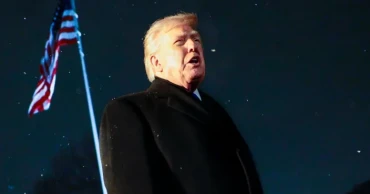
Trump signs order threatening tariffs on countries trading with Iran
Trump has signed an executive order warning that the United States could impose new tariffs on countries that continue trading with Iran.
The order, signed on Friday, allows for additional import taxes on goods entering the US from any country that “directly or indirectly” buys goods or services from Iran. While it does not set a specific tariff rate, it cites 25% as a possible example, reports BBC.
Although Trump has not publicly addressed the order in detail, he reiterated that Iran must not obtain nuclear weapons while speaking to reporters aboard Air Force One on Friday night.
The move comes as senior US and Iranian officials hold talks in Oman, following weeks of escalating rhetoric between the two sides. Earlier this year, Trump had already warned that countries doing business with Iran could face a 25% tariff, writing on Truth Social in January that such penalties would apply immediately. At the time, he did not explain how the policy would be enforced.
The White House said the new order reinforces the existing national emergency related to Iran and noted that the president could revise it if circumstances change. It said the administration is responding to Iran’s nuclear ambitions, support for terrorism, missile development, and actions that destabilize the region.
Iran has not issued an immediate response.
The discussions in Oman, which began on Friday, mark the first direct talks between US and Iranian officials since last June, when the US bombed three of Iran’s main nuclear sites. Iran was represented by Foreign Minister Abbas Araghchi, while the US delegation included special envoy Steve Witkoff and Trump’s son-in-law, Jared Kushner.
Trump described the talks as “very good,” saying Iran appeared eager to reach an agreement. He warned that failure to do so would bring severe consequences and said another meeting is planned for early next week.
Oman’s foreign minister, Badr Albusaidi, who mediated the talks, said they helped clarify each side’s positions and identify potential areas for progress. Araghchi also called the talks a “good start,” saying they were conducted in a positive atmosphere and that both sides had returned home for further consultations.
Growing tensions between Washington and Tehran have raised concerns about a possible conflict. Trump recently said Iran’s Supreme Leader, Ayatollah Ali Khamenei, should be “very worried” and has warned that the US could take military action if Iran refuses to negotiate over its nuclear programme.
Iran maintains that its nuclear activities are peaceful and denies seeking nuclear weapons.
Meanwhile, the US has increased its military presence in the region. Trump described this buildup as a “massive armada,” citing Iran’s violent crackdown on nationwide protests last month. Human rights groups report that thousands may have been killed, though the true scale is uncertain due to government-imposed internet restrictions since early January.
27 days ago
Millions of new Epstein files name global figures
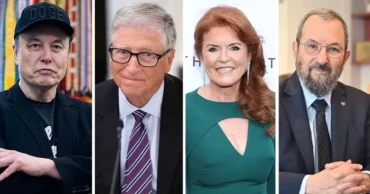
The US government has released millions of pages of documents linked to late financier and convicted sex offender Jeffrey Epstein, revealing connections to numerous high-profile figures worldwide, including Elon Musk, Bill Gates, Richard Branson, and former US President Donald Trump.
The latest release, on January 30, contains around three million pages, 180,000 images, and 2,000 videos. Officials emphasized that inclusion in the documents does not indicate any wrongdoing. Many previously named individuals have denied any involvement in Epstein’s crimes.
The release follows the Epstein Files Transparency Act, signed into law by President Trump in November, mandating the public disclosure of all documents related to Epstein. Lawmakers have criticized the administration for delaying full disclosure.
Among the notable figures, Elon Musk was shown corresponding with Epstein about travel plans, while Gates faced emails allegedly drafted by Epstein, which he and his representatives have dismissed as false. Trump appears in hundreds of entries, largely based on unverified tips, and has consistently denied any misconduct.
British royal Andrew Mountbatten-Windsor, Sarah Ferguson, and Lord Mandelson also appear in the files, though context is often unclear, and they have denied wrongdoing. Other figures mentioned include Steve Bannon, Ehud Barak, Sergey Brin, Peter Attia, Brett Ratner, and Noam Chomsky, who engaged in communications with Epstein in various capacities.
Responses from those named stress that the records do not prove criminal conduct, with several emphasizing they had no knowledge of Epstein’s illegal activities or severed ties long before his death.
The massive release has renewed scrutiny on Epstein’s network, prompting resignations, investigations, and public debate over accountability among the world’s elite.
With inputs from BBC
1 month ago
Trump endorses Japan’s PM Takaichi ahead of snap election
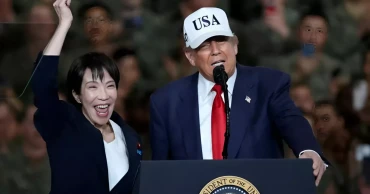
US President Donald Trump has publicly endorsed Japan’s Prime Minister Sanae Takaichi ahead of Sunday’s snap election, describing her as a “strong, powerful, and wise leader” who “truly loves her country” and “will not let the people of Japan down,” according to a post on his social media platform, Truth Social.
Trump’s public support for a foreign leader is unusual, but he has previously endorsed international politicians, including Argentina’s Javier Milei and Hungary’s Viktor Orban. Analysts say the endorsement signals continued US backing for Takaichi amid ongoing regional tensions and efforts to strengthen bilateral ties.
Takaichi, 64, became Japan’s first female prime minister in October after winning her party’s leadership and securing parliamentary support. She called the election to seek a public mandate. Her government has courted Washington following prior US trade tensions, including Trump’s threatened 25% tariffs, which were later reduced to 15% after Japan agreed to invest $550 billion in the US.
Trump and Takaichi share close views on defence and security, advocating increased Japanese military spending. During his visit to Tokyo, Takaichi hosted Trump at the Akasaka Palace and aboard the USS George Washington, where the leaders signed agreements on rare earths and heralded a “new golden era” of US-Japan relations. Takaichi described Trump as a “partner in a new golden era” and praised his role in Middle East peace efforts.
The endorsement also carries geopolitical weight amid heightened tensions with China over Taiwan. Beijing has criticized Takaichi for suggesting Japan could respond militarily if China attacked the self-governed island, a statement she has refused to retract.
Winning Sunday’s election will give Takaichi a public mandate, but her leadership will be judged on managing Japan’s stagnant economy and balancing relations with its key allies, the US and China.
With inputs from BBC
1 month ago

Canada and France open consulates in Greenland after US threats
Canada and France are set to open diplomatic consulates in Greenland on Friday, marking a historic expansion of foreign engagement in the Arctic territory, officials said.
A Canadian delegation led by Governor General Mary Simon and Foreign Minister Anita Anand will formally inaugurate Canada’s first diplomatic outpost in Nuuk, accompanied by a Canadian Coast Guard vessel. French officials are scheduled to open their consulate on the same day.
Governor General Simon, Canada’s Crown representative, said in a pre-trip statement that Canada “stands firmly in support of the people of Greenland who will determine their own future.” The visit also underscores the cultural and ethnic connections between Canadian Inuit and Greenlandic Inuit, Simon’s own Inuk heritage highlighting these longstanding ties.
Until this week, only Iceland and the United States maintained formal diplomatic missions in Greenland. The opening of Canadian and French consulates is viewed as a strategic move amid former US President Donald Trump’s prior remarks suggesting the US should “own” Greenland for national security purposes. Trump later softened his stance, citing ongoing discussions with Denmark, European allies, and Canada.
The Canadian consulate had been planned since early 2024 under Ottawa’s review of its Arctic policy but was delayed due to weather. The opening now comes amid increasing focus on Arctic security and infrastructure, with Canadian officials noting the proximity of Nuuk to Iqaluit in Nunavut, and the broader significance for regional cooperation.
Inuit leaders, including Natan Obed of Inuit Tapiriit Kanatami, said the consulate represents years of advocacy to strengthen ties with Greenland and emphasized concern over US threats, given historical colonization and recent geopolitical tensions. Approximately 50 Canadian Inuit are expected to attend the inauguration ceremony.
Foreign Minister Anand described Arctic defence as “an unquestionable national security priority,” highlighting Canada’s ongoing investments in northern infrastructure and a year-round military presence. During the visit, Anand will meet with Greenland’s Foreign Minister Vivian Motzfeldt, while Simon will meet Prime Minister Jens-Frederik Nielsen.
The consulate openings signal continued NATO ally support for Greenland amid past US claims and reinforce Canada’s strategic presence in the Arctic.
With inputs from BBC
1 month ago
US and Iran hold talks in Oman amid rising conflict fears
Senior officials from the United States and Iran met in Oman on Friday for talks aimed at easing tensions that have raised fears of a direct military confrontation between the two countries.
The discussions follow a US military build-up in the Middle East, prompted by Iran’s violent crackdown on nationwide anti-government protests last month, which human rights groups say left thousands dead. The exact scope of the talks, believed to be indirect, remained unclear, with both sides far apart in their positions amid mutual distrust.
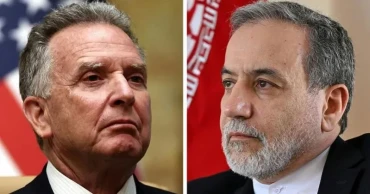
US negotiators were led by special envoy Steve Witkoff, while Iran’s delegation was headed by Foreign Minister Abbas Araghchi. Oman’s foreign minister held separate meetings with Witkoff, Araghchi, and US envoy Jared Kushner, focusing on creating conditions to resume diplomatic and technical negotiations.
The US has demanded that Iran freeze its nuclear programme, surrender its stockpile of enriched uranium, address its ballistic missile programme, halt support for regional armed groups, and improve its treatment of citizens. Iran, however, has insisted that discussions will be limited to its nuclear programme, and it remains unclear if the two sides have resolved these differences.
The last round of talks on Iran’s nuclear programme, scheduled for June 2025, collapsed after a surprise Israeli attack. In recent weeks, US President Donald Trump has threatened military action if a deal is not reached, sending thousands of troops and an “armada” of warships, fighter jets, and an aircraft carrier to the region. Iran has warned it would respond to any attack by targeting US military assets in the Middle East and Israel.
For Iran’s leadership, analysts say the talks may be a last chance to avert US military action that could further destabilize the regime, which is under significant pressure following the brutal suppression of nationwide protests triggered by an economic crisis. The Human Rights Activists News Agency in Washington reported at least 6,883 deaths and more than 50,000 arrests during the demonstrations.
The current crisis has revived concerns over Iran’s nuclear programme, a long-standing point of contention with the West. Iran maintains its programme is for peaceful purposes, while the US and Israel accuse it of pursuing nuclear weapons. Iran also insists on its right to enrich uranium domestically and has rejected demands to transfer its 400kg stockpile of highly enriched uranium abroad.
Officials indicated that Iran could consider concessions, such as establishing a regional uranium enrichment consortium, similar to proposals in previous negotiations that collapsed after the Israeli attack. Tehran, however, has rejected US demands to limit its ballistic missile programme or stop supporting regional allies it calls the “Axis of Resistance,” including Hamas in Gaza, militias in Iraq, Hezbollah in Lebanon, and the Houthis in Yemen, calling such demands a breach of its sovereignty.
Iranian President Masoud Pezeshkian said on Tuesday he instructed Araghchi to pursue “fair and equitable negotiations” with the US, provided a suitable environment exists. Iran is also expected to push for the lifting of sanctions that have severely impacted its economy.
For the US, the Oman talks could provide a potential diplomatic alternative to military action. Regional countries have warned that a US strike could trigger a wider conflict and long-term instability in Iran, noting that air power alone would not topple the Iranian leadership.
Trump, when asked if Iran’s Supreme Leader Ayatollah Ali Khamenei should be worried, told NBC News, “I would say he should be very worried. Yeah, he should be.” US Secretary of State Marco Rubio emphasized that discussions must go beyond the nuclear issue to achieve meaningful results.
The meeting, initially planned in Istanbul, was moved to Oman at Iran’s request. Oman also hosted similar discussions last year. The talks are being led by Egypt, Turkey, and Qatar as part of efforts to de-escalate tensions in the region.
With inputs from BBC
1 month ago
US-Russia nuclear arms pact expires, ending limits
The Kremlin on Thursday expressed regret over the expiration of the New START treaty, the last remaining nuclear arms control agreement between Russia and the United States, a development that removes all caps on the world’s two largest nuclear arsenals for the first time in more than 50 years.
Russian officials warned that the end of the pact could undermine strategic stability, while arms control experts cautioned that its collapse may open the door to an unchecked nuclear arms race.
Russian President Vladimir Putin had said last year that Moscow was prepared to continue observing the treaty’s limits for another year if Washington agreed, but US President Donald Trump did not commit to an extension. Trump has instead argued that any future arms control framework must include China, a proposal Beijing has repeatedly rejected.
US Secretary of State Marco Rubio said Wednesday that Trump believes effective arms control in the modern era is impossible without China’s participation, citing Beijing’s rapidly expanding nuclear arsenal.
The treaty’s expiration was discussed on Wednesday during talks between Putin and Chinese President Xi Jinping. According to Kremlin adviser Yuri Ushakov, Putin noted Washington’s lack of response to Russia’s proposal to temporarily extend the limits and said Moscow would act responsibly after carefully assessing the security environment.
Kremlin spokesman Dmitry Peskov said Russia views the expiration negatively and regrets the outcome, while stressing that Moscow would continue to take a cautious and responsible approach to nuclear stability, guided primarily by its national interests.
Russia’s Foreign Ministry said that with the treaty no longer in force, Moscow remains ready to take decisive military and technical steps to counter potential threats to national security. At the same time, it said Russia is open to political and diplomatic efforts aimed at stabilising the strategic situation, provided conditions for equal and mutually beneficial dialogue are created.
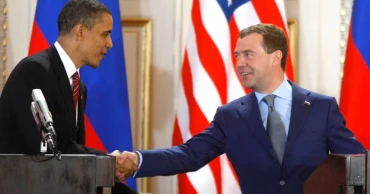
Signed in 2010 by then US President Barack Obama and Russian President Dmitry Medvedev, the New START treaty limited each side to 1,550 deployed nuclear warheads and 700 deployed missiles and bombers. It was initially due to expire in 2021 but was extended for five years.
The agreement included provisions for extensive on-site inspections to verify compliance, but these were suspended in 2020 due to the Covid-19 pandemic and were never resumed.
In February 2023, Putin suspended Russia’s participation in New START, arguing that US inspections were unacceptable while Washington and its NATO allies openly pursued Russia’s defeat in Ukraine. At the time, Moscow said it would still adhere to the treaty’s limits.
Putin later warned that the treaty’s expiration would be destabilising and could encourage nuclear proliferation, proposing a temporary continuation of its core limits to allow time for negotiations on a successor agreement.
New START was the final agreement in a series of US-Soviet and later US-Russian arms control deals dating back to the SALT I treaty of 1972.
Trump has said he supports maintaining limits on nuclear weapons but insists that China should be included in any new arrangement. During his first term, he unsuccessfully pushed for a trilateral nuclear pact involving Beijing.
China has rejected such proposals, arguing that its nuclear arsenal is far smaller than those of the US and Russia. Chinese Foreign Ministry spokesperson Lin Jian said Thursday that China regrets the expiration of New START and urged Washington to resume nuclear dialogue with Moscow and respond positively to Russia’s proposal to continue observing the treaty’s limits for now.
Peskov said Russia respects China’s position, while reiterating Moscow’s view that any broader nuclear agreement should also involve the nuclear forces of NATO members France and the United Kingdom.
Arms control advocates warned that the treaty’s collapse could trigger a dangerous new arms buildup. Daryl Kimball, executive director of the Washington-based Arms Control Association, said that abandoning arms control diplomacy could prompt Russia and China to accelerate their own nuclear expansions, potentially leading to a prolonged and risky three-way nuclear arms race.
1 month ago