Others

US defense secretary arrives in Israel and is expected to press for a more targeted approach in Gaza
U.S. Defense Secretary Lloyd Austin was expected to press Israel to wind down major combat operations in Gaza on a visit Monday, in the latest test of whether the U.S. can leverage its unwavering support for the offensive to blunt its devastating impact on Palestinian civilians.
France, the U.K. and Germany — some of Israel's closest allies — joined global calls for a cease-fire over the weekend, and Israeli protesters have demanded the government relaunch talks with Hamas on releasing more hostages after three were mistakenly killed by Israeli troops while waving a white flag.
Prime Minister Benjamin Netanyahu has insisted that Israel will keep fighting until it removes Hamas from power, crushes its still-formidable military capabilities and returns the dozens of hostages still held by the group after its Oct. 7 attack, which ignited the war.
Read: Israel finds large tunnel adjacent to Gaza border, raising new questions about prewar intelligence
The U.S. has vetoed calls for a cease-fire at the U.N. and rushed munitions to its close ally while pressing it to take greater steps to avoid harming civilians. More than 100 people were killed in strikes on residential buildings in northern Gaza on Sunday, a Health Ministry official in the Hamas-run territory said. The 10-week-old war has killed over 18,700 Palestinians and transformed much of the north into a moonscape.
Some 1.9 million Palestinians — nearly 85% of Gaza's population — have fled their homes, with most packing into U.N.-run shelters and tent camps in the southern part of the besieged territory.
Austin and Joint Chiefs Chairman Gen. CQ Brown, who arrived in Tel Aviv on Monday, are expected to press Israeli leaders to transition to a new phase of the war after weeks of heavy bombardment and a ground offensive. American officials have called for targeted operations aimed at killing Hamas leaders, destroying tunnels and rescuing hostages.
Read: In Hamas captivity, an Israeli mother found the strength to survive in her 2 young daughters
Under U.S. pressure, Israel provided more precise evacuation instructions as troops moved into the southern city of Khan Younis earlier this month, though Palestinians say nowhere in Gaza is safe as Israel continues to carry out strikes in all parts of the territory.
Israel reopened its main cargo crossing with Gaza to allow more aid in — also after a request from the U.S. But the amount is still less than half of prewar imports, even as needs have soared and fighting hinders delivery in many areas.
UNPRECEDENTED DEATH AND DESTRUCTIONThe war began with an unprecedented surprise attack by Hamas that overwhelmed Israel's border defenses. Thousands of militants rampaged across southern Israel, killing some 1,200 people, mostly civilians, and abducting around 240 men, women and children.
Hamas and other militants are still holding an estimated 129 captives after most of the rest were freed in return for Israel's release of 240 Palestinian prisoners during a truce last month. Hamas has said no more hostages will be released until the war ends.
More than 18,700 Palestinians have been killed, according to the Health Ministry in the Hamas-run territory, which has said most are women and minors, and that thousands more are buried under the rubble. The ministry does not differentiate between civilian and combatant deaths.
Israel’s military says 126 of its soldiers have been killed in the Gaza offensive. It says it has killed thousands of militants, without providing evidence.
Israel blames civilian deaths on Hamas, saying it uses them as human shields when it operates in dense, residential areas. But the military rarely comments on individual strikes.
At least 110 people were killed in Israel's bombardment of residential buildings in the urban Jabaliya refugee camp in northern Gaza on Sunday, Munir al-Boursh, a senior Health Ministry official, told Al-Jazeera television.
The area has seen heavy fighting in recent days. “No one can retrieve the martyrs or take the wounded to hospitals," said Amal Radwan, who is staying at a U.N. shelter in Jabaliya.
The military meanwhile released pictures of what it said was around $1.3 million in Israeli currency found in the home of a senior Hamas operative in the camp.
ISRAEL RAIDS ANOTHER HOSPITALHeavy fighting around Gaza's hospitals has forced most of them to shut down. Israel accuses militants of sheltering in health facilities and has provided evidence in some cases. Health officials deny the allegations and say the army has recklessly endangered civilians.
The World Health Organization said it was “appalled” by an Israeli raid on northern Gaza’s Kamal Adwan Hospital over the last several days. WHO chief Tedros Adhanom Ghebreyesus said late Sunday that at least eight patients had died, including a 9-year-old, and that several had fled on foot because ambulances could not reach the facility.
The military said troops operating in and around the hospital had detained dozens of suspected militants, some of whom had taken part in the Oct. 7 attack, and had seized “numerous” weapons. It said the hospital had been used as a command center by Hamas, without providing evidence.
A similar standoff unfolded last month at Shifa Hospital in Gaza City — the territory's largest — where hundreds of patients and tens of thousands of displaced people were stranded for days with little food, water or medical supplies. Israel said Hamas concealed a major command center inside the hospital, and revealed what appeared to be a militant hideout beneath the facility before withdrawing days later.
Read: In Hamas captivity, an Israeli mother found the strength to survive in her 2 young daughters
The WHO, which is working to restore services at Shifa and was able to visit on Friday, described its emergency department as a “bloodbath," with hundreds of wounded patients, some being sutured on the floor with little or no pain medicine. It said tens of thousands of people are sheltering in the medical compound despite severe shortages of food and water.
REGIONAL TENSIONSThe war has repeatedly spilled over into other areas of the region.
Israel and Lebanon's Hezbollah have traded fire along the border nearly every day since the war began, and other Iran-backed militant groups have attacked U.S. targets in Syria and Iraq. Yemen's Iran-aligned Houthi rebels have targeted ships in the Red Sea with missiles and drones.
Over 300 Palestinians have been killed in the Israeli-occupied West Bank since the start of the war, including four overnight during an Israeli military raid in the built-up Faraa refugee camp, according to the Palestinian Health Ministry.
This has been the deadliest year for Palestinians in the West Bank since 2005. Most have been killed during military raids, which often ignite gunbattles, or during violent demonstrations.
U.S. defense leaders are hoping to prevent a wider regional conflict, both through a U.S. military presence and by urging Israel to scale back operations. President Joe Biden has warned that Israel is losing international support because of its “indiscriminate bombing.”
Israeli Defense Minister Yoav Gallant said last week that his country would continue major combat operations against Hamas for several more months.
2 years ago

Mongolia's capital imposes odd-even car ban to reduce traffic jam
Mongolia's capital Ulan Bator has decided to ban half the vehicles from the road starting Monday to Feb. 1 to reduce traffic congestion in the city.
Vehicles will be allowed on alternating days based on odd or even license plate numbers during the above-mentioned period, the municipal government said in a statement.
Read: 10 Bangladeshis trafficked to India return home via Tamabil
The decision came after roads of the capital city have become slippery due to recent heavy snowfall, and as a result, cars have been stuck on the roads for several hours.
For many years, traffic congestion has been one of the most pressing issues in Ulan Bator.
Ulan Bator was originally built to have 500,000 residents. However, the city is now home to around half of the country's population of 3.4 million.
Read: Day 2 of hartal underway with regular traffic on Dhaka streets
Currently, there are 720,000 vehicles registered in Ulan Bator, and the number of vehicles in the capital city increases by an average of 50,000 per year, according to the municipal government.
2 years ago
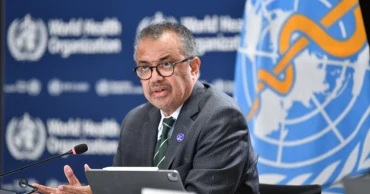
WHO chief reiterates call for ceasefire in Gaza
Tedros Adhanom Ghebreyesus, director-general of the World Health Organization (WHO), reiterated his call on Friday for an immediate ceasefire in the Gaza Strip.
Tedros made the appeal at an annual press conference organized by the Association of Accredited Correspondents at the United Nations in Geneva.
The director-general hailed as "significant" the resolution adopted at the special session of the WHO Executive Board on the health situation in the occupied Palestinian territory, which called for immediate, sustained and unimpeded passage of humanitarian relief in Gaza, including medical personnel.
The resolution also called on Tedros to continue reporting on the public health implications of the crisis, to assess the mental health impacts of the crisis, to increase technical and material assistance, and to strengthen the health agency's work with partners.
However, these tasks are almost impossible in the current circumstances, Tedros said. "The only real remedy is an immediate ceasefire," he said.
This year, there were over 1,200 documented attacks on health workers, patients, hospitals, clinics, and ambulances, across 19 countries, resulting in nearly 700 deaths and over 1,100 injuries, according to the head of WHO.
Tedros denounced attacks on health as a violation of international humanitarian law, saying health must never be a target.
More than 18,700 Palestinians have been killed amid the ongoing Gaza conflict since Oct. 7, with 70 percent of them women and children, the health ministry in Gaza said on Thursday.
2 years ago

Over 60 people have drowned in the capsizing of a migrant vessel off Libya, the UN says
A boat carrying dozens of migrants trying to reach Europe capsized off the coast of Libya, leaving more than 60 people dead, including women and children, the U.N. migration agency said.
Saturday’s shipwreck was the latest tragedy in this part of the Mediterranean Sea, a key but dangerous route for migrants seeking a better life in Europe. Thousands have died, according to officials.
The U.N.’s International Organization for Migration said in a statement the boat was carrying 86 migrants when strong waves swamped it off the town of Zuwara on Libya’s western coast and that 61 migrants drowned, according to survivors.
Read: Netanyahu says Israel is as 'committed as ever' to war after soldiers mistakenly killed 3 hostages
“The central Mediterranean continues to be one of the world’s most dangerous migration routes,” the agency wrote on social media platform X, formerly known as Twitter.
Libya has in recent years emerged as the dominant transit point for migrants fleeing war and poverty in Africa and the Middle East, even though the North African nation has plunged into chaos following a NATO-backed uprising that toppled and killed longtime autocrat Moammar Gadhafi in 2011.
More than 2,250 people died on the central European route this year, according to Flavio Di Giacomo, an IOM spokesperson.
It’s “a dramatic figure which demonstrates that unfortunately not enough is being done to save lives at sea,” Di Giacomo wrote on X.
According to the IOM’s missing migrants project, at least 940 migrants were reported dead and 1,248 missing off Libya between Jan. 1 and Nov. 18.
The project, which tracks migration movements, said about 14,900 migrants, including over 1,000 women and more than 530 children, were intercepted and returned to Libya this year.
Read: Israeli defense minister says war on Hamas will last months as US envoy discusses timetable
In 2022, the project reported 529 dead and 848 missing off Libya. Over 24,600 were intercepted and returned to Libya.
Human traffickers in recent years have benefited from the chaos in Libya, smuggling in migrants across the country’s lengthy borders, which it shares with six nations. The migrants are crowded onto ill-equipped vessels, including rubber boats, and set off on risky sea voyages.
Those who are intercepted and returned to Libya are held in government-run detention centers rife with abuses, including forced labor, beatings, rapes and torture — practices that amount to crimes against humanity, according to U.N.-commissioned investigators.
The abuse often accompanies attempts to extort money from the families of those held, before the imprisoned migrants are allowed to leave Libya on traffickers’ boats to Europe.
2 years ago

Russia and Ukraine exchange drone attacks after EU funding stalled
Russia and Ukraine each reported dozens of attempted drone attacks in the past day, just hours after Hungary vetoed 50 billion euros ($54.5 billion) of EU funding to Ukraine.
Ukraine’s air force said Saturday that Ukrainian air defense had shot down 30 out of 31 drones launched overnight against 11 regions of the country.
Russia also said Friday evening that it had thwarted a series of Ukrainian drone attacks.
Russian anti-aircraft units destroyed 32 Ukrainian drones over the Crimean peninsula, the Russian Defense Ministry said on Telegram. Russia annexed the peninsula from Ukraine in 2014, a move that most of the world considered illegal, and has used it as a staging and supply point during the war.
Earlier, Russia’s Defense Ministry said that six drones had been shot down in the Kursk region, which borders Ukraine.
In Ukraine’s partially occupied southern Kherson region, Russian-installed governor Vladimir Saldo reported on Telegram that Russian anti-aircraft units had downed at least 15 aerial targets near the town of Henichesk.
Meanwhile, shelling wounded two people in Ukrainian-held parts of the Kherson region, regional Gov. Oleksandr Prokudin said Saturday.
Stepped-up drone attacks over the past month come as both sides are keen to show they are not deadlocked as the war approaches two years' duration. Neither side has gained much ground despite a Ukrainian counteroffensive that began in June, and analysts predict the war will be a long one.
On Friday, EU leaders sought to paper over their inability to boost Ukraine’s coffers with a promised 50 billion euros ($54.5 billion) over the next four years, saying the check will likely arrive next month after some more haggling between the other 26 leaders and the longtime holdout, Prime Minister Viktor Orban of Hungary.
Instead, they wanted Ukraine to revel in getting the nod to start membership talks that could mark a sea change in its fortunes — although the process could last well over a decade and be strewn with obstacles placed by any single member state.
2 years ago

Kuwait's ruling emir, Sheikh Nawaf Al Ahmad Al Sabah, dies
Kuwait's ruling emir, the 86-year-old Sheikh Nawaf Al Ahmad Al Sabah, died Saturday.
Kuwait state television broke into programming with Quranic verses just before a somber official made the announcement.
“With great sadness and sorrow, we — the Kuwaiti people, the Arab and Islamic nations, and the friendly peoples of the world — mourn the late His Highness the emir, Sheikh Nawaf Al Ahmad Al Jaber Al Sabah, who passed away to his Lord today,” Sheikh Mohammed Abdullah Al Sabah, the minister of his emiri court, read the brief statement.
Authorities gave no cause of death.
Kuwait's deputy ruler and his half-brother, Sheikh Meshal Al Ahmad Al Jaber, now 83, is believed to be the world’s oldest crown prince. He is in line to take over as Kuwait’s ruler.
In late November, Sheikh Nawaf was rushed to hospital for an unspecified illness. In the time since, the tiny, oil-rich nation had been waiting for news about his health. State-run news previously reported that he traveled to the United States for unspecified medical checks in March 2021.
The health of Kuwait’s leaders remains a sensitive matter in the Middle Eastern nation bordering Iraq and Saudi Arabia, which has seen internal power struggles behind palace doors.
Sheikh Nawaf was sworn in as emir following the 2020 death of his predecessor, the late Sheikh Sabah Al Ahmad Al Sabah. The breadth and depth of emotion over the loss of Sheikh Sabah, known for his diplomacy and peacemaking, was felt across the region.
Sheikh Nawaf previously served as Kuwait’s interior and defense minister but wasn’t seen as particularly active in government outside those terms. However, he was largely an uncontroversial choice for emir, though his advancing age led analysts to suggest his tenure would be short.
Sheikh Nawaf’s term had been focused on domestic issues as it struggles through political disputes — including the overhaul of Kuwait’s welfare system — which prevented the sheikhdom from taking on debt. That’s left it with little in its coffers to pay bloated public sector salaries, despite generating immense wealth from its oil reserves.
In 2021, Sheikh Nawaf issued a long-awaited amnesty decree, pardoning and reducing the sentences of nearly three dozen Kuwaiti dissidents in a move aimed at defusing a major government standoff. He issued another just before his illness, aiming to resolve that political impasse that also saw Kuwait hold three separate parliamentary elections under his rule.
Kuwait is perceived as having the Gulf’s freest parliament that comparatively allows for dissent.
Meanwhile, the Gulf Cooperation Council states, including Qatar, Saudi Arabia and the United Arab Emirates, restored ties after years of a boycott of Doha, easing regional tensions and allowing Sheikh Nawaf to focus on issues at home.
Kuwait, a nation home to some 4.2 million people which is slightly smaller than the U.S. state of New Jersey, has the world’s sixth-largest known oil reserves.
It has been a staunch U.S. ally since the 1991 Gulf War expelled the occupying Iraqi forces of Saddam Hussein. Kuwait hosts some 13,500 American troops in the country, as well as the forward headquarters of the U.S. Army in the Middle East.
2 years ago

Israel vows to fight on in Gaza despite deadly ambush and rising international pressure
Israel has vowed to keep fighting in Gaza until it crushes Hamas after one of the deadliest single battles of the war for its soldiers, even as it faces mounting international calls for a cease-fire and unease on the part of its closest ally, the United States.
The ambush in Gaza City showed Hamas is still able to fight in some of the hardest-hit areas more than two and a half months into a massive air and ground war aimed at destroying its military capabilities. Israel has imposed a total siege on northern Gaza and flattened much of it, forcing most of the population to flee south several weeks ago.
Hamas' resilience has called into question whether Israel can defeat it without wiping out Gaza. Support for Hamas has surged among Palestinians — in part because of the militant group’s stiff resistance to a far more powerful foe — while Israel’s most important ally, the U.S., has expressed growing discomfort over civilian deaths in what is already one of the 21st century’s most devastating military campaigns.
“We are continuing until the end, there is no question," Prime Minister Benjamin Netanyahu said late Wednesday. “I say this even given the great pain and the international pressure. Nothing will stop us.”
Read: BNP pays homage to martyred intellectuals
U.S. National Security Adviser Jake Sullivan was set to visit Israel on Thursday. The U.S. has pressed Israel to take greater measures to spare civilians, and President Joe Biden said earlier this week that Israel was losing international support because of its “indiscriminate bombing.”
The ambush took place Tuesday in the dense Gaza City neighborhood of Shijaiyah, which was also the scene of a major battle during the 2014 war between Israel and Hamas. The dead included two high-ranking officers. A total of 116 soldiers have been killed in the ground offensive, which began Oct. 27.
Heavy fighting has raged for days in Shijaiyah and other areas in and around eastern Gaza City that were encircled earlier in the war. Tens of thousands of people remain in the north despite repeated evacuation orders, saying they don't feel safe anywhere in Gaza or fear they may never return to their homes if they leave them.
A HEAVY CIVILIAN TOLL
Israel's air and ground assault, launched in response to Hamas' unprecedented attack into southern Israel on Oct. 7, has killed more than 18,600 Palestinians, according to the Health Ministry in Hamas-run Gaza.
The ministry does not differentiate between civilian and combatant deaths. Its latest count did not specify how many were women and minors, but they have consistently made up around two-thirds of the dead in previous tallies. Thousands more are missing and feared dead beneath the rubble.
Read: Want to uphold Sylhet's political legacy: Momen
Nearly 1.9 million Palestinians have been driven from their homes, with most seeking refuge in the south, even as Israel has continued to strike what it says are militant targets in all parts of the territory, often killing women and children.
Residents reported Israeli airstrikes overnight in Rafah, the southernmost town along the Egyptian border. An Associated Press reporter saw 27 bodies brought into a local hospital early Thursday.
One woman burst into tears after recognizing the body of her child.
“They were young people, children, displaced, all sitting at home,” Mervat Ashour said as she and others mourned their relatives. “There were no resistance fighters, rockets, or anything.”
A neighbor who helped pull bodies from the rubble of one strike said there were no survivors. “We saw people in pieces,” Hassan Abdulaal said.
New evacuation orders issued as troops pushed into the southern city of Khan Younis earlier this month have pushed U.N.-run shelters to the breaking point and forced people to set up tent camps in even less hospitable areas. Heavy rain and cold in recent days has compounded their misery, swamping tents and forcing families to crowd around fires to keep warm.
Read: BNP terms rail tracks cutting in Gazipur an act of sabotage, demands judicial probe
Israel has sealed Gaza off to all but a trickle of humanitarian aid, and U.N. agencies have struggled to distribute it since the offensive expanded to the south because of fighting and road closures. Almost no aid has reached the north since the start of the war.
RISING SUPPORT FOR HAMAS
Israel might have hoped that the war and its hardships would turn Palestinians against Hamas, hastening its demise, but as with previous rounds of violence, it seems to be having the opposite effect.
A poll conducted by the Palestinian Center for Policy and Survey Research found 44% of respondents in the occupied West Bank said they supported Hamas, up from just 12% in September. In Gaza, the militants enjoyed 42% support, up from 38% three months ago.
That's still a minority in both territories. But even many Palestinians who do not share Hamas' commitment to destroying Israel and oppose its attacks on civilians see it as resisting Israel's decades-old occupation of lands they want for a future state.
The poll meanwhile showed overwhelming rejection of Western-backed Palestinian President Mahmoud Abbas, with nearly 90% saying he must resign. The 88-year-old leader's administration, which governs parts of the Israeli-occupied West Bank, is widely seen by Palestinians as a corrupt and autocratic accomplice to the occupation because it works with Israel to suppress Hamas and other militant groups.
The U.S. wants Abbas’ internationally recognized Palestinian Authority to also govern Gaza, which it lost to Hamas in a week of street fighting in 2007. The U.S. also wants to revive the long-defunct peace process to negotiate the creation of a Palestinian state.
Netanyahu’s government is firmly opposed to Palestinian statehood and has said it will maintain open-ended security control over Gaza.
Hamas’ exiled leader, Ismail Haniyeh, who is based in Qatar, said late Wednesday that any plans for Gaza that do not involve Hamas are an “illusion and mirage,” though he said the group is open to another truce.
Israelis remain strongly supportive of the war and see it as necessary to prevent a repeat of Oct. 7, when Hamas burst through the country’s vaunted defenses. Palestinian militants attacked communities across southern Israel that day, killing around 1,200 people, mostly civilians, and taking some 240 hostage.
Around half the hostages, mostly women and children, were released last month during a weeklong cease-fire in exchange for the release of 240 Palestinian prisoners held by Israel.
2 years ago

Japan, UK and Italy formally establish a joint body to develop a new advanced fighter jet
The defense ministers of Japan, Britain and Italy signed an agreement on Thursday to establish a joint organization to develop a new advanced jet fighter, as the countries push to strengthen their cooperation in the face of growing threats from China, Russia and North Korea.
The three countries had agreed last year to merge earlier individual plans — for Japan’s Mitsubishi F-X to succeed the retiring F-2s developed with the United States and Britain’s Tempest – to produce the new combat aircraft for deployment in 2035.
Japan, which is rapidly building up its military, hopes to have a greater capability to counter China’s rising assertiveness while welcoming Britain's bigger presence in the Indo-Pacific region.
Defense Minister Minoru Kihara said at a joint news conference with his British and Italian counterparts, Grant Shapps and Guido Crosett, that co-developing a high-performance fighter aircraft is “indispensable to securing air superiority and enabling effective deterrence” at a time that Japan faces an increasingly severe security environment.
Read: North Korean and Russian officials discuss economic ties as Seoul raises labor export concerns
Kihara said no individual nation can defend itself today, adding that securing the technology and funding to develop an advanced fighter jet involves large risks. He said the joint trilateral Global Combat Air Program is a “historic program” enabling the countries to work together to create a new fighter jet while reducing risks.
Shapps said the joint project will develop cutting-edge technology as well as “a new era of prosperity" involving thousands of people working on the project. “It will strengthen our collective security,” he said. “The risks and problems from Europe to Indo-Pacific are clear for all to see.”
Under the plan, a joint body called the GCAP International Government Organization will manage the private sector joint venture — which includes Japan’s Mitsubishi Heavy, Britain’s BAE Systems PLC and Italy’s Leonardo — to oversee the aircraft's development. The organization, which will be staffed by several hundred people from the three countries, is tasked with distributing work in different areas, such as the engine and avionics.
Read: Hunter Biden defies congressional subpoena, says will only testify in public
The organization will be headquartered in Britain and headed by a Japanese official, and the joint venture will be led by an Italian representative, Kihara said. The top posts will rotate every few years, Japanese defense officials said.
The project, however, hinges on Japan easing its postwar ban on exporting jointly developed lethal weapons to third countries. It said before Thursday's signing it was working to do so, but the process has been delayed.
Shapps said he expected Japan would approve the changes as soon as possible.
“We are working within the three of us. It needs updating. Otherwise, who will be able to take the project forward at all?" he said. “We couldn't live with this program without updating those principles of yours. So, clearly that time is coming now.”
Japan is moving ahead despite delayed approval at home in easing its current policy that bans the export of lethal weapons to a third country. The restriction under Japan’s postwar pacifist Constitution does not allow the country to sell a jointly developed fighter jet and possibly complicates the project, since Britain and Italy hope to be able to sell the new aircraft.
A Japanese government panel has been discussing the easing of military sales and has agreed to relax restrictions on the transfer of licensed technology and equipment. But it recently postponed a decision on easing the policy for the joint fighter jet until early next year.
Read: Biden takes a tougher stance on Israel's 'indiscriminate bombing' of Gaza
Japanese defense officials refused to discuss how the situation would affect the joint project.
The project is the first time that Japan will participate in a multinational organization to jointly develop new military equipment.
To counter growing threats from China, North Korea and Russia, Japan has been expanding its defense partnerships with countries in Europe, Southeast Asia and the Indo-Pacific, including Australia and the Philippines.
2 years ago

COP28: Countries agree to 'transition away' from planet-warming fossil fuels
United Nations climate negotiators directed the world on Wednesday to transition away from planet-warming fossil fuels in a move the talks chief called historic, despite critics' worries about loopholes.
Within minutes of opening Wednesday's session, COP28 President Sultan al-Jaber gaveled approval of the central document — the global stocktake that says how off-track the world is on climate and how it will get back on track — without asking for comments. Delegates stood and hugged each other.
Also read: As COP28 nears finish, critics say proposal 'doesn't even come close' to what's needed on climate
"It is a plan that is led by the science,'' al-Jaber said. "It is an enhanced, balanced, but make no mistake, a historic package to accelerate climate action. It is the UAE consensus."
"We have language on fossil fuel in our final agreement for the first time ever," said al-Jaber, who's also CEO of the UAE's oil company.
United Nations Climate Secretary Simon Stiell told delegates their efforts were "needed to signal a hard stop to humanity's core climate problem: fossil fuels and that planet-burning pollution. Whilst we didn't turn the page on the fossil fuel era in Dubai, this outcome is the beginning of the end."
Also read: COP28: UN climate talks set to disappoint again
Stiell cautioned people that what they adopted was a "climate action lifeline, not a finish line."
The new deal had been floated early Wednesday and was stronger than a draft proposed days earlier, but had loopholes that upset critics. Analysts and delegates wondered if there was going to be a floor fight over details, but al-Jaber acted quickly, not giving critics a chance to even clear their throats.
Several minutes later, Samoa's lead delegate Anne Rasmussen, on behalf of small island nations, complained that they weren't even in the room when al-Jaber said the deal was done. She said that "the course correction that is needed has not been secured," with the deal representing business-as-usual instead of exponential emissions-cutting efforts. She said the deal could "potentially take us backward rather than forward."
Also read: COP28: PM’s climate change envoy Saber Chowdhury calls for universal and inclusive financing mechanism
When Rasmussen finished, delegates whooped, applauded and stood, as al-Jaber frowned and then eventually joined the standing ovation that stretched longer than his plaudits. Marshall Islands delegates hugged and cried.
The European Union's delegation, which stood with small island nations in fighting for stronger language to rid the world of fossil fuels, instead celebrated the agreement as historic.
"I am in awe of the spirit of cooperation that has brought everybody together," United States Special Envoy John Kerry said. He said it shows that multilateralism can still work despite what the globe sees with wars in Ukraine and the Middle East. "This document sends very strong messages to the world."
The deal also includes a call for tripling the use of renewable energy and doubling energy efficiency. Earlier in the talks, the conference adopted a special fund for poor nations hurt by climate change and nations put nearly $800 million in the fund.
"Many, many people here would have liked clearer language" on getting rid of fossil fuels, Kerry said. But he said it's a compromise.
United Nations Secretary-General Antonio Guterres said in a statement that "for the first time, the outcome recognizes the need to transition away from fossil fuels."
"The era of fossil fuels must end – and it must end with justice and equity," he said.
Also read: COP 28: Bangladesh seeks science-based solution to global climate crisis, demands doubling of adaptation funding
The deal doesn't go so far as to seek a "phase-out" of fossil fuels, which more than 100 nations, like small island states and European nations, had pleaded for. Instead, it calls for "transitioning away from fossil fuels in energy systems, in a just, orderly and equitable manner, accelerating action in this critical decade."
The deal says that the transition would be done in a way that gets the world to net zero greenhouse gas emissions in 2050 and follows the dictates of climate science. It projects a world peaking its ever-growing carbon pollution by the year 2025 to reach its agreed-upon threshold, but gives wiggle room to individual nations like China to peak later.
Intensive sessions with all sorts of delegates went well into the small hours of Wednesday morning after the conference presidency's initial document angered many countries by avoiding decisive calls for action on curbing warming. Then, the United Arab Emirates-led presidency presented delegates from nearly 200 nations a new central document — called the global stocktake — just after sunrise.
It was the third version presented in about two weeks and the word "oil" does not appear anywhere in the 21-page document, but "fossil fuels" appears twice.
"This is the first time in 28 years that countries are forced to deal with fossil fuels," Center for Biological Diversity energy justice director Jean Su told The Associated Press. "So that is a general win. But the actual details in this are severely flawed."
"The problem with the text is that it still includes cavernous loopholes that allow the United States and other fossil fuel producing countries to keep going on their expansion of fossil fuels," Su said. "There's a pretty deadly, fatal flaw in the text, which allows for transitional fuels to continue" which is a code word for natural gas that also emits carbon pollution.
2 years ago

Packed hospitals, treacherous roads, harried parents: Newborns in Gaza face steeper odds of survival
The birth of their daughter should have marked the beginning of a joyful chapter for the young Palestinian couple.
Instead, the devastating war in Gaza, now in its third month, has turned childbirth and parenthood into a time of worry and fear for Salim and Israa al-Jamala.
First, they endured a perilous journey, dodging missile fire, to reach a maternity ward. And now, the couple is sheltering with their newborn in the partially tented courtyard of another hospital where they can't care properly for their now 3-week-old daughter, her mother's namesake.
His wife's breast milk is not sufficient because she cannot eat enough as a result of widespread food shortages, said the 29-year-old Salim, rocking baby Israa, swaddled in blankets in a crib cobbled together from wood scraps. Baby formula and medicine for the infant's persistent cough are not available and in any case not affordable.
Iraq scrambles to contain fighting between US troops and Iran-backed groups, fearing Gaza spillover
The war, triggered by a deadly Oct. 7 Hamas assault on southern Israel, has unleashed unimaginable destruction, with more than 18,000 Palestinians killed and close to 50,000 wounded in Israel's offensive, according to health officials in Hamas-run Gaza. The initial Hamas attack killed about 1,200 people in Israel, most of them civilians.
Amid the devastation, about 5,500 births are expected over the next month, out of an estimated 50,000 women in Gaza who are currently pregnant, according to the World Health Organization.
Yet the health sector is close to collapse, with two-thirds of Gaza's 36 hospitals now out of service. The 12 remaining health facilities are only partially operational. Even in the functioning hospitals, doctors report a lack of basic medicines and the kind of equipment needed to treat newborns, including ventilators, formula milk and disinfectant.
The severe shortage of fuel is another major concern for hospitals that have run solely on generators since the early days of the war when Israel cut Gaza's electricity supply.
Battles rage across Gaza as Israel indicates it's willing to fight for months or more to beat Hamas
“Electricity sometimes comes on for a few minutes" before dropping off, said Wisam Shaltout, head of the neonatal intensive care unit at the Al-Aqsa Hospital in Deir al-Balah in central Gaza.
Salim and Israa's odyssey began in mid-October. During that period, the Israeli military had been issuing daily warnings to residents of northern Gaza, including Gaza City, to head to the southern half of the territory ahead of a looming Israel ground offensive in the north.
Heeding the warnings, Salim, a heavily pregnant Israa and their 5-year-old son fled their home in the Sheikh Radwan neighborhood of Gaza City and headed south on foot. The family of three shortly arrived at Shifa hospital in Gaza City before managing to secure a taxi later that day to take them to Al-Aqsa Hospital where they found shelter.
When 26-year old Israa went into labor on Nov. 23, the pair were told to head to Al-Awda Hospital, near the Nuseirat refugee camp, as it still had a maternity ward.
The couple managed to find a Red Crescent ambulance to take them to Al-Awda, just 6 kilometers (3.7 miles) away. But it was a frightful stop-start journey that took more than an hour because three airstrikes hit near the road.
Most arriving at Al-Awda's maternity ward have no vehicle to help. Some pregnant women are too scared to go at all, fearing airstrikes that in some cases have also struck ambulances, said Dr. Yasmin Kafarneh, who runs the obstetrics department at Al-Awda.
She said she believes her department is the only functioning maternity ward in southern Gaza. Before the war, the department used to handle around six births a day. Now, pregnant women arrive from all over and more than 70 babies are delivered each day.
Under the current conditions, first-time mothers are permitted to stay and receive treatment in the hospital for around four hours after giving birth, while those who have previously given birth can stay for only half that time.
Israa gave birth at 2 a.m. on Nov. 24, but the joy was short-lived. Just after daybreak, the family was told by medical staff they had to leave to make room for others.
They secured a donkey cart to carry them back to their shelter at the Al-Aqsa Hospital. They have little to eat, some days just onions.
Their neighbors make fires to stay warm, sometimes burning plastic that releases toxic fumes. “The atmosphere here is all smoke, all dust," Salim said. “It is not an appropriate environment for a newborn girl!”
The baby's health has deteriorated, said Salim, troubled by her persistent cough.
Israa was born just hours before a cease-fire took effect that lasted a week. After fighting resumed and ground forces advanced in central and southern Gaza, their shelter became even more crowded.
Given the circumstances, Salim said he has done the best he can. But he's scared for his daughter. “I do not know whether she will be alive tomorrow," he said.
2 years ago