Others

Day 9 of the latest Israel-Hamas war
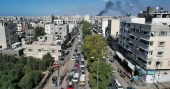
Hundreds of thousands of Gaza residents sought to heed Israel’s order to evacuate roughly the northern half of the territory, while others huddled at hospitals in the north on Sunday. Gaza’s 2.3 million civilians faced a deepening struggle for food, water and safety, and braced for a looming invasion a week after Hamas militants launched a deadly assault on Israel.
Israeli forces, supported by a growing deployment of U.S. warships in the region, positioned themselves along Gaza’s border and drilled for what Israel said would be a campaign by air, land and sea to dismantle the militant group. Israel dropped leaflets over Gaza City in the north and renewed warnings on social media, ordering more than 1 million Gaza residents to move south.
Currently:
1. People are struggling to flee from northern Gaza while also grappling with a growing water crisis after Israel stopped the flow of resources to the Gaza Strip
2. No decision on a ground offensive has been announced, although Israel has been massing troops along the Gaza border
3. The war has claimed more than 3,600 lives since Hamas launched an incursion on Oct. 7
4. Gaza’s hospitals are expected to run out of fuel for emergency generations within two days, according to the U.N., which said that that would endanger the lives of thousands of patients.
Here's what's happening in the latest Israel-Hamas war:
PALESTINIAN DEATHS SOAR PAST 2,300
The Gaza Health Ministry says 2,329 Palestinians have been killed since the latest fighting erupted, making this the deadliest of the five Gaza wars for Palestinians.
The death toll on Sunday surpassed that of the third war between Israel and Hamas, in the summer of 2014, when 2,251 Palestinians, including 1,462 civilians, were killed, according to U.N. figures.
That war lasted six weeks, and 74 people were killed on the Israeli side, including six civilians.
The current war erupted a week ago when Hamas militants stormed into southern Israel in a shocking surprise attack. More than 1,300 Israelis have been killed in the initial, wide-ranging assault and in rocket attacks from Gaza. The overwhelming majority were civilians.
For Israel, this is the deadliest war since the 1973 conflict with Egypt and Syria.
BLINKEN MEETS WITH SAUDI CROWN PRINCE
RIYADH, Saudi Arabia — U.S. Secretary of State Antony Blinken is meeting with Saudi Crown Prince Mohammed bin Salman in Riyadh as the Biden administration scrambles to prevent the Israel-Hamas war from becoming a broader regional conflict.
Blinken and the crown prince were holding talks on Sunday just hours after the Israeli military said it would begin a full-scale assault on Hamas positions in the Gaza Strip amid increasingly dire warnings that the expected ground invasion will have devastating consequences for Palestinian civilians.
The meeting, which had been expected late Saturday night but never materialized, was closed to media and there were no immediate details of the discussion.
Prince Mohammed is the sixth Arab leader Blinken has seen in person since he arrived in the Middle East on Thursday, stopping first in Israel to reaffirm the Biden administration’s pledge to stand with and support Israel. From Israel, Blinken has traveled throughout the region meeting the leaders of Jordan, the Palestinian Authority, Qatar, Bahrain, the United Arab Emirates and Saudi Arabia. He plans to visit Egypt later Sunday.
Read: Palestinians flee northern Gaza after Israel orders 1 million to evacuate as ground attack looms
INDONESIANS RALLY TO SHOW SUPPORT FOR PALESTINIANS
JAKARTA, Indonesia — More than 2,000 Muslims rallied in Indonesia’s capital on Sunday to show solidarity with Palestinians and called for an end to the Israel-Hamas war.
Waving Indonesian and Palestinian flags and signs that read “Save Palestinians,” they gathered outside Al Azhar Grand Mosque in southern Jakarta.
“Let’s pray for an end to the war, which is full of tears and blood of the martyrs,” a speaker told the crowd with a loudspeaker. “Victory will at the end be in the hands of the Palestinian people."
The rally ended peacefully and the community raised money for humanitarian aid in Gaza.
Similar rallies were held Saturday in other major cities across the world’s most populous Muslim-majority country, including in Bandung, Yogyakarta, Solo and Medan.
US DEFENSE SECRETARY SAYS 2ND CARRIER IS PART OF EFFORT TO PREVENT WIDENING OF WAR
WASHINGTON — The Biden administration is sending the USS Dwight D. Eisenhower carrier strike group to the Eastern Mediterranean to support Israel.
U.S. Defense Secretary Lloyd Austin said the additional carrier was being sent “as part of our effort to deter hostile actions against Israel or any efforts toward widening this war following Hamas’s attack on Israel.”
The Eisenhower will join the USS Gerald R. Ford carrier strike group, which is already sailing near Israel, to bolster U.S. presence there with a host of destroyers, fighter aircraft and cruisers.
The Eisenhower deployed from its homeport of Norfolk, Va., Friday. Having two carriers in the region can provide a host of options.
They can disperse and serve as primary command and control operations centers, to cover a wide swath of area. They can conduct information warfare. They can launch and recover E2-Hawkeye surveillance planes that provide early warnings on missile launches, conduct surveillance and manage the airspace.
Both ships carry F-18 fighter jets that could fly intercepts or strike targets. They also have significant capabilities for humanitarian work, including an onboard hospital with medics, surgeons and doctors, and they sail with helicopters that can be used to airlift critical supplies in or victims out.
US TO SEND A SECOND CARRIER STRIKE GROUP TO SUPPORT ISRAEL
WASHINGTON — The Biden administration is sending the USS Dwight D. Eisenhower carrier strike group to the Eastern Mediterranean to support Israel, two defense officials told The Associated Press on the condition of anonymity to discuss the move ahead of its announcement.
The Eisenhower will join the USS Gerald R. Ford carrier strike group, which is already sailing near Israel, to bolster U.S. presence there with a host of destroyers, fighter aircraft and cruisers.
The Eisenhower deployed from its homeport of Norfolk, Va., Friday. Having two carriers in the region can provide a host of options.
They can disperse and serve as primary command and control operations centers, to cover a wide swath of area. They can conduct information warfare. They can launch and recover E2-Hawkeye surveillance planes that provide early warnings on missile launches, conduct surveillance and manage the airspace.
Read: Syria says Israeli airstrikes hit airports in Damascus and Aleppo, damaging their runways
Both ships carry F-18 fighter jets that could fly intercepts or strike targets. They also have significant capabilities for humanitarian work, including an onboard hospital with medics, surgeons and doctors, and they sail with helicopters that can be used to airlift critical supplies in or victims out.
— By Tara Copp
HAMAS SAYS THREE KILLED AFTER CROSSING BORDER BETWEEN LEBANON AND ISRAEL
BEIRUT — Hamas announced early Sunday that three of its members from Lebanon had been killed after crossing the border from Lebanon into Israel and clashing with Israeli forces.
The group said in a statement that its militants had “inflicted losses” before being targeted by Israeli airstrikes.
Since the outbreak of the latest Hamas-Israel war on Oct. 7, there have been sporadic border clashes between Israeli forces and the Lebanese militant group Hezbollah, a Hamas ally, and with Palestinian armed groups in Lebanon including Hamas and the Palestinian Islamic Jihad.
MONITOR SAYS ISRAEL ATTACKS AIRPORT IN NORTHERN SYRIA
BEIRUT — A Syrian opposition war monitor and a pro-government media outlet say Israel’s military has attacked the international airport of the northern city of Aleppo, putting it out of service.
Al-Watan daily said the Saturday night strike hit the runway of Aleppo airport — putting it out of service just hours after it was fixed following a similar Israeli strike on Thursday.
The Britain-based Syrian Observatory for Human Rights also reported that the strike also hit the runway at Aleppo airport.
The attack on Aleppo airport came shortly after a rocket was reportedly fired from Syria into the Israeli-controlled Golan Heights.
On Thursday, Israeli struck the runways in Aleppo and Damascus International Airport. Aleppo was fixed within a day before it was again targeted Saturday.
There was no immediate comment from Israel’s military, which rarely confirms such strikes.
WORLD HEALTH ORGANIZATION SENDS SUPPLIES FOR GAZA
A planeload of World Health Organization supplies has landed at Egypt’s el-Arish airport and is destined for Gaza when humanitarian access across the border is possible, the U.N. said Saturday.
The cache includes enough basic essentials for 300,000 people and enough trauma medicines and materials for 1,200 wounded, the U.N. said in a release. It called for opening the Rafah border crossing immediately to humanitarian deliveries.
Read: Palestinians rush to buy food and struggle under strikes as Israel readies possible ground operation
“The critically injured, the sick and the vulnerable cannot wait,” the world body said.
ISRAEL SAYS IT IS STRIKING MILITARY TARGETS IN SYRIA
TEL AVIV, Israel — The Israeli military says it is striking targets in Syria after air raid sirens went off in two villages in northern Israel and the Israeli-controlled Golan Heights.
In a statement, the military did not say what set off the sirens. It said it was firing artillery to strike back.
The incident is the latest in a continued flare-up along Israel’s northern border with Lebanon and Syria after an unprecedented attack by Hamas on Israeli communities set off a war with Israel.
FAMILIES OF ISRAELI HOSTAGES SAY SOME OF THEIR LOVED ONES NEED MEDICINE
TEL AVIV, Israel — The relatives of Israelis taken captive by Hamas are demanding Saturday that the militant group allow in medicine to hostages who require it, saying their loved ones are suffering.
“Every day without her medication is torture. She’s being tortured,” said Yifat Zailer, who said her kidnapped 63-year-old aunt has Parkinson’s disease. She was taken along with several other family members, Zailer said.
In its assault on southern Israeli communities, Hamas militants captured dozens of Israelis and some foreign or dual nationals, including children, women and the elderly, dragging them into the Gaza Strip.
Israeli military spokesman Read Adm. Daniel Hagari said Saturday Israel had so far identified 126 captives. Their fate becomes more complicated as Israel continues its bombardment of Gaza.
2 years ago
Palestinians flee northern Gaza after Israel orders 1 million to evacuate as ground attack looms
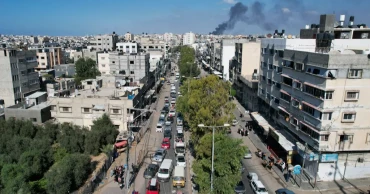
Palestinians fled in a mass exodus Friday from northern Gaza after Israel’s military told some 1 million people to evacuate to the southern part of the besieged territory ahead of an expected ground invasion in retaliation for the surprise attack by the ruling Hamas militant group.
The U.N. warned that evacuating almost half of crowded Gaza's population would be calamitous, and it urged Israel to reverse the unprecedented directive. As airstrikes hammered the territory throughout the day, families in cars, trucks and donkey carts packed with possessions streamed down a main road out of Gaza City.
Hamas’ media office said warplanes struck cars fleeing south, killing more than 70 people. The Israeli military said its troops conducted temporary raids into Gaza to battle militants and hunted for traces of some 150 people abducted in Hamas's assault on Israel nearly a week ago.
Palestine-Israel clash won’t have any impact on Bangladesh: FM Momen
In urging the evacuation, Israel’s military said it planned to target underground Hamas hideouts around Gaza City. But Palestinians and some Egyptian officials fear that Israel ultimately hopes to push Gaza’s people out through the southern border with Egypt.
Hamas told people to ignore the evacuation order, and families in Gaza faced what they saw as a no-win decision to leave or stay, with no safe ground anywhere. Hospital staff said they couldn’t abandon patients.
Unrelenting Israeli strikes over the past week have leveled large swaths of neighborhoods, magnifying the suffering of Gaza, which has also been sealed off from food, water and medical supplies, and under a virtual total power blackout.
“Forget about food, forget about electricity, forget about fuel. The only concern now is just if you’ll make it, if you’re going to live,” said Nebal Farsakh, a spokesperson for the Palestinian Red Crescent in Gaza City, as she broke into heaving sobs.
Hasan Mahmud says European countries suppressing freedom of expression by banning pro-Palestine rallies
In the nearly week-old war, the Gaza Health Ministry said Friday that roughly 1,900 people have been killed in the territory — more than half of them under the age of 18, or women. The Hamas assault last Saturday killed more than 1,300 Israelis, most of whom were civilians, and roughly 1,500 Hamas militants were killed during the fighting, the Israeli government said.
ISRAELI TROOPS MAKE FORAY INTO GAZAIsrael's raid was the first word of troops entering Gaza since Israel launched its round-the-clock bombardment in retaliation for Hamas’ massacre of hundreds of civilians in southern Israel.
A military spokesman said Israeli ground troops left after conducting the raids. The troop movements did not appear to be the beginning of an expected ground invasion.
The evacuation order was taken as a further signal of an expected Israeli ground offensive, although no such decision has been announced. Israel has been massing troops along the Gaza border.
An assault into densely populated and impoverished Gaza would likely bring even higher casualties on both sides in brutal house-to-house fighting.
“We will destroy Hamas,” Israeli Prime Minister Benjamin Netanyahu vowed Friday night in a speech, adding, “This is only the beginning.”
Hamas said Israel’s airstrikes killed 13 of the hostages in the past day. It said the dead included foreigners but did not give their nationalities. Israeli military spokesperson Rear Adm. Daniel Hagari denied the claim.
In Israel, the public remained in shock over the Hamas rampage and frightened by continual rocket fire out of Gaza. The public is overwhelmingly in favor of the military offensive, and Israeli TV stations have set up special broadcasts with slogans like “together we will win” and “strong together.” Their reports focus heavily on the aftermath of the Hamas attack and stories of heroism and national unity, and they make scant mention of the unfolding crisis in Gaza.
Islamic parties stage protest condemning Israeli attacks on Palestine
In the occupied West Bank, the Palestinian Health Ministry reported 16 Palestinians killed Friday, bringing the total of Palestinians killed there since Hamas' rampage to 51. The U.N. says attacks by Israeli settlers have surged there since the Hamas assault.
ISRAEL URGES MASS EVACUATION OF GAZA CIVILIANSThe U.N. said the Israeli military's call for civilians to move south affects 1.1 million people. If carried out, that would mean the territory’s entire population would have to cram into the southern half of the 40-kilometer (25-mile) strip.
An Israeli spokesperson, Jonathan Conricus, said the military would take “extensive efforts to avoid harming civilians” and that residents would be allowed to return when the war is over.
Israel has long accused Hamas of using Palestinians as human shields. Israeli Defense Minister Yoav Gallant said Israel wanted to separate Hamas militants from the civilian population.
“So those who want to save their life, please go south,” he said at a news conference with U.S. Defense Secretary Lloyd Austin.
U.N. spokesperson Stephane Dujarric said it would be impossible to stage such an evacuation without “devastating humanitarian consequences.” He called on Israel to rescind any such orders.
PALESTINIANS IN GAZA GRAPPLE WITH WHERE TO GOHamas’ media office said airstrikes hit cars in three locations as they headed south from Gaza City, killing 70 people. There was no immediate comment from the Israeli military on the strike.
Two witnesses reported a strike on fleeing cars near the town of Deir el-Balah, south of the evacuation zone and in the area Israel told people to flee to. Fayza Hamoudi said she and her family were driving from their home in the north when the strike hit some distance ahead on the road and two vehicles burst into flames. A witness from another car on the road gave a similar account.
“Why should we trust that they’re trying to keep us safe?” Hamoudi said, her voice choking. “They are sick.”
The Israeli military did not respond to a request for comment on the strike.
Hamas called the evacuation order “psychological warfare” aimed at breaking Palestinian solidarity and urged people to stay. But there was no sign of it preventing the flight.
Gaza City resident Khaled Abu Sultan at first didn’t believe the evacuation order was real, and now isn’t sure whether to move his family to the south. “We don’t know if there are safe areas there,” he said. “We don’t know anything.”
Many feared they would not be able to return or would be gradually displaced to Egypt’s Sinai Peninsula.
More than half of the Palestinians in Gaza are the descendants of refugees from the 1948 war surrounding Israel’s creation, when hundreds of thousands fled or were expelled from what is now Israel. For many, the mass evacuation order dredged up fears of a second expulsion. Already, at least 423,000 people — nearly 1 in 5 Gazans — have been forced from their homes by Israeli airstrikes, the U.N. said Thursday.
“Where is the sense of security in Gaza? Is this what Hamas is offering us?” said one resident, Tarek Mraish, standing by an avenue as vehicles flowed by. “What has Hamas done to us? It brought us catastrophe,” he said, using the same Arabic word “nakba” used for the 1948 displacement.
The U.N. estimated that tens of thousands had fled homes in the north by Friday night.
HOSPITALS STRUGGLE WITH PATIENTSGaza’s Health Ministry said it was impossible to safely transport the many wounded from hospitals, which are already struggling with high numbers of dead and injured. “We cannot evacuate hospitals and leave the wounded and sick to die,” spokesperson Ashraf al-Qidra said.
Farsakh, of the Palestinian Red Crescent, said some medics refused to abandon patients and instead called colleagues to say goodbye.
“We have wounded, we have elderly, we have children who are in hospitals,” she said.
Al Awda Hospital was struggling to evacuate dozens of patients and staff after the military contacted it and told it to do so by Friday night, said the aid group Doctors Without Borders, known as MSF, which supports the facility. The military extended the deadline to Saturday morning, it said.
The U.N. agency for Palestinian refugees, known as UNRWA, said it would not evacuate its schools, where hundreds of thousands have taken shelter. But it relocated its headquarters to southern Gaza, according to spokesperson Juliette Touma.
“The scale and speed of the unfolding humanitarian crisis is bone-chilling. Gaza is fast becoming a hellhole and is on the brink of collapse,” said Philippe Lazzarini, UNRWA’s commissioner general.
Pressed by reporters on whether the army would protect hospitals, U.N. shelters and other civilian locations, Hagari, the Israeli military spokesperson, said the military would keep civilians safe “as much as we can.” But he warned: “It’s a war zone.”
2 years ago

Israel's Netanyahu vows to 'destroy' Hamas, says Gaza offensive still in early stages
Israeli Prime Minister Benjamin Netanyahu has vowed to destroy Hamas as the army prepares for an expected ground invasion of the Gaza Strip.
Netanyahu delivered the threat in a nationally televised address late Friday.
READ: Putin calls for ex-Soviet states to expand their influence and comments on Israel-Hamas war
Israel has been pounding Gaza with airstrikes since Hamas militants carried out an unprecedented cross-border attack last Saturday, killing over 1,300 people in a brutal rampage. Early Friday, Israel ordered half of Gaza’s population to evacuate their homes.
“This is just the beginning,” Netanyahu said. “We will end this war stronger than ever.”
READ: Israel orders the evacuation of 1.1 million people from northern part of Gaza, the UN says
“We will destroy Hamas,” he added, saying Israel has widespread international support for the operation.
2 years ago

Putin calls for ex-Soviet states to expand their influence and comments on Israel-Hamas war
Russian President Vladimir Putin attended a Friday summit of a Moscow-dominated alliance of several ex-Soviet nations and commended the growing cooperation between them despite Western sanctions against Russia.
Putin met in Kyrgyzstan’s capital, Bishkek, with the leaders of most fellow members of the Commonwealth of Independent States. He told reporters that economic exchanges between Russia and the alliance's other nations have increased despite Western threats to punish them for maintaining ties with Moscow.
He specifically hailed a new deal on joint air defenses with Kyrgyzstan, saying it would help further bolster military ties. Kyrgyzstan, a member of a Moscow-led security pact, already hosts a Russian air base.
At the same time, Putin sought to downplay Armenian Prime Minister Nikol Pashinyan's failure to attend the summit in Bishkek. He noted that Pashinyan has a lot on his plate after Azerbaijan reclaimed control last month of Nagorno-Karabakh, sparking a mass exodus of the breakaway region's ethnic Armenian population.
Pashinyan has accused Russian peacekeepers in the region of failing to prevent the hostilities, criticism that added to widening tensions with Moscow. Russia also has been irked by Armenia's move to recognize the jurisdiction of the International Criminal Court after it indicted Putin in March for war crimes connected to the deportation of children from Ukraine.
While the indictment would oblige any country that is party to the court to arrest him on their soil, Armenian officials have argued that the move wasn't aimed against Russia and offered to sign a bilateral agreement that would assuage Moscow's concern.
In a statement that appeared to indicate a desire to mend fences, Putin said he has Pashinyan's invitation to visit Armenia and might do so later.
Addressing the participants of the summit in Bishkek, Putin emphasized that “it is important to work together, together with like-minded people from other regions of the world — with the countries of the so-called world majority, the Global South, whose views are very close to us.”
The Russian leader also commented on the Israel-Hamas war. Putin argued that Israel has the right to defend itself after an attack by Hamas that was "unprecedented not only in its scale, but also its cruelty.”
“Israel certainly has the right to ensure its security,” he said.
At the same time, Putin said it was unacceptable for the Israeli military onslaught on Gaza to “make all of its residents suffer, including women and children.” He stressed that Russia has longtime ties with both Israel and the Palestinians and could help negotiate a settlement.
Asked about unconfirmed allegations that some Western weapons supplied to Ukraine ended up in the hands of Hamas militants, Putin said he wouldn't be surprised if some weapons from Ukraine were sold on the black market but that he did not think it would happen with the knowledge of Ukrainian officials.
“I don't have any doubt that there have been arms leaks from Ukraine,” Putin said, without providing details. “I certainly have no sympathy for the current leadership of Ukraine, but I doubt that it’s being done on the level of Ukrainian leadership.”
2 years ago
US defence secretary is in Israel to meet with its leaders and see America's security assistance
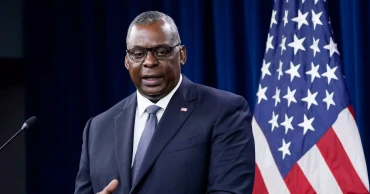
U.S. Defence Secretary Lloyd Austin arrived Friday in the Israeli city of Tel Aviv to meet with senior government leaders and see firsthand some of the U.S. weapons and security assistance that Washington rapidly delivered to Israel in the first week of its war with the militant Hamas group.
Austin is the second high-level U.S. official to visit Israel in two days. His quick trip from Brussels, where he was attending a NATO defense ministers meeting, comes a day after Secretary of State Antony Blinken arrived in the region on Thursday. Blinken is continuing the frantic Mideast diplomacy, seeking to avert an expanded regional conflict.
Austin is expected to meet with Prime Minister Benjamin Netanyahu, Minister of Defense Yoav Gallant, and the Israeli War Cabinet.
Also read: Israel orders the evacuation of 1.1 million people from northern part of Gaza, the UN says
His arrival comes as Israel's military directed hundreds of thousands of residents in Gaza City to evacuate "for their own safety and protection," ahead of a feared Israeli ground offensive. Gaza's Hamas rulers responded by calling on Palestinians to "remain steadfast in your homes and to stand firm" against Israel.
Defense officials traveling with Austin said he wants to underscore America's unwavering support for the people of Israel and that the United States is committed to making sure the country has what it needs to defend itself.
Also read: Hamas practiced in plain sight, posting video of mock attack weeks before border breach
A senior defense official said the U.S. has already given Israel small diameter bombs as well as interceptor missiles for its Iron Dome system and more will be delivered. Other munitions are expected to arrive Friday.
Austin has spoken nearly daily with Gallant, and directed the rapid shift of U.S. ships, intelligence support and other assets to Israel and the region. Within hours after the brutal Hamas attack across the border into Israel, the U.S. moved warships and aircraft to the region.
The USS Gerald R. Ford aircraft carrier strike group is already in the eastern Mediterranean Sea, and a second carrier was departing Friday from Virginia, also heading to the region.
Austin declined to say if the U.S. is doing surveillance flights in the region, but the U.S. is providing intelligence and other planning assistance to the Israelis, including advice on the hostage situation.
A day after visiting Israel to offer the Biden administration's diplomatic support in person, Blinken was in Jordan on Friday for talks with Jordanian King Abdullah II and Palestinian President Mahmoud Abbas who has a home in the Jordanian capital of Amman.
Also read: Palestinians rush to buy food and struggle under strikes as Israel readies possible ground operation
The monarch rules over a country with a large Palestinian population and has a vested interest in their status while Abbas runs the Palestinian Authority that controls the West Bank.
Later Friday, Blinken is to fly to Doha for meetings with Qatari officials who have close contacts with the Hamas leadership and have been exploring an exchange of Palestinian prisoners in Israel for the release of dozens of Israelis and foreigners taken hostage by Hamas during the unprecedented incursion of the militants into southern Israel last weekend.
Blinken will make a brief stop in Bahrain and end the day in Saudi Arabia, a key player in the Arab world that has been considering normalizing ties with Israel, a U.S.-mediated process that is now on hold.
He will also travel to the United Arab Emirates and Egypt over the weekend.
2 years ago

Syria says Israeli airstrikes hit airports in Damascus and Aleppo, damaging their runways
Syrian state media reported that Israeli airstrikes on Thursday hit the international airports of the Syrian capital Damascus and the northern city of Aleppo, damaging their runways and putting them out of service.
State news agency SANA quoted an unnamed military official as saying that no one was hurt in the attacks.
The Israeli military declined to comment.
Read: Palestinians rush to buy food and struggle under strikes as Israel readies possible ground operation
They would be the first Israeli strikes on Syria since the militant Palestinian group Hamas carried out its deadly attacks in southern Israel.
The airstrikes came a day before Iran’s foreign minister was scheduled to visit Syria to meet officials over the volatile situation in the region.
Israel has targeted airports and sea ports in the government-held parts of Syria in an apparent attempt to prevent arms shipments from Iran to militant groups backed by Tehran, including Lebanon’s Hezbollah. Thousands of Iran-backed fighters from around the region joined Syria’s 12-year conflict helping tip the balance in favor of President Bashar Assad’s forces.
Read: Protests by pro-Israel and pro-Palestinian demonstrators span the world as war escalates
Israel has carried out hundreds of strikes on targets inside government-controlled parts of Syria in recent years, including attacks on the Damascus and Aleppo airports, but rarely acknowledges or discusses the operations.
2 years ago

Palestinians rush to buy food and struggle under strikes as Israel readies possible ground operation
Palestinians lined up outside bakeries and grocery stores in Gaza on Thursday after spending the night surrounded by the ruins of pulverized neighborhoods darkened by a near-total power outage. Israel launched new airstrikes and said it was preparing for a possible ground invasion.
International aid groups warned that the death toll in Gaza could mount after Israel stopped all deliveries of food, water, fuel and electricity and the tiny enclave's crossing with Egypt closed. The war — which was ignited by a bloody and wide-ranging assault on Israel by Hamas militants — has already claimed at least 2,500 lives on both sides.
Lt. Col. Richard Hecht, an Israeli military spokesman, told reporters Thursday that forces “are preparing for a ground maneuver if decided," but that political leaders have not yet ordered one. A ground offensive in Gaza, whose 2.3 million residents are densely packed into a sliver of land only 40 kilometers (25 miles) long, would likely bring even higher casualties on both sides in brutal house-to-house fighting.
Read: What to know on the sixth day of the latest Israel-Palestinian war
As Israel pounds Gaza, Hamas fighters have fired thousands of rockets into Israel since their weekend assault. Militants in the territory are also holding an estimated 150 people taken hostage from Israel.
Already, Palestinians fleeing airstrikes could be seen running through the streets, carrying their belongings and looking for a safe place. Tens of thousands have crowded into U.N.-run schools while others are staying with relatives or even strangers who let them in.
Lines formed outside bakeries and grocery stores during the few hours they dared open, as people tried to stock on food before shelves are emptied. On Wednesday, Gaza’s only power station ran out of fuel and shut down, leaving only lights powered by scattered private generators.
A senior official with the the International Committee of the Red Cross warned that lack of electricity could cripple hospitals.
“As Gaza loses power, hospitals lose power, putting newborns in incubators and elderly patients on oxygen at risk. Kidney dialysis stops, and X-rays can’t be taken,” said Fabrizio Carboni, ICRC’s regional director. “Without electricity, hospitals risk turning into morgues.”
Read: Palestinian death toll from Israeli attacks hit 1,078
Israel’s Energy Minister Israel Katz said nothing would be allowed into Gaza until the captives were released. “Not a single electricity switch will be flipped on, not a single faucet will be turned on, and not a single fuel truck will enter until the Israeli hostages are returned home,” he tweeted.
After Hamas militants stormed through a border fence Saturday and massacred hundreds of Israelis in their homes, on the streets and at an outdoor music festival, Israeli Prime Minister Benjamin Netanyahu vowed to “crush and destroy” the group, which has governed Gaza since 2007.
“Every Hamas member is a dead man,” Netanyahu said in a televised address late Wednesday.
The Israeli government is under intense public pressure to topple the militant group rather than continuing to try to bottle it up in Gaza after four previous conflicts ended with Hamas still firmly in charge of the territory. Israel has mobilized 360,000 reservists, massed additional forces near Gaza and evacuated tens of thousands of residents from nearby communities.
Netanyahu now has the backing of a new war Cabinet that includes a longtime opposition politician. The U.S. has also pledged unwavering support, and Secretary of State Antony Blinken arrived in Tel Aviv on Thursday to meet with Netanyahu and other Israeli leaders. He plans to meet Friday with Palestinian President Mahmoud Abbas and Jordan’s King Abdullah II.
The Israeli military said overnight strikes targeted Hamas' elite Nukhba forces, including command centers used by the fighters who attacked Israel on Saturday, and the home of a senior Hamas naval operative that it said was used to store unspecified weapons.
Another airstrike killed a commander with the Islamic Jihad armed group in his family home in the northern town of Beit Lahia, according to media linked to the group. And a commander from a small, leftist militant group was also killed in a strike, along with some of his relatives, the group's media said.
“Right now we are focused on taking out their senior leadership,” Hecht, the military spokesman, said. "Not only the military leadership, but also the governmental leadership, all the way up to (top Hamas leader Yehia) Sinwar. They were directly connected."
Read: After a hard fight to clear militants, Israeli soldiers find a scene of destruction, slain children
The Hamas-run Interior Ministry said Israeli strikes demolished two multistory houses without warning, killing and wounding “a large number” of people, mainly civilians. Hamas has threatened to kill hostages if Israel strikes Palestinian civilians without warning.
While Israel has insisted that it is giving notice of its strikes, it is employing a new tactic of leveling whole neighborhoods, rather than just individual buildings.
Israel’s tone has changed as well. In past conflicts, its military insisted on the precision of strikes in Gaza, trying to ward off criticism over civilian deaths. This time, military briefings emphasize the destruction wrought.
Hecht said Israel was not “doing carpet bombing, though some people would like to see that.” He said targeting decisions were based on intelligence and civilians were warned.
Even with the evacuation warnings, Palestinians say some are unable to escape or have nowhere to go, and that entire families have been crushed under rubble.
Other times, strikes come with no notice, survivors say.
“There was no warning or anything,” said Hashem Abu Manea, 58, who lost his 15-year-old daughter, Joanna, when a strike late Tuesday leveled his home in Gaza City.
The U.N. said late Wednesday the number of people displaced by the airstrikes had soared 30% within 24 hours, to 339,000, two-thirds of them crowding into U.N. schools. Others sought shelter in the shrinking number of safe neighborhoods.
The U.N. humanitarian office said Israeli strikes have leveled 1,000 homes since the retaliation began last Saturday, with another 560 housing units severely damaged and rendered uninhabitable. It said an Israeli cutoff has resulted in dire water shortages for over 650,000 people. Sewage systems have been destroyed, sending fetid wastewater into the streets.
Egypt has engaged in intensive talks with Israel and the United States to allow the delivery of aid and fuel through its Rafah crossing point, which is closed after an airstrike hit nearby earlier this week.
But it has pushed back against proposals to establish corridors out of Gaza, saying an an exodus of Palestinians would have grave consequences for their hopes of one day establishing an independent state. Egypt is also likely concerned about a potential influx of hundreds of thousands of displaced people.
The death toll in Gaza rose to 1,200 early Thursday, including at least 326 children and 171 women, the Palestinian health ministry said.
Ghassan Abu Sitta, a reconstructive surgeon at the Gaza Strip’s biggest hospital, said he had 50 patients waiting to go to the operating room.
“We’re already beyond the capacity of the system to cope,” he said. The health system “has the rest of the week before it collapses, not just because of the diesel. All supplies are running short.”
Shock, grief and demands for vengeance against Hamas are running high in Israel.
Netanyahu alleged that the attackers engaged in atrocities, including binding boys and girls and shooting them in the head, burning people alive, raping women and beheading soldiers.
The prime minister’s allegations could not be independently confirmed. Rescue workers and witnesses have described horrifying scenes, including the slaughter of elderly people and finding bloody rooms crowded with massacred civilians.
The Israeli military said more than 1,300 people, including 222 soldiers, have been killed in Israel, a staggering toll unseen since the 1973 war with Egypt and Syria that lasted weeks.
Israel says roughly 1,500 Hamas militants were killed inside Israel, and that hundreds of the dead inside Gaza are Hamas members.
2 years ago

Palestinian death toll from Israeli attacks hit 1,078
The death toll and injuries of the Palestinians from Israeli strikes on Gaza Strip and West Bank hit 1,078 and 5,314 respectively, according to the Ramallah-based Palestinian Health Ministry.
Among the 1,078 deaths, 1055 were in Gaza, the ministry said in a press statement, adding that the injuries in Gaza were 5,184.
Read: What to know on the sixth day of the latest Israel-Palestinian war
Meanwhile, the number of fatalities in Hamas' attack on Israel has reached at least 1,200, an Israeli military spokesperson said on Wednesday.
Read: Protests by pro-Israel and pro-Palestinian demonstrators span the world as war escalates
2 years ago

What to know on the sixth day of the latest Israel-Palestinian war
The Israeli military is preparing for a possible ground operation in Gaza but the political leadership has not yet decided on one, Lt. Col. Richard Hecht told reporters Thursday as the latest Israel-Palestinian war rolled into a sixth day of fighting since Hamas launched its attack Saturday.
Hamas said it's seeking to end Palestinians’ suffering, which had become intolerable under unending Israeli military occupation and increasing settlements in the West Bank and a 16-year-long blockade in Gaza.
People in Gaza spent the Wednesday night in darkness, surrounded by the ruins of pulverized neighborhoods as Israeli Prime Minister Benjamin Netanyahu vowed to “crush and destroy” Hamas, with the support of a new war cabinet that includes a longtime opposition critic.
Egypt has engaged with intensive talks with Israel and the United States to allow the delivery of aid and fuel through its Rafah crossing point. However, it pushed back against proposals to establish corridors out of Gaza, saying an an exodus of Palestinians from the enclave would have grave consequences on the Palestinian cause.
Read: Protests by pro-Israel and pro-Palestinian demonstrators span the world as war escalates
The latest conflict, which has claimed at least 2,400 lives on both sides, is expected to escalate.
Here are some key takeaways from the war:
WHAT IS THE SITUATION IN GAZA?
As the Israeli military retaliates for the Hamas attack, Palestinians say civilians are paying the price in strikes on Gaza, a small coastal strip of land packed with 2.3 million residents.
The United Nations says 260,000 people have fled their homes, most crowding into U.N. schools. Others sought the shrinking number of safe neighborhoods. Gaza is only 40 kilometers (25 miles) long, wedged among Israel, Egypt and the Mediterranean Sea.
After nightfall, Palestinians were plunged into pitch blackness in large parts of Gaza City and elsewhere after the power station shut down.
The Gaza Strip’s biggest hospital, Al-Shifa, will run out of fuel to keep the power on within days, said Matthias Kannes, a Gaza-based official for Doctors Without Borders. The group said the two hospitals it runs in Gaza were running out of surgical equipment, antibiotics, fuel and other supplies.
Israel has cut off supplies of food, fuel, electricity and medicine into Gaza. Convoys stood loaded with fuel and food Wednesday on the Egyptian side of the Rafah crossing but were unable to enter Gaza, a senior Egyptian official said. The only crossing point between Egypt and Gaza was shut down Tuesday following nearby Israeli airstrikes.
At least 1,200 people have been killed in Gaza, according to authorities there. Israel says hundreds of the dead inside Gaza are Hamas members.
Read: What to know on fifth day of latest Israel-Palestinian war
WHAT IS THE SITUATION IN ISRAEL?
In one kibbutz near Gaza, Israeli troops were still removing the bodies of dead Hamas militants who stormed the community and killed more than 100 residents, then battled soldiers for nearly three days.
Maj. Gen. Itai Veruv told visiting journalists that the military found evidence of Hamas militants cutting throats of bound captives, lining up children and killing them and packing 15 teenage girls in a room before throwing a grenade inside.
An Israeli-American teenager in a kibbutz survived a siege on his home by Hamas attackers over the weekend after his parents shielded him from the gunfire but were killed themselves.
The Israeli military said more than 1,200 people, including 189 soldiers, have been killed in Israel, a staggering toll unseen since the 1973 war with Egypt and Syria that lasted weeks.
WILL ISRAEL LAUNCH A GROUND ASSAULT?
The Israeli military says it is preparing for a possible ground operation in Gaza but that the political leadership has not yet decided on one. Lt. Col. Richard Hecht told reporters Thursday that forces “are preparing for a ground maneuver if decided.”
Israel has called up some 360,000 army reservists and has threated an unprecedented response to Hamas’ bloody, wide-ranging incursion over the weekend. It has been launching intense airstrikes on Gaza since the attack by Hamas on Saturday, as militants have fired thousands of rockets into Israel.
Four previous rounds of Israel-Hamas fighting between 2008 and 2021 all ended inconclusively, with Hamas battered but still in control.
This time, Israel’s government is under intense pressure from the public to topple Hamas, which has ruled Gaza since 2007. That would likely require reoccupying Gaza, at least temporarily. Even then, Hamas has a long history of operating as an underground insurgency in areas controlled by Israel. A ground offensive would also likely result in a surge of casualties for fighters on both sides.
WHAT HAS BEEN THE RESPONSE FROM THE U.S. AND OTHER NATIONS?
U.S. President Joe Biden on Wednesday called the attack by Hamas the worst attack on Jews since the Holocaust as the number of U.S. citizens killed in the fighting ticked up to at least 22.
“This attack was a campaign of pure cruelty — not just hate, but pure cruelty — against the Jewish people,” Biden told Jewish leaders gathered at the White House.
Signs of U.S. support for Israel were seen across the administration, with Secretary of State Antony Blinken traveling there for meetings, Biden denouncing antisemitism in America and the U.S. military moving a second aircraft carrier toward the Mediterranean Sea as part of efforts to prevent the war from spilling over into a more dangerous regional conflict.
On Tuesday, Biden warned other countries and armed groups against entering the war.
British Foreign Secretary James Cleverly arrived in Israel on Wednesday to express “unwavering solidarity” with the country following the attacks by Hamas, while Britain's King Charles III condemned the “barbaric acts of terrorism in Israel," a palace official said Wednesday. The German government held a minute of silence Wednesday in parliament for the Israeli victims of the Hamas attacks in parliament.
Read: Israel strikes downtown Gaza City and mobilizes 300,000 reservists as war enters fourth day
Malaysian Foreign Minister Zambry Abdul Kadir slammed Israel’s “outrageous acts of cruelty” in cutting off food, water and fuel to the Gaza Strip and said Malaysia will provide an emergency fund to help Palestinians.
Turkey is holding negotiations for the release of civilian hostages held by Hamas, a Turkish official said Wednesday.
WHAT IS THE STATUS OF FOREIGN CITIZENS IN ISRAEL?
The number of U.S. citizens confirmed to have been killed in the latest Israel-Hamas war has risen to at least 22, the State Department said Wednesday. That’s an increase from 14 the day before. The State Department said at least 17 more Americans remain unaccounted for.
Two Brazilian citizens were killed as the result of the Hamas attack on Israel, according to that country's foreign ministry, which also said that three people with dual Brazilian-Israeli citizenship were missing after they disappeared at a music festival outside of Kibbutz Re’im.
The Austrian government has confirmed that one of three Austrian-Israeli citizens who went missing after Hamas’ attack on Israel has been found dead.
Spain’s Foreign Ministry said one of two Spaniards affected by the Hamas attacks in Israel had died.
WHAT PROMPTED HAMAS' ATTACK ON ISRAEL?
Hamas, which seeks Israel’s destruction, says it is defending Palestinians’ right to freedom and self-determination.
But the devastation following Hamas' surprise attack on Saturday has sharpened questions about its strategy and objectives. Hamas officials have said they planned for all possibilities, including a punishing Israeli escalation.
Desperation has grown among Palestinians, many of whom see nothing to lose under unending Israeli control and increasing settlements in the West Bank, a 16-year-long blockade in Gaza and what they see as the world’s apathy.
In addition to citing long-simmering tensions, Hamas officials cite a long-running dispute over the sensitive Al-Aqsa Mosque that is sacred to both Muslims and Jews. Competing claims over the site, known to Jews as the Temple Mount, have spilled into violence before, including a bloody 11-day war between Israel and Hamas in 2021.
Tensions between Israel and the Palestinians escalated with recent violent Palestinian protests. In negotiations with Qatar, Egypt and the United Nations, Hamas has pushed for Israeli concessions that could loosen the blockade on the Gaza Strip and help halt a worsening financial crisis.
2 years ago

CIA officially describes 1953 coup it backed in Iran as ‘undemocratic’
While revealing new details about one of the most famed CIA operations of all times — the spiriting out of six American diplomats who escaped the 1979 U.S. Embassy seizure in Iran — the intelligence agency for the first time has acknowledged something else as well.
The CIA now officially describes the 1953 coup it backed in Iran that overthrew its prime minister and cemented the rule of Shah Mohammad Reza Pahlavi as undemocratic.
Other American officials have made similar remarks in the past, but the CIA’s acknowledgment in a podcast about the agency’s history comes as much of its official history of the coup remains classified 70 years after the putsch. That complicates the public’s understanding of an event that still resonates, as tensions remain high between Tehran and Washington over the Islamic Republic’s rapidly advancing nuclear program, its aiding of militia groups across the Mideast and as it cracks down on dissent.
Jailed Iranian activist Narges Mohammadi wins the Nobel Peace Prize for fighting women's oppression
The “CIA’s leadership is committed to being as open with the public as possible,” the agency said in a statement responding to questions from The Associated Press. “The agency’s podcast is part of that effort — and we knew that if we wanted to tell this incredible story, it was important to be transparent about the historical context surrounding these events, and CIA’s role in it.”
In response to questions from the AP, Iran’s mission to the United Nations described the 1953 coup as marking “the inception of relentless American meddling in Iran’s internal affairs” and dismissed the U.S. acknowledgments.
“The U.S. admission never translated into compensatory action or a genuine commitment to refrain from future interference, nor did it change its subversive policy towards the Islamic Republic of Iran,” the mission said in a statement.
Iranian embassy organises discussion on Prophet
The CIA’s podcast, called “The Langley Files” as its headquarters is based in Langley, Virginia, focused two recent episodes on the story of the six American diplomats’ escape. While hiding at the home of the Canadian ambassador to Iran, a two-man CIA team entered Tehran and helped them fly out of the country while pretending to be members of a crew scouting for a made-up science fiction film.
The caper, retold in the 2012 Academy Award-winning film “Argo” directed by and starring Ben Affleck, offered a dramatized version of the operation, with Affleck playing the late CIA officer Antonio “Tony” Mendez. The podcast for the first time identified the second CIA officer who accompanied Mendez, naming him as agency linguist and exfiltration specialist Ed Johnson. He previously only had been known publicly by the pseudonym “Julio.”
Iran says it successfully launches an imaging satellite into orbit amid tensions with the West
“Working with the six — these are rookies,” Johnson recounts in an interview aired by the podcast. “They were people who were not trained to lie to authorities. They weren’t trained to be clandestine, elusive.”
But in the podcast, another brief exchange focuses on the 1953 coup.
In it, CIA spokesman and podcast host Walter Trosin cites the claims of agency historians that the majority of the CIA’s clandestine activities in its history “bolstered” popularly elected governments.
“We should acknowledge, though, that this is, therefore, a really significant exception to that rule,” Trosin says of the 1953 coup.
CIA historian Brent Geary, appearing on the podcast, agrees.
“This is one of the exceptions to that,” Geary says.
Seven decades later, the 1953 coup remains as hotly debated as ever by Iran, its theocratic government, historians and others.
Iran’s hard-line state television spent hours discussing the coup that toppled Prime Minister Mohammad Mosaddegh on its anniversary in June. In their telling, a straight line leads from the coup to the 1979 Islamic Revolution that ultimately toppled the fatally ill shah. It still fuels the anti-Americanism that colors decisions made by the theocracy, whether in arming Russia in its war on Ukraine or alleging without evidence that Washington fomented the recent nationwide mass protests targeting it.
From the U.S. side, the CIA’s hand in the coup quickly was revealed as a success of Cold War espionage, though historians in recent years have debated just how much influence the agency’s actions had. It also led the CIA into a series of further coups in other countries, including Guatemala, where American clandestine action in 1954 installed a military dictator and sparked a 40-year civil war that likely killed some 245,000 people.
That’s led to an American political reappraisal of the 1953 CIA action in Iran. Then-Secretary of State Madeleine Albright acknowledged the U.S.’ “significant role” in the coup in 2000. President Barack Obama, speaking in Cairo in 2009, described the CIA’s work as leading to the “overthrow of a democratically elected Iranian government.”
But largely absent from the discussion was the CIA itself. After years of conflicting versions of the coup both in public and classified papers, a member of the CIA’s own in-house team of historians wrote a reappraisal of the operation in a 1998 paper titled “Zendebad, Shah!” in Farsi — or “Long Live the Shah!”
But despite a series of American historical documents being made public, including a major tranche of State Department papers in 2017, large portions of that CIA reappraisal remain heavily redacted despite attempts to legally pry them loose by the George Washington University-based National Security Archive. That’s even after pledges by former agency directors Robert Gates and James Woolsey Jr. in the 1990s to release documents from that coup and others engineered by the agency.
Further complicating any historical reckoning is the CIA’s own admission that many files related to the 1953 coup likely had been destroyed in the 1960s.
“It’s wrong to suggest that the coup operation itself has been fully declassified. Far from it,” said Malcolm Byrne of the National Security Archive. “Important parts of the record are still being withheld, which only contributes to public confusion and encourages myth-making about the U.S. role long after the fact.”
2 years ago