Others

Youths clash with French police and loot stores in fourth day of riots triggered by fatal police shooting
Young rioters clashed with police and looted stores Friday in a fourth day of violence in France triggered by the deadly police shooting of a teen, piling more pressure on President Emmanuel Macron after he appealed to parents to keep children off the streets and blamed social media for fueling unrest.
Police said 270 people had been arrested by midnight nationwide.
Despite repeated government appeals for calm and stiffer policing, Friday saw brazen daylight violence, too. An Apple store was looted in the eastern city of Strasbourg, where police fired tear gas, and the windows of a fast-food outlet were smashed in a Paris-area shopping mall, where officers repelled people trying to break into a shuttered store, authorities said.
The southern port city of Marseille, initially spared the violence that broke out first in the Paris region, was experiencing its second night of upheaval. Even before nightfall, young people hurled projectiles, set fires, and looted shops, police said. They made almost 90 arrests. On Friday evening, looters broke into a Marseille gun shop and made off with weapons, and a man was later arrested with a hunting rifle, police said. The previous night, two off-duty officers suffered serious injuries, including one who was stabbed, when they were set upon by about 20 people, police said.
600 arrested and 200 police officers hurt on France’s 3rd night of protests over teen’s killing
Authorities in the city of Lyon reported rioters again setting fires and pelting police in the suburbs. In the city center, police made 31 arrests to stop the attempted looting of shops after an unauthorized protest against police violence that drew about 1,300 people Friday evening.
Violence was also erupting in some of France’s territories overseas.
In French Guiana, a 54-year-old was killed by a stray bullet Thursday night when rioters fired at police in the capital, Cayenne, authorities said. On the small Indian Ocean island of Reunion, protesters set garbage bins ablaze, threw projectiles at police, and damaged cars and buildings, officials said. Some 150 officers were deployed there Friday night.
In the face of the escalating crisis that hundreds of arrests and massive police deployments have failed to quell, Macron held off on declaring a state of emergency, an option that was used in similar circumstances in 2005.
Fiery protests grip France for 3rd night over deadly police shooting of a teenager
Instead, his government ratcheted up its law enforcement response. Already massively beefed-up police forces were boosted by another 5,000 officers for Friday night, increasing the number to 45,000 overall, the interior minister said. Some were called back from vacation. The minister, Gerald Darmanin, said police made 917 arrests on Thursday alone and noted their young age — 17 on average. He said more than 300 police officers and firefighters have been injured.
Darmanin also ordered a nationwide nighttime shutdown of all public buses and trams, which have been among rioters’ targets.
And he said he had delivered a warning to social networks that they can’t allow themselves to be used as channels for calls to violence.
France will deploy 40,000 police officers to quell violence that followed deadly police shooting
“They were very cooperative. We’ll see tonight if they really are. We are going to give them as much information as possible” so that, in return, French authorities get the identities of people who incite violence, the minister explained.
“We will pursue every person who uses these social networks to commit violent acts,” he said. “And we will take all necessary measures if we become aware that social networks, whoever they are, don’t respect the law.”
Macron, too, zeroed in on social media platforms that have relayed dramatic images of vandalism and cars and buildings being torched, saying they are playing a “considerable role” in the violence. Singling out Snapchat and TikTok, he said they were being used to organize unrest and serving as conduits for copycat violence.
Macron said his government would work with technology companies to establish procedures for “the removal of the most sensitive content,” adding that he expected “a spirit of responsibility” from them.
Snapchat spokesperson Rachel Racusen said the company has increased its moderation since Tuesday to detect and act on content related to the rioting.
The violence comes just over a year before Paris and other French cities are due to host 10,500 Olympians and millions of visitors for the summer Olympic Games. Paris 2024 organizers said they are closely monitoring the situation and that preparations for the Olympics continue.
The fatal shooting of the 17-year-old, who has only been identified by his first name, Nahel, was captured on video, shocking France and stirring up long-simmering tensions between police and young people in housing projects and disadvantaged neighborhoods.
Macron said a third of the individuals arrested Thursday night were “young people, sometimes very young,” and that “it’s the parents’ responsibility” to keep their children at home.
Nanterre prosecutor Pascal Prache said officers tried to pull Nahel over because he looked so young and was driving a Mercedes with Polish license plates in a bus lane. He allegedly ran a red light to avoid being stopped and then got stuck in traffic.
The police officer accused of pulling the trigger was handed a preliminary charge of voluntary homicide after Prache said his initial investigation led him to conclude that the officer’s use of his weapon wasn’t legally justified. Preliminary charges mean investigating magistrates strongly suspect wrongdoing but need to investigate more before sending a case to trial.
The officer said he feared he and his colleague or someone else could be hit by the car as Nahel attempted to flee, according to the prosecutor.
Nahel’s mother, identified as Mounia M., told France 5 television that she was angry at the officer but not at the police in general. “He saw a little Arab-looking kid, he wanted to take his life,” she said, adding that justice should be “very firm.”
“A police officer cannot take his gun and fire at our children, take our children’s lives,” she said.
Deadly use of firearms is less common in France than in the United States, although 13 people who didn’t comply with traffic stops were fatally shot by French police last year. This year, another three people, including Nahel, died under similar circumstances. The deaths have prompted demands for more accountability in France, which also saw racial justice protests after George Floyd’s killing by police in Minnesota.
Nahel’s burial is scheduled for Saturday, according to Nanterre Mayor Patrick Jarry, who said France needs to “push for changes” in disadvantaged neighborhoods.
Race was a taboo topic for decades in France, which is officially committed to a doctrine of colorblind universalism. In the wake of Nahel’s killing, French anti-racism activists renewed complaints about police behavior in general.
This week’s protests echoed the three weeks of rioting in 2005 that followed the deaths of 15-year-old Bouna Traoré and 17-year-old Zyed Benna, who were electrocuted while hiding from police in a power substation in Clichy-sous-Bois.
2 years ago
Essentials for the Hajj: From sun hats to shoe bags, a guide to gear for the Muslim pilgrimage
Straw hats, cross-body bags, and collapsible chairs: These are just some of the essentials Muslims bring to the Hajj pilgrimage.
Spiritually, the five-day Hajj is awe-inspiring for the faithful, an experience they say brings them closer to God and to the entire Muslim world.
Physically, it’s grueling. Pilgrims walk outdoors for hours in broiling heat around holy sites in Mecca and the surrounding desert. They are caught in unimaginable and overwhelming crowds, all trying to get to the same place. Barriers directing the traffic mean that if you miss your turn, you might walk hours more to get where you want to be.
READ: Hajj pilgrimage starts in Saudi Arabia, with 2 million expected after lifting of COVID measures
So the more than 2 million pilgrims don’t just learn the complicated rules of how to properly perform the rituals, which began Monday. They also pick up helpful hints and tricks of the trade to get by, learned from other hajjis — as those who have completed the pilgrimage are known.
Here’s a look at what they say is essential gear.
WHAT TO WEAR
Dress for the heat, since daytime temperatures regularly soar past 40 degrees Celsius (104 degrees Fahrenheit). The majority of rituals take place outdoors in the desert, including climbing the Mount of Mercy and stoning the Jamarat, a row of pillars representing the devil.
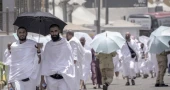
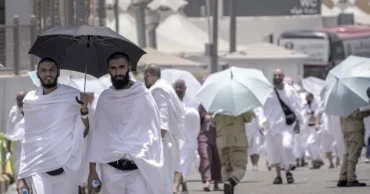
Sun hats are key. Pilgrims often opt for wide-brimmed straw hats or even cowboy hats. Umbrellas of every color are everywhere. Some balance their prayer mats on their heads or the canopies from umbrellas.
All men are required to wear simple white robes without any stitching, a rule aimed at uniting rich and poor. Women must forego beauty products and cover their hair but have more latitude to wear fabrics from their native countries, resulting in a colorful display of Islam’s multiculturalism.
When it comes to footwear, it’s best to wear something that’s durable for the long walks but that also slips on and off easily, as pilgrims must remove their shoes before entering Mecca’s Grand Mosque.
READ: What is the Hajj pilgrimage and what does it mean for Muslims?
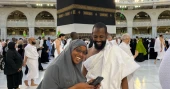
Sandals are sensible, but some pilgrims say it’s best also to wear socks as the mosque’s marble floor can be surprisingly cold as they walk around the Kaaba seven times.
WHAT TO CARRY
A daypack of some kind is essential for carrying food, water, sunscreen and other sundries. But backpacks can be a hassle when you’re crammed shoulder-to-shoulder.
Far more popular are cross-body bags that you can access without turning around.
Many pilgrims also carry a separate drawstring bag or pouch for their shoes. Usually at mosques, you can leave your shoes with an attendant at the entrance, but with hundreds of thousands at the Grand Mosque, that's a sure way to lose your shoes, or at best waste a long time getting them back. It would also mean you have to exit the same way you entered, not always possible when the crowd takes you in another direction.
Umaima Hafez, a five-time hajjah from Egypt, packs like a pro.
Sitting on her portable plastic stool, she reaches into her large pack and pulls out a blanket, homemade granola and crackers, a travel towel that she wets and places on her head when it gets hot, an extra-thick prayer mat — for her knees — and some medications. The stool fits into the bag as well. She’ll carry it throughout Hajj, then leave it behind for someone else to use.
She insists her bag isn’t heavy. “Everything is beautiful and easy with God. … And people give out a lot of water and food here.”
READ: Hajj pilgrims perform final rituals in Mecca before heading to Mina
Hassan Hussain, a 24-year-old first-time pilgrim from Britain, also went for a maximal approach. His bag holds his phone, charging cable, power bank, sunglasses, water bottle, British and Saudi currency, bank cards, his shoe bag, a prayer mat and hydrating facial mist.
He said his sister, who did the Hajj last year, told him what to bring. His advice to other pilgrims is to overpack.
“You don’t know when you’re going to need things,” he said. “The person next to you might need things. Just take everything and work it out as you go along.”
In contrast, Ali Ibn Mousa, a 30-year-old Russian and father of seven, is going for maneuverability and speed, so he stays light.
His drawstring bag holds only his phone and his pilgrim ID. He’s more interested in what he will bring back from the Hajj, saying that alongside the spiritual journey he’s on the lookout for a second wife.
“If I had a heavy bag, I wouldn’t be able to do some of the things I want to,” he said. “That’s why I take a small bag that is easy to carry, so I can run inside” while circling the Kaaba.
CAMPOUT CHECKLIST
The giant flows of pilgrims move back and forth between holy sites spread out over a length of more than 10 miles (16 kilometers) from the Grand Mosque to the Mount of Mercy, or Mount Arafat, out in the desert. Even within a single ritual site, it can take much of the day to walk from one end to another, like Mina, where pilgrims will stay in one of the world’s largest tent camps and stone the pillars representing the devil.
A pilgrim has to be prepared to be stuck in a spot outside for ages, waiting for a transport to arrive or a crowd to clear, sometimes in the middle of the night.
Ikram Mohammed’s supermarket in Mecca sells camping essentials such as lightweight tents, sleeping mats and collapsible water pouches.
“They buy dried fruit and nuts, biscuits, chips. Anything they can consume easily while they are on the move that doesn’t need refrigeration or utensils,” Mohammed said. A special section specializes in fragrance-free toiletries, in keeping with the prohibition on perfume.
Mohammed also sells souvenirs for pilgrims to take back home with them, everything from chocolate and sweets to water from the sacred Zamzam well near the Kaaba.
Another popular item: Pain relief cream for achy joints.
2 years ago

Putin says the aborted rebellion played into the hands of Russia’s enemies
Russian President Vladimir Putin on Monday blasted organizers of a weekend revolt, the gravest threat yet to his power, as “traitors” who played into the hands of Ukraine’s government and its allies.
Speaking in a stern tone and looking tired in a five-minute TV address near midnight, Putin sought to project stability. He tried to strike a balance between criticizing the uprising’s perpetrators to prevent another crisis, and not antagonizing the bulk of the mercenaries and their hardline supporters, some of whom are incensed at the Kremlin’s handling of the situation.
Putin, whose troops are stretched thin in the face of a Ukrainian counteroffensive, praised the rank and file mercenaries for not letting the situation descend into “major bloodshed.” And he said the nation had stood united, although there had been localized signs of support for the uprising.
Earlier in the day, the head of the mercenary Wagner Group, Yevgeny Prigozhin, who led the rebellion, defended his short-lived insurrection. He again taunted Russia’s military, but said he hadn’t been seeking to stage a coup against Putin. On Friday, Prigozhin had called for an armed rebellion to oust the military leadership.
Read: US, NATO had no involvement in Wagner's 'short-lived' revolt in Russia: Biden
Putin’s address was announced by his spokesman in advance and billed by Russian state media as something that would “define the fate of Russia.” In fact, the address didn’t yield groundbreaking developments.
Abbas Gallyamov, a former Kremlin speechwriter turned political analyst, called the address weak. In a Facebook post, he said it was a sign that Putin is “acutely dissatisfied with how he looked in this whole story and is trying to correct the situation.”
The Kremlin later showed Putin meeting with top security, law enforcement and military officials, including Defense Minister Sergei Shoigu, whom the uprising had tried to remove. Putin thanked members of his team for their work over the weekend, implying support for the embattled Shoigu. Earlier, the authorities released a video of Shoigu reviewing troops in Ukraine.
Putin, who declined to name Prigozhin, said mutiny organizers had tried to force the group’s soldiers “to shoot their own.”
Read: Wagner chief breaks his silence after aborted mutiny
He said “Russia’s enemies” had hoped the mutiny would divide and weaken Russia, “but they miscalculated.”
Western officials have been muted in their public comments on the mutiny, and President Joe Biden said Monday that the U.S. and NATO were not involved. Speaking at the White House, Biden said he was cautious about speaking publicly because he wanted to give “Putin no excuse to blame this on the West and blame this on NATO.”
“We made clear that we were not involved, we had nothing to do with it,” he said.
Prigozhin said he had been acting to prevent the destruction of Wagner, his private military company. “We started our march because of an injustice,” he said in an 11-minute statement Monday, giving no details about where he was or what his plans were.
The injustice apparently was a government order requiring Wagner soldiers, if they want to remain fighting, to sign contracts with the Defense Ministry by July 1, which might effectively disband the group despite its battlefield successes in Ukraine. Prigozhin also accused Russia’s military of attacking his troops, prompting his march.
The feud between the Wagner Group leader and military brass has festered throughout the war, erupting into mutiny when mercenaries left Ukraine to seize a military headquarters in the southern Russia city of Rostov. They rolled seemingly unopposed for hundreds of miles toward Moscow before turning around after less than 24 hours on Saturday.
Read: Russian defense minister makes first public appearance since mercenary revolt as uncertainty swirls
The Kremlin said it had made a deal for Prigozhin to move to Belarus and receive amnesty, along with his soldiers. There was no confirmation of his whereabouts Monday.
Prigozhin boasted that his march was a “master class” on how Russia’s military should have carried out the February 2022 invasion of Ukraine. He also mocked the military for security breaches that allowed Wagner to march 780 kilometers (500 miles) toward Moscow without facing resistance.
It remained unclear what would ultimately happen to Prigozhin and his forces under the deal purportedly brokered by Belarusian President Alexander Lukashenko.
Prigozhin said Lukashenko proposed finding a way to let Wagner “continue its work in a lawful jurisdiction.” That suggested Prigozhin might keep his military force, although it wasn’t clear which jurisdiction he was referring to.
Though the mutiny was brief, it was not bloodless. Russian media reported that several military helicopters and a communications plane were shot down by Wagner forces, killing at least 15. Prigozhin expressed regret for attacking the aircraft but said they were bombing his convoys.
Russian media reported that a criminal case against Prigozhin hasn’t been closed, despite earlier Kremlin statements, and some Russian lawmakers called for his head. In his address Monday, Putin didn’t repeat threats he had made Saturday to punish the mutiny’s leaders.
Andrei Gurulev, a retired general and current lawmaker who has clashed with the mercenary leader, said Prigozhin and his right-hand man, Dmitry Utkin, deserve “a bullet in the head.”
And Nikita Yurefev, a city council member in St. Petersburg, said he filed a request with Russia’s Prosecutor General’s Office and the Federal Security Service, or FSB, asking who would be punished for the rebellion.
Russian media reported that Wagner offices in several Russian cities had reopened on Monday and the company had resumed enlisting recruits.
Read: With Russia revolt over, mercenaries' future and direction of Ukraine war remain uncertain
In a return to at least superficial normality, Moscow’s mayor announced an end to the “counterterrorism regime” imposed on the capital Saturday, when troops and armored vehicles set up checkpoints on the outskirts and authorities tore up roads leading into the city.
For months, Prigozhin had blasted Shoigu and General Staff chief Gen. Valery Gerasimov with expletive-ridden insults, accusing them of failing to provide his troops with enough ammunition during the fight for the Ukrainian town of Bakhmut, the war’s longest and bloodiest battle.
Prigozhin said most of his fighters refused to come under the Defense Ministry’s command. He said Wagner had planned to hand over the military equipment it was using in Ukraine on June 30 after pulling out of Ukraine and gathering in Rostov, but they were attacked.
Russian political analyst Tatiana Stanovaya said on Twitter that Prigozhin’s mutiny “wasn’t a bid for power or an attempt to overtake the Kremlin,” but a desperate move amid his escalating rift with the military leadership.
While Prigozhin could get out of the crisis alive, he doesn’t have a political future in Russia under Putin, Stanovaya said.
It was unclear what the fissures opened by the 24-hour rebellion would mean for the war in Ukraine, where Western officials say Russia’s troops suffer low morale. Wagner’s forces were key to Russia’s only land victory in months, in Bakhmut.
The U.K. Ministry of Defense said Monday that Ukraine had “gained impetus” in its push around Bakhmut, making progress north and south of the town. Ukrainian forces claimed to have retaken Rivnopil, a village in southeast Ukraine that has seen heavy fighting.
Ukraine’s President Volodymyr Zelenskyy said Monday after visiting troops in the war-torn Donetsk region that his military had advanced there as well as in Zaporizhzhia. “Today, our warriors have advanced in all directions, and this is a happy day,” he said in his nightly address, without providing details.
The events of the weekend show the war is “cracking Russia’s political system,” said EU foreign policy chief Josep Borrell.
“The monster that Putin created with Wagner, the monster is biting him now,” Borrell said. “The monster is acting against his creator.”
2 years ago
Hajj pilgrimage starts in Saudi Arabia, with 2 million expected after lifting of COVID measures
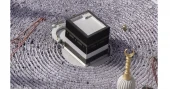
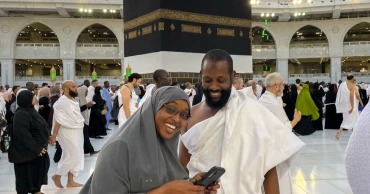
Some 2 million Muslim pilgrims officially began the annual Hajj pilgrimage on Monday, making their way out of Mecca after circling Islam's holiest site, the Kaaba, and converging on a vast tent camp in the nearby desert for a day and night of prayer.
One of the largest religious gatherings in the world has returned to full capacity this year for the first time since the onset of the coronavirus pandemic three years ago.
What is the Hajj pilgrimage and what does it mean for Muslims?
The pilgrimage is one of the five pillars of Islam, and all Muslims are required to make the five-day Hajj at least once in their lives if they are physically and financially able to do it.
For pilgrims, it is a deeply moving spiritual experience that absolves sins, brings them closer to God and unites the world's more than 1.8 billion Muslims. Some spend years saving up money and waiting for a permit to embark on the journey.
Maintaining the holy sites and hosting the annual Hajj is a major source of pride and legitimacy for the Saudi royal family, which captured Mecca in the 1920s. The pilgrimage has occasionally been marred by tragedy, as in 2015, when over 2,400 people died in a stampede and crush of pilgrims.
Hajj pilgrims perform final rituals in Mecca before heading to Mina
As the outbreak of the coronavirus led to worldwide lockdowns in 2020, Saudi authorities limited the Hajj to a few thousand citizens and local residents. The year before, some 2.5 million Muslims had taken part.
Pilgrims begin by entering a state of spiritual purity known as "ihram." Men wear simple, white terrycloth garments and women forgo make-up and cover their hair. The pilgrims circle the black, cube-shaped Kaaba seven times and walk between two hills, all of which are encompassed by Mecca's Grand Mosque, the world's largest.
The rituals during Hajj largely commemorate the Quran's accounts of Ibrahim, his son Ismail and Ismail's mother Hajar. The walk between the hills, for example, recreates Hajar's search for water in the desert for Ismail. In Islamic tradition, Ibrahim was ordered by God to sacrifice his son, Ismail, only to have his hand stayed at the last moment. Muslims believe Ibrahim and Ismail later built the Kaaba, which Muslims face during their daily prayers no matter where they are in the world.
Zilhajj moon sighted: Bangladesh to celebrate Eid-ul-Azha on June 29
In the Christian and Jewish traditions, which refer to him as Abraham, the biblical patriarch is ordered to sacrifice his other son, Isaac.
Pilgrims have been doing the ritual circuit around the Kaaba since arriving in Mecca over recent days. As the last ones performed it Monday, the pilgrims made their way by foot or by bus to Mina, where they will camp in one of the largest tent cities in the world. They will pray throughout the day and night before traveling on Tuesday to Mount Arafat, where the Prophet Muhammad is said to have delivered his final sermon.
The pilgrims will then collect pebbles from a site known as Muzdalifa to be used in the symbolic stoning of pillars representing the devil back in Mina. The final three days of the Hajj coincide with the festive Eid al-Adha holiday, when Muslims around the world slaughter livestock and distribute the meat to the poor.
2 years ago
What is the Hajj pilgrimage and what does it mean for Muslims?
Over 2 million Muslims will take part in this week's Hajj pilgrimage to the holy city of Mecca in Saudi Arabia, as one of the world's largest religious gatherings returns to full capacity following years of coronavirus restrictions.
The Hajj is one of the five pillars of Islam, and all Muslims are required to undertake it at least once in their lives if they are physically and financially able to do so. For the pilgrims, it is a profound spiritual experience that wipes away sins, brings them closer to God and highlights Muslim unity.
For the Saudi royal family, which captured Mecca in the 1920s, organizing the pilgrimage is a major source of pride and legitimacy. Authorities have invested billions of dollars in modern infrastructure, but the Hajj has occasionally been marred by tragedy, as in 2015, when over 2,400 pilgrims died in a stampede.
READ: Hajj pilgrims perform final rituals in Mecca before heading to Mina
Here's a look at the pilgrimage, which begins on Monday, and its meaning.
WHAT IS THE HISTORY OF THE HAJJ PILGRIMAGE IN ISLAM?
The pilgrimage draws Muslims from around the world to Mecca, in Saudi Arabia, where they walk in the footsteps of the Prophet Muhammad and retrace the journey of Ibrahim and Ismail, or Abraham and Ishmael as they are known in the Christian and Jewish traditions.
As related in the Quran, Ibrahim is called upon to sacrifice his son Ismail as a test of faith, but God stays his hand at the last moment. Ibrahim and Ismail later are said to have built the Kaaba together. In the Christian and Jewish traditions, Abraham nearly sacrifices his other son, Isaac, on Mount Moriah, which is associated with a major holy site in Jerusalem.
The Kaaba was a center for polytheistic worship among pagan Arabs until the arrival of Islam in the 7th century, when the Prophet Muhammad consecrated the site and inaugurated the Hajj.
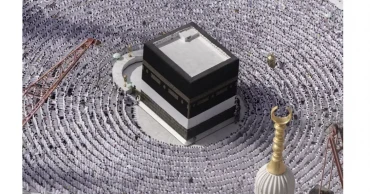
Muslims do not worship the Kaaba, a cube-shaped structure covered in a black, gold-embroidered cloth, but view it as their most sacred place and a powerful symbol of unity and monotheism. No matter where they are in the world, Muslims face toward the Kaaba during their daily prayers.
The Hajj has been held every year since the time of the prophet, even through wars, plagues and other turmoil.
READ: Pray that Bangladesh is safe from man-made or natural disasters: PM to Hajj pilgrims
In the Middle Ages, Muslim rulers organized massive caravans with armed escorts that would depart from Cairo, Damascus and other cities. It was an arduous journey through deserts where Bedouin tribes carried out raids and demanded tribute. A notorious Bedouin raid in 1757 wiped out an entire Hajj caravan, killing thousands of pilgrims.
In 2020, amid worldwide coronavirus lockdowns, Saudi Arabia limited the pilgrimage to a few thousand citizens and local residents. This is the first year it returns to full capacity.
HOW DO MUSLIMS PREPARE FOR THE HAJJ?
Some pilgrims spend their whole lives saving up for the journey or wait years before getting a permit, which Saudi authorities distribute to countries based on a quota system. Travel agents offer packages catering to all income levels, and charities assist needy pilgrims.
Pilgrims begin by entering a state of spiritual purity known as “ihram.” Women forgo make-up and perfume and cover their hair, while men change into seamless terrycloth robes. The garments cannot contain any stitching, a rule intended to promote unity among rich and poor.
Pilgrims are forbidden from cutting their hair, trimming their nails or engaging in sexual intercourse while in the state of ihram. They are not supposed to argue or fight, but the heat, crowds and difficulty of the journey inevitably test people's patience.
READ: Biman successfully completes this year's pre-hajj flights
Many Muslims visit Medina, where the Prophet Muhammad is buried and where he built the first mosque, before heading to Mecca.
WHAT HAPPENS DURING THE HAJJ?
The Hajj begins with Muslims circling the Kaaba in Mecca counter-clockwise seven times while reciting prayers. Then they walk between two hills in a reenactment of Hagar's search for water for her son, Ismail, a story that occurs in different forms in Muslim, Christian and Jewish traditions.
All of this takes place inside Mecca's Grand Mosque — the world's largest — which encompasses the Kaaba and the two hills.
The next day, pilgrims head to Mount Arafat, some 20 kilometers (12 miles) east of Mecca, where the Prophet Muhammad delivered his final sermon. Here, they stand in prayer throughout the day asking God for forgiveness of their sins in what many view as the spiritual high point of the pilgrimage.
Around sunset, pilgrims walk or take buses to an area called Muzdalifa, 9 kilometers (5.5 miles) west of Arafat. They pick up pebbles to use the next day in a symbolic stoning of the devil in the valley of Mina, where Muslims believe Ibrahim was tempted to ignore God's command to sacrifice his son. The pilgrims stay for several nights in Mina in one of the largest tent camps in the world.
READ: Pilgrims return to Mecca for ‘umrah’ after 7 months
The pilgrimage ends with a final circling of the Kaaba and further casting of stones at Mina. Men often shave their heads and women clip a lock of hair, signaling renewal. Many will assume the title of “hajj” or “hajja” — a great honor, particularly in more traditional communities. Some paint murals on their homes with images of airplanes, ships and the Kaaba to commemorate the journey.
The final days of Hajj coincide with Eid al-Adha, or the festival of sacrifice, a joyous occasion celebrated by Muslims around the world to commemorate Ibrahim’s test of faith. During the three-day Eid, Muslims slaughter livestock and distribute the meat to the poor.
2 years ago

Let’s continue our work to end drug abuse, illicit trafficking: António Guterres
United Nations Secretary-General António Guterres has called for continuing work to end drug abuse, noting that tens of millions of people suffer from drug use disorders.
“As a global community, let’s continue our work to end drug abuse, illicit trafficking, and the stigma endured by drug users around the world,” he said in a message marking the International Day Against Drug Abuse and Illicit Trafficking.
Drug users are doubly victimized: first by the harmful effects of the drugs themselves, and second by the stigma and discrimination they face.
People who use drugs can often face significant barriers to treatment and even health services for infectious diseases like HIV/AIDS and hepatitis.
“Meanwhile, drug traffickers continue to prey on drug users, rapidly escalating the production of dangerous, highly addictive synthetic drugs,” said the UN chief.
This year’s International Day Against Drug Abuse and Illicit Trafficking focuses on the need to put people first by ending stigma and discrimination, and strengthening prevention, he said.
“This means stressing rehabilitation, rather than punishment and incarceration for minor drug offences. It means upholding the human rights of people who use drugs, including by expanding prevention and treatment programmes and health services,” Guterres said.
It means protecting people and communities alike by ending impunity for drug traffickers profiting from people’s pain.
“Above all, it means governments leading the way. When I was Prime Minister of Portugal, we implemented non-criminal responses to drug possession for personal use, while cracking down on traffickers and re-allocating resources to prevention, treatment and harm-reduction measures,” said the UN chief.
As a result, drug consumption and associated infectious disease rates plummeted, more drugs were seized by police and customs, and — most importantly — lives were saved, he said, adding that, “Today, Portugal has one of Europe’s lowest overdose and death rates from drug use.”
2 years ago
When wealthy adventurers take huge risks, who should foot the bill for rescue attempts?
When millionaire Steve Fossett's plane went missing over the Nevada range in 2007, the swashbuckling adventurer had already been the subject of two prior emergency rescue operations thousands of miles apart.
And that prompted a prickly question: After a sweeping search for the wealthy risktaker ended, who should foot the bill?
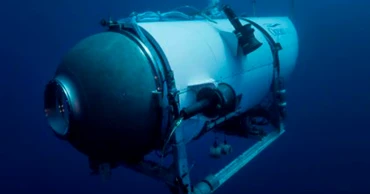
In recent days, the massive hunt for a submersible vehicle lost during a north Atlantic descent to explore the wreckage of the Titanic has refocused attention on that conundrum. And with rescuers and the public fixated first on saving and then on mourning those aboard, it has again made for uneasy conversation.
Canada is investigating why the Titanic-bound submersible imploded
"Five people have just lost their lives and to start talking about insurance, all the rescue efforts and the cost can seem pretty heartless — but the thing is, at the end of the day, there are costs," said Arun Upneja, dean of Boston University's School of Hospitality Administration and a researcher on tourism.
"There are many people who are going to say, 'Why should the society spend money on the rescue effort if (these people) are wealthy enough to be able to ... engage in these risky activities?'"
That question is gaining attention as very wealthy travelers in search of singular adventures spend big to scale peaks, sail across oceans and blast off for space.
What the Titanic submersible saga and the Greek migrant shipwreck say about our reactions to tragedy
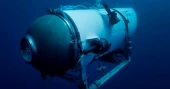
The U.S. Coast Guard declined Friday to provide a cost estimate for its efforts to locate the Titan, the submersible investigators say imploded not far from the world's most famous shipwreck. The five people lost included a billionaire British businessman and a father and son from one of Pakistan's most prominent families. The operator charged passengers $250,000 each to participate in the voyage.
"We cannot attribute a monetary value to Search and Rescue cases, as the Coast Guard does not associate cost with saving a life," the agency said.
While the Coast Guard's cost for the mission is likely to run into the millions of dollars, it is generally prohibited by federal law from collecting reimbursement related to any search or rescue service, said Stephen Koerting, a U.S. attorney in Maine who specializes in maritime law.
Previous passengers recall ill-fated Titan: ‘I 100% knew this was going to happen’
But that does not resolve the larger issue of whether wealthy travelers or companies should bear responsibility to the public and governments for exposing themselves to such risk.
"This is one of the most difficult questions to attempt to find an answer for," said Pete Sepp, president of the National Taxpayers Union, noting scrutiny of government-funded rescues dating back to British billionaire Richard Branson's hot air balloon exploits in the 1990s.
"This should never be solely about government spending, or perhaps not even primarily about government spending, but you can't help thinking about how the limited resources of rescuers can be utilized," Sepp said.
The demand for those resources was spotlighted in 1998 when Fossett's attempt to circle the globe in a hot air balloon ended with a plunge into the ocean 500 miles off Australia. The Royal Australian Air Force dispatched a Hercules C-130 transport aircraft to find him. A French military plane dropped a 15-man life raft to Fossett before he was picked up by a passing yacht.
With the fate of Titanic-bound submersible clear, focus turns to cause of the fatal implosion
Critics suggested Fossett should pay the bill. He rejected the idea.
Late that same year the US Coast Guard spent more than $130,000 to rescue Fossett and Branson after their hot air balloon dropped into the ocean off Hawaii. Branson said he would pay if the Coast Guard requested it, but the agency didn't ask.
Nine years later, after Fossett's plane vanished over Nevada during what should have been a short flight, the state National Guard launched a months-long search that turned up the wreckage of several other decades-old crashes without finding the millionaire.
The state said the mission had cost taxpayers $685,998, with $200,000 covered by a private contribution. But when the administration of Gov. Jim Gibbons announced that it would seek reimbursement for the rest, Fossett's widow balked, noting she had spent $1 million on her own private search.
"We believe the search conducted by the state of Nevada is an expense of government in performance of government action," a lawyer wrote on behalf of the Fossett estate.
Risky adventurism is hardly unique to wealthy people.
The pandemic drove a surge in visits to places like national parks, adding to the popularity of climbing, hiking and other outdoor activities. Meanwhile, the spread of cellphones and service has left many feeling that if things go wrong, help is a call away.
Some places have laws commonly referred to as "stupid motorist laws," in which drivers are forced to foot the emergency response bill when they ignore barricades on submerged roads. Arizona has such a law, and Volusia County in Florida, home to Daytona, enacted similar legislation this week. The idea of a similar "stupid hiker law" is a regularly debated item in Arizona as well, with so many unprepared people needing to be rescued in stifling triple-digit heat.
Most officials and volunteers who run search efforts are opposed to charging for help, said Butch Farabee, a former ranger who participated in hundreds of rescue operations at the Grand Canyon and other national parks and has written several books on the subject.
Searchers are concerned that if they did charge to rescue people "they won't call for help as soon as they should and by the time they do it's too late," Farabee said.
The tradeoff is that some might take that vital aid for granted. Farabee recounts a call in the 1980s from a lawyer who underestimated the effort needed to hike out of the Grand Canyon. The man asked for a helicopter rescue, mentioning that he had an important meeting the following day. The ranger rejected that request.
But that is not an option when the lives of adventurers, some of them quite wealthy, are at extreme risk.
At Mount Everest, it can cost tens of thousands of dollars in permit and expedition fees to climb. A handful of people die or go missing while hiking the mountain every year — prompting emergency response from local officials.
While the government of Nepal requires that climbers have rescue insurance, the scope of rescue efforts can vary widely, with Upneja estimating that some could cost "multiple dozens of thousands of dollars."
Nepal's Ministry of Foreign Affairs did not respond to a message seeking comment.
On the high seas, wealthy yachtsmen seeking speed and distance records have also repeatedly required rescue when their voyages run astray.
When the yacht of Tony Bullimore, a British millionaire on a round-the-world journey, capsized 1,400 miles off the Australia Coast in 1997 it seemed he might be done for. Clinging to the inside of the hull, he ran out of fresh water and was almost out of air.
When a rescue ship arrived, he swam desperately toward the surface.
2 years ago

Indian PM Modi arrives in Egypt on a two-day visit to strengthen ties
Indian Prime Minister Narendra Modi kicked off a two-day visit to Egypt on Saturday, a trip that underscores the growing ties between the two countries.
Modi’s flight landed at Cairo’s international airport Saturday afternoon, coming from a four-day trip to the United States where he held talks with President Joe Biden, delivered a speech to the U.S. Congress, and met with top American and Indian executives.
READ: Biden hosting Modi as US sees India as a pivotal force in Asia for decades to come
It’s the first state visit to Egypt by an Indian prime minister since 1997.
Modi was received by Egyptian Prime Minister Moustafa Madbouly, and the two inspected an honor guard and listened to the national anthems. Modi took to Twitter to thank Madboubly for “the special gesture of welcoming me at the airport," and added, “May India-Egypt ties flourish and benefit the people of our nations.”
Modi is scheduled to hold talks with President Abdel Fattah el-Sissi on Sunday. The two countries would also sign a set of memorandums aiming at solidifying their ties, according to India’s External Affairs Ministry.
READ: India's Modi meets the press at the White House — and takes rare questions
Modi’s visit came six months after el-Sissi attended India’s Republic Day parade as an official guest.
In January, el-Sissi and Modi agreed on measures to increase the two-way trade in five years to $12 billion, up from $7.3 billion in 2021-22. During el-Sissi’s visit, the countries also signed agreements on expanding cooperation in cyber security, information technology, culture, and broadcasting.
India is one of the top five importers of Egyptian products, including crude oil and liquefied natural gas, salt, cotton, inorganic chemicals and oilseeds. Major Indian exports to Egypt include cotton yarn, coffee, herbs, tobacco, lentils, vehicle parts, ships, boats and electrical machinery.
READ: Modi to start US visit with yoga on the UN lawn, a savvy and symbolic choice for India's leader
More than 50 Indian companies have invested around $3.15 billion in various parts of the Egyptian economy, including chemicals, energy, textiles, garments, agri-business and retailing, according to India’s External Affairs Ministry.
2 years ago

What the Titanic submersible saga and the Greek migrant shipwreck say about our reactions to tragedy
Across the span of nearly a week, the saga of a lost submersible that had gone into the depths of the ocean to see the Titanic wreckage rippled across the national and global conversation — culminating in news that the craft had imploded and its five occupants were dead.
But a far bigger disaster days earlier, the wrecking of a ship off Greece filled with migrants that killed at least 80 people and left a horrifying 500 missing, did not become a moment-by-moment worldwide focus in anywhere near the same way.
One grabbed unrelenting, moment-to-moment attention. One was watched and discussed as another sad, but routine, news story.
Also Read: About 350 Pakistanis were on migrant boat that sank off Greece and many may have died, official says
What makes these two events at sea different in how they were received? Viewed next to each other, what do they say about human reactions to tragic news? And why did the saga of the submersible grab so much attention?
AN UNKNOWN OUTCOME AND (WE THOUGHT) A TICKING CLOCK
By the time the world learned about the Greek shipwreck, the event had already taken place and, to some extent, the outcome was already known. All that was left was the aftermath.
Conversely, the Titan (the world thought) was an event in the process of happening — something that unfolded in real time with a deadline attached. As with any narrative, a ticking clock increases tension and attention.
Read More: At least 79 dead after overcrowded migrant vessel sinks off Greece; hundreds may be missing
The fact that no one could communicate with the submersible — or learn anything about what the people inside were experiencing — only added to the potential for close attention.
A RENOWNED HISTORICAL TRAGEDY BACK IN THE NEWS
Before anything even went awry, the Titan was already venturing into a realm of existing high interest — the wreck of the Titanic, itself the archetype of modern disasters long before James Cameron's popular 1997 film. So there was an interest already baked in that had nothing to do with the submersible itself.
Cameron's reaction to the Titan disaster only made that connection more intense.
He told the BBC in an interview broadcast on Friday that he "felt in my bones" that the Titan submersible had been lost soon after he heard it had lost contact with the surface during its descent to the wreckage of the ocean liner at the bottom of the Atlantic Ocean. He said focus in the media over the next few days about the submersible having 96 hours of oxygen supply — and that banging noises had been heard — were a "prolonged and nightmarish charade."
CLASS AND RACE PLAYED A ROLE
Many reactions and memes this week centered around the notion — fair or not — that one event involved rich people using the ocean as a playground, while the other was a sadly frequent recurrence of misfortune befalling people who lack status, resources or even a voice in the modern marketplace of ideas.
Related: Previous passengers recall ill-fated Titan: ‘I 100% knew this was going to happen’
Apryl Alexander, a public health professor at University of North Carolina-Charlotte who has studied trauma and survivors, said the migrants on the ship in Greece didn't seem to engender the same interest from the public as did the wealthy individuals who paid $250,000 apiece to explore the Titanic.
That reminded Alexander of the differences in news coverage of crime in the United States. Crimes get more attention when the victim is white and wealthy compared to a person of color in poverty, Alexander says.
A SMALL GROUP OF PEOPLE HAD THE MEDIA'S EAR
Tim Recuber, an assistant professor of sociology at Smith College who studies mass media, digital culture and emotions, says people tend to be drawn to stories that allow them to empathize with the suffering of others — and that it's easier to empathize when there are smaller numbers of people involved.
Related: With the fate of Titanic-bound submersible clear, focus turns to cause of the fatal implosion
"I think some people are calling out this time around the sort of inequalities that are baked into it around class," Recuber said. "We are able to learn who the people on the sub are because of who they are. They're wealthy and they have access to the press. Divisions of race and national identity matter in terms of who gets empathized with."
THE PUBLIC LIVES VICARIOUSLY THROUGH RISKS OTHERS TAKE
Risk-takers who choose their risks have grabbed headlines almost since there have been headlines. So the public was likely enthralled about others cheating death by doing something dangerous, says Daryl Van Tongeren, a psychology professor at Hope College in Michigan who has studied the meaning around big events and their effect on people.
In other words, he said, readers and viewers can feel alive by living vicariously through others who are taking risks. "There's this fascination with people who engage in these high-risk experiences," Van Tongeren said. "Even though we know that death is the only certainty in life, we invest in these activities where we get close to death but overcome it. We want to demonstrate our mastery over death." he said.
DISASTER FATIGUE IS A FACTOR, TOO
The pandemic. Mass shootings. Economic problems. War. Climate change. It can be hard for another piece of bad news to punch through. "People are starting to tune out," Alexander said.
In the end, she said, she'd like to see the same level of societal interest in human tragedies regardless of race, religion, demographics, or other factors: "For all of us, we hope that if any of our loved ones go missing that the media and the public would pay the same attention to all stories."
2 years ago

Previous passengers recall ill-fated Titan: ‘I 100% knew this was going to happen’
Talk to someone who rode on the Titan submersible, and they're likely to mention a technological glitch: the propulsion system failed or communications with people on the surface cut out. Maybe there were problems balancing weights on board.
They are also likely to mention Stockton Rush, the OceanGate Expeditions CEO who died on the fatal trip this week. He has been described by past passengers as both a meticulous planner and an overconfident pioneer.
With the fate of Titanic-bound submersible clear, focus turns to cause of the fatal implosion
In the wake of the Titan's fatal implosion near the Titanic shipwreck on Sunday, some people who embarked on the company's deep-sea expeditions described experiences that foreshadowed the tragedy and look back on their decision to dive as "a bit naive."
But others expressed confidence and said that they felt they were "in good hands" nearly 13,000 feet (3,962 meters) below the ocean's surface.
'Like playing Russian roulette'
"I 100% knew this was going to happen," said Brian Weed, a camera operator for the Discovery Channel's "Expedition Unknown" show, who has felt sick to his stomach since the sub's disappearance Sunday.
Tourist sub's implosion draws attention to murky regulations of deep-sea expeditions
Weed went on a Titan test dive in May 2021 in Washington state's Puget Sound as it prepared for its first expeditions to the sunken Titanic. Weed and his colleagues were preparing to join OceanGate Expeditions to film the famous shipwreck later that summer.
They quickly encountered problems: The propulsion system stopped working. The computers failed to respond. Communications shut down.
Rush, the OceanGate CEO, tried rebooting and troubleshooting the vessel on its touch screens.
"You could tell that he was flustered and not really happy with the performance," Weed said. "But he was trying to make light of it, trying to make excuses."
Titan submersible imploded, killing all 5 on board, US Coast Guard says
They were barely 100 feet (30 meters) deep in calm water, which begged the question: "How is this thing going to go to 12,500 feet — and do we want to be on board?" Weed said.
Following the aborted trip, the production company hired a consultant with the U.S. Navy to vet the Titan.
He provided a mostly favorable report, but warned that there wasn't enough research on the Titan's carbon-fiber hull, Weed said. There also was an engineering concern that the hull would not maintain its effectiveness over the course of multiple dives.
Weed said Rush was a charismatic salesman who really believed in the submersible's technology — and was willing to put his life on the line for it.
"It was looking more and more like we weren't going to be the first guys down to film the Titanic — we were going to be maybe the 10th," Weed said of the possible Titan expedition. "I felt like every time (the vessel) goes down, it's going to get weaker and weaker. And that's a little bit like playing Russian roulette."
For work projects, Weed has swam with sharks, repelled into remote caves and snowshoed through Siberia. But he and his colleagues pulled out of the dive to the Titanic.
"I didn't have a good feeling about it," he said. "It was a really hard choice to make."
'I always felt I was in good hands'
Mike Reiss, a writer for "The Simpsons" television show, said he had positive experiences on the dives he made with OceanGate, including to the Titanic wreck site.
"When my wife first came to me with this (idea), I said to her, 'Well, this sounds like a fun way to get killed,'" Reiss said. "I knew (the risks) going in there. I always felt I was in good hands."
Reiss said he went on three trips with OceanGate in waters near New York City — and that the company took safety seriously.
"Mostly it was just breathtaking how well it all went," Reiss said of his 2022 dive to the Titanic. "It's a 10-hour trip. And I went from sea level to two and a half miles down, and then back to sea level. And at no time did the pressure change in my ears. I didn't get the same feeling I get in the New York elevator. To me that's a remarkable achievement."
Reiss said he was in a "different state of mind" on the expedition because he was so engaged.
"You're never hungry. You're never thirsty. They have a bathroom on board. It has never been used," he said. "You just become a different kind of person. You even know you could die and it doesn't bother you."
Reiss said he did notice some issues with the Titan, although he wasn't sure everything was a glitch.
For instance, the communications didn't always work, like a cellphone losing service. The Titan's compass also started "acting frantically" when they got to the ocean floor near the sunken Titanic.
"I don't know if that's an equipment failure or because magnetism is different two and a half miles down," he said.
'The fatal flaw is what he will be remembered for'
Arnie Weissmann, editor in chief of Travel Weekly, never rode in the Titan despite spending a week aboard its support ship in late May, waiting for the weather to clear. He briefly climbed into the submersible, but the dive was ultimately canceled.
Wind, fog and waves were the stated reasons, but Weissmann wondered whether the submersible's readiness was also a factor.
Over cigars one night, Rush told Weissmann that he got the carbon fiber for the Titan's hull at a big discount because it was past its shelf-life for use in airplanes, Weissmann said. But Rush reassured him it was safe.
"I really felt there were two Stockton Rushes," Weissman said. "There was the one who was a good team leader and efficient and getting the work done. And there was this cocky, self-assured, others be damned, 'I'm going to do it my way' sort of guy. And that's the one I saw when we went out the back of the boat and had our cigars."
But he also was a strong leader, said Weissmann, who recalled Rush leading lengthy planning meetings and urging anyone who was interested to read a book called "The Checklist Manifesto: How to Get Things Right" that he left in the ship's lounge. If a repair was complex, Weissmann said Rush would tell those assigned to it to pause for five minutes after completing it to make sure it was done correctly.
Looking back, Weissmann believes Rush had a fatal flaw: overconfidence in his engineering skills and the perception that he was a pioneer in an area that others weren't because they were sticking to the rules.
"But in the end, for sure, the fatal flaw is what he will be remembered for — even though he was a three-dimensional human being like everybody else," Weissmann said.
'I was a bit naive'
Arthur Loibl, a retired businessman and adventurer from Germany, was among OceanGate's first customers to dive to the sunken ocean liner.
"You have to be a little bit crazy to do this sort of thing," he said.
His submersible mates included Rush, French diver and Titanic expert Paul-Henri Nargeolet and two passengers from England.
"Imagine a metal tube a few meters long with a sheet of metal for a floor. You can't stand. You can't kneel. Everyone is sitting close to or on top of each other," Loibl said. "You can't be claustrophobic."
During the 2.5-hour descent and ascent, the lights were turned off to conserve energy, he said, with the only illumination coming from a fluorescent glow stick.
The dive was repeatedly delayed to fix a problem with the battery and the balancing weights. In total, the voyage took 10.5 hours.
He described Rush as a tinkerer who tried to make do with what was available to carry out the dives, but in hindsight, he said, "it was a bit dubious."
"I was a bit naive, looking back now," Loibl said.
2 years ago