Others
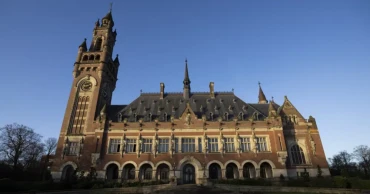
Top UN court allows a record 32 countries to intervene in Ukraine's genocide case against Russia
The International Court of Justice has accepted requests from 32 countries to back Ukraine in a genocide case against Russia, the United Nations' highest court said Friday.
It's the largest number of countries to join another nation's complaint at the world court based in The Hague, Netherlands.
Also Read: Russia says top UN court should dismiss Ukraine's case over Crimea and terrorism funding
Ukraine's government filed the legally creative case days after Russia invaded its neighbor in February 2022. The Kremlin snubbed hearings held the next month, while protesters holding Ukrainian flags chanted antiwar slogans outside the court building's gates.
Latvia was the first country to intervene in the complaint, which alleges Russia violated the 1948 Genocide Convention by falsely accusing Ukraine of committing genocide in its eastern Luhansk and Donetsk regions, and using that as a pretext for the invasion.
A record 33 countries, including the United States, Canada, Australia and every European Union member nation except Hungary requested to participate on Ukraine's side in the case. However, the U.N. court's judges rejected the U.S. request on a technicality.
Also Read: Ukraine brands Russia ‘terrorist state’ to open hearings in case against Russia at top UN court
"The court concludes that the declarations of intervention filed in this case, except for the declaration submitted by the United States, are admissible," they said.
Any country that has signed the post-World War II treaty criminalizing genocide is allowed to file for intervention in cases brought under the accord. The United States did not accept part of the Genocide Convention when it signed the treaty, so the judges determined the country wasn't entitled to participate.
Also Read: UN court rejects Myanmar claims, will hear Rohingya case
Countries and organizations not directly involved in legal proceedings often ask courts if they can submit arguments in a case, particularly if the outcome might impact them in some way.
Experts see the petitions in the pending case as attempts to demonstrate support for Ukraine and to condemn Russia's war rather than countries seeking opportunities to advocate particular legal positions or arguments.
"The countries are expressing solidarity with Ukraine," Ori Pomson, a legal scholar at the University of Cambridge whose research focuses on the International Court of Justice, told the Associated Press.
In March 2022, the court ordered Russia to stop hostilities in Ukraine, but Moscow has failed to comply.
The world court is hearing a separate case brought earlier by Ukraine linked to Russia's 2014 annexation of Crimea and Russian funding of separatist rebels in eastern Ukraine.
A similar group of countries also asked the European Court of Human Rights to intervene in a group of cases Ukraine brought against Russia over the war. In March, the Strasbourg-based court granted 31 groups the right to back Ukraine in those proceedings.
2 years ago

UN aid chief says Ukraine faces `hugely worse' humanitarian situation after the dam rupture
The humanitarian situation in Ukraine is “hugely worse” than before the Kakhovka dam collapsed, the U.N.'s top aid official warned Friday.
Undersecretary-General Martin Griffiths said an “extraordinary” 700,000 people are in need of drinking water and warned that the ravages of flooding in one of the world’s most important breadbaskets will almost inevitably lead to lower grain exports, higher food prices around the world, and less to eat for millions in need
“This is a viral problem,” he said in an interview with The Associated Press. “But the truth is this is only the beginning of seeing the consequences of this act.”
The rupture of the Kakhovka hydroelectric dam and emptying of its reservoir on the Dnieper River on Wednesday added to the misery in a region that has suffered for more than a year from artillery and missile attacks.
Ukraine holds the Dnieper’s western bank, while Russian troops control the low-lying eastern side, which is more vulnerable to flooding. The dam and reservoir, essential for fresh water and irrigation in southern Ukraine, lies in the Kherson region that Moscow illegally annexed in September and has occupied for the past year.
Griffiths said the United Nations, working mainly through Ukrainian aid groups, has reached 30,000 people in flooded areas under Ukrainian control. He said that so far Russia has not given access to areas it controls for the U.N. to help flood victims.
Also read: A dam collapses and thousands face the deluge — often with no help — in Russian-occupied Ukraine
Griffiths said he met with Russia’s U.N. ambassador, Vassily Nebenzia, on Wednesday to ask Russian authorities “for access for our teams in Ukraine to go across the front lines to give aid, to provide support for … Ukrainians in those areas.”
“We're providing them with details as we speak, to enable Moscow to meet what we hope will be a positive decision on this,” he said. “I hope that will come through.”
The emergency response is essential to save lives, he said, “but behind that you’ve got a huge, looming problem of a lack of proper drinking water for those 700,000 people” on both the Ukrainian-controlled and Russian-controlled sides of the river.
There is also the flooding of important agricultural land and a looming problem of providing cooling water for the Zaporizhzhia nuclear power plant, Europe’s largest, which had been supplied from the dam, he added.
In addition, Griffiths noted that waters also have rushed over areas with land mines from the war “and what we are bound to be seeing are those mines floating in places where people don’t expect them,” threatening adults and especially children.
Also read: Drone footage of collapsed dam shows ruined structure, devastation and no sign of life
“So it’s a cascade of problems, starting with allowing people to survive today, and then giving them some kind of prospects for tomorrow,” he said.
Griffiths said that because of the wide-ranging consequences “it’s almost inevitable” that the United Nations will launch a special appeal for more aid funds for Ukraine to deal with “a whole new order of magnitude” from the dam’s rupture. But he said he wants to wait a few weeks to see the economic, health and environmental consequences before announcing the appeal.
Griffiths said he and U.N. trade chief Rebeca Grynspan are also working to ensure the extension of the Black Sea Grain Initiative, which Turkey and the U.N. brokered with Ukraine and Russia last July to open three Black Sea ports in Ukraine for its grain exports.
More than 30,000 metric tons of wheat and other foodstuff has been shipped under the deal, leading to a decline in global food prices that skyrocketed after Russia's Feb. 24, 2022, invasion of Ukraine. It has been extended three times and is due to expire July 17.
Also read: Ukrainian dam breach: What is happening and what's at stake
Part of the deal was a memorandum signed by Russia and the U.N. aimed at overcoming obstacles to Russian food and fertilizer shipments that Moscow has repeatedly complained are not being fulfilled.
A key Russian demand has been the reopening of a pipeline between the Russian port of Togliatti on the Volga River and the Black Sea port of Odesa that has been shut down since Russia’s attack on Ukraine. It carried ammonia, a key ingredient of fertilizer.
“Opening that pipeline and delivering ammonia across the Black Sea to the global south is a priority for all of us,” Griffiths said. “Ammonia is an essential ingredient for global food security.”
A rupture in the pipeline was reported from shelling late Tuesday, but Griffiths said the U.N. couldn’t confirm it because the pipeline is in the middle of a war zone.
“We, of course, are very, very strongly of the view that we need that repaired as quickly as possible,” he said. “So let’s hope it’s not too badly damaged.” He said the Ukrainians have told the U.N. they will get to the pipeline, which is on their territory, “as soon as they can.”
Griffiths said the Ukrainians see opening the pipeline as part of a package that would also include Russian agreement to open a fourth Black Sea port at Mykolaiv to export more grain.
Negotiations have been taking place in recent weeks, including at a meeting Friday in Geneva between U.N. trade chief Grynspan and Russia's deputy foreign minister Sergey Vershinin.
“We're not there yet,” Griffiths said. “I hope that we'll make it.”
2 years ago

To restore reefs dying in warming seas, UAE turns to coral nurseries
On a boat off the coast of an island near Abu Dhabi, marine scientist Hamad al-Jailani feels the corals, picked from the reef nursery and packed in a box of seawater, and studies them carefully, making sure they haven't lost their color.
The corals were once bleached. Now they're big, healthy and ready to be moved back to their original reefs in the hope they'll thrive once more.
"We try to grow them from very small fragments up to — now some of them have reached — the size of my fist," al-Jailani said, who's part of the Environment Agency Abu Dhabi's coral restoration program.
Also Read: Red Sea corals threatened by mass sea urchin die-off, Israeli researchers say
The nursery gives corals the ideal conditions to recover: clear waters with strong currents and the right amount of sunlight. Al-Jailani periodically checks the corals' growth, removes any potentially harmful seaweed and seagrass, and even lets the fish feed off the corals to clean them, until they're healthy enough to be relocated.
The Environment Agency Abu Dhabi, or EAD, has been rehabilitating and restoring corals since 2021, when reefs off the United Arab Emirates' coast faced their second bleaching event in just five years. EAD's project is one of many initiatives — both public and private — across the country to protect the reefs and the marine life that depend on them in a nation that has come under fire for its large-scale developments and polluting industries that cause harm to underwater ecosystems. There's been some progress, but experts remain concerned for the future of the reefs in a warming world.
Also Read: Coral reefs' survival at stake: Unesco
Coral bleaching occurs when sea temperatures rise and sun glares flush out algae that give the corals their color, turning them white. Corals can survive bleaching events, but can't effectively support marine life, threatening the populations that depend on them.
The UAE lost up to 70% of their corals, especially around Abu Dhabi, in 2017 when water temperatures reached 37 degrees Celsius (99 degrees Fahrenheit), according to EAD. But al-Jailani said 40-50% of corals survived the second bleaching event in 2021.
Although the bleaching events "did wipe out a good portion of our corals," he said, "it did also prove that the corals that we have are actually resilient ... these corals can actually withstand these kind of conditions."
Bleaching events are happening more frequently around the world as waters warm due to human-made climate change, caused by the burning of oil, coal and gas that emits heat-trapping gases into the atmosphere. Other coral reef systems around the world have suffered mass bleaching events, most notably Australia's Great Barrier Reef.
How to limit global warming and its effects will be discussed at length at the United Nations climate conference, which will be held in Dubai later this year.
Also Read: Rare, pristine coral reef found off Tahiti coast
The UAE is one of the world's largest oil producers and has some of the highest per capita greenhouse gas emissions globally. The country has pledged to have net zero carbon emissions by 2050, which means all carbon dioxide emissions are either slashed or canceled out somehow, but the goal has been met with skepticism from analysts.
But bleaching due to warming weather is not the only threat to coral reefs around the gulf. High oil tanker traffic, fossil-fuel related activities, offshore installations, and the exploitation of marine resources are all putting marine life under intense stress, according to the U.N. Environment Programme, causing them to degrade.
Environmentalists have also long criticized the UAE, and Dubai in particular, for its large-scale buildings and huge coastal developments.
The building of the Palm Jebel Ali, which began more than a decade ago and has been on hold since 2008, caused an outcry among conservationists after it reportedly destroyed about 8 square kilometers (5 square miles) of reef.
"More than 90 million cubic meters (23.8 billion gallons) of sediments were dredged and dropped, more or less on top of one of the remaining reefs near Dubai," said John Henrik Stahl, the dean of the College of Marine Sciences at Khorfakkan University in Sharjah, UAE.
The project was meant to be similar to the Palm Jumeirah — a collection of small, artificial islands off the coast of Dubai in the shape of a palm tree.
Still, environmental projects persist across the coastline and throughout the emirates.
Development company URB has announced it wants to grow 1 billion artificial corals over a 200-square-kilometer area (124 square miles) and 100 million mangrove trees on an 80-kilometer (50-mile) strip of beaches in Dubai by 2040.
Still in the research and development phase, the project hopes to create 3D technology to print materials that can host algae, much like corals.
Members of Dubai's diving community are also encouraging coral protection efforts.
Diving course director Amr Anwar is in the process of creating a certified coral restoration course that teaches divers how to collect and re-plant corals that have fallen after being knocked off by divers' fins or a boat's anchor.
"I don't want people to see broken corals and just leave them like that," said Anwar. "Through the training we give people, they would be able to take these broken corals that they find and plant them elsewhere, and then see them grow and watch their progress."
But experts say that unless the threat of overheating seas caused by climate change is addressed, coral bleaching events will continue to occur, damaging reefs worldwide.
Countries have pledged to limit the global average temperature rise to 1.5 degrees Celsius (2.7 degrees Fahrenheit) since pre-industrial times, after which scientists say the effects of warming on the planet could be much worse, and some even potentially irreversible. But analysts say most nations — including the UAE — are still way off that target.
"You have to make sure that the cause for the degradation of the coral reefs in the first place is no longer a threat," said Stahl, the Khorfakkan University scientist. "Otherwise the restoration effort may be for nothing."
2 years ago

A dam collapses and thousands face the deluge — often with no help — in Russian-occupied Ukraine
For days, the Ukrainian teenager has waited in the attic, just down the street from the cemetery of her flooded town, marking time with her 83-year-old grandfather and two other elderly people and hoping for help to escape the deluge of a catastrophic dam collapse.
But help is slow in coming to Oleshky, a Russian-occupied town across the Dnieper River from the city of Kherson with a prewar population of 24,000, according to those stranded and their desperate Ukrainian rescuers. Russian forces are taking rescuers' boats, they say. Some say the soldiers will only help people with Russian passports.
Also Read: Drone footage of collapsed dam shows ruined structure, devastation and no sign of life
"Russian soldiers are standing at the checkpoints, preventing (rescuers) from approaching the most-affected areas and taking away the boats," said one volunteer, Yaroslav Vasiliev. "They are afraid of saboteurs, they suspect everyone."
So 19-year-old Yektarina But and the three elderly people with her simply wait, along with thousands of others believed to be trapped by floodwaters spread across 600 square kilometers (230 square miles) of the Kherson region. About two-thirds of the flooded areas are in territory occupied by Russia, officials said.
The group in the attic have no electricity, no running water, no food. The battery on But's cellphone is dying.
"We are afraid that no one will know about our deaths," she said in a brief cellphone interview, her voice trembling.
"Everything around us is flooded," she said. "There is still no help." Her grandfather, who had suffered a stroke, was running out of medicine, she said. One woman with her, a neighbor's grandmother, could not move on her own.
Others have been turned away from rescue.
Also Read: Zelenskyy visits area flooded by destroyed dam as five reported dead in Russian-occupied town
Viktoria Mironova-Baka said she has been in touch from Germany with relatives stuck in the flooded region.
"My relatives said that Russian soldiers were coming up to the house today by boat, but they said they would only take those with Russian passports," she told The Associated Press. Her grandmother, aunt and more than a dozen other people are taking shelter in the attic of a two-story house.
Details of life in Russian-occupied Ukraine are often unclear. The AP could not independently verify reports of boat seizures or that only Russians were being evacuated, but the account is in line with reporting by independent Russian media.
It's a sharp contrast to Ukrainian-controlled territory flooded by the dam collapse. Authorities there have aggressively evacuated civilians and brought in emergency supplies. On Thursday, President Volodymyr Zelenskyy traveled to the area to assess the damage. Russian President Vladimir Putin "has no plans at the current moment" to visit affected Moscow-occupied areas, Kremlin spokesman Dmitry Peskov told journalists.
also read: Ukrainian dam breach: What is happening and what's at stake
This region has suffered terribly since Russia invaded Ukraine early last year, enduring sometimes-relentless artillery and missile attacks.
The latest disaster began Tuesday, when the Kakhovka hydroelectric dam, roughly 80 kilometers (50 miles) upstream from Oleshky, collapsed, sending torrents of water down the Dnieper River and across the war's front lines.
Officials say more than 6,000 people have been evacuated from dozens of inundated cities, towns and villages on both sides of the river. But the true scale of the disaster remains unclear for a region that was once home to tens of thousands of people.
At least 14 people have died in the flooding, many are homeless, and tens of thousands are without drinking water.
The floods ruined crops, displaced land mines, caused widespread environmental damage, and set the stage for long-term electricity shortages.
Ukraine says Russia destroyed the dam with explosives. Russia accuses Ukraine of destroying it with a missile strike.
A drone flown Wednesday by an AP team over the dam's wreckage revealed none of the scorch marks or shrapnel scars typical of a bombardment. The bulk of the dam itself is now submerged, and The AP images offered a limited snapshot, making it difficult to rule out any scenario. The dam also had been weakened by Russian neglect and water had been washing over it for weeks. It had been under Russian control since the invasion in February 2022.
Compounding the tragedy, Russia has been shelling areas hit by the flooding, including the front-line city of Kherson. On Thursday, Russian shelling echoed not far from a square in Kherson where emergency crews and volunteers were dispensing aid. Some evacuation points in the city were hit, wounding nine people, according to Ukrainian officials.
The floodwaters have irrevocably changed the landscape downstream, and shifted the dynamic of the 15-month-old war.
Oleshky Mayor Yevhen Ryshchuk said that by Thursday afternoon water levels were beginning to fall, but roughly 90% of the city remained flooded.
Ryshchuk fled after Russian forces tried to force him to collaborate, but he remains in close contact with people in and around the city.
Russia says it is helping the region's civilians. Moscow-appointed regional Gov. Vladimir Saldo claimed over 4,000 people had been evacuated from the flood zones. He shared a video showing empty beds in shelters prepared for evacuees.
Ryshchuk dismisses such talk.
He said some people trying to leave flooded areas were forced back by Russian soldiers who accused them of being "waiters" — people waiting for Ukraine to reclaim control of the region.
Others, who called the Russian-controlled emergency services, were told they would have to wait for help, he said.
"That's it," he said. "Yesterday, some Russians came in the morning, took a few people off the roofs, filmed a video, and left. That's everything they have done as of today."
The help that made it through has been scattered.
Ukrainian military footage, for instance, showed their forces dropping a bottle of water from a drone to a boy trapped with his mother and sister in the attic of their home near Oleshky. Ukrainian soldiers later evacuated the family and their pets to the city of Kherson, National Police reported.
Much of the help is being organized by volunteers communicating on the encrypted app Telegram. Messages about stranded people, often trapped on the roofs of their houses, appear in these groups every few minutes. Most are posted by relatives in safer areas.
Just one of these volunteer groups has a map showing over 1,000 requests to locate and rescue people, mostly in Oleshky and the nearby town of Hola Prystan.
A woman helping with one of the groups, who spoke on condition her name not be used for fear of reprisals from the Russian occupiers, shared a message with an AP journalist.
"We were looking for a person named Serhii Borzov," the message read. "He was found. Unfortunately, dead. Our condolences to the relatives."
2 years ago

WHO, Global Fund announce commitment for enhanced collaboration
The World Health Organization (WHO) and the Global Fund to Fight AIDS, Tuberculosis and Malaria (the Global Fund) signed a new and revised Strategic Framework for Collaboration, designed to build stronger and more resilient health systems and maximize collaboration and impact in support of country, regional and global responses to major communicable diseases.
The new five-year framework builds on the previous agreement signed in 2018, WHO said on Thursday.
Read more: Accelerate efforts to ensure safe roads for all: WHO
It aligns with the 2023-2028 Global Fund Strategy and the WHO General Programme of Work, which put communities at the centre of the health response and also address pandemic preparedness and challenges posed by climate change.
The framework fits with broader collaboration platforms to accelerate support to countries to achieve the health-related Sustainable Development Goals (SDGs) including Universal Health Coverage (UHC).
“As health budgets globally are strained and under pressure, it is imperative for our two organizations to continue to work together to support countries to expand access to services for the three diseases as part of their journey towards universal health coverage,” said Dr Tedros Adhanom Ghebreyesus, WHO Director-General.
Read more: WHO launches global network to detect and prevent infectious disease threat
“In light of slowing progress towards ending the AIDS, TB, and malaria epidemics, coupled with emerging health challenges, stronger collaboration between WHO and the Global Fund is needed more than ever.”
With WHO and the Global Fund’s common mission and commitment to serve countries, the new Strategic Framework for Collaboration will further strengthen and extend collaboration.
“At a time when the world is beset by interlocking and intersecting crises, from conflict to climate change, the partnership between the Global Fund and WHO is more critical than ever,” said Peter Sands, Executive Director of the Global Fund.
“Crises shock global systems and roll back gains, with the world’s most vulnerable people bearing the brunt. Organizations like ours are most effective when we collaborate closely with national governments and other trusted partners to strengthen local, community-driven systems for health.”
Read more: Bangladesh leads WHO in adopting resolutions to reduce drowning mortality
Through this new framework, WHO and the Global Fund will be leveraging their comparative strengths across 35 areas for collaboration divided into 4 categories- health policies and normative guidance, advocacy and health governance, health products and innovations and technical support and capacity building.
2 years ago

Millions breathing hazardous air as smoke from Canadian wildfires streams south over US
Smoke from Canadian wildfires poured into the U.S. East Coast and Midwest on Wednesday, covering the capitals of both nations in an unhealthy haze, holding up flights at major airports, postponing Major League Baseball games and prompting people to fish out pandemic-era face masks.
Canadian officials asked other countries for additional help fighting more than 400 blazes nationwide that already have displaced 20,000 people. Air with hazardous levels of pollution extended into the New York metropolitan area, central New York state and parts of Pennsylvania and New Jersey. Massive tongues of unhealthy air extended as far as North Carolina and Indiana, affecting millions of people.
“I can taste the air,” Dr. Ken Strumpf said in a Facebook post from Syracuse, New York, which was enveloped in an amber pall. The smoke, he later said by phone, even made him a bit dizzy.
The air quality index, a U.S. Environmental Protection Agency metric for air pollution, exceeded a staggering 400 at times in Syracuse, New York City and Pennsylvania’s Lehigh Valley. A level of 50 or under is considered good; anything over 300 is considered “hazardous,” when even healthy people are advised to curtail outdoor physical activity.
Also read: Out-of-control wildfires cause evacuations in western Canada
In Baltimore, Debbie Funk sported a blue surgical mask as she and husband, Jack Hughes, took their daily walk around Fort McHenry, a national monument overlooking the Patapsco River. The air hung thick over the water, obscuring the horizon.
“I walked outside this morning, and it was like a waft of smoke,” said Funk.
Canadian officials say this is shaping up to be the nation's worst wildfire season ever. It started early on drier-than-usual ground and accelerated very quickly, exhausting firefighting resources across the country, fire and environmental officials said.
Smoke from the blazes in various parts of the country has been lapping into the U.S. since last month but intensified with recent fires in Quebec, where about 100 were considered out of control Wednesday — which, unsettlingly, was national Clean Air Day in Canada.
The smoke was so thick in downtown Ottawa, Canada's capital, that office towers just across the Ottawa River were barely visible. In Toronto, Yili Ma said her hiking plans were canceled and she was forgoing restaurant patios, a beloved Canadian summer tradition.
“I put my mask away for over a year, and now I’m putting on my mask since yesterday," the 31-year-old lamented.
Quebec Premier François Legault said the province currently has the capacity to fight about 40 fires — and the usual reinforcements from other provinces have been strained by conflagrations in Nova Scotia and elsewhere.
Canadian Interagency Forest Fire Centre spokesperson Jennifer Kamau said more than 950 firefighters and other personnel have arrived from the U.S., Australia, New Zealand and South Africa, and more are due soon.
In Washington, White House press secretary Karine Jean-Pierre said President Joe Biden has sent more than 600 firefighters and equipment to Canada. His administration has contacted some U.S. governors and local officials about providing assistance, she said.
Also read: Chile wildfires spread amid heat wave as death toll rises
Canadian Prime Minister Justin Trudeau said on Twitter that he spoke by phone with Biden and “thanked him for all the help Americans are providing as we continue to fight these devastating wildfires.”
The largest town in Northern Quebec — Chibougamau, population about 7,500 — was evacuated Tuesday, and Legault said the roughly 4,000 residents of the northern Cree town of Mistissini would likely have to leave Wednesday. But later in the day, Mistissini Chief Michael Petawabano said his community remains safe and asked residents to wait for instructions from Cree officials.
Eastern Quebec got some rain Wednesday, but Montreal-based Environment Canada meteorologist Simon Legault said no significant rain is expected for days in the remote areas of central Quebec where the wildfires are more intense.
U.S. National Weather Service meteorologist Zach Taylor said the current weather pattern in the central and eastern U.S. is essentially funneling in the smoke. Some rain should help clear the air somewhat in the Northeast and Mid-Atlantic this weekend or early next week, though more thorough relief will come from containing or extinguishing the fires, he said.
New York Gov. Kathy Hochul said 1 million N95 masks would be available at state facilities. New York City closed beaches, and Mayor Eric Adams told residents to stay indoors as much as possible as smoke smudged out the skyline. Zoos in the Bronx and Central Park closed early and brought their animals inside.
The Federal Aviation Administration paused some flights bound for LaGuardia Airport and slowed planes to Newark Liberty and Philadelphia because the smoke was limiting visibility. It also contributed to delayed arrivals at Dulles International Airport outside Washington, where a heavy haze shrouded the Washington Monument and forced the cancellation of outdoor tours.
Major League Baseball put off games in New York and Philadelphia, and even an indoor WNBA game in Brooklyn was called off.
On Broadway, “Killing Eve” star Jodie Comer had difficulty breathing and left the matinee of “Prima Facie” after 10 minutes; the show restarted with an understudy, show publicists said. “Hamilton” and “Camelot” canceled Wednesday evening performances, with “Hamilton” publicists saying the the deteriorating air quality “made it impossible for a number of our artists to perform.” In Central Park, the popular outdoor Shakespeare in the Park performances were put off through Friday.
Schools in multiple states canceled sports and other outdoor activities, shifting recess inside. Live horse racing was canceled Wednesday and Thursday at Delaware Park in Wilmington. Organizers of Global Running Day, a virtual 5K, advised participants to adjust their plans according to air quality.
New Jersey closed state offices early, and some political demonstrations in spots from Manhattan to Harrisburg, Pennsylvania, were moved indoors or postponed. Striking Hollywood writers were pulled off picket lines in the New York metropolitan area.
The smoke exacerbated health problems for people such as Vicki Burnett, 67, who has asthma and has had serious bouts with bronchitis.
After taking her dogs out Wednesday morning in Farmington Hills, Michigan, Burnett said, “I came in and started coughing and hopped back into bed.”
Still, she stressed that she's concerned for Canadians, not just herself.
“It’s unfortunate, and I’m having some problems for it, but there should be help for them,” she said.
2 years ago

Persistent inflation, rising interest rates will weigh on global economy, OECD predicts
The global economy must steer through a precarious recovery this year and next as inflation keeps dragging on household spending and higher interest rates weigh on growth, banks and markets.
That was the takeaway Wednesday from the latest economic outlook by the Paris-based Organization for Economic Cooperation and Development. The group, made up of 38 member countries, raised its growth forecast this year to 2.7% from an estimated 2.2% in November and foresaw only a tiny acceleration to 2.9% next year.
The rebound from the COVID-19 pandemic and energy price spike tied to Russia's invasion of Ukraine is likely to be weak by past standards, with average growth of 3.4% recorded in the pre-pandemic years 2013-2019.
Also Read: Economists wary about finance minister’s 6 percent inflation target for FY24
The path ahead is fraught with risks, from escalation of Russia's war in Ukraine — with a dam collapse Tuesday that the sides blamed on each other — to debt troubles in developing countries and rapid interest rate hikes having unforeseen effects on banks and investors.
"The global economy is turning a corner but faces a long road ahead to attain strong and sustainable growth," the intergovernmental organization said. "Global economic developments have begun to improve, but the upturn remains fragile. "
It was a more optimistic outlook than the World Bank gave Tuesday, citing similar risks in its expectation for 2.1% global growth this year. That was still an upgrade from its January forecast of 1.7%.
Energy prices have fallen to pre-invasion levels, helping ease the worst of the recent outbreak of inflation. But those costs are still higher than they were before Russia began massing troops on Ukraine's border in early 2021.
Meanwhile, China's reopening after drastic pandemic measures has provided a boost to global activity.
But core inflation, which excludes volatile energy and food prices, is proving persistent as some companies raise prices to increase profits and workers push for higher wages amid relatively low unemployment.
Also Read: G7 finance leaders vow to contain inflation, strengthen supply chains but avoid mention of China
The OECD sees inflation declining to 5.2% by year end from 7.8% at the end of last year in the Group of 20 countries that make up more than 80% of the global economy. The U.S. should see annual inflation of 3.2% by the last quarter of this year, and Europe's rate should fall to 3.5%.
Those levels would provide some relief but are still above the 2% inflation targets for the European Central Bank and U.S. Federal Reserve, which have been rapidly raising interest rates to fight inflation. That increases the cost of borrowing to buy houses and invest in business expansion.
The OECD cautioned that while central banks need to maintain policies that restrict credit, they "must keep a watchful eye, given the uncertainties around the exact impact" of the rapid hikes.
"Signs of stress have started to appear" as higher borrowing costs slow property markets and raise concern about the impact of more expensive credit, the organization said.
Also Read: War in Ukraine at 1 year: Pain, resilience in global economy
Countries that spent on pandemic relief for households and businesses already are grappling with higher public debt and now have the added burden of more expensive costs to pay it down.
The United States and Europe both can expect only tepid growth.
The U.S. is facing challenges from higher borrowing costs in rate-sensitive areas like housing construction and manufacturing. As demand slows, unemployment is expected to gradually rise toward 4.5% in 2024 — up from 3.7% in May. With more jobs available and fewer pay increases, inflation is expected to moderate.
"Nonetheless, the economic outlook could worsen if rising interest rates expose further financial fragilities," the OECD said.
The failure of Silicon Valley Bank and two other U.S. lenders highlighted problems that could emerge in the banking system if financial institutions suffer losses on investments like bonds, whose value falls when rates go up.
Most of the globe's growth will come from Asian economies such as China, India, Indonesia and Singapore. Growth in China is expected to reach 5.4% this year and 5.1% next year as services such as tourism and entertainment recover from COVID-19 lockdowns and infrastructure spending supports a construction boom. Exports should be tempered by weak global demand.
2 years ago

Thor completes mission to visit every country without flying
Thor Pedersen – a Danish traveller- has just completed his mission to visit every country in the world in a single trip without flying.
During his 3,512-day voyage, he visited 203 countries, including several disputed territories not included on the United Nations' official list, BBC reports.
From a container ship off the coast of the Maldives, he told BBC that his journey included a two-year stopover in Hong Kong due to the Covid lockdown and two marriages.
Read more: Cambodia Travel Guide: Best Places to See and Amazing Things to Do
During his interview, Thor acknowledged that nonstop travel has not always been simple.
He spent four months attempting to enter Equatorial Guinea, and during long bus rides, he would frequently gaze up at an airplane and wonder what he was doing with his life.
2 years ago

Ukraine brands Russia ‘terrorist state’ to open hearings in case against Russia at top UN court
A top Ukrainian diplomat called Russia a "terrorist state" Tuesday as he opened his country's case against Moscow at the United Nations' highest court and accused Russia of blowing up a major dam in southern Ukraine.
Anton Korynevych was addressing judges at the International Court of Justice in a case brought by Kyiv against Russia linked to Moscow's 2014 annexation of Crimea and arming of rebels in eastern Ukraine in the years before Russia's full-scale invasion in February 2022.
Ukraine wants the world court to order Moscow to pay reparations for attacks in the regions, including for the downing of Malaysia Airlines flight MH17 that was shot down by Russia-backed rebels on July 17, 2014, killing all 298 passengers and crew.
ALso Read: Ukraine accuses Russia of destroying major dam near Kherson, warns of ecological disaster
Korynevych said that with Moscow unable to beat Ukraine on the battlefield, "it targets civilian infrastructure to try to freeze us into submission. Earlier today, just today, … Russia blew up a major dam located in Nova Kakhovka, causing significant civilians evacuations, harsh ecological damages and threatening the safety of the Zaporizhzhia nuclear power plant. Russia's actions are the actions of a terrorist state, an aggressor."
Four days of hearings in the court's ornate, wood-paneled Great Hall of Justice are opening against a backdrop of Europe's deadliest conflict since World War II. Ukraine and Russia are trading accusations of blame for the damage to the Kakhovka dam and hydroelectric power station, which are located in a part of Ukraine that Moscow controls.
Meanwhile, in The Hague, lawyers for Kyiv were presenting legal arguments to support their case Tuesday, followed by Russia on Thursday. Each side has another opportunity next week to present evidence. Judges are expected to take months to issue a judgment.
"The Russian Federation has contempt for international law," Korynevych said. "Over the last 16 months, the world has woken up to this dark reality."
The case is one of several legal proceedings against Russia linked to Ukraine.
Also Read: Russia launched 'largest drone attack' on Ukrainian capital before Kyiv Day; 1 killed
In a separate case brought by Ukraine in the immediate aftermath of Russia's illegal invasion, the world court issued a preliminary order calling on Russia to stop hostilities — a legally binding ruling that Moscow ignored.
In that case, Kyiv is arguing that Russia violated the 1948 Genocide Convention by falsely accusing Ukraine of committing genocide and using that as a pretext for the Feb. 24, 2022, invasion. Moscow argues that the court does not have jurisdiction.
A few kilometers (miles) away at the International Criminal Court, judges have issued an arrest warrant for Russian President Vladimir Putin on charges of deporting and illegally transferring children from Ukraine. Russia is not a member of the court and does not recognize its jurisdiction.
Meanwhile, a Dutch domestic court last year convicted two Russians and a pro-Moscow Ukrainian for their roles in downing MH17 and sentenced them in their absence to life imprisonment. Ukraine also has another case against Russia at the International Court of Justice over its invasion last year, and the Netherlands and Ukraine are suing Moscow at the European Court of Human Rights over MH17.
Also Read: Russia says drones damage Moscow buildings in pre-dawn attack, blames Ukraine
Russia has always denied involvement in the downing of the passenger jet that was flying from Amsterdam to Kuala Lumpur when it was shot down by a Soviet-era missile over eastern Ukraine.
Tuesday's hearing is in a case Kyiv brought in 2017 related to Russia arming rebels in eastern Ukraine and restricting the rights of ethnic Tatars and other minorities following its annexation of Crimea in 2014.
In a preliminary ruling, the court ordered Russia to stop limiting "the ability of the Crimean Tatar community to conserve its representative institutions."
2 years ago

Ukraine accuses Russia of destroying major dam near Kherson, warns of ecological disaster
Ukraine on Tuesday accused Russian forces of blowing up a major dam and hydroelectric power station in a part of southern Ukraine that Moscow controls, sending water gushing from the breached facility and threatening what officials called an "ecological disaster" due to possible massive flooding. Officials from both sides in the war ordered hundreds of thousands of residents downriver to evacuate.
Russian officials countered that the Kakhovka dam, on the Dnipro river, was damaged by Ukrainian military strikes in the contested area.
The fallout could have broad consequences: Flooding homes, streets and businesses downstream; depleting water levels upstream that help cool Europe's largest nuclear power plant; and draining supplies of drinking water to the south in Crimea, which Russia illegally annexed.
Also Read: Russia claims Ukraine is launching major attacks; Kyiv accuses Moscow of misinformation
The dam break added a complex new element to Russia's ongoing war in Ukraine, now in its 16th month. Ukrainian forces were widely seen to be moving forward with a long-anticipated counteroffensive in patches along more than 1,000-kilometers of frontline in the east and south of Ukraine.
Ukraine's nuclear operator Energoatom said in a Telegram statement that the blowing up of the dam "could have negative consequences" for the Zaporizhzhia Nuclear Power Plant, which is Europe's biggest, but wrote that for now the situation is "controllable."
The U.N.'s International Atomic Energy Agency wrote on Twitter that its experts were closely monitoring the situation at the plant, and there was "no immediate nuclear safety risk" at the facility.
Ukrainian authorities have previously warned that the dam's failure could unleash 18 million cubic meters (4.8 billion gallons) of water and flood Kherson and dozens of other areas where hundreds of thousands of people live.
The World Data Center for Geoinformatics and Sustainable Development, a Ukrainian nongovernmental organization, estimated that nearly 100 villages and towns would be flooded. It also reckoned that the water level would start dropping only after 5-7 days.
Also Read: Ukraine keeps up pressure following Russian declaration of victory in Bakhmut
A total collapse in the dam would wash away much of the left bank and a severe drop in the reservoir has the potential to deprive the nuclear plant of crucial cooling, as well as dry up the water supply in northern Crimea, according to the Ukraine War Environmental Consequences Working Group, an organization of environmental activists and experts documenting the war's environmental effects.
Mykhailo Podolyak, a senior advisor to President Volodymyr Zelenskyy, said that "a global ecological disaster is playing out now, online, and thousands of animals and ecosystems will be destroyed in the next few hours."
Videos posted online began testifying to the spillover. One showed floodwaters inundating a long roadway; another showed a beaver scurrying for high ground from rising waters.
Zelenskyy called an emergency meeting to deal with the crisis, Ukrainian officials said.
The Ukrainian Interior Ministry called for residents of 10 villages on the Dnipro's right bank and parts of the city of Kherson downriver to gather essential documents and pets, turn off appliances, and leave, while cautioning against possible disinformation.
Also Read: Blinken says no Ukraine cease-fire without a peace deal that includes Russia's withdrawal
The Russian-installed mayor of occupied Nova Kakhovka, Vladimir Leontyev, said it was being evacuated as water poured into the city.
Ukraine controls five of the six dams along the Dnipro, which runs from its northern border with Belarus down to the Black Sea and is crucial for the entire country's drinking water and power supply.
Footage from what appeared to be a monitoring camera overlooking the dam that was circulating on social media purported to show a flash, explosion and breakage of the dam.
Oleksandr Prokudin, the head of the Kherson Regional Military Administration, said in a video posted to Telegram shortly before 7 a.m. that "the Russian army has committed yet another act of terror," and warned that water will reach "critical levels" within five hours.
The Kakhovska dam was completely destroyed, Ukraine's state hydro power generating company wrote in a statement: "The station cannot be restored." Ukrhydroenergo also claimed that Russia blew up the station from inside the engine room.
Leontyev, the Russian-appointed mayor, said Tuesday that numerous strikes on the Kakhovka hydroelectric plant destroyed its valves, and "water from the Kakhovka reservoir began to uncontrollably flow downstream." Leontyev added that damage to the station was beyond repair, and it would have to be rebuilt.
Energoatom, the nuclear operator, wrote that the Kakhovka reservoir, where water levels are "rapidly decreasing," was necessary "for the plant to feed the turbine condensers and ZNPP safety systems," the statement said.
"Currently the station cooling pond is full: as of 8 am, the water level is at 16.6 meters, and this is enough for the needs of the station," it said.
Ukraine and Russia have previously accused each other of targeting the dam with attacks, and last October Zelenskyy predicted that Russia would destroy the dam in order to cause a flood.
Authorities, experts and residents have for months expressed concerns about water flows through — and over — the Kakhovka dam.
In February, water levels were so low that many feared a meltdown at the Zaporizhzhia nuclear plant, whose cooling systems are supplied with water from the Kakhovka reservoir held up by the dam.
By mid-May, after heavy rains and snow melt, water levels rose beyond normal levels, flooding nearby villages. Satellite images showed water washing over damaged sluice gates.
2 years ago