Others

Russia says Ukraine attacks border regions; Moscow’s forces strike Dnipro clinic
Russia's southern Belgorod region bordering Ukraine came under attack from Ukrainian artillery fire, mortar shells and drones Friday, authorities said, hours after two drones struck a Russian city in a region next to the annexed Crimea Peninsula.
The Kremlin's forces, meanwhile, struck a clinic in Dnipro, in central Ukraine, killing two people and wounding another 23, including two children, Ukrainian officials said. Also, a Russian S-300 missile hit a dam in the Karlivka district of Ukraine's eastern Donetsk province, placing nearby settlements under threat of severe flooding.
The Belgorod town of Graivoron, about seven kilometers (more than four miles) from the Ukrainian border, was under fire for several hours, with four houses, a store, a car, a gas pipeline and a power line damaged, Gov. Vyacheslav Gladkov reported.
Closer to the border, a recreation center, a shop and an uninhabited house sustained damage in the village of Glotovo. One woman was wounded when the nearby village of Novaya Tavolzhanka was shelled, according to Gladkov.
Earlier this week, the Belgorod region was the target of one of the most serious cross-border attacks from Ukraine since the war began 15 months ago. Details of the raid were murky. Russia blamed the Ukrainian armed forces, but two Russian groups said they were involved, with the aim of bringing down Russian President Vladimir Putin.
Officials in Russia's southern city of Krasnodar, in the region of the same name bordering Crimea, said that two drones struck there. Witnesses told local media they heard something like the sound of a moped and then two explosions.
The blasts smashed a hole in the roof of a building and blew out windows in an apartment building.
"We just went to bed and then there was such a strong terrible boom," resident Tatiana Safonova said. "We ran outside, there were people running, but nothing else was going on."
She said "there was a specific sound beforehand, like a growling noisy moped driving by."
"There is damage to buildings, but essential infrastructure was not damaged. And most importantly, there were no casualties," Krasnodar regional Gov. Veniamin Kondratyev wrote on Telegram.
Krasnodar Mayor Yevgeny Naumov said a residential building and an office building were damaged, but there were no casualties.
Drone attacks against Russian regions on the border with Ukraine have been a regular occurrence since the start of Russia's full-scale invasion of Ukraine in February last year, with attacks stepping up last month.
Earlier this month, an oil refinery in Krasnodar was attacked by drones on two consecutive days.
In another apparent incident of Kyiv's forces harassing Russia, Ukraine's defense ministry on Thursday published footage that appeared to show an unmanned drone boat attacking Russia's Ivan Khurs reconnaissance ship in the Black Sea.
The video didn't show the drone hitting the ship.
The video followed reports by Russia's Ministry of Defense on Wednesday that Ukraine had launched an "unsuccessful" attack on the Ivan Khurs using three unmanned speedboats, with all three boats attacked and destroyed prior to reaching the ship. Moscow released footage allegedly showing the destruction of one of the uncrewed boats.
At least two civilians were killed and three others wounded in Russian attacks on Ukraine over the previous 24 hours, the Ukrainian president's office reported Friday.
3 years ago

Japan adopts new sanctions on Russia, criticizes its deal to deploy nuclear weapons in Belarus
Japan on Friday approved additional sanctions against Russia over its war on Ukraine, including freezing the assets of dozens of individuals and groups and banning exports to Russian military-related organizations.
Chief Cabinet Secretary Hirokazu Matsuno told reporters the Cabinet approval shows Japan is in step with the rest of the Group of Seven countries that agreed during their summit in Hiroshima last week to maintain and strengthen sanctions against Russia.
He said Japan is committed to working with other G7 countries and the broader international community "to improve the situation" for Ukraine.
Read: Russia signs deal to deploy tactical nuclear weapons in Belarus
Matsuno also sharply criticized the signing of a deal between Russia and Belarus on Thursday formalizing the deployment of Moscow's tactical nuclear weapons in its ally's territory as a move that "further escalate tensions."
"As the world's only country to have suffered nuclear attacks, Japan finds Russia's threats of nuclear weapons and their use absolutely impermissible," Matsuno said. "Japan's government demands Russia and Belarus stop actions that further escalate tensions as we continue to watch the development with strong concern."
Also Read: Sanctions against Russia and what the G7 may do to fortify them
Japan's additional sanctions and export restrictions reflect the G7's aim to prevent the evasion of sanctions by third countries and include a ban on exporting materials that would help strengthen Russia's industrial base, Matsuno said.
According to a statement jointly issued by the foreign, trade and finance ministries, 24 individuals and 78 organizations were added to a list of those subject to asset freezes, including those who allegedly helped to divert and evade sanctions.
Also Read: PM Hasina: Bangladesh won't buy anything from those who impose sanctions against it
Japan also imposed an export ban on 80 Russian military-related organizations, including machinery makers. The provision of construction, engineering and other services for Russia will also be banned.
Japan has been closely cooperating with the G7 to impose sanctions against Russia over its war on Ukraine amid growing concern about the conflict's impact in Asia, where China has been expanding its military presence and threatening to use force to exert its control over self-governed Taiwan.
3 years ago
UN peacekeeping on 75th anniversary: Successes, failures and many challenges
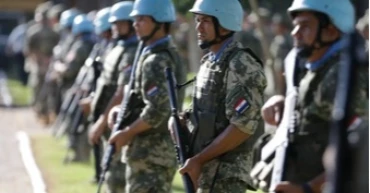
Over the past 75 years, the United Nations sent more than 2 million peacekeepers to help countries move away from conflict, with successes from Liberia to Cambodia and major failures in former Yugoslavia and Rwanda. Today, it faces new challenges in the dozen hotspots where U.N. peacekeeping has operations, including more violent environments, fake news campaigns and a divided world that is preventing its ultimate goal: successfully restoring stable governments.
The organization is marking the 75th anniversary of U.N. peacekeeping and observing the International Day of United Nations Peacekeepers on Thursday. There will be a ceremony honoring the more than 4,200 peacekeepers who have died since 1948, when a historic decision was made by the U.N. Security Council to send military observers to the Middle East to supervise implementation of Israeli-Arab armistice agreements. The current commander of that mission, which became the United Nations Truce Supervision Organization, will be at a Security Council meeting.
In a message, U.N. Secretary-General Antonio Guterres called peacekeepers “the beating heart of our commitment to a more peaceful world,” pointing to their support for communities rocked by conflict and upheavals across the globe.
U.N. peacekeeping operations have grown dramatically. At the end of the Cold War in the early 1990s, there were 11,000 U.N. peacekeepers. By 2014, there were 130,000 in 16 far-flung peacekeeping operations. Today, 87,000 men and women serve in 12 conflict areas in Africa, Asia, Europe and the Middle East.
There have been two kinds of successes, U.N. peacekeeping chief Jean-Pierre Lacroix said in an interview Wednesday with The Associated Press. Those are the long list of countries that have returned to a reasonable degree of stability with the support of U.N. peacekeeping, including Liberia, Sierra Leone, Ivory Coast, Mozambique, Angola and Cambodia, and the countries where peacekeepers are not only monitoring but preserving cease-fires like in southern Lebanon and Cyprus.
As for failures, he pointed to the failure of U.N. peacekeepers to prevent the 1994 Rwanda genocide that killed at least 800,000 ethnic Tutsis and Hutus and the 1995 massacre of at least 8,000 mostly Muslim men and boys at Srebrenica during the war in Bosnia, Europe’s only acknowledged genocide since the Holocaust during World War II.
The U.N.’s reputation has also been tarnished by numerous allegations that peacekeepers charged with protecting civilians sexually abused women and children, including in Central African Republic and Congo. Another high-profile blunder was the cholera epidemic in Haiti that began in 2010 after U.N. peacekeepers introduced the bacteria into the country’s largest river by sewage runoff from their base.
Despite that, Richard Gowan, the International Crisis Group’s U.N. director, said “U.N. peacekeeping has a surprisingly decent track record.”
While many people understandably focus on the Rwanda and Srebrenica disasters, he said, “the U.N. has done a good job of tamping down crises, protecting civilians and rebuilding broken states in cases from the Suez crisis in the 1950s to Liberia in the 2000s.”
Looking ahead, the U.N.'s Lacroix said the major challenge peacekeeping is facing is the divided international community and especially divisions in the U.N. Security Council, which must approve its missions.
“The result of that is that we’re not able to achieve what I call the ultimate goal of peacekeeping — to be deployed, support a political process that moves forward, and then gradually roll down when that political process is completed,” he said. “We cannot do that because peace processes are not moving, or they’re not going fast enough.”
The result is that “we have to essentially be content with what I call the intermediate goal of peacekeeping — preserving cease-fires, protecting civilians, we protect hundreds of thousands of them … and doing our best, of course, to support political efforts wherever we can,” the undersecretary-general for peace operations said.
Lacroix pointed to other challenges peacekeepers are facing: The environment in which they are operating is more violent and dangerous and attacks are more sophisticated. Fake news and disinformation “is a massive threat to the population and the peacekeepers.” And old and new drivers of conflict — including transnational criminal activities, trafficking, drugs, weapons, the illegal exploitation of natural resources, and the impact of climate change exacerbating competition between herders and farmers — are also having an “absolutely massive influence.”
The U.N. needs to better address all the challenges, he said. And it needs to keep improving the impact of peacekeeping and implement its initiatives on performance, combating fake news, improving safety and security, and recruiting more women to be peacekeepers.
The Crisis Group’s Gowan told AP it’s pretty clear that the U.N. is “trapped” in some countries like Mali and Congo where there aren’t enough peacekeepers to halt recurring cycles of violence. Some African governments, including Mali, are turning to private security providers like Russia’s Wagner Group to fight insurgents, he said.
“I think we should be wary of dumping U.N. operations outright,” Gowan said. “We have learned the hard way in cases like Afghanistan that even heavily armed Western forces cannot impose peace. The U.N.’s track record may not be perfect, but nobody else is much better at building stability in turbulent states.”UNF 09.
3 years ago

UN: Sudan conflict displaces over 1.3 million, including some 320K to neighboring countries
The fighting between Sudan’s military and a powerful paramilitary force has displaced more than 1.3 million people, the U.N. migration agency said Wednesday.
The International Organization for Migration said the clashes have forced over 1 million people to leave their homes to safer areas inside Sudan. Some 320,000 others have fled to the neighboring countries of Egypt, South Sudan, Chad, Ethiopia, the Central African Republic and Libya.
The fighting erupted on April 15 after months of escalating tensions between the military, led by Gen. Abdel-Fattah Burhan, and the Rapid Support Forces commanded by Gen. Mohamed Hamdan Dagalo. The conflict derailed Sudanese hopes of restoring the country's fragile transition to democracy, which was disrupted by a military coup led by the two generals in October 2021.
The conflict has killed at least 863 civilians, including at least 190 children, and wounded more than 3,530 others, according to the most recent numbers from the Sudanese Doctors’ Syndicate — which mainly tracks civilian casualties. It has also pushed the East African country to near collapse, with urban areas in the capital, Khartoum, and its neighboring city of Omdurman turning into battlegrounds.
Also read: Sudan military chief freezes bank accounts of rival armed group in battle for control of the nation
Egypt is hosting the largest number of those who fled, with at least 132,360 people, followed by Chad with 80,000 and South Sudan with over 69,000, the agency added.
All but one of Sudan’s 18 provinces experienced displacement, with Khartoum at the top of the list with around 70% of the total number of displaced people, according to the IOM’s Displacement Tracking Matrix.
Sporadic fighting continued Wednesday in several areas, despite a cease-fire reached this week. Residents reported hearing gunshots and explosions in central Khartoum as well as areas close to military facilities in Omdurman.
Both sides in the conflict Wednesday traded blame for violating the cease-fire.
The weeklong cease-fire, which was brokered by the United States and Saudi Arabia, took effect Monday night. It was the latest international effort to push for humanitarian aid delivery to the conflict-torn country.
A joint statement from the U.S. and Saudi Arabia late Tuesday warned that neither the Sudanese military nor the Rapid Support Forces observed the short-term cease-fire.
“The Sudanese people continue to suffer as a result of this devastating conflict," the statement said. It called on both sides to “fully abide by their commitments" and to implement the temporary cease-fire to deliver urgently needed humanitarian relief.
Earlier on Tuesday, U.S. Secretary of State Antony Blinken cautioned both parties of possible sanctions if the latest cease-fire was not adhered to.
But on Wednesday, White House National Security Council spokesman John Kirby told reporters in Washington that the cease-fire has largely been holding, despite reports of sporadic fire in Khartoum and elsewhere.
“Ultimately, it’s of course up to the Sudanese Armed Forces and the Rapid Support Forces to implement this thing.” Kirby said. “But in general, in the main, it appears to be holding. I want to caution you though, this is early, I mean, just went into effect yesterday afternoon. We have seen this movie before. So, we’re being pretty pragmatic as we look at it.”
The fighting has exacerbated the already dire humanitarian conditions in Sudan. According to the U.N., the number of people who need assistance this year has increased by 57% to reach 24.7 million people, more than half the country’s population. The international body said it would need $2.6 billion to provide them with much-needed humanitarian assistance.
The U.N. special envoy for sexual violence Pramila Patten, meanwhile, said Wednesday she is “is gravely concerned” about reports of sexual attacks against women.
“There are strong indications that it is parties to the conflict who have committed sexual violence, including rape, against women and girls,” she said in a statement.
She said many of the sexual attacks apparently took place in residential areas in Khartoum, or while they were fleeing the fighting in the capital.
Other attacks on women also took place in the western region of Darfur, where sexual violence against women has been consistently reported over the past two decades, she said.
She called for investigations into the allegations and urged all parties to take immediate measures against suspects, including suspending or removing them from the ranks.
3 years ago

South Korea, US troops to hold massive live-fire drills near border with North Korea
The South Korean and U.S. militaries were set to begin massive live-fire drills near the border with North Korea on Thursday, despite the North’s warning that it won’t tolerate what it calls such a hostile invasion rehearsal on its doorstep.
Thursday’s drills, the first of the allies’ five rounds of firing exercises until mid-June, mark 70 years since the establishment of the military alliance between Seoul and Washington. North Korea has typically reacted to such major South Korean-U.S. exercises with missile and other weapons tests.
Since the start of 2022, North Korea has test-launched more than 100 missiles but none since it fired a solid-fuel intercontinental ballistic missile in mid-April. North Korea has argued its torrid pace of tests was meant to respond to the expanded military drills between the U.S. and South Korea, but observers say the North aims to advance its weapons development then wrest greater concessions from its rivals in eventual diplomacy.
The U.S.-South Korean firing exercises, called “the combined annihilation firepower drills,” would be the biggest of their kind. The drills have been held 11 times since they began in 1977, according to the South Korean Defense Ministry.
Ministry officials said this year’s drills are to involve advanced stealth fighter jets, attack helicopters, multiple rocket launch systems and other weapons from South Korea and the United States. It wasn't immediately known how many troops would take part in the drills, but previous exercises in 2017 drew about 2,000 soldiers and 250 weapons assets from both countries.
An earlier Defense Ministry statement said the drills are meant to enhance the allies’ combined operational performance capabilities. It said South Korea and the United States will seek to establish “the overwhelming deterrence and response capabilities” to cope with North Korean nuclear and missile threats.
Last Friday, North Korea’s state media called the drills “a typical North Korea-targeted war rehearsal.” It said North Korea “cannot but take a more serious note of the fact that” that the drills would be held in an area a few kilometers (miles) from its frontier.
KCNA said the U.S. and South Korea will face unspecified “corresponding responses” over their series of large-scale, provocative drills.
Earlier this year, the South Korean and U.S. militaries conducted their biggest field exercises in five years. The U.S. also sent the nuclear-powered USS Nimitz aircraft carrier and nuclear-capable bombers for joint exercises with South Korea.
Also read: World leaders warn China and North Korea on nukes as Ukraine's Zelenskyy travels to G7 summit
In their summit last month, U.S. President Joe Biden and South Korean President Yoon Suk Yeol announced steps to reinforce their deterrence capabilities such as the periodic docking U.S. nuclear-armed submarines in South Korea; bolstering joint training exercises; and the establishment of a new nuclear consultative group. Biden also issued a blunt warning that any North Korean nuclear attack on the U.S. or its allies would “result in the end of whatever regime” took such action.
Kim Yo Jong, the powerful sister of North Korean leader Kim Jong Un, later said the Biden-Yoon summit agreement revealed the two countries’ “most hostile and aggressive will of action” against the North. She threatened to further bolster her country’s escalatory nuclear doctrine, saying “The pipe dream of the U.S. and South Korea will henceforth be faced with the entity of more powerful strength.”
Worries about North Korea’s nuclear program grew after the North last year legislated a law that authorizes the preemptive use of nuclear weapons. Many foreign experts say North Korea has yet to possess functioning nuclear missiles.
3 years ago

Russian prime minister says pressure from West is strengthening ties with China
Pressure from the West is strengthening Russia's ties with China, Russian Prime Minister Mikhail Mishustin said in a meeting with his Chinese counterpart in Beijing Wednesday.
Mishustin's visit comes as Russia is increasingly turning to China for diplomatic and economic support amid growing isolation over its invasion of Ukraine.
Also Read: G7 urges China to press Russia to end war in Ukraine, respect Taiwan's status, fair trade rules
In opening remarks at his meeting Wednesday with Chinese Premier Li Qiang, Mishustin did not mention the 15-month-old war that China, in deference to Moscow, has refused to criticize, focusing instead on economic cooperation between the neighbors that have partnered in challenging the U.S. lead in global affairs.
Relations between the two countries are "at an unprecedented high level," influenced by the "increased turbulence in the international arena and the pattern of sensational pressure from the collective West," Mishustin said.
Also Read; New sanctions: How effective are they in stopping Russia's invasion of Ukraine?
China says it is a neutral party between Russia and Ukraine and wants to help broker an end to the conflict. But it has blamed the West for provoking Moscow and has maintained strong diplomatic and trade ties with Russia in opposition to sanctions against it.
China's special envoy met with Ukrainian President Volodymyr Zelenskyy and other government officials during talks in Kyiv this month. The visit followed a phone call last month between the Ukrainian leader and his Chinese counterpart Xi Jinping that Zelenskyy described as "long and meaningful" and which marked the first known contact between the two since the Russian invasion began.
Also Read: The cyber gulag: How Russia tracks, censors and controls its citizens
Beijing released a peace plan in February but Ukraine's allies largely dismissed it, insisting that Putin must withdraw his forces. Zelenskyy's own 10-point peace plan includes a tribunal to prosecute war crimes committed by Russia.
While sidestepping the conflict, Mishustin emphasized Russia's role as a provider of oil and gas to China and their bonds formed as initial allies among communist nations.
"The peoples of Russia and China cherish their history, rich culture and traditions. We support the further development of our culture, exchanges and communication," Mishustin said.
3 years ago

EU defense ministers fail to agree on new military aid to Ukraine
The defense ministers of the European Union (EU) member states have failed to reach an agreement on new military aid to Ukraine, the bloc's foreign policy chief Josep Borrell said here on Tuesday.
Borrell said after Tuesday's EU defense ministers' meeting that the overwhelming majority of member states had backed a proposal to increase the European Peace Facility budget by 3.5 billion euros (3.77 billion U.S. dollars), although he stressed that not all of it will be used to assist Ukraine.
"I still don't have unanimity on this, and it's still being discussed," he said, adding that he expected the remaining "hurdles" to be surmounted soon. He recalled that more than 10 billion euros in military support have already been provided to Ukraine.
Borrell said EU countries had already provided Ukraine with 220,000 artillery shells and 1,300 missiles since March. These alone were worth 800 million euros and the EU was on track to provide 1 billion euros worth of ammunition.
"Our aim is to provide one million projectiles over the next 12 months," Borrell said, adding that the EU had already trained 20,000 Ukrainian soldiers and was on track to train 30,000 by the end of the year.
He explained that as part of a three-pronged strategy, member states are being asked to provide ammunition from their own stocks. There is also an effort for the joint procurement of 155 mm caliber ammunition and to boost the capability of European industry to manufacture the necessary ammunition.
Jens Stoltenberg, secretary general of the North Atlantic Treaty Organization, attended the meeting and briefed ministers on the latest developments in the conflict in Ukraine.
Borrell welcomed the decision to initiate training programs for Ukrainian pilots on F-16 fighter jets. He said the training created a positive momentum that will eventually lead to the deployment of these jets in Ukraine.
"I am glad that pilot training has already started, and I hope that soon we will be able to provide this weapon to Ukraine," he said prior to the start of the meeting in Brussels.
3 years ago

Typhoon Mawar closes in on Guam as residents shelter, military sends away ships
Residents stockpiled supplies, battened down windows and abandoned wood and tin homes for emergency shelters as Guam was buffeted by rains and winds Wednesday from Typhoon Mawar, the strongest storm to approach the U.S. Pacific territory in decades.
The U.S. military sent away ships, President Joe Biden approved an emergency declaration and anyone not living in a concrete house was urged to seek safety elsewhere ahead of the typhoon, which was forecast to arrive as a Category 4 storm but could possibly strengthen to a Category 5. The last Category 5 to make a direct hit in Guam was Super Typhoon Karen in 1962.
Guam Gov. Lou Leon Guerrero said on social media that the emergency declaration will support the mobilization of resources into Guam, which is “especially crucial given our distance from the continental U.S.” Guerrero ordered residents of coastal, low-lying and flood-prone areas of the territory of over 150,000 people to evacuate to higher elevations.
Federal assistance will be needed to save lives and property and "mitigate the effects of this imminent catastrophe,” Guerrero said in a letter to the president requesting a “pre-landfall emergency” for Guam. Officials warned residents who aren’t in fully concrete structures — some homes on the far-flung island are made of wood and tin — to relocate.
Also read: Guam braces for hit from Typhoon Mawar as storm heads toward Pacific US territory
Guam is a crucial hub for U.S. forces in the Pacific, and the Department of Defense controls about a third of the island. Rear Adm. Benjamin Nicholson, Joint Region Marianas commander, authorized the evacuation of defense personnel, dependents and employees in areas expected to be affected
All ships were moved out to sea as a standard precaution, according to the Navy, and any personnel remaining on the island were sheltering in place. About 6,800 U.S. service members are assigned to Guam, according to the Pentagon.
With rain from the storm's outer bands already falling over the island as of late morning local time, the typhoon had maximum sustained winds of 140 mph (225 kph) with gusts peaking at 170 mph (274 kph), said Landon Aydlett, a meteorologist with the National Weather Service in Guam. Its center was about 75 miles (120 kilometers) southeast of the island and was moving to the north-northwest.
That was a slight downgrade from earlier when Mawar was reported to be a Category 4 “super typhoon,” meaning maximum sustained winds of 150 mph (241 kph) or greater. But it still posed extreme danger to life and property.
The weather service warned of “considerable damage” from a “triple threat” of winds, torrential rains and life-threatening storm surge of 4 to 6 feet (1.2 to 2 meters), with dangerous surf of 20 to 30 feet (6 to 9 meters). It said the storm could hit Wednesday afternoon in the southern part of Guam, which lies west of the International Date Line and is a day ahead of the U.S. mainland and Hawaii.
“This is going to be a rough afternoon for us across the island,” Aydlett said. “So watch out.”
If Guam doesn’t take a direct hit, it will be very close, said Patrick Doll, the lead weather service meteorologist in Guam. Mawar is a Malaysian word that means “rose,” he noted.
Shool buses picked up residents at island community centers and transported them to 11 elementary schools outfitted as shelters. Civic workers in various villages warned residents to secure loose objects in their yards and seek shelter immediately. Some spread the word by megaphone, while others turned to social media. Power flickered off and on as the rain and wind intensified, and officials said nearly 900 people were in shelters.
Guerrero urged residents in a YouTube message to remain calm and ordered the National Guard to help those in low-lying areas evacuate, saying, “We are at the crosshairs of Typhoon Mawar. Take action now.”
The storm was moving at 6 mph (10 kph) but had an eye 17 miles (27 kilometers) wide, meaning people at the typhoon's center could see calm conditions for over three hours and conclude, far too soon, that the worst is over, Doll said. As the eye leaves, the winds could rise to 150 mph (241 kph) in minutes, so people should remain sheltered until the government gives the all-clear.
“Folks may say, ‘Hey it’s over, we could go outside and start cleaning up,’” Doll said. “That is totally wrong.
In low-lying Agat along the southern coast, resident Reuel Drilon began preparing Friday and spent the weekend tying down patio furniture and trash containers. Nearly every home in the village, he said, has a mango tree — which officials warned could be ripped from the ground and become roadblocks and deadly flying projectiles.
“A lot of folks are keeping their eyes on trees,” he told The Associated Press. "Down south, we have a lot of coconut trees and mango trees.”
Joshua Paulino, a client manager at Xerox Guam, was sheltering at home in the central village of Chalan Pago with his wife, two sons and mother after the family closed the shutters and secured outdoor objects. He worried that the storm could dump rain on the island for a long time, since it was forecast to pass by gradually.
“This storm is moving very slowly so that is making me really uneasy,” Paulino said by text message.
And an ocean away in Los Angeles, Marichelle Tanag was fretting from afar after her parents, who are in their 70s and have survived many typhoons in their decades on the island. They boarded up windows, stocked up on a couple of weeks of food, prepared the generator and filled bathtubs with water. Their home in Tamuning, also in central Guam, is made of concrete, but she worried about it nevertheless.
“Will the house stand? ... If not, will they be able to go to another place of safety if needed, as fast as possible, and not get in the way of any of the flying debris?” Tanag said by phone.
Rota, an island in the U.S. Commonwealth of the Northern Mariana Islands, was also under a typhoon warning, Doll said. Tinian and Saipan, in the Northern Marianas, were under tropical storm warnings. Some people in those areas are still in temporary shelters or tents after Category 5 Super Typhoon Yutu in 2018, Doll noted.
The western Pacific is “a notorious breeding ground for intense tropical cyclones,’’ said Yale Climate Connections meteorologist Jeff Masters. “They’ve got a much bigger area to romp around in and more time to intensify.”
The National Oceanic and Atmospheric Administration has warned that in a warmer world, the number of Category 4 or stronger storms will increase by 10% — and Mawar “could well be a harbinger of the type of battering that the U.S. could expect to see,” Masters said
3 years ago

Over 150 doctors on strike at NYC hospital that was once called pandemic epicenter
About 160 resident physicians went on strike Monday over what they called low pay at New York City's Elmhurst Hospital Center, a public hospital once known as the epicenter of the coronavirus pandemic in 2020.
The doctors-in-training at the Queens hospital, who are employed by the Icahn School of Medicine at Mount Sinai Hospital in Manhattan, are the first doctors to go on strike in the city since 1990, according to their labor union, the Committee of Interns and Residents local of the Service Employees International Union.
Mount Sinai “refuses to pay us the same as our coworkers doing the exact same job at Mount Sinai Hospital in Manhattan,” Dr. Joya Dupre, a second-year internal medicine resident at Elmhurst, said in a union statement. ”It feels, fundamentally, like Mount Sinai is saying that this community does not matter. Like we as Elmhurst residents do not matter, as largely immigrant, union doctors.”
Mount Sinai released a statement Monday saying it was “working towards an equitable and reasonable resolution that is in the best interest for both our residents at Elmhurst as well as for the Mount Sinai Health System.” It also said it was working with Elmhurst on contingency plans to ensure patient care is not affected by the strike.
The resident physicians and Mount Sinai have been in negotiations for nearly a year. A five-day strike is planned.
Pay has been the major sticking point. The union says first-year Mount Sinai resident physicians working at Elmhurst are making about $7,000 less annually than their peers working at Mount Sinai's main campus in Manhattan.
Also Monday, the union announced that another 500 resident physicians at Mount Sinai Morningside/West in Manhattan have authorized a strike, also over pay.
Elmhurst was among several city hospitals overrun by the coronavirus when the pandemic began. Medical staff at Elmhurst described gasping patients arriving — seemingly nonstop — ventilators running low, and death totals so high that a refrigerated morgue truck had to be stationed outside.
3 years ago

US bomb designed to hit targets like Iran underground nuclear sites briefly reappears amid tensions
As tensions with Iran have escalated over its nuclear program, the U.S. military this month posted pictures of a powerful bomb designed to penetrate deep into the earth and destroy underground facilities that could be used to enrich uranium.
The U.S. Air Force on May 2 released rare images of the weapon, the GBU-57, known as the “Massive Ordnance Penetrator.” Then it took the photos down — apparently because the photographs revealed sensitive details about the weapon's composition and punch.
The publication of the photographs comes as The Associated Press reported that Iran is making steady progress in constructing a nuclear facility that is likely beyond the range of the GBU-57, which is considered the U.S. military last-ditch weapon to take out underground bunkers.
WHAT DO WE KNOW ABOUT AMERICA'S MASSIVE ORDNANCE PENETRATOR?
The U.S. developed the Massive Ordnance Penetrator in the 2000s as concerns grew over Iran hardening its nuclear sites by building them underground.
The Air Force posted images of the bombs on the Facebook page for Whiteman Air Force Base in Missouri. The base is home to the fleet of B-2 stealth bombers, the only aircraft that can deploy the bomb.
In a caption, the base said it had received two Massive Ordnance Penetrator bombs so a munitions squadron there could “test their performance.”
It is not the first time the Air Force has published photos and videos of the bomb that coincided with rising acrimony with Tehran over its nuclear program. In 2019, the U.S. military released a video of a B-2 bomber dropping two of the bombs. The Air Force did not respond to requests for comment on why it posted — and removed — the most recent set of photos.
WHAT DID WE LEARN FROM THE PHOTOS?
The latest photos revealed stenciling on the bombs that listed their weight as 12,300 kilograms (27,125 pounds). It also described the bomb as carrying a mix of AFX-757 — a standard explosive — and PBXN-114, a relatively new explosive compound, said Rahul Udoshi, a senior weapons analyst at Janes, an open-source intelligence firm.
The weight of the bomb, judging from the stenciling, shows the majority of it comes from its thick steel frame, which allows it to chew through concrete and soil before exploding. However, it remains unclear what the exact effectiveness of the weapon would be.
The Warzone, an Internet news site, first reported on the publication of the photographs. The AP contacted Whiteman Air Force Base and the Air Force’s Global Strike Command with questions about the images. Within a day, the Facebook post vanished.
Udoshi said the Air Force likely took them down because they revealed too much data about the bombs. “Immediate removal from the internet without comment (or) justification means there is a potential lapse,” Udoshi said.
WHAT ROLE WOULD THIS BOMB PLAY IN POTENTIALLY TARGETING IRAN'S NUCLEAR PROGRAM?
The AP reported on Monday that satellite imagery from Planet Labs PBC reveals Tehran has been digging tunnels in the mountain near the Natanz nuclear site in central Iran. Excavation mounds at the site suggest the facility could be between 80 meters (260 feet) and 100 meters (328 feet) under the ground, according to the experts and AP’s analysis.
Experts say the size of the construction project indicates Iran likely would be able to use the underground facility to enrich uranium as well — not just to build centrifuges. Those tube-shaped centrifuges, arranged in large cascades of dozens of machines, rapidly spin uranium gas to enrich it. Additional machines would allow Iran to quickly enrich uranium under the mountain’s protection.
That could be a problem for the GBU-57: In previously describing the bomb’s capabilities, the Air Force has said it could tear through 60 meters (200 feet) of ground and cement before detonating.
COULD THE UNITED STATES STILL TRY TO DROP THE BOMB?
U.S. officials have discussed using two such bombs in succession to ensure a site is destroyed. But even then, the new depth of the Natanz tunnels likely presents a serious challenge.
Further complicating any possible U.S. military strike is that the B-2 had been grounded for months since December when one caught fire after an emergency landing. On Monday, Gen. Thomas A. Bussiere, the commander of the Air Force's Global Strike Command, announced the B-2 grounding had been lifted.
“While the B-2 fleet safety pause is officially over, our ability to deliver nuclear deterrence and provide long-range strike was never in doubt," an Air Force statement said.
3 years ago