Others

Biden to unveil new efforts to protect S. Korea from nukes
WASHINGTON (AP/UNB) — President Joe Biden will use this week’s celebratory state visit by South Korean President Yoon Suk Yeol to underscore that the U.S. is ready to step up its efforts to deter a North Korean attack on South Korea, according to the White House.
Biden will announce specific new nuclear deterrence efforts as well as a new cyber security initiative, economic investments and an educational partnership, part of an effort to highlight the breadth and depth of the two countries’ relationship as they mark the 70th anniversary of their alliance, White House national security adviser Jake Sullivan said.
White House officials say Biden hopes to put a particular emphasis on the United States’ “iron clad” commitment to deterring nuclear action by North Korea as Pyongyang has stepped up ballistic missile tests, including flight-testing a solid-fuel intercontinental ballistic missile for the first time earlier this month. The recent test is seen as a possible breakthrough in the North’s efforts to acquire a more powerful, harder-to-detect weapon targeting the continental United States.
Sullivan didn’t offer details on the new deterrence efforts ahead of the leaders’ announcement, but said that the U.S. is looking to send a clear message to Pyongyang about its increasingly aggressive rhetoric.
“What I will say is that we believe that the statement will send a very clear and demonstrable signal of the United States’ credibility when it comes to its extended deterrence commitments to the Republic of Korea and to the people of Korea,” Sullivan said, using the formal name for South Korea.
Biden also hopes to use the visit, which begins Tuesday, to underscore the importance of South Korea and Japan building on their security ties.
Biden has sought opportunities to help the historic rivals improve their long, fraught relationship as the Indo-Pacific region becomes increasingly complicated. He held trilateral meetings with Yoon and Japanese Prime Minister Fumio Kishida that largely focused on the North Korea threat on the sidelines of the East Asia Summit in Cambodia last November and at the NATO summit in Madrid in June.
Last month, South Korea announced a plan to compensate Koreans who performed forced labor during Tokyo’s colonial rule that doesn’t require Japanese companies to contribute to the reparations.
Biden hailed the step as a “groundbreaking new chapter” in cooperation between the countries. Yoon followed up by visiting Tokyo later in March for talks with Kishida. It was the first summit between the two nations’ leaders in Japan since 2011.
Sullivan said Biden also plans to highlight Yoon’s “determination and courage” in rapprochement with Japan during the visit.
Ahead of the Yoon visit, the United States, South Korea and Japan conducted a joint missile defense exercise last week aimed at countering North Korea’s growing nuclear arsenal.
Experts say North Korean leader Kim Jong-un wants to pressure the United States into accepting North Korea as a legitimate nuclear power and hopes to negotiate an easing of sanctions from a position of strength.
The United States and South Korea conducted their biggest field exercises in years in March and have also held separate naval and aerial drills involving a U.S. aircraft carrier battle group and nuclear-capable B-52 bombers.
South Korean officials said that the two leaders would discuss human rights concerns in North Korea. Experts believe the food situation in North Korea is the worst it has been under Kim Jong Un’s 11-year rule, but they still say they see no signs of imminent famine or mass deaths. Kim vowed to strengthen state control over agriculture and take a spate of other steps to increase grain production, according to North Korean state media.
Meanwhile, the White House recently declassified and released intelligence findings that show that Russia is looking again to North Korea for weapons to fuel the war in Ukraine in a deal that would provide Pyongyang with needed food and other commodities in return. The White House previously said North Korea had provided the Wagner Group, a private Russian military company, with arms to help bolster its forces as they fight side-by-side with Russian troops in Ukraine.
South Korean Foreign Minister Park Jin in a virtual speech at the Center for Strategic and International Studies in Washington said there is a “dire human rights situation on the ground” and urged the international community to work together “to ease the anguish of ordinary North Korean people.”
As part of his visit to Washington, Yoon is scheduled on Tuesday to tour NASA’s Goddard Space Flight Center with Vice President Kamala Harris. The South Korean president will visit the Korean War Memorial with Biden and First Lady Jill Biden on Tuesday evening. The two leaders and aides will hold formal talks and a joint news conference on Wednesday before Yoon is honored with the state dinner.
Yoon is to deliver a speech to the U.S. Congress on Thursday before traveling to Massachusetts where he is scheduled to speak at the Harvard Kennedy School.
Biden has spent considerable time getting to know and consulting with Yoon since he took office.
The Democratic administration has also been full of praise for Yoon’s leadership in the IndoPacific and beyond. South Korea has provided Ukraine with about $230 million in non lethal assistance since Russia’s invasion more than 14 months ago.
The visit also follows just weeks after scores of highly classified documents were leaked which have complicated relations with allies, including South Korea. The papers viewed by The Associated Press indicate that South Korea’s National Security Council “grappled” with the U.S. in early March over an American request to provide artillery ammunition to Ukraine.
The documents, which cited a signals intelligence report, said then-NSC Director Kim Sung-han suggested the possibility of selling the 330,000 rounds of 155 mm munitions to Poland, since getting the ammunition to Ukraine quickly was the United States’ ultimate goal.
Seoul has also been supportive on U.S.-led sanctions and export controls targeting Russia since the start of the war. And South Korea has announced plans to invest more than $100 billion in the U.S. since the start of Biden administration, including a new Samsung advanced semiconductor factory in Texas and a Hyundai electrical vehicle plant in Georgia.
Yoon in an interview with Reuters last week said that Seoul could potentially extend its support for Ukraine beyond humanitarian and economic aid if that eastern European nation were to face large-scale civilian attack by Russia.
“The summit will also celebrate what we’ve been able to do under President Yoon’s leadership since he took over,” Sullivan said. “The ROK is stepping up around the world.”
Yoon is the second ally to be honored by Biden with a state visit. French President Emmanuel Macron was honored with a state visit in December.
3 years ago

UAE spacecraft takes close-up photos of Mars' little moon
A spacecraft around Mars has sent back the most detailed photos yet of the red planet's little moon.
The United Arab Emirates' Amal spacecraft flew within 62 miles (100 kilometers) of Deimos last month and the close-up shots were released Monday. Amal — Arabic for Hope — got a two-for-one when Mars photobombed some of the images. It was the closest a spacecraft has been to Deimos in almost a half-century.
The spacecraft also observed the little explored far side of the odd-shaped, cratered moon, just 9 miles by 7 miles by 7 miles (15 kilometers by 12 kilometers by 12 kilometers).
Mars' other moon, Phobos, is almost double that size and better understood since it orbits much closer to Mars — just 3,700 miles (6,000 kilometers) away, the closest of any planet's moon in our solar system.
Deimos' orbit around Mars stretches 14,000 miles (23,000 kilometers) out. That's close to the inner part of the spacecraft's orbit — "which is what made observing Deimos such a compelling idea," said the mission's lead scientist Hessa al-Matroushi.
"Phobos has got most of the attention up until now — now it's Deimos' turn!" she added in an email.
Al-Matroushi and other scientists with the UAE Space Agency said these new images indicate Deimos is not an asteroid that got captured in Mars' orbit eons ago, the leading theory until now. Instead, they say the the moon appears to be of Martian origin — perhaps from the bigger Martian moon or from Mars itself.
The findings were presented Monday at the European Geosciences Union's general assembly in Vienna.
Amal will continue to sweep past Deimos this year, but not as closely as the March 10 encounter, according to al-Matroushi.
NASA's Viking 2 came within 19 miles (30 kilometers) of Deimos in 1977. Since then, other spacecraft have photographed Deimos but from much farther away.
Amal rocketed to Mars on July 19, 2020, one day shy of the 50th anniversary of humanity's first moon landing — Earth's moon, that is — by Apollo 11's Neil Armstrong and Buzz Aldrin.
3 years ago

Watchdog: World military spending up to an all-time high
Global military spending grew for the eighth consecutive year in 2022 to an all-time high of $2.24 trillion, with a sharp rise in Europe, chiefly due to Russian and Ukrainian expenditure, a Swedish think tank said Monday.
Spending globally increased by 3.7% in real terms, but military expenditure in Europe was up 13% — its steepest year-on-year increase in at least 30 years, the Stockholm International Peace Research Institute, or SIPRI, said in a report. Military aid to Ukraine and concerns about a heightened threat from Russia "strongly influenced many other states' spending decisions."
The independent Swedish watchdog said that last year, the three largest arms spenders were the United States, China and Russia, who between them accounted for 56% of global expenditure.
'The rise "is a sign that we are living in an increasingly insecure world," said Nan Tian, a researcher with SIPRI's Military Expenditure and Arms Production Program.
Several states significantly increased their military spending following Russia's invasion of Ukraine, while others announced plans to raise spending levels over periods of up to a decade. Some of the sharpest increases were seen in countries near Russia: Finland (36 %), Lithuania (27%), Sweden (12%) and Poland (11%).
Both Sweden and Finland jointly applied for NATO membership in May 2022, abandoning decades of nonalignment in the wake of Russia's invasion of Ukraine. While Finland has been admitted, Sweden's bid to join NATO remains stalled by opposition from Turkey and Hungary.
"While the full-scale invasion of Ukraine in February 2022 certainly affected military spending decisions in 2022, concerns about Russian aggression have been building for much longer," said Lorenzo Scarazzato, a researcher with SIPRI's Military Expenditure and Arms Production Program.
"Many former Eastern bloc states have more than doubled their military spending since 2014, the year when Russia annexed Crimea."
Russia also has increased its military spending. SIPRI said that grew by an estimated 9.2% in 2022, to around $86.4 billion. That is equivalent to 4.1% of Russia's gross domestic product in 2022, up from 3.7% the previous year.
Established in 1966, SIPRI is an international institute dedicated to research into conflict, armaments, arms control and disarmament.
3 years ago

Magnitude 7.1 quake hits remote Pacific, no tsunami threat
A magnitude 7.1 quake struck in a remote part of the Pacific Ocean on Monday but did not appear to generate a tsunami.
The quake struck near the Kermadec Islands about 900 kilometers (560 miles) northeast of New Zealand's North Island at a depth of 49 kilometers (30 miles), according to the U.S. Geological Survey.
The Pacific Tsunami Warning Center said the quake posed no threat to Hawaii and the wider Pacific. A localized potential for a tsunami passed without any confirmed impact.
New Zealand's National Emergency Management Agency said it was assessing whether the quake could affect New Zealand but gave its standard advice for people to move away from coastal areas if they felt a long or strong quake.
The Kermadec Islands are uninhabited except for Raoul Island where New Zealand scientists sometimes stay over to carry out meteorological observations or weed control work.
The islands are the site of frequent large earthquakes. They were geologically formed from a ridge that rose from the ongoing collision between the Pacific and Australian tectonic plates.
3 years ago

Curfew in Jamaica district after gunmen wound 7 boarding bus
Police enforced a curfew in a community on the southern fringes of Jamaica’s capital Saturday after gunmen fired on people boarding a public minibus, wounding seven, including three children.
The Jamaica Constabulary Force gave no information on the conditions of the wounded from the brazen attack, which occurred at midafternoon Friday in Seaview Gardens, a poor area of Kingston.
There was speculation the gunmen were targeting one of the people trying to get on the bus, but authorities did not comment on a possible motive. Conflict among rival gangs has been blamed for an uptick in violence in the community.
Authorities ordered a two-day curfew in Seaview Gardens, and police said they were looking for two men for questioning about the shooting.
Crime statistics released by the police say 303 people were killed on the island in the first three months of this year, 20% fewer than during the same period of 2022.
3 years ago
Biden says US embassy evacuation in Sudan has been completed
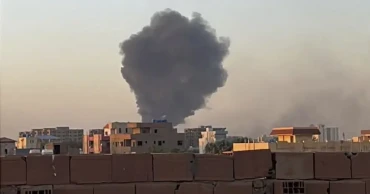
American forces carried out a precarious evacuation of U.S. embassy personnel in Sudan, President Joe Biden said late Saturday, calling for the end to “unconscionable” violence there as two rival leaders battled for power in the African country.
Biden thanked the U.S. troops who carried out the mission to extract American staffers in Sudan. With the last American embassy worker out, Washington shuttered the U.S. mission in Khartoum indefinitely.
The U.S. said it had no current plans for a government-coordinated evacuation of an estimated 16,000 other Americans remaining in Sudan, calling the situation too dangerous.
Biden said he was receiving regular reports from his team on efforts to assist those remaining Americans in Sudan “to the extent possible.”
The roughly 70 American staffers were airlifted from a landing zone at the embassy to an undisclosed location in Ethiopia, according to two U.S. officials familiar with the mission. U.S. troops carried out the operation as fighting between two armed Sudanese commanders —which has killed more than 400, put the nation at risk of collapse and could have consequences far beyond its borders—moved into a second week.
“I am proud of the extraordinary commitment of our Embassy staff, who performed their duties with courage and professionalism and embodied America’s friendship and connection with the people of Sudan,” Biden said in a statement. “I am grateful for the unmatched skill of our service members who successfully brought them to safety.”
Biden ordered American troops to evacuate embassy personnel after receiving a recommendation earlier Saturday from his national security team with no end in sight to the fighting.
“This tragic violence in Sudan has already cost the lives of hundreds of innocent civilians. It’s unconscionable and it must stop,” Biden said. “The belligerent parties must implement an immediate and unconditional ceasefire, allow unhindered humanitarian access, and respect the will of the people of Sudan.”
The State Department has suspended operations at the embassy due to the dire security situation. It was not clear when the embassy might resume functioning.
“The widespread fighting has caused significant numbers of civilian deaths and injuries and damage to essential infrastructure and posed an unacceptable risk to our Embassy personnel,” Secretary of State Antony Blinken said in a statement.
The fighting erupted April 15 between two factions whose leaders are vying for control over the country. The violence has included an unprovoked attack on an American diplomatic convoy and numerous incidents in which foreign diplomats and aid workers were killed, injured or assaulted.
An estimated 16,000 private U.S. citizens are registered with the embassy as being in Sudan.
Biden said he was receiving regular reports from his team on efforts to assist those remaining Americans in Sudan “to the extent possible.”
The embassy issued an alert earlier Saturday cautioning that “due to the uncertain security situation in Khartoum and closure of the airport, it is not currently safe to undertake a U.S. government-coordinated evacuation of private U.S. citizens.”
Fighting in Sudan between forces loyal to two top generals has put that nation at risk of collapse and could have consequences far beyond its borders.
The fighting, which began as Sudan attempted to transition to democracy, already has left millions trapped in urban areas, sheltering from gunfire, explosions and looters.
Army chief Gen. Abdel Fattah Burhan said Saturday he would facilitate the evacuation of American, British, Chinese and French citizens and diplomats from Sudan after speaking with the leaders of several countries that had requested help. The rival Rapid Support Forces, or RSF, in a Twitter posting said it cooperated with U.S. forces.
The U.S. evacuation planning got underway in earnest on Monday after the embassy convoy was attacked in Khartoum. The Pentagon confirmed on Friday that U.S. troops were being moved to Camp Lemonnier in Djibouti ahead of a possible evacuation.
Saudi Arabia announced the successful repatriation of some of its citizens on Saturday, sharing footage of Saudi nationals and other foreigners welcomed with chocolate and flowers as they stepped off an apparent evacuation ship at the Saudi port of Jeddah.
Embassy evacuations conducted by the U.S. military are relatively rare and usually take place only under extreme conditions.
When it orders an embassy to draw down staff or suspend operations, the State Department prefers to have its personnel leave on commercial transportation if that is an option. When the embassy in Kyiv temporarily closed just before Russia’s invasion of Ukraine in February, 2022, staffers used commercial transport to leave.
However, in several other recent cases, notably in Afghanistan in 2021, conditions made commercial departures impossible or extremely hazardous. U.S. troops accompanied personnel from the U.S. Embassy in Tripoli, Libya, in an overland convoy to Tunisia when they evacuated in 2014.
3 years ago

Eid ul-Fitr celebrated around the world
The holiday of Eid ul-Fitr ushered in a day of prayers and joy for Muslims around the world on Friday. The celebration was marred by tragedy amid the explosion of conflict in Sudan, while in other countries it came against the backdrop of hopes for a better future.
After the Ramadan month of fasting, Muslims celebrate Eid ul-Fitr with feasts and family visits. The start of the holiday is traditionally based on sightings of the new moon, which vary according to geographic location.
In Sudan’s capital, Khartoum, staccato blasts of gunfire marked the early hours of the feast day. A deadly conflict in the vast African country that erupted in the past week has forced many people to shelter indoors ahead of the holiday, even as water and food for civilians runs low.
In Jerusalem, thousands of faithful gathered at Islam’s third holiest shrine, the Al-Aqsa Mosque compound, where tensions with Israeli authorities have seethed in the past month. The compound also hosts Judaism’s holiest site.
Following holiday prayers, a clown entertained children and a woman painted the cheek of a girl with the green, red, black and white Palestinian flag. Some attendees trampled on an Israeli flag and unfurled banners in support of Palestinian militant groups.
The streets of Arab capitals of Damascus, Baghdad and Beirut were crowded with worshippers heading to mosques and cemeteries. Many Muslims visit the graves of their loved ones after the early morning prayer on the first day of Eid ul-Fitr. Visitors toted bouquets of flowers, jugs of water for plants, and brooms to clean gravestones.
“After the Eid prayer we always visit our dead … to pray and pay our respects, may God have mercy and forgive them on this blessed day,” said Atheer Mohamed in Baghdad’s Azamiya cemetery.
Islam’s holidays follow a lunar calendar. But some countries rely on astronomical calculations rather than physical sightings. This frequently leads to disagreements between religious authorities in different countries — and sometimes in the same country — over the start date of Eid ul-Fitr.
This year, Saudi Arabia and many other Arab countries began their Eid celebrations on Friday, while Iran, Pakistan and Indonesia, among others, set the first day of the holiday for Saturday.
In Sudan, the holiday was eclipsed by a week of raging battles between the army and its rival paramilitary force, which are locked in a violent struggle to control the country. The fighting has killed hundreds of people and wounded thousands.
In a video message released early Friday, his first speech since the fighting broke out, Sudan’s top general Gen. Abdel-Fattah Burhan marked the somber tone of the holiday. “Ruin and destruction and the sound of bullets have left no place for the happiness everyone in our beloved country deserves,” he said.
The day before, Sudan’s military ruled out negotiations with the rival paramilitary force, known as the Rapid Support Forces, saying it would only accept its surrender as the two sides continued to battle in central Khartoum and other parts of the country, threatening to wreck international attempts to broker a sustainable cease-fire.
Yet in other parts of the region, the recent rapprochement between arch-rivals Saudi Arabia and Iran has kindled hopes for peace.
In Yemen, the Saudi-Iranian rapprochement raised the possibility for an end to the civil war that had turned into a proxy conflict and torn the impoverished country apart since 2014.
Saudi officials and Iran-backed Houthi rebels recently began talks in Yemen’s capital of Sanaa. During the last days of Ramadan, the warring sides exchanged hundreds of prisoners captured during the conflict.
However, the moment of hopes was marred by a stampede late Wednesday at a charitable event in the rebel-held capital that killed at least 78 people and injured 77.
This year’s Eid ul-Fitr also came on the heels of intensified violence in Israel and the Palestinian territories.
Alaa Abu Hatab and his only remaining daughter started the holiday in the Palestinian Gaza Strip by visiting the graves of his wife and four children who were killed in an Israeli airstrike on the day of Eid ul-Fitr in 2021. That strike also killed Abu Hatab’s sister and her children.
“Because they were killed in the Eid, I miss them especially during Eid ul-Fitr. I miss their laughter,” Abu Hatab said, standing by his family’s grave with his six-year-old daughter, Maria. The holiday has become a “scene of pain and loss,” he said.
In Afghanistan’s Kabul, where worshippers gathered under the watchful eyes of its Taliban rulers, 35-year-old Abdul Matin said, “I wish that besides security we had good income and good jobs. Unfortunately people can’t afford to buy all their necessities at this difficult time.”
In Turkey and Syria, many are still mourning loved ones lost in the devastating 7.8 magnitude earthquake that struck the two countries on Feb. 6, killing more than 50,000 people.
Turkish President Recep Tayyip Erdogan on Friday performed morning Eid prayers at Hagia Sophia, the 6th century Byzantine church in Istanbul that was turned into a mosque in the 15th century. It became a museum in 1934 and was reconverted into a mosque three years ago.
Erdogan, who is facing elections next month amid an economic crisis and the fallout of the earthquake, handed out chocolate and pastries to journalists outside the mosque, renamed Holy Ayasofya Grand Mosque.
In the United States, celebrations among the Sudanese community were tempered with concern for the homeland. They still gathered in large numbers for Friday prayers at the Muslim Community Center in Silver Spring.
“We are not in a mood to do anything joyful, but we’re doing (these celebrations) for the kids,” said Shaza Ahmed, who is among an estimated 20,000 Sudanese in Maryland and Virginia.
In Tennessee, where school state testing was underway, Imam Ossama Bahloul, the resident scholar at the Islamic Center of Nashville, said that for the first time, his daughter missed the holiday prayer with the family so she could take an exam.
In Minneapolis, Friday public school classes were called off for the first time to mark the holiday. About 10% of students are Muslim, said Jaylani Hussein, director of Council on American-Islamic Relations-Minnesota.
“In Minneapolis, you can be unapologetically Muslim,” Hussein said.
In Dearborn, Michigan, employees have Eid ul-Fitr off as a paid holiday for the first time. Mayor Abdullah Hammoud said the precedent was not planned but that it was important for Muslim employees “to feel included and enjoy the holiday with their families.” ___
Associated Press reporters Ali Abdul-Hassan in Baghdad, Tia Goldenburg in Jerusalem, Fares Akram in Gaza City, Gaza Strip; Mariam Fam in Cairo, Rahim Faiez in Kabul, Afghanistan; Andrew Wilks in Istanbul, Deepa Bharath in Los Angeles, Giovanna Dell’Orto in Minneapolis and Mike Householder in Detroit contributed to this report.
3 years ago

Amid joy and tragedy, Muslims celebrate Eid-ul-Fitr holiday
The holiday of Eid-ul-Fitr ushered in a day of prayers and joy for Muslims around the world on Friday. The celebration was marred by tragedy amid the explosion of conflict in Sudan, while in other countries it came against the backdrop of hopes for a better future.
After the Ramadan month of fasting, Muslims celebrate Eid-ul-Fitr with feasts and family visits. The start of the holiday is traditionally based on sightings of the new moon, which vary according to geographic location.
In Sudan's capital, Khartoum, staccato blasts of gunfire marked the early hours of the feast day. A deadly conflict in the vast African country that erupted in the past week has forced many people to shelter indoors ahead of the holiday, even as water and food for civilians runs low.
In Jerusalem, thousands of faithful gathered at Islam's third holiest shrine, the Al-Aqsa Mosque compound, where tensions with Israeli authorities have seethed in the past month. The compound also hosts Judaism's holiest site.
Following holiday prayers, a clown entertained children and a woman painted the cheek of a girl with the green, red, black and white Palestinian flag. Some attendees trampled on an Israeli flag and unfurled banners in support of Palestinian militant groups.
The streets of Arab capitals Damascus, Baghdad and Beirut were crowded with worshippers heading to mosques and cemeteries. Many Muslims visit the graves of their loved ones after the early morning prayer on the first day of Eid-ul-Fitr. Visitors toted bouquets of flowers, jugs of water for plants, and brooms to clean gravestones.
"After the Eid prayer we always visit our dead … to pray and pay our respects, may God have mercy and forgive them on this blessed day," said Atheer Mohamed in Baghdad's Azamiya cemetery.
Islam's holidays follow a lunar calendar. But some countries rely on astronomical calculations rather than physical sightings. This frequently leads to disagreements between religious authorities in different countries – and sometimes in the same country – over the start date of Eid-ul-Fitr.
This year, Saudi Arabia and many other Arab countries began their Eid celebrations on Friday, while Iran, Pakistan and Indonesia, among others, set the first day of the holiday for Saturday.
In Sudan, the holiday was eclipsed by a week of raging battles between the army and its rival paramilitary force, which are locked in a violent struggle to control the country. The fighting has killed hundreds of people and wounded thousands.
In a video message released early Friday, his first speech since the fighting broke out, Sudan's top general Gen. Abdel-Fattah Burhan marked the somber tone of the holiday. "Ruin and destruction and the sound of bullets have left no place for the happiness everyone in our beloved country deserves," he said.
The day before, Sudan's military ruled out negotiations with the rival paramilitary force, known as the Rapid Support Forces, saying it would only accept its surrender as the two sides continued to battle in central Khartoum and other parts of the country, threatening to wreck international attempts to broker a sustainable cease-fire.
Yet in other parts of the region, the recent rapprochement between arch-rivals Saudi Arabia and Iran has kindled hopes for peace.
In Yemen, the Saudi-Iranian rapprochement raised the possibility for an end to the civil war that had turned into a proxy conflict and torn the impoverished country apart since 2014.
Saudi officials and Iran-backed Houthi rebels recently began talks in Yemen's capital of Sanaa. During the last days of Ramadan, the warring sides exchanged hundreds of prisoners captured during the conflict.
However, the moment of hopes was marred by a stampede late Wednesday at a charitable event in the rebel-held capital that killed at least 78 people and injured 77.
This year's Eid-ul-Fitr also came on the heels of intensified violence in Israel and Palestine.
Alaa Abu Hatab and his only remaining daughter started the holiday in the Palestinian Gaza Strip by visiting the graves of his wife and four children who were killed in an Israeli airstrike on the day of Eid-ul-Fitr in 2021. That strike also killed Abu Hatab's sister and her children.
"Because they were killed in the Eid, I miss them especially during Eid-ul-Fitr. I miss their laughter," Abu Hatab said, standing by his family's grave with his six-year-old daughter, Maria. The holiday has become a "scene of pain and loss," he said.
In Afghanistan's Kabul, where worshippers gathered under the watchful eyes of its Taliban rulers, 35-year-old Abdul Matin said, "I wish that besides security we had good income and good jobs. Unfortunately people can't afford to buy all their necessities at this difficult time."
In Turkey and Syria, many are still mourning loved ones lost in the devastating 7.8-magnitude earthquake that struck the two countries on Feb. 6, killing more than 50,000 people.
Turkish President Recep Tayyip Erdogan on Friday performed morning Eid prayers at Hagia Sophia, the 6th century Byzantine church in Istanbul that was reconverted into a mosque three years ago.
Erdogan, who is facing elections next month amid an economic crisis and the fallout of the earthquake, handed out chocolate and pastries to journalists outside the mosque, renamed Holy Ayasofya Grand Mosque after 85 years as a museum.
3 years ago

Eid-ul-Fitr to be celebrated in Saudi Arabia on Friday
Saudi Arabia has announced the Kingdom will celebrate Eid-ul-Fitr on Friday as the Shawwal moon has been sighted on Thursday, Saudi Gazette reports.
According to the sighting committee in the Tumair observatory, the Shawwal crescent moon has been sighted, meaning Ramadan will only last 29 days this year.
Eid is celebrated based on the sighting of the moon.
In Bangladesh, the National Moon Sighting Committee is scheduled to meet on Friday evening to decide the date of Eid-ul-Fitr.
3 years ago

US-made Patriot guided missile systems arrive in Ukraine
American-made Patriot missiles have arrived in Ukraine, the country's defense minister said Wednesday, providing Kyiv with a long-sought new shield against the Russian airstrikes that have devastated cities and civilian infrastructure.
The U.S. agreed in October to send the surface-to-air systems, which can target aircraft, cruise missiles and shorter-range ballistic missiles such as those that Russia has used to bombard residential areas and the Ukrainian power grid.
“Today, our beautiful Ukrainian sky becomes more secure,” Defense Minister Oleksii Reznikov said in a tweet.
The missiles are the latest contribution from Western allies, who have also pledged tanks, artillery and some types of fighter jets as Ukraine gears up for an expected counteroffensive.
Reznikov thanked the United States, Germany and the Netherlands, without saying how many missile systems had been delivered or when they arrived.
Ukrainian air force spokesman Yurii Ihnat said late Tuesday that delivery of the systems would be a landmark event, allowing Ukrainians to knock out Russian targets at a greater distance.
Germany’s federal government website on Tuesday listed a Patriot system as among the military items delivered within the past week to Ukraine. German Foreign Minister Annalena Baerbock confirmed that to lawmakers Wednesday in Berlin.
Germany has also delivered the second of four medium-range IRIS-T air defense systems that it pledged last year, Baerbock said.
Reznikov said he first asked for Patriot systems when visiting the U.S. in August 2021, five months before Russia's full-scale invasion and seven years after Russia illegally annexed Ukraine's Crimea peninsula. He described possessing the system as “a dream” but said he was told in the U.S. at the time that it was “impossible.”
Ukrainian personnel have been trained on the Patriot battery, which requires up to 90 troops to operate and maintain it.
“Our air defenders have mastered (the Patriot systems) as far as they could. And our partners have kept their word,” Reznikov wrote.
Experts have cautioned that the system’s effectiveness is limited and that it may not significantly change the shape of the war, even though it will add to Ukraine’s arsenal against its bigger enemy.
The Patriot was first deployed by the U.S. in the 1980s. The system costs approximately $4 million per missile, and the launchers cost about $10 million each, analysts say. At such a cost, it’s not advantageous to use the Patriot to shoot down the smaller, cheaper Iranian drones that Russia has been buying and using in Ukraine.
In other developments Wednesday, China denied recent reports that Chinese drones have been found on Ukraine battlefields. China has insisted that it will not help arm Russia, one of its key allies.
The Chinese Commerce Ministry said in a statement that Beijing maintains strict control over the export of drones in keeping with international standards preventing them from being used for nonpeaceful purposes.
China, which has repeatedly criticized the U.S. and other countries’ support for Ukraine as “adding fuel to the fire” of the war, has an “objective and fair stance” and seeks peace, the statement said.
Elsewhere, Russian President Vladimir Putin said Wednesday that he recently visited Moscow-controlled parts of Ukraine’s southern Kherson and easternmost Luhansk provinces.
“The purpose of the trip was to meet with the military, whom I did not want to distract for a long time and a long distance from the deployment of the units they command,” he said.
Kyiv officials have reported daily civilian, but not military, casualties from Russian bombardment.
At least four civilians were killed and 27 others were wounded Tuesday and overnight, Ukraine’s defense ministry reported.
A 50-year-old man and 44-year-old woman were killed in a Russian airstrike on a border town in the northeastern Kharkiv region, Gov. Oleh Syniehubov said in televised remarks.
Russian forces launched 12 rocket, artillery, mortar, tank and drone attacks on Ukraine’s southern Kherson region, killing one civilian at a market in the center of Kherson, the region’s namesake capital, and a nearby school, Gov. Oleksandr Prokudin said.
A woman was killed and another was wounded in northern Ukraine after Russian forces shelled the border village of Richki from multiple rocket launchers, the local military administration said.
Russian forces also fired exploding drones at Ukraine’s southern Odesa region.
3 years ago