Others
Poll shows weak US public support for attacks on Iran
A survey carried out shortly after the United States and Israel launched a major military operation against Iran suggests that only about a quarter of Americans support the attacks, highlighting weak public approval amid a widening regional conflict.
The Reuters–Ipsos poll was conducted from Saturday to Sunday, before President Donald Trump’s administration confirmed that the first US troops had been killed. Results showed that just one in four respondents approved of the US-Israeli strikes.
The early findings could influence how the Trump administration and US lawmakers proceed in the coming days, particularly with a difficult midterm election season approaching.
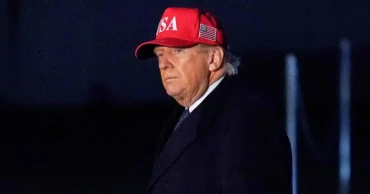
On Sunday, Trump vowed to press ahead with what he called a “righteous mission” until “all objectives are achieved”. Referring to the three US service members confirmed killed, he said that “there will likely be more before it ends”.
After a US-Israeli strike killed Iran’s Supreme Leader Ayatollah Ali Khamenei, Trump again portrayed Iran as an existential danger, claiming its leaders “have waged war against civilization itself”.
The poll indicated that many Americans do not share that view. About 43 percent of respondents said they disapproved of the war, while 29 percent were unsure. Republican support was higher but still mixed, with 55 percent approving, 13 percent opposing and 32 percent undecided.
Notably, around 42 percent of Republicans said they would be less likely to support the operation if it resulted in “US troops in the Middle East being killed or injured”. Among Democrats, opposition was overwhelming, with 74 percent disapproving, 7 percent approving and 19 percent unsure.
The survey, released Sunday, comes as Republican lawmakers have largely rallied behind Trump’s stance on Iran, despite concerns it contradicts his campaign pledge to end “endless wars” and limit US intervention abroad under an “America First” agenda.
Some conservative commentators have warned of political risks. “If this war is a swift, easy, and decisive victory, most of them will get over it,” Blake Neff, a former producer for conservative activist Charlie Kirk, wrote on X. “But if the war is anything else, there will be a lot of anger.” He added that “success can override bad explanations. So we must pray for success.”
Speaking to Al Jazeera, Doug Bandow, a senior fellow at the Cato Institute, said confirmation of US military deaths “brings home the cost of the war”.“Americans, by a very large margin, don’t want to be tied up in an ongoing conflict in the Middle East,” he said. “The fact that Americans have died suddenly shows this is not just a video game from the standpoint of America.”
Beyond the three US personnel killed, at least 201 people have died in Iran, nine in Israel, two in Iraq, three in the United Arab Emirates and one in Kuwait. The conflict has also threatened key trade routes, prompting several companies to suspend shipments.
Tehran refuses negotiations; Israeli air strikes kill 31 in Lebanon
The poll also found that 45 percent of respondents, including 34 percent of Republicans and 44 percent of independents, would be less likely to back the campaign if fuel prices rose in the US.
Democrats are closely watching public opinion as the November midterms approach, with affordability central to their campaign messaging. They have criticised Trump’s military actions, including the US abduction of Venezuelan leader Nicolas Maduro, as out of step with his promises.
Democratic reactions to the Iran strikes have varied, with some praising the action, others welcoming Khamenei’s death while questioning the justification, and several openly condemning the attacks.
On Sunday, multiple Democrats said the deaths of US soldiers highlighted the need for a war powers resolution requiring congressional approval before further military action.“I’m thinking of the brave American soldiers killed today,” Senator Chris Van Hollen wrote on X. “They should still be with us.”“Trump said he would keep us out of war. This is his war of choice.”
A vote on the resolution is expected early this week.
4 days ago
Trump says more US deaths likely as Iran strikes continue
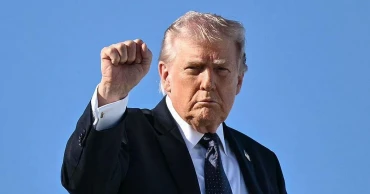
US President Donald Trump has warned that additional American casualties are likely as US military operations against Iran continue until all objectives are achieved, amid a rapidly escalating regional conflict.
US Central Command earlier confirmed that three US service members have been killed in action, while five others were seriously wounded during the ongoing operations. Trump acknowledged the growing human cost, noting that the campaign would continue despite the risks.
Iranian authorities reported that at least 153 people, including children, were killed after a strike hit a school inside Iran. In Israel, medical services said nine people were killed in a missile strike on the city of Beit Shemesh.
Iran’s foreign minister said a new national leader could be selected within “a day or two” following the killing of Supreme Leader Ayatollah Ali Khamenei in US and Israeli air strikes.
The conflict has also spread beyond Iran and Israel. The British Ministry of Defence said a UK Royal Air Force base at RAF Akrotiri in Cyprus was targeted in a suspected drone strike on Sunday night, though no casualties were reported.
In Lebanon, residents of Beirut were woken by explosions after Israel launched strikes on Hezbollah targets in response to rocket fire from the Iran-backed group. Hezbollah said it fired missiles and drones at northern Israel in retaliation for Khamenei’s killing, describing its actions as self-defence. Israel accused Hezbollah of acting on Iran’s behalf and warned it would respond forcefully to further attacks.
Lebanon’s Prime Minister Nawaf Salam urged all sides to refrain from launching rockets from southern Lebanon, warning that such actions threaten national security and risk further Israeli strikes.
Iran has also carried out retaliatory attacks across the Gulf region. Authorities in the United Arab Emirates said they intercepted dozens of Iranian ballistic missiles and drones, while explosions were reported near key facilities in Dubai, Doha and Manama. The Gulf Cooperation Council condemned the attacks, accusing Iran of violating international law and warning it would take necessary measures to defend member states.
Blasts were reported in Tehran as internet access remained restricted, making it difficult to assess the full extent of the damage. Meanwhile, Iran launched strikes on targets in Iraq, including areas near Erbil’s international airport, which US Central Command said was among the intended targets.
The widening conflict has rattled global markets. Oil prices surged when Asian markets opened on Monday, with Brent crude and US benchmark oil jumping by more than 10 percent before easing slightly.
Senior US officials, including Secretary of State Marco Rubio, are scheduled to brief Congress on the situation on Tuesday as international concern grows over the risk of a prolonged and wider war in the Middle East.
With inputs from BBC
4 days ago
World leaders call for talks after US-Israeli strikes kill Iran’s Supreme Leader
Global leaders have urged restraint and a return to negotiations following military strikes by the United States and Israel that killed Iran’s Supreme Leader Ali Khamenei, raising fears of wider regional conflict.
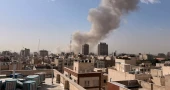
A massive explosion shook Tehran on Sunday morning as the Israeli military said it targeted the “heart” of the city after clearing a path to the capital the previous day. Meanwhile, Iran continued its retaliatory campaign, with Qatar, Kuwait, and Bahrain reporting interceptions of missile attacks.
Oman reported that an oil tanker in the strategic Strait of Hormuz came under attack, and its port at Duqm, used by the U.S. Navy as a logistical hub, was targeted in a drone strike. The sudden death of Khamenei, who had no designated successor, has added to uncertainty over Iran’s future and the potential for broader regional escalation.
Top diplomats from the 27 European Union nations convened an emergency meeting Sunday to assess the situation, while the U.N. Security Council met late Saturday. While some countries refrained from direct comment to avoid worsening tensions, others expressed clear positions: Australia and Canada supported the U.S. strikes, while Russia and China criticized them.
U.S. President Donald Trump called on the Iranian public to “seize control of your destiny” and challenge the Islamic regime that has ruled Iran since 1979.
Calls for dialogue and de-escalation
During the U.N. Security Council session, Secretary-General António Guterres and representatives from several countries called for an immediate halt to hostilities and a return to negotiations to prevent further escalation.
“The alternative is a potential wider conflict with grave consequences for civilians and regional stability,” Guterres warned. He condemned both the U.S. and Israeli airstrikes for violating international law and Iran’s retaliatory attacks for breaching the sovereignty of Bahrain, Iraq, Jordan, Kuwait, Qatar, Saudi Arabia, and the UAE.
Regional leaders also called for calm. UAE presidential adviser Anwar Gargash urged Iran to act responsibly and avoid further escalation. The 22-member Arab League criticized Iranian attacks as violations of the sovereignty of nations committed to peace and stability.
EU foreign policy chief Kaja Kallas said Iran’s indiscriminate strikes risk dragging the region into a wider war, calling on the regime to make measured choices. British Prime Minister Keir Starmer, French President Emmanuel Macron, and German Chancellor Friedrich Merz also urged the U.S. and Iran to return to talks, emphasizing that a negotiated settlement is essential and that the Iranian people must be allowed to determine their future.
Protests and reactions worldwide
Clashes erupted in Pakistan’s Karachi, where at least six people were killed after protesters stormed the U.S. Consulate. In Indian-administered Kashmir, tens of thousands demonstrated against Khamenei’s killing.
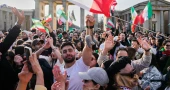
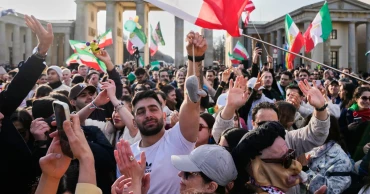
Members of the Iranian diaspora and supporters staged rallies from New York to Berlin, with some celebrating the end of Khamenei’s rule. In Berlin, demonstrators waved flags of the Iranian monarchy along with German, Israeli, and U.S. flags, while cheering and dancing in the streets.
The events highlight the deep regional and global concern over the potential fallout from the strikes and the urgent calls for diplomatic solutions to prevent further conflict.
5 days ago
At least 40 buildings damaged in Iranian strikes on Tel Aviv
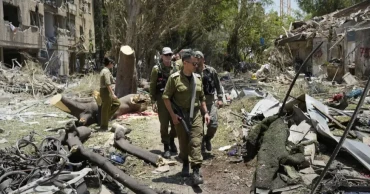
Iranian missile strikes on Tel Aviv damaged at least 40 buildings, forcing more than 200 residents to evacuate their homes and take shelter in three hotels, Israeli daily Haaretz reported, citing the city municipality.
The strikes came after Iran vowed sweeping retaliation for the killing of Supreme Leader Ayatollah Ali Khamenei in a joint U.S.-Israeli attack.
Missiles were fired at targets in Israel and Gulf Arab states, prompting U.S. President Donald Trump to issue stark warnings against further escalation.
Iran confirmed Khamenei’s death, saying he was killed in an Israeli-American airstrike on his Tehran office on Saturday, a development that has cast uncertainty over the future of the Islamic Republic and heightened fears of regional instability.
Iranian state television said the 86-year-old leader’s death at his office “showed that he consistently stood among the people and at the forefront of his responsibilities, confronting what officials call global arrogance.”
Trump described the killing as an opportunity for Iranians to reclaim their country, writing on social media: “Khamenei, one of the most evil people in History, is dead.”
Iran’s Cabinet said the attack was a “great crime” that “will never go unanswered,” while the paramilitary Revolutionary Guard warned of its “most intense offensive operation” yet, targeting Israeli and American bases. Parliamentary Speaker Mohammad Bagher Qalibaf said in a televised address: “You have crossed our red line and must pay the price. We will deliver such devastating blows that you yourselves will be driven to beg.”
Trump responded online, saying: “Iran just stated that they are going to hit very hard today, harder than they have ever hit before,” adding, “THEY BETTER NOT DO THAT, HOWEVER, BECAUSE IF THEY DO, WE WILL HIT THEM WITH A FORCE THAT HAS NEVER BEEN SEEN BEFORE!”
Following the initial strikes, Iran launched missiles and drones toward Israel and U.S. military installations in Bahrain, Kuwait and Qatar. The Israeli military said dozens of missiles were fired, many of them intercepted. Israel’s Magen David Adom rescue service reported that a woman died Saturday night from wounds sustained in a missile strike in the Tel Aviv area.
Air traffic across the Middle East was disrupted as air defense systems activated, with explosions heard over Dubai into Sunday morning. UAE state media said shrapnel from an Iranian missile attack on the capital killed one person, while debris from interceptions sparked fires at the city’s main port and damaged the facade of the iconic Burj Al Arab hotel.
The attack marked a dramatic escalation in U.S. involvement, raising the risk of broader conflict and underscoring a major show of military force by an American president who campaigned on an “America First” platform and pledged to avoid “forever wars.”
Khamenei’s killing, the second major U.S.-led strike on Iran during Trump’s current term, is expected to leave a power vacuum, as no clear successor had been named and the supreme leader held ultimate authority over state policy for decades, overseeing both the clerical establishment and the Revolutionary Guard.
“This is the single greatest chance for the Iranian people to take back their Country,” Trump said.
Iran swiftly formed a governing council to run the country until a new supreme leader is selected. State media also reported that the head of the Revolutionary Guard and a senior security adviser to Khamenei were killed in the airstrikes. Maj. Gen. Mohammad Pakpour assumed command of the Guard after its previous leader was killed in last June’s 12-day war, while adviser Ali Shamkhani was described by IRNA as a long-standing figure in Iran’s security establishment.
As news of Khamenei’s death spread, some residents in Tehran were seen celebrating, cheering from rooftops, blowing whistles and ululating, according to eyewitnesses who spoke to The Associated Press.
Elsewhere, mourners raised a black flag over the Imam Reza shrine in Mashhad, Iran’s second-largest city and a key Shiite pilgrimage site. The government declared 40 days of national mourning and a seven-day public holiday.
Citing unnamed sources, the semiofficial Fars news agency reported that several of Khamenei’s relatives were also killed, including a daughter, son-in-law, daughter-in-law and a grandchild.
5 days ago
Middle East airports shut, thousands stranded after strikes on Iran
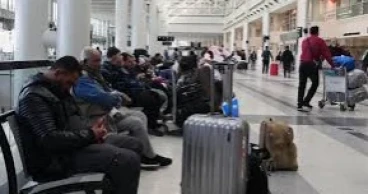
Air travel across the Middle East and beyond was severely disrupted Saturday after the United States and Israel launched attacks on Iran, prompting several countries to shut their airspace and close major airports linking Europe, Africa and the West with Asia.
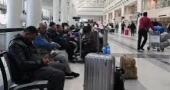
Airports across the region remained closed Sunday as the conflict entered its second day. Emirates suspended all flights to and from Dubai until at least Sunday afternoon. Qatar Airways said operations at Qatar’s main airport would remain halted until at least Monday morning. Israeli airspace also stayed closed.
The sweeping closures have left tens of thousands of passengers stranded worldwide.
Israel, Qatar, Syria, Iran, Iraq, Kuwait and Bahrain shut their airspace Saturday, forcing hundreds of thousands of travelers to either delay journeys or divert to alternative airports. According to flight tracking site FlightRadar24, there was no flight activity over the United Arab Emirates following a government announcement of a “temporary and partial” airspace closure.
Major hub airports in Dubai, Abu Dhabi and Doha were shut down, leading to more than 1,800 flight cancellations by key regional carriers. The three major airlines operating from those hubs — Emirates, Qatar Airways and Etihad Airways — typically handle around 90,000 transit passengers daily, aviation analytics firm Cirium said.
Authorities in the United Arab Emirates reported incidents at two airports, condemning what they described as a “blatant attack involving Iranian ballistic missiles.” Officials at Dubai International Airport said four people were injured, while Abu Dhabi’s Zayed International Airport reported one fatality and seven injuries following a drone strike. Strikes were also reported at Kuwait International Airport.
Although Iran did not officially claim responsibility, Gulf states said retaliatory strikes attributed to Tehran extended beyond previously declared American military targets.
Aviation analyst Henry Harteveldt, president of Atmosphere Research Group, warned travelers to expect continued disruption. “There’s no way to soften this. Passengers should be prepared for delays and cancellations over the next few days,” he said.
Airlines rerouting flights to avoid the conflict are diverting aircraft south over Saudi Arabia, adding hours to journeys and increasing fuel consumption. Prolonged disruption could drive up ticket prices. The added traffic is also expected to strain Saudi air traffic control services, while countries closing their skies will lose overflight fee revenue.
Mike McCormick, a former U.S. air traffic control official now teaching at Embry-Riddle Aeronautical University, said limited reopening of certain airspace sectors may be possible in the coming days once military flight paths are clarified and missile threats reassessed.
However, the duration of the disruption remains uncertain. By comparison, a previous Israeli and U.S. strike on Iran in June 2025 lasted 12 days.
Airlines worldwide urged passengers to check flight status before traveling to airports. Some carriers issued waivers allowing affected travelers to rebook without additional fees.
At least 145 aircraft bound for destinations such as Tel Aviv and Dubai were diverted to cities including Athens, Istanbul and Rome, according to FlightAware. Some flights returned to their departure points, including one that flew nearly 15 hours from Philadelphia to Spain before turning back.
India’s aviation authorities classified much of Middle Eastern airspace as high risk, prompting cancellations by several airlines. Air India suspended all flights to the region. Turkish Airlines halted services to Lebanon, Syria, Iraq, Iran and Jordan until Monday, and also suspended flights to Qatar, Kuwait, Bahrain, the United Arab Emirates and Oman.
U.S. carriers Delta Air Lines and United Airlines paused Tel Aviv flights through the weekend. KLM had earlier suspended operations to and from Tel Aviv.
Other airlines, including Lufthansa, Air France, Transavia and Pegasus Airlines, canceled flights to Lebanon, while American Airlines suspended services from Philadelphia to Doha.
Virgin Atlantic said it would avoid Iraqi airspace, potentially lengthening flights to India, the Maldives and Riyadh. British Airways suspended services to Tel Aviv and Bahrain until next week and canceled flights to Amman on Saturday.
Analysts cautioned that travelers should brace for ongoing uncertainty. “If you haven’t left yet, you may not be traveling for several days, if not longer,” Harteveldt said, advising those attempting to return home to explore alternative routes as disruptions persist.
5 days ago
Thousands mourn Khamenei’s killing in central Iran’s Yasuj city
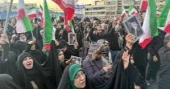
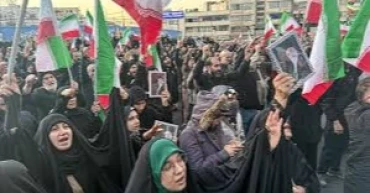
Thousands of people in central Iran’s Yasuj city joined the start of the mourning period for Supreme Leader Ayatollah Ali Khamenei, a video posted by Iran’s Tasnim news agency showed.
The footage showed mourners beating their heads and chests, a traditional practice in Iran during mourning.
Similar scenes were reported in Lorestan province, according to the Tehran Times newspaper.
Iran’s Supreme Leader Ayatollah Ali Khamenei and senior security officials have been killed amid ongoing US and Israeli strikes.
The Iranian Revolutionary Guard Corps has vowed revenge, claiming it has launched attacks on 27 bases hosting US forces in the Middle East, as well as Israeli military sites in Tel Aviv. Explosions have also been reported in Qatar and the UAE.
US President Donald Trump warned that Iran would face “a force that has never been seen before” if it strikes “very hard today.”
Iran’s government said an interim council, led by President Masoud Pezeshkian, will manage the country until a new supreme leader is chosen. State media reported that at least 201 people have died in attacks across 24 provinces.
Iran’s retaliatory strikes have targeted Israeli and US positions in several Middle Eastern countries, including Qatar, the UAE, Kuwait, Bahrain, Jordan, Saudi Arabia, and Iraq.
5 days ago
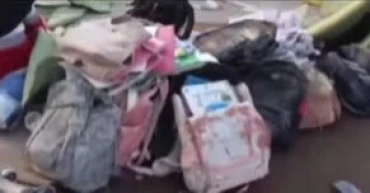
Death toll climbs to 148 in U.S.-Israeli strike on Iranian school
The number of fatalities from a joint U.S.-Israeli airstrike on a girls’ primary school in Iran’s southern Hormozgan Province has risen to 148, the semi-official Tasnim News Agency reported on Sunday.
The assault also injured 95 people, local prosecutor Ebrahim Taheri said.
According to Taheri, most of those killed in the attack were students, while teachers, school employees and parents were also among the victims.
On Saturday morning, Israel and the United States carried out coordinated strikes on Tehran and several other cities, including Tabriz, Qom, Isfahan, Kermanshah and Karaj. Iran retaliated with missile and drone attacks targeting Israel and U.S. military bases in the region.
The strikes on Tehran reportedly killed Iran’s Supreme Leader Ali Khamenei, Secretary of the country’s Defense Council Ali Shamkhani, and Mohammad Pakpour, chief commander of the Islamic Revolutionary Guard Corps.
5 days ago
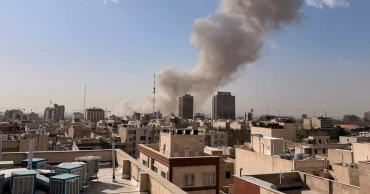
AU warns against escalation, urges middle east restraint
African Union (AU) Commission Chairperson Mahmoud Ali Youssouf on Saturday expressed "deep concern" over the military escalation in the Middle East, warning that further escalation threatens to worsen global instability.
In a statement issued Saturday, the chairperson said he is "deeply concerned by the reported military strikes carried out by the United States in coordination with Israeli forces against targets inside Iran, an escalation that marks a serious intensification of hostilities in the Middle East."
At least 51 students killed as US-Israel strikes on Iran escalate into regional crisis
Calling for restraint, urgent de-escalation and sustained dialogue, Youssouf stressed that all parties must act fully in accordance with international law and the United Nations Charter to safeguard international peace and security.
He warned that further escalation threatens to worsen global instability, with serious implications for energy markets, food security and economic resilience, particularly in Africa, where conflict and economic pressures remain acute.
The commission chief urged all concerned actors to prioritize diplomatic engagement to prevent a further deterioration and uphold the international rules-based order.
Iran’s IRGC chief, defence minister reportedly killed in Israeli strikes
"Sustainable peace can only be achieved through diplomacy, not through force," Youssouf said.
6 days ago
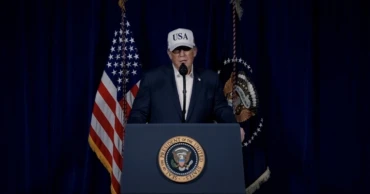
Trump announces major US strikes on Iran, targets nuclear sites and missile program
US President Donald Trump on Wednesday announced that the United States has launched “major combat operations” in Iran, accusing the Iranian regime of an “unending campaign of bloodshed and mass murder” against the US.
In a video posted on Truth Social in the early hours, Trump said the US strikes, dubbed Operation Midnight Hammer, targeted Iran’s nuclear facilities at Fordow, Natanz, and Isfahan. He insisted that Iran will never be allowed to acquire nuclear weapons.
Trump claimed Tehran had ignored repeated opportunities to abandon its nuclear ambitions and continued developing long-range missiles capable of threatening US allies in Europe, American troops abroad, and potentially the US homeland. He vowed to destroy Iran’s missile industry and “annihilate” its navy, reports BBC.
The president also criticized Iran’s 47-year campaign of chanting “Death to America,” warning that US forces may suffer casualties in the operation. Addressing the Iranian people, Trump urged them to rise up and “take over your government,” declaring, “The hour of your freedom is at hand.”
6 days ago
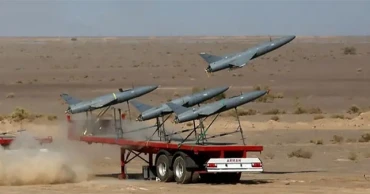
Iran launches missiles, drones at Israel after US-Israeli attacks
Iran’s Islamic Revolutionary Guard Corps (IRGC) has confirmed it launched missiles and drones towards Israel in retaliation for recent US-Israeli strikes.
“In response to the aggression of the hostile and criminal enemy against the Islamic Republic of Iran, the first wave of extensive missile and drone attacks by the Islamic Republic of Iran towards the occupied territories has begun,” the IRGC said.
United States President Donald Trump announced that the US has begun “major combat operations” in Iran following the missile attacks claimed by Israel, reports Al Jazeera.
A senior Iranian official told Al Jazeera, “All American and Israeli assets and interests in the Middle East have become a legitimate target. There are no red lines after this aggression, and everything is possible, including scenarios that were not previously considered.”
The official also said, “The United States and Israel have started an aggression and a war that will have wide and long-lasting repercussions. We were not surprised by the joint American-Israeli aggression and we have a complex response with no time limit,” adding that any calls for Iran to show restraint or surrender are “unacceptable and mere wishful thinking.”
Multiple explosions have been reported in Tehran and other parts of Iran, while state media reported that President Masoud Pezeshkian is “safe and sound.”
The senior official added that Israel should “prepare for what is coming, and our response will be public, and there are no red lines.”
President Pezeshkian on Thursday dismissed Trump’s accusation that Tehran was seeking the bomb, stating that Iran would not develop nuclear weapons.
Earlier this week, Iran’s Deputy Foreign Minister Kazem Gharibabadi told the UN Conference on Disarmament that Iran would “never seek nuclear weapons,” calling for full disarmament and peaceful nuclear energy use.
Air travel has been heavily disrupted in the region.
Wizz Air suspended flights to and from Israel, Dubai, Abu Dhabi, and Amman until March 7.
Lufthansa canceled flights to Dubai, Tel Aviv, Beirut, and Muscat for the weekend. KLM canceled flights from Amsterdam to Tel Aviv, while Oman Air suspended flights to Baghdad.
Russia suspended all flights to Iran and Israel.
Iraq closed its airspace, and Israel canceled all civilian flights.
Israel’s Prime Minister Benjamin Netanyahu said the attacks on Iran were aimed at removing an “existential threat,” adding that “joint action” by Israel and the US “will create the conditions for the brave Iranian people to take their fate into their own hands” and praised Trump for his “historic leadership.”
Tehran struck near Khamenei’s office
Explosions were reported near Supreme Leader Ayatollah Ali Khamenei’s office in Tehran, though it was unclear if the 86-year-old leader was present. Khamenei has not appeared publicly in recent days as tensions with the United States escalate, reports AP.
U.S. military buildup pressures Iran
The strikes came as Washington deployed a large fleet of fighter jets and warships to the region to pressure Iran into a nuclear deal. Although Iran claims it has not enriched uranium since June, it has blocked international inspectors from sites bombed during a 12-day conflict. Satellite images analyzed by The Associated Press suggest Iran is assessing and possibly recovering material at some of these locations.
Missile ranges and concerns
Iran maintains a self-imposed limit on its ballistic missiles, restricting them to 2,000 kilometers, covering the Middle East and parts of eastern Europe. There is no public evidence Iran is pursuing intercontinental missiles, although the U.S. has raised concerns over its space program.
Explosions rock northern Israel
Hours after the Iranian strikes, northern Israel reported explosions as air defense systems attempted to intercept incoming missiles. Sirens also sounded in Jordan, and several Israeli hospitals activated emergency protocols, moving patients and surgeries underground. The United Arab Emirates closed its airspace amid heightened tensions.
Blasts across Tehran and surrounding areas
Roads near Khamenei’s compound were shut down, and additional blasts were reported across Tehran. Iraq also closed its airspace. Israeli officials said the strikes targeted Iranian military, government, and intelligence sites. Defense Minister Israel Katz described the attacks as aimed “to remove threats.”
Houthi rebels vow retaliation
Iranian-backed Houthi rebels in Yemen pledged to resume missile and drone attacks on Red Sea shipping routes and Israel in support of Iran, with officials warning the first strike could come “as soon as tonight.”
The Houthis had paused attacks under agreements with the Trump administration and a ceasefire with Israel in Gaza last October.
6 days ago