Others

Nobel Laureates arrive in Stockholm, Oslo for awards week
Nobel week was underway in Stockholm and Oslo with laureates holding news conferences and lectures before they will be awarded the prestigious prizes.
Hungarian László Krasznahorkai, who won the Prize in literature for his surreal and anarchic novels that combine a bleak world view with mordant humor, was expected to give a lecture in Stockholm on Sunday in one of his rare public appearances.
When the Nobel judges announced the award in October, they described the 71-year-old as “a great epic writer” whose work “is characterized by absurdism and grotesque excess.”
“Krasznahorkai’s work can be seen as part of a Central European tradition," the Nobel Prize organization said. ”Important features are pessimism and apocalypse, but also humor and unpredictability."
Last year’s winner was South Korean author Han Kang. The 2023 winner was Norwegian writer Jon Fosse, whose work includes a seven-book epic made up of a single sentence.
Meanwhile, the director of the Norwegian Nobel Institute, Kristian Harpviken, said Saturday that Venezuelan Peace Prize laureate and opposition leader María Corina Machado will come to Oslo this week to receive her award in person.
The 58-year-old, who won for her struggle to achieve a democratic transition in the South American nation, has been hiding and has not been seen in public since January.
Harpviken told Norwegian public broadcaster NRK that Machado was expected to personally pick up the prize on Wednesday.
“I spoke with the Peace Prize winner last night, and she will come to Oslo,” Harpviken said, according to NRK.
Nobel Prize award ceremonies are held on Dec. 10, the anniversary of Alfred Nobel’s death in 1896. The award ceremony for peace is in Oslo and the other ceremonies are in Stockholm.
5 months ago
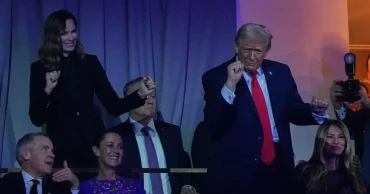
Trump meets Mexico’s Sheinbaum in first face-to-face talks at World Cup draw
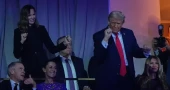
President Donald Trump met Mexican President Claudia Sheinbaum in person for the first time on Friday during the 2026 World Cup draw in Washington, a long-delayed meeting that centered on next year’s tournament but also touched on trade and tariffs.
The two leaders spoke in the president’s box at the Kennedy Center and later joined Canadian Prime Minister Mark Carney onstage for the draw. A senior White House official said the three leaders also held a private discussion afterward.
Sheinbaum, who had said before leaving Mexico that she intended to raise U.S. tariffs on automobiles, steel and aluminum, posted on X after the meeting that they discussed the “great opportunity” of co-hosting the 2026 World Cup and agreed to continue working through trade issues.
Mexico remains the United States’ largest trading partner, and the U.S.-Mexico-Canada Agreement, crafted during Trump’s first term, is still in force. But Washington is reviewing the deal ahead of a joint assessment set for July, and Trump has repeatedly threatened broad tariff hikes, though many of those threats have not been carried out.
Before Friday, Trump and Sheinbaum had spoken frequently by phone on issues ranging from fentanyl trafficking to tariff disputes, but despite meetings with other major world leaders, the two had not managed an in-person session until now.
Sheinbaum has earned a reputation for managing a sensitive relationship with Washington by balancing respect with occasional humor and polite pushback. Mexican officials have been working to ease the impact of existing U.S. tariffs and prevent new ones, particularly measures that could hit the country’s crucial automotive sector.
Mexico also continues to negotiate over import levies of 25 percent on the automotive industry and 50 percent on steel and aluminum. At the same time, Sheinbaum’s government has been working to protect millions of Mexican nationals living in the United States as the Trump administration expands mass deportation operations. A new 1 percent U.S. tax on remittances sent from the United States to Mexico is set to take effect on January 1.
Immigration, though once at the center of bilateral tensions, has taken a lower profile amid a sharp drop in illegal border crossings. Recent discussions have focused more on persuading countries to take back their nationals and integrate them to reduce migration pressures — a key White House objective.
On security, Mexico has extradited dozens of cartel suspects to the United States and expanded authority for its security chief, steps that U.S. officials say have improved cooperation on fentanyl and organized crime. Still, disagreements persist. Trump has criticized Sheinbaum for rejecting his suggestion that U.S. forces could conduct operations in Mexico, an idea she has firmly dismissed.
Sheinbaum also objected to U.S. maritime strikes on suspected drug-carrying vessels in the Caribbean and eastern Pacific. Trump, in turn, has accused her of being constrained by cartel violence. She avoided escalating the dispute, choosing not to respond directly to the remarks.
Friday’s meeting, though largely framed around the World Cup, offered the two leaders their first opportunity for direct talks as both sides navigate a complex agenda involving trade, migration and security ahead of 2026.
5 months ago

US and Ukraine plan third round of talks after steps toward security framework
Advisers to US President Donald Trump and senior Ukrainian officials said they will meet for a third straight day on Saturday after reporting initial progress on shaping a security framework for postwar Ukraine.
In a joint statement, US special envoy Steve Witkoff, Trump’s son-in-law Jared Kushner, and Ukrainian negotiators Rustem Umerov and Andriy Hnatov cautioned that genuine movement toward any agreement will depend on Russia showing “serious commitment to long-term peace.” The two sides issued the remarks after a second day of talks in Florida, where Trump is pushing both Kyiv and Moscow to consider a US-mediated proposal to end nearly four years of war.
The statement said both delegations reviewed ideas for a future prosperity agenda aimed at supporting Ukraine’s reconstruction, bilateral economic initiatives and long-term recovery. They also discussed the deterrence capabilities Ukraine will need to maintain a lasting peace.
Friday’s meeting was held at the Shell Bay Club in Hallandale Beach, a private luxury resort owned by Witkoff’s real estate company. The discussions followed earlier talks in Moscow, where President Vladimir Putin held a five-hour meeting with Witkoff and Kushner on Tuesday.
Ukraine’s President Volodymyr Zelenskyy said his delegation wanted updates from the US side about the Kremlin session. Zelenskyy and European leaders have repeatedly accused Putin of dragging out negotiations while Russian forces continue their offensive. In a video message Thursday, Zelenskyy said Kyiv wanted to know what new excuses Russia might be advancing to prolong the war and increase pressure on Ukraine.
Kremlin foreign policy adviser Yuri Ushakov, speaking to Russian journalist Pavel Zarubin on Friday, praised Kushner as potentially instrumental in ending the conflict. Ushakov, who also attended Tuesday’s Kremlin talks, said any settlement blueprint would likely bear Kushner’s imprint. His warm comments came as Putin seeks to widen divisions between Trump, Ukraine and Europe at a time when Trump’s frustration with the conflict is growing. Putin described this week’s meeting with Witkoff and Kushner as “necessary” and “useful,” though he said some proposals were unacceptable.
Kushner, married to Trump’s daughter Ivanka, served as a senior adviser during Trump’s first term and led the effort to negotiate the Abraham Accords. He has taken on a more informal role during Trump’s second term but recently helped Witkoff broker ceasefire and hostage arrangements between Israel and Hamas. Trump again paired him with Witkoff to work on a possible endgame for Russia’s invasion.
From Europe, reactions reflected anxiety about security guarantees and Moscow’s intentions. Ushakov, speaking during Putin’s trip to India, repeated Russia’s claims that Europe is complicating the peace effort by insisting on terms unacceptable to Moscow. Ukraine’s European partners have said security assurances must be part of any settlement, fearing the possibility of future Russian aggression.
French President Emmanuel Macron said on Friday he saw signs of willingness from Chinese President Xi Jinping to contribute to peace efforts during his visit to Beijing. Macron said Ukraine needs credible guarantees that Russia will not attack again if a deal is reached and stressed the importance of a united Western approach.
As diplomatic efforts continued, the conflict saw fresh violence. Russian drone strikes on Thursday night killed a 12-year-old boy in Ukraine’s central Dnipropetrovsk region and injured two women, according to regional officials. Ukrainian forces said Russia launched 137 drones of various types overnight.
Ukraine’s military reported long-range drone attacks on a Russian port and an oil refinery as part of an effort to disrupt Moscow’s logistics. The strikes targeted the Temriuk sea port in the Krasnodar region and the Syzran refinery in Samara, igniting fires, Ukrainian officials said. Russia’s Defense Ministry said its air defenses intercepted 85 Ukrainian drones over Russian regions and Crimea, which Moscow illegally annexed in 2014.
Talks between the US and Ukraine are expected to resume Saturday.
5 months ago
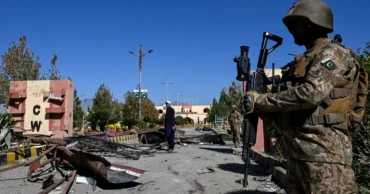
4 killed in heavy clashes with Pakistan: Afghanistan
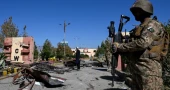
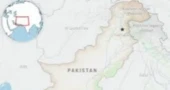
Tensions between Afghanistan and Pakistan escalated again after heavy cross-border fire late Friday left four Afghan civilians dead, Afghan authorities said on Saturday.
Fighting erupted along the Spin Boldak–Chaman border around 10:30pm local time and continued for nearly two hours, officials and residents said. Both sides blamed each other for firing first.
Taliban government spokesman Zabihullah Mujahid accused Pakistani forces of launching attacks toward Spin Boldak, prompting Afghan forces to retaliate. In contrast, Pakistani Prime Minister Shehbaz Sharif’s spokesman Mosharraf Zaidi said Afghan forces carried out “unprovoked firing,” adding that Pakistan remained alert to protect its territory and citizens.
Ali Mohammad Haqmal, head of Kandahar’s information department, told AFP that Pakistani forces used light and heavy artillery, and mortar shells hit civilian homes. He said the clashes later subsided after both sides agreed to halt fire.
Relations between Kabul and Islamabad have deteriorated sharply since the Taliban seized power in 2021, with Pakistan accusing Afghanistan of harbouring armed groups including the Pakistan Taliban (TTP), the Balochistan Liberation Army, and ISKP. The Taliban rejects the allegations, saying Pakistan is responsible for its own security.
Border tensions spiked in October after Pakistan demanded the Taliban rein in fighters operating from Afghan soil, triggering a week of deadly clashes that killed about 70 people on both sides. A ceasefire was signed in Doha on October 19, but subsequent talks hosted by Qatar, Turkiye and Saudi Arabia have failed to achieve lasting progress.
Despite the fragile truce, Kabul alleges Pakistan has carried out repeated air strikes in eastern Afghanistan in recent weeks — including an attack in Khost province in late November that reportedly killed nine children and a woman. Pakistan has denied any involvement.
Source Al Jazeera
5 months ago
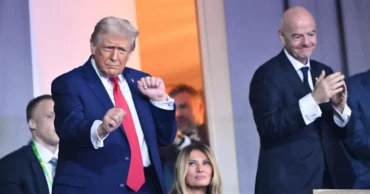
Infantino’s ‘Peace Prize’ for Trump sparks debate over FIFA’s political neutrality
FIFA has long maintained that political messages have no place in football, frequently penalising players who display them. Yet on Friday, the organisation’s president Gianni Infantino handed US President Donald Trump the first-ever FIFA Peace Prize, prompting fresh questions about the body’s stance on neutrality.
The announcement came less than a day after the Trump administration carried out another lethal air strike in the Caribbean, a timing that drew sharp criticism from rights advocates and football commentators.
Craig Mokhiber, a former UN official who has pushed for Israel’s suspension from world football over its war in Gaza, called the award a “truly shameful development”. He argued that Infantino has consistently refused to hold Israel accountable, insisting that football “cannot solve geopolitical” problems.
“Not satisfied with two years of FIFA complicity in genocide in Palestine, Infantino and his cronies have now invented a new ‘peace prize’ in order to curry favour with Donald Trump,” Mokhiber told Al Jazeera. He said the move helps “obscure” Trump’s “disgraceful record” on Israel, the deadly boat strikes in the Caribbean, and “gross violations of human rights” inside the United States.
Infantino praises Trump’s global deals
While presenting the award, Infantino lauded Trump’s international agreements, including the Abraham Accords that normalised relations between Israel and several Arab countries without addressing Palestinian statehood.
The gesture appears at odds with Infantino’s previous insistence on keeping politics away from sport. “There’s no more powerful tool than sport to unite the people,” he said in 2023. “Now we have to protect the autonomy of sport: the political neutrality of sport and to protect the values of sport.”
Critics noted the contrast between that message and the decision to honour a president who days earlier referred to people from Somalia as “garbage”.
Football journalist Zach Lowy quipped on social media, “Giving Donald Trump a prize for peace is like giving Luis Suarez a prize for not biting people’s ears off.”
Infantino has built a close relationship with Trump as the US prepares to co-host the 2026 World Cup with Mexico and Canada. He has been a frequent visitor to the White House and joined Trump in October at a ceremony in Egypt marking the Gaza truce.
FIFA did not respond to Al Jazeera’s request for comment.
The Democratic Party also criticised the move, saying, “Trump couldn’t win a Nobel Peace Prize so FIFA made one up for him.”
Trump’s record under scrutiny
Despite brokering some international agreements, including between Rwanda and the Democratic Republic of the Congo, Trump has consistently pushed for higher military spending among Western allies.
He also ordered the bombing of Iran’s nuclear facilities in June and continued supplying arms to Israel amid its abuses against Palestinians.
In the Americas, his administration has carried out 22 air strikes on vessels it claimed were transporting drugs, killing at least 86 people. Legal experts have broadly condemned the operations as unlawful extrajudicial killings.
The US president has also deployed additional military assets near Venezuela, fuelling speculation of a possible intervention aimed at ousting President Nicolas Maduro.
Domestically, Trump has intensified immigration crackdowns, detaining and attempting to deport non-citizens. Some advocates say they have been targeted over criticism of Israel, despite such speech being protected by the First Amendment.
“US President Donald Trump was just awarded the newly created ‘FIFA Peace Prize’,” Human Rights Watch posted on X. “But his administration’s appalling human rights record certainly does not display ‘exceptional actions for peace and unity’.”
Mokhiber said the “vulgar” award should be withdrawn. “FIFA rules do not allow play on a muddy pitch. They certainly shouldn’t play on a bloody pitch. But that’s precisely where Infantino is leading FIFA,” he said.
5 months ago
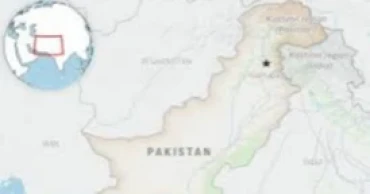
Pakistan and Afghanistan exchange border fire with no reported casualties
Pakistani and Afghan forces traded gunfire late Friday along their tense shared border, though officials on both sides said no one was injured and no damage occurred. Each country accused the other of breaking a fragile, two-month ceasefire.
Talks between Islamabad and Kabul meant to ease tensions and maintain the truce collapsed in November, although the Qatar-brokered agreement from October has largely remained in place.
The latest exchange occurred a day after Pakistan agreed to let the United Nations move relief supplies into Afghanistan through the largely closed Chaman and Torkham crossings.
Mohammad Sadiq, a Pakistani police official, said Afghan forces fired first near the vital Chaman crossing, prompting Pakistan to respond. In contrast, Afghan Taliban spokesman Zabihullah Mujahid claimed Pakistan initiated the shooting in Kandahar’s Spin Boldak district, forcing Afghan forces to return fire. Afghan border police spokesman Abidullah Farooqi also alleged that Pakistani troops threw a grenade into the Afghan side before the clash, adding that Afghanistan still supports the ceasefire.
Meanwhile, Mosharraf Zaidi, speaking for Pakistani Prime Minister Shehbaz Sharif, wrote on X that the Afghan Taliban fired “unprovoked shots” earlier in the evening and that Pakistan’s military remains vigilant in defending its territory and citizens.
Border tensions have been running high since deadly clashes in October left dozens dead and hundreds injured on both sides following explosions in Kabul that the Taliban blamed on Pakistan. The violence marked the worst confrontation between the neighbors in years. Although the Qatar-mediated ceasefire helped reduce hostilities, follow-up talks in Istanbul failed to reach a lasting solution.
Pakistan continues to accuse the Pakistani Taliban (TTP) — a group separate from but closely linked to the Afghan Taliban — of carrying out most militant attacks inside Pakistan. Many TTP fighters are believed to have found refuge in Afghanistan since the Taliban takeover in 2021, further straining relations.
5 months ago
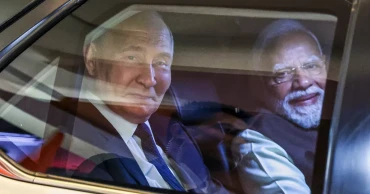
Putin and Modi to discuss strategic ties amid US pressure
Russian President Vladimir Putin is set to hold talks with Indian Prime Minister Narendra Modi on Friday at an annual summit aimed at strengthening bilateral ties on the second day of his state visit.
The 23rd Russia-India Summit comes at a pivotal moment as the United States pushes for a Ukraine peace deal while seeking global cooperation. They will test New Delhi’s efforts to balance relations with Moscow and Washington as the nearly four-year war in Ukraine grinds on.
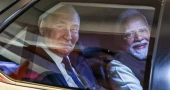
Putin was received by Modi at an airport in New Delhi on Thursday, who gave the visting leader a bear hug and a tight handshake with the gusto of an old friend.
According to Indian officials involved in the preparation for the summit, the agenda includes talks on defense, energy and labor mobility.
While India has historically maintained deep ties with Russia, critics say Putin’s visit could strain relations with the European Union and the United States and might jeopardize negotiations for major trade agreements with both that are seen as critical for India’s exports.
U.S. President Donald Trump raised tariffs on Indian goods to 50% in August, citing New Delhi's discounted Russian oil. India has been the second biggest importer of Russian crude after China.
The U.S. says purchases of Russian oil help finance Moscow’s war machine. In October, U.S. sanctioned two of Moscow’s biggest oil producers to force countries like India to cut down on imports. Indian officials have said New Delhi has always abided by international sanctions and would do so in the case of Russia oil purchases as well.
India and the U.S. set a target for the first tranche of a trade deal by the fall, but the deal hasn’t come through yet amid strains in relations.
India is also in the final stages of talks on a trade agreement with the EU, which sees Russia's war in Ukraine as a major threat.
In his meeting with Putin, Modi is likely to push for faster delivery of two further more Russian S-400 surface-to-air missile systems. It has already received three under a 2018 deal worth about $5.4 billion. The delay has been tied to supply chain disruptions linked to the war in Ukraine.
The two sides signed a pact in February to improve military cooperation, exercises, port calls, disaster relief assistance and logistics support. Moscow’s State Duma ratified the same ahead of Putin’s India visit.
Talks are also expected on upgrading India’s Russian-made Su-30MKI fighter jets and accelerating deliveries of critical military hardware.
Trade is also expected to be a major point in talks.
Bilateral trade between the two countries stood at $68.7 billion in the last fiscal year ended March, while the aim is to boost it to $100 billion by 2030. The trade is heavily skewed in favor of Russia with deep deficits for India, which it is looking to bridge by pushing exports.
India is keen to increase exports of pharmaceuticals, agriculture and textiles to Russia and is seeking the removal of non-tariff barriers. New Delhi is also seeking long-term supplies of fertilizers from Moscow.
Another key area where the two countries are expected to finalize an agreement is the safety and regulation of migration of Indian skilled workers to Russia.
Putin last visited India in 2021. Modi was in Moscow last year, and the two leaders briefly met in September in China during a Shanghai Cooperation Organization summit.
5 months ago

Mecca's Kaaba seen like a bright light from 400k km above earth; picture goes viral
A stunning photograph taken from orbit has gone viral online, revealing Mecca’s Kaaba glowing like a luminous point from 400 kilometers above Earth.
The image, captured from the International Space Station (ISS), highlights Islam’s holiest site as a radiant center within the city.
Nasa astronaut Don Pettit, who has just returned from his ISS mission, posted the photo on X (formerly Twitter) with the caption: “Orbital views of Mecca, Saudi Arabia. The bright spot in the center is the Kaaba, Islam’s holiest site, visible even from space”.
Pettit, known for his artistic approach to space imagery during his fourth stint on the station, shot the picture using a high-resolution Nikon camera through the ISS cupola window.
5 months ago
Houthis release mariners detained since July ship attack
Yemen’s Houthi rebels on Wednesday released 11 mariners held since a July attack on the ship Eternity C in the Red Sea, an assault that killed four on board and sank the vessel.
The Iranian-backed Houthis, who have been targeting ships during the Israel-Hamas war, said via their al-Masirah satellite news channel that Oman had taken custody of the mariners, who were flying to the sultanate.
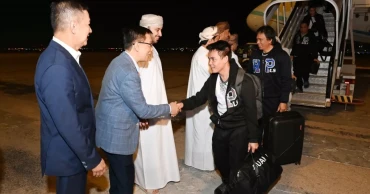
Oman later said it received the 11 mariners — who are from India and the Philippines — “in preparation for their return to their home countries.” However, the Houthis later released images of only 10 mariners. It wasn't clear why the 11th releasee wasn't shown.
A Royal Oman Air Force jet landed earlier Wednesday in Sanaa, the Yemeni capital held for over a decade by the rebels, according to flight-tracking data analyzed by The Associated Press. Following the Houthi announcement, the plane was tracked leaving Yemeni airspace.
Oman later published images of the men being greeted on arrival in Muscat, the sultanate's capital, by Filipino and Indian diplomats.
The Philippines said Tuesday it expected nine Filipino mariners held by the Houthis since the attack to be released. The Foreign Ministry in Manila described the mariners as being “held hostage by the Houthis” since the attack, something the U.S. government also had said earlier.
The Houthis offered no immediate breakdown on the nationalities of those released. It had described their forces as rescuing the men after they abandoned the crippled ship following the attack. It contended the men spent "five months spent as guests, not detainees.”
The Houthis have targeted more than 100 ships with missiles and drones in their campaign, sinking four vessels. The attacks have killed at least nine mariners, after a crew member aboard one vessel targeted, the Minervagracht, died of his wounds in October.
The Houthis have held mariners for months in the past, and it wasn’t immediately clear why they released the mariners now.
The Houthis stopped their attacks during a brief, earlier ceasefire in the war in Gaza. They later became the target of a weekslong campaign of airstrikes ordered by U.S. President Donald Trump before he declared a ceasefire had been reached with the rebels. The current ceasefire in the war has again seen the Houthis hold their fire.
Meanwhile, the future of talks between the United States and Iran over Tehran’s battered nuclear program is in question after Israel launched a 12-day war against the Islamic Republic in June that saw the U.S. bomb three Iranian atomic sites.
6 months ago
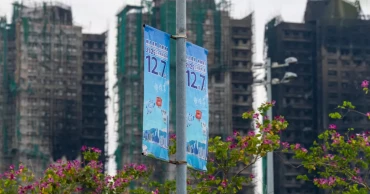
Fire raises concerns as Hong Kong approaches Sunday legislative poll
The deadliest fire in Hong Kong in decades is piling pressure on Beijing’s “patriots-only” governance system, casting a shadow on elections widely seen as a further step to tighten control over the city's legislature.
Sunday's vote to elect new lawmakers to Hong Kong's 90-member Legislative Council comes just 11 days after a massive fire engulfed seven towers in a high-rise apartment complex, killing at least 159 people in the financial hub's worst blaze since 1948.
With many voters in the city grown politically apathetic since China’s crackdown shut out the pro-democracy camp in recent years, Sunday's turnout rate will be a key barometer of public sentiment toward the government and its handling of the fire.
While there hasn’t yet been significant public protests because of the chilling effect of a wide-ranging security crackdown that started five years ago, some residents have raised concerns among friends, on social media and to reporters about government oversight in building maintenance projects and official investigation efforts.
Nearly 40% of incumbents, including household names and mildly vocal politicians, are stepping aside for this election. More candidates with mainland Chinese business links, as well as more members of China’s parliament, are joining the race.
Observers suggest the candidate lineup signals Beijing’s tightening control over even its loyalists and a preference for politicians more in tune with its agenda.
A change of guard
Starting in late September, many veteran lawmakers announced one by one that they would not seek reelection. Regina Ip, a leading member of Hong Kong’s cabinet, said she wanted to pass the torch to the younger generation and denied that age was a factor.
Several relatively outspoken lawmakers also stepped aside. One of them, Doreen Kong, insisted she faced no pressure to bow out.
The changes drew wide attention to the legislature, now filled with Beijing loyalists after China overhauled electoral rules in 2021.
Under the rules, the number of directly elected seats was reduced from 35 to 20. Forty other seats are chosen by a predominantly pro-Beijing election committee, with voters in professional, business and other designated sectors picking another 30 for their industries. All candidates must pass official vetting, including by national security authorities.
Pro-democracy politicians in the legislature have completely disappeared after many were arrested under a 2020 national security law Beijing imposed to quell the massive protests that started in 2019.
The pro-Beijing camp praised the new model’s efficiency, but Hong Kong think tank POD Research Institute in September said its survey showed growing public concerns about the quality of debate in the legislature.
More candidates with mainland Chinese ties
The new candidate pool marks a deeper change.
The Associated Press found that at least 26 of 161 candidates, or 16%, held positions in Chinese-funded businesses without declaring party affiliations — almost double the figure reported by local newspaper South China Morning Post in the 2021 election. Most were connected to state-owned enterprises.
Among all candidates, 16 are delegates to China's top legislature — more than double from the last election — and 13 others are members of China's top political advisory body. The directly-elected seats drew more candidates than four years ago, including district councilors handling municipal matters. Still, many of those new candidates are not familiar names to voters.
John Burns, an honorary professor of politics and public administration at the University of Hong Kong, said the central government has “very much controlled” the city's elections since 2021. Burns said it appears that the central authorities have a new informal criterion on an upper age limit and possibly less appetite for outspoken lawmakers.
He said members of China's legislature and political advisory body are more in tune with Beijing's agenda, while those who work for state-owned enterprises are under more control by the central authorities, in addition to having better resources for their roles.
“They’re trying to ensure that the new people adopt a national perspective, national agenda ... and not focus on sectional interests, not focus on vested interests, and not perhaps representing the concerns of people in Hong Kong,” he said.
He added that central authorities also appeared to be trying to minimize the influence of traditional political parties.
Other new faces joining the race include Olympic fencing champion Vivian Kong, who has faced questions over her eligibility to run in the tourism sector. She cleared the official vetting process in November after citing her efforts to promote horse racing tourism.
Candidates defend dual roles
Hong Kong leader John Lee maintained that personnel changes in the election are normal during a change of term, and condemned attempts by “opposing forces” to smear the election with accusations of interference. He added it’s justifiable for Beijing to care about the election.
Incumbent finance lawmaker Ronick Chan, an adviser at Bank of China (Hong Kong) Limited, whose parent company is a state-owned commercial bank, said working in Chinese-funded enterprises does not conflict with serving as a legislator.
“Employees of Chinese-funded enterprises frequently engage with national policies in their daily work," he said in a text message. “That helps Hong Kong better understand the central government’s concerns and facilitates the city's service to and integration into national development.”
His rival Ip Tsz-kin, who works in the Bank of Communications (Hong Kong) — also affiliated with another state-owned bank — told the SCMP that candidates must work for Hong Kong's future development regardless of their company background. He did not reply to the AP’s request for comment.
During an election candidate forum, candidate Rex Lai said patriot organizations can mobilize volunteers to support relief efforts in a disaster.
In November, China’s Hong Kong affairs office said the pool of new candidates will boost the development of “high-quality democracy” that suits Hong Kong.
It said the legislature needs new blood, and that the participation of professional elites from new sectors, innovation industries and think tanks, among other areas, signals hopes for better alignment with China’s next five-year plan.
Push for turnout could be dampened by fire aftermath
Voter turnout rate in the 2021 election had dropped to 30.2%, a record low. Officials have been pulling out all the stops to boost that figure until the fire brought a temporary halt.
Burns noted that about 60% of the popular vote went to the pro-democracy camp in past elections before 2021. He believed those voters would continue to stay away from Sunday's election.
He said that while some pro-government voters would be grateful for the authorities' response to the fire, others could have reservations about voting due to the systemic problems uncovered by the fire and the huge death toll.
To drive up turnout, the government has extended voting hours, added voting stations and offered subsidies to centers for older adults and people with disabilities. City leader Lee urged civil servants to vote and companies provided time off for employees casting ballots. Authorities have made arrests over social media content that allegedly discouraged voting or for damaging promotional election materials.
“This fire has run a truck right through that campaign,” Burns said. “That makes it very difficult for the authorities to better the thirty percent, and so probably it will be lower."
6 months ago