others
Israel to reopen Gaza–Egypt crossing after extended shutdown
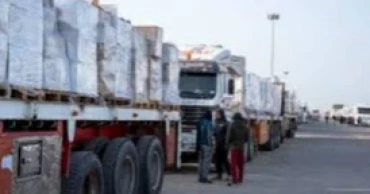
Israeli authorities announced Friday that the pedestrian border crossing between Gaza and Egypt will reopen over the weekend, ending a prolonged closure and marking a significant development in U.S. President Donald Trump’s ceasefire initiative for Gaza.
Israel’s Coordinator of Government Activities in the Territories (COGAT) said that beginning Sunday, the Rafah crossing—Gaza’s primary exit point to the outside world—will permit restricted movement of people only.
The statement followed earlier comments by Prime Minister Benjamin Netanyahu and Ali Shaath, who was recently appointed to lead the Palestinian administrative body overseeing Gaza’s civilian affairs, both of whom indicated the crossing would reopen soon.
Although COGAT confirmed the crossing will be accessible in both directions on Sunday, Shaath described the first day as a test run, noting that regular two-way travel is expected to begin Monday.
According to an official familiar with the discussions, Israel has approved the daily departure of up to 150 people, including 50 medical patients accompanied by two relatives each. Additionally, up to 50 Palestinians who left Gaza during the conflict will be allowed to return each day. The official spoke anonymously due to the sensitivity of ongoing diplomatic negotiations.
Gaza’s Health Ministry estimates that around 20,000 injured or ill residents require medical treatment outside the enclave, as the territory’s healthcare system suffered severe damage during the war and can no longer provide many advanced procedures.
COGAT said Israel and Egypt will jointly screen travelers using the crossing, which will be monitored by European Union border officials. Palestinians will also undergo Israeli security checks in a nearby corridor that remains under Israeli military control.
The Rafah crossing has been almost entirely closed since May 2024, when Israel took control of the area, citing efforts to prevent Hamas from smuggling weapons. It was briefly reopened earlier this year to allow the evacuation of medical patients during a short-lived ceasefire.
Israel had previously opposed reopening the crossing, but the recovery of the remains of the final hostage held in Gaza earlier this week removed a major obstacle. Netanyahu said shortly afterward that the crossing would reopen in a limited and closely regulated manner.
Many Palestinians inside Gaza are seeking to leave the devastated territory, while tens of thousands who fled during intense fighting are hoping to return.
The reopening represents one of the initial steps in the second phase of the U.S.-mediated ceasefire agreement reached last year. This phase addresses complex issues, including the disarmament of Gaza, the dismantling of Hamas’ tunnel network, and the establishment of a new governing authority to manage reconstruction efforts.
Netanyahu reiterated this week that Israel’s priority remains dismantling Hamas’ military capabilities. He warned that without disarmament and tunnel destruction, rebuilding Gaza would not proceed—making Israeli control over Rafah a significant source of leverage.
Renewed violence in Gaza
On Friday, Palestinians mourned those killed earlier in the week in Israeli attacks, which have decreased in frequency but continue despite the ceasefire following the return of the last hostage’s remains.
Funeral processions were held for three Palestinians, with mourners carrying wrapped bodies through the streets before performing Islamic burial prayers.
The Israeli military said four people were killed in airstrikes in central Gaza on Friday, alleging they were armed and moving toward Israeli troops near the ceasefire boundary separating Israeli-controlled areas from much of Gaza.
These deaths add to the 492 Palestinians killed since the ceasefire began in October, according to Gaza’s Health Ministry. The ministry does not differentiate between civilians and fighters but maintains casualty records considered broadly credible by United Nations agencies and independent analysts.
1 month ago
Venezuela unveils amnesty proposal that may free large numbers of political detainees
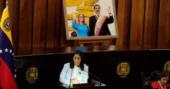
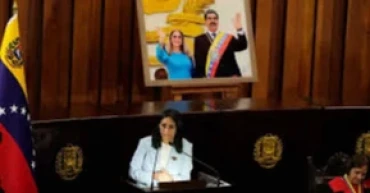
Venezuela’s interim leader Delcy Rodríguez announced Friday that her government is introducing an amnesty law that could result in the release of hundreds of people imprisoned for political reasons, including opposition figures, journalists, and human rights defenders.
The proposal, long demanded by the U.S.-supported opposition, marks Rodríguez’s most recent compromise since she assumed power on Jan. 3 following the dramatic U.S. military operation in Caracas that removed former President Nicolás Maduro.
Speaking at a recorded ceremony attended by senior judges, cabinet members, military officials, and other top authorities, Rodríguez said the National Assembly—controlled by the ruling party—would move quickly to debate the bill.
She said the law is intended to mend the harm caused by years of political conflict marked by violence and extremism, restore justice, and promote peaceful coexistence among Venezuelans.
Rodríguez also revealed plans to close Helicoide, a notorious Caracas detention center where independent groups have repeatedly documented torture and serious rights violations. According to her, the facility will be converted into a recreational and cultural complex serving police officers and nearby communities.
The announcement was made in the presence of several officials whom former detainees and rights organizations have accused of authorizing abuses at Helicoide and other prisons.
Outside the prison, relatives of inmates watched Rodríguez’s address on a mobile phone. Emotions ran high—some wept while others shouted, “Freedom! Freedom!”
“God is good. God listened to us,” said Johana Chirinos, the aunt of a detainee, through tears.
Opposition leader and Nobel Peace Prize winner María Corina Machado said in a statement that the measures were not voluntary but instead driven by pressure from the U.S. government. She emphasized that Venezuelans have been jailed for political reasons for periods ranging from one month to as long as 23 years.
She described the government’s repression as severe, adding that once fear and repression end, authoritarian rule will collapse.
According to Foro Penal, a Venezuelan prisoners’ rights organization, 711 people are currently held nationwide for political reasons, with 183 already convicted.
The government has not yet made public the full text of the amnesty bill, leaving uncertainty over eligibility requirements.
Rodríguez said the proposed “general amnesty law” would apply to acts linked to political violence from 1999 to the present, but would exclude those convicted of crimes such as murder, drug trafficking, corruption, or human rights abuses.
Earlier this month, her administration pledged to free a significant number of detainees as a goodwill measure, though families have criticized the process for moving too slowly.
“A general amnesty is positive only if it applies to all of civil society without discrimination, avoids granting impunity, and helps dismantle the machinery of political persecution,” said Foro Penal president Alfredo Romero in a social media post.
The group reports that 302 prisoners have been released since Jan. 8, when National Assembly leader Jorge Rodríguez first announced plans for large-scale releases.
Human rights organization Provea also criticized the lack of clarity and the gradual pace of releases, stressing that freeing political prisoners is urgent. It warned that an amnesty should not be portrayed as an act of mercy by the state.
“These individuals were unlawfully detained for exercising rights guaranteed by international human rights standards, the constitution, and Venezuelan law,” Provea said.
1 month ago

Trump claims Russia will spare Kyiv during freezing winter spell
US President Donald Trump has said Russian President Vladimir Putin agreed not to carry out attacks on Kyiv and other Ukrainian cities for about a week due to exceptionally cold weather gripping the region.
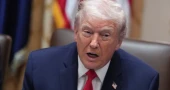
Speaking at a televised cabinet meeting in Washington on Thursday, Trump said he personally asked Putin to halt strikes on Ukraine’s capital and other urban areas during the extreme cold, and that the Russian leader agreed. Trump did not specify when the pause would begin.
Russia has not confirmed any such agreement. However, Ukrainian President Volodymyr Zelensky welcomed Trump’s remarks, calling them an important signal about the possibility of protecting Kyiv and other cities during the harsh winter period.
Air raid sirens sounded overnight into Friday in only four Ukrainian regions close to the frontline, according to Ukrainian officials. Kyiv and other major cities were not included. Ukraine’s air force later said those areas were targeted by around 80 Russian drones and a ballistic missile.
Temperatures in Kyiv were forecast to drop sharply from Thursday, falling to as low as minus 24 degrees Celsius in the coming days. Russia has intensified strikes on Ukraine’s energy infrastructure during cold spells since launching its full-scale invasion in 2022, worsening power and heating shortages.
In a social media post, Zelensky said Ukrainian and US teams had discussed the issue during talks in the United Arab Emirates and expressed hope that the understandings would be implemented. Ukrainian media reported that Kyiv had agreed to mirror Moscow’s actions by pausing its own attacks on Russian oil refineries.
Russian, Ukrainian and US negotiators held their first trilateral talks since the war began during meetings in the UAE last week. While all sides described the discussions as constructive, there has been no formal announcement from Moscow of a pause in attacks.
Despite the reported understanding, Russian strikes have continued to damage Ukraine’s power grid, leaving millions without reliable heating or electricity as repair crews struggle to restore supplies amid ongoing attacks.
With inputs from BBC
1 month ago
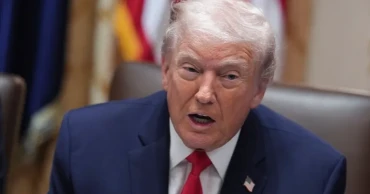
Trump orders reopening of Venezuela commercial airspace, signals travel resumption
US President Donald Trump announced Thursday that he has instructed U.S. officials to reopen Venezuela’s commercial airspace, a major step toward easing travel restrictions and potentially allowing American citizens to visit the South American country again. Trump said he informed Venezuela’s acting President Delcy Rodríguez of the decision and directed U.S. Transportation Secretary Sean Duffy and top military leaders to implement the reopening by the end of the day.
Speaking from the White House, Trump told reporters that “American citizens will be very shortly able to go to Venezuela, and they’ll be safe there,” signalling a shift in U.S. policy after years of diplomatic rupture. Venezuela’s government had not immediately responded to the announcement.
Earlier this week, the Trump administration notified Congress of initial steps to possibly reopen the long‑closed U.S. Embassy in Caracas, part of efforts to restore diplomatic ties following a controversial U.S. military operation that ousted former President Nicolás Maduro. The State Department said in letters dated Monday that it plans a phased approach to gradually resume embassy operations with a growing number of temporary staff conducting select diplomatic functions.
Diplomatic relations between Washington and Caracas collapsed in 2019, as the U.S. government raised its travel advisory for Venezuela to the highest “Do not travel” level, citing risks of wrongful detention, torture and kidnapping for U.S. citizens. The State Department still maintains that warning, and has not confirmed any changes in its advisory despite Trump’s airspace announcement.
In November, Trump had escalated tensions by declaring that the airspace “above and surrounding” Venezuela should be considered closed, prompting the U.S. Federal Aviation Administration to alert pilots about increased military activity in the region and leading major airlines to cancel flights.
The move to reopen Venezuelan airspace comes as American carriers eye resuming services that have been suspended for years, marking a potential revival in commercial links between the two nations.
1 month ago
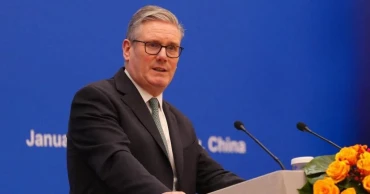
UK citizens to get visa-free travel to China, Starmer announces
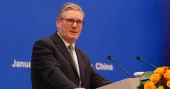
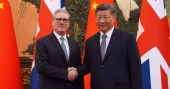
UK Prime Minister Sir Keir Starmer announced on Thursday that British citizens will be able to travel to China without a visa for trips under 30 days, marking a significant step to strengthen bilateral ties and business opportunities.
Starmer made the announcement during his official visit to Beijing, where he met Chinese President Xi Jinping and Premier Li Qiang. The talks, which lasted one hour and 20 minutes, resulted in a series of agreements aimed at expanding trade, investment, and cooperation between the two countries.
Under the new arrangement, UK citizens visiting China for tourism or business for less than a month will no longer require a visa, bringing Britain in line with countries such as France, Germany, Australia, and Japan. Meanwhile, UK-based pharmaceutical giant AstraZeneca pledged to invest $15 billion (£10.9 billion) in China by 2030, including expanding manufacturing sites and creating new jobs.
Starmer described the visit as a “springboard” for future engagement, stressing that economic growth at home is linked to stronger international ties. He highlighted the importance of broader engagement with China to build a “sophisticated relationship” and pursue shared goals while recognising differences.
The agreements also include cooperation in areas such as trade in services, technical education, food safety, and health, though some deals remain largely symbolic with limited immediate economic impact. Opposition politicians criticised the visit, urging Starmer to press China on human rights issues, including the case of jailed pro-democracy tycoon Jimmy Lai.
China, meanwhile, presented the visit as prestigious for domestic audiences, with state media extensively covering Starmer’s meetings with Xi and highlighting the strategic importance of UK-China relations.
With inputs from BBC
1 month ago
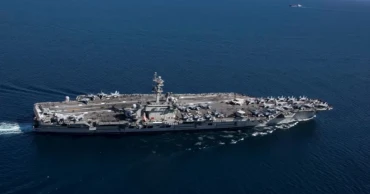
Trump warns Iran as US naval fleet builds up in Gulf
US President Donald Trump on Thursday warned Iran that “time is running out” to negotiate a nuclear deal, amid a significant buildup of American military forces in the Gulf.
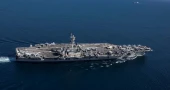
Trump described a “massive armada” moving rapidly with “great power, enthusiasm, and purpose” toward Iran, signaling Washington’s readiness to act if necessary. The fleet is led by the aircraft carrier USS Abraham Lincoln, supported by destroyers, combat ships, and aerial assets deployed across Jordan, Qatar, and the Indian Ocean. Satellite imagery and open-source tracking confirm fighter jets, drones, refueling aircraft, and surveillance planes have also been stationed near Iranian airspace.
Responding to Trump, Iranian Foreign Minister Abbas Araghchi stressed that Tehran is prepared to respond “immediately and powerfully” to any aggression and reaffirmed that Iran’s nuclear program remains purely peaceful. Deputy Foreign Minister Kazem Gharibabadi said no formal negotiations with the US are currently underway despite “exchanges of messages.”
Trump’s warnings follow earlier US commitments to intervene after the crackdown on protests in Iran, which began after the national currency plunged but escalated into a broader challenge to the clerical regime. Rights groups report thousands of deaths since the unrest began in late December, with figures ranging from 6,000 to potentially more than 25,000.
Trump called on Iran to “come to the table” for a fair deal prohibiting nuclear weapons, while US officials stress Tehran must also limit its missile program and support for regional proxies. Iranian officials reiterated that any deal must be free from coercion, threats, or intimidation and preserve the country’s right to peaceful nuclear technology.
The US last targeted Iranian nuclear sites in June 2025 during Tehran’s brief conflict with Israel, an operation Washington said set back its nuclear ambitions. Meanwhile, Iran has deployed its drone carrier IRIS Shahid Bagheri near its coast, signaling readiness to counter any potential US action.
With inputs from BBC
1 month ago
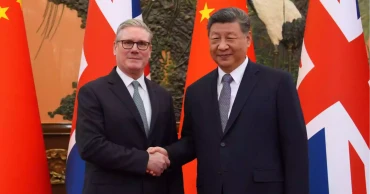
Starmer and Xi seek closer UK-China relations as global order faces strain
The leaders of Britain and China on Thursday called for a “comprehensive strategic partnership” aimed at strengthening ties between the two countries amid increasing global uncertainty.
Neither leader made a public reference to Donald Trump, though the U.S. president’s challenges to the post-Cold War global order appeared to factor into their discussions.
“I think that working together on issues like climate change, global stability during challenging times for the world is precisely what we should be doing as we build this relationship in the way that I’ve described,” Starmer said in his opening remarks to Xi.
The meeting took place at the Great Hall of the People in central Beijing as both nations seek to repair relations following several years of strain. Tensions have grown over allegations of Chinese espionage in Britain, China’s backing of Russia in the Ukraine war, and Beijing’s crackdown on freedoms in Hong Kong, the former British colony returned to China in 1997. Starmer is the first British prime minister to visit China in eight years.
Chinese President Xi Jinping said past setbacks in China-U.K. relations had not served the interests of either nation and called for closer cooperation amid global uncertainty. “China-U.K. relations experienced setbacks in previous years, which was not in the interests of either country,” Xi said, adding that “in the current complex and ever-changing international situation, China and the U.K. need to strengthen dialogue and cooperation to maintain world peace and stability.”
Read More: China reaffirms support for Bangladesh’s democratic transition
Xi appeared to acknowledge criticism faced by British Prime Minister Keir Starmer over engagement with China despite national security and human rights concerns, including Britain’s recent approval of plans for a large Chinese Embassy in London.
“Good things often come with difficulties,” Xi said.
Starmer, who took office in July 2024, said Britain would safeguard national security while maintaining dialogue and economic cooperation, telling Xi it had “been far too long” since a British prime minister visited China.
More than 50 senior business leaders joined Starmer on the trip as Britain seeks to expand trade and investment ties.
1 month ago
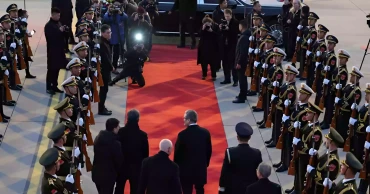
Starmer lands in Beijing to boost UK-China trade ties
UK Prime Minister Keir Starmer arrived in Beijing on Tuesday for a three-day visit aimed at strengthening trade and investment ties, marking the first visit by a British premier to China since 2018.
Accompanied by around 60 business and cultural leaders, Starmer is scheduled to meet Chinese President Xi Jinping and Premier Li Qiang, as well as engage with officials in Shanghai on commercial and investment opportunities. The trip will conclude with a visit to Japan to meet Prime Minister Sanae Takaichi.
Speaking on the flight to Beijing, Starmer said the trip would deliver benefits “back at home” and stressed the need for a “comprehensive and consistent approach to China.” On human rights concerns, he said issues would be raised where necessary but declined to provide specifics.
Starmer’s visit comes amid heightened trade tensions between China and the United States, with Washington having threatened punitive tariffs on countries pursuing new trade agreements with Beijing. The prime minister stressed that the UK would maintain close relations with the US while also engaging with China, saying it would be “unwise” to ignore the Asian giant.
Security remains a priority for the UK delegation. Members are using disposable phones and temporary email addresses, leaving modern devices behind due to concerns about surveillance, while officials emphasize vigilance regarding potential risks from China.
Economically, the UK and China remain heavily imbalanced, with China’s $20 trillion economy far outstripping the UK’s $4 trillion GDP. However, UK exports to China rose 6.4% to £22.6 billion ($29.3 billion) between 2024 and 2025, with growth led by machinery, pharmaceuticals, and high-tech goods. Services, tourism, and finance sectors are also showing recovery, highlighting renewed opportunities for British businesses.
Observers say the trip carries both economic and symbolic significance. China sees the UK as a stable partner amid US policy unpredictability, while Starmer seeks to signal that Britain will engage pragmatically with global powers without compromising security or values.
The visit also follows recent trade agreements China struck with Canada, demonstrating Beijing’s interest in expanding partnerships with Western nations despite friction with Washington. Analysts note that while opportunities are significant, Starmer faces a delicate diplomatic balance between economic interests, human rights, and maintaining strong ties with the United States.
With inputs from BBC
1 month ago
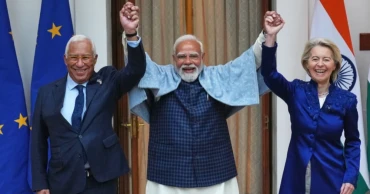
EU signs trade deals to boost global ties and reduce reliance on U.S.
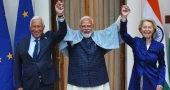
The European Union is seeking new trade partnerships worldwide as it aims to reduce dependence on the United States and strengthen its global influence. The EU recently signed a free trade agreement with India, part of a series of deals with countries including Japan, Indonesia, Mexico, and South America’s Mercosur nations.
The agreement with India, signed by European Commission President Ursula von der Leyen in New Delhi, could impact up to 2 billion people. It will remove tariffs on nearly 97% of EU exports to India, such as cars and wine, and 99% of Indian exports to the EU, including textiles and medicines. Observers say the deal strengthens ties between Brussels and New Delhi amid rising concerns over China and uncertainty in trans-Atlantic relations.
“The international order we relied upon for decades is no longer certain,” said Cyprus President Nikos Christodoulides, highlighting the EU’s push for a more autonomous and globally open union.
The EU has also pursued trade deals with Indonesia, Japan, South Korea, Australia, and is negotiating with the United Arab Emirates. A deal with the Mercosur nations was finalized recently, creating a free trade market of over 700 million people despite some opposition in the European Parliament.
Beyond trade, the EU is investing in its defense industry and infrastructure, spurred by Russia’s invasion of Ukraine and past criticism from the Trump administration over low European defense spending. The bloc has allocated 150 billion euros for projects including missile defense, drones, artillery, cyber systems, and artificial intelligence. Experts note that Europe’s goal is to build strategic autonomy and reduce reliance on U.S. military support.
Energy independence is another priority. The EU has increased U.S. energy imports while seeking alternative suppliers in the eastern Mediterranean and Gulf. Officials stress the need to diversify sources to avoid replacing one dependency with another.
Analysts say these moves show the EU’s effort to strengthen its global position and manage relations with China, Russia, and the U.S., ensuring both economic and strategic resilience.
1 month ago
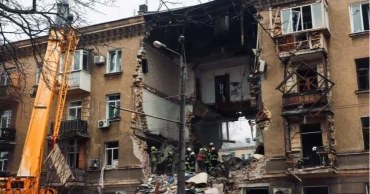
Zelensky denounces Russian drone attack killing five aboard passenger train
Ukrainian President Volodymyr Zelensky has denounced a Russian drone strike on a passenger train in Ukraine’s north-eastern Kharkiv region as an act of “terrorism,” after local authorities reported at least five deaths and several injuries.
Officials said more than 200 passengers were aboard the train when a drone struck one of the carriages on Tuesday, while two other drones exploded nearby. Zelensky said 18 people were inside the affected carriage at the time and stressed there was no “military justification” for targeting civilians.
Russia has not commented on the incident. However, it has stepped up drone and missile attacks on Ukraine’s energy and transport infrastructure amid one of the harshest winters in recent years.
In a separate incident, dozens of drones targeted the southern port city of Odesa, killing three people and injuring many others, officials said. Energy authorities reported that a local facility sustained “enormous damage” overnight into Tuesday, while Odesa city chief Serhii Lysak said the attacks continued for a second consecutive night into Wednesday.
Meanwhile, police in the Kyiv region said a couple were killed and their four-year-old child was injured after a residential apartment block was struck in a district near the capital.
Read More: Ukraine condemns Russian strikes amid peace talks
Russian attacks have left millions of people across Ukraine without heating, electricity and water, according to officials.
Russian President Vladimir Putin launched a full-scale invasion of Ukraine in February 2022, with Moscow now controlling about 20 percent of the country’s territory.
In a social media post late Tuesday, President Volodymyr Zelensky said: “In any country, a drone strike on a civilian train would be considered in exactly the same way – purely as terrorism.”
Images released by Ukraine’s emergency services showed a badly damaged carriage still on fire after the attack. Kharkiv regional prosecutors said the train was hit near Yazykove village while travelling from Chop to Barvinkove via Kharkiv, a route used by civilians and soldiers.
In Odesa, officials said more than 50 drones were launched overnight, killing three people. Despite recent Ukraine-Russia talks in the UAE involving US mediators, key territorial issues remain unresolved.
With inputs from BBC
1 month ago