others

Iran pushes 30-day deadline to end war as Trump voices doubts
Iran’s latest proposal to the United States calls for issues between the two countries to be resolved within 30 days and aims to end the war rather than extend the ceasefire, according to Iran’s state-linked media.
President Donald Trump said on Saturday that he was reviewing a new Iranian proposal to end the war but also expressed doubt it would lead to a deal.
Iran’s 14-point proposal calls for an end to the war, rather than just an extension of the truce. The proposal, a rebuttal to the U.S. nine-point plan, also calls for the U.S. lifting sanctions on Iran, ending the naval blockade, withdrawing forces from the region, and ceasing all hostilities, including Israel’s operations in Lebanon, according to the semiofficial Nour News agency, which has close ties to the country’s security organizations.
Iran sent its reply via a Pakistani intermediary, the news agency reported. Pakistan has hosted previous negotiations between Iran and the United States.
Pakistan’s prime minister, foreign minister and army chief are continuing to push negotiations and encourage the U.S. and Iran to speak directly, according to two officials in Pakistan who spoke on the condition of anonymity because they were not authorized to speak to the media.
Trump rejected a previous Iranian proposal this week. However, conversations have continued, and the fragile three-week ceasefire appears to be holding.
Also on Sunday, Iranian Foreign Minister Abbas Araghchi spoke with Oman’s Foreign Minister Badr al Busaidi, who oversaw previous rounds of talks between the U.S. and Iran before the latest round of fighting.
The U.S. president also offered a new plan to reopen the Strait of Hormuz at the mouth of the Persian Gulf, where about a fifth of the world’s trade in oil and natural gas typically passes.
Iran stands firm on Strait of Hormuz issues
Iran’s deputy parliament speaker said on Sunday that Iran “will not back down from our position on the Strait of Hormuz, and it will not return to its prewar conditions.” Ali Nikzad, who has no decision-making power in parliament, made the comments while on a visit to port facilities on Iran’s strategic Larak Island, located close to the narrowest part of the strait.
“The Strait of Hormuz belongs to the Islamic Republic of Iran,” he said, adding that the country was working to compensate businesses and property damaged during the war, and that Trump’s blockade plan was certain to fail.
Nikzad reiterated Iran’s position that any ships not associated with the U.S. or Israel will be able to pass after paying a toll. The U.S. has warned shipping companies they could face sanctions for paying Iran in any form, including digital assets, to pass safely.
Iran effectively closed the strait by attacking and threatening ships after the U.S. and Israel launched a war on Feb. 28. Tehran later offered some ships safe passage via routes closer to its shore, charging fees at times.
The U.S. has responded with a naval blockade of Iranian ports since April 13, depriving Tehran of oil revenue it needs to shore up its ailing economy.
In Tehran, rial continues to tumble
On Sunday, the second day of Iran’s working week, the rial weakened further against the U.S. dollar. In Tehran’s Ferdowsi Street, the capital’s main currency exchange hub, the dollar was trading at 1,840,000 rials. Analysts say there is a strong possibility the currency will slip further in the coming days.
The rial was trading at 1.3 million to the dollar in December, which at the time was a record low, and triggered w idespread protests over the worsening economy. Markets in Tehran remain unstable, with prices of some goods rising daily.
According to reports published in Iranian media, several factories have not renewed contracts for workers after the Iranian new year holidays, and significant numbers have lost their jobs.
Yousef Pezeshkian, the son and adviser of Iranian President Masoud Pezeshkian, wrote on Telegram that both the United States and the Islamic Republic see themselves as the winner of the war and are unwilling to back down.
Nobel committee calls for medical treatment for imprisoned Iranian laureate
The Norwegian Nobel Committee urged Iran to immediately transfer jailed Nobel Peace Prize laureate Narges Mohammadi for medical treatment in Tehran after her health sharply deteriorated.
The committee said it was in touch with Mohammadi’s family and lawyer, and that the 2023 prize winner’s life remains at risk without treatment by her dedicated medical team in Tehran.
Mohammadi fainted twice in prison on Friday in the northwestern city of Zanjan, her foundation said, and was admitted to a local hospital. Her lawyers have said she is believed to have suffered a heart attack in late March.
“Narges Mohammadi is imprisoned solely for her peaceful human rights work. Her life is now in the hands of the Iranian authorities,” Nobel committee chair Jørgen Watne Frydnes said.
Mohammadi, 53, a rights lawyer who won the prize while in prison, was arrested in December during a visit to the eastern Iranian city of Mashhad and sentenced to seven more years in prison.
1 month ago

One West Bengal constituency to remain out of result tally amid repoll order in Falta
The results of the West Bengal Assembly elections will be declared on May 4 for 293 of the 294 constituencies, but Falta seat will remain outside the final tally due to allegations of serious electoral irregularities and a fresh repoll order.
The Election Commission has ordered repolling in all 285 booths of the Falta Assembly constituency in South 24 Parganas district on May 21 under strict security arrangements. Counting for the constituency will now be held on May 24.
The decision comes amid complaints of voter intimidation, alleged EVM tampering, and unauthorized presence inside polling stations during voting on April 29. Authorities said observers flagged multiple irregularities during the exercise.
Earlier, complaints had sought repolls in 77 booths across the state, including 32 booths in Falta alone.
Incidents reported during polling included allegations that the EVM button for a candidate was covered with tape at a booth in Falta, which was later removed by security forces. Separate claims of similar interference were also raised in other booths.
Security personnel also used force outside a polling station in the Belsingh area following allegations of attempted voter influence, triggering protests in which some voters, including women and a child, were reportedly injured.
The Election Commission has directed authorities to ensure full security deployment, webcasting, micro-observer presence and videography to prevent any recurrence of malpractice during the repoll.
The constituency is witnessing a triangular contest involving Trinamool Congress candidate Jahangir Khan, BJP’s Debangshu Panda, Congress nominee Abdur Razzak Molla, and CPI(M)’s Sambhu Nath Kurmi.
The two-phase elections in the state were held on April 23 and April 29.
Reacting to the repoll order, BJP leaders welcomed the move, claiming it exposed electoral malpractice, while Trinamool Congress leaders strongly rejected the allegations and accused the opposition of political targeting.
Source NDTV
1 month ago

Iranian Nobel laureate Narges Mohammadi hospitalized after health crisis in prison
Imprisoned Iranian Nobel Peace Prize winner Narges Mohammadi has been transferred to a hospital following a serious deterioration in her health, her foundation said Friday.
According to the Narges Mohammadi Foundation, she experienced two instances of complete unconsciousness along with a severe cardiac episode while being held in a prison in Zanjan, northwestern Iran.
Earlier the same day, Mohammadi reportedly fainted twice in custody. Her lawyers have previously indicated that she may have suffered a heart attack in late March, noting her weakened condition, pale appearance and need for assistance to walk during a prison visit.
The foundation said her hospitalization came after more than four months of what it described as “systematic medical neglect” since her arrest on December 12. Prison doctors ultimately recommended her transfer, saying her condition could no longer be treated inside the facility.
Her family, however, warned that the move might have come too late. Relatives had been calling for weeks for her transfer to a properly equipped medical center. Her brother, Hamidreza Mohammadi, said the family is struggling to ensure she receives adequate care, alleging that local authorities have obstructed efforts.
Mohammadi, 53, has suffered ongoing heart-related complications. In March, fellow inmates reportedly found her unconscious, and she later complained of chest pain and breathing difficulties. Her legal representatives have also said she was previously denied access to hospital treatment and a cardiologist.
Her lawyer Mostafa Nili said her blood pressure has fluctuated sharply in recent days, leading to repeated fainting. She was eventually admitted to a cardiac care unit after a neurologist ordered her urgent transfer.
Mohammadi, a prominent rights activist, was awarded the Nobel Peace Prize in 2023 while in detention. She was arrested again in December during a visit to Mashhad and later sentenced to an additional seven years in prison.
Her family says her health has worsened partly due to alleged physical abuse during her arrest. International observers, including the Nobel committee, have condemned what they describe as life-threatening mistreatment.
Before her latest arrest, Mohammadi had already been serving a lengthy prison sentence on charges related to national security and anti-government activities, though she had been temporarily released on medical grounds.
Despite repeated detentions, she has continued her activism, even while on furlough, participating in protests and speaking to international media. Her case gained global attention after she became one of the few Nobel laureates to receive the prize while imprisoned, amplifying her role in highlighting protests in Iran following the death of Mahsa Amini.
Mohammadi has remained outspoken against Iran’s leadership, calling for political change and urging public resistance, even from behind bars.
1 month ago
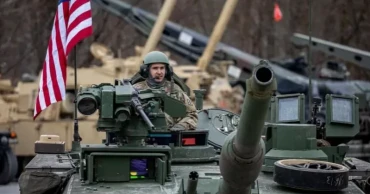
Germany calls US troop cut ‘expected’ as Trump signals deeper reductions
Germany’s defence minister said the United States’ decision to withdraw about 5,000 troops from the country was “foreseeable,” as NATO seeks more details from Washington amid concerns over the alliance’s future.
Speaking to DPA news agency, Defence Minister Boris Pistorius said the presence of US forces in Europe especially in Germany remains important for both sides. He added that Berlin still values close military cooperation with Washington.
NATO spokeswoman Allison Hart said the alliance is in talks with the US to better understand the scope and impact of the decision.
President Donald Trump indicated that more cuts could follow. Asked about the troop withdrawal, he said the US would reduce its forces “way down,” suggesting the number could be far higher than 5,000, though he gave no specifics.
The move comes after tensions between Trump and German Chancellor Friedrich Merz, who recently criticised the US over its handling of negotiations with Iran, saying Washington had been “humiliated.”
The US currently has more than 36,000 troops stationed in Germany — its largest military presence in Europe compared to about 12,000 in Italy and 10,000 in the United Kingdom. Trump has also floated the idea of reducing troop levels in Italy and Spain.
The decision follows earlier steps to scale back US forces in Romania, part of a broader strategy to shift military focus toward the Indo-Pacific region.
The latest move has raised concerns within the 32-member NATO alliance that reduced US presence could weaken collective security.
Polish Prime Minister Donald Tusk warned that internal divisions, rather than external threats, pose the greatest risk to the transatlantic alliance and urged members to act to reverse the trend.
In Washington, senior Republican lawmakers also voiced concern. Senator Roger Wicker and Representative Mike Rogers said maintaining a strong US military presence in Europe is vital for deterrence.
Pistorius said Europe must take on greater responsibility for its own security, noting that Germany has significantly increased defence spending in recent years.
Under the current government, Germany’s defence budget is expected to rise to €105.8 billion by 2027, pushing total defence-related spending to about 3.1% of GDP, including support for Ukraine.
Trump has long criticised NATO allies, including Germany, for not meeting defence spending targets, though Berlin has recently moved closer to those goals.
NATO officials say the US decision highlights the need for European countries to further boost defence investment and share more of the security burden.
The troop withdrawal is expected to be completed within six to twelve months, according to the Pentagon.
Tensions between Trump and allies have also grown over disagreements on military operations in the Strait of Hormuz, where Iran has restricted shipping following US and Israeli strikes earlier this year.
With inputs from BBC
1 month ago
Türkiye unveils 10-year strategy to boost birth rates
Turkish President Recep Tayyip Erdogan on Saturday announced a comprehensive 10-year national strategy aimed at protecting family structures and reversing declining birth rates.
Speaking at the "Family and Population Vision 2026-2035" program in Istanbul, Erdogan emphasized that preserving the family structure and promoting marriage are at the forefront of the government's agenda for the coming decade.
The roadmap also focuses on increasing fertility rates, ensuring youth development alongside elderly welfare, and fostering rural development to achieve a balanced population distribution.
"The family is also transforming in the age of digital techno-culture and faces significant challenges," Erdogan noted.
The president added that the government is striving to prepare the country and the nation for the future during this period, and the initiative aims to strengthen the social fabric and ensure long-term demographic stability.
Erdogan also announced that the last week of May will be celebrated as "National Family Week" to bolster social awareness.
1 month ago
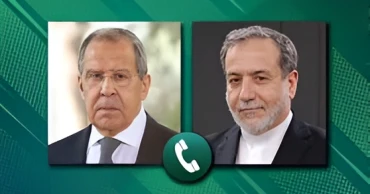
Russian, Iranian FMs discuss navigation freedom, nuclear issue
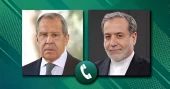
Russian Foreign Minister Sergei Lavrov held a telephone conversation with his Iranian counterpart Seyed Abbas Araghchi on Friday, discussing freedom of navigation and issues related to Iran’s nuclear programme, according to the Russian Ministry of Foreign Affairs.
In a statement, the ministry said the two ministers continued a detailed exchange of views on the prospects for a full cessation of hostilities and efforts to stabilise the military and political situation in the Middle East.
US warns shipping firms of sanctions over Iran toll payments in Hormuz
Russia reaffirmed its support for ongoing mediation initiatives and expressed readiness to fully back political and diplomatic efforts aimed at reaching sustainable agreements to ensure long-term peace in the region.
The ministers also discussed matters related to the passage of Russian vessels and cargo through the Strait of Hormuz, the statement added.
1 month ago
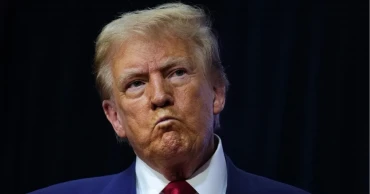
Not satisfied with Iran deal, says Trump
U.S. President Donald Trump has rejected Iran’s latest proposal to end the war.
“They want to make a deal, I’m not satisfied with it, so we’ll see what happens,” Trump said Friday. He didn’t elaborate but expressed frustration with Iran’s leadership, calling it “very disjointed.”
Iran’s state-run IRNA news agency said Tehran handed over its plan to mediators in Pakistan on Thursday night.
The shaky three-week ceasefire between the U.S. and Iran appears to be holding, though both countries have traded accusations of violations.
Negotiations continued by phone after Trump called off his envoys’ trip to Pakistan last weekend, the president said. Trump this week floated a new plan to reopen the Strait of Hormuz.
1 month ago
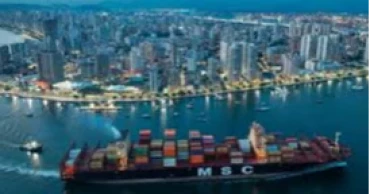
Nations keep plan for global shipping carbon fee alive, more talks set for fall
Maritime nations have agreed to keep working on a plan to introduce the world’s first global carbon fee on shipping emissions, but delayed a final decision and left room for alternative proposals.
The agreement came after a week-long meeting at the International Maritime Organization headquarters in London, where countries were expected to move closer to adopting new global rules, known as the “Net-zero Framework,” to cut pollution from the shipping sector.
Instead of finalising the plan, delegates decided on Friday to hold further discussions in the fall before a possible vote later in the year. The existing framework will remain the basis for negotiations.
Several countries proposed changes and alternative ideas during the meeting and insisted those options should continue to be considered. Meeting chairman Harry Conway of Liberia assured delegates that both existing and new proposals would be reviewed in upcoming sessions.
Some countries, including Australia, warned that reopening discussions could delay urgent action at a time when climate impacts are worsening and the shipping industry needs clear direction to invest in cleaner technologies.
IMO Secretary-General Arsenio Dominguez said progress had resumed but urged countries to rebuild trust and continue dialogue.
Climate advocates said the framework remains intact, with broad support from many nations, but cautioned against prolonged negotiations.
If adopted, the rules would introduce a pricing system that charges ships for greenhouse gas emissions above set limits, effectively creating the first global carbon tax for the sector. However, countries like the United States and Saudi Arabia have strongly opposed such a fee.
The framework was initially agreed upon last year, and its formal adoption had been expected in October. But the process was delayed after opposition led by the United States, backed by Saudi Arabia and others.
Shipping currently accounts for about 3 percent of global emissions, largely due to the use of heavy fuel oil. As global trade has expanded, emissions from the sector have also increased.
The proposed framework aims to gradually reduce emissions from marine fuels and create a fund from collected fees to support cleaner technologies, reward low-emission ships and help developing countries transition to greener practices.
Experts say such measures are crucial as the industry moves toward the IMO’s goal of reaching net-zero emissions by around 2050.
With large ships typically lasting about 25 years, industry groups say investments in cleaner fuels and technologies must begin soon to meet long-term climate targets.
1 month ago

May Day protests held worldwide as workers demand relief from rising costs
Workers and activists across the world marked May Day with rallies and protests on Friday, demanding higher wages, better working conditions and peace, as many face rising energy costs and declining purchasing power linked to the Iran war.
International Workers’ Day, observed on May 1 in many countries, traditionally sees trade unions mobilising around labour rights, wages, pensions and inequality. This year, demonstrations were held in cities ranging from Seoul, Sydney and Jakarta to European capitals and across the United States.
"Working people refuse to pay the price for Donald Trump's war in the Middle East," the European Trade Union Confederation said. "Today's rallies show working people will not stand by and see their jobs and living standards destroyed."
Rising fuel prices and inflation emerged as key concerns during the protests. In Manila, thousands marched demanding higher wages and lower taxes while criticising the United States’ role in the Iran conflict. Some protesters clashed with police near the US Embassy.
"Every Filipino worker now is aware that the situation here is deeply connected to the global crisis," said Josua Mata, leader of the SENTRO labour group.
In Indonesia, President Prabowo Subianto joined a major rally in Jakarta, where workers called for stronger government support amid rising prices and shortages of industrial raw materials.
In Pakistan, although May Day is a public holiday, many daily wage earners continued working due to financial pressures.
"How will I bring vegetables and other necessities home if I don't work?" said Mohammad Maskeen, a construction worker near Islamabad.
Inflation, driven partly by rising oil prices, has reached around 16 percent in Pakistan, according to government estimates.
Elsewhere, protests took place across Europe. In Istanbul, police detained around 15 people attempting to reach Taksim Square in defiance of a ban. In France, unions organised marches under the slogan “bread, peace and freedom,” linking domestic concerns with global conflicts.
In Italy, the government recently approved nearly 1 billion euros in job incentives aimed at boosting employment and addressing labour abuses, though opposition parties criticised the measures as ineffective.
In Portugal, labour tensions remain high over proposed changes to employment laws, with unions warning the reforms could weaken workers’ rights.
In France, May Day also sparked debate over whether more businesses should be allowed to operate on the public holiday, which is traditionally a mandatory paid day off for most workers.
"Don't touch May Day," unions said in a joint statement opposing proposed changes.
Activists in the United States also organised protests and boycotts, targeting policies of President Donald Trump. Demonstrators called for taxing the wealthy and ending strict immigration measures, with organisers urging people to observe a “no work, no school, no shopping” protest.
May Day traces its origins to the US labour movement of the 1880s, when workers campaigned for an eight-hour workday. A protest in Chicago in 1886 turned violent, leading to deaths and the execution of several labour activists, events that later inspired the global observance of International Workers’ Day.
1 month ago
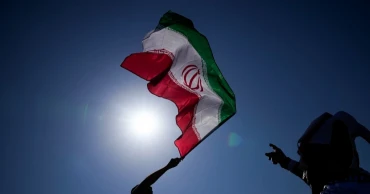
Iran vows to safeguard nuclear and missile capabilities
Iran’s supreme leader defiantly vowed Thursday to protect the Islamic Republic’s nuclear and missile capabilities, which U.S. President Donald Trump has sought to curtail through airstrikes and as part of a wider deal to cement the war’s shaky ceasefire.
In a statement read by a state television anchor, Ayatollah Mojtaba Khamenei said the only place Americans belonged in the Persian Gulf is “at the bottom of its waters” and that a “new chapter” was being written in the region’s history. Khamenei has not been seen in public since taking over as supreme leader following the killing of his father in the war’s opening airstrikes.
His remarks come as Iran’s economy is reeling and its oil industry is being squeezed by a U.S. Navy blockade halting its tankers from getting out to sea. The world economy is also under pressure as Iran maintains its chokehold on the Strait of Hormuz, through which a fifth of all crude oil is transported. On Thursday, the global benchmark for oil, Brent crude, traded as high as $126 a barrel.
That shock to oil supplies and prices is putting pressure on Trump, who is floating a new plan to reopen the critical passageway used by the U.S.'s Gulf allies to export their oil and gas.
Under the plan, the U.S. would continue its blockade on Iranian ports, while coordinating with allies to impose higher costs on Iran’s attempts to subvert the free flow of energy, according to a senior administration official, who spoke on condition of anonymity because they were not authorized to comment publicly.
In a cable sent Tuesday, the U.S. State Department instructed American diplomats around the world — except those in Belarus, China, Cuba and Russia — to seek their host government’s support for the Trump administration’s call for assistance in establishing a “maritime freedom construct” that would ensure free and unimpeded access to shipping through the strait.
1 month ago