others

Republicans in Montana bar transgender lawmaker from House floor
Montana Republicans barred transgender lawmaker Zooey Zephyr from the House floor on Wednesday, wielding “decorum” rules after she rebuked colleagues supporting a ban on gender-affirming care for children and protested their efforts to silence her.
The punishment marks the first time in nearly half a century that Montana lawmakers have sought such disciplinary action against one of their own. It caps a weeklong standoff between Zephyr and House Republican leaders and formalizes their decision to silence her for saying that those voting in favor of the ban would have blood on their hands.
Zephyr will still be able to vote and participate in committees, but not discuss proposals and amendments under consideration in the full House. The legislative session is set to end in early May.
The fight over Zephyr’s remarks has brought the nationwide debate over protest’s role in democracy to Montana, where lawmakers punished her for voicing dissent, an increasingly prevalent move in statehouses.
Also read: GOP moves closer to winning the House; the Senate's fate may depend on a runoff
Supporting Zephyr’s attempts to regain her voice, protesters interrupted proceedings earlier this week by chanting “Let her Speak” in a boisterous rally that came after they protested outside the Capitol and unfurled a banner that read “Democracy Dies Here.”
After days of rebuffing Zephyr’s request to speak, Republican leaders finally granted her the floor to give a statement before they ultimately voted to discipline her Wednesday. She said her initial “blood on your hands” remark and subsequent decision to thrust a microphone into the air toward protesters in the House gallery were an effort to stand up for the LGBTQ+ community and her constituents in Missoula.
House Speaker Matt Regier’s decision to turn off her microphone, she said, was an attempt to drive “a nail in the coffin of democracy.”
“If you use decorum to silence people who hold you accountable, then all you’re doing is using decorum as a tool of oppression,” Zephyr told her colleagues.
House Republicans who supported barring Zephyr from the floor have accused her of placing lawmakers and staff at risk of harm for disrupting House proceedings and inciting protests in the chamber on Monday.
But lawmakers were on the floor Monday when protesters were in the gallery, and there have been no reports of damage to the building.
“Freedom in this body involves obedience to all the rules of this body, including the rules of decorum,” House Majority Leader Sue Vinton said.
Authorities arrested seven people in the confrontation, who Zephyr said were defending democracy. Her opponents said ensuring government can conduct business on behalf of the people without interruption was a critical precedent to set.
“This is an assault on our representative democracy, spirited debate, and the free expression of ideas cannot flourish in an atmosphere of turmoil and incivility,” Republican David Bedey said on the House floor.
The episode comes weeks after two Black lawmakers, Tennessee state Reps. Justin Jones and Justin Pearson, were expelled for participating in a protest in favor of gun control after another school shooting. Similarly, Zephyr’s punishment has ignited a firestorm of debate about governance and who has a voice in an elected body during this politically polarizing time.
Post-expulsion, the fate of the two Tennessee lawmakers were sent to their county commissions, which swiftly voted to reinstate them. Zephyr told The Associated Press after the vote that Republican leaders were likely aware that a similar sequence of events could be triggered, had they expelled her.
“My community and the Democratic Party in Missoula would send me back here in a heartbeat because I represent them and I represent their values by standing up for democracy,” she said.
In Missoula, the county Democratic Party Chair Andy Nelson said Zephyr’s constituents and supporters were disheartened to see her disciplined.
“What it comes down to is the silencing of not just Rep. Zephyr, but the 11,000 people she serves,” he said after the decision.
The punishment comes two days after protesters later packed into the gallery at the Statehouse and brought House proceedings to a halt chanting “Let her speak” as Zephyr lifted her microphone toward them. Seven subsequent arrests galvanized both her supporters and those saying Zephyr’s actions constitute an unacceptable attack on civil discourse.
The far-right Montana Freedom Caucus, which had pushed for Zephyr to be censured, said in a statement that her actions in support of the protesters were “nothing more than an ego trip.” The caucus again on Wednesday deliberately misgendered Zephyr by using incorrect pronouns when referring to her.
“There needs to be some consequences for what he has been doing,” said Rep. Joe Read, a member of the caucus who frequently and inconsistently used incorrect pronouns for Zephyr.
He claimed Zephyr gave a signal to her supporters just before Monday’s session was disrupted. He declined to say what that was other than a “strange movement.”
“When she gave the signal for protesters to go into action, I would say that’s when decorum was incredibly broken,” Read added.
Zephyr told the AP that she felt the moment was calling on her to stand up for democracy.
“Every time that one of these votes came; every time the speaker refused to allow me to speak; when the protesters came and demanded, my thought was twofold,” she said. “Pride in those who stood up to defend democracy and a hope that in some small way, I could rise to that moment individually and do the work they sent me to do.”
3 years ago

Sudanese crowd at borders to escape amid shaky truce
Sudanese families were massing Wednesday at a border crossing with Egypt and at a port city on the Red Sea, desperately trying to escape their country's violence and sometimes waiting for days with little food or shelter, witnesses said.
In the capital, Khartoum, the intensity of fighting eased on the second day of a three-day truce, and the military said it had “initially accepted” a diplomatic initiative to extend the current cease-fire for another three days after it expires Thursday.
The initiative, brokered by the eight-nation East Africa trade bloc known as the Intergovernmental Authority on Development, or IGAD, would also include direct negotiations between the military and the Rapid Support Forces, the paramilitary group it has been battling since Apr. 15.
Also read: Expecting evacuation of Bangladeshis in Sudan by this month or early next month: Chief of Mission
There was no immediate comment from the RSF on the initiative, which, if accepted by both sides, would mark a major breakthrough in more than a week of intense international diplomacy. The two rivals, army chief Gen. Abdel Fattah Burhan and RSF commander Gen. Mohammed Hamdan Dagalo, have until now seemed determined to vanquish the other.
Taking advantage of relative calm, many residents in Khartoum and the neighboring city of Omdurman emerged from their homes to seek food and water, lining up at bakeries or grocery stores, after days of being trapped inside by the fighting between the army and a rival paramilitary group. Some inspected shops or homes that had been destroyed or looted.
“There is a sense of calm in my area and neighborhoods,” said Mahasen Ali, a tea vendor who lives in Khartoum’s southern neighborhood of May. “But all are afraid of what’s next.”
Still, gunfire and explosions could be heard in the city, though residents said clashes were in more limited pockets, mainly around the military’s headquarters and the Republican Palace in central Khartoum and around bases in Omdurman across the Nile River.
With the future of any truce uncertain, many took the opportunity to join the tens of thousands who have streamed out of the capital in recent days, trying to get out of the crossfire between the forces of Sudan's two top generals.
Food has grown more difficult to obtain, and electricity is cut off across much of the capital and other cities. Multiple aid agencies have had to suspend operations, a heavy blow in a country where a third of the population of 46 million relies on humanitarian assistance.
The U.N. Office for the Coordination of Humanitarian Affairs said only one in four hospitals in the capital is fully functional, and that the fighting has disrupted assistance to 50,000 children who are acutely malnourished.
Many Sudanese fear the two sides will escalate their battle once the international evacuations of foreigners that began Sunday is completed. The British government, whose airlift is one of the last still ongoing, said it has evacuated around 300 people on flights out and plans four more Wednesday, promising to keep going as long as possible.
Large numbers of people have meanwhile been making the exhausting daylong drive across the desert to access points out of the country — to the city of Port Sudan on the eastern Red Sea coast and to the Arqin crossing into Egypt at the northern border.
Crowds of Sudanese and foreigners also waited in Port Sudan, trying to register for a ferry to Saudi Arabia. Dallia Abdelmoniem, a Sudanese political commentator, said she and her family arrived Monday and have been trying to get a spot. “Priority was given to foreign nationals,” she told The Associated Press.
She and some of her extended family, mostly women and children, took a 26-hour bus journey to reach the port, during which they passed military checkpoints and small villages where people offered cold hibiscus juice and water to “Khartoum travelers.”
"These folk have very little, but they offered every single passenger on all these buses and trucks something to make their journey better,” she said.
At the Arqin crossing, families have been spending their nights outside in the desert, waiting to be let in to Egypt. Buses were lining up at the crossing.
“It’s a mess — long lines of elderly people, patients, women and children waiting in miserable conditions," said Moaz al-Ser, a Sudanese teacher who arrived along with his wife and three children at the border a day earlier.
Tens of thousands of Khartoum residents have also fled to neighboring provinces or even into already existing displacement and refugee camps within Sudan that house victims of past conflicts.
At least 512 people, including civilians and combatants, have been killed since the fighting erupted on Apr. 15, with another 4,200 wounded, the Sudanese Health Ministry said. The Doctors’ Syndicate, which tracks civilian casualties, said at least 295 civilians have been killed and 1,790 wounded.
The 72-hour cease-fire announced by U.S. Secretary of State Antony Blinken was to last until late Thursday. Many fear that fighting will only escalate once evacuations of foreigners, which appeared to be in their last stages, are completed.
But a senior British military officer said the U.K. evacuation operation could continue regardless of the cease-fire. Brig. Dan Reeve said conditions at the Wadi Saeedna airfield near Khartoum are “calm” and that the Sudanese armed forces have “good control” of the surrounding area.
Cyprus' Foreign Minister Constantinos Kombos said five flights from Sudan arrived Wednesday, with a total of 391 British nationals aboard.
A series of short cease-fires over the past week have either failed outright or brought only intermittent lulls that allowed evacuations of hundreds of foreigners by air and land.
U.N. Secretary-General Antonio Guterres warned that the conflict is not only putting Sudan’s future at risk, “it is lighting a fuse that could detonate across borders, causing immense suffering for years, and setting development back by decades.”
Guterres cited reports of armed clashes across the country, with people fleeing their homes in Blue Nile and North Kordofan states and across Western Darfur as well. Joyce Msuya, the assistant secretary-general for humanitarian affairs, told the Security Council “there have been numerous reports of sexual and gender-based violence.”
Msuya said the U.N. has received reports “of tens of thousands of people arriving in the Central African Republic, Chad, Egypt, Ethiopia, and South Sudan.”
In a separate development, Dr. Mike Ryan, emergencies chief at the World Health Organization, appeared to walk back concerns expressed a day earlier by the WHO representative in Sudan over fighters taking over a laboratory where pathogens are stored, including polio, measles and cholera. Speaking to reporters in Geneva, Ryan said the main risk of exposure was to the fighters themselves.
Burhan and Dagalo rose to power after a popular uprising in 2019 prompted the generals to remove Sudan’s longtime autocratic ruler Omar al-Bashir. Sudanese since have been trying to bring a transition to democratic rule, but in 2021 Burhan and Dagalo joined forces in a coup that purged civilian leaders. They fell out this month over a new rough plan to re-introduce civilian rule.
Both the military and the RSF have a long history of brutalizing activists and protesters as well as other rights abuses.
Also on Wednesday, the military said al-Bashir was being held in a military-run hospital, giving its first official statement on his location since the fighting erupted. An attack on the prison where al-Bashir and many of his former officials had been held raised questions over his whereabouts.
In a statement, the military said al-Bashir and other former officials had been moved to the military-run Aliyaa hospital before clashes broke out across the country. Al-Bashir is wanted by the International Criminal Court on charges of genocide, crimes against humanity and war crimes related to the Darfur conflict in the 2000s.
3 years ago

Ex-New Zealand Prime Minister Jacinda Ardern to join Harvard
Former New Zealand Prime Minister Jacinda Ardern, who led her country through a devastating mass shooting, will be temporarily joining Harvard University later this year, Kennedy School Dean Douglas Elmendorf said Tuesday.
Ardern, a global icon of the left and an inspiration to women around the world, has been appointed to dual fellowships at the Harvard Kennedy School. She will serve as the 2023 Angelopoulos Global Public Leaders Fellow and a Hauser Leader in the school’s Center for Public Leadership beginning this fall.
“Jacinda Ardern showed the world strong and empathetic political leadership,” Elmendorf said in statement, adding that Ardern will "bring important insights for our students and will generate vital conversations about the public policy choices facing leaders at all levels.”
Also Read: Hipkins sworn in as New Zealand PM after unexpected resignation of Jacinda Ardern
Ardern, who was just 37 when she became prime minister in 2017, shocked New Zealanders when she announced in January she was stepping down from the role after more than 5 years because she no longer had “enough in the tank” to do it justice. She was facing mounting political pressures at home, including for her handling of the coronavirus pandemic, which was initially widely lauded but later criticized by those opposed to mandates and rules.
She said she sees the Harvard opportunity as a chance not only to share her experience with others, but also to learn.
Also Read: New Zealand PM Jacinda Ardern to leave office next month, sets October election
"As leaders, there’s often very little time for reflection, but reflection is critical if we are to properly support the next generation of leaders,” she said.
Ardern's time at the Cambridge, Massachusetts, university will also include a stint as the first tech governance leadership fellow at the school's Berkman Klein Center for Internet & Society.
The center has been an important partner as New Zealand worked to confront violent extremism online after a white supremacist gunman killed 51 people at two mosques in the city of Christchurch in 2019, Ardern said. The gunman livestreamed the slaughter for 17 minutes on Facebook before the video was taken down.
Two months after the shooting, Ardern launched the Christchurch Call with French President Emmanuel Macron. The initiative's goal is to eliminate terrorist and violent extremist content online.
More than 50 countries joined the initiative, including the United States, Britain, Germany and South Korea, as well as technology companies like Facebook parent company Meta, Amazon, Google, Microsoft, YouTube, Zoom and Twitter.
"The Center has been an incredibly important partner as we’ve developed the Christchurch Call to action on addressing violent extremism online," Ardern said, adding that the fellowship will be a chance not only to work collaboratively with the center’s research community, but also to work on the challenges around the growth of generative AI tools.
Jonathan Zittrain, co-founder of the Berkman Klein Center, said it's rare for a head of state to be able to immerse deeply in a complex and fast-moving digital policy issue.
“Jacinda Ardern’s hard-won expertise — including her ability to bring diverse people and institutions together — will be invaluable as we all search for workable solutions to some of the deepest online problems," he said in a statement.
Ardern said she planned to return to New Zealand after the fellowships.
3 years ago

US, Filipino forces show power in drills amid China tensions
Thousands of American and Filipino forces pummeled a ship with a barrage of high-precision rockets, airstrikes and artillery fire in their largest war drills on Wednesday in Philippine waters facing the disputed South China Sea that would likely antagonize China.
President Ferdinand Marcos Jr. watched the American show of firepower from an observation tower in the coastal town of San Antonio in northwestern Zambales province — the latest indication of his strong backing of the Philippines' treaty alliance with the U.S.
Marcos has ordered his military to shift its focus to external defense from decades-long anti-insurgency battles as China’s increasingly aggressive actions in the South China Sea become a top concern. The shift in the Philippine defense focus falls in sync with the Biden administration’s aim of reinforcing an arc of alliances in the Indo-Pacific region to better counter China.
Also Read: US sails warship through Taiwan Strait after China's drills
China has angered the Philippines by repeatedly harassing its navy and coast guard patrols and chasing away fishermen in the waters close to Philippine shores but which Beijing claims as its own. The Philippines has filed more than 200 diplomatic protests against China since last year, including at least 77 since Marcos took office in June.
Sitting beside U.S. Ambassador MaryKay Carlson and his top defense and security advisers, Marcos used a pair of binoculars, smiling and nodding, as rockets streaked into the blue sky from the U.S. High Mobility Artillery Rocket System, or HIMARS, a multiple rocket and missile launcher mounted on a truck that has become a crucial weapon for Ukrainian troops battling Russian invasion forces.
The coastal clearing in front of Marcos resembled a smoke-shrouded war zone, which thudded with artillery fire as AH-64 Apache attack helicopters flew overhead.
Also Read: US, Philippines hold largest war drills near disputed waters
“This training increased the exercise’s realism and complexity, a key priority shared between the Armed Forces of the Philippines and the U.S. military,” Lt. Gen. William Jurney, commander of U.S. Marine Corps Forces, Pacific, said.
“Together we are strengthening our capabilities in full-spectrum military operations across all domains,” said Jurney, the U.S. director for the annual joint exercises called Balikatan, Tagalog for ”shoulder-to-shoulder."
About 12,200 U.S military personnel, 5,400 Filipino forces and 111 Australian counterparts were taking part in the exercises, the largest since Balikatan started three decades ago. The drills have showcased U.S. warships, fighter jets as well as Patriot missiles, HIMARS and anti-tank Javelins, according to U.S. and Philippine military officials.
The ship targeted by the allied forces was a decommissioned Philippine navy warship, which was towed about 18 to 22 kilometers (11 to 14 miles) out to sea.
Smaller floating targets, including empty drums tied together, were also used as targets to simulate a battle scene where a U.S. Marine Corps command and control hub enabled scattered allied forces to identify and locate enemy targets then deliver precision rocket and missile fire.
Philippine military officials said the maneuvers would bolster the country’s coastal defense and disaster-response capabilities and were not aimed at any country. China has opposed military drills involving U.S. forces in the region in the past as well as increasing U.S. military deployments, which it warned would rachet up tensions and hamper regional stability and peace.
Washington and Beijing have been on a collision course over China’s increasingly assertive actions to defend its vast territorial claims in the South China Sea and Beijing’s goal of annexing Taiwan, by force if necessary.
In February, Marcos approved a wider U.S. military presence in the Philippines by allowing rotating batches of American forces to stay in four more Philippine military camps. That was a sharp turnaround from his predecessor Rodrigo Duterte, who feared that a larger American military footprint could antagonize Beijing.
China strongly opposed the move, which would allow U.S. forces to establish staging grounds and surveillance posts in the northern Philippines across the sea from Taiwan and in western Philippine provinces facing the South China Sea, which Beijing claims virtually in its entirety.
China has warned that a deepening security alliance between Washington and Manila and their ongoing military drills should not harm its security and territorial interests or interfere in the territorial disputes.
The Chinese Foreign Ministry has said that such military cooperation “should not target any third party and should be conducive to regional peace and stability.”
3 years ago

Russia’s Lavrov warns EU becoming militarized now, like NATO
Russia’s top diplomat warned Tuesday that the European Union “is becoming militarized at a record rate” and aggressive in its goal of containing Russia.
Foreign Minister Sergey Lavrov told a news conference he has no doubts that there is now “very little difference” between the EU and NATO.
Lavrov said they recently signed a declaration, which he said essentially states that the 31-member NATO military alliance will ensure the security of the 27-member EU political and economic organization.
He was apparently referring to a Jan. 19 EU-NATO declaration on their “strategic partnership” which calls Russia’s Feb. 24, 2022, invasion of Ukraine “the gravest threat to Euro-Atlantic security in decades.”
Also Read: Sweden expels 5 Russian Embassy staff on suspicion of spying
It calls the present moment “a key juncture for Euro-Atlantic security and stability” and urges closer EU-NATO cooperation to confront evolving security threats, saying this will contribute to strengthening security in Europe and beyond. And it encourages the fullest possible involvement of NATO members that don’t belong to the EU and EU members that aren’t part of NATO, but it does not state that NATO will ensure the security of the EU.
Russian President Vladimir Putin has long complained about NATO’s expansion, especially toward his country, and partly used that as a justification for invading Ukraine.
Also Read: UN chief, representatives of the West berate Russian Foreign Minister Lavrov over Ukraine war
The Russian attack, however, sent fear through its other neighbors, and Finland joined NATO earlier this month, seeking protection under its security umbrella after decades of neutrality following its defeat by the former Soviet Union in World War II.
While NATO says it poses no threat to Russia, the Nordic country’s accession dealt a major political blow to Putin.
Finland's membership doubles Russia’s border with NATO, the world’s largest security alliance. Sweden, an EU member, is also seeking NATO membership and is hoping for final approval soon.
NATO chief Jens Stoltenberg defiantly declared last week that Ukraine’s “rightful place” is in the military alliance and pledged more support for the country on his first visit to Kyiv since the invasion. The Kremlin responded by repeating that preventing Ukraine from joining NATO is still a key goal of its invasion, arguing that Kyiv’s membership in the alliance would pose an existential threat to Russia.
Ukraine is also seeking EU membership and in February its leaders pledged they would do all it takes to back Ukraine. But they offered no firm timetable for talks on joining the EU to begin, as Ukraine's President Volodymyr Zelenskyy had hoped.
Russia’s Lavrov was asked whether the war in Ukraine was a miscalculation since Moscow strongly opposed NATO’s expansion and the invasion sparked Finland’s membership, with Sweden next and Ukraine hoping for a road map to join.
“NATO never had any intention of stopping,” the Russian minister replied, pointing to the recent EU-NATO declaration and actions in recent years that saw non-NATO members Sweden and Finland “increasingly taking part in NATO military exercises and other actions that were meant to synchronize the military programs of NATO members and neutral states.”
Lavrov said Russia was promised on several occasions that NATO would not expand, but said “those were lies.”
“Unbiased assessments that our political scientists as well as those abroad made is that NATO sought to break Russia apart," he said, "but in the end it only made it stronger, brought it closer together. So, let’s not make any hasty conclusions now as to what this will all end in.”
3 years ago

UN fears more ‘displacement’ from Sudan despite cease-fire
The U.N. refugee agency warned Tuesday of “further displacement” of people from Sudan after thousands streamed into neighboring Chad and South Sudan despite a tenuous cease-fire between the two warring Sudanese generals battling for control of the country.
The fighting has plunged Sudan into chaos, pushing the already heavily aid-dependent African nation to the brink of collapse. Before the clashes, the U.N. estimated that a third of Sudan's population — or about 16 million people — needed assistance, a figure that is likely to increase .
Since the outbreak of the fighting on April 15, at least 20,000 Sudanese have fled into Chad and some 4,000 South Sudanese refugees — who had been living in Sudan — have returned to their home country, UNHCR spokeswoman Olga Sarrado said Tuesday.
Also Read: Fitful start to new 3-day truce in Sudan; airlifts continue
The figures could rise, she cautioned. Sarrado did not have figures for the five other countries neighboring Sudan, but UNHCR has cited unspecified numbers of those fleeing Sudan arriving in Egypt.
“The fighting looks set to trigger further displacement both within and outside the country,” she said, speaking at a U.N. briefing in Geneva.
The UNHCR was scaling up its operations, she said, even as foreign governments have raced to evacuate their embassy staff and citizens from Sudan. Many Sudanese have desperately sought ways to escape the chaos, fearing late their all-out battle for power once evacuations are completed.
Also Read: Why Sudan's conflict matters to the rest of the world
Several previous cease-fires have failed, although intermittent lulls during the weekend’s major Muslim holiday allowed for dramatic evacuations of hundreds of diplomats, aid workers and other foreigners by air and land.
More than 800,000 South Sudanese refugees live in Sudan, a quarter of them in the capital of Khartoum, where they are directly affected by the fighting. Overall, Sudan hosts 1.1 million refugees, according to the UNHCR. There are also more than 3 million internally displaced persons, mostly in Darfur, a region mired in decades-long conflict, it said.
Along with the refugees, the U.N. migration agency said there are 300,000 registered migrants, as well as tens of thousands of unregistered migrants in the country.
Marie-Helene Verney, the UNHCR's chief in South Sudan, said from its capital of Juba that “the planning figure that we have for the most likely scenario is 125,000 returns of South Sudanese refugees into South Sudan, and 45,000 refugees,” Sudanese fleeing the fighting.
Also Read: Which countries are evacuating citizens from Sudan?
The U.N. Population Fund has said that the fighting threatens tens of thousands of pregnant women, including 24,000 women expected to give birth in the coming weeks. For 219,000 pregnant women across the country it is too dangerous to venture outside their homes to seek urgent care in hospitals and clinics amid the clashes, the agency said.
Dozens of hospitals have shuttered in Khartoum and elsewhere across the country due to the fighting, and dwindling medical and fuel supplies according to the Sudanese Doctors’ Syndicate.
“If the violence does not stop, there is a danger that the health system will collapse,” the U.N. agency warned last Friday.
The International Committee of the Red Cross welcomed the announced cease-fire as a “potential lifesaver for civilians” trapped in their homes in fighting-hit areas.
“It’s clear that this ceasefire must be implemented up and down the chain of command and that it must hold for it to give a real respite to civilians suffering from the fighting,” said Patrick Youssef, ICRC’s regional director for Africa. He called on the international community to help find a “durable political solution to end the bloodshed.”
Spokesman Jens Laerke of the U.N. Office for the Coordination of Humanitarian Affairs, said it has been forced to “reduce our footprint” because of the fighting. and he pointed to “acute shortages of food, water, medicines and fuel and limited communications and electricity” and new reports of looting of humanitarian warehouses and aid stockpiles.
“The humanitarian needs in Sudan were already at record levels before this recent eruption of fighting … some 15.8 million people — that’s about a third of the population — required humanitarian assistance,” he said.
“This (fighting) coming on top of it, is, I would say, more than just a slap in the face. It’s more than a fist in the face of those people who were already in need,” Laerke added, echoing the calls for "the fighting to stop.”
Other aid agencies, including the World Food Program, were forced to suspend or scale down its operations in Sudan following attacks on aid workers and humanitarian compounds and warehouses. At least five aid workers, three from the WFP, were killed since April 15.
The WFP has said its offices and warehouses in Nyala, the provincial capital of South Darfur, were attacked and looted last week. An ICRC office in Nyala was also looted, and warehouses for the Sudanese Red Crescent in Khartoum were attacked last week by armed men who took several of their vehicles and trucks, the charity said.
Arshad Malik with Save the Children Sudan urged the warring sides to ensure protection for humanitarian workers to allow resumption of aid flow in Sudan, which was “already going through its worst-ever humanitarian emergency” before fighting erupted.
“Now we’re seeing more children than ever going hungry. About 12% of the country’s 22 million children are going without enough food,” he said.
3 years ago

Moscow hosts more Turkey-Syria rapprochement talks
Russia's defense minister on Tuesday hosted his counterparts from Iran, Syria and Turkey for talks that were part of the Kremlin's efforts to help broker a rapprochement between the Turkish and Syrian governments.
The Russian Defense Ministry said the talks focused on “practical steps to strengthen security in the Syrian Arab Republic and to normalize Syrian-Turkish relations.”
Moscow has waged a military campaign in Syria since September 2015, teaming up with Iran to allow Syrian President Bashar Assad’s government to reclaim control over most of the country while Turkey has backed armed opposition to Assad throughout the 12-year conflict.
While the bulk of Russia's armed forces have been busy fighting in Ukraine, Moscow has maintained its military presence in Syria and has also made persistent efforts to help Assad rebuild fractured ties with Turkey and other countries in the region following the civil war that has killed nearly 500,000 people and displaced half of the country’s prewar population.
Also Read: Sweden expels 5 Russian Embassy staff on suspicion of spying
In December, Moscow hosted a surprise meeting of the Turkish and Syrian defense ministers, the first such encounter since Syria’s uprising-turned-civil-war began in 2011. And earlier this month, senior diplomats from Russia, Turkey, Syria and Iran met in Moscow for two days of talks intended to set the stage for a meeting of the four countries' foreign ministers.
The efforts toward a Turkish-Syrian reconciliation come as Turkish President Recep Tayyip Erdogan is under intense pressure at home to send Syrian refugees back amid a steep economic downturn and an increasing anti-refugee sentiment. He faces presidential and parliamentary elections in May.
The Russian Defense Ministry said in its readout of Tuesday’s talks that the parties "reaffirmed their adherence to the preservation of Syria’s territorial integrity and the need to step up efforts to allow a speedy return of Syrian refugees.”
Also Read: UN chief, representatives of the West berate Russian Foreign Minister Lavrov over Ukraine war
The Turkish Defense Ministry issued a similarly worded statement, noting that the four ministers discussed the issue of strengthening security in Syria, the concrete steps that can be taken to normalize ties between Turkey and Syria, the fight against terrorist and extremist groups on the Syrian territory and efforts for the return of Syrian refugees.
The statement said the sides also emphasized the importance of the continuation of the four-party meetings “to ensure and maintain stability in Syria and the region as a whole.”
On Tuesday, Russian Defense Minister Sergei Shoigu also hosted Turkish Defense Minister Hulusi Akar and his counterparts from Syria and Iran for separate bilateral talks.
Turkey has de facto control over large swathes of northwestern Syria, and Assad's government has described the withdrawal of Turkish forces from Syrian territory is a prerequisite for a normalization of ties.
But even as Turkey has supported Syrian opposition fighters in the north, Ankara and Damascus are equally dismayed over the U.S.-backed, Kurdish-led Syrian Democratic Forces in Syria’s northeast. Turkey-backed opposition fighters have clashed with the SDF in the past, accusing them of being an arm of Turkey’s outlawed Kurdistan Workers’ Party, or PKK. The PKK has for decades waged an insurgency within Turkey.
Assad’s government has cast the SDF as a secessionist force that has been pilfering the country’s wealth while controlling Syria’s major oil fields.
The Russian Defense Ministry noted that during Tuesday's talks “special attention was given to countering terror threats and fighting all groups of extremists on Syrian territory.”
3 years ago

Sweden expels 5 Russian Embassy staff on suspicion of spying
Sweden informed Russia on Tuesday that five employees of the Russian Embassy in Stockholm were asked to leave the country because they were suspected of spying.
Swedish Foreign Minister Tobias Billström said the alleged activities of the five were “incompatible” with their diplomatic status. Billström said Russia’s ambassador to Sweden, Viktor Tatarintsev, was informed of the expulsions.
The Swedish Security Service, which is known by the acronym SAPO, recently received a list of names of a number of suspected Russian intelligence officers, Swedish broadcaster SVT reported.
The domestic security agency has said that “every third Russian diplomat in Sweden is an intelligence officer.”
Also Read: Sweden arrest 5 suspected of terror, ties to Quran burning
Sweden also expelled three Russian Embassy staff members a year ago. Neighboring Norway said two weeks ago that it was expelling 15 Russian diplomats accused of spying.
The public broadcasting companies of Denmark, Finland, Norway and Sweden reported last week in a joint investigation that Russia was suspected of spying in the waters of the Baltic Sea and North Sea using civilian fishing trawlers, cargo ships and yachts.
For their series titled “Shadow War,” the broadcasters analyzed marine radio traffic and locations of Russian vessels. They said the data revealed suspicious sailing patterns, particularly around offshore wind farms, gas pipelines and undersea power and data cables.
A new episode is scheduled to air Wednesday.
Also Read: Finland could join NATO ahead of Sweden: Defense minister
Alarmed by Russia’s invasion of Ukraine last year, Sweden and neighboring Finland applied to join NATO in May 2022, seeking protection under the organization’s security umbrella.
Also Read: Rohingya response: Sweden announces $7.6m for energy, environment programme
Finland joined the military alliance on April 4. However, objections from NATO members Turkey and Hungary have delayed the process for Sweden, which has avoided military alliances for more than 200 years.
3 years ago
Which countries are evacuating citizens from Sudan?
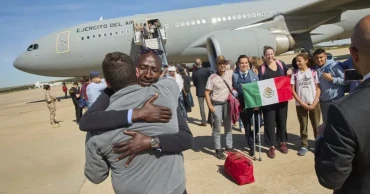
As continued fighting raises fears that Sudan could plunge deeper into chaos, foreign governments are scrambling to get their diplomats and other citizens safely out. Most countries deployed military transport aircraft to fly people out, including France which used its airbase in neighboring Djibouti for the airlift. But not all is going smoothly — about 2,000 British nationals remain in Sudan, and many complain that their government isn’t giving them enough information about evacuation plans.
Although some flights included people of various nationalities, here’s a country-by-country accounting of evacuation efforts based on information available so far:
UNITED STATES:
White House national security adviser Jake Sullivan said Monday that Washington has begun facilitating the overland departure of private U.S. citizens who want to leave Sudan with the use of intelligence, surveillance and reconnaissance assets. Earlier, the U.S. government told some 16,000 US citizens in Sudan that they need to fend for themselves and that there won’t be mass evacuations.
UNITED KINGDOM:
Some 1,200 British soldiers who were part of a military operation out of a key British air base on the east Mediterranean island of Cyprus helped evacuate around 30 U.K. diplomatic staff and their families out of Sudan. Arrangements are being made to fly the evacuees back home from Cyprus. Britain’s Africa Minister, Andrew Mitchell, said about 2,000 U.K. citizens still in Sudan have registered with the embassy and that “intense planning” was underway for a “series of possible evacuations.”
FRANCE:
Officials say France has evacuated 491 people, including citizens from 36 countries, on flights to Djibouti in the nearby Horn of Africa. They include 23 Sudanese citizens who were family members or had other links to foreigners being evacuated and 38 citizens of Niger. Another 36 were Irish citizens and nine were Americans. Others included three wounded individuals, the German ambassador and several other foreign ambassadors.
GERMANY:
Four German military transport planes flew more than 400 people from Sudan to Jordan from where they’ll head to their home countries. German Foreign Minister Minister Annalena Baerbock said her country had evacuated citizens of 20 countries in addition to its own, and would try to continue doing so, even if the end of the ceasefire Monday could complicate the situation. The Austrian government said 27 people were Austrian citizens.
CANADA:
Canada’s foreign minister, Melanie Joly, says Ottawa is working with ``like-minded countries″ to help at least 1,600 citizens formally registered in Sudan flee the country. Canada suspended consular services in Sudan on Sunday, saying Canadian diplomats would ``temporarily work from a safe location outside the country.″
ITALY:
Italian Air Force C-130 transport aircraft airlifted some 200 people out of Khartoum airport Sunday evening and flew them to Djibouti. Italian Foreign Minister Antonio Tajani said they included 140 Italians, some Swiss, other Europeans and personnel from the Vatican’s embassy in Khartoum.
SPAIN:
Spain said it had evacuated approximately 172 people from the Sudanese capital to Djibouti so far, including 34 Spanish nationals and citizens of Argentina, Colombia, Ireland, Italy, Mexico, Portugal and Poland.
SWEDEN & DENMARK:
Sweden says 25 of its embassy staff and their families were among the 388 people that French aircraft airlifted to Djibouti. Denmark said 15 of its citizens were among the group.
SWITZERLAND:
Switzerland’s Foreign Ministry says French forces have evacuated 12 Swiss nationals to Djibouti and Egypt.
FINLAND:
Finnish Foreign Minister Pekka Haavisto tweeted that 10 Finns, including children, had been evacuated from Khartoum. He said efforts were underway to evacuate others still in the Sudanese capital.
NORWAY:
Norway’s Ambassador to Sudan Endre Stiansen has tweeted that he and two colleagues are “in a safe place” outside Sudan.
POLAND:
Poland’s Foreign Ministry said 11 Poles – including the ambassador to Sudan, diplomatic staff and private citizens — have been evacuated as part of French and Spanish efforts.
NETHERLANDS:
A pair of Dutch air force C-130 Hercules have flown from Sudan to Jordan Monday carrying an undisclosed number of Dutch and other evacuees. Defense Minister Kajsa Ollongren said in a tweet more flights were planned “in close cooperation with partners.”
BULGARIA:
Bulgaria’s Foreign Ministry says 21 Bulgarian nationals have been evacuated by land to Egypt or by air to Europe.
TURKEY:
The Turkish government says it’s evacuating “hundreds” of its citizens by land to Ethiopia, from where they are scheduled to be flown to Istanbul.
GREECE:
Greece’s Foreign Ministry says 15 Greek nationals and their family members have been evacuated to Djibouti with the help of Italy.
JAPAN:
Japanese Prime Minister Fumio Kishida says eight Japanese, including embassy officials and their family, were airlifted from an air base in northern Khartoum by the French military. Japanese defense troops had already evacuated 45 others to nearby Djibouti.
SOUTH AFRICA:
The South African government says at least 77 South African nationals, including embassy staff, are on on their way out of the Sudanese capital.
KENYA:
Kenya’s Foreign Ministry says 29 Kenyan students have crossed into Ethiopia and are in route to Nairobi, while the air force has a transport plane ready to fly out 18 students now on the road to the South Sudan border. Another two aircraft are expected to ferry 300-400 Kenyans to Jeddah.
PALESTINIANS:
The Palestinian Ministry of Foreign Affairs and Expatriates says some 72 Palestinians have relocated to Port Sudan, while vehicle convoys are carrying about 200 Palestinians to Egypt.
SOUTH KOREA:
South Korea says a bus transporting at least 28 of its nationals, including embassy staff, has entered Port Sudan’s international airport where a South Korean military aircraft awaits to fly them to Jeddah, Saudi Arabia.
JORDAN:
Some 343 Jordanian nationals evacuated from Port Sudan arrived at Amman military airport aboard four transport aircraft.
EGYPT:
Egypt’s state-run MENA news agency says the country is urging the more than 10,000 Egyptian citizens in Sudan to head to Port Sudan and Wadi Halfa in the north for evacuation. Buses carrying an undisclosed number of Egyptian citizens crossed into Egypt from the Arqin border crossing on Monday.
3 years ago
Global Covid-19 cases now over 686 million
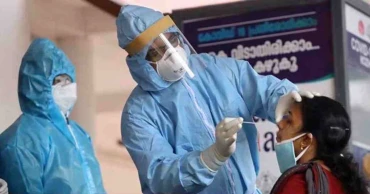
The total number of recorded Covid-19 cases around the world has now surpassed 686 million.
According to the latest global data, the total Covid-19 case count is 686,579,615, while the death toll reached 6,860,200 this morning.
The US has reported 106,580,794 Covid-19 cases so far, while 1,159,313 people have died from the virus in the country — both highest counts globally.
India has reported 7,178 new Covid-19 cases in 24 hours, according to the Union Health Ministry data updated on Monday.
The active cases in the country dropped to 65,683 from 67,806.
The death toll in the country increased to 5,31,345 with 16 deaths during the period.
Meanwhile, France and Germany have registered 39,951,432 and 38,396,459 Covid-19 cases so far, occupying the third and fourth positions in the world number-wise, and 166,289 and 172,635 people have died in the European countries, as per Worldometer.
Covid-19 situation in Bangladesh
Bangladesh reported seven more Covid-19 cases in 24 hours till Monday morning.
With the new numbers, the country's total caseload rose to 2,038,161, according to the Directorate General of Health Services (DGHS).
However, the official death toll from the disease remained unchanged at 29,446 as no new fatalities were reported.
The daily case test positivity increased to 1.55 percent from Sunday’s 1.52 percent as 452 samples were tested.
The Covid-19 recovery and death rates remained unchanged at 98.40 percent and 1.44 percent, respectively.
3 years ago