others

Some in dry Somalia break Ramadan fast with little but water
This year’s holy month of Ramadan coincides with the longest drought on record in Somalia. As the sun sets and Muslims around the world gather to break their daily fasts with generous dinners, Hadiiq Abdulle Mohamed and her family have just water and whatever food might be at hand.
Mohamed is among more than 1 million Somalis who have fled their homes in search of help while an estimated 43,000 people died last year alone. She and her husband and their six children now take refuge in one of the growing displacement camps around the capital, Mogadishu.
Ramadan brought an increase in food prices for a country already struggling with inflation caused in part by Russia’s invasion of Ukraine and the withering of local crops by five consecutive failed rainy seasons. Millions of livestock that are central to people’s diets have died.
Now food is even harder to come by for those displaced. For Ramadan, Mohamed and her family rely on well-wishers to provide their single meal a day. First, they break their fast with water and pieces of dates, then spoons of rice. Finally, they eat the donated meal of rice cooked with mixed meat, bruised banana and a small plastic bag of juice, which Mohamed waits in line for hours under the searing sun to obtain.
“I recall the Ramadan fast we had in the past when we were enjoying and prospering,” she said. “We would milk our goats, cook the ugali (maize porridge) and collard greens and drink water from our catchment. However, this year we are living in a camp, without plastic to cover us from rain, without food to eat, thirsty and experiencing drought. We have this small hot meal, but do you think that this can feed a family of six children, plus a mother and father? That is not possible.” The family once was prosperous and owned farmland and goats in a village about 140 kilometers (87 miles) west of the capital. Now they try to get by on the little money her husband makes by carrying goods in a wheelbarrow. But food prices have soared so much that his income is no longer enough to buy a 1 kilogram (2.2 pound) bag of rice.
The inflation in Somalia pinches the more well-off, too. The typical Ramadan fast-breaking meal includes samosas and other snacks; juice and tea and coffee; the main dish of rice or spaghetti or flatbread with camel, goat, chicken or fish; and finally, dessert.
The Horn of Africa country imports the majority of its food, from Ukraine-grown wheat to the bottles of Mountain Dew stocked in some gleaming Mogadishu shops. Meanwhile, prices of basics like rice and cooking oil continue to rise in parts of the country.
This month, World Food Program monitoring reported that supply chain resilience was generally good in Somalia, but the spike in demand for Ramadan would be “a disadvantage to vulnerable households who depend on local markets.”
“We are really experiencing a soaring price of food and another basic commodities,” said Ahmed Khadar Abdi Jama, a lecturer in economics at Somalia University. “Whenever there is an external factor that can reduce the supply of food, such as the Russia-Ukraine conflict, it is more likely that Somalis will feel a low supply.”
For example, a kilogram of camel meat that cost about $4 before the holy month now costs about $6. But this inflation will subside after the month is over, Khadar said.
Ramadan is a month of alms and forgiveness throughout the Muslim world. With the growing number of Somalis displaced by the drought, the imams of the mosques in Mogadishu are leading efforts to encourage the city’s wealthy and others who can afford it to sympathize with the poor and give generously.
“Some people need food to afford to break their fast," said one imam, Sheikh Abdikarim Isse Ali. "Please help them.”
3 years ago

Deadly fire highlights immigration pressures on Mexico
The fire that killed 38 people at an immigration detention center in Mexico happened as Western hemisphere countries face pressure to address the extraordinary number of people fleeing their homes.
Mexico has expanded its network of dozens of detention centers while working closely with the United States to limit movement of asylum-seekers through its territory to the U.S. border, including to Ciudad Juarez, where authorities said migrants set mattresses on fire late Monday in a detention center after learning they would be deported.
Here are some questions and answers about the conditions and policies that led to one of Mexico's deadliest events at an immigration detention center.
WHY WERE THESE MIGRANTS DETAINED?
Specifics have yet to be released, but Mexico has emerged as the world’s third most popular destination for asylum-seekers, after the United States and Germany. It is still largely a transit country, though, for those on the way to the U.S.
Asylum-seekers must stay in the state where they apply in Mexico, resulting in large numbers being holed up without work in Tapachula, near the country’s southern border with Guatemala.
Tens of thousands are also assembled in border cities, including Ciudad Juarez, often arriving illegally after harrowing journeys or paying someone off. A sprawling network of lawyers, fixers and middlemen has sprung up to provide documents and counsel to migrants who can afford to speed up the system.
More than 2,200 people are believed to be at Ciudad Juarez migrant shelters, and more are living elsewhere in the city after arriving from Guatemala, Venezuela, Nicaragua, Colombia, Ecuador, Peru and El Salvador, according to a report issued last month by the Strauss Center for International Security and Law at the University of Texas at Austin.
Mexico carried out more than 106,000 deportations last year, with about 8 out of every 10 sent to Guatemala or Honduras.
HOW ARE U.S. POLICIES AT WORK?
The Trump and Biden administrations have relied increasingly and heavily on Mexico to curb a flow of migrants that has made the United States the world's most popular destination for asylum-seekers since 2017, according to U.N. figures.
Guatemalans were the largest group among those killed or injured in Monday's blaze, according to Mexico’s Attorney General’s Office. Others were from Honduras, El Salvador, Venezuela, Colombia and Ecuador.
Guatemalans have been disproportionately affected by a U.S. policy in effect since March 2020 to return people who enter the U.S. illegally to Mexico. The practice suspended their rights to seek asylum on grounds of preventing COVID-19.
Mexico takes back Guatemalans and some other nationalities, while people from other countries are often released in the U.S. to pursue their cases in immigration court. That's due to the costs and diplomatic challenges of sending them home.
On May 11, the Biden administration plans to end the pandemic-era rule, known as Title 42, and replace it with a sweeping new policy that largely bans asylum for anyone who travels through Mexico without first seeking protection there.
The U.S. Department of Homeland Security received more than 11,000 comments on the new policy before a Monday deadline for public feedback. The U.N. refugee agency said “key elements of the proposal are incompatible with principles of international refugee law.”
The American Federation of Government Employees, the main union representing asylum officers, opposes the change.
The proposal is subject to revisions based on public comment and will almost certainly be challenged in court.
Amid the uncertainty and rapid change, frustration is running high among many migrants about a glitch-plagued app called CBPOne, which was expanded in January to grant some exemptions to the asylum restrictions. The U.S. has been admitting about 740 migrants daily at land crossings through CBPOne.
About 80 migrants are being admitted daily from Ciudad Juarez to El Paso using CBPOne, according to the Strauss Center.
WHY CIUDAD JUAREZ?
The Biden administration has been under intense pressure after the tally of illegal border crossings reached its highest levels ever recorded last year. Traffic has slowed sharply since January, when the administration extended humanitarian parole to Cubans, Haitians, Nicaraguans and Venezuelans who enter through an airport with a financial sponsor.
At the same time, Mexico agreed to start taking back people from those four countries who crossed the border illegally. Homeland Security Alejandro Mayorkas said at a Senate hearing Tuesday that the policy on those four countries has been “tremendously successful.”
Toward the end of last year, El Paso became the busiest of the Border Patrol's nine sectors along the Mexican border, causing many migrants to sleep outside or in overcrowded shelters upon their release and prompting Joe Biden's first visit to the border as president.
El Paso, with its expansive network of shelters in Ciudad Juarez, remained the busiest corridor for illegal crossings in February, when migrants were stopped more than 32,000 times. Nearly half of those incidents involved people from Mexico.
3 years ago

38 dead in Mexico fire after guards didn't let migrants out
When smoke began billowing out of a migrant detention center in the Mexican border city of Ciudad Juarez, Venezuelan migrant Viangly Infante Padrón was terrified because she knew her husband was still inside.
The father of her three children had been picked up by immigration agents earlier in the day, part of a recent crackdown that netted 67 other migrants, many of whom were asking for handouts or washing car windows at stoplights in this city across the Rio Grande from El Paso, Texas.
In moments of shock and horror, Infante Padrón recounted how she saw immigration agents rush out of the building after fire started late Monday. Later came the migrants’ bodies carried out on stretchers, wrapped in foil blankets. The toll: 38 dead in all and 28 seriously injured, victims of a blaze apparently set in protest by the detainees themselves.
“I was desperate because I saw a dead body, a body, a body, and I didn’t see him anywhere,” Infante Padrón said of her husband, Eduard Caraballo López, who in the end survived with only light injuries, perhaps because he was scheduled for release and was near a door.
But what she saw in those first minutes has become the center of a question much of Mexico is asking itself: Why didn't authorities attempt to release the men — almost all from Guatemala, Honduras, Venezuela and El Salvador — before smoke filled the room and killed so many?
“There was smoke everywhere. The ones they let out were the women, and those (employees) with immigration,” Infante Padrón said. “The men, they never took them out until the firefighters arrived.”
“They alone had the key,” Infante Padrón said. “The responsibility was theirs to open the bar doors and save those lives, regardless of whether there were detainees, regardless of whether they would run away, regardless of everything that happened. They had to save those lives.”
Immigration authorities said they released 15 women when the fire broke out, but have not explained why no men were released.
Surveillance video leaked Tuesday shows migrants, reportedly fearing they were about to be moved, placing foam mattresses against the bars of their detention cell and setting them on fire.
In the video, later confirmed by the government, two people dressed as guards rush into the camera frame, and at least one migrant appears by the metal gate on the other side. But the guards don't appear to make any effort to open the cell doors and instead hurry away as billowing clouds of smoke fill the structure within seconds.
“What humanity do we have in our lives? What humanity have we built? Death, death, death,” thundered Bishop Mons. José Guadalupe Torres Campos at a Mass in memory of the migrants.
Mexico’s National Immigration Institute, which ran the facility, said it was cooperating in the investigation. Guatemala has already said that many of the victims were its citizens, but full identification of the dead and injured remains incomplete.
U.S. authorities have offered to help treat some of the 28 victims in critical or serious condition, most apparently from smoke inhalation.
For many, it the tragedy was the foreseeable result of a long series of decisions made by leaders in places like Venezuela and Central America, by immigration policymakers in Mexico and the United States, right down to residents in Ciudad Juarez complaining about the number of migrants asking for handouts at street corners.
“You could see it coming,” more than 30 migrant shelters and other advocacy organizations said in statement Tuesday. “Mexico’s immigration policy kills.”
Those same advocacy organizations published an open letter March 9 that complained of a criminalization of migrants and asylum seekers in Ciudad Juarez. It accused authorities of abusing migrants and using excessive force in rounding them up, including complaints that municipal police questioned people in the street about their immigration status without cause.
President Andrés Manuel López Obrador offered sympathy Tuesday, but held out little hope of change.
He said the fire was started by migrants in protest after learning they would be deported or moved.
“They never imagined that this would cause this terrible misfortune,” López Obrador said.
Immigration activist Irineo Mujica said the migrants feared being sent back, not necessarily to their home countries, but to southern Mexico, where they would have to cross the country all over again.
“When people reach the north, it’s like a ping-pong game — they send them back down south,” Mujica said.
“We had said that with the number of people they were sending, the sheer number of people was creating a ticking time bomb," Mujica said. "Today that time bomb exploded.”
The migrants were stuck in Ciudad Jaurez because U.S. immigration policies don’t allow them to cross the border to file asylum claims. But they were rounded up because Ciudad Juarez residents were tired of migrants blocking border crossings or asking for money.
The high level of frustration in Ciudad Juarez was evident earlier this month when hundreds of mostly Venezuelan migrants tried to force their way across one of the international bridges to El Paso, acting on false rumors that the United States would allow them to enter the country. U.S. authorities blocked their attempts.
After that, Ciudad Juarez Mayor Cruz Pérez Cuellar started campaigning to inform migrants there was room in shelters and no need to beg in the streets. He urged residents not to give money to them and said authorities would remove them from intersections where it was dangerous to beg and residents saw it as a nuisance.
For the migrants, the fire is another tragedy on a long trail of tears.
About 100 migrants gathered Tuesday outside the immigration facility’s doors to demand information about relatives. In many cases, they asked the same question Mexico is asking itself.
Katiuska Márquez, a 23-year-old Venezuelan woman with her two children, ages 2 and 4, was seeking her half-brother, Orlando Maldonado, who had been traveling with her.
“We want to know if he is alive or if he’s dead,” she said. She wondered how all the guards who were inside made it out alive and only the migrants died. “How could they not get them out?”
3 years ago

Police: Nashville shooter fired indiscriminately at victims
The shooter who killed three students and three staff members at a Christian school in Nashville legally bought seven weapons in recent years and hid the guns from their parents before carrying out the attack by firing indiscriminately at victims and spraying gunfire through doors and windows, police said Tuesday.
The violence Monday at The Covenant School was the latest school shooting to roil the nation and was planned carefully. The shooter had drawn a detailed map of the school, including potential entry points, and conducted surveillance of the building before carrying out the massacre, authorities said.
The suspect, Audrey Hale, 28, was a former student at the school. Hale did not target specific victims — among them three 9-year-olds and the head of the school — but did target “this school, this church building,” police spokesperson Don Aaron said at a news conference Tuesday.
Hale was under a doctor's care for an undisclosed emotional disorder and was not known to police before the attack, Metropolitan Nashville Police Chief John Drake said at the news conference.
Also read: Nashville shooter was ex-student with detailed plan to kill
If police had been told that Hale was suicidal or homicidal, “then we would have tried to get those weapons," Drake said. “But as it stands, we had absolutely no idea who this person was or if (Hale) even existed."
Tennessee does not currently have a “red flag” law, which lets police step in and take firearms away from people who threaten to kill.
On Tuesday night, Tennessee's governor said one of the victims, 61-year-old substitute teacher Cynthia Peak, was a close friend of his wife, Maria, and that the two had been scheduled to have dinner after Peak taught that day.
“Maria woke up this morning without one of her best friends,” Gov. Bill Lee said, adding that his wife once taught with Peak and another victim, Katherine Koonce, and the women and “have been family friends for decades.”
Hale legally bought seven firearms from five local gun stores, Drake said. Three of them were used in Monday’s shooting. Police spokesperson Brooke Reese said Hale bought the guns between October 2020 and June 2022.
Hale's parents believed their child had sold one gun and did not own any others, Drake said, adding that Hale “had been hiding several weapons within the house.”
Hale's motive is unknown, Drake said. In an interview with NBC News on Monday, Drake said investigators don't know what drove Hale but believe the shooter had “some resentment for having to go to that school.”
Drake, at Tuesday's news conference, described “several different writings by Hale” that mention other locations and The Covenant School.
Asked at a Senate hearing whether the Justice Department would open an investigation into whether the shooting was a hate crime targeting Christians, U.S. Attorney General Merrick Garland said federal officials were working with local police to identify a motive.
Police have released videos of the shooting, including edited surveillance footage that shows the shooter's car driving up to the school, glass doors being shot out and the shooter ducking through one of them.
Additional video, from Officer Rex Engelbert's bodycam, shows a woman meeting police outside as they arrive and telling them that all the children were locked down, “but we have two kids that we don't know where they are.”
The woman then directs officers to Fellowship Hall and says people inside had just heard gunshots. Three officers, including Engelbert, search rooms one by one, holding rifles and announcing themselves as police.
The video shows officers climbing stairs to the second floor and entering a lobby area, followed by a barrage of gunfire and an officer yelling twice: “Get your hands away from the gun." Then the shooter is shown motionless on the floor.
Police identified Engelbert, a four-year member of the force, and Michael Collazo, a nine-year member, as the officers who fatally shot Hale. The White House said President Joe Biden spoke Tuesday with Drake, Engelbert and Callazo to thank them for their bravery.
Police response times to school shootings have come under greater scrutiny after the attack in Uvalde, Texas, in which 70 minutes passed before law enforcement stormed the classroom. In Nashville, police said about eight minutes passed from the initial call to when officers arrived at the scene.
Surveillance video shows a time stamp of just before 10:11 a.m., when the attacker shot out the doors. Police said they got the call about a shooter at 10:13. Aaron said in an email Tuesday that dispatch records show officers arrived on campus shortly before 10:22.
At about 10:24, officers engaged the suspect, the chief said during the news conference. Within two minutes of that, the suspect was down, according to the dispatch records.
“There were police cars that had been hit by gunfire. As officers were approaching the building, there was gunfire going off,” Drake said.
“We feel, our response right now, from what I’ve seen, I don’t have a particular problem with it. But we always want to get better. We always want to get there in two or three minutes,” he said, adding that traffic was “locked down” at the time.
Traffic was indeed stopped along a nearby two-lane road with a turning lane as police tried to weave their way to the school.
Police have given unclear information on Hale's gender. For hours Monday, police identified the shooter as a woman. Later in the day, the police chief said Hale was transgender. After the news conference, Aaron declined to elaborate on how Hale identified.
In an email Tuesday, police spokesperson Kristin Mumford said Hale “was assigned female at birth. Hale did use male pronouns on a social media profile.” Later Tuesday, at the news conference, Drake referred to Hale with female pronouns.
Authorities identified the dead children as Evelyn Dieckhaus, Hallie Scruggs and William Kinney. The adults were Cynthia Peak, 61, Katherine Koonce, 60, and Mike Hill, 61.
The website of The Covenant School, a Presbyterian school founded in 2001, lists a Katherine Koonce as the head of the school. Her LinkedIn profile says she has led the school since July 2016. Peak was a substitute teacher, and Hill was a custodian, according to investigators.
Koonce was remembered as someone who would run toward danger, not away from it.
“I guarantee you if there were kids missing (during the shooting), Katherine was looking for them,” friend Jackie Bailey said. “And that’s probably how she got in the way — just trying to do something for somebody else. She would give up her own life in order to save somebody else’s.”
Founded as a ministry of Covenant Presbyterian Church, the school is in the affluent Green Hills neighborhood just south of downtown Nashville. It has about 200 students from preschool through sixth grade and roughly 50 staff members.
Before Monday’s violence in Nashville, there had been seven mass killings at K-12 schools since 2006 in which four or more people were killed within a 24-hour period, according to a database maintained by The Associated Press and USA Today in partnership with Northeastern University. In all of them, the shooters were males.
The database does not include school shootings in which fewer than four people were killed, which have become far more common in recent years. Last week alone, for example, school shootings happened in Denver and the Dallas area within two days of each other.
3 years ago

Nashville shooter was ex-student with detailed plan to kill
The former student who shot through the doors of a Christian elementary school in Nashville and killed three children and three adults had drawn a detailed map of the school, including potential entry points, and conducted surveillance of the building before carrying out the massacre.
Metropolitan Nashville Police Chief John Drake did not say exactly what drove the shooter to open fire Monday morning at The Covenant School before being killed by police. But he provided chilling examples of the shooter’s elaborate planning for the targeted attack, the latest in a series of mass shootings in a country that has grown increasingly unnerved by bloodshed in schools.
“We have a manifesto, we have some writings that we’re going over that pertain to this date, the actual incident,” he told reporters. “We have a map drawn out of how this was all going to take place.”
He said in an interview with NBC News that investigators believe the shooter had “some resentment for having to go to that school.”
The victims included three 9-year-old children, the school’s top administrator, a substitute teacher and a custodian. Amid the chaos a familiar ritual played out: Panicked parents rushed to the school to see if their children were safe and tearfully hugged their kids, and a stunned community held vigils for the victims.
Rachel Dibble, who was at a nearby church where children were taken to be reunited with their parents, described the scene as everyone being in “complete shock.”
“People were involuntarily trembling,” she said. “The children … started their morning in their cute little uniforms, they probably had some Froot Loops and now their whole lives changed today.”
Police gave unclear information on the gender of the shooter. For hours, police identified the shooter as a 28-year-old woman and eventually identified the person as Audrey Elizabeth Hale. Then at a late afternoon press conference, the police chief said that Hale was transgender. After the news conference, police spokesperson Don Aaron declined to elaborate on how Hale currently identified.
Authorities said Hale was armed with two “assault-style” weapons as well as a handgun. At least two of them were believed to have been obtained legally in the Nashville area, according to the chief. Police said a search of Hale’s home turned up a sawed-off shotgun, a second shotgun and other unspecified evidence.
The victims were identified as Evelyn Dieckhaus, Hallie Scruggs, and William Kinney, all 9 years old, and adults Cynthia Peak, 61; Katherine Koonce, 60; and Mike Hill, 61.
The website of The Covenant School, a Presbyterian school founded in 2001, lists a Katherine Koonce as the head of the school. Her LinkedIn profile says she has led the school since July 2016. Peak was a substitute teacher and Hill was a custodian, according to investigators.
Founded as a ministry of Covenant Presbyterian Church, The Covenant School is located in the affluent Green Hills neighborhood just south of downtown Nashville that is home to the famed Bluebird Café – a spot typically beloved by musicians and songwriters.
The school has about 200 students from preschool through sixth grade, as well as roughly 50 staff members.
“Our community is heartbroken,” a statement from the school said. “We are grieving tremendous loss and are in shock coming out of the terror that shattered our school and church. We are focused on loving our students, our families, our faculty and staff and beginning the process of healing.”
Before Monday’s violence in Nashville, there had been seven mass killings at K-12 schools since 2006 in which four or more people were killed within a 24-hour period, according to a database maintained by The Associated Press and USA Today in partnership with Northeastern University. In all of them, the shooters were males.
The database does not include school shootings in which fewer than four people were killed, which have become far more common in recent years. Just last week alone, for example, school shootings happened in Denver and the Dallas-area within two days of each other.
Monday’s tragedy unfolded over roughly 14 minutes. Police received the initial call about an active shooter at 10:13 a.m.
Officers began clearing the first story of the school when they heard gunshots coming from the second level, Aaron said. Police later said the shooter fired at arriving officers from a second-story window and had come armed with significant ammunition.
Two officers from a five-member team opened fire in response, killing the suspect at 10:27 a.m., Aaron said.
Late Monday night, police released approximately two minutes of edited surveillance video showing the shooter’s car driving up to the school from multiple angles, including one in which children can be seen playing on swings in the background. Next an interior view shows glass doors to the school being shot out and the shooter ducking through one of the shattered doors.
More footage from inside shows the shooter walking through a school corridor holding a gun with a long barrel and walking into a room labeled “church office,” then coming back out. In the final part of the footage, the shooter can be seen walking down another long corridor with the gun drawn. The shooter is not seen interacting with anyone else on the video, which has no sound.
Aaron said there were no police officers present or assigned to the school at the time of the shooting because it is a church-run school.
President Joe Biden, speaking at the White House on Monday, called the shooting a “family’s worst nightmare” and implored Congress again to pass a ban on certain semi-automatic weapons.
A reeling city mourned during multiple vigils Monday evening. At Belmont United Methodist Church, teary sniffling filled the background as vigil attendees sang, knelt in prayer and lit candles. They lamented the national cycle of violent and deadly shootings.
“We need to step back. We need to breathe. We need to grieve,” said Paul Purdue, the church’s senior pastor. “We need to remember. We need to make space for others who are grieving. We need to hear the cries of our neighbors.”
3 years ago

Russia says it test-fired anti-ship missiles in Sea of Japan
Russia's Defense Ministry says Moscow has test-fired anti-ship missiles in the Sea of Japan.
The ministry said Tuesday that two boats launched a simulated missile attack on a mock enemy warship about 100 kilometers (60 miles) away. The ministry said the target was successfully hit by two Moskit cruise missiles.
The Moskit, whose NATO reporting name is the SS-N-22 Sunburn, is a supersonic anti-ship cruise missile that has conventional and nuclear warhead capacity.
It said the exercise took place in the Peter the Great Gulf in the Sea of Japan but did not give more precise coordinates. The gulf borders the Russian Pacific Fleet headquarters at Fokino and is about 700 kilometers (430 miles) from Japan's northern Hokkaido Island.
Japan's Defense Ministry had no immediate response. The U.S. Navy’s 7th Fleet did not immediately respond to requests for comment.
Russian nuclear-capable Tu-95 bombers flew over the Sea of Japan for several hours last week.
In September, Japan protested multinational military exercises on the Russian-held Kuril Islands — some of which are claimed by Japan — and expressed concern about Russian and Chinese warships conducting shooting drills in the Sea of Japan.
UNF-08Landslide in Ecuador kills at least 7, with dozens missingALAUSI, Ecuador (AP/UNB) — A huge landslide swept over an Andean community in central Ecuador, burying dozens of homes, killing at least seven people and sending rescuers on a frantic search for survivors, authorities said Monday.
Earlier in the day, officials had reported 16 deaths, but President Guillermo Lasso put the confirmed toll at seven as he arrived Monday night at the scene of the disaster in Alausí, about 137 miles south of the capital, Quito. Officials also raised the number of people reported missing to 62.
Lasso lamented the tragedy and promised people in the town that “we will continue working" on the search effort.
Ecuador’s Risk Management Secretariat said more than 30 people were rescued after the mountainside collapsed around 10 p.m. Sunday. It said 23 people were injured.
“My mother is buried" under the mud, said Luis Ángel González, 58, who also lost other family members Sunday. "I am so sad, devastated. There is nothing here, no houses, no anything. We are homeless (and) without family.”
The risk management agency estimated 500 people and 163 homes were affected by the disaster, which also destroyed a portion of the Pan-American Highway.
The governor of Chimborazo, Ivan Vinueza, told The Associated Press that some of the injured were taken to area hospitals. He said officials had urged people to evacuate the area after landslides and cracks began to develop about two months ago. Some followed the advice, and by Saturday, as tremors intensified, others fled.
Area residents told local media they heard tremors on the mountain before the landslide, which was estimated to be about 150 meters (490 feet) wide and nearly a half mile (700 meters) long. It swept away trees, homes and other buildings. More than fifty houses were buried under tons of mud of debris.
The emergency response agency said 60% of potable water service in the area was affected by the landslide. The communication’s office of the presidential office said some schools would be switching to online classes.
Firefighters from a half dozen cities were dispatched to the area to help. Rescuers focused on the flanks of the landslide where they found traces and debris of houses.
Rescuer and paramedic Alberto Escobar said it was unlikely more survivors would be found because of the time that had elapsed.
He said the search would continue as long as it did not rain.
Video from cameras connected to the country’s emergency service network showed people fleeing their homes with help from neighbors. It also showed people transporting appliances and other belongings in vehicles.
Survivors, many housed in temporary shelters, cried over their misfortune.
Among them was the Zuña family, who were staying at the Iglesia Matriz de Alausí, where rooms for catechism or parish meetings were adapted with bunk beds days ago after authorities declared an emergency in the area due to the risk of landslides.
Sonia Guadalupe Zuña said her mother was reluctant to leave what they had built over the years.
“We went to the shelter, but my mother didn’t want to,” Zuña said. “Later, my daughter went to convince her. When they walked along the rails, everything collapsed. They arrived covered in dirt and crying.”
Save for the clothes they had on, Zuña's family lost everything.
“I don’t know where, but we’re all leaving," she said crying. "My parents taught us that by working hard, you get material things, but being together is priceless.”
3 years ago

Global Covid-19 cases now over 683 million
The total number of recorded Covid-19 cases around the world has now surpassed 683 million.
According to the latest global data, the total Covid-19 case count is 683,393,282, while the death toll reached 6,827,486 this morning.
The US has reported 106,109,844 Covid-19 cases so far, while 1,153,816 people have died from the virus in the country — both highest counts globally.
India logged 1,890 new coronavirus cases, the highest in 149 days, while the active cases increased to 9,433, according to the Union Health Ministry data updated on Sunday.
Read: Covid-19 survivors are at high risk of diabetes, cardiovascular diseases: Study
The country recorded 2,208 cases in a single day on October 28 last year.
The death count has increased to 530,831 with seven deaths.
According to the ministry data, the Covid-19 case tally was recorded at 44,704,147.
Meanwhile, France and Germany have registered 39,758,771 and 38,338,298 Covid-19 cases so far, occupying the third and fourth positions in the world number-wise, and 165,534 and 170,493 people have died in the European countries, as per Worldometer.
Read More: China to reopen to tourists, resume all visas Wednesday
Covid-19 situation in Bangladesh
Bangladesh reported seven more Covid-19 cases in the 24 hours till Monday (March 27, 2023) morning.
With the new numbers, the country's total caseload rose to 2,038,008, according to the Directorate General of Health Services (DGHS).
However, the official death toll from Covid-19 remained unchanged at 29,445 as no new fatalities were reported in Bangladesh.
Read More: Ignoring experts, China's sudden zero-COVID exit cost lives
3 years ago

Mass protests erupt after Netanyahu fires defense chief
Tens of thousands of Israelis poured into the streets of cities across the country Sunday night in a spontaneous outburst of anger after Prime Minister Benjamin Netanyahu abruptly fired his defense minister for challenging the Israeli leader's judicial overhaul plan.
Protesters in Tel Aviv blocked a main highway and lit large bonfires, while police scuffled with protesters who gathered outside Netanyahu's private home in Jerusalem.
The unrest deepened a monthslong crisis over Netanyahu's plan to overhaul the judiciary, which has sparked mass protests, alarmed business leaders and former security chiefs and drawn concern from the United States and other close allies.
Netanyahu's dismissal of Defense Minister Yoav Gallant signaled that the prime minister and his allies will barrel ahead this week with the overhaul plan. Gallant had been the first senior member of the ruling Likud party to speak out against it, saying the deep divisions were threatening to weaken the military.
But as droves of protesters flooded the streets late into the night, Likud ministers began indicating willingness to hit the brakes. Culture Minister Micky Zohar, a Netanyahu confidant, said the party would support him if he decided to pause the judicial overhaul.
Israeli media said leaders in Netanyahu's coalition were to meet on Monday morning. Later in the day, the grassroots protest movement said it would hold another mass demonstration outside the Knesset, or parliament, in Jerusalem.
In a brief statement, Netanyahu’s office said late Sunday the prime minister had dismissed Gallant. Netanyahu later tweeted, “We must all stand strong against refusal.”
Tens of thousands of Israelis poured into the streets in protest after Netanyahu's announcement, blocking Tel Aviv's main artery, transforming the Ayalon highway into a sea of blue-and-white Israeli flags and lighting a large bonfire in the middle of the road.
Demonstrations took place in Beersheba, Haifa and Jerusalem, where thousands of people gathered outside Netanyahu's private residence. Police scuffled with protesters and sprayed the crowd with a water cannon. Thousands then marched from the residence to the Knesset.
Inon Aizik, 27, said he came to demonstrate outside Netanyahu’s private residence in central Jerusalem because “bad things are happening in this country.” He called the judicial overhaul “a quick legislative blitz.”
Netanyahu's decision came less than a day after Gallant, a former senior general, called for a pause in the controversial legislation until after next month’s Independence Day holidays, citing the turmoil in the ranks of the military.
Gallant had voiced concerns that the divisions in society were hurting morale in the military and emboldening Israel’s enemies. “I see how the source of our strength is being eroded,” Gallant said.
While several other Likud members had indicated they might follow Gallant, the party quickly closed ranks Sunday, clearing the way for his dismissal.
Galit Distal Atbaryan, Netanyahu’s public diplomacy minister, said Netanyahu summoned Gallant to his office and told him “that he doesn’t have any faith in him anymore and therefore he is fired.”
Gallant tweeted shortly after the announcement that “the security of the state of Israel always was and will always remain my life mission.”
Opposition leader Yair Lapid said Gallant’s dismissal "harms national security and ignores warnings of all defense officials.”
Israel’s consul general in New York City, Assaf Zamir, resigned in protest.
Avi Dichter, a former chief of the Shin Bet security agency, is expected to replace Gallant. Dichter had reportedly flirted with joining Gallant but instead announced Sunday he was backing the prime minister.
Netanyahu’s government is pushing ahead for a parliamentary vote this week on a centerpiece of the overhaul — a law that would give the governing coalition the final say over all judicial appointments. It also seeks to pass laws that would would grant parliament the authority to overturn Supreme Court decisions and limit judicial review of laws.
Netanyahu and his allies say the plan will restore a balance between the judicial and executive branches and rein in what they see as an interventionist court with liberal sympathies.
But critics say the laws will remove Israel's system of checks and balances and concentrate power in the hands of the governing coalition. They also say that Netanyahu, who is on trial for corruption charges, has a conflict of interest.
Tens of thousands of people have taken to the streets over the past three months to demonstrate against the plan in the largest demonstrations in the country's 75-year history. The State Department dismissed as “completely false” claims repeated by Yair Netanyahu, the prime minister’s son, that the U.S. government was financing these protests.
Leaders of Israel’s vibrant high-tech industry have said the changes will scare away investors, former top security officials have spoken out against the plan and key allies, including the United States and Germany, have voiced concerns.
In recent weeks, discontent has surged from within Israel’s army — the most popular and respected institution among Israel’s Jewish majority. A growing number of Israeli reservists, including fighter pilots, have threatened to withdraw from voluntary duty if the laws are passed.
Israel's military is facing an increase in fighting in the occupied West Bank, threats from Lebanon's Hezbollah militant group and concerns that archenemy Iran is close to developing a nuclear-weapons capability.
Manuel Trajtenberg, head of an influential Israeli think tank, the Institute for National Security Studies, said that “Netanyahu can dismiss his defense minister, he cannot dismiss the warnings he heard from Gallant.”
Meanwhile, an Israeli good governance group asked the country’s Supreme Court on Sunday to punish Netanyahu for allegedly violating a conflict of interest agreement meant to prevent him from dealing with the country’s judiciary while he is on trial for corruption.
The Movement for Quality Government in Israel, a fierce opponent of the overhaul, asked the court to force Netanyahu to obey the law and sanction him either with a fine or prison time for not doing so. It said he was not above the law.
The prime minister said the appeal should be dismissed and said that the Supreme Court didn’t have grounds to intervene.
Netanyahu is barred by the country’s attorney general from directly dealing with his government’s plan to overhaul the judiciary, based on a conflict of interest agreement that the Supreme Court acknowledged in a ruling over Netanyahu’s fitness to serve while on trial for corruption. Instead, Justice Minister Yariv Levin, a close confidant of Netanyahu, is spearheading the overhaul.
But on Thursday, after Parliament passed a law making it harder to remove a sitting prime minister, Netanyahu said he was unshackled from the attorney general’s decision and vowed to wade into the crisis and “mend the rift” in the nation. That declaration prompted the attorney general, Gali Baharav-Miara, to warn that Netanyahu was breaking his conflict of interest agreement.
The fast-paced legal and political developments have catapulted Israel into uncharted territory, said Guy Lurie, a research fellow at the Israel Democracy Institute, a Jerusalem think tank.
“We are at the start of a constitutional crisis in the sense that there is a disagreement over the source of authority and legitimacy of different governing bodies,” he said.
3 years ago

Iran-backed fighters on alert in east Syria after US strikes
Iran-backed fighters were on alert in eastern Syria on Saturday, a day afte r U.S. forces launched retaliatory airstrikes on sites in the war-torn country, opposition activists said. The airstrikes came after a suspected Iran-made drone killed a U.S. contractor and wounded six other Americans on Thursday.
The situation was calm following a day in which rockets were fired at bases housing U.S. troops in eastern Syria. The rockets came after U.S. airstrikes on three different areas in Syria’s eastern province of Deir el-Zour, which borders Iraq, opposition activists said.
While it’s not the first time the U.S. and Iran have traded strikes in Syria, the attack and the U.S. response threaten to upend recent efforts to deescalate tensions across the wider Middle East, whose rival powers have made steps toward détente in recent days after years of turmoil.
“The calm continues as Iran-backed militiamen are on alert out of concern of possible new airstrikes,” said Rami Abdurrahman, who heads the Syrian Observatory for Human Rights, an opposition war monitor.
Also Read: Suspected Iran drone kills US worker in Syria; US retaliates
President Joe Biden said Friday that the U.S. would respond “forcefully” to protect its personnel after U.S. forces retaliated with airstrikes on sites in Syria used by groups affiliated with Iran’s Revolutionary Guard. The strikes followed an attack Thursday by a suspected Iran-made drone that killed a U.S. contractor and wounded five American servicemembers and a U.S. contractor.
“The United States does not, does not seek conflict with Iran,” Biden said in Ottawa, Canada, where he was on a state visit. But he said Iran and its proxies should be prepared for the U.S. “to act forcefully to protect our people. That’s exactly what happened last night.” Activists said the U.S. bombing killed at least four people.
A statement issued late Friday by the Iranian Consultative Center in Syria warned the U.S. not to carry out further strikes in Syria. Otherwise, “we will have to retaliate." It warned that "it will not be a simple revenge.”
Also Read: Saudi Arabia, Syria may restore ties as Mideast reshuffles
The center, which speaks on behalf of Tehran in Syria, said the U.S. airstrikes targeted places used to store food products and other service centers in Deir el-Zour. It said the strike killed seven people and wounded seven others without giving the nationalities of the dead. An official with an Iran-backed group in Iraq said the strikes killed seven Iranians.
The Observatory raised the death toll from the U.S. strikes to 19, saying they were killed in three locations, including an arms depot in the Harabesh neighborhood in the city of Deir el-Zour, and two military posts near the towns of Mayadeen and Boukamal.
Iran-backed militia groups and Syrian forces control the area, which also has seen suspected airstrikes by Israel in recent months allegedly targeting Iranian supply routes.
According to U.S. officials, two simultaneous attacks were launched at U.S. forces in Syria late Friday. Officials said that based on preliminary information, there was a rocket attack on the Conoco plant, where U.S. troops are stationed, and one U.S. service member was wounded but is in stable condition. At about the same time, several drones were launched at Green Village, in Deir el-Zour province where U.S. troops are also based. One official said all but one of the drones were shot down, and there were no U.S. injuries there. The officials spoke on condition of anonymity to discuss military operations.
Iran’s paramilitary Revolutionary Guard, which answers only to Supreme Leader Ayatollah Ali Khamenei, has been suspected of carrying out attacks with bomb-carrying drones across the wider Middle East.
U.S. Defense Secretary Lloyd Austin said the American intelligence community had determined the drone in Thursday’s attack was of Iranian origin, but offered no other immediate evidence to support the claim. The drone hit a coalition base in the northeast Syrian city of Hasakeh.
Iran relies on a network of proxy forces throughout the Mideast to counter the U.S. and Israel, its arch regional enemy. The U.S. has had forces in northeast Syria since 2015, when they deployed as part of the fight against the Islamic State group, and maintains some 900 troops there, working with Kurdish-led forces that control around a third of Syria.
The exchange of strikes came as Saudi Arabia and Iran have been working toward reopening embassies in each other’s countries. The kingdom also acknowledged efforts to reopen a Saudi embassy in Syria, whose embattled President Bashar Assad has been backed by Iran in his country’s long war. According to officials, Iran has launched 80 attacks against U.S. forces and locations in Iraq and Syria since January 2021. The vast majority of those have been in Syria.
The U.S. under Biden has struck Syria previously over tensions with Iran — in February and June of 2021, as well as August 2022.
Syria’s conflict that began in 2011 has left nearly half a million people dead.
3 years ago
United States imposes additional sanctions to address Myanmar military regime’s atrocities
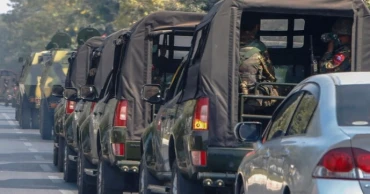
The United States continues to promote accountability for the Myanmar military regime’s assault on the democratic aspirations of the people of Myanmar designating two individuals and six entities.
"Today we are designating two individuals and six entities. The regime continues to inflict pain and suffering on the people of Burma (Myanmar)," said US Secretary of State Antony J. Blinken on Friday.
The U.S. Department of the Treasury is imposing sanctions on Tun Min Latt and his spouse Win Min Soe, as well as three entities owned or controlled by Tun Min Latt.
Additionally, Treasury is issuing a Sanctions Alert on Burma jet fuel to inform individuals, businesses, and other persons of the sanctions risks associated with the provision of jet fuel to Burma’s military regime.
"The actions we are taking today further align with those taken by Canada, the European Union, and the United Kingdom," Blinken said.
The United States is committed to supporting the people of Myanmar and will continue to take actions to deny the regime the resources it uses to commit these atrocities, he said.
3 years ago