others

Fears of renewed nuclear arms race as US-Russia treaty nears expiry
The last major nuclear weapons control treaty between the United States and Russia is set to expire on Thursday, raising concerns over a possible new arms race.
The Strategic Arms Reduction Treaty, known as New START, signed in 2010, capped deployed strategic nuclear warheads for each country at 1,550. The treaty also included transparency measures such as data sharing, notifications, and on-site inspections to reduce the risk of miscalculations.
Experts warn that its expiry could mark the end of decades-long arms control cooperation that helped maintain global security since the Cold War.
Pope Leo has urged both nations to renew the treaty, noting that the current global situation “calls for doing everything possible to avert a new arms race.”
The original START treaty, signed in 1991 between the US and the Soviet Union, had limited deployed nuclear warheads to 6,000 for each party. New START succeeded it, signed in Prague by the US and Russia, the Soviet Union’s successor state. Despite a temporary technical suspension three years ago, both countries were believed to be following the treaty.
The treaty’s expiration follows a pattern of eroding arms control frameworks. Previous agreements such as the Intermediate-Range Nuclear Forces Treaty, the Open Skies Treaty, and the Conventional Armed Forces in Europe Treaty have already collapsed, limiting oversight on nuclear and conventional forces.
Former UK Chief of Defence Staff, Admiral Sir Tony Radakin, warned that the collapse of these treaties represents “one of the most dangerous aspects of our current global security,” citing the increasing role of nuclear weapons.
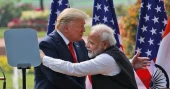
Russia’s former President Dmitry Medvedev, who signed New START in 2010, said its expiration should “alarm everyone,” highlighting the risk as global powers modernize their nuclear arsenals. Meanwhile, US President Donald Trump has downplayed concerns, stating last month that “if it expires, it expires… We’ll just do a better agreement.”
Any future arms control deal is expected to consider other nuclear powers. Washington has suggested including China, while Moscow has proposed France and the UK. Analysts warn that rising strategic capabilities and new weapons development in the US, Russia, and China make reaching a new treaty more challenging.
Darya Dolzikova, senior research fellow at the UK-based RUSI, noted that both the US and Russia are modernizing their nuclear forces, including new long-range hypersonic missiles and advanced weapons systems, which could intensify global tensions and complicate future agreements.
The expiration of New START signals a potential new era of instability in nuclear arms control. Observers emphasize that urgent diplomatic efforts are needed to prevent an uncontrolled arms race and ensure global security.
With inputs from BBC
4 months ago
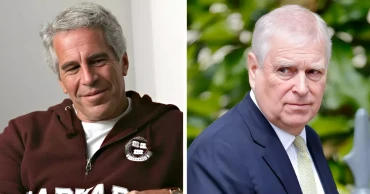
Andrew and Epstein allegedly sought sexual acts from dancers, legal letter says
A recently released legal letter claims that Prince Andrew, also known as Andrew Mountbatten-Windsor, and the late convicted sex offender Jeffrey Epstein asked an exotic dancer to perform sexual acts at Epstein’s Florida residence.
The letter states that the dancer had been promised $10,000 to perform at the 2006 event but received only $2,000. Her lawyers said she was “treated like a prostitute” and had agreed to maintain confidentiality about the encounter in exchange for $250,000.
According to the document, the dancer and other women from Rachel’s Strip Club in West Palm Beach were transported to Epstein’s home. There, she was introduced to Prince Andrew and danced in minimal attire. The letter claims that both Epstein and Andrew then requested a threesome, which she refused, but she alleges they pressured her to engage in sexual activity.
The dancer was later invited to travel with Epstein and Andrew to the Virgin Islands, which she declined. The letter also notes that other women present at the event appeared to be very young, some as young as 14.
Prince Andrew has consistently denied any wrongdoing. He previously reached a financial settlement with Virginia Giuffre in 2022 over her civil claim, in which she alleged that he had sexually abused her as a teenager after being trafficked by Epstein.
The latest allegations come amid increasing pressure on Andrew to provide testimony regarding his relationship with Epstein. The most recent release of Epstein files by the US Department of Justice includes photographs showing Andrew kneeling over a fully clothed woman, which has drawn additional public attention.
UNB could not independently verify the claims, and Prince Andrew has not responded publicly to the specific allegations contained in the letter.
With inputs from BBC
4 months ago
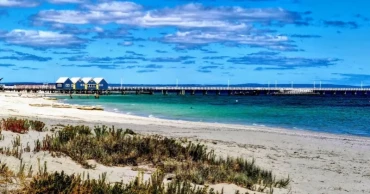
Teen swims 4km to save mother, siblings
A 13-year-old boy has been widely praised for his courage after swimming for hours through rough seas to get help for his mother and two siblings who were swept out to sea off the coast of Western Australia.
Police said the family were paddle boarding and kayaking in Geographe Bay on Friday when strong winds blew their inflatables off course.
As conditions worsened, the teenager set off toward shore to raise the alarm, but his kayak began taking on water, forcing him to swim the rest of the way.
Read More: 145 pilot whales die in stranding on New Zealand beach
The boy swam about 4km to reach land and alert authorities, triggering a large-scale search by marine rescue teams. He managed to raise the alarm by 6:00pm local time, reports BBC.
Rescue crews later found the boy’s 47-year-old mother, his 12-year-old brother and eight-year-old sister clinging to a paddleboard roughly 14km offshore. A rescue helicopter located them around 8:30pm, and a volunteer marine rescue vessel brought them safely back to shore.
Naturaliste Volunteer Marine Rescue Group commander Paul Bresland described the teenager’s effort as “superhuman”, noting that he swam for hours in difficult conditions. Police and rescue officials said the family’s use of life jackets played a crucial role in their survival.
Inspector James Bradley said the incident showed how quickly ocean conditions can change and praised the boy’s determination and bravery, saying his actions ultimately saved the lives of his family members.
The family were checked by paramedics and taken to hospital as a precaution before being discharged. They later returned to thank the volunteer marine rescue crew for their efforts.
Read More: Rush-hour storm floods New York City area, swamping streets and stranding people in traffic
4 months ago
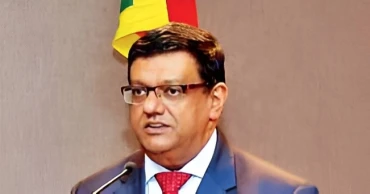
FICAC South Asia conference concludes in Colombo with focus on regional cooperation
The South Asia Regional Conference of the World Federation of Consuls (FICAC) concluded in Colombo on Tuesday, with the aim of strengthening cooperation and identifying new pathways for sustainable development in South Asia.
The three-day conference was hosted by the Association of Consuls in Sri Lanka under the aegis of FICAC, according to Sri Lankan daily Daily FT.
The event focused on policy dialogue, business networking and capacity building to support Sri Lanka’s economic recovery and foreign policy priorities.
Sri Lankan Prime Minister Dr Harini Amarasuriya, who attended the inauguration as the chief guest, said the government is working closely with international partners to position Sri Lanka as a credible and reliable destination for sustainable and inclusive development, investment and tourism in South Asia.
The conference brought together more than 60 diplomats, business leaders and policymakers fromacross the region, including Bangladesh.
During her address, the prime minister said Sri Lanka’s selection as the host country was significant at a time when the government was intensifying engagement with international partners to rebuild confidence and reinforce its standing as a dependable partner in the region.
She also highlighted Sri Lanka’s vulnerability to climate change, referring to the recent impact of Cyclone Ditwah, and thanked international partners for their support.
She said climate change is a global challenge that requires collective action, shared responsibility and innovative solutions.
President of the Association of Consuls in Sri Lanka Mahen Kariyawasan said hosting the conference in Colombo reflected renewed global confidence in Sri Lanka and provided an opportunity to attract investment, boost tourism and strengthen regional partnerships.
He said the programme, which included business forums, networking sessions and cultural activities, was designed to translate diplomatic engagement into tangible economic outcomes.FICAC is currently led by Nikolaos Nikos K. Margaropoulos, Honorary Consul of the Philippines in Thessaloniki, Greece.
Organisers said honorary consuls play a vital role as links between diplomacy and real-world cooperation, helping convert policy intent into practical partnerships.
4 months ago

Three sisters die after jumping from 9th floor in Ghaziabad
Around 2.15 am early Wednesday, three sisters jumped from their ninth-floor apartment in Uttar Pradesh's Ghaziabad, after leaving a handwritten note that said, "Sorry, Papa".
Pakhi,12, Prachi ,14, and Vishika,16 were allegedly upset that their father had taken away their mobile phone, reports NDTV.
In the dead of night, the sisters went to their balcony, bolted the door and jumped out of a window, one after the other. Their screams and the sound of the bodies hitting the ground were loud enough to wake their parents, neighbours and security guards at the apartment complex at Bharat City in Ghaziabad.
By the time the parents broke open the door to the balcony, it was too late.
"When we reached the scene, we confirmed that three girls, daughters of Chetan Kumar, had died after jumping from the building," said Atul Kumar Singh, Assistant Commissioner of Police.
Visuals this morning showed the bodies of the girls on the ground, their mother wailing in grief, and a crowd of neighbours in shock.
The sisters were addicted to everything Korean, so much in fact, that they had even taken on Korean names. They had reportedly stopped going to school two years ago.
Eight-Page Suicide Note
Investigations are focusing on their suicide note and a diary they cited in it.
"Is diary me jo kuch bhi likha hai woh sab padh lo kyuki ye sab sach hai (Read everything written in this diary because all of it is true.) Read now. I'm really sorry. Sorry, Papa," the note read. It was accompanied by a hand-drawn crying emoji.
The eight-page note was written on the pages of a pocket diary, detailing their mobile activities.
Their father, Chetan Kumar, described what appears to be an extreme addiction to the Korean culture.
"They said Papa sorry, Korea is our life, Korea is our biggest love, whatever you say, we cannot give it up. So we are killing ourselves," Chetan Kumar wept. "This should not happen to any parent or child."
The note also said: "You tried to distance us from Koreans, but now you know how much we love Koreans."
The girls were deep into K-pop culture and Korean movies, music, short films, shows, and series, their diary notes revealed.
"For the past few days, they had been denied access to a mobile phone, a restriction that appeared to have affected them," said Deputy Commissioner of Police Nimish Patel.
Visuals from their home revealed more jottings on a wall in the girls' bedroom, like "I am very very alone" and "make me a hert of broken (sic)".
"It is clear that the girls were influenced by Korean culture and have mentioned it in the suicide note," said senior police officer Nimish Patel.
The sisters did everything together, including bathing and eating.
Their phone addiction reportedly began during the COVID-19 pandemic. Afterwards, they became irregular in school and finally stopped going altogether.
According to the police, Chetan Kumar married two sisters and lives with both wives and their children, all daughters. Two of the girls who died were daughters of one wife and the third was their half-sister.
4 months ago
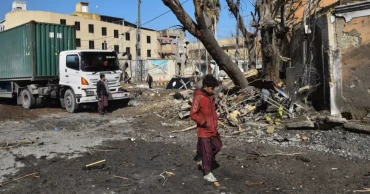
UN Security Council condemns deadly militant attacks in Pakistan
The U.N. Security Council on Wednesday strongly condemned a recent surge of militant attacks in southwestern Pakistan that have killed dozens, mostly civilians, as security forces intensified operations in the insurgency-affected region.
Authorities said Pakistani forces have killed scores of militants in recent days while cracking down on insurgents in Balochistan, where about a dozen coordinated attacks began Saturday, targeting civilians and buildings housing police and security personnel.
Federal and provincial officials reported at least 36 civilians and 17 security personnel killed. Security forces said they have so far killed 197 militants from the outlawed Baloch Liberation Army, which claimed responsibility for recent suicide bombings and gun attacks.
In an overnight statement, U.N. Security Council President James Kariuki said the council condemned in the “strongest terms the heinous and cowardly terrorist attacks across multiple locations” in Balochistan and expressed condolences to the victims’ families and the government and people of Pakistan.
Balochistan has long faced a separatist insurgency by ethnic Baloch groups seeking greater autonomy or independence from Pakistan’s central government. While Islamabad has claimed to have quelled the insurgency, sporadic violence has continued.
4 months ago
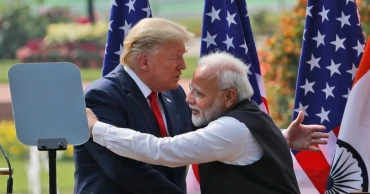
Modi praised for US trade deal as opposition raises agriculture concerns
Indian lawmakers from Prime Minister Narendra Modi’s ruling coalition lauded him Tuesday for reaching a trade deal with the United States aimed at reducing tariffs on Indian goods, while opposition parties questioned its impact on sensitive sectors such as agriculture.
The deal follows U.S. President Donald Trump’s announcement Monday that he would cut import tariffs on India from 25% to 18%, six months after imposing steep duties to penalize New Delhi for continuing purchases of Russian oil, which Washington said fueled Moscow’s war against Ukraine. In exchange, Trump said Modi had agreed to halt Russian crude imports, although the Indian government has not publicly confirmed this.
Trump also said India would reduce import taxes on U.S. products to zero and commit to purchasing $500 billion worth of American goods. “This will help end the war in Ukraine, which is taking place right now, with thousands of people dying each and every week,” Trump wrote on social media. Modi responded on X, expressing that he was “delighted” with the tariff reduction and calling Trump’s “leadership vital for global peace, stability, and prosperity.”
The announcement effectively removes the penal tariff imposed on Indian exports, providing relief for exporters who had been facing combined duties as high as 50%. India had emerged as a major buyer of discounted Russian Urals, raising tensions with Washington.
In Parliament, opposition parties disrupted proceedings Tuesday, demanding clarity on the deal’s implications for agriculture, a key sector employing millions of Indians. While the U.S. seeks greater market access and zero tariffs on most of its exports, India has historically protected sectors such as agriculture and dairy from full liberalization.
U.S. Secretary of Agriculture Brooker Rollings said the deal would help American farmers export more products to India, boosting rural incomes. In 2024, the U.S. faced a $1.3 billion agricultural trade deficit with India. Indian Trade Minister Piyush Goyal assured that sensitive sectors, including agriculture and dairy, have been protected. “India has got the best deal in comparison to the countries in the neighborhood. This will strengthen U.S.-India relations while protecting the interests of all 1.4 billion Indians,” he said.
Analysts urged caution, noting that details such as timelines, tariff reductions, and coverage of sensitive sectors remain unclear. Achieving $500 billion in U.S. imports would take decades, given current imports of around $50 billion, said trade analyst Ajay Srivastava. A senior Finance Ministry official, Arvind Shrivastava, said the deal could expand trade, create opportunities for India’s labor-intensive and manufacturing sectors in the U.S., and boost collaboration in advanced technology.
4 months ago
US, UN launch $700 million humanitarian fund for Sudan
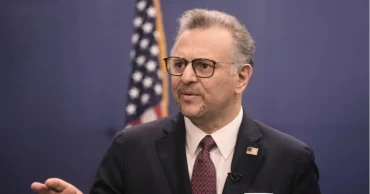
The United States and the United Nations have launched a new Sudan Humanitarian Fund with $700 million in contributions to support civilians affected by Sudan’s ongoing conflict, officials said Tuesday.
The U.S. pledged $200 million from a $2 billion fund set aside last year for global humanitarian projects, while the United Arab Emirates announced a $500 million contribution. Saudi Arabia and several other countries also promised support, though the amounts were not specified.
“Today we are signaling that the international community will work together to bring this suffering to an end, and to ensure lifesaving aid reaches communities in such desperate, desperate need,” said U.N. humanitarian chief Tom Fletcher, who leads the U.N. Office for the Coordination of Humanitarian Affairs (OCHA). Fletcher co-hosted the fundraising event in Washington with U.S. senior adviser for Arab and African affairs Massad Boulos.
Fletcher said visible progress on the initiative is expected by the start of Ramadan on February 17. Boulos added that the U.S. has proposed a “comprehensive plan” for a humanitarian truce, which could be finalized in the coming weeks.
Sudan has been engulfed in war since 2023, with the paramilitary Rapid Support Forces (RSF) and the Sudanese military fighting for control. The U.N. estimates that over 40,000 people have been killed, though the real toll is believed to be much higher. The conflict has created the world’s largest humanitarian crisis, displacing more than 14 million people and causing famine in several regions.
Recent fighting has centered in the Kordofan regions after the RSF captured el-Fasher, one of the army’s last Darfur strongholds. The military has since regained territory in Kordofan, including breaking the siege of Kadugli and nearby Dilling, and reopened a key road linking the two towns. Kadugli had been under siege since the start of the war, with famine declared there in November by the Integrated Food Security Phase Classification.
On Tuesday, the RSF carried out a drone attack on a medical center in Kadugli, killing 15 people, including seven children, according to the Sudan Doctors Network, which monitors casualties from the war.
4 months ago
Four in ten cancer cases worldwide preventable
Nearly 40% of cancer cases globally could be avoided, according to a new worldwide assessment by the World Health Organization (WHO) and its cancer research arm, the International Agency for Research on Cancer (IARC).
The analysis reviews 30 avoidable risk factors, such as tobacco use, alcohol consumption, obesity, lack of physical activity, air pollution, ultraviolet exposure, and—introduced for the first time—nine infections known to cause cancer.
The report was published ahead of World Cancer Day on 4 February, it estimates that preventable factors were responsible for 37% of all newly diagnosed cancer cases in 2022—approximately 7.1 million cases.
The findings emphasize the significant role prevention could play in reducing cancer rates worldwide.
Using data from 185 countries and covering 36 types of cancer, the study identifies tobacco as the single largest preventable cause, accounting for 15% of new cases globally. This is followed by infections at 10% and alcohol consumption at 3%.
Almost half of all preventable cancers worldwide were attributed to three types: lung, stomach, and cervical cancer. Lung cancer was mainly associated with smoking and air pollution, stomach cancer with Helicobacter pylori infection, and cervical cancer largely with human papillomavirus (HPV).
Dr André Ilbawi, WHO Team Lead for Cancer Control and a lead author of the study, said this is the first global assessment to quantify how much cancer risk comes from modifiable causes. He noted that analyzing trends across regions and population groups provides governments and individuals with actionable evidence to prevent many cancers before they develop.
Differences by sex and region
The study found a notably higher share of preventable cancers among men than women—45% of new cases in men compared with 30% in women. Among men, smoking was the dominant risk factor, responsible for 23% of new cases, followed by infections (9%) and alcohol use (4%). For women, infections were the leading preventable cause at 11%, followed by smoking (6%) and high body mass index (3%).
Dr Isabelle Soerjomataram, Deputy Head of the IARC Cancer Surveillance Unit and senior author of the report, described the study as the most comprehensive global evaluation of preventable cancer to date, highlighting the inclusion of infectious causes alongside behavioral, environmental, and occupational risks. She emphasized that tackling these factors offers a major opportunity to reduce the global cancer burden.
Preventable cancer rates varied considerably across regions. Among women, they ranged from 24% in North Africa and West Asia to 38% in sub-Saharan Africa. Among men, East Asia recorded the highest proportion at 57%, while Latin America and the Caribbean had the lowest at 28%. These variations reflect differences in risk exposure, socioeconomic conditions, prevention policies, and health system strength.
The report calls for tailored prevention strategies, including strong tobacco control, alcohol regulation, vaccination against cancer-causing infections such as HPV and hepatitis B, cleaner air, safer work environments, and healthier diets and physical activity levels.
It also stresses the importance of coordinated action across multiple sectors—including health, education, energy, transport, and labour—to reduce cancer risk. Addressing preventable causes can not only lower cancer incidence but also reduce long-term healthcare costs and improve overall population health and well-being.
4 months ago
Who Was Jeffrey Epstein? A Look at the Controversial Financier
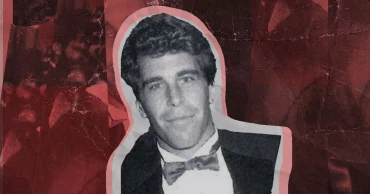
Jeffrey Epstein, the disgraced financier with a network of powerful friends, died in a New York prison cell on August 10, 2019, while awaiting trial on sex trafficking charges.
He had no chance of bail. Epstein’s death came over a decade after he was convicted for soliciting prostitution from a minor and was registered as a sex offender.
This time, he faced allegations of running a “vast network” of underage girls for sexual exploitation, to which he pleaded not guilty.
In November 2025, the US Congress approved the Epstein Files Transparency Act, requiring the Justice Department to release its files from investigations into Epstein. President Donald Trump signed the bill, and some documents were made public by the December 19 deadline, with more released in the following weeks, reports BBC.
While authorities have claimed the January 30 release marked the end of the review process, some critics argue too many documents remain withheld. The released material has illuminated Epstein’s life and connections.
Early Life and Rise to Wealth
Born and raised in New York, Epstein taught mathematics and physics at the Dalton School in the mid-1970s. Though he studied these subjects at university, he never graduated. His teaching led to a connection with a Wall Street partner at Bear Stearns, and Epstein became a partner within four years. By 1982, he founded J Epstein and Co., managing over $1 billion in client assets.
Epstein lived lavishly, owning properties in Florida, New Mexico, and New York, and mingled with celebrities, artists, and politicians. Former President Trump once described him as a “terrific guy” who enjoyed the company of young women. Trump later said he cut ties with Epstein over inappropriate behavior toward women at his Mar-a-Lago club.
Epstein’s circle also included former President Bill Clinton, actors Kevin Spacey and Chris Tucker, and UK politician Peter Mandelson. Despite these high-profile associations, Epstein maintained a private personal life and dated women like Miss Sweden winner Eva Andersson Dubin and Ghislaine Maxwell, though he never married.
Criminal Conviction and Controversial Plea Deal
In 2005, Florida police were alerted to Epstein’s abuse of a 14-year-old girl, leading to a search of his Palm Beach home and the discovery of numerous photos of young girls. Reports suggested his abuse had been ongoing for years.
Despite the gravity of his crimes, prosecutors negotiated a 2008 plea deal, allowing Epstein to serve 18 months in jail with work release privileges, avoiding federal charges that could have meant life imprisonment. He was registered as a high-risk sex offender for life.
Epstein maintained his wealth and properties post-conviction. In 2010, Prince Andrew was photographed with him, sparking controversy years later. Virginia Giuffre, an alleged victim, claimed she was forced to have sex with Andrew as a minor, which he denied, though he later settled a lawsuit filed by her.
Final Arrest and Death
Epstein was arrested on July 6, 2019, after returning from Paris. Prosecutors sought forfeiture of his New York mansion, a location tied to his alleged crimes. Denied bail, he was held in the Metropolitan Correctional Center in New York. Epstein was briefly hospitalized in July 2019 for undisclosed injuries, but never faced trial.
The Maxwell Trial
Following Epstein’s death, his former partner Ghislaine Maxwell was arrested in July 2020 for aiding his sexual exploitation of minors. In December 2021, she was convicted on five counts, including sex trafficking of a minor, and sentenced to 20 years in prison. Maxwell had introduced Epstein to many of his wealthy and influential friends, including Clinton and Andrew, and continued collaborating with him professionally for years after their romantic involvement ended.
4 months ago