others
Hong Kong court jails father of US-based activist under security law
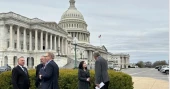
A Hong Kong court on Thursday sentenced the father of a U.S.-based pro-democracy activist to eight months in jail for trying to withdraw money from his daughter’s insurance policy, marking the first time a family member of a wanted activist has been punished under the city’s national security law.
Kwok Yin-sang, 69, was earlier found guilty of attempting to handle financial assets belonging to an “absconder” under the 2024 security law, known locally as Article 23. His daughter, Anna Kwok, executive director of the Washington-based Hong Kong Democracy Council, condemned the ruling, calling it a case of “transnational repression.”
Police have offered a bounty of HK$1 million (about $127,900) for information leading to Anna Kwok’s arrest and barred anyone from managing her funds. She is among 34 activists targeted by such bounties following the 2019 anti-government protests.
Authorities allege she lobbied foreign politicians and officials for sanctions and other hostile measures against China and Hong Kong.
Reacting to the verdict, Anna Kwok said her father was convicted “simply for being my father,” describing the charge as based on an “incoherent fiction.” The Hong Kong Democracy Council also said the case marked a major escalation in what it called a campaign of transnational repression.
The court heard that the elder Kwok had purchased an insurance policy for his daughter when she was a child, which came under her control at 18. In 2025, he tried to cancel the policy and withdraw about $11,000. He was arrested the same year on suspicion of dealing with funds linked to an “absconder.”
Acting Principal Magistrate Cheng Lim-chi delivered the sentence. Kwok’s lawyer had sought a 14-day jail term, arguing there was no proof he intended to send the money to his daughter.
The offence carries a maximum seven-year sentence, but the case was heard in a magistrates’ court, where penalties usually do not exceed two years.
Police have also placed bounties on other overseas activists, including former lawmakers Nathan Law and Ted Hui. The U.S. and U.K. governments have criticised the bounties.
In 2025, Washington sanctioned six Chinese and Hong Kong officials over alleged “transnational repression.” Beijing later announced sanctions against certain U.S. officials and NGO leaders over Hong Kong-related issues.
Hong Kong and Chinese authorities maintain that the 2020 Beijing-imposed national security law and the 2024 legislation are essential to ensure stability in the city.
8 days ago
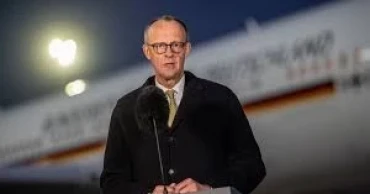
German chancellor in China to push fair trade, seek help on Ukraine war
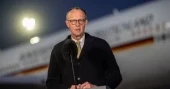
German Chancellor Friedrich Merz arrived in Beijing on Wednesday for a two-day visit aimed at pushing for fair trade conditions for German firms and seeking China’s support to help end the war in Ukraine.
Speaking before leaving Berlin, Merz said Europe wants a partnership with China that is “balanced, reliable and fair.” He noted that his trip follows recent visits by French President Emmanuel Macron and British Prime Minister Keir Starmer, and comes ahead of a planned visit by U.S. President Donald Trump in April.
This is Merz’s first visit to China since taking office last May. He has been advocating a stronger and more self-reliant Europe amid rising global tensions, including U.S. tariffs and calls for Europe to take greater responsibility for its own security.
Merz said major global crises, including the war involving Russia, cannot be resolved without Beijing’s involvement, noting that China’s voice carries weight in Moscow. Many European governments, however, are frustrated that China has not done more to pressure Russia to end the conflict. Beijing says its stance on the war is neutral and hopes all sides will reach a lasting peace agreement.
Economically, Merz is expected to raise concerns about trade imbalances and market access. A surge in Chinese exports has put pressure on factory jobs in Europe. Germany’s imports from China rose sharply last year, while its exports to China declined.
European leaders are urging Chinese firms to invest and build factories in Europe. They also want Beijing to reduce excess manufacturing capacity in sectors like electric vehicles and solar panels, which has pushed global prices down, and to ease restrictions faced by foreign companies in the world’s second-largest economy.
In a commentary, China’s state-run Xinhua News Agency said both countries, as major economies, share responsibility to keep global supply chains stable and oppose protectionism.
9 days ago
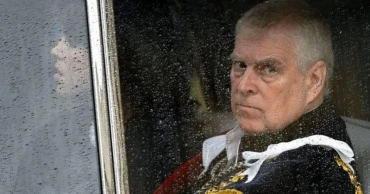
Australia supports move to drop Andrew from royal succession
Australia has formally expressed support for removing Andrew Mountbatten-Windsor from the British royal line of succession, with Prime Minister Anthony Albanese writing to his UK counterpart to back such a move.
In a letter to UK Prime Minister Keir Starmer, Albanese said his government would agree to any proposal aimed at stripping Andrew of his position in the order of succession, following recent developments surrounding the former prince.
Andrew remains eighth in line to the throne despite having lost his royal titles, including that of prince, in October amid mounting pressure over his past association with the late financier Jeffrey Epstein. The UK government is now considering legislation to remove him entirely from the line of succession after he was arrested last week on suspicion of misconduct in public office. Andrew has repeatedly denied any wrongdoing.
He was released under investigation about 11 hours after his arrest by Thames Valley Police.
Any change to the line of succession would require an Act of Parliament in the UK, as well as the consent of all 14 Commonwealth realms where King Charles III is head of state, including Australia, Canada, Jamaica and New Zealand.
In his letter, Albanese said Australians viewed the allegations seriously and supported a full and proper investigation. He added that the law must be allowed to take its course, echoing remarks made earlier by King Charles following his brother’s arrest.
A spokesperson for Starmer confirmed receipt of the letter, saying the government was considering whether further steps were necessary regarding Andrew’s status. However, the spokesperson said it would be inappropriate to comment further while the police investigation remains ongoing.
Darren Jones, the prime minister’s chief secretary, told lawmakers that the government was not ruling out action concerning the line of succession. Any legislation passed by Parliament would only take effect after receiving royal assent from the King.
The last time an individual was removed from the line of succession through parliamentary action was in 1936, when Edward VIII and his descendants were excluded following his abdication.
Buckingham Palace has so far declined to comment publicly on the possibility of legislation. Meanwhile, political views remain divided, with some senior figures urging caution until the investigation is concluded, while others argue that removing Andrew from the succession would be appropriate regardless of its outcome.
With inputs from BBC
10 days ago

BBC, BAFTA host apologise for racial slur incident at awards
Britain’s film academy and the BBC apologized to viewers after an audience member with Tourette syndrome shouted a racial slur during the British Academy Film Awards.
The highly offensive word could be heard as “Sinners” stars Michael B. Jordan and Delroy Lindo were presenting the award for best visual effects during Sunday’s ceremony. Host Alan Cumming had earlier told the audience that a guest at the ceremony was John Davidson, a Scottish campaigner for people with Tourette syndrome, who inspired the BAFTA-nominated film “I Swear.”
Tourette syndrome is a neurological disorder characterized by involuntary, repetitive movements and vocalizations, including the uttering of inappropriate words. Several shouts were audible during the first part of the ceremony, although what was said wasn't intelligible to an Associated Press reporter in the press room.
After the slur was shouted during Jordan and Lindo's presentation, Cumming apologized to the audience at London’s Royal Festival Hall for the “strong and offensive language.”
“Tourette syndrome is a disability and the tics you have heard tonight are involuntary, which means the person who has Tourette syndrome has no control over their language,” Cumming said. “We apologize if you were offended.”
The British Academy of Film and Television Arts referred to Cumming’s statement when asked for comment on Monday.
The epithet could be heard when the BBC broadcast the ceremony about two hours after the live event. The broadcaster apologized for not editing it out before the broadcast, though the offensive word could still be heard on its iPlayer streaming service on Monday morning. The program was later removed, and the BBC said the slur would be edited out.
“Some viewers may have heard strong and offensive language during the Bafta Film Awards,” the BBC said in a statement. "This arose from involuntary verbal tics associated with Tourette syndrome, and as explained during the ceremony it was not intentional.
“I Swear” won two BAFTAs, including best actor for Robert Aramayo, who plays Davidson.
Ed Palmer, vice chair of the charity Tourettes Action, said the BBC should have considered bleeping out the slur.
“This is really one of the most acute examples of where something that is a disability can cause quite understandably huge amounts of offense to someone,” he told Times Radio. “So, if it’s being prerecorded now, then bleeping it out, for example, might be a reasonable compromise.”
11 days ago
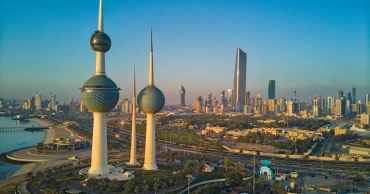
Kuwait plans freelance visa to reform labour market, curb residency trade
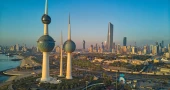
Kuwait is preparing to roll out a regulated freelance visa as part of broader efforts to restructure its labour market and end the long-running trade in residency permits.
The plan, unveiled by First Deputy Prime Minister and Interior Minister Sheikh Fahd Al Yousef during a meeting with private sector stakeholders, would allow expatriates to work independently without a conventional sponsor, within a legally monitored framework.
Officials say the proposed system aims to tackle problems stemming from unregulated employment, residency brokerage and unusually high daily wages in some low-skilled jobs, where workers can earn more than KD25 a day for basic services, report Gulf News.
Observers of the existing system have blamed lax supervision for uneven service quality and weak accountability. Supporters of the new model argue it could boost transparency, protect workers from abuse and improve overall standards.
Under initial guidelines, the scheme’s first phase would cover basic occupations. Annual fees are expected to be set between KD750 and KD1,000, with renewals contingent on meeting regulatory conditions.
11 days ago
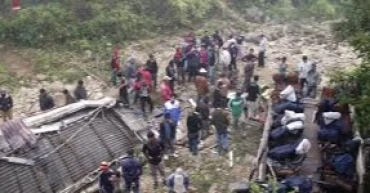
19 people killed as bus veered off a mountain highway in Nepal
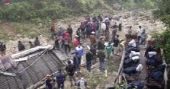
The bus was traveling from the tourist city of Pokhara to the capital, Kathmandu, when it plunged off the Prithvi Highway shortly after midnight, police said. The vehicle tumbled down a mountainside before coming to rest on the banks of the Trishuli River near Benighat, around 80 kilometers west of Kathmandu.
Authorities said dozens of passengers were on board at the time of the crash. Among the victims was a 24-year-old British citizen, according to the Dhading district police office. So far, only nine of the deceased have been identified.
Those injured include a Chinese national, who is receiving treatment at the National Trauma Center in Kathmandu, and a 27-year-old woman from New Zealand who sustained minor injuries and is being treated at a local hospital. China’s state-run Xinhua News Agency, quoting the Chinese Embassy in Nepal, reported earlier that another Chinese national remained missing.
Rescue teams reached the scene shortly after the accident and pulled survivors from the wreckage before transporting them to nearby hospitals, said government administrator Mohan Prasad Neupane.
Police have launched an investigation to determine the cause of the crash.
Road accidents involving buses are frequent in Nepal, often attributed to poor road conditions and inadequate vehicle maintenance. The mountainous Himalayan nation relies heavily on narrow, winding roads for transportation.
The bus came to rest along the bank of the fast-flowing Trishuli River. In 2024, two buses carrying 65 passengers plunged into the same river, with most of those on board either killed or still missing. The wreckage of one of those buses was recovered only this year after being buried deep under sand.
11 days ago
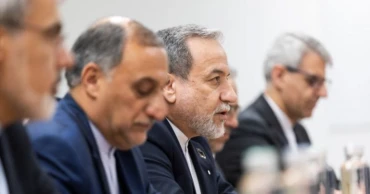
Oman confirms fresh US-Iran nuclear talks in Geneva
Oman has confirmed that the next round of talks between the United States and Iran will be held in Geneva on Thursday, as tensions remain high amid a growing US military build-up in the region.
Oman’s Foreign Minister Badr Albusaidi said in a social media post that the negotiations were set for Geneva, expressing hope for a “positive push to go the extra mile” towards finalising a deal.
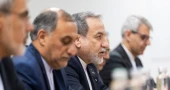
The announcement came hours after Iran’s Foreign Minister Abbas Araghchi said Tehran was ready to establish a full monitoring mechanism to guarantee the peaceful nature of its nuclear programme and ease international concerns.
Speaking to CBS News, Araghchi said Iran was currently negotiating “only nuclear” issues and remained confident that an agreement could be reached. He stressed that uranium enrichment was a matter of national dignity, saying Iran had developed the technology independently and at great cost.
Araghchi said Iran would not abandon its nuclear programme as long as it remains peaceful and under safeguards of the International Atomic Energy Agency. As a signatory to the Non-Proliferation Treaty, he said Tehran was fully prepared to cooperate with international inspectors while insisting on its right to peaceful nuclear energy, including enrichment.
US officials, including President Donald Trump, have previously pushed for Iran to halt enrichment entirely, while Washington has also raised concerns about Iran’s missile programme and regional activities. Araghchi rejected widening the scope of the talks, saying no other issues were under discussion at this stage.
The latest Geneva meeting follows a second round of indirect US-Iran talks held there on February 17, as well as earlier discussions hosted by Oman. Iranian officials said they were preparing a draft proposal aimed at accommodating the concerns of both sides to reach a swift agreement.
Araghchi suggested that any new deal could improve on the 2015 Joint Comprehensive Plan of Action, noting that stronger guarantees on the peaceful nature of Iran’s programme could be paired with wider sanctions relief.
Meanwhile, Iranian President Masoud Pezeshkian said Iran remained committed to peace and stability in the Middle East, while also preparing for all possible scenarios as negotiations continue.
Analysts remain divided over the prospects of a breakthrough, with some warning that sharply differing expectations between Washington and Tehran could still derail a deal despite renewed diplomatic momentum.
With inputs from ALJAZEERA
11 days ago
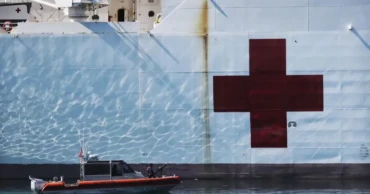
Greenland rejects Trump’s offer of US hospital ship
Greenland’s Prime Minister Jens-Frederik Nielsen has firmly rejected an offer by Donald Trump to send a US hospital ship to the Arctic island, saying Greenland’s public healthcare system already provides free treatment for all citizens.
Trump said in a post on social media that he planned to dispatch a hospital boat carrying medical supplies to Greenland, claiming that many people there were sick and “not being taken care of”. The post included an image resembling the USNS Mercy, one of two hospital ships operated by the US Navy.
Responding on Facebook, Nielsen said the proposal was unnecessary and added that healthcare in Greenland is publicly funded and free, unlike in the United States. “It’s going to be a no thanks from us,” he said, while stressing that Greenland remains open to cooperation with Washington.
The Greenland leader also urged Trump to engage through direct dialogue rather than what he described as “random outbursts on social media”.
Trump has long expressed interest in Greenland, a semi-autonomous territory within the Kingdom of Denmark, though he said in January he would not attempt to take the island by force. He later announced a vague “framework for a future deal” involving Greenland, after Denmark and NATO allies rejected any suggestion of relinquishing sovereignty.
It was unclear what prompted Trump’s latest remarks. They came shortly after Denmark’s Joint Arctic Command said a crew member from a US submarine near Nuuk had been evacuated for urgent medical treatment, though no official link was confirmed.
Despite the public rebuff, Nielsen said Greenland was willing to work with the United States, provided discussions are held respectfully and through proper channels.
With inputs from BBC
11 days ago
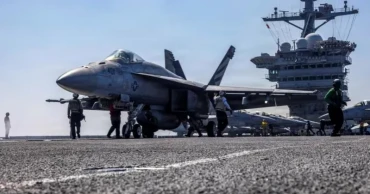
Trump questions why Iran has not yielded amid US military pressure
US President Donald Trump is questioning why Iran has not yet “capitulated” despite an expanding US military build-up in the Middle East, his special envoy Steve Witkoff has said.
Speaking to Fox News on Saturday, Witkoff said Trump was “curious” about Tehran’s stance after warning that Washington could carry out a limited military strike if no agreement is reached on Iran’s nuclear programme. The United States and its European allies suspect Iran of moving towards developing a nuclear weapon, a claim Tehran strongly denies.
Witkoff said the president was not frustrated but puzzled as to why Iran had not responded positively despite what he described as overwhelming US naval and military pressure in the region. He said Washington wanted Iran to clearly state it does not seek nuclear weapons and outline what steps it is prepared to take.
Iran’s Foreign Minister Abbas Araghchi said on Sunday there was still a chance to resolve the dispute diplomatically through what he called a “win-win” approach. He told CBS News that negotiators were working on the core elements of a possible deal and that Tehran was preparing a draft proposal to share with the US side.
US and Iranian officials held indirect talks in Geneva on February 17, reporting progress afterward. Oman, which mediated the discussions, said the next round of negotiations is scheduled to take place in Geneva later this week.
Despite diplomatic movement, Trump said recently that it would become clear within days whether a deal would be reached or whether the US would resort to military action.
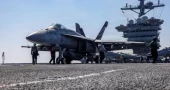
In recent weeks, Washington has significantly increased its military presence near Iran and across the wider Middle East, including deploying major naval assets such as the aircraft carriers USS Gerald R Ford and USS Abraham Lincoln, along with destroyers, combat ships and fighter jets.
Meanwhile, Iran has seen a renewed wave of anti-government protests at universities in Tehran and other cities, marking the largest student demonstrations since a deadly crackdown by authorities in January. Human rights groups say thousands were killed during that period, while Iranian officials have disputed those figures.
The renewed unrest comes as pressure mounts on Tehran both domestically and internationally, against the backdrop of heightened US military readiness and uncertain prospects for a nuclear agreement.
With inputs from BBC
11 days ago
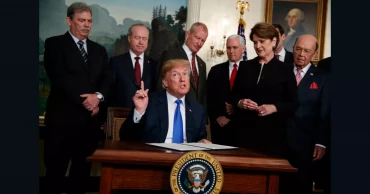
US must honor a trade deal after court blocks Trump tariffs: EU
The European Union's executive arm requested “full clarity” from the United States and asked its trade partner to fulfill its commitments after the U.S. Supreme Court struck down some of President Donald Trump’s most sweeping tariffs.
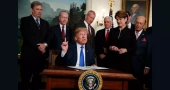
Trump has lashed out at the court decision and said Saturday that he wants a global tariff of 15%, up from the 10% he announced a day earlier.
The European Commission said the current situation is not conducive to delivering "fair, balanced, and mutually beneficial” trans-Atlantic trade and investment, as agreed to by both sides and spelled out in the EU-U.S. Joint Statement of August 2025.
American and EU officials sealed a trade deal last year that imposes a 15% import tax on 70% of European goods exported to the United States. The European Commission handles trade for the 27 EU member countries.
A top EU lawmaker said on Sunday he will propose to the European Parliament negotiating team to put the ratifying process of the deal on pause.
“Pure tariff chaos on the part of the U.S. administration,” Bernd Lange, the chair of Parliament’s international trade committee, wrote on social media. “No one can make sense of it anymore — only open questions and growing uncertainty for the EU and other U.S. trading partners.”
The value of EU-U.S. trade in goods and services amounted to 1.7 trillion euros ($2 trillion) in 2024, or an average of 4.6 billion euros a day, according to EU statistics agency Eurostat.
“A deal is a deal,” the European Commission said. “As the United States’ largest trading partner, the EU expects the U.S. to honor its commitments set out in the Joint Statement — just as the EU stands by its commitments. EU products must continue to benefit from the most competitive treatment, with no increases in tariffs beyond the clear and all-inclusive ceiling previously agreed."
Jamieson Greer, Trump’s top trade negotiator, said in a CBS News interview Sunday morning that the U.S. plans to stand by its trade deals and expects its partners to do the same.
He said he talked to his European counterpart this weekend and hasn’t heard anyone tell him the deal is off.
“The deals were not premised on whether or not the emergency tariff litigation would rise or fall,” Greer said. “I haven’t heard anyone yet come to me and say the deal’s off. They want to see how this plays out.”
Europe’s biggest exports to the U.S. are pharmaceuticals, cars, aircraft, chemicals, medical instruments, and wine and spirits. Among the biggest U.S. exports to the bloc are professional and scientific services like payment systems and cloud infrastructure, oil and gas, pharmaceuticals, medical equipment, aerospace products and cars.
“When applied unpredictably, tariffs are inherently disruptive, undermining confidence and stability across global markets and creating further uncertainty across international supply chains,” the commission added.
As primarily a trading bloc, the EU has a powerful tool at its disposal to retaliate — the bloc’s Anti-Coercion Instrument. It includes a raft of measures for blocking or restricting trade and investment from countries found to be putting undue pressure on EU member nations or corporations.
The measures could include curtailing the export and import of goods and services, barring countries or companies from EU public tenders, or limiting foreign direct investment. In its most severe form, it would essentially close off access to the EU’s 450-million customer market and inflict billions of dollars of losses on U.S. companies and the American economy.
12 days ago