Others
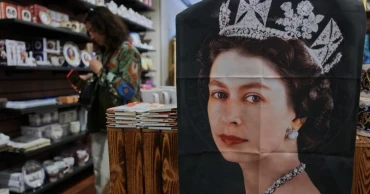
Queen Elizabeth ii’s legacy still shapes monarchy 100 years after her birth
Four years after her death, Queen Elizabeth II continues to cast a long shadow over the British monarchy as the country marks the 100th anniversary of her birth.
At souvenir shops near Buckingham Palace, items featuring the late queen remain far more popular than those of her son, King Charles III, reflecting her lasting appeal among the public.
Shopkeepers say products bearing Elizabeth’s image still sell strongly, highlighting how deeply she remains connected to people’s memories after her record 70-year reign.
Elizabeth, who died in September 2022, was the only monarch most Britons had ever known. Even now, the phrase “the queen” often brings her to mind rather than Queen Camilla.
Her long rule saw her transform from a young and glamorous monarch in post-war Britain into a widely respected national figure who helped steady the country during difficult periods, including the COVID-19 pandemic.
Experts say her influence continues to shape how people view the monarchy today.
“Despite her absence, Elizabeth II remains a central figure whenever we think about the monarchy,” historian Ed Owens told AP, adding that she remains one of the most important figures in the institution’s modern history.
The centenary is being marked with events including a reception at Buckingham Palace, a new memorial garden in Regent’s Park and exhibitions showcasing her fashion.
Elizabeth was not originally expected to become queen. Born on April 21, 1926, she was the daughter of the second son of King George V and was expected to live a relatively quiet royal life.
However, her uncle King Edward VIII’s abdication changed her future, placing her father on the throne and making her the heir.
She became queen in 1952 at the age of 25, beginning a reign that would span decades of major global and social change.
Throughout her rule, she carried out thousands of engagements at home and abroad, helping strengthen Britain’s ties with countries across the world, including former colonies and long-time allies.
In her later years, she also connected with younger generations, appearing in memorable moments such as a short film with actor Daniel Craig during the 2012 London Olympics opening ceremony.
King Charles paid tribute to his mother, recalling how millions remember her for both historic moments and brief personal encounters that left a lasting impression.
Observers say Elizabeth managed to adapt to changing times while staying above politics, offering stability during periods of uncertainty.
However, her legacy is not without criticism.
Her handling of the controversy surrounding her son Prince Andrew and his links to convicted sex offender Jeffrey Epstein has been questioned, with critics saying she acted too slowly to address the issue.
Even so, analysts argue that her achievements far outweigh such shortcomings, noting her role as a steady figure across generations.
As historians continue to assess her impact, many members of the public still view her with admiration, remembering her as a symbol of dignity and continuity in a rapidly changing world.
1 month ago

Harry and Meghan’s Australia visit echoes royal tour, but draws limited interest
Prince Harry and Meghan Markle have concluded a four-day visit to Australia’s east coast that carried the appearance of a traditional royal tour, but attracted limited public attention and mixed reactions.
The Duke and Duchess of Sussex, who are no longer working royals, undertook the visit in a private capacity, with engagements centred on Indigenous culture, Australian sport, charitable activities and a visit to the national war memorial.
During their previous 2018 tour as active royals, tens of thousands of people turned out across a nine-day visit. This time, however, most Australians interviewed by the BBC said they were either unaware of or uninterested in the couple’s presence.
Andrew’s royal downfall deepens latest crisis for Britain’s monarchy
There has also been some criticism after reports suggested Australian taxpayers could bear part of the security costs for their public appearances.
Flinders University academic Giselle Bastin said the visit appeared tightly controlled, limiting public exposure and potential backlash.
Despite the low-key reception, the couple engaged warmly with supporters, often high-fiving fans and taking selfies. At the Sydney Opera House, Harry met Michelle Haywood, daughter of war widow Daphne Dunne, whom he had previously met in 2015.
Meghan also participated in several interactions, including meeting survivors of the Bondi Beach attack and speaking with children about Australian literature.
The visit also highlighted the couple’s increasing focus on media and commercial ventures, with Meghan investing in a tech platform and appearing at a paid retreat, while Harry spoke at a mental health summit. Some events raised questions over costs and payments, though organisers declined to confirm details.
While supporters praised their charitable work, critics questioned the commercial aspects of the trip. Invictus Australia CEO Michael Hartung defended the couple, saying their involvement significantly benefits charitable organisations.
Fans, however, said the couple are entitled to earn a living and should be free to pursue commercial opportunities alongside their charitable engagements.
Source- BBC
1 month ago

Men disqualified for running in women’s category at South African marathon
Two male runners have been disqualified after they were found to have competed in the women’s category of the Two Oceans Marathon in Cape Town, officials said.
The men ran using race bibs registered to two female athletes and finished among the top 10 in the women’s half-marathon, initially taking positions that should have gone to female competitors.
The issue was detected by a race official, leading to the disqualification of the men from their 7th and 10th place finishes. The two rightful female runners were later awarded those positions.
Race board member Stuart Mann said Larissa Parekh allegedly allowed Luke Jacobs to run using her bib, while Tegan Garvey is accused of giving hers to Nic Bradfield. All four individuals could face disciplinary action, including a possible two-year ban from the event.
The Two Oceans Marathon is one of South Africa’s most well-known races, featuring both a 56-kilometre ultramarathon and a 21.1-kilometre half-marathon, and attracts more than 16,000 participants each year. Finishing in the top 10 is considered a major achievement.
Mann described the practice of swapping bibs as unethical and potentially dangerous, noting that it could create serious medical risks in emergencies if runners are misidentified.
He said runners sometimes give their bibs to others due to last-minute injuries or personal reasons, while others do it to gain unfair advantages, such as achieving faster times to qualify for future races.
The incident came to light after photos shared on social media showed Jacobs wearing a bib with Parekh’s name, raising suspicion.
Jacobs later issued a written apology, admitting it was a mistake and saying he did not consider the consequences.
Garvey also acknowledged giving her bib to Bradfield, saying she was unable to run due to a hip injury. Both women have apologised, according to officials.
1 month ago

South Korean pianist rebuilds career as one-handed performer after stroke
South Korean pianist Lee Hun, who suffered a devastating stroke in 2012 that paralyzed the right side of his body, has rebuilt his career as a left-hand-only performer and is now preparing for his first orchestral concert at an international festival next month.
Lee, 54, said his initial concern after the stroke was whether he would walk again, not return to music. The stroke damaged about 60 percent of the left hemisphere of his brain, leaving him unable to move his right arm and leg and causing temporary aphasia. He was later brought back to South Korea in a wheelchair and could not even recognize his father upon arrival.
Seeds of Sadaqah sponsors mass wedding of 126 underprivileged couples in Sylhet
His recovery took a turn in 2013 when former teacher Chun Yung Hae encouraged him to explore piano pieces written for the left hand alone. Inspired, Lee resumed practice and made his formal debut in 2016 at Seoul St. Mary’s Hospital.
Since then, he has performed widely, appeared on television and authored a memoir. Now able to walk unaided and communicate more smoothly, Lee will perform Ravel’s “Piano Concerto for the Left Hand” on May 2 at the Icheon Young-Artist International Music Festival.
Despite slim medical prospects of regaining full use of his right hand, Lee remains hopeful of one day performing with both hands again.
1 month ago

Fatou, world’s oldest captive gorilla, celebrates 69th birthday in Berlin
Fatou the gorilla, the world’s oldest gorilla living in captivity, marked her 69th birthday on Monday with a special feast at Berlin Zoo, enjoying cherry tomatoes, beets, leeks and lettuce.
Zoo officials said no birthday cake was served as sugar is not considered healthy for the ageing primate.
Fatou, a western lowland gorilla, was brought to then West Berlin in 1959 when she was believed to be around two years old, although her exact birth date remains unknown. April 13 has been designated as her official birthday. In the wild, gorillas typically live 35–40 years, while those in captivity can live significantly longer.
She became the zoo’s oldest resident in 2024 following the death of Ingo the flamingo, who was believed to be at least 75 years old and had lived at the zoo since 1955.
According to Guinness World Records, Fatou is believed to have been born in the wild in western Africa before being taken by a French sailor, who reportedly traded her in Marseille to settle a bar bill. She was later sold to the Berlin Zoo by a French animal trader.
Now living in a separate enclosure, Fatou prefers to stay apart from the zoo’s other gorillas in her old age. She has lost her teeth and suffers from arthritis and hearing loss.
However, Berlin Zoo primate supervisor Christian Aust said she remains friendly with keepers, though still somewhat stubborn.
At 69, she continues to be well cared for as staff wished her a warm “Alles Gute zum Geburtstag, Fatou.”
1 month ago

How an ancient ocean shaped both the Himalayas and the Strait of Hormuz
The Strait of Hormuz has been drawing global attention due to rising tensions that have disrupted shipping along one of the world’s most important oil routes. This narrow waterway carries a large share of global energy supplies, meaning any disruption quickly affects oil prices and international politics.
But scientists say the existence of this critical passage is linked to an ocean that vanished millions of years ago, known as the Tethys Sea.
Around 250 million years ago, Earth looked very different, with two massive landmasses, Laurasia in the north and Gondwana in the south, separated by the Tethys Sea. Over time, shifting tectonic plates reshaped the planet.
The Arabian Plate gradually moved north and collided with the Eurasian Plate, causing parts of the Tethys Sea to shrink. This collision formed the Zagros Mountains in present-day Iran and squeezed the remaining water into a narrow channel, now known as the Strait of Hormuz. Today, the strait stands as a remnant of that ancient ocean, linking the Persian Gulf with the Arabian Sea.
The same ocean also played a key role in forming the Himalayas, located thousands of kilometres to the east.
About 50 to 40 million years ago, the Indian Plate collided with the Eurasian Plate. Instead of one plate sliding beneath the other, both crumpled due to their thickness. Sediments from the floor of the Tethys Sea, including limestone and marine deposits, were pushed upward over time, creating the Himalayan mountain range.
This is why marine fossils can still be found high in the Himalayas, including near the summit of Mount Everest, showing that these rocks were once part of an ocean floor.
Experts say the Tethys Sea disappeared gradually over millions of years, but left behind very different features. In the west, it formed the narrow and strategically important Strait of Hormuz, while in the east, it gave rise to the world’s highest mountain range.
Despite their distance, both the strait and the Himalayas share a common geological origin rooted in the same ancient ocean.
With inputs from NDTV
1 month ago

Japanese town struggles with crowds visiting cherry blossoms and Mount Fuji
A small town at the foot of Japan’s iconic Mount Fuji is facing unexpected challenges as tourists flock to see cherry blossoms and the mountain’s snow-capped peak. What began with a beautiful photo shared on social media has turned into a source of tension for locals.
Visitors eager to capture the perfect shot of Mount Fuji rising behind a red pagoda quickly filled the peaceful streets of Fujiyoshida. Along with the crowds came complaints of traffic jams, litter, and some tourists entering private homes to use toilets or even relieving themselves in front yards.
The situation became so severe that city officials canceled this year’s annual cherry blossom festival, originally created a decade ago to promote tourism. Masatoshi Hada, manager of Fujiyoshida’s Economics and Environment Department, said, “This area is primarily an ordinary residential neighborhood, where balancing tourism with the safety of residents’ daily life has become difficult. We decided not to promote a festival that would invite more visitors.”
Even without the festival, tourists packed the town on sunny early-April days when cherry blossoms were at their peak. Narrow streets leading to Arakurayama Sengen Park were crowded as visitors lined up to film the world-famous views. In recent years, foreign tourists have exceeded 10,000 per day in the area, a number the city says has “threatened residents’ daily lives.”
Overtourism is not unique to Fujiyoshida. Other popular destinations in Japan, such as Kyoto and Kamakura, have faced similar problems, including congested buses and crowded streets. Locals refer to the issue as “tourism pollution,” which has sparked wider debate as Japan seeks to balance economic growth through tourism with community well-being. The government has set a target to increase annual foreign visitors from 40 million to 60 million by 2030, even as some local communities struggle to cope.
To manage crowds, Fujiyoshida increased security and restricted vehicle access to the scenic neighborhood, asking visitors to reach the park on foot. Security guard Hiroaki Nagayama said, “Some people buy food at stalls and leave litter behind. I think what’s happening here is a typical example of overtourism.” Residents also expressed mixed feelings. Ninety-three-year-old Hitoshi Mori said, “Having many visitors is good but annoying. It’s too crowded, so I can only shop once a week.”
Tourists, meanwhile, continue to enjoy the views despite the crowds and strict rules. Lisa Goerdert from Paris said, “It was amazing. We had only a few minutes to take pictures, but it was worth it.”
Overtourism has divided locals. Some have opened businesses like shops, food stalls, and toll parking, while others long for quiet. Masami Nakamura, a school uniform shop owner, said, “I hope tourists respect our rules and manners.” Meanwhile, hotel employee Kyoko Funakubo, who also sells Fuji-themed souvenirs, said the influx has brought new life to previously quiet streets.
1 month ago

Miniature art turns Hattiesburg alley into quirky tourist spot
Tiny figurines peek over electrical boxes, float down drainage pipes, and hide in alley nooks, waiting for visitors willing to get on their hands and knees to discover them.
Vicki Taylor carefully assembles these miniature scenes in the backroom of a theater she runs with her husband, Rick. In 2020, the couple opened the Hattiesburg Pocket Museum also called "Mississippi's Tiniest Museum"—to bring joy and draw people downtown during the COVID-19 shutdown. Today, the once gray, overlooked alley has become a lively community hub and a unique tourist attraction.
"You may come feeling down, but you're going to leave excited," said Brianna Moore, a local who often brings her two sons to the free museum. "My boys love it."
What began as a small window display behind Hattiesburg’s Saenger Theater has grown into a miniature wonderland. Visitors can now explore a tiny art gallery, a mini movie theater, colorful murals, a keychain and DVD exchange, a rainbow bridge for pets that have passed away, and even a motion-activated dance corner with music and disco lights.
"It was just an average alley, like you see in any town," Taylor said. "It just took looking at it differently to see what it could become."
Rick Taylor, executive director of the Hattiesburg Convention Commission, which operates the museum and theater, said the museum has drawn over 300,000 visitors since opening. According to Visit Hattiesburg CEO Marlo Dorsey, the museum has coincided with a more than 40% growth in the city’s tourism economy.
Dorsey credited the rise to city efforts to promote culture, art, and recreation, including a project to paint 100 murals across Hattiesburg. Unique attractions like the Pocket Museum and the nearby Lucky Rabbit vintage store have also helped pull visitors downtown.
Tony Lymon, a Hattiesburg resident since 1990 and owner of eYrthBeat Coffee Company near the museum, said he has seen a "monumental rebirth" in the downtown area over the past decade. He believes nearby attractions help bring customers to his shop.
The museum has also become a platform for local artists. Gabby Smith, who painted several alley murals, said it gave her confidence to pursue art full-time. Now, she watches her children explore the alley, excitedly asking, "Mommy, did you paint that one too?"
"This city believes in art and artists," said Shaw Ingram, who opened Wax Fantastic Records downtown last year. "There's nowhere else I would want to open this business."
Back in her workshop, Vicki Taylor reflects on the museum’s unexpected popularity. She once feared it might fade after the pandemic, but now curates constantly changing exhibits. The effort, she said, is worth it to showcase the city she loves.
"Hattiesburg is not a beach town, and it doesn't have mountains," she said. "There has to be something to make people stop off the highway."
1 month ago

Strawberry pots double as space-saving planters for eye-catching plant displays
Those unusual planters with small openings on their sides often resembling tiny buildings with windows and balconies are more than decorative pieces. While commonly used for growing strawberries, these pots can also be used creatively for a variety of plants.
Usually made of terracotta, strawberry pots are tall and urn-shaped, though shorter and wider versions are also available. The side openings are designed to hold soil and plants, allowing strawberries to grow above the ground and reducing the risk of rotting. However, gardeners can use them for much more than fruit.
These pots are ideal for creating attractive and practical displays. Succulents such as hens and chicks fit well in the side pockets, offering a striking look. In colder climates, the pots can be moved indoors during winter, as long as the plants receive enough sunlight and are not overwatered.
They are also perfect for a compact herb garden. Smaller herbs like parsley, thyme and mint can be planted in the lower openings, while larger ones such as rosemary or basil can be placed at the top, creating a neat and functional display. Adding small flowering plants like marigolds can enhance the look.
Trailing flowers and vines, including petunias and sweet potato vines, can spill out of the openings, creating a colourful effect. Plants like nasturtiums, verbena and ivy also work well, while shade-loving varieties like caladium and coleus are good options for low-light areas.
Watering all plants evenly can be challenging, but placing a perforated PVC pipe in the centre of the pot helps distribute water and nutrients effectively.
Although strawberry pots come in different materials, traditional clay versions can crack in freezing weather. In colder regions, it is best to bring them indoors during winter and care for them as houseplants.
Jessica Damiano is a gardening writer for The Associated Press and publishes the Weekly Dirt Newsletter.
1 month ago

Nutritionists and dermatologists weigh in on sugar and skin health
While sugar is widely considered harmful in nutrition, some experts argue that it is often misunderstood. Nutritionist Athena recently took to Instagram, claiming, “Sugar is one of the most misunderstood substances in the health space. 'Sugar-free' recipes plague my explore page, as if removing it is the pinnacle of health.” She added in her post titled “A low-sugar diet will age you faster. And collagen powders won't fix it”, “Sugar is constantly framed as the root cause of disease.
But in my view, anti-sugar is anti-life, especially the female body; particularly for those who want to be fertile, calm, nourished, and beautiful. I know that nothing makes me feel more myself than a ripe piece of fruit, a cup of tea with lots of honey, a panna cotta, cheesecake, or a big glass of chocolate milk.”
To assess these claims, NDTV consulted two dermatologists, Dr Akanksha Sanghvi and Dr Bindu Sthalekar. Dr Sthalekar clarified that sugar itself is not essential for healthy skin. “What the body needs is glucose in balanced amounts, which it can derive from complex carbohydrates like whole grains, fruits, and vegetables,” she said, noting that these foods provide energy along with fibre, vitamins, and antioxidants that support skin health.
She warned that added sugars in desserts, packaged foods, and sugary drinks offer no direct benefits to skin and should be limited to 5-10% of daily calories.
Dr Sanghvi explained that while there is no scientific evidence that a low-sugar diet accelerates ageing, excessive sugar intake has clearly established negative effects. “Excess sugar binds to proteins like collagen and elastin through glycation, making them stiff and less functional. Over time, this causes visible ageing signs like fine lines, loss of elasticity, and dullness,” she said.
High sugar intake can also trigger inflammation, worsen acne, disrupt hormones, and contribute to insulin resistance, which may exacerbate conditions like PCOD, irregular periods, hair thinning, and abdominal weight gain.
Regarding low-sugar diets, Dr Sthalekar added, “A well-balanced low-sugar diet that reduces refined sugars but maintains overall nutrition can improve skin health, with fewer breakouts and less inflammation. However, extremely restrictive diets that cut out entire food groups or calories can harm skin, causing dryness and dullness due to nutrient deficiency.”
On the relationship between sugar and collagen, Dr Sthalekar said that high sugar intake damages collagen through glycation, accelerating skin ageing, while collagen production relies more on protein, vitamin C, zinc, and overall nutrition than on sugar consumption.
Signs of excessive sugar intake, according to Dr Sanghvi, include reduced skin firmness, early fine lines, dull or uneven skin tone, and increased breakouts. She also cautioned that repeated sugar spikes can lead to insulin resistance, contributing to conditions like acanthosis nigricans, which appears as dark, thickened skin in body folds.
Experts agree that while natural sugars from fruits and balanced diets can be part of a healthy lifestyle, refined and added sugars offer no benefits and should be consumed in moderation to maintain overall health and skin quality.
#From NDTV
1 month ago