Foreign-Affairs

Politically motivated arbitrary detentions persist under Bangladesh interim govt: HRW
Human Rights Watch (HRW) has said that politically motivated and arbitrary detentions, which had become ‘entrenched’ under the Awami League government, have continued under the interim government, including the practice of naming hundreds of unidentified individuals as suspects in criminal cases.
The New York-based human rights body came up with the observations in a report released on Wednesday.
Quoting a report by the human rights group Odhikar in October, the HRW said at least 40 people had been killed by law enforcement since the interim government took charge, including 14 who allegedly died due to torture. Almost 8,000 people had been injured in political violence and 81 killed.
In May, the government ordered a ‘temporary’ ban on the Awami League, using newly introduced powers under an amendment to the Anti-Terrorism Act, according to the World Report 2026, Human Rights Watch’s 36th annual review of human rights practices and trends around the globe, which reviews developments in more than 100 countries.
The ban includes, among other prohibitions, meetings, publications, and online speech supporting the party.
In its Bangladesh chapter, the report said there were numerous attacks on journalists in 2025, often by non-state actors such as political party members and violent mobs.
The police and courts also pursued cases under the Code of Criminal Procedure against writers accused by members of the public of ‘hurting religious sentiment’.
Hundreds of Awami League leaders, members, and supporters are in custody as murder suspects, held without trial and routinely denied bail. This includes actors, lawyers, singers, and political activists, the report said.
A further set of cases was launched following a clash between Awami League members and student protesters on February 8, in a campaign called ‘Operation Devil Hunt’, leading to at least 8,600 arrests, said the New York-based global rights body.
Scores more may have been arrested under the draconian Special Powers Act and Anti-Terrorism Act, laws previously used to suppress dissent, it said.
Women’s and Girls’ Rights
Sexual and gender-based violence remained widespread, and women and girls had little recourse to seek protection or access justice. Women played a pivotal role in the 2024 uprising, but were not adequately represented in the interim government.
Rohingya Refugees
More than 100,000 Rohingya have arrived in Bangladesh since early 2024, fleeing fighting and abuses by the Myanmar military and Arakan Army, an ethnic armed group.
Bangladesh authorities continued to advocate in 2025 for repatriation of over 1 million Rohingya refugees, although conditions for safe, voluntary, and dignified returns to Myanmar did not exist, said the report.
Bangladesh held a stakeholders’ dialogue in Cox’s Bazar in August ahead of the UN General Assembly High-Level Conference on the Rohingya in September.
The Rohingya faced pressure and violence by armed groups and criminal gangs in the camps, including sexual violence, abductions, forced recruitment, and extortion. Many victims reported a near total lack of access to protection, legal assistance, and medical care, the HRW said.
Cuts to foreign aid and the influx of new arrivals led to the closure of health care centers and early education programs, and reductions in food and cooking gas.
Humanitarian workers warned of an expected increase in disease outbreaks and child malnutrition, as well as human trafficking, irregular migration, and gang violence.
Attacks on Ethnic and Religious Minorities
On July 26 and 27, a mob damaged at least 14 homes belonging to members of the Hindu minority in Rangpur district. The year also saw reports of continuing violations against minority communities in the Chittagong Hill Tracts. Rape was among the crimes committed in the targeting of minority communities.
The interim government led by Muhammad Yunus, established in 2024 following the overthrow of Sheikh Hasina’s autocratic Awami League government, struggled to maintain law and order, or deliver on promised human rights reforms. General elections are scheduled for February 12, 2026.
Some of the fear and repression that marked Hasina’s 15-year rule, including widespread enforced disappearances, appeared to have ended.
However, the interim government arbitrarily detained thousands of perceived political opponents and in May banned the Awami League, the HRW said.
On November 17, Bangladesh’s International Crimes Tribunal (ICT) sentenced Hasina to death for crimes against humanity committed during the attempted suppression of 2024 protests.
Among the challenges faced by the interim government was an alarming surge in mob violence by political parties and other non-state groups, such as religious hardliners hostile to women’s rights and to lesbian, gay, bisexual, and transgender people, said the global rights body.
According to the Bangladeshi human rights group Ain O Salish Kendra, at least 124 people were killed in mob attacks between June and August 2025, it said.
Accountability for Past Violations
In February, a United Nations report found that police, border guards, the Rapid Action Battalion (RAB), and intelligence agencies had engaged in serious human rights violations during the protests that toppled Hasina, leading to the killing of around 1,400 people.
However, the HRW said, the government made limited progress in holding alleged perpetrators accountable.
In July, a spokesperson for the Bangladesh Police told the BBC that only 60 police officers had been arrested for their role in suppressing the 2024 protests.
Stalled Reforms
As Hasina consolidated power during her 15-year rule, she weakened state institutions, said the report, noting that after coming to office in 2024, the interim government established several commissions to recommend reforms including in the judiciary, electoral system, police, women’s rights, labor rights and the constitution.
A Consensus Commission chaired by Yunus was then established to complete a package of recommended reforms.
However, for reasons including lack of consensus among political stakeholders, few reforms were agreed on or implemented, said the HRW.
On August 5, Prof Yunus announced the July Declaration, named for the month that the uprising against Hasina’s rule began, followed by a more detailed July Charter in October.
In November, Prof Yunus announced a referendum on constitutional reforms to be held during the election, which would commit the incoming government to implement parts of the July Charter.
1 month ago
Next Bangladesh govt will need to navigate tricky foreign policy issues: Crisis Group
The International Crisis Group has said the incoming administration in Bangladesh will need to address a raft of challenges, from weak institutions to a sluggish economy heavily dependent on garment exports and remittances to the growing effects of climate change in one of the world’s most densely populated countries.
It will also need to 'navigate tricky foreign policy issues, particularly relations with India, the implications of the intensifying U.S.-China rivalry' and the lack of progress toward resolving the status of more than one million Rohingya refugees languishing in camps near the Myanmar border, said Thomas Kean, Crisis Group’s Senior Consultant on Myanmar and Bangladesh.
He said an elected government with a five-year term will be better positioned to manage the country’s political rancour and social and economic challenges than an interim administration, but the tasks at hand are many and complex.
"If the result is contested, it could spiral into a political crisis, testing the fragile consensus that has underpinned the transition," said Kean.
He made the remarks while commenting further on the latest Q&A, 'Curtain Falls on Bangladesh’s Interim Government as Critical Elections Approach', which examines what is at stake in Bangladesh’s 12 February election.
Even if the vote passes peacefully, Kean said the next government will face mounting pressure to meet the aspirations of a youthful and frustrated population and to deliver reforms, starting with the July Charter, or risk reinforcing perceptions that the promised political change has been largely cosmetic.
“Predicting the outcome of the 12 February poll is challenging because Bangladesh’s electoral landscape has shifted so much," he said.
The biggest risks revolve around security: political violence is already on the rise - at least sixteen politicians have been killed since the election schedule was announced, Kean said.
He said there is a real danger of further attacks on candidates, as well as reprisals against Awami League supporters or Bangladesh’s Hindu minority.
The International Crisis Group is an independent organisation working to prevent wars and shape policies that will build a more peaceful world.
Crisis Group has offices in Bogotá, Brussels, Dakar, Istanbul, London, Nairobi, New York and Washington, DC and has a presence in more than 25 different locations in Africa, Asia, Europe, the Middle East and the Americas.
Highlighting the main challenges facing the next government, Kean said the 12 February elections are crucial for several reasons.
There are also concerns over the growing influence of radical Islamist groups, such as Hizb ut-Tahrir, which have become more prominent since former Prime Minister Sheikh Hasina’s ouster, and the capacity of state forces to watch out for violent extremist activity, he observed.
Perhaps, Kean said, the most important threat to stability in the years ahead would stem from a failure to meet the aspirations of Bangladesh’s youthful population.
Roughly half are under 30, and many struggle to find work that matches their education level, leaving a deep sense of frustration.
Any stumble in seeing through reforms, starting with the July Charter, would risk reinforcing a perception that the political change they were promised has been cosmetic, he said.
The incoming government will also have to grapple with the 'thorny issue of political reconciliation.'
Given its prominence in the country’s history and its strong electoral base, the Awami League cannot remain on the sidelines forever, Kean said.
But the party’s actions under Hasina, particularly in July-August 2024, mean that allowing it to come back to the electoral arena, even under new leadership, will be politically fraught, he said.
India and other foreign governments with influence could help broker dialogue between the party and the future government to come to an agreement, Kean said.
Foreign governments, he said, many of which have cheered on Prof Muhammad Yunus and his colleagues, should extend support to the incoming government as it seeks to turn the page on Bangladesh’s recent turbulence.
1 month ago
Bangladesh calls for new, accessible climate finance to address damages
Bangladesh has stressed the need for new, additional and accessible climate finance to address losses and damages faced by climate-vulnerable countries.
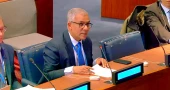
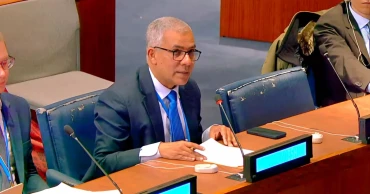
At the annual meeting of the Executive Board of UNDP, held in UN Headquarters on February 3, Permanent Representative of Bangladesh to the United Nations Ambassador Salahuddin Noman Chowdhury highlighted UNDP's crucial role in strengthening democratic participation and judicial reforms in Bangladesh.
Bangladesh also expressed support for ongoing UN reforms while emphasising the importance of preserving UNDP's delivery mandate and country-level programming.
Bangladesh reaffirmed its strong commitment to multilateralism and vowed to work in close partnership with the United Nations Development Programme (UNDP) for development in line with national priorities.
Read More: Bangladesh launches new climate finance strategy to combat $1 billion in annual losses
Ambassador Chowdhury also emphasised the need for continued and predictable international support as Bangladesh prepares to graduate from the Least Developed Country (LDC) category.
The Ambassador congratulated the new UNDP Administrator, Alexander De Croo for assuming his responsibility and reaffirmed Bangladesh's full support to his leadership.
1 month ago
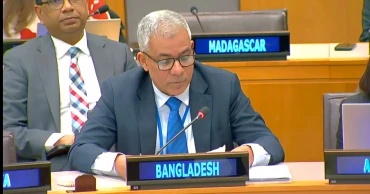
Dhaka calls for pro-people policies, fair finance
Bangladesh has called for renewed global solidarity and people-centred policies to advance social development and social justice.
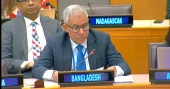
Speaking at the sixty-fourth session of the Commission for Social Development (CSocD64) at the United Nations Headquarters in New York on February 3, the Bangladesh Permanent Representative emphasised the need for building compassionate societies with equal opportunities for all.
Bangladesh Permanent Representative also highlighted the governments holistic development approach with a strong focus on rural development, women’s empowerment, youth development, social protection, climate resilience and inclusive finance.
Bangladesh also called for strengthened international support for debt relief, disaster response, and protection of persons subjected to displacement due to persecution.
The sixty-fourth session of the Commission for Social Development (CSocD64) is being held at the United Nations Headquarters in New York from February 2-10.
Bangladesh is a member of the Commission for 2023-2027.
1 month ago
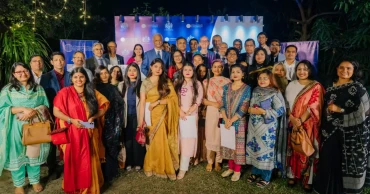
UK-funded scholarships reflect strong Dhaka-London partnership: Sarah Cooke
British High Commissioner to Bangladesh Sarah Cooke has congratulated the Chevening and Commonwealth scholars and said the UK government funded scholarship programmes reflect the strong partnership between Bangladesh and the UK, grounded in shared values and mutual respect.
“Our scholars have all studied at world-class UK universities, and we look forward to seeing the positive impact they will make in Bangladesh in the years ahead,” she said.
The British High Commission Dhaka recently hosted a welcome home reception for Bangladeshi Chevening and Commonwealth scholars who recently completed their postgraduate studies in the United Kingdom.
1 month ago
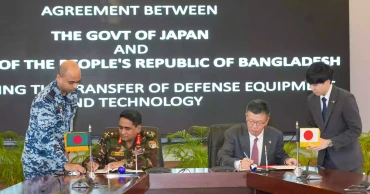
Dhaka, Tokyo sign deal over transfer of defence equipment, technology
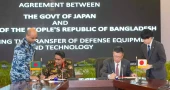
Bangladesh and Japan have signed an agreement over ‘transfer of defence equipment and technology’ which is expected to ensure ‘appropriate control’ over the defence equipment and technology transferred between the two countries.
Lieutenant General SM Kamrul Hassan, Principal Staff Officer, Armed Forces Division, Chief Adviser’s Office of Bangladesh and Saida Shinichi, Ambassador Extraordinary and Plenipotentiary of Japan to Bangladesh, signed the deal on behalf of their respective sides on Tuesday.
The agreement entered into force on February 3, officials said.
The strategic partnership and long-standing friendship between the two countries have been elevated to new heights through this agreement, the ISPR said in a media release.
Bangladesh approves proposal to sign EPA with Japan
It mentioned that the strategic partnership between Bangladesh and Japan in South Asia will be further deepened, making an important contribution to regional stability and global security.
The ISPR said the agreement is expected to further accelerate Bangladesh’s defense modernisation process.
The deal establishes a legal framework for the governments of Japan and Bangladesh regarding the handling of defence equipment and technology to be transferred between the two governments in order to implement projects to be jointly determined, including those contributing to international peace and security, said the Japanese Ministry of Foreign Affairs.
Specifically, it stipulates procedures to determine and confirm each specific transfer as well as basic rules on the proper use of the transferred defence equipment and technology.
The agreement, Japan said, will ensure appropriate control over the defence equipment and technology transferred between Japan and Bangladesh, especially regarding any subsequent transfer to a third party or any extra-purpose use.
It is expected that this agreement will contribute to closer cooperation between Bangladesh and Japan for defence equipment and technology, and maintaining and improving the production and technological bases for Japan’s defence industry, thereby contributing to the security of Japan, said the Japanese side.
Quoting sources at the Armed Forces Division, the ISPR said the signing of the agreement was made possible through intensive and continuous efforts by both sides since 2023.
It said the defense agreement reflects the deep mutual trust, shared vision and cooperation between the two countries, achieved through the visionary and effective diplomacy of the interim government of Bangladesh.
The agreement has been executed in full compliance with the principles of the United Nations Charter and will create an institutional framework for the acquisition of advanced technology and defense equipment, as well as for joint research and development, to help establish international peace and security and protect the independence and sovereignty of Bangladesh.
Japan, South Korea leaders drum to K-pop after summit
The ISPR said the signing of this historic agreement will increase the exchange of military experts between the two countries, which is expected to play an important role in strengthening Bangladesh’s defense capabilities and implementing future action plans.
According to the ISPR, the agreement is also expected to play a significant role in enhancing strategic relations and military cooperation between the two countries.
1 month ago
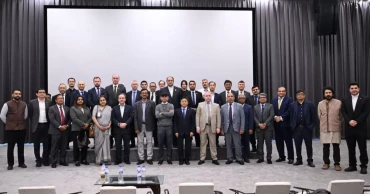
July Museum highlights climax of 36 days, Hasina’s misrule: Foreign Adviser
Foreign Affairs Adviser Md Touhid Hossain on Tuesday said the July Mass Uprising Memorial Museum reflects Bangladesh people’s struggle against the misrule of former Prime Minister Sheikh Hasina.
“The museum showcases the climax of the 36 days of the July uprising, but it also highlights the elements of years of misrule,” he said, adding that the true lesson of history is to ensure it is not repeated.
The Foreign Adviser made the remarks as foreign diplomats stationed in Dhaka visited the museum on Monday, days before its opening to the public.
Cultural Affairs Adviser Mostofa Sarwar Farooki briefed the diplomats and guided them through the museum’s key sections.
Senior Secretary and SDGs Affairs Principal Coordinator Lamiya Morshed, Foreign Secretary Asad Alam Siam, and Cultural Affairs Secretary Md Mofidur Rahman were also present.
Dhaka calls for early FTA talks with EU to attract more investment
The Ministry of Foreign Affairs on January 29 wrote to all diplomatic missions, UN agencies and offices of international organisations in Dhaka, inviting Ambassadors, High Commissioners, CDAs and heads of international organisations and UN agencies to join the museum tour, a senior official at the ministry told UNB.
Chief Adviser’s Press Secretary Shafiqul Alam and Deputy Press Secretary Abul Kalam Azad Majumder joined the programme.
1 month ago
Bangladesh finalises National Action Plan for Global Compact for Migration
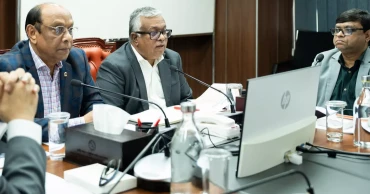
Bangladesh has finalised its National Action Plan (NAP) for the Global Compact for Migration (GCM). The soft adoption of the GCM NAP underscores Bangladesh’s strong commitment to safe, orderly and regular migration and to protecting the rights of migrants, said International Organization for Migration (IOM), Bangladesh.
It was finalised following a multi-stakeholder consultation on Monday. Ministry of Expatriates' Welfare and Overseas Employment's Senior Secretary and Foreign Affairs Secretary Asad Alam Siam co-chaired the consultation meeting.
British High Commissioner meets Army Chief
The process brought together line ministries, civil society, development partners, the private sector and migrant communities, ensuring the GCM NAP is practical, nationally owned and grounded in real needs. With guidance from the Bangladesh Migration Compact Taskforce, IOM - UN Migration provided technical support throughout the drafting process.
1 month ago
British High Commissioner meets Army Chief
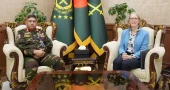
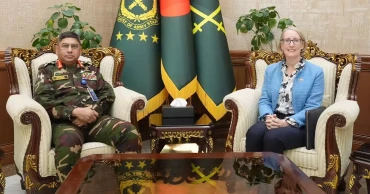
British High Commissioner to Bangladesh Sarah Cooke has met Chief of Army Staff General Waker‑uz‑Zaman to explore ways to deepen defence ties.
She also reaffirmed the UK’s long‑standing encouragement of free, fair, credible and peaceful elections in Bangladesh, said the High Commission on Monday.
The courtesy meeting with the Chief of Army Staff was held at Army Headquarters.
In addition to exchanging mutual greetings, both sides discussed various aspects of further enhancing defence cooperation between two nations, said the Bangladesh Army in a message through its verified Facebook page.
1 month ago
Adviser Touhid Hossain ditches claims of giving up diplomatic passport
Foreign Affairs Adviser Md Touhid Hossain on Sunday said reports claiming that he had surrendered his diplomatic passport are untrue, although he acknowledged that some of his colleagues have opted for ordinary passports to facilitate quicker visa processing due to travel-related issues.
“Here is where misinformation comes in. Neither my wife nor I have surrendered our diplomatic passports. My passport is with me. It is highly unusual that the Foreign Adviser or any Minister would surrender his or her diplomatic passport while the tenure is still in effect,” he told reporters when asked about surrendering diplomatic passports by Advisers.
Hossain, however, confirmed that some have taken new passports, noting that it can make obtaining visas easier in certain cases.
But the Foreign Adviser did not mention who obtained the new passports.
In Bangladesh, diplomatic (red) passports are issued to top-ranking government officials, diplomats, and, depending on policy, certain high-ranking public representatives and their dependents.
Key holders include the President, Prime Minister (now the Chief Adviser), Speaker, Chief Justice, cabinet members (now Council of Advisers), diplomats and senior civil servants.
If they surrender their diplomatic (red) passports, they obtain an ordinary (green) passport.
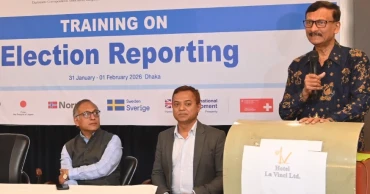
Earlier, he spoke as the chief guest at the closing session of a training programme on election reporting.
Diplomatic Correspondents Association, Bangladesh (DCAB) in cooperation with the UNDP and Media Resources Development Initiative (MRDI) hosted the training where former Bangladesh Bureau Chief of the Associated Press (AP) Farid Hossain was the facilitator of the two-day session.
UNDP Resident Representative in Bangladesh Stefan Liller, MRDI Executive Director Hasibur Rahman and DCAB President AKM Moinuddin also spoke at the event conducted by DCAB General Secretary Emrul Kayesh.
1 month ago