Foreign-Affairs

Bangladesh economy to rebound over coming year: HSBC
Chief Asia Economist and Co-Head of Global Research Asia, HSBC Frederic Neumann has said that even though Bangladesh’s GDP growth rate has been set to a revised 4.5% for FY2024-25, the country will rebound to 7.1% in the following year.
This growth will be largely driven by exports and remittances, both of which are showing positive signs despite the ongoing challenges in the global economy, he said in a webinar based on latest HSBC Global Research report on Bangladesh ‘Regaining balance - Bangladesh looks to recovery’.
The Hongkong and Shanghai Banking Corporation (HSBC) Limited in Bangladesh organised the economic outlook webinar titled ‘Navigating Bangladesh’s Crossroads’ highlighting the latest global and Asian market developments and sharing perspectives on Bangladesh.
Bangladesh received a $425mn remittance in 5 days of Oct: BB
Key speaker Neumann highlighted that the garment sector, which accounts for 83% of the country’s exports, is expected to grow by the demand from international markets.
At the same time, imports, which had been strained by rising global energy prices, are now stabilising reflecting a recovery in domestic demand and easing cost pressures.
He also mentioned that remittances are anticipated to grow driven by improved employment conditions in key overseas markets.
This rise in remittances will not only support household consumption but play a significant role in sustaining the broader economic recovery.
Neumann, however, noted that while these factors are promising, challenges remain, particularly with inflation.
This will continue to affect both household spending and business costs. Structural reforms in the banking sector and efforts to control inflation will be essential for unlocking Bangladesh’s full economic potential and ensuring long-term, sustainable growth.
Finance Adviser urges banks to ensure rigorous loan scrutiny and inclusive lending
During the webinar, he added, “Bangladesh is already well on its way to recovery. Macroeconomic adjustments undertaken in recent months, and robust economic fundamentals, should pave the way for growth to rebound over the coming year. A rapid implementation of reforms would help to speed up the process further.”
The event was also attended by Md Mahbub ur Rahman, Chief Executive Officer, HSBC Bangladesh and Gerard Haughey, Country Head of Wholesale Banking, HSBC Bangladesh.
Almost 300 clients and stakeholders were also in attendance at the virtual event.
1 year ago

Bangladesh, Australia discuss maritime security cooperation to promote peaceful region
Bangladesh and Australia have discussed cooperation in the areas of maritime security as part of their efforts to promote a peaceful and prosperous region.
Acting Australian High Commissioner Nardia Simpson on Monday met with Director General of Bangladesh Coast Guard, Rear Admiral Mir Ershad Ali and discussed how maritime security cooperation can promote a “peaceful, stable and prosperous” region.
Very happy to welcome my old friend: Prof Yunus on receiving Malaysian PM
Australia and Bangladesh are Indian Ocean neighbours and one of the things they want to do is to have deeper cooperation between the two coastguards.
In May this year, Australian Foreign Minister Penny Wong pledged to have “deeper cooperation” with Bangladesh on key fronts and address the shared challenges of climate change, regional maritime security and people smuggling.
“We share a region. We share an Ocean and we share a future. And we are determined to do what we can to work with you and other partners to make sure the region is peaceful, stable and prosperous,” she said during her recent visit to Bangladesh.
1 year ago

Dhaka voices "deep concern" over new arrivals of Rohingyas; seeks early repatriation
Bangladesh has expressed "deep concern" over the new arrivals of Forcibly Displaced Myanmar Nationals in recent times due to armed conflicts in Myanmar particularly in Rakhine State.
Bangladesh also stressed the need for early, voluntary, and sustainable repatriation of the Forcibly Displaced Myanmar Nationals to their homeland.
Foreign Secretary Md Jashim Uddin conveyed this when Ambassador of the Republic of the Union of Myanmar to Bangladesh Kyaw Soe Moe met him at Ministry of Foreign Affairs on Sunday.
He urged to take all measures to contain armed conflict near the bordering areas of Bangladesh and infiltration of inhabitants and armed personnel from Myanmar into Bangladesh.
The Ambassador assured that repatriation of the Forcibly Displaced Myanmar Nationals in Myanmar will be commenced as soon as peace and order in Rakhine state are restored, according to the Ministry of Foreign Affairs.
Both sides acknowledged the huge potentials of cooperation between the two countries in the areas like trade, shipping connectivity, energy, and agriculture.
Issues of other bilateral components between the two countries were discussed at the meeting.
Ambassador Moe congratulated the Foreign Secretary for assuming the new position and wished that during his tenure the existing bilateral relations between Bangladesh and Myanmar will be further strengthened.
The Foreign Secretary also congratulated him on his appointment as the Ambassador.
1 year ago
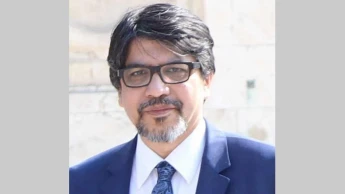
Bangladesh’s Foreign Secretary to visit NY, Washington
Foreign Secretary Md Jashim Uddin is scheduled to make an official visit to the United States from October 7-14 to hold a series of meetings as the two sides eye stronger relations in diverse areas.
The Foreign Secretary is scheduled to leave Dhaka shortly after Sunday midnight, a senior official at the Ministry of Foreign Affairs told UNB on Sunday.
This is going to be his first official visit abroad since his appointment as the Foreign Secretary.
The Foreign Secretary will have meetings with senior officials of the US government, a diplomatic source told UNB, adding that he would visit both Washington and New York.
He plans to have meetings with officials at the US Department of State, Office of the U.S. Trade Representative (USTR), UN officials in New York and the officials of the World Bank and International Monetary Fund (IMF).
Foreign Secretary Jashim likely to visit US next week
Chief Adviser Prof Muhammad Yunus visited the US recently to attend the United Nations General Assembly and on the sidelines he had meetings with US President Joe Biden and Secretary of State Antony J Blinken.
In New York, President Biden and Prof Yunus affirmed the close partnership between the United States and Bangladesh, which is rooted in shared democratic values and strong people-to-people ties.
President Biden welcomed further engagement between the two governments and offered continued US support as Bangladesh implements its new reform agenda.
1 year ago
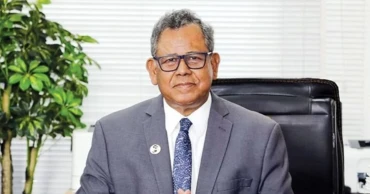
Foreign Ministry’s MAU Secretary Khurshed Alam resigns
Md Khurshed Alam, Maritime Affairs Unit (MAU) Secretary at the Ministry of Foreign Affairs, has resigned from his post.
Director General (Public Diplomacy wing) Toufique Hasan on Sunday confirmed UNB regarding Alam’s resignation but did not elaborate.
He performed the duties regarding the ‘Dispute concerning delimitation of the maritime boundary between Bangladesh and Myanmar in the Bay of Bengal’ in the International Tribunal on the Law of the Sea (ITLOS) in, Germany and the ‘Bay of Bengal Maritime Boundary Arbitration between Bangladesh and India’ under Annex VII to UNCLOS in the Permanent Court of Arbitration in the Hague respectively.
Khorshed Alam Khastagir next Bangladesh Ambassador to Poland
He was also the head of the Bangladesh Continental Shelf technical team entrusted with the preparation, documentation, carrying out seismic survey of the Bay of Bengal and submission of Bangladesh’s claim on extended continental shelf to the 21 member UN Commission on the Limits of the Continental Shelf.
He was awarded with the first Bangabandhu Medal for Diplomatic Excellence in 2020 for his contribution to the settlement of Bangladesh’s Maritime Boundary, Development of Blue Economy and International Maritime Diplomacy.
1 year ago
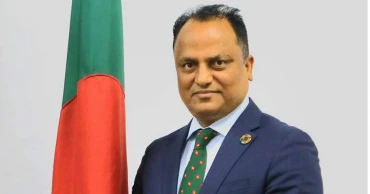
Khastagir’s appointment as Ambassador to Poland cancelled
The government has cancelled the appointment of Mohammad Khorshed Alam Khastagir as Bangladesh’s next Ambassador to Poland reportedly for his role during the students-led protests.
A foreign ministry source confirmed the development to UNB on Sunday, noting that Khastagir will continue his current role in the Bangladesh Mission in Kuala Lumpur as its Minister (Political) and Deputy High Commissioner at the Bangladesh High Commission in Kuala Lumpur.
Appointments of 8 DCs cancelled
On September 25, the government announced his name as the new Ambassador to Poland.
Khastagir, who is now in Malaysia, was not, however, given a scope to defend him against the allegations brought against him, said the source.
Khastagir, a career diplomat belonging to the 20th batch of BCS (Foreign Affairs) cadre, joined Bangladesh Foreign Service in 2001.
Prior to joining his current assignment in October 2020, he served as the Director/Director General of Europe and EU Wing and International Organisations Wing at the Ministry of Foreign Affairs (2015-2019).
Masud Bin Momen’s contractual appointment as Foreign Secretary cancelled
In his diplomatic career, Khastagir also served as First Secretary at the Bangladesh Permanent Mission to the United Nations in New York (2008-2010) and as Charge d'affaires/Counsellor at the Bangladesh Embassy in Muscat, Oman (2011-2014).
Khastagir obtained an interdisciplinary Master of Marine Management (Law and Policy) degree from the Dalhousie University, Canada, under the CIDA Marine Scholarship Program (2004-2005).
Earlier, he graduated from the Bangladesh University of Engineering and Technology in Electrical and Electronic Engineering. He also attended several professional development courses/training programs both at home and abroad.
1 year ago
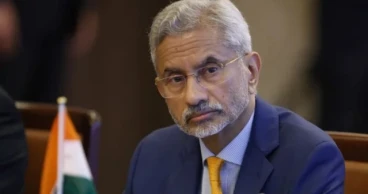
Jaishankar: ‘In last 5-6 years we’ve seen far more regional integration in Subcontinent than since partition of India’
Indian External Affairs Minister S Jaishankar has said in the last five-six years they have seen far more regional integration in the Indian Subcontinent than they have seen since the partition of India.
While responding to a question during the Sardar Patel Lecture on Governance organised by the IC Centre for Governance in New Delhi on Saturday, the Indian External Affairs Minister highlighted connectivity with Bangladesh, Bhutan, Nepal, Sri Lanka, and Myanmar with road and railway links.
Jaishankar also said their refineries give fuel to Nepal and Bangladesh.
He said India is pursuing “neighbourhood first” policy and as a big country, it must put in maximum resources.
Talking about why a SAARC meeting has not happened in recent years, Jaishankar said that does not mean regional activities have stopped.
"In fact, in the last 5-6 years, we have seen far more regional integration in the Indian subcontinent," he added.
India remains firm on its stance of not holding bilateral talks with Pakistan until it puts an end to cross-border terrorism.
Jaishankar also indirectly criticised Pakistan, blaming it for the lack of progress in the South Asian Association for Regional Cooperation (SAARC).
"At the moment, SAARC is not moving forward, we haven't had a meeting of SAARC for a very simple reason—there is one member of SAARC who is practising cross-border terrorism at least against one more member of SAARC, maybe more...," he said.
Malaysian PM pledges immediate attention to 18,000 fresh entries from Bangladesh
Jaishankar said terrorism is something which is unacceptable and “despite a global view of it if one of our neighbours continues to do it—there cannot be business as usual in SAARC.”
Bangladesh’s Chief Adviser Professor Muhammad Yunus recently called for the revival of SAARC as a top platform for regional cooperation in South Asia.
"Reviving SAARC could be a good way to start it and seek Pakistan’s support," he said when he met Pakistani Prime Minister Shehbaz Sharif on the sidelines of the UN General Assembly at the UN headquarters.
Jaishankar said there are no plans to engage in talks with Pakistan during his upcoming visit to the Shanghai Cooperation Organisation (SCO) meeting.
The Indian minister stressed that his trip to Pakistan will be purely for the SCO summit. "Yes, I am scheduled to go to Pakistan in the middle of this month and that is for the meeting of the SCO—the heads of government meeting," he said
Jaishankar also addressed the likely media attention surrounding the visit due to the nature of India-Pakistan relations.
India confers "Classical Language" status to Bengali
"I expect that there would be a lot of media interest because the very nature of the relationship is such and I think we will deal with it. But, I do want to say it will be there for a multilateral event, I mean I am not going there to discuss India-Pakistan relations," he said.
He said he is going there to be a good member of the SCO. “Since I am a courteous and civil person, I will behave myself accordingly.”
Jaishankar said this year's SCO summit is being hosted in Islamabad, as Pakistan, like India, recently joined the organisation.
"Normally, the Prime Minister goes to the high-level meeting, the heads of state, that’s in line with the tradition. It so happens that the meeting is taking place in Pakistan, because, like us, they are a relatively recent member," he said.
1 year ago
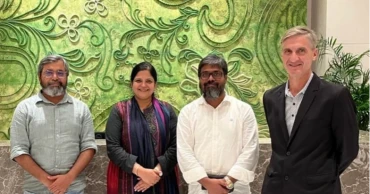
Feasibility study will identify opportunities for increased US investment in Bangladesh cold chain: Helen LaFave
Lack of appropriate temperature-controlled logistics in Bangladesh results in post-harvest losses, affects food safety, and limits trade in agricultural and consumer products, said Chargé d’Affaires of US Embassy Dhaka, Helen LaFave.
"Cold chain infrastructure would enable Bangladeshi agricultural producers to diversify export opportunities by ensuring the safety and quality of their agricultural products," she said.
US Trade and Development Agency (USTDA) has awarded a feasibility study grant to Bangladeshi prepared foods and cold chain services company Bonton Foods Limited (Bonton Foods) to support the deployment of a temperature-controlled logistics network of cold storage refrigeration warehouses in Bangladesh.
This feasibility study will identify opportunities for increased U.S. investment in cold chain, which would create a stable logistics network for refrigerated and frozen U.S. products that meet the consumer demands of the rapidly growing Bangladesh middle class, Helen LaFave said.
The study’s goal is to lower costs and reduce losses of dairy, meat, and other food products, resulting in improved food security for people across the country, USTDA said recently.
Read: Bangladesh to reap long-term benefits of US investment: Commercial Counselor of US Embassy
Bonton Foods selected Minnesota-based Land O’Lakes Venture37 to conduct the study.
“Facilitating private sector investment is vital to Bangladesh’s food security goals. Our partnership with Bonton Foods will help mobilize capital and deploy innovative solutions that address the needs of Bangladesh’s people,” said Enoh T. Ebong, USTDA’s Director.
“We look forward to demonstrating the positive role that U.S. technology can play in unlocking greater access to fresh foods.”
While Bangladesh has 2.7 million metric tons of cold storage refrigeration capacity across over 300 sites, the country’s current cold chain industry cannot meet demands, particularly in rural areas.
As a result, animal proteins and produce are handled primarily via wet markets with little to no mechanical refrigeration support, which can lead to food spoilage and loss.
The USTDA-funded study will address these challenges by facilitating the construction of an integrated network of third-party logistics cold storage facilities across Bangladesh.
Shamim Ahamed, Managing Director of Bonton Foods, said the country’s large population—20 million people in greater Dhaka alone—a growing upper and middle-class, and changing consumer patterns signal a bright future for the cold chain industry.
Read more: US investment in Bangladesh's tech market to pave the way for the development of digital economy of two countries: Palak
"We are keen to leverage our position in the market by expanding third-party logistics services to small and medium-sized agribusinesses as well as international food importers and exporters,” he said.
USTDA’s study advances the goals of Biden-Harris Administration priorities such as the Feed the Future initiative.
The U.S. Trade and Development Agency helps companies create US jobs through the export of the U.S. goods and services for priority infrastructure projects in emerging economies.
1 year ago

Durga Puja: India expects Bangladesh to provide security to minority community
Expressing concerns over vandalism of idols and security of Hindu community in Bangladesh, India has said the incidents of this kind "are not right and they are not good."
"The message of Durga Puja is one of happiness and on such occasion, we would like to extend our best wishes to all those celebrating Durga Puja, not only here but in other countries, in every corner of the world," said Spokesperson at the Indian Ministry of External Affairs Randhir Jaiswal.
Responding to a question at a weekly briefing on Friday evening, he said they hope this festival brings prosperity and happiness in everyone's life.
"That is our wish, and we wish this for all. I would also like to say that when we talk about ensuring the security of minorities, it inherently includes our concerns regarding Durga Puja and Dussehra as well," Jaiswal said.
When it comes to minorities, he said, they have said multiple times, even at high levels from their side that the minorities in Bangladesh should be protected.
"And we expect that the government there (in Bangladesh) will provide security to the people of the minority community and fulfill their needs," said the Spokesperson.
The interim government has issued a set of instructions for the local administration and law enforcement agencies to maintain law and order situation during the Durga Puja celebrations across the country.
The Home Ministry on Wednesday said advance preparations should be made to prevent any untoward incident.
A monitoring committee will be formed, including the dignitaries and students from different levels of the society, to ensure the security of the puja mandap along with the Hindus.
District administrators at the district level and upazila officers at the upazila level will form such committees.
Police, RAB and Ansar, and VDP will be deployed with increased vigilance to control the law and order situation during the celebrations.
Members of the armed forces deployed in the field to maintain law and order will also provide necessary assistance.
Internal Matter
Responding to a question on Bangladesh's decision to recall its six envoys, the MEA Spokesperson said in any country, whether it is India or any other country and when it comes to Ambassadors, they also send Ambassadors abroad.
"It's up to the government to decide. Similarly, it's up to the Bangladesh government, whom they appoint as their Ambassador or High Commissioner. That's their internal matter," Jaiswal said, adding that they have also seen some reports that Bangladesh has transferred or recalled some of their ambassadors, and this is their internal matter.
Bangladesh on Thursday said the six Bangladesh envoys stationed in New Delhi, London, Brussels, Canberra, Lisbon and Bangladesh Permanent Mission to the UN in New York to return to Dhaka, who have been asked to return home immediately, are actually going on retirement in December this year.
“They have been recalled as part of their retirement process,” Chief Adviser’s Deputy Press Secretary Abul Kalam Azad Majumder told reporters at a media briefing at the Foreign Service Academy.
Azad said the six envoys are scheduled to go on retirement in 6 they will go on Post Retirement Leave (PRL).
Regional Cooperation
While replying to a question on regional organisations, the MEA Spokesperson said they attach deep importance to regional cooperation and regional connectivity.
"Therefore, we have given impetus to BIMSTEC," he said.
"On SAARC, as you know, we want to strengthen regional cooperation, but you are well aware of the reason as to why this particular cooperation in that format is not moving forward," Jaiswal said.
Without mentioning the country name, he said a particular country has a particular way of doing things, which is stalling SAARC.
"But as far as regional cooperation is concerned, we attach deep importance to it. You would have seen our approach in it through BIMSTEC and other platforms that we have," Jaiswal said.
During the recent United Nations General Assembly, Bangladesh Chief Adviser Prof Muhammad Yunus called for the revival of SAARC as a top platform for regional cooperation in South Asia.
"Reviving SAARC could be a good way to start it and seek Pakistan’s support," he said when he met Pakistani Prime Minister Shehbaz Sharif on the sidelines of the UNGA at the UN headquarters in New York last month.
1 year ago

Dhaka, KL want stronger ties; next round of discussions on FTA soon
Bangladesh and Malaysia on Friday agreed to hold next round of discussions on the Free Trade Agreement (FTA) soon.
The two countries also agreed to hold Foreign Minister level Joint Commission meeting preferably in the early next year.
Malaysian Prime Minister Anwar Ibrahim and Chief Advisor Prof Muhammad Yunus discussed the issues during a bilateral meeting in Dhaka.
The Malaysian Prime Minister paid an official visit to Bangladesh, marking the first official visit by any Head of Government after the assumption of the Interim Government assumed office.
A 58 -member delegation, comprising Foreign Minister, Investment, Trade, and Industry Minister, Deputy Minister for Transport, Deputy Minister for Religious Affairs, Members of Parliament, and high officials of the Malaysian government accompanied the visiting Prime Minister.
Chief Adviser Prof Yunus received the Malaysian Prime Minister at the airport.
The Malaysian Prime Minster was accorded red-carpet reception with guard of honour and gun salutes.
Official engagements began with a tête-à-tête between the two leaders followed by a bilateral talk.
During the meetings, two leaders reaffirmed their strong commitment to revitalise the long-standing bilateral relations and also discussed potential areas of collaboration, among others, data science, semi-conductor, artificial intelligence, finance, health, higher education, agriculture, energy, defence and halal economy.
The Malaysian Prime Minister lauded the enormous contribution of Prof Yunus for the marginalized segment of the society through microcredit and social business in Bangladesh and elsewhere in the world.
Referring to the Chief Adviser as his ‘great friend’, the Malaysian Prime Minister expressed his support to the Interim government’s reform efforts.
Advisers for Foreign Affairs, Commerce and Finance, Expatriates' Welfare, Home Affairs, Road, Transport and Bridges, Chief Adviser’s Office, Special Envoy on International Affairs, relevant Secretaries and other Senior officials of Bangladesh government were present from the Bangladesh delegation.
Chief Advisor also briefed the visiting Prime Minister on the ongoing reform initiatives undertaken by the Interim Government towards a democratic and just Bangladesh.
"We are moving to a new Bangladesh, which will make us proud," said Prof Yunus.
The Malaysian Prime Minister expressed his support to the Interim Government’s effort “to bring Bangladesh’s economic trajectory back to track”.
During the official talks, the Chief Adviser drew special attention to the Malaysian dignitary on the 18000 Bangladesh workers who could not fly within the deadline.
The Malaysian Prime Minister assured that his government will give major consideration to the applications of these Bangladeshi workers.
Prof Yunus urged the Malaysian Government to issue multiple visas for the Bangladeshi workers and increase the professional and workers in-take to Malaysia.
While deeply appreciating the enormous contribution made by the Bangladeshi expatriates in Malaysia, Anwar Ibrahim underscored the importance of ensuring decent work condition and other benefits.
He added that Malaysian government is reviewing the whole recruitment process aimed at ensuring full transparency and accountability in the sector.
The Chief Adviser drew his Malaysian counterpart’s attention to the numerous challenges faced by Bangladesh due to the presence of 1.2 million Rohingyas in Bangladesh.
Prof Yunus expressed hope as Malaysia is taking up the Chairmanship of the ASEAN, it will use its good offices for increasing pressure on the Myanmar authority in order to ensure early repatriation of the Myanmar nationals.
The Malaysian Prime Minister said that he will extend wholehearted support in this regard. As regards Bangladesh’s bid for Sectoral Dialogue Partner of ASEAN, Anwar Ibrahim assured to extend all possible support.
Later, Prime Minister Anwar Ibrahim and Chief Adviser Professor Muhammad Yunus jointly addressed the media.
While interacting the members of the media, both the leaders agreed that the visit has elevated the bilateral relations to a new height.
Following the press conference, Prof Muhammad Yunus hosted a reception in honour of the visiting Prime Minister.
Advisers of the Interim government, Members of the Malaysian delegation, foreign envoys, government high officials and eminent persons were in attendance.
Prime Minister Anwar Ibrahim also called on President Mohammed Shahabuddin at Bangabhaban. Issues pertaining to mutual interests featured prominently in the discussion.
1 year ago