Foreign-Affairs
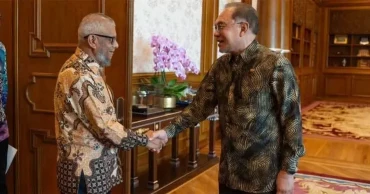
Malaysian PM invites PM Tarique
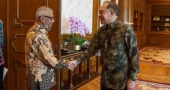
Malaysian Prime Minister Anwar Ibrahim has extended an invitation to Prime Minister of Bangladesh Tarique Rahman to visit Malaysia while the Southeast Asian country reaffirmed their commitment to further strengthening cooperation across multiple sectors.
The invitation was extended when Expatriates’ Welfare and Overseas Employment Minister Ariful Haque Choudhury called on the Malaysian Prime Minister at his office in Putrajaya on Thursday.
The Minister was accompanied by Prime Minister’s Adviser Mahdi Amin and Bangladesh High Commissioner to Malaysia Manjurul Karim Khan Chowdhury.
On labour cooperation, the Malaysian Prime Minister said his country remains committed to safeguarding the welfare of the hundreds of thousands of Bangladeshi workers in the country, particularly in the construction and manufacturing sectors.
At the same time, he underscored the need to reduce recruitment costs for foreign workers, and urged the government of Bangladesh to consider measures to lower these costs in the interest of workers’ wellbeing.
Anwar Ibrahim extended warm felicitations to his Bangladesh counterpart Tarique on his election as the Prime Minister of the Bangladesh.
1 month ago
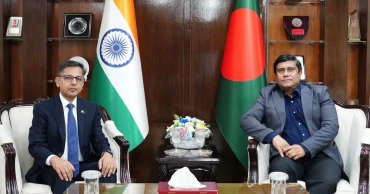
Dhaka, Delhi exchange views on common security challenges
Bangladesh and India have exchanged views on common security challenges and discussed ways to further strengthen their defence ties as an important component of their overall bilateral relationship.
Indian High Commissioner to Bangladesh Pranay Verma called on Prime Minister's Defence Adviser Brig. Gen. (Retd.) Dr. A.K.M Shamsul Islam and exchanged views on 'common security challenges' and agreed to work together to promote peace, security and stability in the region.
The meeting was held on Wednesday, said the Indian High Commission in Dhaka on Thursday.
They underlined the importance of sustained development of India-Bangladesh ties, and affirmed the unshakeable bond between the two countries rooted in their shared sacrifices during Bangladesh’s Liberation War of 1971.
The two sides reviewed their wide ranging security and defence cooperation, including bilateral consultation mechanisms, training exchanges, capacity building initiatives and exchanges between the defence institutes of the two countries.
The High Commissioner conveyed India’s willingness to closely work with the Government of Bangladesh to enhance their multifaceted cooperation based on mutual interest and mutual benefit.
1 month ago
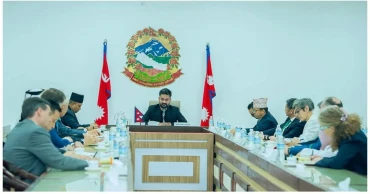
Bangladesh envoy joins Nepal PM’s meeting, emphasises bilateral ties
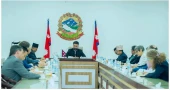
Bangladesh Ambassador to Nepal Md Shafiqur Rahman joined a joint meeting with Prime Minister of Nepal Balendra Shah, along with other ambassadors based in Kathmandu.
Taking the floor during the interaction, the Bangladesh envoy extended warm greetings and felicitations to the Prime Minister on the assumption of his responsibilities, on behalf of Prime Minister Tarique Rahman and the people of Bangladesh.
He emphasised the excellent relationship between Bangladesh and Nepal, premised on mutual respect, trust, and shared collaboration in various areas, stemming from common cultural and societal values, beliefs, and long-standing civilisational links marked by strong people-to-people contact.
1 month ago

Tamara Hasan Abed named commissioner of Dev Cooperation Coalition
Tamara Hasan Abed, Managing Director of BRAC Enterprises, has been appointed as a Commissioner to the Future of Development Cooperation Coalition, a prestigious, high-level global initiative convening leaders from government, finance, business, and civil society to reimagine development cooperation in a rapidly changing world.
Co-hosted by the African Center for Economic Transformation and the Center for Global Development, the coalition aims to develop practical, forward-looking solutions to some of the most pressing global challenges, including economic transformation, climate change, technological disruption, and inclusive growth, a media statement said on Wednesday.
The coalition is co-chaired by Yemi Osinbajo, former Vice President of Nigeria, and Arancha González Laya, Dean of the Paris School of International Affairs at Sciences Po and former Minister of Foreign Affairs of Spain.
In her role as Managing Director of BRAC Enterprises, Tamara Hasan Abed has been instrumental in advancing market-based solutions to development challenges.
Under her leadership, BRAC’s social enterprises have significantly expanded their reach and impact, creating sustainable livelihoods while supporting communities across Bangladesh.
Her appointment as a commissioner reflects her recognised leadership in social enterprise and her commitment to integrating business innovation with development outcomes, while also underscoring Bangladesh’s growing influence in shaping global development discourse.
Drawing on BRAC’s extensive experience in implementing large-scale, community-driven solutions, she is expected to contribute valuable insights from the Global South to the Coalition’s work.
Over the next year, commissioners will work collaboratively to align development partnerships with country priorities, mobilise both public and private resources to support sustainable growth, strengthen policy and regulatory systems, and harness innovation and technology to enhance development impact.
They will hold their inaugural in-person meeting in Washington, D.C., during the forthcoming World Bank-IMF Spring Meetings.
The coalition brings together internationally recognised leaders with expertise in climate finance, financial inclusion, governance reform, digital innovation, and private sector development.
1 month ago
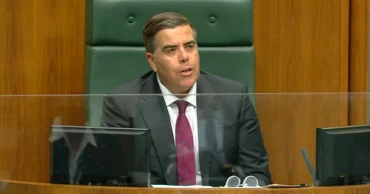
Australian delegation to start Dhaka talks Thursday to deepen parliamentary cooperation
An Australian parliamentary delegation, led by Speaker of the House of Representatives Milton Dick, MP, will engage in a series of meetings that will begin in Dhaka on Thursday to strengthen parliament-to-parliament engagement between Australia and Bangladesh.
The two countries will exchange views on shared priorities, including clean and green development, civics and democracy, youth engagement, gender equality, women’s political participation and leadership, financial transparency and parliamentary oversight.
The delegation will meet with Speaker of Jatiya Sangsad Hafiz Uddin Ahmad, Bir Bikram, parliamentarians, and relevant ministers.
Bangladesh, Australia discuss possibility of LNG supply
The visit reflects Australia’s long-standing partnership with Bangladesh and its support for inclusive, transparent, and resilient democratic institutions as a foundation for sustainable development and regional stability, said the Australian High Commission in Dhaka on Wednesday.
The visit is part of an international three-country tour to Malaysia, Bangladesh and Türkiye ahead of 152nd IPU Assembly.
It underscores Australia’s commitment to supporting democratic governance, strong parliamentary institutions, and inclusive political participation.
Discussions in Dhaka will focus on parliamentary systems and practices, democratic norms and accountability, and opportunities to support Bangladesh’s ongoing democratic transition following the national elections of February 2026, which Australia supported through the UN Development Programme-led BALLOT project.
1 month ago
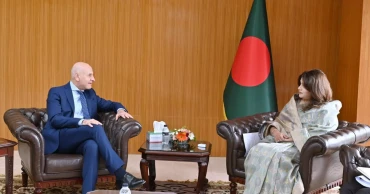
Dhaka to work together with European partners to ensure ‘effective migration governance’
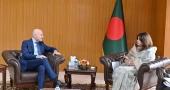
State Minister for Foreign Affairs Shama Obaed Islam on Wednesday reiterated Bangladesh’s commitment to continued collaboration with Italy and other European partners in ensuring effective migration governance.
She underscored the importance of expanding opportunities for regular migration channels to ensure mutual benefit.
Migration and mobility issues were featured prominently when Ambassador of Italy to Bangladesh Antonio Alessandro met her at the Ministry of Foreign Affairs.
The State Minister underscored Italy’s role as an important partner within the European Union and sought Italy’s support for Bangladesh’s candidature for the Presidency of the 81st Session of the United Nations General Assembly.
The Ambassador apprised her of Italy’s position on reform agenda of UN Security Council, said the Ministry of Foreign Affairs.
He congratulated the State Minister on her recent assumption of office and conveyed Italy’s confidence in further advancing the longstanding and amicable bilateral relations.
Both sides noted with satisfaction the continued growth of Bangladesh-Italy relations, anchored in strong people-to-people ties.
They reaffirmed their shared commitment to broadening engagement across priority sectors, including trade and investment, leather and ceramic industries, manufacturing, skills development, women’s empowerment, education, sports and cultural exchanges, private sector engagements and defence cooperation.
The Ambassador commended Bangladesh’s measures to curb irregular migration and acknowledged the positive contributions of the Bangladeshi community to Italian society.
Both sides emphasized the importance of promoting safe, orderly, and regular migration, including through enhanced cooperation on legal pathways, skills partnerships, and labour mobility aligned with market needs.
1 month ago
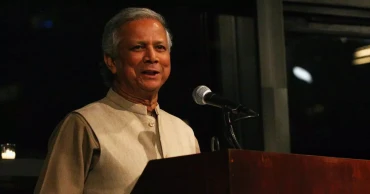
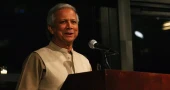
Prof Yunus urges urgent global action to end Middle East war
Nobel Peace Prize Laureate Professor Muhammad Yunus on Wednesday urged immediate and decisive global action to end the war in the Middle East saying now, more than ever, the world must come together with courage, compassion, and a clear sense of purpose.
“Global leaders must step forward to protect this world and take firm and effective measures to uphold international law," he said in a statement issued by Yunus Centre.
Diplomatic dialogue must take precedence over military escalation, and multilateral cooperation must be strengthened, Prof Yunus said.
"A world already scarred by war is being pushed toward deeper instability by this continued violence," he said.
Prof Yunus said they are facing a profound test of humanity where civilians, especially children, are being killed; homes, hospitals, and educational institutions are being destroyed; and basic human needs are being neglected.
"This is not merely a regional crisis; it is a moral challenge for all humankind," he said.
The war is increasing uncertainty and instability across the globe, Prof Yunus said.
He said the heaviest burden is being borne by poorer nations, while vulnerable and marginalised communities face ever greater hardship.
1 month ago
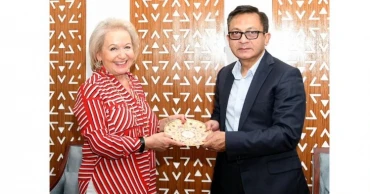
Bangladesh urges UK to keep providing dev country trade benefits, boost investment
Commerce Minister Khandakar Abdul Muktadir on Wednesday urged the United Kingdom to continue preferential market access for Bangladeshi products under its Developing Countries Trading Scheme (DCTS).
The minister made the call during a meeting with UK Trade Envoy for Bangladesh Baroness Rosie Winterton at the Ministry of Commerce.
The meeting focused on strengthening bilateral trade relations, increasing investment and enhancing cooperation for long-term economic growth.
The minister said the government has undertaken a series of reforms to improve the investment climate, reduce logistics costs and facilitate ease of doing business.
He stressed that increased investment is essential to harness Bangladesh’s growing workforce, adding that the government is prioritising this area.
Muktadir also noted that Bangladesh is working on Free Trade Agreements (FTAs) and Economic Partnership Agreements (EPAs) with several countries and will further strengthen trade and investment dialogue with the UK. During the meeting, he reiterated the request for continued preferential access for Bangladeshi goods under the UK’s DCTS.
Baroness Winterton praised the new government’s economic reforms, investment-friendly policies and initiatives aimed at achieving long-term growth.
The UK side noted that there is scope to better utilise existing market access facilities for Bangladeshi products, highlighting export potential beyond readymade garments, particularly in processed food, seafood, light engineering and leather goods.
They also encouraged Bangladesh to utilise export credit facilities worth around £2 billion under UK Export Finance to support investments, including in infrastructure.
Both sides agreed to reactivate the Bangladesh-UK Trade and Investment Dialogue and expressed optimism about closer cooperation in the future.
UK High Commissioner to Bangladesh Sarah Cooke, Commerce Secretary Mahbubur Rahman, Additional Secretary (Export) Abdur Rahim Khan, and members of the UK delegation were present at the meeting.
1 month ago
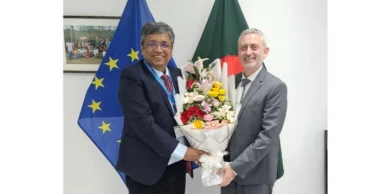
Malta Consul, EU envoy hold talks on cooperation, Europe Day plans
The Honorary Consul of Malta in Dhaka, Shoeb Chowdhury, held a courtesy meeting with the Ambassador and Head of Delegation of the European Union to Bangladesh Michael Miller on Wednesday.
During the meeting, they discussed bilateral interests and regional cooperation.
The meeting focused heavily on the upcoming Europe Day 2026 celebrations.
The two officials reviewed preparations for the event’s central theme, "A European-Bangladeshi Village," highlighting the initiative’s role in fostering cultural and community ties.
In addition to event planning, the discussions covered a broad spectrum of strategic issues, including Bangladesh’s current investment climate, social security frameworks, and the advancement of freedom of expression and human rights.
During the exchange, Consul Shoeb Chowdhury expressed his profound gratitude to Ambassador Miller for the European Union’s enduring commitment to the country.
He underscored the EU’s vital contributions to Bangladesh’s ongoing development and its significant impact on the nation’s socio-economic landscape.
1 month ago
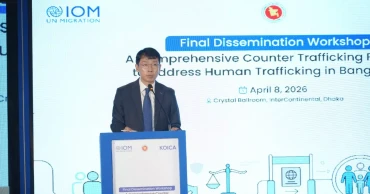
Human trafficking remains serious challenge, requires sustained efforts: KOICA
Korea International Cooperation Agency (KOICA) Country Director Jihoon Kim on Wednesday said human trafficking remains a serious challenge that requires coordinated and sustained efforts.
He made the remarks while speaking at a programme marking the conclusion of a multi-year initiative to combat human trafficking and promote safe migration.
KOICA, in partnership with the International Organization for Migration (IOM), organised the final dissemination workshop of the “Comprehensive Counter Trafficking Program to Address Human Trafficking in Bangladesh” at a city hotel.
Human trafficking must stop, offenders must face justice: State Minister
Through this programme, Kim said, KOICA has supported a comprehensive and victim-centred approach in partnership with the government of Bangladesh and stakeholders. “We believe the achievements and lessons from this initiative will continue to contribute to national efforts in addressing human trafficking.”
While the programme concludes, stakeholders emphasised the importance of sustaining its achievements through continued national leadership, institutional strengthening, and collaboration.
Additional Secretary of the Ministry of Home Affairs (Political Wing) Dr Ziauddin Ahmed said the government of Bangladesh is firmly committed to combating human trafficking through strengthened systems, legal frameworks, and coordinated action. “This programme has made meaningful contributions to enhancing our national capacity.”
IOM Chief of Mission Giuseppe Loprete said this initiative highlights the importance of partnerships and a survivor-centred approach. “The progress achieved provides a strong foundation for continued efforts in Bangladesh.”
Shah Mohammad Naheeaan, Head of Office of the United Nations Office on Drugs and Crime, and Hasan Mahmudul Islam, Joint Secretary from the Ministry of Law, Justice and Parliamentary Affairs were also present.
1 month ago