foreign-affairs
Bangladesh, China eye stronger ties as FM begins official visit
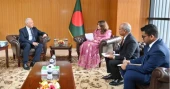
Bangladesh and China eye an enhanced cooperation as Foreign Minister Dr Khalilur Rahman is set begin his first official visit to China- May 5-7 at the invitation of Member of the Political Bureau of the Communist Party of China Central Committee and Minister of Foreign Affairs Wang Yi.
Through this visit, China hopes to work with the new government of Bangladesh to enhance political mutual trust, deepen exchanges and cooperation in various fields, promote high-quality Belt and Road cooperation and strengthen China-Bangladesh comprehensive strategic cooperative partnership.
During the visit, the Foreign Minister will hold bilateral talks with Chinese Foreign Minister Wang Yi, a senior official at the Ministry of Foreign Affairs told UNB.The two Foreign Minister are expected to engage in comprehensive bilateral discussions on issues of mutual interest alongside exchange of views on contemporary regional and global developments, including the situation in the Middle East.
The two Ministers are also expected to discuss about possible alignment of their development policies and strategic priorities.During the visit Foreign Minister Dr Khalilur is scheduled to meet the Chairman of Chinese People's Political Consultative Conference Wang Huning.
Minister for International Department of the Communist Party of China Liu Haixing will host a lunch in honor of Bangladesh Foreign Minister, according to the Ministry of Foreign Affairs. Humaiun Kobir, Adviser for Foreign Affairs to the Prime Minister, Ashiq Chowdhury, Chairman of BIDA, and senior Government officials will accompany the Foreign Minister.
Bangladesh and China have long been each other's friends and close neighbors and are comprehensive strategic cooperative partners.
Over the past five decades and more since the establishment of diplomatic ties, the two countries have been developing friendly ties on the basis of the Five Principles of Peaceful Coexistence and with mutual respect and equality, and the bilateral ties have enjoyed sustained and steady progress and delivered tangibly for the two peoples, said the Chinese side.
China said it attaches high importance to its relations with Bangladesh.
30 days ago
SelectUSA Summit: Bangladesh delegation accorded reception in Washington
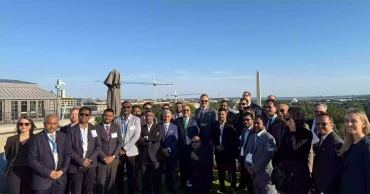
The US-Bangladesh Business Council on Monday hosted a reception in honour of the visiting Bangladesh business delegation in Washington on the sidelines of the SelectUSA Investment Summit 2026.
The reception was held on the rooftop of the historic headquarters of the US Chamber of Commerce, a landmark institution with more than a century of history.
US Assistant Secretary of State for South and Central Asian Affairs Paul Kapur, US Ambassador to Bangladesh Brent T Christensen and Bangladesh Ambassador to US Tareq Md Ariful Islam, among others, addressed the event.
Officials of the US Chamber of Commerce and diplomats from the Bangladesh Embassy in Washington were also present.
A 25-member business delegation from Bangladesh is currently visiting the United States to participate in the SelectUSA Investment Summit 2026, being held from May 3 to 6.
The summit has brought together nearly 5,000 participants from more than 100 countries, including around 2,700 investors, making it one of the world’s largest investment promotion events.
30 days ago
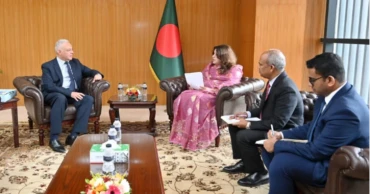
Egyptian envoy calls on State Minister Shama Obaed
Ambassador of Egypt to Bangladesh, H.E. Mr. Omar Mohie Eldin Ahmed Fahmy, paid a courtesy call on H.E. Ms. Shama Obaed Islam, M.P., Hon’ble State Minister for Foreign Affairs of Bangladesh, on 04 May 2026 at the Ministry of Foreign Affairs.
During the meeting, both sides reaffirmed the longstanding friendship and growing bilateral relations between Bangladesh and Egypt. The State Minister appreciated the Government of Egypt for hosting a considerable number of Bangladeshi students and professionals. She particularly thanked the Government of Egypt for its recent decision to increase the number of fully funded scholarships for Bangladeshi students from 12 to 24.
Dhaka seeks constructive relations with neighbouring countries: Shama Obaed
The discussions focused on further enhancing cooperation in trade and investment, particularly in the sectors of energy, infrastructure, pharmaceuticals, agriculture, jute and manpower. The State Minister also underscored the importance of strengthening collaboration in the field of culture and education.
The Ambassador reiterated Egypt’s commitment to further strengthening cooperation across all sectors, including the recruitment of skilled and semi skilled manpower, as well as collaboration in energy, agriculture and cultural sectors. He assured Egypt’s continued support for Bangladesh.
The State Minister underscored the importance of enhancing people-to-people contacts, including cultural and sports exchanges, mutual visa waiver agreement and stressed the need for regular bilateral engagements and high-level visits to further deepen the partnership.
The Ambassador reaffirmed Egypt’s continued support for Bangladesh and expressed strong commitment to further strengthening the brotherly relations between the two countries.
1 month ago
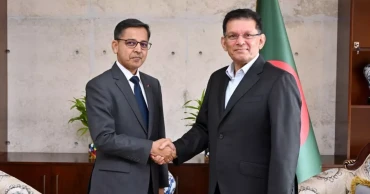
Dhaka eyes mutually beneficial relations with Delhi: FM Khalilur
Foreign Minister Dr Khalilur Rahman on Monday reiterated that Bangladesh looked forward to a mutually beneficial and forward-looking relationship with India.
He made the remarks when outgoing High Commissioner of India to Bangladesh, Pranay Verma, paid a farewell call on the Foreign Minister at the Ministry of Foreign Affairs, according to the Ministry of Foreign Affairs.
The Foreign Minister congratulated the Indian High Commissioner on completing his tenure in Dhaka.
Govt advancing ties with India based on fairness, mutual respect: FM
The Indian High Commissioner expressed his gratitude to the Government of Bangladesh for cooperation and support extended to him throughout his tenure and reaffirmed India’s continued commitment to strengthening ties with Bangladesh.
The Foreign Minister wished the High Commissioner success in his future endeavours.
1 month ago

Bangladesh-India proposed CEPA may unlock new trade, investment opportunities: CII
India’s leading industry body Confederation of Indian Industry (CII) on Monday said the proposed Comprehensive Economic Partnership Agreement (CEPA) between Bangladesh and India could significantly expand bilateral trade and investment by moving beyond trade in goods to include services, investment facilitation, technology collaboration and skills development.
It sees strong alignment between the new Government of Bangladesh’s “Bangladesh First” strategy and India’s own development experience, underscoring vast opportunities for deeper economic partnership.
Speaking during an interaction with a Bangladesh media delegation at the headquarters of CII in New Delhi, its Senior Vice President (Int’l Business) Pankaj Tandon said the current phase in Bangladesh-India relations was crucial not only for sustaining existing ties but also for shaping the next stage of economic partnership to support Bangladesh’s long-term growth and competitiveness, .
“We see strong alignment between the new Government of Bangladesh’s ‘Bangladesh First’ approach and India’s own development experience,” he said.
At its core, Tandon said, ‘Bangladesh First’ emphasises domestic capacity building, job creation, productivity enhancement, export diversification, digital transformation and long-term resilience.
“Importantly, this is not an inward-looking strategy. It is about strengthening national capabilities through well-designed partnerships,” he added.
Describing Bangladesh as India’s largest trading partner in South Asia, Tandon said India remained Bangladesh’s second-largest trading partner in Asia, with bilateral trade standing at around US$13.5 billion in the 2024-25 fiscal.
He said economic cooperation remained the backbone of bilateral relations, adding that expanding market access, reducing non-tariff barriers and improving border infrastructure could significantly boost trade.
Tandon said Bangladesh’s industrial strength and India’s manufacturing and services sectors complement each other, creating opportunities for integrated regional value chains.
Highlighting sector-specific opportunities, he said textiles and apparel would continue to remain central to Bangladesh’s economy even after its graduation from the least developed country status, while future competitiveness would increasingly depend on productivity, compliance standards, machinery and design capabilities.
He also identified medical tourism, food processing, agricultural value chains, digital economy, startups, energy cooperation and MSME linkages as promising areas for expanded collaboration.
Tandon said Indian expertise in digital public infrastructure, fintech, renewable energy, manufacturing excellence and sustainable development could support Bangladesh’s economic transformation.
He reaffirmed CII’s commitment to working closely with partner organisations in Bangladesh to deepen business-to-business engagement and strengthen economic cooperation between the two neighboring countries.
CII senior director Manish Mohan, President of Diplomatic Correspondents Association, Bangladesh (DCAB) AKM Moinuddin, former DCAB president and the Daily Sun Editor Rezaul Karim Lotus also spoke on the occasion.
Dr. Geethanjali Nataraj, Principal, International Trade Policy, Confederation of Indian Industry (CII) made a presentation.
1 month ago
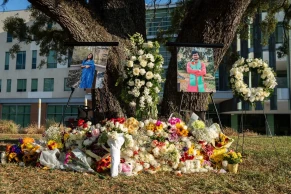
USF holds vigil for two Bangladeshi students
The University of South Florida (USF) community gathered in grief to honour two Bangladeshi students who were murdered last month, with hundreds attending a solemn vigil on campus.
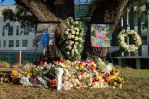
Students, faculty and administrators lined up at Crescent Hill, near the Marshall Student Center, on Friday afternoon to place flowers in memory of Nahida Sultana Bristy and Zamil Limon, said a press release.
Participants at the vigil offered condolences and support to the victims’ families and friends.
Murdered in US: Limon starts final journey for home in coffin
“We become the village for one another,” said Imam Hassan Sultan while opening the programme with a prayer.
1 month ago

Dhaka’s 'balanced and constructive policy' towards Iran war received positively in region: MoFA
The Ministry of Foreign Affairs (MoFA) on Friday responded to remarks made by Opposition Leader in Parliament Dr Shafiqur Rahman, stressing that Bangladesh’s stance on the ongoing conflict in the West Asia region has been widely appreciated across the region.
In his speech at the Jatiya Sangsad on April 30, the Opposition Leader questioned why a friendly country appeared to suggest that Bangladesh had not stood by them during a difficult time.
The MoFA, in a statement however, said Bangladesh’s balanced and constructive policy has received positive recognition from regional countries.
As an example, the ministry cited a recent statement from the Iranian Embassy in Dhaka, which commended Bangladesh’s approach.
The embassy also expressed concern over what it described as selective and fragmented reporting of its remarks in certain media outlets.
On April 23, at a ceremony held at the Iranian Embassy marking the handover of emergency medical assistance from Bangladesh to Iran, Ambassador Jalil Rahimi Jahanabadi underscored the deep and friendly ties between the two countries.
He also conveyed appreciation for Bangladesh’s compassion and sincere support for the Iranian people during this challenging period.On April 21, the Iranian Embassy in Dhaka welcomed the meeting held between Bangladesh Foreign Minister Dr Khalilur Rahman and Deputy Foreign Minister of Iran Dr. Khatibzadeh on the sidelines of the Antalya Diplomacy Forum.
The Embassy said they will earnestly pursue the constructive and fruitful engagements and initiatives between the officials of the two countries and underscores the importance of further expanding bilateral relations across all areas of mutual interest.
Iran appreciated the balanced and constructive position of the government of Bangladesh in promoting peace and stability in the Middle East through dialogue and diplomacy, which remain essential for the region and the wider international community.
The Embassy also expressed its sincere appreciation for the messages of condolence conveyed by the government of Bangladesh following the martyrdom of the Leader of the Islamic Revolution, the Leader of the Ummah and the great Leader of the Islamic Republic of Iran, Grand Ayatollah Khamenei.
Particular appreciation is extended for the adoption of a condolence motion at the opening session of the 13th Parliament, which constitutes a notable and exceptional gesture.
The Embassy further expressed its gratitude for the presence of a senior official of the Ministry of Foreign Affairs of Bangladesh at the Embassy of the Islamic Republic of Iran in Dhaka to sign the condolence book.
Iran also appreciated the decision of Prime Minister Tarique Rahman to send emergency medical assistance to the Islamic Republic of Iran through the Bangladesh Red Crescent Society.
The Islamic Republic of Iran, while appreciating the support of the government and people of Bangladesh, expressed its heartfelt condolences over the loss of Bangladeshi nationals resulting from the war ‘initiated by the United States and the Zionist regime and their unlawful aggression’ against the Islamic Republic of Iran, and wished a speedy recovery to those injured in these unfortunate incidents.
It will continue its efforts to facilitate the safe passage of Bangladeshi vessels through the Strait of Hormuz and has also facilitated the safe evacuation of 186 Bangladeshi nationals from Iran via Azerbaijan.
The Embassy, in a press statement, called upon all concerned to refrain from any actions or statements that may create misperceptions, and to uphold the spirit of mutual respect that governs the enduring ties between the two brotherly nations.
Iran reiterates its firm commitment to strengthening the close and amicable relations between the two nations.
The Embassy expressed its dissatisfaction with the selective dissemination of excerpts from recent media interviews concerning developments in the Middle East, which have been republished by certain media outlets and social media platforms.
“Such actions are deemed inconsistent with the friendly and brotherly relations between the two countries,” said the Embassy, noting that these inaccurate and selective representations are regrettable and contrary to the principles of responsible media conduct.
The Islamic Republic of Iran and the People's Republic of Bangladesh enjoy longstanding, friendly, and brotherly relations founded upon mutual respect and shared values.
Iran reaffirmed its firm commitment to the principle of non-interference in the internal affairs of other countries.
1 month ago

SAARC Journalist Forum to host Dhaka Conference this year
The Bangladesh chapter of SAARC Journalist Forum (SJF) has decided to organise the Dhaka Conference of the forum later this year.
The decision was taken at a meeting of the Executive Committee of the Bangladesh chapter held at the Jatiya Press Club in Dhaka on Thursday with its President Nasir Al Mamoon in the chair.
The proposed conference aims to bring together journalists and media professionals from across South Asia to deliberate on key issues – strengthening professional collaboration, revitalising the South Asian Association for Regional Cooperation (SAARC), and promoting people-to-people connectivity, according to a press release.
Members of the Executive Committee expressed their commitment to making the Dhaka conference a significant platform for dialogue on media, democracy, and regional cooperation.
The meeting also congratulated Khondoker Kaosar Hossain, a senior journalist and Executive Committee member of the forum, on his recent appointment as Media Coordinator to the Information and Broadcasting Minister.
The meeting was attended by Central Secretary General Md Abdur Rahman, Bangladesh Chapter Vice Presidents Asif Hasan Nabi & Md Shariful Islam, General Secretary Shiabur Rahman, Joint General Secretary Shahed Motiur Rahman, Treasure Reza Mahmud, Executive Members Rafiqul Islam Azad & Md Mostafa Khan, Ayon Ahmed and MM Gias Uddin.
The meeting concluded with a renewed commitment to advancing the objectives of the SAARC Journalist Forum and strengthening cooperation among journalists in the region.
1 month ago

Digital Media Asia 2026 spotlights newsroom reinvention, revenue and evolving audience habits
Media leaders from across Asia and beyond have gathered in the Philippine capital to examine how journalism is evolving amid shifting audience behaviour, platform dynamics and revenue pressures.
Manila Mayor Francisco “Isko Moreno” Domagoso and Vice Mayor Chi Atienza opened the Digital Media Asia 2026, organised by World Association of News Publishers (WAN-IFRA) on Thursday.
Opening remarks were delivered by Kah Whye Lee, Director, Asia at WAN-IFRA, who underscored the need for news organisations to innovate across both editorial and business fronts as the industry undergoes rapid digital transformation.
The conference brought together leading regional and international media organisations, including Channel NewsAsia, SPH Media, Agence France-Presse and South China Morning Post, among others.
A key session moderated by OneNews Anchor Regina Hing (Lay), featured speakers including Nahar Khan of Marana Media and United News of Bangladesh (UNB) and Cania Citta of Malaka Indonesia, focusing on how changing audience behaviour is reshaping the use of platforms, crafting messages, addressing target audiences, and asks what traditional media can learn from it.
Drawing on her presentation, Nahar Khan highlighted a fundamental shift in how audiences consume news, noting that social media has become a top source of news for most of Generation Z.
“The hook must land in three seconds — or they scroll,” she said.
She emphasised that the transformation goes beyond platforms to a deeper change in communication itself.
“It’s not just that they use different platforms. It’s that they think in a different language - visual language,” she said.
“The headline is now an image. The argument is a meme. The news is a 30-second video.”
Khan said visual storytelling is increasingly central to how information is processed and shared. She also highlighted that different platforms now play distinct roles in the news ecosystem, requiring newsrooms to tailor content and strategy accordingly.
1 month ago
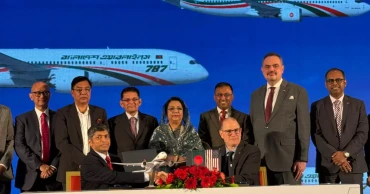
Biman signs agreement with Boeing for 14 brand new aircraft
Biman Bangladesh Airlines Limited has finalized a landmark agreement with The Boeing Company to acquire 14 aircraft, including eight Boeing 787-10 Dreamliners, two Boeing 787-9 Dreamliners and four Boeing 737-8 MAX jets.
The agreement was signed by Biman Managing Director and CEO Kaizer Sohel Ahmed on behalf of the airline, while a Boeing representative signed for the manufacturer in the presence of senior government officials, diplomats and aviation executives at a city hotel in Dhaka.
The estimated list value of the aircraft package is around $3.7 billion (Tk 37,000 crore). Under the delivery schedule, the first aircraft is expected to arrive in November 2031, while the remaining jets are scheduled for delivery by October 2035.
At the ceremony, Civil Aviation and Tourism Minister Afroza Khanam attended as chief guest, while Foreign Affairs Minister Dr Khalilur Rahman was present as guest of honour. State Minister for Civil Aviation and Tourism M Rashiduzzaman Millat and Adviser to the Prime Minister on Foreign Affairs Humayun Kabir attended as special guests.
Other dignitaries present included Biman Board Chairman Rumee A Hossain, US Ambassador Brent T Christensen, Boeing Vice President Sales and Marketing Paul Righi, along with senior officials from the government of Bangladesh and Boeing.
The deal aligns with the government’s “Bangladesh First” vision, which prioritises economic growth, stronger global connectivity and improved passenger experience, according to a Biman press release.
State Minister M Rashiduzzaman Millat said Bangladesh is moving towards becoming a regional aviation hub and the addition of new aircraft will support that goal.
US donates 600,000 TB testing kits, 11,000 pediatric drugs to Bangladesh
“The new fuel-efficient and technologically advanced aircraft will modernise Biman’s fleet, enhance operational efficiency and expand its international route network, strengthening Bangladesh’s position in the global aviation market,” said Kaizer Sohel Ahmed, Managing Director and CEO of Biman Bangladesh Airlines.
He said the agreement is expected to contribute beyond aviation by supporting tourism growth, boosting economic activity and creating skilled employment opportunities through technology transfer and workforce development.
Biman said it remains a key lifeline for Bangladeshi expatriate workers worldwide, and the new aircraft will ensure safer, more reliable and more comfortable travel for passengers.
Boeing Vice President Paul Righi said Biman will become one of the few carriers globally to operate the full Boeing 787 Dreamliner family, the 787-8, 787-9 and 787-10.
He said the 787-10 will offer higher capacity and efficiency on high-demand routes including the Middle East, while the 787-9 will serve long-haul destinations such as Europe and North America.
He added that the 787 and 737 families together deliver up to 20 percent better fuel efficiency compared to the aircraft they replace, while also improving passenger comfort through advanced cabin features and smoother travel experience.
He further said the agreement supports Biman’s strategy to expand its network, modernise its fleet and enhance passenger experience, while positioning Bangladesh as an emerging aviation hub in South Asia.
1 month ago