foreign-affairs
US opens Founders Museum in Dhaka to share America’s story of freedom
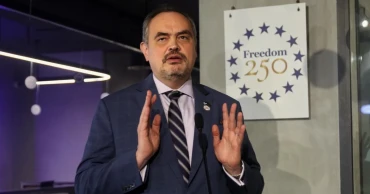
US Ambassador to Bangladesh Brent T Christensen on Wednesday inaugurated the American Founders Museum at the Edward M Kennedy Center in Dhaka and hoped that the ideas behind the story of America’s independence will resonate here in Bangladesh as well.
“I know many of you here are alumni of US universities or have participated in one of our exchange programmes. You have brought some of the best ideas from America back to Bangladesh, and we hope the Founders Museum here will help do that for a broader audience,” he said.
The museum, a White House initiative developed with the US Department of Education and PragerU, explores the ideas, people, and events that shaped America's independence.
US announces $235,000 grant to restore historic Musa Khan Mosque at DU
1 month ago
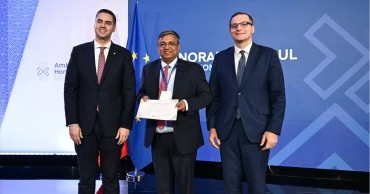
Malta Honorary Consul Shoeb Chowdhury given special recognition
The government of Malta has formally bestowed a special recognition upon Shoeb Chowdhury, the Honorary Consul of Malta in Bangladesh, in appreciation of his distinguished service to bilateral diplomacy.
The certificate of recognition was presented by the Deputy Prime Minister of Malta, Ian Borg, during an official ceremony.
The event was also attended by the Permanent Secretary for the Office of the Deputy Prime Minister, Christopher Cutajar, said a media release on Wednesday.
Malta Consul, EU envoy hold talks on cooperation, Europe Day plans
Besides, Shoeb Chowdhury was received in a courtesy audience by the President of the Republic of Malta at the historic Grand Master's Palace in Valleta.
High Commissioner of Malta to Bangladesh Reuben Gauci congratulated Shoeb Chowdhury, commending his steadfast dedication to strengthening the diplomatic and economic ties between the two nations.
1 month ago
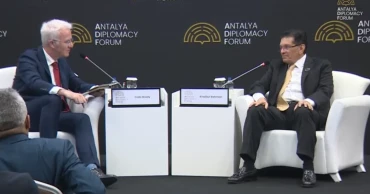
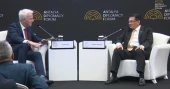
Global trade must remain open to avoid economic fallout: FM
Foreign Minister Dr Khalilur Rahman has said that international commerce and global trade channels should be free and open, stressing that everybody suffers if the free flow of international commerce is impeded.
“It’s very important that the Strait of Hormuz is open for navigation. Not only the Strait of Hormuz, but international commerce should also be free and open. If they are not open and are impeded, everybody suffers. Global growth suffers, countries suffer. So it’s very important that these channels of global trade remain open,” he said.
During an interview titled ADF Talks on the sidelines of the Antalya Diplomacy Forum recently, the Foreign Minister said the news that the Strait of Hormuz would remain open was very welcome. “You saw the impact on oil prices immediately.”
He called for coordinated international action to contain the global energy crisis, warning that developing countries could face severe economic shocks if supply disruptions persist.
Referring to past experiences, Dr Khalilur said they do not want a repetition of history, and it is very important that countries around the world work not only to bring peace but also to minimide the effects that the crisis might have on various countries, especially developing nations.
He said the International Energy Agency has already indicated that the scope of the current crisis could be much larger than that of the 1970s.
“So if the impact is very similar, then we have very rough days ahead. It is only through collective action that we will be able to withstand the negative effects emanating from the crisis and its impact on the energy market,” said the Foreign Minister.
He said the world is currently facing a serious energy crisis and significant energy challenges and expressed hope that the situation would improve soon so that countries can return to normal economic activities.
The 5th edition of the Antalya Diplomacy Forum (ADF 2026), hosted by the Ministry of Foreign Affairs of the Republic of Türkiye under the auspices of President Recep Tayyip Erdoğan, took place on April 17–19 in Antalya, Türkiye.
In the face of geopolitical tensions, shifting balances of power, rising trade barriers and mounting pressure on multilateralism, the current global landscape is marked by increasing unpredictability.
This year’s theme, “Mapping Tomorrow, Managing Uncertainties,” emphasized the importance of anticipating and addressing emerging issues in order to shape a better future. The theme underscored the need to stay ahead of future developments by identifying risks and opportunities, developing strategies, and turning insights into action.
“Young nations and developing economies suffered deeply in the 1980s after earlier oil shocks. We do not want a repetition of history,” said the Foreign Minister.
1 month ago
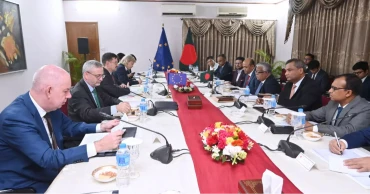
Dhaka eyes forward-looking partnership with EU amid strategic, economic realities
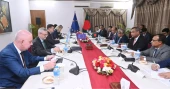
Bangladesh on Wednesday underscored its interest in advancing a forward-looking partnership with the European Union (EU), infusing fresh dynamism into bilateral engagement to realise the untapped potential of the relations.
During the fifth round of diplomatic consultations in Dhaka, both sides exchanged views on democratic governance, human rights, and the rule of law while discussing migration and skills development.
Bangladesh highlighted the importance of preferential market access in underpinning its trade relations with the EU and outlined its perspective on ensuring continuity of such arrangements in the future including through possible instruments such as a Free Trade Agreement (FTA) and an Investment Protection Agreement (IPA).
Foreign Secretary Asad Alam Siam and Managing Director for Asia Pacific of the European External Action Service Erik Kurzweil co-chaired the meeting in Dhaka that reflected the growing strategic importance of Bangladesh-EU relations.
The two sides renewed commitment to deepening a long-standing and multifaceted partnership between Bangladesh and the European Union.
The consultations, convened after a pause of nearly five years, provided an opportunity to review the breadth of bilateral cooperation of mutual interest, said the Ministry of Foreign Affairs.
The meeting reviewed the current state of Bangladesh-EU relations and discussed avenues for further engagement across priority sectors.
The discussions welcomed the recent ‘initialling’ of the Partnership and Cooperation Agreement (PCA) and noted the expectation that following completion of the respective internal processes, the agreement would provide a structured and comprehensive framework for future cooperation.
1 month ago
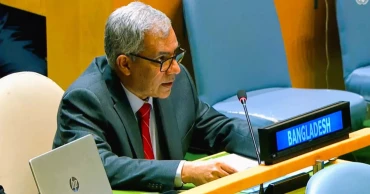
NPT Review Conf: Bangladesh calls for accelerated nuclear disarmament
Bangladesh has called for renewed and strengthened global commitment to nuclear disarmament and non-proliferation, stressing that the vision of a nuclear-weapon-free world remains unfulfilled.
Bangladesh made the call at the 11th review conference of the treaty on the Non-Proliferation of Nuclear Weapons (NPT) held at the United Nations Headquarters in New York on April 28.
Speaking at the general debate, Bangladesh’s Permanent Representative Ambassador Salahuddin Noman Chowdhury stressed that despite eight decades of the United Nations, the vision of a nuclear-weapon-free world remains unfulfilled.
He warned that continued nuclear proliferation poses a grave threat to international peace and security, while also undermining global development aspirations, said the Bangladesh Mission in New York on Wednesday.
Highlighting Bangladesh’s firm commitment to disarmament, the Ambassador said the country has consistently advocated for both nuclear and conventional disarmament and has voluntarily remained non-nuclear despite being located in a nuclear-armed region.
Ambassador Chowdhury urged nuclear-weapon States to fulfill their legal obligations under Article VI of the NPT and called for the universalization of disarmament treaties.
He also reaffirmed Bangladesh’s strong commitment to advancing global disarmament through dialogue, trust-building, and collective action towards a safer world free from the threat of nuclear weapons.
1 month ago
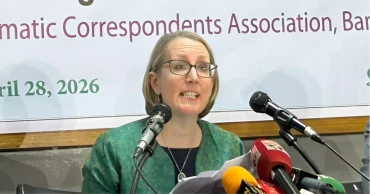
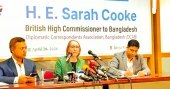
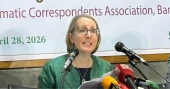
UK freezes assets worth over £250mn linked to Bangladeshi individuals: Sarah Cooke
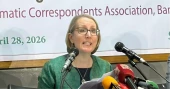
British High Commissioner to Bangladesh Sarah Cooke on Tuesday said the UK, since June 2025, has frozen over £250 million in assets in the UK linked to Bangladeshi individuals, underlining their determination to uphold the rule of law and the integrity of the international financial system.
“We are very committed to working further in that area. Of course, we can't talk about specific cases. They all need to follow due legal process and make sure that they are evidence-based. But it is a high priority for us,” she said while responding to a question during “DCAB Talk”.
Diplomatic Correspondents Association, Bangladesh (DCAB) hosted the “DCAB Talk” at Jatiya Press Club.
Instability in Middle East pushing up costs from London to Dhaka: UK Envoy
High Commissioner Cooke said the United Kingdom is committed to supporting Bangladesh’s efforts to strengthen economic governance and tackle illicit finance.
The envoy said this is something that they have worked very closely with the government over the last 18 months to two years.
“I think that (steps taken so far) gives you a very strong demonstration of the commitments to working with the government on this area,” she said.
“The United Kingdom will also host an Illicit Finance Summit in London this June,” said the High Commissioner, noting that the Summit will bring together international partners to strengthen cooperation, share expertise and advance collective action against illicit finance.
“We hope to welcome the Finance Minister of Bangladesh (Amir Khosru Mahmud Chowdhury) to London for this important gathering,” she said.
Taking place at Lancaster House in London over two days from June 23-24, the Illicit Finance Summit will bring together governments, civil society organisations, and private sector representatives, such as major banks, to build an international coalition to tackle flows of dirty money around the world and strengthen the UK’s national security.
In the UK, dirty money lurks behind drug-related violence and organised immigration crime, allowing criminals to store their profits without trace.
The Summit will focus on strengthening global enforcement efforts to prevent, disrupt and recover dirty money, including through closer collaboration with the private sector.
It will forge new agreements to tackle modern methods for moving dirty money, such as laundering in the property sector, misuse of crypto-assets, and trading in illicit gold.
“And, of course, we hope that Bangladesh will be represented at that Summit. We look forward to welcoming the Finance Minister. So, I hope that gives you a sense of just how committed the UK is to working with Bangladesh in this area,” said the High Commissioner.
DCAB President AKM Moinuddin and General Secretary Emrul Kayesh also spoke at the event, where the High Commissioner described the relationship between Bangladesh and the UK as “modern and strategic.”
1 month ago

Bangladesh committed to purchase $3.5bn US agricultural products: Ambassador Christensen
US Ambassador to Bangladesh Brent T. Christensen on Tuesday described the agreement on reciprocal trade (ART) as an excellent agreement, noting that Bangladesh has committed to purchasing $3.5 billion in US agricultural products - wheat, soy, cotton, and corn.
The recently concluded agreement on reciprocal trade, the Ambassador said, can propel not just trade between the two countries, but Bangladesh’s economic development to new levels if fully embraced and executed.
“The ART is an excellent agreement, which preserves Bangladesh’s access to the critical US market with competitive 19 percent tariffs – down from 35 percent without the agreement -- while making changes in Bangladesh’s tariffs and non-tariff trade barriers designed to encourage imports from the United States to balance our trade. This is really just common sense,” he said while speaking at a luncheon meeting.
The American Chamber of Commerce in Bangladesh (AmCham) hosted the luncheon meeting titled, “Advancing US-Bangladesh Economic Partnership” at a city hotel.
Commerce Minister Khandakar Abdul Muktadir spoke as the chief guest while the US envoy attended as special guest, underscoring the importance of Bangladesh-United States economic engagement.
1 month ago
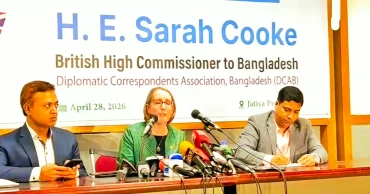
Climate action at core of Bangladesh-UK partnership: Sarah Cooke
British High Commissioner to Bangladesh Sarah Cooke on Tuesday said climate action is a central pillar of their joint efforts to support Bangladesh’s long-term prosperity, stressing that the country is on the frontline of climate change.
“For Bangladesh, climate change is not a future challenge to be managed at some later point; it is a reality. That is why climate action is a central pillar of our work together—to support Bangladesh’s long-term prosperity, economic resilience and energy security,” said the High Commissioner.
Speaking at “DCAB Talk,” the High Commissioner said their climate cooperation focuses on strengthening resilience, protecting communities and supporting sustainable growth.
The Diplomatic Correspondents Association, Bangladesh (DCAB) hosted the “DCAB Talk” at the Jatiya Press Club.
“I have seen this partnership first-hand including in the Sundarbans, where UK support is helping communities adapt to climate impacts while safeguarding one of the world’s most important ecosystems,” she said.
The High Commissioner said they are also working together to strengthen preparedness.
Through the Bangladesh-UK hydrometeorological partnership, UK Met Office expertise is supporting improved flood forecasting and early warning systems.
“Better data and earlier warnings save lives and reduce losses. But public policy and technical expertise alone are not enough. Mobilising finance at scale is essential,” said the British envoy.
That is why, she added, climate finance is a core focus of their engagement in Bangladesh, including work with the government and the private sector to unlock blended finance and private capital, and to move from pilots to scale.
Bangladesh also plays an important role globally, and its voice has helped shape international debate.
“The UK is proud to work alongside Bangladesh through the UN COP process to ensure climate-vulnerable countries are heard and acted upon,” said the British envoy, noting that climate resilience and economic progress also depend on security and stability across the wider region.
Defence & Security Cooperation
As Bangladesh’s role in regional affairs has grown, so too has the importance of defence and security cooperation between the two countries, said High Commissioner Cooke.
She said Bangladesh is a significant contributor to regional stability, maritime security and United Nations peacekeeping.
The UK recognises its important responsibilities in the Bay of Bengal—a region of increasing strategic importance for global trade and energy routes, the High Commissioner said.
“That is why I’m delighted about the recent government-to-government agreement for the transfer of the former HMS Enterprise, a UK-built hydrographic and oceanographic survey vessel,” she said, adding that Enterprise will enhance Bangladesh’s ability to conduct hydrographic and oceanographic surveys, strengthen navigational safety, and support marine resource management across the Bay of Bengal.
The envoy said the vessel will also provide opportunities for scientific research and collaboration with Bangladeshi universities and research institutions, contributing to Bangladesh’s wider blue economy ambitions.
“More broadly, the Enterprise agreement underscores the United Kingdom’s commitment to supporting Bangladesh’s military modernisation that is capability-driven and aligned with regional stability,” she said.
Alongside equipment cooperation, the UK continues to support Bangladesh through military training to help shape its future military leaders.
Rohingya Crisis
“In the broader context of regional stability, another important element of our partnership is our cooperation on the Rohingya humanitarian crisis,” said the High Commissioner.
The United Kingdom continues to stand firmly with Bangladesh in responding to the needs of Rohingya refugees in Cox’s Bazar, recognising the extraordinary generosity of Bangladesh and its host communities.
Since 2017, the UK has provided over £458 million in humanitarian support to deliver life-saving assistance, protect the most vulnerable and support host communities.
“At the same time, in the context of declining global aid, we are increasingly focused on supporting greater self-reliance and skills development,” said the High Commissioner.
“So, when the conditions are right for them to return home, they are equipped to do so. The UK continues to work to keep the Rohingya crisis on the global agenda, including through the United Nations Security Council,” she said.
The High Commissioner said they are working to support greater responsibility-sharing and pressing for a long-term political solution, in close coordination with the Government of Bangladesh and international partners.
Tackling Visa Abuse
Working together to tackle illegal migration is another priority area of close cooperation between the United Kingdom and Bangladesh, she said.
“We recognise the positive contribution that lawful migration makes to our society, while being clear about the serious harm caused by those who exploit vulnerability for personal gain,” said the High Commissioner.
Unscrupulous visa agents who mislead and deceive Bangladeshi citizens undermine confidence in migration systems and expose individuals to serious financial and personal risks, she said.
“That is why the UK is working closely with the government of Bangladesh to tackle visa abuse and visa fraud, and to return those who have no right to reside in the UK,” the envoy said.
She said they want to ensure that movement between the two countries is safe, legal and fair. “We are very grateful to the government for the close cooperation in this area.”
DCAB President AKM Moinuddin and General Secretary Emrul Kayesh also spoke at the event, where the High Commissioner described the relationship between Bangladesh and the UK as “modern and strategic.”
1 month ago
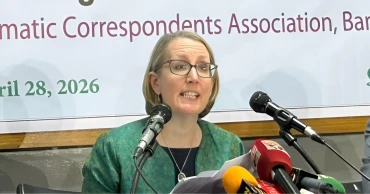
Instability in Middle East pushing up costs from London to Dhaka: UK Envoy
British High Commissioner to Bangladesh Sarah Cooke on Tuesday said instability in the Middle East continues to reverberate far beyond the region, shaping global energy markets, disrupting shipping routes and driving price volatility that affects households and industries from London to Dhaka.
“Today, the international system is under acute strain,” she said, noting that foreign policy must deliver security and prosperity at home, while upholding the rules-based international system.
That formulation may sound familiar, but the world in which it must be delivered has changed profoundly, the High Commissioner said at “DCAB Talk” hosted by the Diplomatic Correspondents Association, Bangladesh (DCAB) at the Jatiya Press Club.
Education cornerstone of Bangladesh-UK partnership: Sarah Cooke
DCAB President AKM Moinuddin and General Secretary Emrul Kayesh also spoke at the event where the High Commissioner described the relationship between Bangladesh and the UK as ‘modern and strategic.’
1 month ago
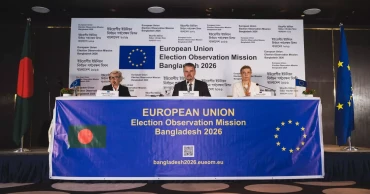
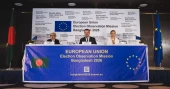
EU EOM shares 6 priority recommendations; seeks more efforts for electoral inclusion
Chief observer of European Union Election Observation Mission (EU EOM) Ivars Ijabs on Tuesday identified six priority recommendations for Bangladesh, noting that more efforts are needed to foster accountability and electoral inclusion.
“Now, it is time to turn the focus to the reform process to strengthen transparency and rule of law, to show political will in promoting women in public and political life and to foster an environment for a pluralistic and secure public debate, both online and offline,” Ijabs said at a press briefing at a city hotel in the afternoon.
Women candidates were almost absent from these elections, signaling a lack of political will to promote women in decision making positions, said the Mission.
Ijabs said the European Union stands ready to support Bangladesh in those efforts, in line with the recently initialled Partnership and Cooperation Agreement, and reaffirming their unwavering commitment to democratic principles.
"In this spirit, we offer our final report, and its 19 recommendations with the hope of contributing positively to future elections in Bangladesh," he told reporters, noting that the work of improving and refining electoral process remains an essential ongoing exercise in any country also here in Bangladesh.
The chief observer said they are looking forward to discussing these recommendations with the national stakeholders, as it is essential to continue an inclusive dialogue in the next steps, to strengthen democracy, and uphold the rule of law, and build public trust.
“These credible and competently managed elections marked a pivotal step toward restoring democratic governance and the rule of law, reflecting a shared commitment to democratic processes among all stakeholders," Ijabs said.
Although elections bolstered public trust, legal and procedural gaps remain, signaling the need to continue the reform process in line with the July National Charter and beyond, he said, adding that the European Union stands ready to support national partners in implementing these recommendations.
"The work of our mission is now finished, but let me assure you that the European Union Delegation here remains committed to working with Bangladeshi partners on the democratic processes," said the chief observer.
Six Priority Recommendations
The EU EOM has put forward six priority recommendations and those include a comprehensive revision of electoral legal framework, introduction of robust campaign financing rules and oversight, introduction of affirmative action to enhance women participation in public and political right, as well as wide-ranging reforms to promote a safe digital environment.
The mission also recommended the EC take steps to ensure transparency throughout all stages of the vote tabulation and to consider extending eligibility for postal voting to other categories of voters.
The report called for revising the legal framework governing parliamentary elections to address inconsistencies and loopholes, reduce fragmentation, strengthen legal certainty, and ensure closer alignment with international standards for democratic elections.
Ensuring consistent arrangements for maintaining transparency during the tabulation of votes at the sub-district and district levels, such as projection of data entry on screens, as well as prompt publication of complete preliminary and final election results, including online, are among the five others priority recommendations.
The report called for amending the Representation of the People Order (RPO) to include strict monitoring and enforcement measures for implementation of Article 90B(1)(b)(ii), ensuring that all political parties achieve the goal of 33 per cent women as members of all internal party committees by 2030; and consider requiring that all political parties nominate at least one-third women candidates for national and local elections.
The report also called for promoting a safer and more transparent digital space by amending the Cyber Security Ordinance to establish binding legal obligations for social media platforms, aimed at safeguarding informational and electoral integrity.
Those obligations may encompass defined collaboration protocols, special measures around elections, algorithmic transparency, and regular reporting on content moderation activities.
In its fifth priority recommendation, the report called for reviewing and strengthening campaign finance provisions to ensure that spending limits and reporting obligations are realistic, enforceable and subject to effective verification and oversight.
The RPO could require candidates and political parties to submit audited election expenditure accounts in a standardised format, provide for systematic controls by the Election Commission during and after the campaign, and set clear deadlines for the publication of financial reports.
The report recommended considering extending eligibility for postal voting to other categories of voters in Bangladesh who are unable to cast their ballot in person on election day, such as homebound voters and persons with disabilities, internally displaced persons, migrant labourers and students, while retaining existing integrity safeguards and exploring additional ones.
Additional voting arrangements, such as early voting, suitable for enfranchising other categories of voters could also be introduced.
The report is based on a two-month-long, country-wide observation and offers a detailed analysis and assessment of the entire electoral process.
As part of this report, the mission offered 19 recommendations aimed at reinforcing the integrity of future electoral processes, in line with Bangladesh’s international commitments to democratic elections.
The mission noted several positive developments, attesting to the resilience of Bangladesh’s democracy.
The renewed legal framework was largely aligned with international standards for democratic elections, the Bangladesh Election Commission (EC) worked professionally, demonstrated openness and successfully enfranchised some 770,000 voters living abroad.
The Electoral Enquiry and Adjudication Committees were pro-active in upholding the campaign rules.
The mission also saw a revitalised civic space and took note of important national initiatives to counter disinformation.
The inconsistent enforcement of the EC’s campaign regulations and limited accountability and oversight in campaign finance laws contributed to an uneven playing field, the EU team said.
Incidents of digital-led violence and harassment alongside inadequate police protection curbed media freedom and social media platforms appeared ill-prepared to safeguard digital information integrity.
The EU EOM was present in Bangladesh between 28 December 2025 to 4 March 2026, at full strength comprising 223 international observers from all EU Member States, Canada, Norway and Switzerland, deployed to all 64 administrative districts of Bangladesh.
1 month ago