foreign-affairs
Bangladesh, Pakistan engineers call for deeper ties to boost innovation, capacity
Engineers from Bangladesh and Pakistan have underscored the importance of strengthening ties among professional engineering bodies to address emerging technological, infrastructural, and sustainability challenges across the region.
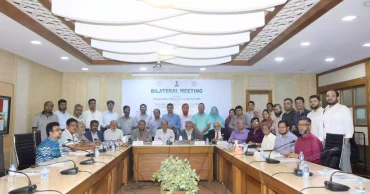
The call was made at a meeting between the Institution of Engineers, Bangladesh (IEB), and Institution of Engineers, Pakistan (IEP) and the Pakistan Engineering Council (PEC) held at the IEB headquarters in Dhaka on Sunday.
IEB President Mohammad Reazul Islam (Rezu) presided over the meeting, which highlighted renewed efforts to strengthen professional collaboration and deepen regional engagement among engineering institutions of the two countries, according to a press release issued on Monday.
Among the participants were IEP President Engr Sohail Bashir and PEC Dr Sarosh Hashmat Lodi.
Participants discussed avenues for expanding technical cooperation, institutional collaboration and knowledge-sharing, with a focus on enhancing professional standards and supporting engineering-led development initiatives.
Officials noted that stronger cooperation between engineering institutions could contribute significantly to regional capacity-building and foster innovation in key sectors such as infrastructure, energy, and digital transformation.
Speaking at the meeting, IEB President Rezu said the initiative reflects a shared commitment to advancing engineering excellence through cooperation and professional engagement.
IEP President Sohail Bashir highlighted the importance of sustained institutional ties, noting that closer cooperation between IEP and IEB will help enhance professional competency and promote innovation-driven development.
Meanwhile, PEC’s Dr Sarosh Hashmat Lodi emphasised the need for strong professional and regulatory cooperation to maintain internationally recognised standards and ensure continuous professional development.
During the discussions, participants explored the possibility of organising joint seminars, workshops, and professional training programmes, along with collaborative research initiatives aimed at strengthening engineering knowledge and technical capacity.
Special emphasis was placed on supporting young engineers and early-career professionals, enabling them to benefit from regional knowledge-sharing platforms and exposure to international best practices.
1 month ago
Bangladesh, US discuss cooperation for future generations
US Special Envoy for Best Future Generations Charles J. Harder has met senior government officials and stakeholders to expand partnerships that support Bangladesh's next generation.
He paid a three-day visit to Bangladesh from April 18 to strengthen Bangladesh-US strategic cooperation on education and the well-being of children.
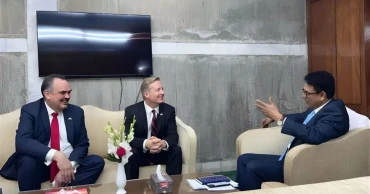
Special Envoy Harder and US Ambassador to Bangladesh Brent T Christensen had a 'productive meeting' with Education Minister Ehsanul Hoque Milon on Monday.
They discussed how American educational expertise can equip Bangladeshi youth with skills that drive economic growth and prosperity.
Special Envoy Harder and Ambassador Christensen also met Foreign Secretary Asad Alam Siam to advance bilateral cooperation and work together on partnerships that benefit future generations in both countries.
Earlier, Special Envoy Harder and Ambassador Christensen visited the Surovi school and health camp.
Their discussion with founder Syeda Iqbal Mand Banu focused on the school's integrated approach to education, nutrition, and health—and how this model is critical for helping future generations thrive, said the US Embassy in Dhaka.
Special Envoy Charles Harder and Deputy Chief of Mission Megan Bouldin visited Lalbagh Fort, hosted by Bangladesh's Department of Archaeology.
The Special Envoy toured the Mughal-era Hammam Khana, which the Ambassadors Fund for Cultural Preservation helped restore—demonstrating U.S. dedication to safeguarding cultural heritage for future generations.
The US Special Envoy arrived in Dhaka on Saturday to advance the 'strategic cooperation' on education and the well-being of children.
The mission of Special Envoy Harder’s office is to protect and promote the interests and well-being of children (0-17) throughout the world.
The focus of his office is the protection and well-being of children throughout the world, with particular focus on food security, education, healthcare, WASH (water, sanitation and hygiene), and ending child labor, trafficking, and recruitment into gangs and armed conflict.
1 month ago
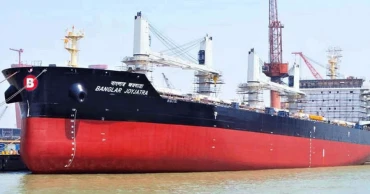
Dhaka requests Tehran to facilitate safe passage of ‘Banglar Joyjatra’ through Strait of Hormuz
Bangladesh has requested Deputy Foreign Minister of Iran Saeed Khatibzadeh to use his good offices to facilitate the safe passage of the Bangladesh-flagged vessel ‘Banglar Joyjatra’ through the Strait of Hormuz.
"We were very thankful when Iran included Bangladesh among the six countries whose vessels would be permitted to cross Hormuz," Foreign Minister Dr. Khalilur Rahman told the Iranian Deputy Foreign Minister during a recent meeting on the sidelines of the Antalya Diplomacy Forum in Turkiye.
The Deputy Foreign Minister of Iran followed up on the matter immediately and informed the Bangladesh Foreign Minister on Sunday night that while the situation continues to remain tense, necessary directives have been given to the authorities concerned in Iran.
The two leaders will continue to maintain communication on the matter, said the Ministry of Foreign Affairs on Monday.
Foreign Minister Dr Khalilur is currently visiting Brussels, Belgium.
Bangladesh and Iran exchanged views on the evolving situation in the Gulf region and other issues of mutual interest.
During the meeting, the Foreign Minister reiterated Bangladesh’s ‘consistent and balanced position’ on the ongoing developments, underscoring the importance of restraint by all parties and the resolution of differences through dialogue and diplomacy.
The Iranian Deputy Foreign Minister appreciated Bangladesh’s constructive stance and expressed hope that the Foreign Minister of Bangladesh would visit Tehran at a mutually convenient time.
Earlier, on 5 April 2026 in Dhaka, Foreign Minister Dr Khalilur held a meeting with Jalil Rahimi Jahanabadi, Ambassador of the Islamic Republic of Iran to Bangladesh, and requested facilitation of safe passage for Banglar Joyjatra as well as another Bangladesh-bound vessel carrying crude oil.
The Ambassador conveyed that the Iranian authorities were being approached at appropriate levels in this regard.
He also appreciated Bangladesh’s balanced stance on the current crisis and expressed gratitude to the Government of Bangladesh for adopting a condolence motion on the opening day of the 13th Parliament session following the targeted assassination of the late Supreme Leader, Ayatollah Ali Khameini.
He thanked the government for deputing Secretary (Bilateral) of Ministry of Foreign Affairs, Dr. Md. Nazrul Islam, to sign the condolence book at the Embassy of Iran on its behalf.
The Iranian Ambassador also conveyed appreciation for the Bangladesh government’s actions to facilitate dispatch of emergency medical supplies to Iran by the Bangladesh Red Crescent Society
Foreign Minister Dr Khalilur noted at that meeting he had addressed an official letter to Iranian Foreign Minister thanking him for the support extended by the Government of Iran to safe passage of 186 Bangladeshis from Iran to Azerbaijan.
1 month ago

Bangladesh, EU to sign PCA in Brussels Monday
Bangladesh and the European Union (EU) are set to sign the Partnership and Cooperation Agreement (PCA) on Monday in Brussels, Belgium as both sides eye to take the relationship to new heights further institutionalising bilateral cooperation.
Once signed, the PCA will serve as the legal and political foundation for the strategic and long-term Bangladesh-EU relationship, said officials at the Ministry of Foreign Affairs on Sunday.
They said it will help strengthen relations between Bangladesh and the EU in many policy areas, from human rights and governance to trade, investment, environmental sustainability and climate change as well as food security, energy, transport and science, technology and innovation.
Moreover, the agreement will also be a significant milestone as Bangladesh moves towards becoming the first South Asian country to sign a PCA with the European Union.
The EU looks forward to the new Partnership and Cooperation Agreement with Bangladesh which will be ‘initialed’ during the visit of the Foreign Minister to Brussels on April 20, enhancing cooperation across the board.
After attending the three-day Antalya Diplomacy Forum, the Foreign Minister and Prime Minister’s Foreign Affairs Adviser Humaiun Kobir left Turkey for Brussels, Belgium on Sunday to attend the signing ceremony.
Secretary (Bilateral) of the Ministry of Foreign Affairs Dr. Md. Nazrul Islam will join.
On his way back home, the Foreign Minister is expected to make a stopover in Addis Ababa, Ethiopia and will return to Bangladesh on April 24, said a senior official.
The fifth round of negotiations between Bangladesh and the European Union on the framework agreement was held in January this year.
Through the negotiations, both sides finalised the text of the agreement.
The negotiations on the proposed PCA started with the explanatory meeting between Bangladesh and the EU in Dhaka in November 2024.
Since then, the two sides engaged in five rounds of discussions and several technical meetings in Dhaka and Brussels, both physically and virtually.
The fifth round on focused particularly on some key thematic areas of mutual interests between Bangladesh and European Union including legal and judicial cooperation, intellectual property rights, energy cooperation, fisheries, aquaculture & ocean governance, trade and investment, human rights, customs cooperation, etc.
1 month ago
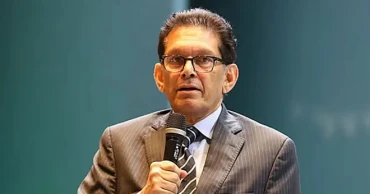
Dhaka looks for regional breakthrough after achieving peace at home: Khalilur Rahman
Foreign Minister Dr Khalilur Rahman has said Bangladesh achieved peace in society following the Uprising of 2024 and they are strongly advocating a ‘much closer and well-functioning’ South Asian Association for Regional Cooperation (Saarc) that will deliver to the people of the region.
“Look, peace starts at home, and with our democratic transition, it has been shown, beyond any doubt, that we have achieved a peaceful society in Bangladesh. Then, regional peace,” he said, adding that they are also trying to resolve the Rohingya issue, one of the longstanding issues in the region.
The Foreign Minister, who attended the three-day Antalya Diplomacy Forum 2026, said they are in touch with all parties to this conflict and believe that they should be able to make advances in resolving this problem in a peaceful manner.
“At least that's what we are trying right now. And when it comes to global peace, Bangladesh is one of the top contributors to peacekeeping operations,” Dr Khalilur told TRT World in an interview before heading towards Brussels.
Responding to a question, the Foreign Minister said the democratic transition they have seen in Bangladesh is ‘historic - historic for Bangladesh and probably for the world’.
He highlighted the smoothness with which power was transferred after ‘extremely well-organised’ elections.
The Foreign Minister said it was the most peaceful in the history of Bangladesh and the government has assumed responsibility on the basis of a historic mandate in which the ruling party got more than two thirds of the seats in Parliament. “So, it's a very resounding mandate. As far as stability is concerned, it was proven beyond doubt on election day.”
Dr Khalilur said they now have a vibrant parliament where policies are debated very vigorously, and a civil society that is very active with a free press.
“So, we have very energetic policy debates. The most important thing is leadership. Our Prime Minister is dedicated to leading the country in a manner that improves the lot of the ordinary people, very substantially and very quickly,” he said.
The Foreign Minister said South Asia is the least integrated region of the world and it has one fourth of the world's population, yet intra-regional trade is only 5% compared to 20% in Asean, which is not very good.
“My Prime Minister's father, President Ziaur Rahman was the first one who thought of bringing greater integration in this region and he advanced the idea of South Asian regional cooperation,” he said, adding that reviving Saarc is a major foreign policy objective of Prime Minister Tarique Rahman.
The Foreign Minister said it is through dialogue and diplomacy; they will remove the obstacles to their cooperation. “And that's what we'll be dedicated to.”
Asked about the relations with Turkey, the Foreign Minister said it is an exceptional and special relationship and both sides value it very highly.
He said his first bilateral visit was to Turkey at the invitation of his Turkish counterpart and it was his second visit within weeks.
Asked a question on the Bangladeshi diaspora, Dr Khalilur said it is an extremely important part of their lives and these are people who live, work and study abroad.
“So, our message to the diaspora is that we are a part and parcel of the same society. We will contribute to our society's well-being, and this is a government which will do everything to make that happen,” he said.
1 month ago
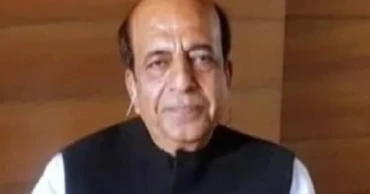
India to send veteran politician Dinesh Trivedi as next envoy to Bangladesh: Report
The Indian government has reportedly decided to send 75-year-old veteran politician and former Union Minister Dinesh Trivedi as next India’s High Commissioner to Bangladesh.
As a first political appointee in the neighbourhood after a long time, BJP leader Trivedi will replace career diplomat Pranay Verma, who will move to Brussels as the Indian Ambassador to the European Union (EU), reports Hindustan Times on Sunday, describing the move as a significant development.
However, a diplomatic source in New Delhi told UNB that there has been no official announcement yet.
Meanwhile, Amit Malviya, in-charge of BJP’s National Information and Technology Department and co-incharge West Bengal congratulated Dinesh Trivedi for being appointed as India's envoy to High Commissioner to Bangladesh.
“Congratulations to Sri Dinesh Trivedi, senior BJP leader, former Union Minister and Barrackpore MP, for being appointed as India’s High Commissioner to Bangladesh,” Amit Malviya said in a post on X.
Trivedi was a Union Minister for Railways and Minister of State for Health and Family Welfare during the UPA regime, as a member of the Trinamool Congress.
He resigned from the TMC on February 12, 2021 and joined the BJP on March 6, 2021.
Pranay Verma, current Indian High Commissioner to Bangladesh, has recently been appointed as the next Ambassador of India to the Kingdom of Belgium and the European Union.
On April 10, the Ministry of External Affairs of India announced his appointment, noting that he will be accredited as Ambassador of India to the European Union.
Pranay Verma is expected to take up the assignment shortly.
Diplomatic sources told UNB that High Commissioner Verma is likely to continue here for one or two months as the new Indian High Commissioner to Bangladesh has yet to be announced.
Pranay Verma, who served as Ambassador of India to Vietnam, arrived in Dhaka on September 21, 2022.
1 month ago
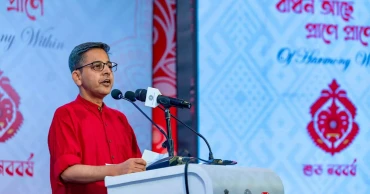
Cultural bonds ‘older, deeper’ than national boundaries: Pranay Verma
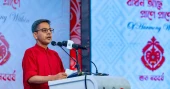
Indian High Commissioner to Bangladesh Pranay Verma has said that the cultural bonds between Bangladesh and India are ‘older and deeper’ than national boundaries, noting that two eminent singers - Adity Mohsin and Srikanta Acharya - from both sides of the border were brought together on one stage.
“Their presence here is symbolic of the cultural continuum that unites us - in a shared musical and literary tradition that continues to flourish on both sides of the border. Cultural exchanges such as this are not merely artistic engagements; they are bridges of understanding. They foster dialogue, build trust, and bring our people closer,” said the Indian envoy.
He made the remarks while speaking at a musical evening on Saturday.
The celebration featured the noted Rabindra Sangeet exponent from Bangladesh Adity Mohsin, joined by acclaimed Bengali singer from India Srikanta Acharya in a melody-filled rendition of the shared heritage of music, festivity and culture between the two countries.
The High Commission of India in Dhaka hosted a two-day musical evening on April 17 and 18 titled “Badhon Ache Praane Praane: Of Harmony Within” at the IGCC premises to mark the Pohela Boishakh and Bengali New Year.
The event was partnered by HSBC Bangladesh as public-private collaboration in promoting heritage and creativity.
1 month ago

Nearly 900 Rohingya lost at sea in 2025, a new high: UNHCR
Nearly 900 Rohingya refugees died or went missing in the Andaman Sea and the Bay of Bengal in 2025, making it the deadliest year on record for sea crossings in South and Southeast Asia, according to the UN Refugee Agency (UNHCR).
The agency said more than 6,500 Rohingya attempted the dangerous sea journey during the year, with around one in seven reported dead or missing. This marks the highest death toll recorded on any major maritime route used by refugees and migrants worldwide, it said.
UNHCR mentioned that more than half of those attempting the journey in recent years have been women and children, a trend that has continued into 2026. Between January and April 13 this year, more than 2,800 Rohingya have already attempted the crossing.
The dangers were highlighted by a recent tragedy in which an overloaded boat departing from Bangladesh sank in rough seas in the Andaman Sea on 26 March.
Around 250 people are believed to be missing. Nine survivors were later rescued near the Andaman Islands on 9 April. UNHCR said it is providing medical, psychological and counselling support to survivors and is ready to assist local authorities.
Despite the risks of trafficking, exploitation and death at sea, return to Myanmar voluntarily, safely and with dignity. However, ongoing conflict, persecution and lack of citizenship prospects continue to prevent their return. Many Rohingya continue to attempt the journey. The overcrowded and unsafe boats usually depart from Cox’s Bazar in Bangladesh or Rakhine State in Myanmar, heading towards Indonesia or Malaysia.
UNHCR said many Rohingya refugees want to return to Myanmar voluntarily, safely and with dignity. However, ongoing conflict, persecution and lack of citizenship prospects continue to prevent their return.
At the same time, a severe funding shortage has reduced humanitarian assistance in Bangladesh, while instability in refugee camps and limited access to education and livelihoods are pushing some to take dangerous routes.
The agency has called on countries in the region to save lives by tackling human trafficking networks, addressing the root causes of displacement, expanding safe and legal migration pathways, and strengthening regional cooperation.
More than 1.3 million Rohingya refugees and asylum seekers are currently displaced across the region, including about 1.2 million in Bangladesh.
The 2025 Joint Response Plan has so far received only 53 percent of the required funding, highlighting an urgent need for greater international support.
1 month ago
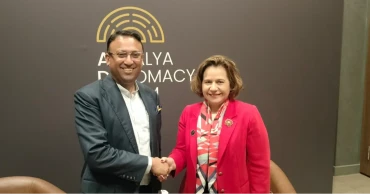
Bangladesh, Turkey discuss ways to boost cooperation in key sectors
Foreign Affairs Adviser to the Prime Minister Humaiun Kobir and Turkish Deputy Foreign Minister Berris Ekinci have discussed ways to further strengthen bilateral cooperation between Bangladesh and Turkey in multiple areas.
The discussion was held on the sidelines of the Antalya Diplomacy Forum in Türkiye on Saturday, according to a statement of the Ministry of Foreign Affairs.
During the discussions, both sides focused on expanding cooperation in trade, investment, development partnership, and engagement in regional and global forums.
Bangladesh seeks aerospace partner, eyes win-win cooperation with Turkey
They also exchanged views on strengthening long-standing bilateral relations based on mutual respect, shared values, and strategic interests.
The Foreign Affairs Adviser highlighted the importance of deepening Bangladesh–Turkey relations and enhancing collaboration in key sectors.
Berris Ekinci expressed Turkey’s strong interest in further expanding ties with Bangladesh, particularly in economic cooperation, development support, and people-to-people exchanges.
She also hailed Bangladesh’s socio-economic progress.
The two sides also discussed important regional and international issues, stressing the need for dialogue, diplomacy, and multilateral cooperation to address global challenges.
The meeting was held in a cordial and constructive atmosphere, reflecting the growing partnership between the two countries, it said.
Both sides expressed optimism about future cooperation and agreed to maintain regular high-level engagement.
1 month ago
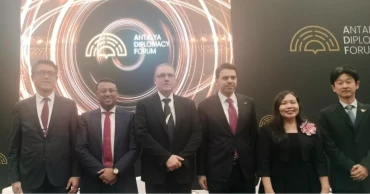
Traditional aid channels no longer enough amid changing world: Humaiun Kobir
Prime Minister’s Foreign Affairs Adviser Humaiun Kobir has said that relying only on traditional aid is no longer enough in today’s changing world.
Instead of depending on foreign help, countries should work together to build their own strengths, he said.
The adviser presented a newly proposed Public-Private Partnership (PPP) model, introduced under the leadership of Prime Minister Tarique Rahman, at the Antalya Diplomacy Forum in Türkiye.
Dhaka thanks Islamabad for its 'commendable diplomatic efforts' to bring conflict to negotiated end
He delivered his remarks during a plenary session titled ‘Shrinking Aid and Capacity Building’, alongside distinguished speakers from international organizations, including the United Nations (UN), TİKA, and JICA, said the Ministry of Foreign Affairs on Saturday.
He specifically highlighted three main points: improving people's skills for long-term progress, educating and empowering women so everyone benefits, and sharing of advances in medical technology to provide better healthcare.
Kobir called for a transformative approach - ‘aid for capacity building, skills development, and technology transfer’, as a forward-looking framework to address global development challenges in an era of shrinking aid.
1 month ago