foreign-affairs

Two-day ‘Korean Story Festival’ begins in city Apr 17
A two-day South Korean film festival titled ‘Korean Story Festival 2026’ will be held at the Bangladesh National Museum on April 17-18, celebrating the richness and diversity of Korean movie.
The festival aims to bring together film enthusiasts and cultural lovers by showcasing a curated selection of acclaimed Korean films spanning multiple genres, including drama, action, history, and slice-of-life storytelling.
The festival is open to all viewers free of charge, said the Embassy of the Republic of Korea on Wednesday.
Viewers will have the opportunity to enjoy five popular Korean movies - Mal-Mo-E: The Secret Mission, Luck Key, Assassination, Little Forest and Escape from Mogadishu.
The Korean Story Festival is designed to strengthen cultural exchange between Bangladesh and South Korea through the universal language of movie.
Each film reflects unique aspects of Korean history, society, and everyday life, offering Bangladeshi audiences a deeper understanding of Korean culture.
1 month ago
Bangladesh welcomes ceasefire in Middle East
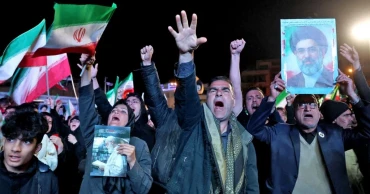
Bangladesh has welcomed the temporary ceasefire in the ongoing conflict in the Middle East describing it as an encouraging step towards de-escalation in the region.
“Bangladesh hopes that all parties involved will respect the ceasefire and utilise this opportunity constructively to work towards a durable and sustainable resolution and restore lasting peace and stability across the region,” said a statement issued by the Ministry of Foreign Affairs.
Bangladesh appreciates all parties involved in the diplomatic efforts in facilitating the ceasefire.
Bangladesh reiterates that all disputes can and should be resolved peacefully through dialogue and diplomacy.
Pakistan says Iran confirms participation in Islamabad peace talks
1 month ago
Bangladesh invited to become full member of International Big Cat Alliance
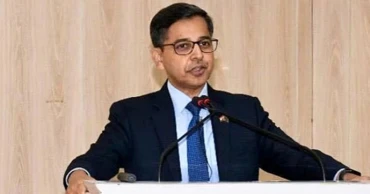
Indian High Commissioner to Bangladesh Pranay Verma on Wednesday said they are exploring areas of cooperation based on national priorities, noting that environment and climate change naturally appear very high in that priority.
"Environment and climate change - both are areas are very important part of our domestic governance in India and Bangladesh," he told reporters after a meeting with Environment, Forest and Climate Change Minister Abdul Awal Mintoo at Secretariat.
The High Commissioner said they have invited Bangladesh to become a full member of the International Big Cat Alliance that they have recently launched.
Dhaka, Delhi discuss strengthening bilateral ties, says Jaishankar
Bangladesh also attended the inaugural meeting.
The International Big Cat Alliance (IBCA) is a global conservation initiative launched by India in April 2023 to protect the world's seven major big cats: tiger, lion, leopard, snow leopard, jaguar, puma, and cheetah.
"I briefed the Minister about what we are doing in the renewable energy sector.
India has a very ambitious target. It has achieved a lot in terms of its renewable energy and non-fossil fuel energy portfolio," he said, noting that they have a very ambitious target of 500 gigawatt of renewable energy capacity in the next few years.
The High Commissioner shared some of those experiences - what kind of institutional mechanisms they have built to achieve that capacity and how they can work together in the renewable energy capacity building for Bangladesh.
The High Commissioner said there are many areas which are common to their interest like climate change, energy transition and renewable energy.
"We discussed also in detail about carbon trading system, which Bangladesh is also going to introduce," Pranay Verma said.
He said they also have a carbon trading market. "So, these are the kind of experiences that we shared, and we discussed how we can take them forward."
The two sides also discussed about conservation areas like forestry, wildlife, and also how tbey can cooperate together in international initiatives that they are both members, like International Solar Alliance, Coalition for Disaster, Resilient Infrastructure.
Pranay Verma described his meeting with the Environment Minister as "excellent" and said they discussed a lot of areas of how they can have closer cooperate together both bilaterally and internationally in the days ahead.
1 month ago
Adviser Kobir hands over PM's letter addressed to BJP National President
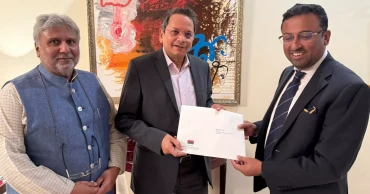
Prime Minister’s Foreign Affairs Adviser Humaiun Kobir has met Dr. Vijay Chauthaiwale, in-charge, Department of Foreign Affairs, Bharatiya Janata Party (BJP) in New Delhi.
During the meeting, Adviser Kobir handed over a letter to Dr Vijay from Prime Minister and BNP Chairman Tarique Rehman addressed to BJP National President Nitin Nabin.
Shishir Bajoria accompanied the BJP leader at the meeting.
Adviser Humaiun Kobir is currently accompanying Foreign Minister Dr Khalilur Rahman in New Delhi.
1 month ago
Delhi to consider Dhaka’s request for increased diesel, fertiliser supply ‘favourably’
Bangladesh on Wednesday thanked the Indian government for the recent supply of diesel and requested an increased volume of diesel and fertiliser supply to Bangladesh while the Indian side indicated that it would consider the request “readily and favourably.”
Dhaka also reiterated its request for the extradition of former Prime Minister Sheikh Hasina and her Home Minister Asaduzzaman Khan Kamal. They have been awarded the death penalty by the International Crimes Tribunal in Bangladesh.
Bangladesh thanked the Indian authorities for apprehending the suspected killers of Shaheed Osman Hadi.
Both sides agreed that the arrested individuals would be returned to Bangladesh in accordance with the procedures laid out in the extradition treaty between the two countries.
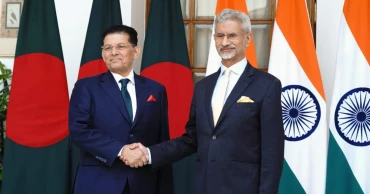
Foreign Minister Dr Khalilur Rahman raised these issues during his meetings in New Delhi. He met Indian External Affairs Minister Dr S. Jaishankar and Oil and Natural Gas Minister Hardeep Singh Puri.
Prime Minister’s Foreign Affairs Adviser Humaiun Kobir and Bangladesh High Commissioner to India Riaz Hamidullah were present at the meetings.
The Bangladesh side also held a meeting with India’s National Security Adviser Ajit Doval on Tuesday evening after arriving in New Delhi.
Although a future visit by Prime Minister Tarique Rahman to India is under discussion, neither Bangladesh nor India mentioned any specific date in their separate readouts issued on Wednesday.
Indian Prime Minister Narendra Modi has already invited Prime Minister Tarique, his wife Dr Zubaida Rahman, their daughter Barrister Zaima Rahman to pay a visit to India at a convenient time.
“A warm welcome awaits you in India,” Modi said in his recent letter handed over to PM Tarique by Speaker of the Indian Lok Sabha Om Birla who represented the government of India at the swearing-in ceremony of the newly elected government of Bangladesh.
1 month ago

13 countries urge Bangladesh visa applicants to follow official procedures
Thirteen countries including Australia, Canada, and the United Kingdom (UK) have jointly urged all applicants in Bangladesh to follow official procedures when seeking visas, permits, or other consular services
The countries urged the Bangladeshi applicants not to use any false documents.
"Do not use falsified documents, unreliable or unlicensed agents, or make payments to unauthorised individuals, agents, or missions," according to a joint message shared by the British High Commission in Dhaka.
Such action can lead to delays, financial loss, refusal at borders, and/or serious legal consequences, it said.
"No mission is affiliated with any agents," said the message.
Applicants in Bangladesh are 'strongly advised' not to rely on intermediaries claiming special access or influence over visa decisions.
"Always rely on verified information and official channels provided by legitimate authorities," the message reads.
The countries, through its diplomatic missions stationed in Dhaka, said their shared priority is to ensure a safe, fair, and transparent application process for everyone.
Germany, Italy, Sweden, Switzerland, Norway, Spain, France, and Denmark are among the thirteen countries.
1 month ago
China ready to deepen water resources co-op with Bangladesh: Envoy
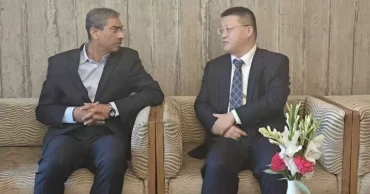
Chinese Ambassador to Bangladesh Yao Wen on Tuesday expressed his country’s readiness to further deepen cooperation with Bangladesh in key areas of water resources management.
He made the remarks during a meeting with Water Resources Minister Md Shahiduddin Chowdhury Anee and State Minister Forhad Hossain Azad.
The meeting focused on strengthening bilateral collaboration in the water sector.
Ambassador Yao said China is willing to enhance cooperation in hydrological information sharing, flood forecasting, capacity building and personnel training, as well as in water resources management and water conservancy project implementation.
He noted that China and Bangladesh have maintained long-standing friendly cooperation in the sector, yielding fruitful results.
The Bangladeshi side emphasised that water resources collaboration is a key pillar of bilateral relations and expressed eagerness to expand experience sharing and practical cooperation for the benefit of both peoples.
1 month ago
Indian High Commissioner visits DU
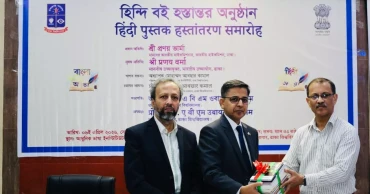
Indian High Commissioner to Bangladesh Pranay Verma has visited Dhaka University (DU) and met with its Vice Chancellor Prof ABM Obaidul Islam and other senior faculty members.
They exchanged views on advancing educational cooperation and academic exchanges between DU and prominent Indian universities and institutions, said the Indian High Commission on Tuesday.
During the visit, the High Commissioner toured DU’s Department of Theatre and Performance Studies, Department of Music and Department of Dance, where he interacted with teachers and students and also witnessed some of their performances.
FM Khalilur set to meet 3 key Indian Ministers in Delhi Wednesday
1 month ago
Bangladesh, Australia discuss possibility of LNG supply
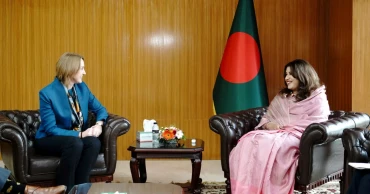
Australian High Commissioner to Bangladesh Susan Ryle on Tuesday met State Minister for Foreign Affairs Shama Obaed Islam and discussed the possibility of the liquefied natural gas (LNG) supply from Australia to Bangladesh to meet the energy demand.
She also talked about possible bilateral cooperation in agriculture and climate change sector as well as enhancement of bilateral trade and investment.
An Australian Parliamentary delegation led by the Speaker of the House of Representatives Milton Dick, MP is visiting Bangladesh this week.
The Australian High Commissioner briefed the State Minister for Foreign Affairs about the visit during the meeting at the ministry.
During the visit, the Australian delegation will meet the Speaker of Jatiya Sangsad Hafiz Uddin Ahmed, Bir Bikram, MP.
They will have a guided tour of the Parliament building and July Revolution Memorial Museum.
The delegation is also expected to observe the parliament proceedings, said the Ministry of Foreign Affairs.
The State Minister stressed on cooperation in skill development of our labour forces and women empowerment.
She expressed hope that the visit would inject new momentum into Bangladesh-Australia bilateral relations following the formation of the new government.
1 month ago
Bangladesh, UK sign aviation MoU to strengthen PPP cooperation
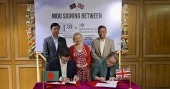
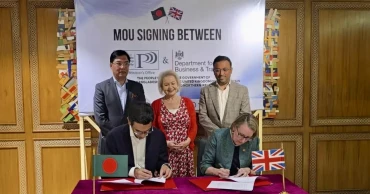
Bangladesh and the United Kingdom on Tuesday signed a Memorandum of Understanding (MoU) to enhance cooperation in Public-Private Partnerships (PPP), reinforcing their shared commitment to boosting investment and sustainable infrastructure development in the aviation sector.
Ashik Chowdhury, Chief Executive Officer of the PPP Authority of Bangladesh, and Sarah Cooke, British High Commissioner to Bangladesh, signed the MoU in the presence of the UK Trade Envoy, Baroness Rosie Winterton of Doncaster, DBE.
The UK trade envoy is visiting Dhaka to reinforce and expand the longstanding and mutually beneficial UK–Bangladesh trade and economic partnership.
The agreement marks a significant step in strengthening bilateral collaboration, with a focus on investment facilitation, knowledge exchange, capacity building, and increased private sector participation in the aviation sector.
Speaking at the event, Baroness Rosie Winterton said Bangladesh and the UK are close economic partners.
“This MoU demonstrates our shared ambition to develop an aviation sector that underpins trade, tourism, and economic growth. The MoU provides a platform for investment and job creation that will benefit both our countries. I look forward to seeing today’s agreement translate into real progress on the ground.”
British High Commissioner to Bangladesh Sarah Cooke said as one of the largest investors in Bangladesh the UK is a reliable, long-term economic partner.
“Today’s MoU reflects our shared commitment to strengthen that partnership to drive mutually beneficial trade, investment and economic growth,” she said.
State Minister, Ministry of Civil Aviation and Tourism M Rashiduzzaman Millat said, “I am pleased to witness this MoU, which will hopefully further strengthen the partnership and business ties between Bangladesh and the UK.”
He said they are confident that PPPA will carry forward the country’s agenda in line with the instructions of Prime Minister Tarique Rahman. “I assure our full support and commitment to Bangladesh-UK engagement that create mutual benefit for both countries.”
Ashik Chowdhury said this MoU is an important step forward. “The support of the Prime Minister’s Office and the commitment of the Ministry of Civil Aviation and Tourism have helped to bring us to this point.”
He said the UK is one of Bangladesh’s largest investors but they have not seen a major new UK investor enter the market in recent years.
“This sends a clear signal that Bangladesh is open for business and ready for a new generation of investments. It also creates opportunities for our young workforce and supports its growing global mobility. We are excited about the potential ahead.”
Prime Minister’s Adviser Humaiun Kobir said the UK is an important development partner for Bangladesh.
He said Bangladesh is open for business to the world and is committed to further strengthening its relationship with the UK.
“We want to unlock the creative potential of our people, particularly our young people, as well as the strength and dynamism of British diaspora businesses. We also want to deepen and expand our business engagement with the UK. I believe this agreement will help pave the way for broader, more wide-ranging collaboration across sectors.”
Senior officials including State Minister M. Rasheduzzaman Millat of the Ministry of Civil Aviation and Tourism, Director of Trade and Investment Sakib Ershad, and Deputy Director of Trade and Investment Saiyab Ahmed, among others, attended the event.
1 month ago