foreign-affairs

Vietnam opens market for Bangladeshi potatoes
The government of Vietnam has officially opened its market for the import of potatoes from Bangladesh.
The Ministry of Agriculture and Environment of Vietnam on Friday granted approval for Bangladesh to export potatoes to Vietnam.
According to Vietnam’s regulations, any country seeking to export potatoes must submit registration documents to the Ministry of Agriculture and Environment of Vietnam.
The authorities then review and verify all submitted information before granting approval.
The Embassy of Bangladesh in Hanoi, in coordination with the Ministry of Commerce, the Ministry of Agriculture, and the Ministry of Food of Bangladesh initiated the registration process in May 2025.
The process has now been successfully completed, making Bangladesh eligible to export potatoes to Vietnam from March 27.
Ambassador Md. Lutfor Rahman said this development will create significant opportunities for Bangladeshi potato exporters and also benefit the local farmers.
He said Vietnam has a strong demand for potatoes, and this export opportunity will contribute to reducing the trade imbalance between the two countries.
The Ambassador expressed hope that this achievement will pave the way for the export of other plant-based products from Bangladesh to Vietnam, such as sesame.
He said the Embassy will continue its efforts to expand market access for more Bangladeshi agricultural products in Vietnam.
2 months ago
When supported and scaled, ideas can contribute to solving global challenges: Prof Yunus
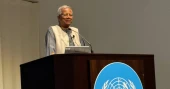
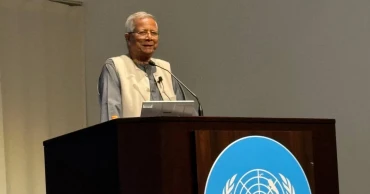
Nobel Peace Prize Laureate Prof Muhammad Yunus has emphasised the importance of collective effort saying ideas, when supported and scaled, can contribute to solving global challenges.
He also highlighted ongoing initiatives in healthcare and introduced the vision for Grameen University, an entrepreneurship-driven institution designed to enable students to build and launch ventures during their studies.
Prof Yunus made remarks while speaking at the Yunus Global Forum 2026 held at the United Nations University, Tokyo on Thursday, organised by Earth Identity Project, led by Kawahara-san.
The forum brought together practitioners, students, and leaders to discuss social business and the vision of a world with three zeros—zero poverty, zero unemployment through entrepreneurship and zero net carbon emissions.
The event featured keynote remarks by Professor Muhammad Yunus, alongside speeches from the Bangladesh Ambassador and the Vice Rector of the United Nations University.
Japanese social businesses presented practical models, including large-scale circular economy initiatives focused on recycling, plastics, and resource efficiency.
A notable presentation came from Mitsuru Izumo, founder of Euglena, who shared that more than 20 million packets of Euglena-fortified biscuits have been distributed to schoolchildren in Bangladesh to address nutrition challenges.
He noted that his journey began 27 years ago as a JICA volunteer in Bangladesh, where he was inspired by Professor Yunus and the work of Grameen Bank.
Euglena, a nutrient-rich microorganism, is also being developed as a biofuel, with early applications already tested in aviation.
Three “Three Zero Club” presentations drew attention, particularly as they were delivered by school students engaged in social business initiatives.
One focused on reducing plastic waste through water stations and reusable bottles.
Another explored the use of Washi, a traditional Japanese material, for low-cost and climate-sensitive housing in Bangladesh. A third introduced “My Earring,” a product designed to be worn without ear piercing.
Additional insights were shared by the mayor of Sakai in Ibaraki Prefecture, where local innovations in governance, taxation, and transport are being implemented as potential models.
The forum also included a panel discussion on advancing the three zeros agenda, focusing on scaling ideas, collaboration, and implementation.
Md. Ashraful Hassan, Managing Director and CEO of Grameen Telecom Trust; Lamiya Morshed, Executive Director of the Yunus Centre; and Shazeeb M Khairul Islam, Founder of YY Ventures, also attended the forum.
2 months ago
Bangladesh achieved remarkable socio-economic progress in 5 decades: FM
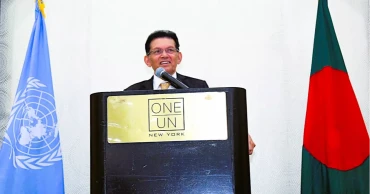
Foreign Minister Dr Khalilur Rahman has said Bangladesh has successfully overcome significant challenges over the past five decades and achieved remarkable socio-economic progress through constructive engagement in line with the principles of the UN Charter.
Speaking at a reception in New York as the chief guest, he highlighted that, since becoming a member of the UN in 1974, Bangladesh has embraced multilateralism as a cornerstone of its foreign policy.
Reaffirming Bangladesh’s unwavering commitment to international peace and security, the Foreign Minister underscored the country’s significant contributions to UN peacekeeping operations and its continued humanitarian support for the Rohingya people.
Bangladesh Permanent Mission to the United Nations hosted the reception to celebrate the 56th Independence and National day of Bangladesh at a local hotel in New York.
The programme was attended by around 150 Permanent Representatives, high officials of the UN, distinguished members of the diplomatic community and other international organizations, according to Bangladesh Permanent Mission in New York.
Permanent Representative of Bangladesh Ambassador Salahuddin Noman Chowdhury said 26 March symbolises not only the birth of the nation but also the enduring triumph of the people’s will, dignity and freedom.
The Permanent Mission also organised a discussion session at its auditorium where the messages from the dignitaries were read out and a special documentary on the significance of the day was also screened.
2 months ago
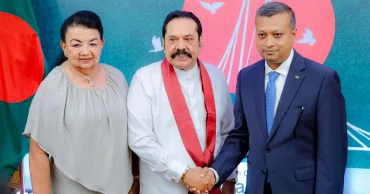
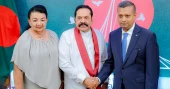
Bangladesh High Commission in Colombo celebrates 55th Independence Day
The Bangladesh High Commission in Colombo observed the 55th Anniversary of the Independence and National Day of Bangladesh with due fervor and festivity on March 26.
The day commenced at the chancery with the ceremonial hoisting of the National Flag.
In the evening, a reception was hosted at The Kingsbury Hotel, Colombo.
Dr Nalinda Jayatissa, Minister of Health and Mass Media of Sri Lanka, graced the occasion as the chief guest, said a media release.
The event was further honored by the presence of former Presidents and Prime Ministers of Sri Lanka, Ministers, former Speakers of Parliament, Deputy Speaker, Governors of the Provinces, Members of Parliament, heads of diplomatic missions, representatives of international organizations, Senior civil and military bureaucrats, business leaders, media professionals, and members of civil society.
The guests were enthralled by a cultural performance presented during the event, said a media release.
The celebration also received wide media coverage, with special supplements published in four leading English dailies of Sri Lanka.
2 months ago
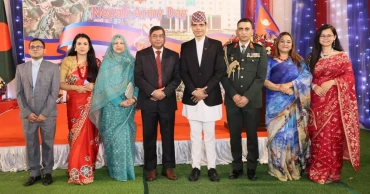
Bangladesh Army Chief lauds Nepal Army's role as ‘wall of defence’
Chief of the Army Staff of Bangladesh General Waker-Uz-Zaman on Friday commended the role of the Nepal Army as a ‘wall of defence’ not only against external threats but also during natural disasters in Nepal.
Speaking as the chief guest at a programme, he expressed satisfaction over the ‘strong and amicable’ relations between the armed forces of Bangladesh and Nepal and emphasised the importance of further strengthening collaboration in the future.
The Nepalese Embassy hosted the programme to observe the 263rd Raising Day of the Nepali Army in the evening.
Nepalese Ambassador to Bangladesh Ghanshyam Bhandari underscored that the Nepali Army stands as an epitome of bravery, unwavering dedication, and service to the nation.
Emphasising the growing momentum of military cooperation between Nepal and Bangladesh, he stated that regular exchanges, training collaboration, capacity-building efforts, and joint exercises have further strengthened the camaraderie between the armed forces of the two countries.
The Ambassador noted that the day commemorates a defining chapter in the country’s history towards becoming a sovereign, unified, and modern nation.
In his welcome remarks, Military Attaché Brigadier General Anjan Keshar Khatri underscored the Nepali Army’s role in safeguarding the country’s independence, sovereignty, and territorial integrity.
He also highlighted its contributions to national development efforts, environment conservation, and response to natural disasters.
He stressed the Nepali Army’s role in promoting global peace and security through its participation in UN peacekeeping missions.
Participants in the event included government officials of Bangladesh, ambassadors and heads of mission, high-ranking officers from the armed forces of Bangladesh, defence attachés, business and civil society leaders, and representatives from the Nepali community based in Dhaka, among others.
2 months ago
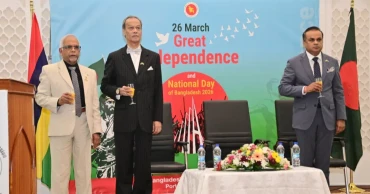
Bangladesh Independence Day observed with cultural program in Mauritius
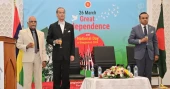
The Bangladesh High Commission in Port Louis, Mauritius, hosted a grand reception on Thursday to mark the 55th Independence and National Day of the People’s Republic of Bangladesh, showcasing pride, festivity, and cultural heritage.
Dr. Zokey Ahad, Ph.D., High Commissioner of Bangladesh, welcomed the guests, while the event was graced by Dharambeer Gokhool, G.C.S.K., President of Mauritius, as the Chief Guest. Other distinguished attendees included Jean Yvan Robert Hungley, G.O.S.K., Vice-President, and Dhananjay Ramful, Minister of Foreign Affairs, Regional Integration and International Trade.
The reception venue at the Islamic Cultural Centre in Port Louis was adorned with colourful lights, banners, and festoons.
The ceremony saw the presence of high-profile Mauritian dignitaries, including Shirin Aumeeruddy-Cziffra, Speaker of the National Assembly; Bibi Rehana Mungly-Gulbul, Chief Justice of the Supreme Court; Muhammad Reza Cassam Uteem, Minister of Labour and Industrial Relations; M. I. Abdool Rahman, Electoral Commissioner; three former Presidents; and a former Vice-President.
The formal program began with a toast to the President and people of Bangladesh, reciprocated by a toast to the President and people of Mauritius proposed by the High Commissioner. National anthems of both nations were performed by the Mauritius Police Band, followed by a statement from the High Commissioner and a performance of a Bangla folk song.
The ceremonial segment concluded with the joint cutting of a cake by the High Commissioner, the Mauritian President, and the Foreign Minister.
A documentary titled Notun Surjoo and a special exhibition highlighting key moments of the July-August 2024 mass movement were also showcased.
In his remarks, High Commissioner Dr. Ahad paid tribute to the martyrs and freedom fighters of Bangladesh’s 1971 Liberation War and the victims and heroes of the July-August 2024 revolution, observing a minute of silence.
He highlighted Bangladesh’s rapid economic growth, investment opportunities, over 100 economic zones, and a dedicated foreign investment zone in Cox’s Bazar’s Sabrang Tourism Park.
Dr. Ahad thanked the Mauritian government for supporting the Bangladeshi expatriate community, noting their significant contribution to the local economy.
He reaffirmed Bangladesh’s support for the rights of the Chagos Archipelago population and expressed gratitude for Mauritius’s consistent backing on the Rohingya issue.
The High Commissioner emphasized the historical, political, and cultural ties between the two nations and highlighted religious diversity and harmony in both countries.
Dr. Ahad also urged diplomats present to support Bangladesh’s candidature for the Presidency of the 81st UN General Assembly.
Around 350 guests attended the reception, including cabinet members, National Assembly representatives, diplomats, business leaders, media personnel, and members of the Bangladeshi community in Mauritius.
Bangladesh highlights importance of enhancing bilateral relations with Mauritius
Guests enjoyed Bangladeshi folk music, cuisine, and were presented with Bangladeshi food products and tourism publications in jute gift bags.
The event received extensive coverage in Mauritian print and electronic media.
Earlier in the morning, the High Commissioner formally hoisted the Bangladesh national flag at Bangladesh House, followed by the singing of the national anthem by all officials and staff.
2 months ago
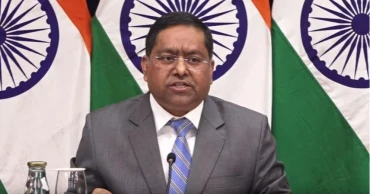
1971 Genocide: India supports Bangladesh in its desire for justice
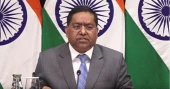
India on Friday said Pakistan remains in denial over the atrocities it committed during ‘Operation Searchlight’ in 1971, including the systematic and targeted killing of millions of innocent Bangladeshi people and widespread sexual violence against women, which forced millions to flee and seek refuge in India.
“These atrocities, needless to say, shook the conscience of the world at large. Pakistan, however, remains in denial to this very day of its crimes. We support Bangladesh in its desire for justice,” Indian Ministry of External Affairs spokesperson Randhir Jaiswal told reporters at a regular briefing in New Delhi on Friday.
He said they are all aware of the terrible atrocities that were committed by the Pakistan in 1971.
The MEA spokesperson said the genocide involved systematic and targeted killing of millions of innocent Bangladeshi people and mass sexual violence against women.
It also forced millions of Bangladeshi people to leave their country who went to India as refugees.
Earlier, Prime Minister Tarique Rahman said in the history of freedom-loving Bangladesh, 25 March 1971 remains one of the most disgraceful and brutal days.
India looks forward to working closely with Bangladesh: Indian President
On that dark night, he said, the Pakistani occupation forces carried out one of the most heinous genocides in history against the unarmed people of Bangladesh in the name of ‘Operation Searchlight’.
The Prime Minister said they indiscriminately opened fire on teachers, intellectuals and innocent civilians at various places, including Dhaka University, Pilkhana and Rajarbagh Police Lines, killing many people. “The genocide of 25 March was a pre-planned massacre.”
2 months ago

Dhaka-Delhi ties regain momentum with renewed engagement
The relationship between Bangladesh and India appears to be regaining momentum, marked by renewed engagement from both sides after a period of sharp deterioration, with both countries now placing greater emphasis on dispelling ‘mistrust’ and replacing it with a foundation of ‘mutual respect and mutual cooperation’.
Following the formation of a government led by Prime Minister Tarique Rahman, renewed engagement between Dhaka and New Delhi has become increasingly visible, signaling a potential shift toward more constructive cooperation in the days ahead, a senior government official told UNB.
He said this re-engagement, following strained relations during the interim government, suggests a mutual willingness to reset the tone of bilateral ties, with both sides prioritising dialogue, economic collaboration, and regional connectivity.
“India looks forward to partnering with Bangladesh for advancing mutual progress and prosperity,” said Minister of State for External Affairs Kirti Vardhan Singh on Thursday, noting that the Bangladesh-India relationship rests on an enduring foundation of shared sacrifices during the Liberation War.
In the lead-up to the election, Indian External Affairs Minister Dr S. Jaishankar attended the funeral of late Prime Minister Khaleda Zia in Dhaka.
In Delhi, Indian Defence Minister Rajnath Singh visited the Bangladesh High Commission to pay homage to Begum Zia.
Speaker of the Indian Lok Sabha Om Birla and Foreign Secretary Vikram Misri attended the new government's swearing-in ceremony in Dhaka.
Bangladesh High Commissioner to India M Riaz Hamidullah met Indian External Affairs Minister Dr Jaishankar at the Ministry of External Affairs in Delhi on March 20.
Although it had been nearly a year since his posting, the meeting is seen as a positive signal toward greater engagement, a diplomat told UNB, adding that their discussions focused on advancing bilateral ties.
The meeting came amid Indian media reports suggesting that Foreign Minister Dr Khalilur Rahman is expected to make a brief visit to New Delhi in April, the first since the new government was formed.
“This is not yet finalised,” a senior official said, noting that both foreign ministers are scheduled to attend the 9th Indian Ocean Conference, to be held in Mauritius from April 10-12.
The conference, organised by the India Foundation in association with the Government of Mauritius and India’s Ministry of External Affairs, will be held under the theme “Collective Stewardship for Indian Ocean Governance.”
It will bring together leaders, policymakers, and experts from across the Indian Ocean region to deliberate on shared responsibilities, cooperative frameworks, and the future of regional governance, organisers said.
Relations with the new government in Bangladesh are being seen as a ‘welcome change’, with both sides showing sensitivity to each other’s concerns and cautiously rebuilding ties for a stronger Bangladesh-India partnership, a diplomatic source told UNB.
During the interim government, he said, there appeared to be a ‘deliberate attempt’ to derail relations with India, even as New Delhi sought to engage with the administration from the outset.
Indian Prime Minister Narendra Modi was the first leader to congratulate former Chief Adviser Prof Muhammad Yunus.
A foreign minister-level meeting was also held in New York. Indian Foreign Secretary Vikram Misri visited Dhaka, and Prof Yunus and Prime Minister Modi met in Bangkok on the sidelines of the BIMSTEC Summit.
The Indian side believes that members of the interim government used various opportunities to cast doubt on India’s intentions and promote a strong anti-India narrative.
Bangladesh High Commissioner M Riaz Hamidullah on Thursday said it is possible to chart a pathway toward ‘interdependent relations’ for future generations in both Bangladesh and India, beyond differences and divergences.
Articulating the government’s vision of “Bangladesh First,” Prime Minister Tarique Rahman reiterated his commitment to maintaining a pragmatic, mutually respectful, and beneficial partnership with India for shared prosperity, he said.
“As we speak, both our countries are navigating complexities and uncertainties in the global order. While we foresee challenging times ahead, Bangladesh looks forward to working together to uphold the values of open regionalism and multilateralism,” the envoy said at a reception marking Bangladesh’s Independence Day in New Delhi.
Last month, Prime Minister Tarique Rahman conveyed to his Indian counterpart Narendra Modi that Bangladesh attaches high importance to its relationship with India, a partnership shaped by shared history, culture, and geography. “Our two peoples share considerable commonality and enjoy deep-rooted ties.”
“As our government embarks on its mandate, we look forward to advancing our ties with India, premised on dignity, equality, mutual trust, and shared benefits. If Dhaka and Delhi address issues in ways that benefit ordinary people, there is much our two countries can achieve together,” PM tarique said.
Indian High Commissioner to Bangladesh Pranay Verma held a series of meetings with key ministers ahead of Eid, discussing bilateral relations and economic cooperation, including ways to strengthen transport, energy, and digital connectivity.
Both sides also explored new areas of collaboration in people-centric sectors aligned with their respective development priorities, based on mutual interest and benefit.
“To me, our ties go far beyond the $12 billion in bilateral goods trade. Conservative estimates point to comprehensive economic transactions in the order of 28 to 30 billion dollars, minimum,” said Bangladesh High Commissioner Riaz Hamidullah.
While the Indian High Commissioner said as two aspiring and forward moving societies, Bangladesh and India stand at the cusp of a new future where they can offer to each other and to the region, shared prosperity by working together.
2 months ago
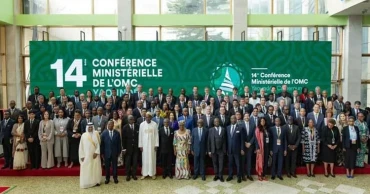
Bangladesh urges caution in WTO reform to protect core principles: Minister
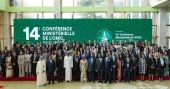
Commerce; Industries; Textiles and Jute Minister Khandakar Abdul Muktadir has called for a cautious approach to reforming the World Trade Organization (WTO), stressing that any changes must not undermine the organisation’s fundamental principles.
Speaking at a session titled ‘WTO Reform: Fundamental Issues’ during the 14th Ministerial Conference (MC14) held in Yaoundé, Cameroon on Thursday, the minister said reforms are necessary in the current global context but should be carefully designed to preserve the integrity of the multilateral trading system.
The minister noted that the WTO’s core objective is to promote trade-driven development among member states, adding that its consensus-based, rules-based framework grounded in non-discrimination and inclusivity has ensured benefits for developed, developing, and least developed countries (LDCs) alike.
Highlighting key mechanisms, Muktadir said provisions such as Most-Favoured-Nation (MFN) status, Duty-Free and Quota-Free (DFQF) market access, and Special and Differential Treatment (S&DT) have played a crucial role in enhancing equity and inclusion in global trade.
The minister pointed out that, except during the 2008 global financial crisis and the COVID-19 pandemic, middle-income levels in developed countries have steadily increased over the past three decades demonstrating the effectiveness of the existing trading system.
While acknowledging the need for reform, the minister cautioned against dismantling a structure built over years of negotiation and cooperation. “The current framework should not be weakened in the name of reform, as most economies rely heavily on this rules-based multilateral system.”
Emphasising prudence, Muktadir said the reform process must ensure the preservation of past achievements, maintain systemic integrity, and deliver inclusive and development-oriented outcomes for all member states.
Re-excavation to bring 1,500 bighas under cultivation in Sylhet: Commerce Minister
The WTO Ministerial Conference is the organisation’s highest decision-making body, where member countries take key decisions on global trade policies. This year’s conference is being attended by trade ministers and representatives from 166 member states.
A Bangladesh delegation, led by the commerce minister, is participating in the conference, with Commerce Secretary Mahbubur Rahman and senior officials from the ministry and Bangladesh’s Permanent Mission in Geneva also in attendance.
2 months ago
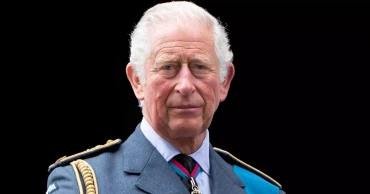
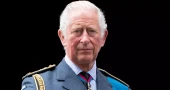
Greatly value Bangladesh's determined leadership: King Charles III
King Charles III has said he looks forward to the opportunity for Bangladesh and the United Kingdom (UK) to come together at the Commonwealth Heads of Government Meeting in November, where they may reaffirm their shared commitments and chart a course for the future.
“Our collaboration on climate action remains an essential feature of our relationship and I greatly value Bangladesh's determined leadership in building resilience and advancing sustainable development as, together, we work to safeguard our environment and secure a more sustainable, prosperous future for generations to come,” he said in a recent message sent to President Mohammed Shahabuddin.
The Commonwealth Heads of Government Meeting 2026 will take place from November 1-4 in St John’s, Antigua and Barbuda, bringing together Heads of Government, Ministers, and representatives from business, civil society, and youth organisations.
The summit will focus on shared priorities such as climate resilience, trade, innovation, equality, and sustainable development, uniting nations under the spirit of partnership and prosperity.
The theme, 'Accelerating Partnerships and Investment for a Prosperous Commonwealth' sets the vision and ambition for CHOGM 2026, which will bring together leaders from 56 Commonwealth nations to strengthen collaboration, drive sustainable investment, and deliver shared prosperity across the Commonwealth.
King Charles III said more than 650,000 people of Bangladeshi heritage live across the United Kingdom, making a vital contribution to our national life, enriching our society and strengthening the enduring ties between the two countries.
UN meeting: FM highlights challenges due to ongoing global oil crisis, its impact on poorer countries
“I remain deeply proud of the role our Commonwealth family of nations plays in fostering understanding, cooperation and opportunity across the globe,” said King Charles.
He said the Commonwealth's rich diversity and the energy of its younger generations continue to inspire hope and progress. “In these times of global uncertainty, our collective strength and unity are more important than ever.”
King Charles III sent his best wishes to the President and the people of Bangladesh on the occasion of their National Day.
“On the joyous occasion of your National Day, my wife and I are delighted to extend our warmest congratulations to Your Excellency and to the People's Republic of Bangladesh,” he said.
“It is with sincere appreciation that I reflect upon the enduring partnership between our nations, rooted in the shared values and mutual respect that define our Commonwealth,” he said.
His wife and he sent their heartfelt good wishes to the President and to all the people of Bangladesh for a peaceful and prosperous year ahead.
2 months ago