foreign-affairs
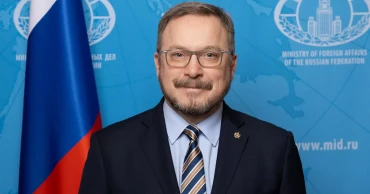
Russia remains open to joint projects, mutually beneficial initiatives: Russian Ambassador
Congratulating Bangladeshi friends on Independence Day, Russian Ambassador to Bangladesh Alexander Grigoryevich Khozin has expressed optimism that cooperation with the new government of Bangladesh will yield the best results for the benefit of the two countries and people.
“We appreciate that, more than 50 years later, Bangladeshis remember the contribution of the Soviet Union to their country's development with warmth and gratitude. Today, Russia is open to joint projects and mutually beneficial bilateral initiatives,” said the Russian Ambassador in a congratulatory message marking Bangladesh’s Independence Day that falls on March 26.
The erstwhile Soviet Union was one of the first to recognise Bangladesh, on January 25, 1972. Since then, friendly relations have been established between Bangladesh and Russia.
Soviet specialists assisted the Bangladeshi people in economic recovery, and sailors conducted a mine-clearing operation in the port of Chittagong.
“I congratulate my Bangladeshi friends on Independence Day. I sincerely wish you success and prosperity!,” said Ambassador Khozin.
He extended his heartfelt congratulations to the friendly people of Bangladesh on the 55th anniversary of the Declaration of Independence. “This day marks the beginning of a key stage in the country's history.”
For Bangladeshi people, he said, the way to sovereignty was thorny.
The Ambassador said Britain's colonial policy, based on the principle of "divide and rule," aggravated tensions on the Indian subcontinent, which subsequently triggered the liberation struggle in the territory of today’s Bangladesh.
The declaration of independence on March 26, 1971, united Bangladeshi people with a common goal and marked the beginning of a powerful national movement for the creation of a sovereign state, said the Russian envoy.
This struggle was based upon deep respect and love of the Bangladeshis for their language and culture, as well as their desire to determine their own destiny.
“As a sovereign state Bangladesh has achieved remarkable results. The country has established large-scale industrial production and became a world leader in textiles,” said the Ambassador.
It achieved impressive growth rates that remained significantly above the world’s average even during global crises such as the COVID-19 pandemic.
Ambassador Khozin said Bangladesh is rightfully proud of its natural resources, including the Sundarbans, the largest mangrove forest on Earth and a UNESCO World Heritage Site.
The country strives to introduce the world to its culture and traditions, such as the unique rickshaw painting technique, recognized as UNESCO intangible cultural heritage.
As a result, the envoy said more and more people from around the world demonstrate interest in Bangladeshi culture.
2 Russian navy ships arrive in Chittagong on goodwill visit
Internationally, he said Bangladesh has achieved recognition as a voice of the Global South nations and a responsible member of the international community, which is actively promoting the Sustainable Development Goals.
The Ambassador said Bangladesh is considered a leader in providing troops and police contingents to UN peacekeeping operations.
Dhaka has already deployed over 200,000 peacekeepers, thus demonstrating its commitment to international peace and security, Ambassador Khozin said.
2 months ago
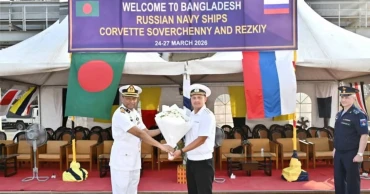
2 Russian navy ships arrive in Chittagong on goodwill visit
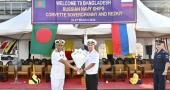
Two Russian Navy ships-Rezkiy and Sovershenny-arrived at the Chittagong port on Tuesday on a four-day goodwill visit.
Chief Staff Officer of Chittagong Naval Region welcomed the captains, officers and sailors of the ships.
The Minister-Counsellor of the Russian Embassy Vyacheslav Sentyurin and Russian Military, Air and Naval Attaché Colonel Pavel Ivashinnikov were present as well, said the Russian Embassy in Dhaka on Wednesday.
In the upcoming days, captains of traveling vessels together with the representatives of the Russian Embassy will have an extensive programme including a meeting with the Commander of Chittagong Naval Region, other high-ranking military officials and Chittagong port authorities.
As part of the tour, officials and sailors will also attend the tomb of Soviet sailor Yuri Redkin at Bangladesh Naval Academy and visit Navy training base.
The goodwill visit will become an opportunity to further strengthen Russia-Bangladesh friendly relations, and create new avenues for training and exchange of experience, said the Embassy.
2 months ago
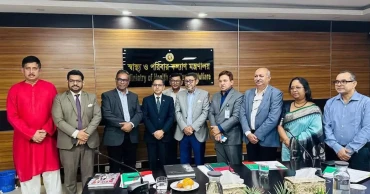
Health sector cooperation discussed as Indian envoy calls on health minister
Bangladesh and India on Tuesday discussed proposals for collaboration in areas of capacity building, pharma industry linkages, medical education as well as digital and AI-enabled healthcare services, based on shared priorities of the two countries and guided by mutual benefit and mutual interest.
The issues were discussed when Indian High Commissioner to Bangladesh Pranay Verma paid a courtesy call on Health and Family Welfare Minister Sardar Md. Sakhawat Hossain.
State Minister Dr. M. A. Muhith was also present along with other senior officials of the Ministry.
They discussed enhancing Bangladesh-India cooperation in public healthcare, exchanges in medical research and advanced treatment, cancer care, traditional medicines, and other people-centric initiatives responsive to affordable healthcare needs of both populations.
2 months ago
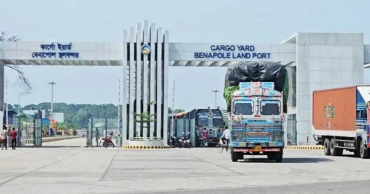
Trade through Benapole port resumes after 7-day Eid holiday
Trade through Benapole-Petrapole land port resumed on Tuesday morning after a seven-day suspension for Eid holidays.
The port remained closed for seven consecutive days from Tuesday to Monday on the occasion of Eid.
With the resumption of operations, around 3,000 workers joined duty from the morning to handle loading and unloading of goods.
Vice-president of the Benapole Import-Export Association Aminul Haque said business activities have regained momentum with traders, C&F agents, port and customs officials, and workers busy clearing goods.
“A backlog of goods piled up on both sides of the border during the long holiday. The congestion is expected to ease as import-export operations and clearance have resumed from this morning,” he said.
Benapole Customs faces Tk 1,650cr revenue shortfall in 8 months
According to port sources, a total of 58 trucks carrying goods entered Bangladesh from India, while 27 trucks went to India till 12 pm.
Officer-in-Charge of Benapole Checkpost Immigration Police Sakhawat Hossain said although trade remained suspended for seven days cross-border movement of passport passengers continued as usual.
2 months ago
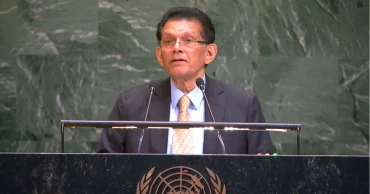
Bangladesh calls for global unity to fight against racial discrimination
Foreign Minister Dr Khalilur Rahman has reaffirmed Bangladesh's steadfast commitment to combating racism in all its forms, emphasising the
country's signing of all relevant international conventions on racism and racial discrimination.
While addressing a commemorative meeting of the United Nations General Assembly on March 23 marking the International Day for the Elimination of Racial Discrimination, he called for strengthened global efforts to eliminate racism, promote equality, and uphold human dignity.
Highlighting ongoing racial injustices in Rakhine and Gaza, Dr Rahman underscored that
the global community is still far from realising the goals of the Durban Declaration and
Programme of Action.
Chinese Vice Foreign Minister Sun Weidong to visit Bangladesh Apr 2–3
The Foreign Minister also highlighted the challenges faced by migrant workers worldwide, including exclusion, exploitation, and limited access to justice, which undermine the core values of the United Nations, according to the Bangladesh Permanent Mission in New York.
Reiterating Bangladesh's constitutional commitment to equality and human rights, Dr Rahman underlined efforts to promote inclusivity, peaceful coexistence, and stronger human rights institutions while calling for greater investment in education, decisive action
against hate speech and enhanced intercultural dialogue to build a world free from racism.
2 months ago

Nepal expresses interest in deepening ties with Bangladesh
Nepal has expressed interest in working with the new government in Bangladesh to take the bilateral relations between the two countries to a new height.
Bangladesh Ambassador to Nepal Md Shafiqur Rahman on Monday paid a courtesy call on with Ram Sahaya Prasad Yadav, Vice-President of Nepal, in his office to extend the invitation to the celebration of the 55th anniversary of the National Day of Bangladesh.
The Vice-President kindly accepted the invitation to grace the event as the chief guest.
During the call on, they exchanged views on issues of mutual interests pertaining to the long-standing bilateral relations between Bangladesh and Nepal.
The Vice-President congratulated Bangladesh for successfully holding the elections and expressed interests to work with the new government to take the bilateral relations between the two countries to a new height.
In response, Bangladesh Ambassador conveyed the keenness of the new government of Bangladesh to work closely with the new government of Nepal, which is on the process to be formed very soon.
2 months ago

New resolution in US House of Representatives call for recognition of 1971 genocide
A resolution introduced in the U.S. House of Representatives calls for formal recognition of the 1971 Bangladesh genocide, bringing renewed attention to atrocities committed by Pakistani forces.
The resolution calls on the President of the United States to recognise the atrocities committed against ethnic Bengali Hindus by the Armed Forces of Pakistan during 1971 and its allies in the Jamaat-e-Islami as crimes against humanity, war crimes, and genocide.
On the night of March 25, 1971, the government of Pakistan imprisoned Bangabandhu Sheikh Mujibur Rahman, and Pakistani military units, in conjunction with radical Islamist groups inspired by the ideology of Jamaat-e-Islami, began a general crackdown throughout East Pakistan code-named “Operation Searchlight” that involved widespread massacres of civilians;
Submitted on March 20, 2026 by Democratic Congressman Greg Landsman of Ohio and referred to the Committee on Foreign Affairs, the resolution outlines historical events leading up to and during the 1971 Liberation War, citing widespread killings, sexual violence, and targeted persecution of religious minorities.
The resolution cites documented accounts from US officials, journalists, and international bodies.
The resolution says the House of Representatives condemns the atrocities committed by the Armed Forces of Pakistan against the people of Bangladesh on March 25, 1971; recognizes that while the Pakistani Army and its Islamist allies indiscriminately mass-murdered ethnic Bengalis regardless of their religion and gender, killed their political leaders, intellectuals, professionals, and students, and forced tens of thousands of women to serve as their sex slaves, they specifically targeted the religious minority Hindus for extermination through mass slaughtering, gang rape, conversion, and forcible expulsion; recognizes that entire ethnic groups or religious communities are not responsible for the crimes committed by their members; and
The resolution refers to a study by the Secretariat of the International Commission of Jurists which concluded there was “overwhelming evidence” of targeted killings based on religious identity.
2 months ago
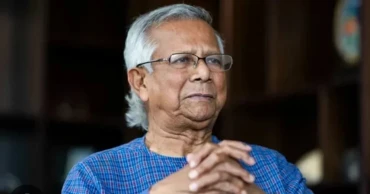
Nearly impossible to combat poverty when war destabilises food, energy markets: Prof Yunus
Seeking peace and stability in the Middle East, Nobel Peace Prize Laureate Prof Muhammad Yunus has said it is nearly impossible to combat poverty when global food and energy markets are destabilised by war.
"As a former head of government of the world’s eighth most populous nation, I have seen firsthand how nearly impossible it is to combat poverty when global food and energy markets are destabilized by war," he said.
Prof Yunus said this cycle of violence must end, as the world can no longer bear the weight of these mounting humanitarian crises.
"May this Eid bring the peace and stability the region so desperately needs. Eid Mubarak to all," he said.
Here in Bangladesh, the anxiety is deeply personal, said Prof Yunus in a message on the occasion of Eid-ul-Fitr being celebrated in Bangladesh today.
He said millions of families are living in constant fear for the safety of their sons, daughters, and parents working abroad.
Tragically, Prof Yunus said, the reach of this war has already been felt at home as they mourn the Bangladeshis killed by missile strikes in the region.
He said the world simply cannot afford another regional conflagration, especially as the war in Ukraine enters its fourth devastating year.
"These conflicts do not exist in a vacuum; they hit the world’s most vulnerable the hardest," Prof Yunus said, noting that global prices have surged, making basic nutrition a struggle for billions of people.
Soaring costs are pushing more families into systemic poverty, he added.
As nearly two billion Muslims celebrate Eid ul-Fitr, marking the end of the holy month of Ramadan, Prof Yunus said his heart and thoughts are with the millions of people affected by conflict across Iran, Lebanon, and the Gulf.
Thousands have lost their lives and millions more have been displaced by a devastating war imposed upon the people of Iran.
"While there were clear avenues for peace to avoid this deadly escalation, the path of military confrontation was chosen instead," Prof Yunus said.
He said this cycle of violence has now rippled across the region, affecting several Gulf nations in the wake of retaliatory actions.
"During this time of celebration, my most fervent hope is for peace to finally prevail. The cycle of conflict that has consumed West Asia for decades must end," Prof Yunus said.
"It is my prayer that the people of Iran, Palestine, Lebanon, the Gulf nations, and Israel find a shared path toward peaceful coexistence," he mentioned.
2 months ago
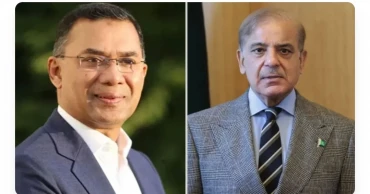
Pak PM exchanges Eid greetings with PM Tarique
Pakistan Prime Minister Muhammad Shehbaz Sharif on Friday held a telephone call with Prime Minister of Bangladesh Tarique Rahman to exchange Eid ul Fitr greetings.
During the warm and cordial conversation between the two leaders, the Pakistani Prime Minister conveyed Eid ul Fitr greetings to Prime Minister Rahman and the brotherly people of Bangladesh, according to Pakistan High Commission in Dhaka.
Recalling the historic, fraternal and familial ties between the two countries, Prime Minister Shehbaz Sharif assured Prime Minister Tarique Rahman of Pakistan’s firm commitment to further strengthen bilateral cooperation with Bangladesh, across all spheres.
The two leaders also exchanged views on regional developments in South Asia as well as the situation in Middle East and urged the pursuit of dialogue and diplomacy to resolve differences and disputes.
Prime Minister Rahman warmly reciprocated Prime Minister Shehbaz Sharif's Eid greetings and extended his best wishes for the people of Pakistan, said the High Commission.
Both leaders looked forward to working closely in the days ahead for the shared objectives of regional as well as global peace and stability.
2 months ago
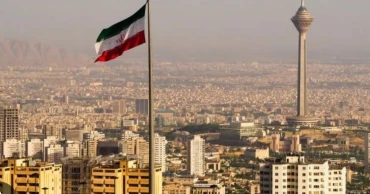
186 Bangladeshis evacuated from Iran arriving home early Saturday
An evacuation flight from Baku, Azerbaijan, carrying expatriate Bangladeshi nationals evacuated from Iran is expected to arrive at Hazrat Shahjalal International Airport at 1:30 am Saturday.
State Minister for Foreign Affairs Shama Obaed Islam and Foreign Secretary Asad Alam Siam, among others, are expected to be at the airport to receive the evacuees.
The government of Bangladesh expressed its deep appreciation to the governments of Iran and Azerbaijan, as well as to the International Organization for Migration (IOM), for their overall cooperation in facilitating this repatriation process.
In light of the ongoing conflict situation in the Middle East, 186 Bangladeshi nationals departed from Baku on Friday for Bangladesh following their evacuation from Iran.
The evacuees crossed the Iran-Azerbaijan border by land and are currently en route to Dhaka on a special flight operated by Biman Bangladesh Airlines from Baku, Azerbaijan, said the Ministry of Foreign Affairs.
The Ministry of Foreign Affairs, with the support of Ministry of Expatriates Welfare and Overseas Employment, Bangladesh Missions in Tehran, Ankara, New Delhi and Geneva, and Biman Bangladesh Airlines, has carried out this emergency evacuation.
2 months ago