foreign-affairs
Global leaders extend full support to Prof Yunus, acknowledge Bangladesh's progress
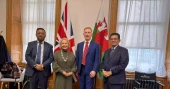
Dozens of global leaders gathered on Friday to meet Chief Adviser Prof Muhammad Yunus at his hotel suite in New York, offering their full support to him and his interim government.
They expressed readiness to provide their expertise and assistance to Bangladesh during this pivotal time, said Chief Adviser’s Deputy Press Secretary Abul Kalam Azad Majumder.
The delegation, led by former President of Latvia Vaira Vīķe-Freiberga, met Prof Yunus on the sidelines of the United Nations General Assembly.
Vīķe-Freiberga is also co-chair of the Nizami Ganjavi International Center (NGIC), named after the renowned 11th-century Persian poet.
The high-profile group included:Borut Pahor, former President of Slovenia, Boris Tadić, former President of Serbia, Egils Levits, former President of Latvia, Charles Michel, President Emeritus of the European Council and former Prime Minister of Belgium, George Papandreou, former Prime Minister of Greece, Rosen Plevneliev and Petar Stoyanov, former Presidents of Bulgaria, Ivo Josipović, former President of Croatia, Mladen Ivanić, former President of Bosnia and Herzegovina and Ameenah Gurib-Fakim, former President of Mauritius.
Return wealth to its rightful owners: Prof Yunus
Also in attendance were a former secretary general of Commonwealth, a former deputy Prime Minister of Georgia, four former Presidents of the UN General Assembly, several former foreign ministers, Ismail Serageldin, former Vice President of the World Bank and NGIC co-chair, Kerry Kennedy, President of Robert F. Kennedy Human Rights, and senior representatives from the IAEA and the Georgetown Institute for Women, Peace and Security.
3 months ago
Bhutan proposes signing FTA with Bangladesh
The Prime Minister of Bhutan, Tshering Tobgay, has expressed strong interest in signing a Free Trade Agreement (FTA) with Bangladesh and linking the two countries’ economic zones to boost trade and investment.
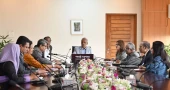
Prime Minister Tobgay made the proposal during a meeting with Chief Adviser Prof Muhammad Yunus at the United Nations headquarters in New York on the sidelines of the 80th UN General Assembly.
During the talks on Friday, Prime Minister Tobgay said both countries could greatly benefit if Bhutan’s Special Economic Zone, Gelephu Mindfulness City (GMC), is connected with the Special Economic Zone in Kurigram that Bangladesh has officially allocated for Bhutanese investors.
Chief Adviser Professor Yunus welcomed the proposals, stressing that both countries should explore all avenues to expand trade and investment.
“Bangladesh and Bhutan can take their bilateral relations to a new level through improved connectivity, trade and investment,” Professor Yunus said.
Albania seeks Bangladeshi workers amid growing economy
Prime Minister Tobgay also highlighted Bhutan’s plans to promote religious tourism, noting that Buddhist monks from Bangladesh spread the faith in their country.
He said Bhutan is eager to share its hydroelectric potential and is ready to welcome investment from Bangladesh’s pharmaceutical companies.
He also sought Bangladesh’s support to set up fiber optic connectivity in Bhutan.
The two leaders also discussed the Rohingya crisis, said Chief Adviser’s Deputy Press Secretary Abul Kalam Azad Majumder.
The Bhutanese Prime Minister confirmed that Bhutan would join the upcoming UN organised plenary session on the Rohingya issue in New York on September 30.
Prof Yunus seeks Dutch cooperation in water management, ocean research
Praising Professor Yunus’ leadership, Prime Minister Tobgay remarked that Bangladesh is in “good hands” under his stewardship.
Referring to Professor Yunus as his “role model,” he warmly hailed him as “My Professor.”
He also commended the design of Bangladesh’s new chancery building in Thimphu, inaugurated on September 9, which was built with the theme “Bay of Bengal at the Foothills of the Himalayas.”
Prof Yunus invited Prime Minister Tobgay to visit Bangladesh.
The Bhutanese leader accepted, suggesting he might undertake the visit before Bangladesh’s planned general elections in February next.
3 months ago
Political leaders show unity at UNGA ahead of elections: Shafiqul Alam
Chief Adviser’s Press Secretary Shafiqul Alam has said that by sitting together with Chief Adviser Prof Muhammad Yunus at the UNGA Hall, leaders of three major political parties sent a strong message to the international community that Bangladesh remains united and committed to moving forward with the national election in a united manner.
“The full presence of six political leaders at the UNGA conveyed the message that we are united and determined to move forward with the elections together. This is a significant message, not only for Bangladesh but also for the entire world,” he said, noting that the country is fully prepared for a democratic transition.
BNP Secretary-General Mirza Fakhrul Islam Alamgir, BNP leader Humayun Kabir, Nayeb-e-Ameer of Bangladesh Jamaat-e-Islami Syeed Abdullah Muhammad Taher, party leader Mohammad Nakibur Rahman, National Citizen Party (NCP) Member Secretary Akhter Hossen, and its Senior Joint Member Secretary Dr Tasnim Jara accompanied the Chief Adviser as part of the Bangladesh delegation to the UNGA.
The political leaders highly appreciated the initiative taken by the Chief Adviser.
“It’s a historic day,” said Press Secretary Alam while briefing reporters at a hotel in New York on Friday afternoon (NY time).
Prof Yunus delivers a 'powerful call' for justice, reform, renewed international solidarity
He said they are in the final stage of reform efforts and have already achieved significant progress in many areas.
The political leaders who joined the Chief Adviser during his speech at the UNGA also participated in various sessions, marking their united presence at the United Nations General Assembly.
The UN General Assembly (UNGA) is the main policy-making organ of the organisation.
Comprising all Member States, it provides a unique forum for multilateral discussion of the full spectrum of international issues covered by the Charter of the United Nations.
Delivering his speech at the 80th UNGA on Friday, delivering a powerful call for justice, reform and renewed international solidarity.
Reflecting on Bangladesh’s transformation since the July Uprising of 2024, Prof Yunus highlighted the decisive role of youth in restoring democracy and inspiring reforms now anchored in the 'July Declaration'.
He underscored progress towards institutional accountability, preparations for free elections, and comprehensive economic and governance reforms aimed at transparency, stability and investment.
Prof Yunus emphasised Bangladesh’s strong human rights commitments, citing accession to international conventions, cooperation with the UN Human Rights Office, and measures to safeguard against past abuses.
TIB statement on Prof Yunus' UNGA delegation "deeply disappointing": CA's press wing
The Chief Adviser paid tribute to Bangladesh’s expatriate workforce, noting that migrant workers continue to send home record levels of remittances and underlined that their contributions are equally valuable in host countries and at home.
He drew the attention of the Member States to the High Level Conference on Rohingya on 30 September 2025 and urged the global community to step up support for the Rohingyas.
He also strongly condemned the Israeli genocide and called for urgent international action to stop the violence in Gaza, and reaffirmed Bangladesh’s unwavering support for a two-state solution.
The Chief Adviser reiterated Bangladesh’s commitment to women’s empowerment, climate action, youth-driven innovation, equitable sharing of new technologies including AI, nuclear non-proliferation and disarmament, reform of international financial system to stop money laundering and wealth siphoning from developing countries, fairer sharing of natural resources among countries, UN peacekeeping, and revitalisation of regional organisations and reform of multilateralism.
Prof Yunus presented his vision of a 'three-zero world': zero carbon, zero net wealth concentration to end poverty and zero unemployment.
The Chief Adviser congratulated the President of the General Assembly and all Member States on the 80th anniversary of the UN Charter.
He commended the UN’s historic achievements while stressing the urgent need for reforms to strengthen multilateralism and ensure that developing countries’ voices are heard.
3 months ago
Return wealth to its rightful owners: Prof Yunus
Chief Adviser Prof Muhammad Yunus has called upon those countries and institutions that shelter stolen assets to return the wealth to its rightful owners, noting that the current global financial system has failed to prevent the illicit transfer of resources from developing nations.
"Do not be complicit in this crime. Return the wealth to its rightful owners - the farmers, the workers, and the ordinary taxpayers," he said, adding that in some cases, the very rules of international financial institutions have enabled the movement of vast sums of illegal money into tax havens around the world.
Speaking at the 80th United Nations General Assembly (UNGA) on Friday, Prof Yunus said recovering the illicit assets stolen from Bangladesh is now one of the highest priorities of the interim government.
In the past 15 years, he said, billions of dollars were siphoned off abroad through corruption.
"We are working tirelessly to bring this wealth back. Yet legal process in the concerned countries and different other obstacles are hurting our efforts," Prof Yunus said, stressing that without sincere political commitment from the countries concerned Bangladesh will not be able recover this asset.
UNGA: Prof Yunus seeks a future without autocrats, safeguarding power for people
He proposed the adoption and enforcement of strong international regulations to prevent the plunder of resources from developing countries and to ensure their return when stolen.
"When we assumed responsibility, we uncovered the vast scale of corruption and theft of public resources, and the severe economic vulnerability it had created," Prof Yunus said.
He said they are determined to put an end to this, so that development is never again used as an excuse to plunder the wealth of the people.
To stabilise the fragile economy, he said, they have taken difficult but necessary reform decisions.
Among the most important is reforming the revenue collection system, Prof Yunus said.
For the first time, legislation has been enacted to separate the policy-making body from the implementing authority.
"This ensures transparency and accountability, and it will expand our revenue base. These measures are fully aligned with the Sevilla Commitment adopted at the recent FFD4 Conference," he said.
Just as Bangladesh is striving to implement reforms in line with the Sevilla Commitment, Prof Yunus hopes that the developed world will also honor their responsibilities under that collective pledge.
"We also believe that reform of decision-making and governance in global financial institutions is urgently needed," he said.
"Equally vital are an inclusive framework for international tax cooperation, coordinated global measures against illicit financial flows and corruption and stronger international cooperation for the recovery of stolen and illicit assets," Prof Yunus said.
3 months ago
Prof Yunus delivers a 'powerful call' for justice, reform, renewed international solidarity
Chief Adviser Prof Muhammad Yunus on Friday addressed the 80th Session of the United Nations General Assembly, delivering a powerful call for justice, reform and renewed international solidarity.
Reflecting on Bangladesh’s transformation since the July Uprising of 2024, Prof Yunus highlighted the decisive role of youths in restoring democracy and inspiring reforms now anchored in the 'July Declaration'.
He underscored progress towards institutional accountability, preparations for free elections and comprehensive economic and governance reforms aimed at transparency, stability and investment.
Prof Yunus emphasised Bangladesh’s strong human rights commitments, citing accession to international conventions, cooperation with the UN Human Rights Office, and measures to safeguard against past abuses.
The Chief Adviser paid tribute to Bangladesh’s expatriate workforce, noting that migrant workers continue to send home record levels of remittances and underlined that their contributions are equally valuable in host countries and at home.
He drew attention of the Member States to the High Level Conference on Rohingya on 30 September 2025 and urged the global community to step up support for the Rohingyas.
He also strongly condemned the Israeli genocide and called for urgent international action to stop the violence in Gaza.
Ptof Yunus reaffirmed Bangladesh’s unwavering support for a two-state solution.
The Chief Adviser reiterated Bangladesh’s commitment to women’s empowerment, climate action, youth-driven innovation, equitable sharing of new technologies including AI, nuclear non-proliferation and disarmament, reform of international financial system to stop money laundering and wealth siphoning from developing countries, fairer sharing of natural resources among countries, UN peacekeeping, and revitalisation of regional organisations and reform of multilateralism.
Prof Yunus presented his vision of a 'three-zero world': zero carbon, zero net wealth concentration to end poverty and zero unemployment.
The Chief Adviser congratulated the President of the General Assembly and all Member States on the 80th anniversary of the UN Charter.
Prof Yunus demands global action, diversified funding, political solution in Rakhine
He commended the UN’s historic achievements while stressing the urgent need for reforms to strengthen multilateralism and ensure that developing countries’ voices are heard.
BNP Secretary-General Mirza Fakhrul Islam Alamgir, BNP leader Humayun Kabir, Nayeb-e-Ameer of Bangladesh Jamaat-e-Islami Syeed Abdullah Muhammad Taher, Bangladesh Jamaat-e-Islami leader Mohammad Nakibur Rahman, National Citizen Party member secretary Akhter Hossen and first senior joint member secretary of National Citizen Party Dr Tasnim Jara accompanied the Chief Adviser as part of the Bangladesh delegation to the UNGA.
Foreign Affairs Adviser Md Touhid Hossain, Law Adviser Dr Asif Nazrul, Energy Adviser Fouzul Kabir Khan, SDGs Affairs Principal Coordinator Lamiya Morshed, Press Secretary Shafiqul Alam were also present.
3 months ago
Nowhere tragedy more visible than in Gaza: Prof Yunus tells UNGA
Chief Adviser Prof Muhammad Yunus on Friday warned that extreme nationalism, geopolitics that thrive on the suffering of others, and indifference to human pain are destroying the progress humanity has built through decades of struggle.
"Nowhere is this tragedy more visible than in Gaza. Children are dying of hunger. Civilians are being killed without distinction. Entire neighbourhoods, including hospitals and schools, are being wiped from the map," he said.
Delivering his speech at the 80th United Nations General Assembly, Prof Yunus, on behalf of the people of Bangladesh and of conscientious citizens across the world, once again made a strong appeal: the two-state solution must be implemented now, through the establishment of an independent State of Palestine with East Jerusalem as its capital.
Only on the basis of the pre-1967 borders, he said, with Israel and Palestine living side by side in peace, can justice be done.
"Madam President. We do agree with the UN independent international inquiry commission that we are witnessing a genocide happening live. Unfortunately, on behalf of humanity we are not doing enough to stop it. If this continues, neither future generations nor history will forgive us," Prof Yunus said.
In Bangladesh, he said, they believe that they must build a culture of peace, one that rests on the values of tolerance, nonviolence, dialogue and cooperation at every level of society.
This year, conflicts have scarred almost every corner of the globe: in Europe, in South Asia, and in the Middle East.
"We live in the most densely populated region of the world. Nowhere else do so many nuclear-armed states exist in such close proximity. That is why we in Bangladesh deeply understand the urgency of disarmament and the prevention of nuclear proliferation," Prof Yunus said.
He called for the revival of global arms control treaties that have grown weaker with time.
"We renew our call for the establishment of nuclear-weapon-free zones, particularly in the Middle East and South Asia. At the same time, we affirm the right of every nation to use nuclear energy peacefully, with full transparency," he said.
As a responsible nation, even before commissioning our first nuclear power plant, Bangladesh this year acceded to the Joint Convention on the Safety of Spent Fuel Management and on the Safety of Radioactive Waste Management under the IAEA.
UNGA: Prof Yunus seeks a future without autocrats, safeguarding power for people
"By doing so, we reaffirm our commitment to the highest standards of nuclear safety and transparency," Prof Yunus said.
For more than three and a half decades, Bangladesh has stood among the leading contributors of United Nations peacekeepers, Prof Yunus said.
"This is living proof of our enduring commitment to global peace and security. Even today, nearly 6,000 Bangladeshi peacekeepers are serving in some of the world’s most volatile regions under the UN flag, and 168 of our peacekeepers have made the ultimate sacrifice in the line of duty," he said.
Research has consistently shown that UN peacekeeping missions are more sustainable and effective than unilateral interventions.
"We, therefore, call for clear and achievable mandates and adequate funding for peacekeeping operations. We must also give the highest priority to the safety of peacekeepers and ensure accountability for crimes committed against them," Prof Yunus said.
He said Bangladesh also actively promotes multilingualism, both at home and internationally, because they believe that linguistic and cultural diversity deepens mutual understanding.
"In the twenty-first century there is no place for hatred, intolerance, racism, xenophobia, or Islamophobia in any society," he said.
BNP Secretary-General Mirza Fakhrul Islam Alamgir, BNP leader Humayun Kabir, Nayeb-e-Ameer of Bangladesh Jamaat-e-Islami Syeed Abdullah Muhammad Taher, Bangladesh Jamaat-e-Islami leader Mohammad Nakibur Rahman, National Citizen Party member secretary Akhter Hossen and first senior joint member secretary of National Citizen Party Dr Tasnim Jara accompanied the Chief Adviser as part of the Bangladesh delegation to the UNGA.
Prof Yunus demands global action, diversified funding, political solution in Rakhine
Foreign Affairs Adviser Md Touhid Hossain, Law Adviser Dr Asif Nazrul, Energy Adviser Fouzul Kabir Khan, SDGs Affairs Principal Coordinator Lamiya Morshed, Press Secretary Shafiqul Alam were also present.
3 months ago
No alternative to regional cooperation among neighbours: Prof Yunus tells UNGA
Chief Adviser Prof Muhammad Yunus on Friday said Bangladesh is committed to regional cooperation based on mutual respect, transparency and shared prosperity.
"Through initiatives such as BIMSTEC, BBIN, the Asian Highway, and SASEC, we are advancing regional connectivity and trade," he said while speaking at the 80th United Nations General Assembly.
For shared development, Prof Yunus said, there is no alternative to regional cooperation among neighbours.
And when it comes to the use of shared natural resources, he said, fairness and compassion must guide them.
Prof Yunus said Bangladesh is firmly committed to peaceful regional cooperation in this area.
"That is why, as the first country in South Asia, we have recently joined the United Nations Water Convention," he said.
At the same time, Prof Yunus said, they have expressed interest in joining effective regional forums like ASEAN, and they are working toward that goal.
The Chief Adviser also called for the revitalisation of the South Asian Association for Regional Cooperation, SAARC.
Established four decades ago, SAARC achieved notable progress in its early years and laid a strong foundation for regional cooperation. Despite political deadlock, its institutional structure remains intact, he said.
"We believe SAARC still holds the potential to deliver welfare to the hundreds of millions in our region, just as ASEAN has done in its own," said the Chief Adviser.
Centuries of political exploitation, plunder of resources, and structural inequalities have created today’s stark realities of uneven development, he said.
"A decade ago, when we agreed on the 2030 Agenda, we were filled with hope that the world could change course and move toward the right path," Prof Yunus said.
"Yet, the reality today is sobering. Progress towards the Sustainable Development Goals has fallen dangerously behind," he said.
Prof Yunus said the gap in development financing continues to grow, while the flow of Official Development Assistance is shrinking.
"We urge donor countries to reverse this trend and to honor their commitments," he said.
LDC Graduation
Prof Yunus said they are in the process of graduating from the category of Least Developed Countries to that of developing countries.
He said enhanced cooperation from the international community, in particular the relevant entities of the United Nations is essential to ensure a smooth and sustainable transition.
In this regard, Prof Yunus said, they commend the work of OHRLLS and other relevant UN entities.
"We call for further strengthening of this Office to enable more effective support to the LDCs and other vulnerable countries," he said.
UNGA: Prof Yunus seeks a future without autocrats, safeguarding power for people
At the same time, alongside grants and loans, Prof Yunus called for a massive expansion of social business through both public and private initiatives.
"This new approach can bring benefit to both donor and recipient countries alike. It can inspire, it can encourage, and it can take human creativity to new heights," he said.
Prof Yunus acknowledged the contribution of the United Nations to Bangladesh’s progress and development.
"We reaffirm our full confidence in its three pillars: peace and security, development, and human rights," the Chief Adviser said.
Over the past eight decades the United Nations has shown time and again that multilateral diplomacy helps humanity live together in greater harmony.
"Yet on its 80th anniversary we must acknowledge that multilateral diplomacy is under strain," he said.
The tensions of unequal bilateral relations have once again proved that multilateralism remains our last and best resort, he said.
"To keep the United Nations—the custodian of multilateralism—alive and vibrant, we call for full transparency and sincere dialogue among member states," said the Chief Adviser.
The United Nations must continue to evolve and adapt if it is to meet today’s challenges and fulfill our collective aspiration for multilateralism, he said.
"In this spirit, we welcome the Secretary-General’s UN80 initiative. But we must also insist: reform must not weaken multilateralism or silence the voices of developing countries," he said, adding that reform must have one goal only, to bring about real and positive change on the ground.
BNP Secretary-General Mirza Fakhrul Islam Alamgir, BNP leader Humayun Kabir, Nayeb-e-Ameer of Bangladesh Jamaat-e-Islami Syeed Abdullah Muhammad Taher, Bangladesh Jamaat-e-Islami leader Mohammad Nakibur Rahman, fNational Citizen Party member secretary Akhter Hossen and first senior joint member secretary of National Citizen Party Dr Tasnim Jara accompanied the Chief Adviser as part of the Bangladesh delegation to the UNGA.
Foreign Affairs Adviser Md Touhid Hossain, Law Adviser Dr Asif Nazrul, Energy Adviser Fouzul Kabir Khan, SDGs Affairs Principal Coordinator Lamiya Morshed, Press Secretary Shafiqul Alam were also present.
3 months ago
Prof Yunus demands global action, diversified funding, political solution in Rakhine
Seeking diversified and additional global funding for the Rohingyas, Chief Adviser Prof Muhammad Yunus on Friday urged the international community that there must be a political solution to the problems in Rakhine involving ethnic stakeholders there so that the Rohingya becomes part of the Rakhine society with equal rights.
"The International community, beyond new and enhanced funding for humanitarian assistance, must apply pressure on Myanmar or the non-state actor in Rakhine to bring positive changes there and seek political solutions urgently," he told the 80th United Nations General Assembly (UNGA).
The global attention turned to the iconic green marble podium in the General Assembly Hall, where presidents, prime ministers and monarchs are delivering national statements, setting out visions for peace, development, human rights and collective action amid mounting global challenges.
Prof Yunus said the neighbouring countries must assume their responsibilities.
Eight years on, the Rohingya crisis continues without any solution in sight, he said.
Bangladesh is hosting over 1.3 million Rohingyas in Cox’s Bazar and Bhasan Char Island.
He said Bangladesh will remain available for any assistance or contribution needed towards stabilisation of Rakhine that the international community collectively agrees.
Prof Yunus said Bangladesh expects that the upcoming high-level Conference on September 30 will galvanise global resolve and generate concrete international support for the Rohingya, with the top-most priority of diversified and additional funding.
Parallelly, he said, it must agree on a process with time-bound deliverables as part of a globally accepted roadmap towards seeking permanent solutions to the Rohingya crisis.
The ongoing conflict in our neighboring country, Myanmar, Prof Yunus said, has created a situation of deep concern for the entire region.
"It threatens not only regional stability, but also the prospects for the safe return of the forcibly displaced Rohingya sheltered in Bangladesh," he said.
Besides, Prof Yunus said, Bangladesh faces a slow, but a regular flow of the Rohingya seeking protection.
Evidently, he said, deprivation of rights and persecution of the Rohingya rooted in cultural identity-based politics continue in Rakhine.
The reversal of the process of marginalisation of the Rohingya cannot wait any further, said the Chief Adviser.
Most of the discriminatory policies and practices that made them vulnerable can be reversed and remedial measures can be advanced without waiting for a comprehensive national political settlement in Myanmar, he said.
Towards these ends, Prof Yunus said, a sustainable repatriation in safety and security must lead the process for restoration of their rights and their ultimate reintegration with dignity.
Bangladesh has been drawn into this crisis as the second victim after the persecuted Rohingya, he said.
"Yet, we must remember that the Rohingya crisis is not a bilateral issue with Myanmar," Prof Yunus said, adding that Bangladesh has been realising its part of obligation as a responsible neighbour and a committed member of the international community.
"But our collective goal of maintaining a minimum standard of living in the camps face a situation of potential collapse given the funding crunch," the Chief Adviser added.
The World Food Programme warns of a critical funding shortfall for its emergency response.
Without urgent new funding, monthly ration may have to be halved to a paltry US$ 6 per person, pushing the Rohingya deeper into hunger, accentuating their malnutrition and forcing them to resort to desperate measures, Prof Yunus said.
"Further cuts will no doubt intensify protection and security risks, transcending much beyond the camps," Prof Yunus said.
Religious affairs adviser says govt working on Rohingya return
He called upon the existing donors to come forward with enhanced contribution and potential donors to make announcements of generous contribution to prevent this catastrophic situation.
BNP Secretary-General Mirza Fakhrul Islam Alamgir, BNP leader Humayun Kabir, Nayeb-e-Ameer of Bangladesh Jamaat-e-Islami Syeed Abdullah Muhammad Taher, Bangladesh Jamaat-e-Islami leader Mohammad Nakibur Rahman, National Citizen Party member secretary Akhter Hossen and first senior joint member secretary of National Citizen Party Dr Tasnim Jara accompanied the Chief Adviser as part of the Bangladesh delegation to the UNGA.
Foreign Affairs Adviser Md Touhid Hossain, Law Adviser Dr Asif Nazrul, Energy Adviser Fouzul Kabir Khan, SDGs Affairs Principal Coordinator Lamiya Morshed, Press Secretary Shafiqul Alam were also present.
3 months ago
UNGA: Prof Yunus seeks a future without autocrats, safeguarding power for people
Chief Adviser Prof Muhammad Yunus on Friday told the international community that Bangladesh is committed to building a balanced democratic order where no elected leader would be able to undermine democracy.
"Our goal is clear: to create a democratic order where power is balanced, where no autocrat can ever return, where no elected leader can destroy democracy, and where those who are meant to protect the people can never again prey upon them," he said.
Prof Yunus made the remarks while speaking at the 80th United Nations General Assembly in presence of global leaders and key political representatives from Bangladesh.
Now, as the country prepares for the national elections in February next year, the Chief Adviser said they remain steadfast in carrying forward reforms that place citizens at the center.
"Our focus is unchanging: transparency, accountability, and the rule of law," Prof Yunus said.
To realise this vision, Prof Yunus said, they established eleven independent commissions on governance, the judiciary, elections, public administration, law enforcement, anti-corruption, women’s rights and other vital areas.
These commissions consulted citizens, studied deeply and produced detailed proposals for reform, he said.
To anchor these reforms in permanence, Prof Yunus said they created a National Consensus Commission, which brought together more than thirty political parties and coalitions.
"Its aim was simple yet historic: to forge a collective pledge that transcends party lines. That effort succeeded. On the first anniversary of the July Uprising, we stood together on one stage and announced the 'July Declaration', a time-bound commitment to reform," he said.
That commitment means that no matter who wins the next election, the reform process will not stop, will not reverse, and will not be undone.
Last year, in this Assembly, he spoke to the global leaders from a country that had just witnessed a popular uprising. "I shared with you our aspirations for transformation," Prof Yunus said.
"Today, I stand here to tell you how far we have come on that journey," he said.
Out of every hundred people on this planet nearly three live in Bangladesh.
"But our story is not important because of our numbers, nor because of our geopolitical location. Our story matters because it is a reminder of the extraordinary power of ordinary people," Prof Yunus said.
"It matters because it inspires hope among nations everywhere: that no matter how deep the crisis, no matter how impossible the solution may seem, the path to renewal is never lost," he said.
Key issues Prof Yunus may raise in UNGA speech tonight
1971 Struggle
Prof Yunus said Bangladesh was born in 1971 through a bloody struggle for equality, for human dignity and for social justice.
"Yet the very rights for which we shed so much blood, the very freedoms for which we sacrificed so much, have been denied again and again over the past five decades," he said.
"Time and again spearheaded by our youth, the people of Bangladesh have risen, endured sacrifice, and reclaimed those rights," Prof Yunus said.
This year, Bangladesh marked the first anniversary of the July Uprising. "It was our youth who stood up, it was our youth who defeated tyranny, and it was our youth who opened the path to a new journey of building a just and equal society," said Prof Yunus.
He said the responsibility to carry that vision forward was placed on my shoulders and on those of my colleagues.
"Rebuilding a devastated economy and state demanded nothing less than profound institutional reforms," Prof Yunus said.
The Chief Adviser said they could have chosen the easy path: reforms imposed by executive order.
"But we chose the hard path: reforms built through inclusion and sustained through consensus. We chose the path that endures," he said.
In the beginning, Prof Yunus extended hi congratulations to Annalena Baerbock on assuming the presidency of the General Assembly as only the fifth woman in the history of the United Nations to hold this office.
"The delegation of Bangladesh will extend its fullest cooperation to you in the discharge of your duties," he said.
Prof Yunus also congratulated all Member States on the eightieth anniversary of the United Nations Charter.
Labour reforms crucial in attracting large-scale FDI to Bangladesh: Prof Yunus
"This session is especially important, both for looking back at our journey and for shaping the road ahead," he said.
Over the past eight decades, the United Nations has steadily expanded its scope of work and deepened its engagement in many areas.
"It has played an indispensable role in advancing peace and security, in promoting human rights, in improving lives across the world, and in upholding justice, fairness, and equality," Prof Yunus said.
Because of the United Nations, today more than 130 million vulnerable people in 120 countries receive urgent food and humanitarian support.
"Nearly 45 percent of the world’s children are immunized through its efforts. Its agencies stand by those in distress, delivering food, clean water, sanitation, vaccines, and other life-saving services in every corner of the world," he said.
At the same time, Prof Yunus said they have also witnessed the limitations of the United Nations in resolving conflicts between states and in confronting major global challenges.
"Yet, on the whole, its role has been overwhelmingly positive and beneficial for humanity," he said.
BNP Secretary-General Mirza Fakhrul Islam Alamgir, BNP leader Humayun Kabir, Nayeb-e-Ameer of Bangladesh Jamaat-e-Islami Syeed Abdullah Muhammad Taher, Bangladesh Jamaat-e-Islami leader Mohammad Nakibur Rahman, National Citizen Party member secretary Akhter Hossen and first senior joint member secretary of National Citizen Party Dr Tasnim Jara accompanied the Chief Adviser as part of the Bangladesh delegation to the UNGA.
Foreign Affairs Adviser Md Touhid Hossain, Law Adviser Dr Asif Nazrul, Energy Adviser Fouzul Kabir Khan, SDGs Affairs Principal Coordinator Lamiya Morshed, Press Secretary Shafiqul Alam were also present.
3 months ago
TIB statement on Prof Yunus' UNGA delegation "deeply disappointing": CA's press wing
The interim government on Friday reacted to the statement issued by the Transparency International Bangladesh (TIB), noting that it is "deeply disappointing" that it issued a public statement based on unverified social media posts, rather than verified facts.
"Contrary to TIB’s recent statement — which unfortunately relies on inaccurate information — the Bangladesh delegation to the 80th United Nations General Assembly (UNGA) is not only significantly smaller than those of the Hasina era, but also far more focused, industrious, and results-driven," said Chief Adviser’s Press Secretary Shafiqul Alam in a statement.
TIB is a respected civil society organisation and a long-standing advocate for transparency, he said.
The delegation's purpose is to represent the interests of Bangladesh and its people at the world’s most significant diplomatic gathering, where key global decisions are shaped. Over the past five days alone, members of the delegation have held at least a dozen high-level meetings, including bilateral engagements with more than six heads of state or government, Press Secretary Alam said.
TIB has inaccurately claimed that the delegation exceeds 100 members.
The actual number is 62 — only marginally higher than last year's 57, said the Press Secretary. "It is worth noting that last year’s figure did not account for six eminent politicians who traveled at the invitation of the Chief Adviser."
Roughly a third of this year’s delegation comprises security personnel, who are essential to ensuring the safety of senior officials, including Professor Muhammad Yunus, amid credible threats from Awami League supporters, Alam said.
Key issues Prof Yunus may raise in UNGA speech tonight
Despite these measures, he said, the current team has been stretched, with many security officers working extended 16-hour shifts to provide adequate protection.
The government acknowledges that questions may arise regarding the size of the delegation.
However, Alam said, this year’s UNGA holds exceptional significance for Bangladesh. "At a time when various actors are engaged in deliberate efforts to destabilise the country — including a concerted campaign to misrepresent the July uprising — strong and proactive international engagement is not just strategic, but necessary."
The press secretary said it is well documented that the Awami League and its allies are spending millions to fund a flood of misinformation about the Interim government and the July uprising -- and to lobby against Bangladesh's democratic transition, often with the tacit support of certain international quarters.
This year’s delegation includes several individuals who will represent Bangladesh at the upcoming Rohingya Conference on September 30 — underscoring Dhaka’s continued leadership on one of the region’s most urgent humanitarian and security issues, he said.
In addition, several advisers — though not part of the formal UNGA delegation — have travelled separately to engage with their global counterparts on matters of mutual concern, Alam said.
Labour reforms crucial in attracting large-scale FDI to Bangladesh: Prof Yunus
Leaders of Bangladesh’s most popular political parties were also invited to participate, and a number of officials were assigned to support them, he said.
'This inclusive approach sends a clear and unequivocal message: Bangladesh is firmly committed to a peaceful, democratic transition," Alam said.
3 months ago