foreign-affairs
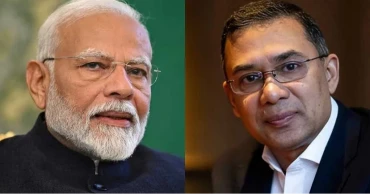
Modi talks to Tarique over phone, reaffirms India's support
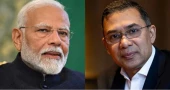
Indian Prime Minister Narendra Modi spoke with BNP Chairman Tarique Rahman on Friday and extended support in his endeavour to fulfill the aspirations of the people of Bangladesh.
"Delighted to speak with Mr. Tarique Rahman. I congratulated him on the remarkable victory in the Bangladesh elections," PM Modi said.
He conveyed his best wishes and support in his endeavour to fulfill the aspirations of the people of Bangladesh.
Modi congratulates Tarique Rahman on BNP’s decisive poll victory
"As two close neighbours with deep-rooted historical and cultural ties, I reaffirmed India’s continued commitment to the peace, progress, and prosperity of both our peoples," said the Indian Prime Minister.
3 months ago
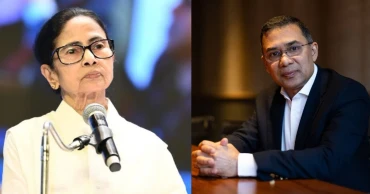
Mamata congratulates Tarique Rahman
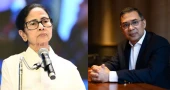
West Bengal Chief Minister Mamata Banerjee on Friday extended her congratulations to BNP Chairman Tarique Rahman for guiding his party to victory in Bangladesh’s national election.
Taking to X, the West Bengal Chief Minister wrote, “My hearty congratulations, shubhonandan, to all my brothers and sisters, all the people, in Bangladesh. My advance Ramazan mubarak to all of them. For this great victory, my congratulations to my Tarique-Bhai, his party, and all the parties. Pray, you all be well and happy.”
Mamata Banerjee mourns death of Khaleda Zia
She also voiced optimism about bilateral relations, expressing the hope that ties between India and Bangladesh would continue on a friendly footing.
“Wish that our relations with Bangladesh be always cordial,” she said on the social media platform.
3 months ago
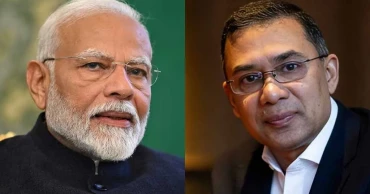
Modi congratulates Tarique Rahman on BNP’s decisive poll victory
Indian Prime Minister Narendra Modi on Friday conveyed his warm congratulations to Tarique Rahman on leading BNP to a decisive victory in the Parliamentary elections in Bangladesh.
“This victory shows the trust of the people of Bangladesh in your leadership,” Modi said in a message.
India will continue to stand in support of a democratic, progressive and inclusive Bangladesh, he said.
"I look forward to working with you to strengthen our multifaceted relations and advance our common development goals," he added.
Voting in Bangladesh’s national election concluded on Thursday in a largely peaceful atmosphere, with high hopes of restoring genuine democracy and securing a strong mandate for national reforms.
The polling in Bangladesh began at 7:30am and continued until 4:30pm without interruption at 42,659 polling stations in 299 out of 300 constituencies, amid the deployment of nearly one million security personnel and another one million polling staff.
3 months ago
US congratulates Bangladesh on successful election, BNP on ‘historic victory’
The United States has congratulated the people of Bangladesh for holding a successful national election.
In a Facebook post, the US embassy in Dhaka extended greetings to Bangladesh Nationalist Party (BNP) and its leader Tarique Rahman on ‘historic victory’.
“The United States looks forward to working with you to realize shared goals of prosperity and security for both our countries,” it added.
3 months ago
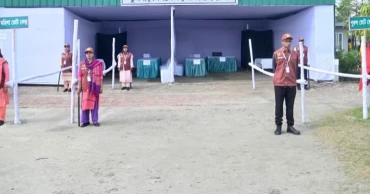
Bangladesh must deliver 'genuinely fair, safe, inclusive' polls: UN experts
UN experts on Wednesday said that the interim government must deliver an election and referendum that is ‘genuinely free, fair, safe and inclusive,’ grounded in respect for the human rights of all citizens, as the people of Bangladesh go to polls on Thursday.
“There can be no free and fair election or meaningful political discourse without an equal right to freedom of opinion and expression, access to information and media freedom,” the experts said in a statement.
The UN experts said they have followed with 'great concern the growing intolerance, threats and attacks' on journalists, human rights defenders, civil society actors, women’s groups and minorities as well as violence and killing of political activists with impunity in recent months.
The experts are Irene Khan, Special Rapporteur on the promotion and protection of the right to freedom of opinion and expression; Gina Romero, Special Rapporteur on the rights to freedom of peaceful assembly and of association; Mary Lawlor, Special Rapporteur on the situation of human rights defenders.
“While the interim government announced the large-scale deployment of law enforcement and military personnel to protect the electorate and the electoral process, we urge authorities to ensure that all security forces act in line with international human rights standards, respect the right to participation of all citizens and are fully accountable in a transparent process under civilian and judicial oversight,” said the statement.
The experts said they were disturbed by the failure of the Electoral Commission to address serious breaches of the electoral code by political parties, and by its lack of preparedness to tackle the tsunami of disinformation on social media platforms, targeting over 50 million users, many of whom are young, first-time voters, susceptible to manipulation.
“The interim government must reach out to social media companies and act swiftly to counter false or misleading information about the elections, while avoiding disruption of the internet and safeguarding the access of the media and the electorate to reliable, detailed and factual information,” the statement said.
The experts also expressed concern that despite the threats, hostility and attacks against journalists and civil society, no election-specific protocol had been announced by the authorities to protect the media.
“It is still not too late for the government to take the necessary protection and prevention measures to safeguard journalists, as well as human rights defenders, civil society observers, women activists and minority groups,” they said.
“The authorities must halt arrests under repressive laws like the Anti-Terrorism Act and desist from arbitrary detention, intimidation or retaliatory measures.”
The experts urged political parties and candidates to refrain from spreading disinformation or inciting hostility, discrimination or violence, including against women and minorities, smear campaigns against human rights defenders and from seeking to delegitimise or promote distrust in the electoral process.
“This election - born out of a mass uprising that ousted an authoritarian regime - is not only about who will govern Bangladesh next but also about creating a society based on human rights and the rule of law,” the experts said.
“We call on the new Executive to create conditions for tolerance of dissent, promotion of media freedom and pluralism, access to information and gender equality,” they said in the statement.
It said, “For democracy to thrive the new government must uphold the rights to freedom of expression, assembly, association and public participation without discrimination or unjustified restrictions and create a safe and enabling environment for human rights defenders.”
The experts have been in contact with the government of Bangladesh on these issues.
3 months ago
Any attempt to obstruct Dhaka-Beijing relations is doomed to fail: Spokesperson
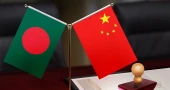
China on Wednesday said its relations with Bangladesh and other South Asian countries are not targeted at any third party, nor will they be swayed by any external force.
“Any attempt to interfere in or obstruct these relations is doomed to fail,” said a spokesperson of the Chinese Embassy in Bangladesh, refuting again China-related remarks by US Ambassador to Bangladesh Brent T. Christensen.
The Chinese Embassy in Dhaka shared its reaction through its verified Facebook page.
Bangladesh, China sign framework agreement for procurement of 4 vessels
The Chinese Embassy has made clear its solemn position on the relevant issue, said the spokesperson, noting that the US Ambassador to Bangladesh was singing the same old tune again, pointed fingers at Bangladesh-China relations and was mixing white and black. “Such remarks are made with ulterior motives.”
The spokesperson reiterated that China and Bangladesh respect and support each other and have set a fine example of friendly exchanges and mutually beneficial cooperation between countries.
“China is a trustworthy partner of South Asian countries, and its friendly cooperation with South Asian countries has safeguarded peace and stability in the region, promoted development and revitalisation, and has been supported and welcomed by the peoples in the region,” said the spokesperson.
1000-bed Bangladesh–China Friendship Hospital, 24 other projects get ECNEC nod
The US Ambassador recently said he is concerned about broader Chinese influence in South Asia, stressing that they have a host of options available to try to help their partner militaries meet their capability needs.
“You know, as I said in my hearing…I am concerned about broader Chinese influence in South Asia. I think the United States government has been very clear about that," he said while responding to a question during an interaction with a small group of journalists on January 21.
"And as I committed to my hearing, I will always engage with our friends in the government—be it the interim government or the newly elected government-- to clearly articulate the risks of involvement with the Chinese in certain areas should the Bangladesh government choose to go down that path," Ambassador Christensen said.
3 months ago

US-Bangladesh ART deal paves way for export surge, boom for businesses using American cotton
Bangladesh’s garment industry is pfor a major export breakthroughoised in the United States following the signing of the landmark Agreement on Reciprocal Trade (ART).
Under the new agreement, the general reciprocal tariff on Bangladeshi exports has been reduced from 20 percent to 19 percent. However, the most significant gain lies in a specialized ‘zero-duty’ clause:
Apparel manufactured in Bangladesh using US-sourced cotton or man-made fibers will be exempt from the 19 percent reciprocal tariff. Experts say it will unlock unprecedented opportunities in Bangladesh’s largest single export market, where RMG comprises over 80% of the basket.
BGMEA welcomes landmark Bangladesh–USA tariff agreement
This effectively brings the reciprocal duty down to ‘zero’ for these products, providing a massive cost advantage for Bangladeshi exporters over regional competitors.
The United States is the primary destination for Bangladeshi apparel, currently absorbing nearly 19 percent of the country’s total garment exports. Data from the Office of Textiles and Apparel (OTEXA) of USA highlights the scale of this potential:
From January to November 2025, the US imported $7.6 billion in apparel from Bangladesh. Of this, $5.18 billion consisted of cotton-based products.
Analysts suggest that by pivoting to US cotton, Bangladesh can convert a significant portion of its current $8 billion annual export volume to the US into duty-free shipments, drastically increasing its market share.
The agreement also targets the high-growth non-cotton (synthetic) segment. Currently, non-cotton products account for roughly 30 percent of Bangladesh’s total US exports. With the ART providing incentives for using US-produced man-made fibers, Bangladesh has a golden opportunity to expand into high-value categories like active wear and technical outerwear, where demand in the American market is surging.
“This agreement marks a new height in our economic relations,” said Sheikh Bashir Uddin, Bangladesh’s Commerce Adviser.
"It not only lowers trade barriers but also solidifies Bangladesh’s position as a premier, high-value partner in the global supply chain," he said.
Agreement grants zero tariff access for Bangladeshi RMG using American cotton into US market
Industry leaders believe the deal will encourage local spinning mills to integrate more American raw materials to capitalize on the zero-tariff route. As Bangladesh works toward a total global garment export target of nearly $39 billion, the US market—bolstered by these new preferential terms—is expected to remain the cornerstone of the country's economic growth.
Faisal Samad, Director of the Bangladesh Garment Manufacturers and Exporters Association (BGMEA), emphasized that this new trade arrangement creates vital opportunities for the Ready-Made Garment (RMG) sector.
"This agreement creates significant new potential, particularly for products manufactured using US cotton and man-made fibers," Samad stated.
He noted that the provision to reduce or eliminate duties on apparel made from US-sourced fibers would directly enhance Bangladesh's competitiveness, leading to a substantial positive impact on export growth.
Echoing this sentiment, Engineer Rajib Haider, former Director of the Bangladesh Textile Mills Association (BTMA), highlighted the benefits for the primary textile sector.
He remarked that the opportunity to gain additional tariff exemptions by using US cotton to produce yarn and fabric locally would strengthen Bangladesh’s position in the global supply chain.
"If we can leverage these tariff concessions by integrating US cotton into our production, it will create a highly positive outlook for both our textile and clothing industries," Haider added.
3 months ago

Bangladesh Polls: UN urges zero tolerance for violence against women
Ahead of the national election in Bangladesh, the United Nations on Wednesday said it notes 'concerns' raised by women’s groups and civil society organizations on violence and harassment of women candidates and voters, including digital violence.
The UN called on all stakeholders, including political leaders and their parties and supporters, to adopt a zero-tolerance approach to intimidation, harassment and any other form of violence against women throughout the electoral process.
This applies equally to women candidates and voters, whose participation and safety are essential to inclusive democratic processes, said the UN in a statement.
As Bangladesh prepares for the 13th national election on February 12, the United Nations underscored that safe, inclusive and meaningful participation in public life is a fundamental right.
This includes the rights of all women and girls, including women with disabilities, women from minority communities, gender diverse people, and others who may face heightened barriers, discrimination or gender-based violence.
Women in public life, including political leaders, activists, journalists and human rights defenders, are reporting increased incidents of cyberbullying, deepfakes, coordinated harassment, and image-based abuse, including AI-altered and sexualised content, said the UN.
It has consistently advocated for women’s meaningful representation and leadership with all stakeholders and is supporting the Bangladesh Election Commission to boost women’s electoral participation and representation.
"It is essential that all voters, including women, can participate as candidates and voters without intimidation, discrimination, online abuse or fear of reprisals," said the UN.
It said they are confident that authorities will continue to take steps to uphold security and the rule of law, and to ensure the safety and rights of every individual.
"The United Nations remains committed to supporting the authorities to ensure the safety and rights of every individual," the statement reads.
3 months ago
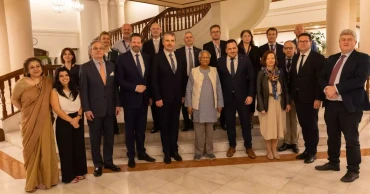
EU, Japanese election observation missions meet Prof Yunus
The EU Election Observer Mission (EU-EOM) paid a courtesy call on Chief Adviser Professor Muhammad Yunus at the State Guest House Jamuna on Tuesday.
The Japanese Election Observation Mission also paid a courtesy call on the Chief Adviser separately, said the Chief Adviser’s press wing.
The EU-EOM delegation was led by Tomas Zdechovsky, Member of the European Parliament and Head of Delegation.
Other members included Ivars Ijabs, Chief Observer, Lukas Mandl, Loránt Vincze, Leire Pajín, Şerban Dimitrie Sturdza, Michael McNamara, Catarina Vieira, Martin Bille Hermann, Inta Lase, Reginald Soenen, Nikos Salliarelis, Filipe Alcobia de Moraes, Benjamin Oppermann, Liviu-Adrian Natea, Tessel Giele, Riccardo Chelleri, Frederik Schumann, Marina Graser Lasic, and Michael Miller, Ambassador and Head of the EU Delegation to Bangladesh.
The Japanese delegation was led by Masato Watanabe, Ambassador and Leader of the Japanese Election Observation Mission.
3 months ago
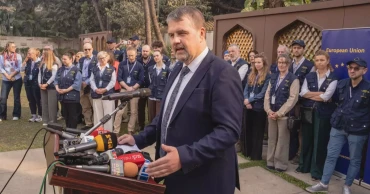
Hopeful mood, positive electoral climate in Bangladesh: EU chief observer
Highlighting the importance of a participatory nature of election, Chief Observer of the European Union Election Observation Mission (EU EOM) to Bangladesh Ivars Ijabs on Tuesday said the general atmosphere and expectations are very hopeful with a positive electoral environment in place.
"We have emphasised the participatory nature of the electoral process which is very much desirable," he told reporters, stressing the importance of inclusion of all communities, minorities and also participation of women in the electoral process.
He said most of their interlocutors have emphasised that there should be a new page in the history of Bangladesh and its democracy. "I would say the electoral environment is very positive. The general atmosphere is very hopeful," Ijabs said.
He, however, said there are many issues that they have discussed and reiterated that they remain neutral without getting involved in any political process. "We are here not to comment on Bangladesh’s politics. We are here to check and observe the process."
In terms of the security situation, the chief observer said their overall perception is that the situation is still under control of the authorities.
They deployed 90 short-term observers (STOs) to observe the election day proceedings in all 64 administrative districts of the country.
The short-term observers will observe opening of polling centres, voting, closing, as well as counting of the ballots and the tabulation of results.
“The short-term observers will be present in cities, towns and villages in almost every constituency. Their observations and reports throughout the day will be a critical element of our impartial and fact-based assessment of these historic elections,” Ijabs told reporters.
With a total of 200 observers deployed across the country, he said they are contributing to the transparency of these historic elections.
"This large and dedicated mission attests to the European Union’s unwavering commitment to the democratic governance of Bangladesh,” said the chief observer.
The deployment of short-term observers builds on the work of 56 long-term observers, who have been in Bangladesh since mid-January, observing the pre-election environment, including preparations by the election administration, campaign activities, voter education efforts, and who have engaged with electoral stakeholders across the political and civil society spectrum.
A delegation of Members of the European Parliament is further reinforcing the mission, and 35 locally recruited short-term observers from the diplomatic missions of the EU Member States, as well as Canada, Norway and Switzerland are also joining the mission.
At full strength, the EU EOM will comprise more than 200 observers, drawn from all 27 EU member states, as well as Canada, Norway and Switzerland.
The EU EOM will present its preliminary findings in a statement at a press conference, on February 14, in Dhaka.
Security, voter participation, level playing field: EU's 3 areas of focus in election
A final report, including recommendations for future electoral processes, will be presented to the authorities after the completion of the entire electoral process. Both documents will be public and will be made available on the Mission’s website.
The EU EOM is bound by a code of conduct, which requires strict neutrality and non-interference.
It undertakes its work in accordance with the Declaration of Principles for International Election Observation, endorsed under UN auspices in 2005.
3 months ago