business
Access to finance remains Bangladesh's weakest business pillar despite improvement: Experts
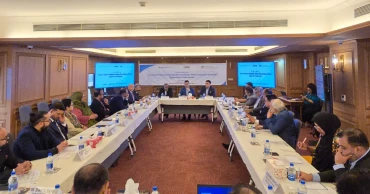
Access to finance remains the most severe bottleneck in Bangladesh's business environment, scoring lowest among 11 pillars assessed under the Bangladesh Business Index (BBX) 2024-25, policymakers, bankers and business leaders said at a round-table discussion here on Monday, calling for a diversified, less bank-dependent financial system to support the private sector.
The BBX 2024-25 recorded a score of 40.07 out of 100 for access to finance, despite a 12-point improvement over the previous year, underscoring that the problem persists even as reform efforts gain traction.
The event, titled "Access to Finance in Bangladesh: Building a More Conducive Financial System for the Private Sector," was jointly organised by Policy Exchange Bangladesh and the Metropolitan Chamber of Commerce and Industry, Dhaka (MCCI), with support from the Australian government's Department of Foreign Affairs and Trade, at the MCCI Gulshan office.
Delivering the keynote, Country Managing Partner of PricewaterhouseCoopers Bangladesh (PwC) Shams Zaman said credible resolution mechanisms form the foundation for rebuilding confidence and extending fresh credit, adding that Bangladesh needs long-term capital that does not rely solely on banks.
He proposed that the country's guarantee window be turned into an autonomous, professionally managed institution to support a more diversified financial system.
A panel discussion, moderated by Chairman and Chief Executive Officer of Policy Exchange Bangladesh Dr M Masrur Reaz, brought together voices from policy, banking and industry, including Managing Director of Shasha Denims Ltd Shams Mahmud, President of the American Chamber of Commerce in Bangladesh (AmCham) Syed Mohammad Kamal, Additional Managing Director and Head of SME Banking at BRAC Bank PLC Syed Abdul Momen and Head of Multinational Wholesale Banking at HSBC Bangladesh Andalib Mirza.
Mahmud said post-pandemic and political shocks remain insufficiently addressed, with manufacturers facing severe financing and cash-flow pressures worsened by higher gas prices.
Kamal said SMEs lack the institutional access enjoyed by large firms, calling for a coordinated approach involving the central bank, judiciary and other stakeholders.
Momen said expanding SME financing requires a strong digital ecosystem, noting the current model remains largely manual and inefficient.
Andalib pointed to limited digital data and weak financial verification as major hurdles, particularly for non-garment firms without export records.
Participants, including representatives of banks, non-bank financial institutions (NBFIs) and development partners, said banks cannot finance new projects without assured energy supply, making progress on gas and LNG infrastructure essential.
They noted, however, that microenterprise lending is expanding through multiple channels with relatively low non-performing loans.
Chairman of Bangladesh Krishi Bank Mohammed Nurul Amin, speaking as distinguished guest, said Bangladesh's regional, gender, financial and psychological inequalities require differentiated policies tailored to borrowers' circumstances.
MCCI President Kamran T Rahman chaired the session.
Participants called for coordinated action among Bangladesh Bank, financial institutions, policymakers and the private sector to expand credit access and strengthen financial inclusion.
The recommendations from the roundtable are expected to feed into a more inclusive and growth-oriented financial system for the private sector.
7 days ago

Green chili prices soar in Dhaka as rains squeeze supply
Green chili prices have jumped sharply across Dhaka’s kitchen markets over the past few days, with retailers raising prices by Tk 40 to Tk 60 per kilogram.
The kitchen spice was selling for Tk 260 to Tk 300 per kg in major retail markets on Monday, compared with Tk 200 to Tk 240 just five days ago.
A visit to Karwan Bazar, Tejgaon Colony Market and Moghbazar found significant price variations.
Retailers at Moghbazar and Tejgaon were selling green chilies at around Tk 300 per kg, while prices at Karwan Bazar where wholesale and retail trading take place side by side ranged between Tk 250 and Tk 280 per kg depending on quality.
The latest surge marks a dramatic increase from just a month ago, when green chilies were available at Tk 50 to Tk 70 per kg.
Traders attributed the steep increase to heavy rainfall and waterlogging in major producing areas, which they said has damaged crops and disrupted supplies to wholesale markets.
Kawser Uddin, a trader at Karwan Bazar, said supplies from key production areas including Manikganj has virtually stopped.
“We are now depending on shipments from Kushtia, Khulna, Jhenaidah and Rajshahi. Excessive rainfall in those regions has caused root rot and destroyed chili flowers, resulting in a severe shortage at production hubs,” he said.
He added that daily arrivals have fallen from around 10 truckloads to eight, creating a supply gap.
“Imports from India which usually help stabilise the market during shortages have not started yet,” Kawser said.
Traders believe prices may remain high until weather condition improves or imports resume.
Consumers, however, questioned the justification for the price hike alleging that some traders are using the rainy season as an excuse to create an artificial shortage and inflate prices.
Many shoppers urged the government to intensify market monitoring and take action against price manipulation to protect consumers from unjustified increases.
The latest spike in green chili prices has added to household expenses already strained by higher costs of other daily essentials, putting additional pressure on consumers.
7 days ago

General investors, institutions to access private bonds, funds through DSE's new PI category
The newly introduced Private Investor (PI) category will now allow general investors, registered institutions and funds to invest in privately offered bonds, open-end mutual funds, exchange-traded funds (ETF) and equities approved by the fund's regulatory authority, officials said at a workshop on Monday.
The Dhaka Stock Exchange (DSE) organised the awareness workshop on the addition of the PI category to its Electronic Subscription System (ESS) through the Zoom platform, where representatives from merchant banks, asset management companies (AMC), TREC holders and other related institutions took part.
Speakers at the workshop said the ESS platform has so far allowed only Eligible Investor (EI) and Qualified Investor (QI) category investors to participate in primary investment opportunities.
Any individual, registered institution or fund will now be able to register under the PI category, according to the DSE.
For individual investors, only a National Identity (NID) card and a bank account will be mandatory, while institutions or funds will need a registration certificate and a bank account. No registration fee will be applicable for PI registration, the DSE said.
The workshop covered the registration and subscription process of the ESS, the required information and documentation, and various aspects of using the digital platform.
Speakers said the initiative will expand alternative investment opportunities for general investors beyond equities and will play a significant role in building a digital and transparent investment environment.
They added that the move will also create scope for introducing diverse financial products in the capital market.
7 days ago
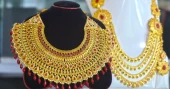
Bajus raises gold price by Tk 2,216 per bhori
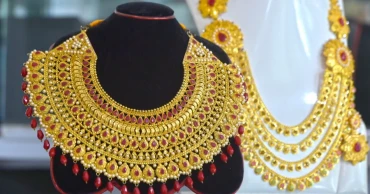
The Bangladesh Jewellers' Association (Bajus) on Monday raised the price of gold by Tk 2,216 per bhori, setting the new price of 22-karat gold at Tk 223,074 per bhori, including VAT.
In a notice issued Monday morning, Bajus said the upward revision was made in view of a rise in the price of pure gold in the local market. The new rates took effect from 10 am the same day.
Under the revised rates, a bhori (11.664 grams) of 22-karat gold ornaments will now cost Tk 223,074, including VAT.
The price of 21-karat gold was raised by Tk 2,100 to Tk 213,043 per bhori, while 18-karat gold went up by Tk 1,750 to Tk 182,950. The price of traditional gold ornaments was increased by Tk 1,458 to Tk 149,474 per bhori.
Bajus said the new prices will remain effective at all jewellery outlets until further notice, though making charges will continue to vary according to design.
Since VAT is included in the sale price of gold and silver ornaments, it cannot be charged separately from customers.
The organisation's existing rules on ornament exchange and purchase, excluding specified VAT, making charges and stone value, will remain unchanged.
Bajus had last adjusted gold prices on the morning of July 24, when it cut the rate by Tk 3,324 per bhori, bringing the price of 22-karat gold, including VAT, down to Tk 220,858.
According to Bajus, gold prices have been revised 95 times in the country so far in 2026; increased on 46 occasions, decreased 48 times, and adjusted once over VAT.
Silver prices were also revised upward alongside gold. The price of 22-karat silver ornaments was raised by Tk 59 to Tk 4,666 per bhori, including VAT.
The price of 21-karat silver went up by Tk 175 to Tk 4,549, 18-karat silver rose by Tk 116 to Tk 3,907, and traditional silver ornaments increased by Tk 116 to Tk 2,974 per bhori.
7 days ago

Biman resumes Dhaka-Narita Tokyo flights after year-long suspension
National flag carrier Biman Bangladesh Airlines has resumed regular flights on the Dhaka–Narita–Dhaka route after a suspension of more than one year.
The inaugural flight departed Hazrat Shahjalal International Airport for Narita at 2:25 am with 143 passengers on board, said a media statement on Monday.
Narita International Airport serves as the main international gateway to Tokyo, Japan's capital.
The resumption of the route is expected to strengthen air connectivity between Bangladesh and Japan while contributing to the expansion of trade, investment, tourism, education, cultural exchange and people-to-people ties between the two countries.
Civil Aviation and Tourism Minister Afroza Khanam attended a greeting and view-exchange programme with passengers of the first flight. State Minister for Civil Aviation and Tourism M. Rashiduzzaman Millat attended the event as the special guest.
7 days ago
A forced-labor crackdown or an end-run around Congress? Dissecting Trump's new tariffs
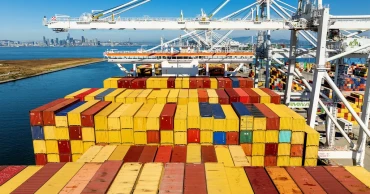
The Trump administration has imposed double-digit tariffs on more than 60 countries, using a legal justification that permits the president to levy import taxes and other sanctions against countries found to engage in “unjustifiable,” “unreasonable” or “discriminatory” trade practices.
The new tariffs announced in recent days take effect just as temporary 10% worldwide tariffs expired, and critics say they are less about cracking down on forced labor than they are a way to replace those tariffs. The expired tariffs were themselves a temporary replacement for worldwide tariffs the Supreme Court struck down in February.
The tariffs were levied on countries that the U.S. says either don't have or don't effectively enforce a forced-labor import ban. The affected countries, which account for 99% of U.S. imports, were quick to protest, calling the Trump administration's claims unfounded and arbitrary, as nations with vastly different records on forced labor received the same tariff level. The U.S. spent four months investigating but gave few details on how it arrived at the tariff rates, which are either 10% or 12.5%.
Sidestepping Congress
The tariffs were levied under Section 301 of the Trade Act of 1974 on countries that the U.S. determined had failed “to impose and effectively enforce a prohibition on the importation of goods produced with forced labor.”
During President Donald Trump 's first term, he cited Section 301 to impose sweeping tariffs on Chinese imports amid a dispute over the sharp-elbowed tactics Beijing was using to challenge America’s technological dominance. The U.S. is also using 301 powers to counter what it calls unfair Chinese practices in the shipbuilding industry.
“The 301s allow a permanent tariff without going to Congress to settle the dispute,” said Barry Appleton, a law professor and co-director of New York Law School’s Center for International Law. “That’s what all of this is about. The president doesn’t want to knock on the front door of Congress, so he’s trying every side door and every unlatched window to get in.”
Little evidence that countries failed to enforce import bans
The office of the United States Trade Representative (USTR) said it consulted with all 60 economies under investigation and held two rounds of public hearings, elicited more than 2,100 public comments, and had “engagement” with its trading partners about what they were doing to combat forced labor bans.
It didn't detail its talks with the countries, saying those were confidential. Experts say it is fairly straightforward to investigate whether a country has a ban or not, but it is difficult to determine the government's exact rationale for each country's failure to enforce import bans.
“There’s not a lot of hard evidence there,” said Scott Lincicome, vice president for general economics and trade policy at the Cato Institute, a libertarian think tank. “It’s pretty laughable on its face to think that a country like the ones in Europe or in Norway or Switzerland aren’t doing enough to police forced labor.”
And even if countries do enact and enforce the forced-labor import bans the U.S. wants, they would still need to prove that they’re enforcing them to Washington’s satisfaction before the tariffs would be removed, said lawyer Patrick Childress, a partner at Holland & Knight and a former U.S. trade official.
“This suggests that no short-term path for countrywide relief from the new Section 301 tariffs will be available,” he said.
Countries and industries reject the forced labor argument
Many countries have pushed back against the Trump administration's findings.
Brazil, which faces a 12.5% forced-labor tariff, called the U.S. move “arbitrary and unjustified.” The U.S. “chose to manipulate an issue of great importance to human rights and the struggles of workers worldwide in order to accuse 59 countries and the European Union of unfair practices,” it said in a statement.
Australia also questioned the justification for its 12.5% tariff.
“We believe that amongst all of the countries in the world, Australia does take the issue of slavery, modern slavery, seriously, and will continue to do that,” Trade Minister Don Farrell told reporters in Adelaide.
Carve-outs have riled some industries. The National Council of Textile Organizations (NCTO), which describes itself as the voice of the American textile industry, protested a mechanism that exempts the Section 301 tariffs for textile and apparel imports from Bangladesh, Cambodia, Indonesia, and Malaysia based on those countries’ imports of U.S. cotton and textiles.
“No other industry has been more disadvantaged by forced labor than the U.S. textile industry, which employs 453,000 workers and has lost 41 plants over the past two plus years,” NCTO chief executive Kim Glas said in a statement. “We remain strongly concerned that USTR’s textile mechanism will harm the very domestic manufacturers the administration seeks to help.”
US forced-labor bans don't always work
The U.S. has two major pieces of legislation related to forced-labor import bans. The Tariff Act of 1930 gave Customs and Border Protection the authority to seize shipments where forced labor was suspected and to block further imports. But it had a big carve-out: If there was “consumptive demand,” meaning there wasn't sufficient supply to meet domestic demand, imports were allowed regardless of how they were produced. The Trade Facilitation and Trade Enforcement Act that took effect in 2016 eliminated that loophole.
In 2021, the Uyghur Forced Labor Prevention Act was passed. It blocks imports from China’s Xinjiang region unless businesses can prove the items were made without forced labor.
But goods made with forced labor can still make it into the U.S. In 2015, an Associated Press investigation found that slave labor was used in the fishing industry in Southeast Asia. The seafood they caught made its way to supermarkets and pet food providers across the U.S.
An investigation by The Associated Press in 2020 into the $65 billion palm oil industry found labor abuses among an invisible workforce consisting of millions of men, women and children in Asia. The fruit they harvested made its way into the supply chains of major companies, including Unilever, L’Oreal, Nestle and Procter & Gamble.
Calls for a more comprehensive approach to combat forced labor
During hearings on the tariffs this month, National Retail Federation vice president Jonathan Gold, who was representing the business coalition the Joint Association Forced Labor Working Group at the hearing, said that in order for the import bans to work, they would have to be much more extensive.
He said there need to be “clear, measurable benchmarks” tied to tariffs for countries to hit, and that the U.S. should help countries build enforcement programs.
Kenya Davis, a partner at the Boies Schiller Flexner law firm, said an effective ban needs a “comprehensive approach” that provides transparency about what the investigations consisted of, along with programs that provide countries aid in enforcing bans.
8 days ago
Bangladesh Bank directs banks to settle disciplinary cases against officials within two months
Bangladesh Bank (BB) has directed all scheduled banks to settle disciplinary cases and departmental proceedings against bank officers and employees within a maximum of two months.
The Banking Regulation and Policy Department (BRPD) of the central bank issued a circular in this regard on Sunday, instructing managing directors and chief executive officers of all scheduled banks to execute the directive immediately.
According to the central bank, the instruction was issued to align the timeframe for resolving internal disciplinary proceedings with the 'Bangladesh Labour Rules, 2015'. To facilitate this, Bangladesh Bank amended clause 2(b) of BRPD Circular Letter No. 06, issued on May 4, 2005, which governs human resource management and inter-bank recruitment.
Under the revised directive, if any disciplinary case or departmental proceeding is pending against an officer or employee, it must be disposed of within two months in accordance with the bank’s service rules.
Central bank officials noted that prolonged delays in resolving such proceedings previously created career uncertainty and prevented affected employees from switching jobs or joining other financial institutions.
Bangladesh Bank emphasized that all other provisions of the 2005 circular will remain unchanged, with the new amendment applying specifically to the settlement timeframe.
Banking sector analysts believe the decision will establish greater transparency, accountability, and good governance in human resource management, while eliminating unnecessary harassment and preventing eligible bankers' career progression from being stalled.
8 days ago
Number of 'crorepatis' jumped by 21% during interim govt's tenure: Bangladesh Bank data
The number of individual bank accounts holding Tk 1.0 crore or more in Bangladesh increased by over 7,000 during the one-and-a-half-year tenure of the Dr. Muhammad Yunus-led interim government, according to the latest figures from Bangladesh Bank.
It means that the number of rich people have increased in the country during the period of the interim government in the country.
Central bank data from its latest 'Banking Sector Update' shows that individual crore-taka accounts rose from 33,629 in September 2024 to 40,645 by the end of March 2026. This represents an addition of 7,016 new accounts—a growth of nearly 21 percent.
Total deposits held in these high-value individual accounts increased from Tk 87,200 crore in September 2024 to Tk 91,400 crore in March 2026.
Economists and banking sector analysts noted that a 21 percent surge in crore-taka accounts within such a short span—amid high inflation, economic stagnation, historically low private sector credit growth, and persistent poverty pressures—does not fully align with typical economic trends, calling for an in-depth investigation into the underlying drivers.
A senior Bangladesh Bank official, speaking on condition of anonymity, suggested that following the political changeover, new influential groups emerged across various sectors. A portion of funds generated through illegal activities, such as extortion and land grabbing, may have entered the banking system, contributing to the rise.
However, former Finance Adviser and former central bank Governor Dr. Salehuddin Ahmed noted that multiple factors could be involved.
He explained that following the reconstitution of the board of directors at several weak banks, many depositors withdrew their fixed deposit receipts (FDRs) and transferred them to relatively stronger banks. He added that the emergence of a new business class and a preference for keeping liquid cash in banks might have also played a role.
Addressing whether individuals connected to new power centers rapidly accumulated wealth, Dr. Salehuddin remarked that when control over business and economic activities shifts to new groups following political changes, it naturally impacts bank account figures.
Meanwhile, central bank data does not strongly support the notion that the surge was driven merely by people depositing cash previously held at home. Cash held outside the banking system by the public actually grew from Tk 283,553 crore in September 2024 to Tk 303,018 crore by March 2026.
Dr. Toufic Ahmad Choudhury, former Director General of the Bangladesh Institute of Bank Management (BIBM), stated that alongside deposit transfers from weak banks and the rise of new business elites, sluggish private sector investment prompted wealthy individuals to keep large funds parked in bank fixed deposits.
During the interim government’s tenure, the boards of 16 private banks were reconstituted alongside major leadership changes in several others. During the same period, private sector credit growth dropped to historical lows, leading commercial banks to invest heavily in government Treasury bills and bonds.
Commenting on the matter, Bangladesh Bank Executive Director and Spokesperson Arif Hossain Khan said the central bank has tightened oversight to enforce good governance in the banking sector. He stated that while prevailing economic conditions could explain part of the growth, necessary action would be taken if any involvement of illicit or undisclosed money is uncovered.
8 days ago

BMPCA demands probe into illegal VoIP racket in Bangladesh
The Bangladesh Mobile Phone Consumers Association (BMPCA) on Sunday expressed deep concern over the detection of thousands of SIMs used in illegal VoIP activities, which led the Bangladesh Telecommunication Regulatory Commission (BTRC) to impose around Tk 8.68 crore in administrative fines on four mobile operators.
In a statement, the association said 8,682 SIMs were found to have been used for illegal international call termination, citing reports published in various media outlets.
Association president Mohiuddin Ahmed said if such a large number of SIMs had been used in illegal VoIP activities over an extended period, the matter goes beyond a mere violation of licence conditions, posing a serious warning for state revenue, national security and governance in the telecom sector. “Administrative fines alone cannot settle accountability for irregularities of this scale.”
The recovery of thousands of SIMs in a joint operation proves this was not an isolated incident, he said, adding that questions must be answered before the nation about who ran the illegal operation, who benefited financially, and where regulatory oversight failed.
The statement said allegations of massive revenue losses and possible money laundering through illegal VoIP activities have surfaced at various times, underscoring the need for an independent, impartial and high-level investigation.
It said anyone found involved in the racket, whether individuals, institutions or vested interest groups, must face criminal action under existing law.
The association urged the government to identify and bring to justice the individuals, syndicates and beneficiaries involved in illegal VoIP operations, and to assess the actual extent of state revenue losses with a view to recovering the funds.
It also called for an independent investigation coordinated among the BTRC, the National Telecommunication Monitoring Centre (NTMC), law enforcement agencies and the Anti-Corruption Commission (ACC), along with stronger operator accountability, technical surveillance and regulatory oversight to prevent such crimes in future.
“Establishing the rule of law in the telecom sector requires not just fines but bringing those behind the crime to justice. Otherwise, the same offence will recur, the state will keep losing revenue, and ordinary customers will ultimately bear the brunt,” the association president said.
Mobile VoIP refers to a form of internet-based calling in which users make calls through an app on their smartphones, commonly known as a Mobile Dialer App, allowing low-cost international calls. The BTRC recently detected illegal SIMs and imposed fines after finding several telecom companies involved in illegal VoIP operations.
8 days ago
Bangladesh sets $63.4b export target for FY27, eyes 15pc growth
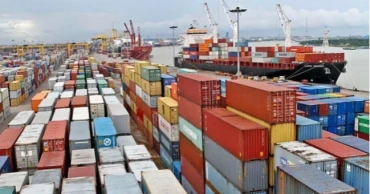
The government has set an export target of $63.4 billion for the 2026-27 fiscal year, aiming for 15 percent growth in both goods and services exports, Commerce Minister Khondakar Abdul Muktadir announced on Sunday.
“Of the total target, goods are expected to fetch $55.2 billion while services are targeted to bring in $8.2 billion, with both segments carrying the same 15 percent growth ambition,” the minister said, while addressing a press briefing at the conference room of the commerce ministry.
Muktadir said Bangladesh's export sector has a real chance of a turnaround despite global economic uncertainty, ongoing geopolitical tensions and challenges in international markets, crediting a business-friendly environment, simplified investment procedures and streamlined government services for the renewed momentum.
He said free trade agreement (FTA) negotiations with South Korea and the United Arab Emirates are in their final stages, with the government also aiming to conclude FTAs with several other countries within the current year. “Formal talks on an FTA with the European Union are expected to begin soon.”
Stressing the need for export diversification, the minister noted that ready-made garments currently account for nearly 85 percent of the country's total exports.
To reduce this dependence, he said the government is giving special priority to leather and leather goods, footwear, shipbuilding, ship recycling, light engineering and information technology, with specific action plans for these sectors to be rolled out soon.
On US tariff policy, Muktadir said there has been no substantive change in the effective tariff structure applicable to Bangladesh, with the earlier 10 percent tariff continuing under the new legal framework.
As such, he said, no fresh negative impact on the country's exports is anticipated.
Referring to the energy crisis, the minister said gas supply constraints continue to prevent industries from fully utilising their production capacity, adding that the government is working to improve the situation by installing additional Floating Storage and Regasification Units (FSRUs) for LNG.
He expressed confidence that the export target for the coming fiscal year is achievable, citing the elected government's policy stability, business-friendly reforms, new free trade agreements and growing buyer confidence in Bangladesh in international markets.
“A new window of opportunity has opened up for Bangladesh,” the minister said, adding that a combined push on ease of doing business, market access and export diversification is aimed at ushering in a new phase of growth for the country's export sector.
Commerce Secretary Md Ataur Rahman Khan and Export Promotion Bureau (EPB) Vice Chairman Mohammad Hasan Arif were present at the briefing.
8 days ago