Banking
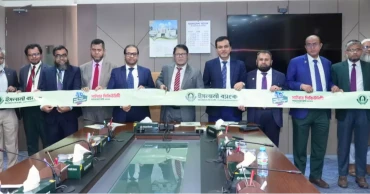
Islami Bank launches month-long cyber security awareness campaign
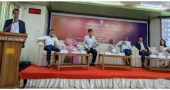
Islami Bank Bangladesh PLC launched a month-long "Cyber Security Awareness" campaign on Wednesday to strengthen data protection, safeguard customer trust, and build a resilient digital banking infrastructure.
Dr. M. Kamal Uddin Jasim, Managing Director (Current Charge) of the bank, inaugurated the campaign as the chief guest at a ceremony held at Islami Bank Tower in Dhaka.
Emphasizing the imperative of robust digital security, Dr. M. Kamal Uddin Jasim said, "With the growing use and importance of information technology, the significance of cyber security has increased manifold. Ensuring customer trust, data confidentiality, and security is one of our primary responsibilities. Along with institutional measures, every official and employee must play an active, conscious, and responsible role in ensuring cyber security."
The inauguration ceremony was chaired by Executive Vice President Mohammad Rezaul Karim, while Senior Vice President S M Mizanur Rahman delivered the welcome address.
Islami Bank Deputy Managing Directors Md. Rafiqul Islam, Muhammad Sayeed Ullah, Md. Maksudur Rahman, Abu Sayed Md. Idris, and Md. Zakir Hossain, along with other senior executives and officials, attended the event.
All zone heads, branch managers, and sub-branch in-charges across the country also joined the program virtually, according to a press release.
1 day ago
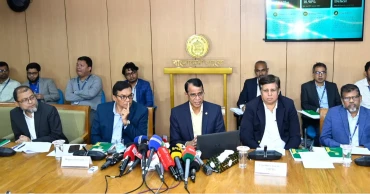
BB unveils first quarterly monetary policy, keeps policy rate unchanged at 9.5%
Bangladesh Bank (BB) on Wednesday unveiled its first-ever quarterly Monetary Policy Statement (MPS) for October–December quarter of FY 2026–27, keeping the benchmark policy interest rate unchanged at 9.50 % to curb inflation, while acknowledging that elevated borrowing costs continue to suppress private sector credit growth.
The central bank transitioned to a quarterly monetary policy framework from the previous half-yearly cycle in line with condition set by the International Monetary Fund (IMF).
Deputy Governor Dr. Md. Habibur Rahman formally announced the monetary policy at a press briefing held at the Jahangir Alam Conference Hall of the central bank's headquarters in Motijheel.
Under the policy decision, the Standing Lending Facility (SLF) rate remains unchanged at 11%, while the Standing Deposit Facility (SDF) rate stands at 7.50 %.
Highlighting the state of credit flow, the central bank noted that higher financing costs resulting from the tight monetary stance, alongside energy shortages, infrastructure bottlenecks, and investment uncertainty, have severely constrained credit expansion.
Private sector credit growth slowed to a sluggish 4.75 percent in August 2026, reflecting weak investment demand, elevated borrower risks, and structural vulnerabilities in the banking sector, where the non-performing loan (NPL) ratio reached 32.78 percent in June 2026.
The Deputy Governor expressed optimism that private sector credit growth would pick up during the October–December quarter as liquidity conditions adjust.
Explaining the rationale behind keeping the rate unchanged, the central bank stated that premature monetary easing could reignite inflation expectations.
Although headline inflation eased to a 10-month low of 8.26 percent in August 2026—driven by food inflation slowing to 7.02 percent—non-food inflation remained elevated at 9.32 percent.
Underlying price risks linger due to global energy price volatility, potential supply disruptions in the Strait of Hormuz, recent domestic fuel price hikes, and fiscal pressures from the national pay scale implementation.
On overall economic performance, BB cited that real GDP growth for FY26 stood at an estimated 4.14 percent, though Q3 FY26 growth fell to 2.2 percent alongside a 0.28 percent contraction in industrial output.
For FY27, the World Bank projects GDP growth at 4.6 percent, while the IMF has revised its projection down to 3.5 percent from 4.3 percent.
To support growth without undermining price stability, the central bank highlighted a Tk 60,000 crore stimulus package, which includes Tk 20,000 crore for reopening closed factories, alongside active refinance schemes for CMSMEs, agriculture, and export diversification.
Regarding the external sector, BB reported that robust remittance inflows—growing by 18.90 percent in early FY27—and a broadly stable exchange rate continue to bolster foreign exchange reserves and help buffer against imported inflation.
1 day ago
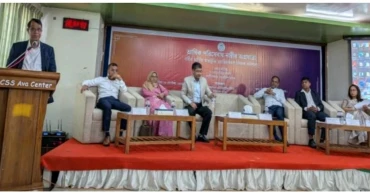
Bangladesh Bank holds workshop to accelerate financial inclusion of women
Bangladesh Bank organized a workshop to bring financially underserved women into the formal financial system.
The title of the workshop was "Accelerating Financial Inclusion of Women" at the CSS Awa Center in Rupsha Upazila of Khulna recently.
Bangladesh Bank Deputy Governor Dr. Md. Habibur Rahman attended the program as the chief guest, while NAU Director Shayema Islam presided over the session.
Speaking on the occasion, discussants highlighted the importance of inclusive financing, analyzed the current scenario for marginal women, identified existing barriers, and outlined strategies to overcome them.
They stressed expanding special credit facilities for women, promoting digital financial services, enhancing opportunities in e-commerce and freelancing, boosting financial literacy, and formulating necessary inclusive policies.
A total of 10 financial service booths were set up on the workshop premises by banks, finance companies, mobile financial service providers (MFSPs), and microfinance institutions. Deputy Governor Dr. Md. Habibur Rahman, along with participating women, visited the booths, where several marginal women opened financial service accounts and received basic guidance on financial products.
Bangladesh Bank Executive Director Rup Ratan Pine and Bangladesh Bank Khulna Director SM Kamaluzzaman Kamal attended the event as special guests. The workshop was moderated by NAU Additional Director Shahana Ferdousi.
Khulna University Development Studies Discipline Associate Professor Dr. Md. Hasan Howlader, Microcredit Regulatory Authority Director Mohammad Kamal Hossain, and senior officials from various financial institutions took part in the discussion.
Underprivileged women and local women entrepreneurs shared their personal experiences during the workshop, and an awareness quiz competition was organized for the participants.
A total of 120 individuals, including representatives from banks, finance companies, MFS providers, microcredit organizations, and financially excluded women, participated in the workshop.
2 days ago
Lifeline for raw jute exporters: Loan rescheduling deadline extended to Dec 31
In a major relief for 100 percent foreign currency-earning raw jute exporters, Bangladesh Bank (BB) has extended the deadline to resolve their classified loan issues and complete loan rescheduling applications until December 31, 2026.
The central bank issued a circular letter (BRPD-1 Circular Letter No. 33) to the managing directors and chief executive officers of all scheduled banks on Thursday, providing fresh policy support to address ongoing trade disruptions in the raw jute sector.
According to the new circular, exporters with adversely classified loans—classified as Sub-standard (SS), Doubtful (DF), or Bad/Loss (B/L) as of September 30, 2026—can apply for rescheduling by depositing a 2 percent down payment of their total loan balance.
Exporters must submit their applications to their respective banks by September 30, 2026, and banks must process and resolve all received applications by December 31, 2026.
Previously, exporters were required to apply by June 30, 2026, based on their classified loan balance as of December 31, 2025. However, central bank officials noted that due to ongoing complexities and operational hurdles in raw jute exports, many exporters were unable to fulfill the down payment requirements and submit their applications within the earlier timeframe.
The circular, signed by Gazi Md. Mahfuzul Islam, Director of the Banking Regulation and Policy Department-1, stated that all other terms and conditions from previous directives remain unchanged, and the new order takes immediate effect.
7 days ago
StanChart may exit retail banking in Bangladesh; BRAC, City Bank in race to acquire
Multinational banking giant Standard Chartered is reportedly preparing to wind down its retail banking operations in Bangladesh as part of a global strategic shift, sparking interest among leading local lenders to acquire its high-value consumer portfolio.
While the bank has not made any official announcement, industry sources revealed that competitive bidding may soon be launched to sell the retail division.
Top private commercial lenders BRAC Bank and City Bank have already emerged as frontrunners in separate preliminary discussions to acquire the business.
Commercial banking sources confirmed that initial talks regarding the transfer mechanism have taken place between Standard Chartered and interested domestic banks. Furthermore, senior officials from the bank’s Bangladesh and regional offices have met the Bangladesh Bank governor to outline their potential plans.
Clarifying the nature of the potential move, a senior banker, speaking on condition of anonymity, noted that Standard Chartered is not exiting Bangladesh entirely.
Instead, it plans to offload or wind down its retail banking portfolio, which encompasses savings and current accounts, debit and credit cards, personal and home loans, ATMs, and mobile banking, while maintaining its core corporate and institutional banking services.
Currently, Standard Chartered's retail banking division in Bangladesh holds an estimated deposit portfolio of nearly Tk 16,000 crore and a loan portfolio of around Tk 10,000 crore.
Its extensive base of high-net-worth customers, premium reward cards, Islamic banking offerings, and specialised NRI banking services make the acquisition particularly lucrative for domestic players.
City Bank, which currently holds around Tk 45,000 crore in individual deposits and Tk 12,000 crore in consumer loans, stands to significantly boost its consumer market share if the deal goes through.
Meanwhile, BRAC Bank – boasting over Tk 53,000 crore in retail deposits and Tk 14,000 crore in consumer loans – has also expressed strong interest.
Officials from both banks confirmed participating in preliminary discussions, noting that any final deal remains subject to valuation, due diligence, and regulatory approvals.
The multinational bank has previously scaled back or exited retail operations across several markets in Africa, the Middle East, Asia, and Sri Lanka.
If finalised, the transition will mark another major portfolio handover in Bangladesh's banking history, following similar historical transitions by BCCI, Credit Agricole Indosuez, and ANZ Grindlays, as well as HSBC's decision to exit local retail banking in 2025.
The future of retail employees, branch networks, and technological infrastructure will form a critical part of any potential acquisition agreement. While operations continue as normal, customer retention will ultimately depend on client consent and regulatory guidelines once a buyer is finalised.
When contacted, Country Head of Corporate Affairs, Brand & Marketing at Standard Chartered Bangladesh Bitopi Das Chowdhury dismissed the market discussions as speculation, stating the bank does not comment on rumours.
"We regularly review the effectiveness of our global business model. When necessary, steps are taken to further concentrate resources and investments in areas where we have distinctive capabilities to serve our clients," she said.
Reaffirming the bank's commitment to the country, Bitopi said, "Standard Chartered is a global super-connector with roots in Bangladesh spanning over 120 years. We remain fully committed to Bangladesh, and our day-to-day banking services and operations continue as normal.”
7 days ago
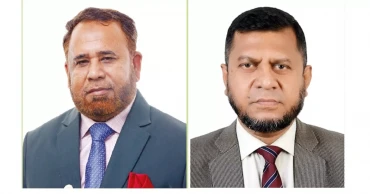
Two Islami Bank officials promoted to DMD
Abu Sayeed Md. Idris and Md. Zakir Hossain have been promoted to Deputy Managing Director (DMD) at Islami Bank Bangladesh PLC.
Before their promotion, both served as Senior Executive Vice Presidents (SEVPs) of the bank, said a press release.
Abu Sayeed Md. Idris is currently serving as head of the SME Investment Wing at the bank's head office.
He joined Islami Bank as a Probationary Officer in 1992 and previously served as head of the Retail Investment Management Wing, as well as head of the Rangpur, Mymensingh and Dhaka South zones. He also managed various divisions and branches. He holds a master's degree in Public Administration from Dhaka University.
Md. Zakir Hossain is currently heading the Local Office Corporate Branch of the bank. He joined the bank as a Probationary Officer in 1996 and has previously served as head of the Special Investment Division, head of the Sylhet Zone, and in various other divisional and branch leadership roles.
He earned his bachelor's and master's degrees in Accounting from Islamic University, Kushtia.
8 days ago
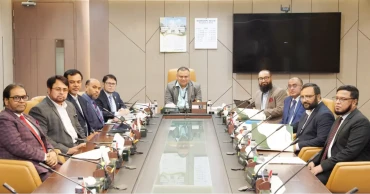
Islami Bank holds board meeting
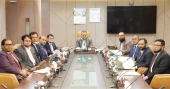
A meeting of the Board of Directors of Islami Bank Bangladesh PLC was held on Wednesday at the Islami Bank Tower in the capital.
Mohammad Zahir Hussain, Chairman of the bank, presided over the meeting.
Md. Altaf Hossain, Acting Managing Director, and Md. Habibur Rahman, Company Secretary of the bank, were also present.
During the meeting, the board reviewed the recent business performance of the bank and made several key policy decisions.
8 days ago
BB asks banks to keep Hajj-related branches open this Friday, Saturday
Bangladesh Bank (BB) has asked scheduled banks to keep their Hajj-related branches open this Friday and Saturday (September 25-26) to facilitate the collection of registration fees for Hajj 2027.
The branches will remain open during regular banking hours, according to a circular issued by the central bank on Wednesday and signed by Md Abdul Mannan, director of the Supervisory Data Management and Analytics Department.
Banks have also been asked to continue receiving Hajj registration fees beyond regular banking hours as long as depositors remain present at the branches, while ensuring adequate security measures.
The decision was taken in response to a letter from the Ministry of Religious Affairs issued on September 20, aimed at easing the registration fee submission process for prospective pilgrims.
8 days ago
Bangladesh Bank allows Taka Vostro accounts to boost local currency trade
Bangladesh Bank has issued new directives allowing foreign trading partner banks to open and maintain "Taka Vostro Accounts" without any initial deposit, aiming to expand the scope of using local currency in international trade.
The initiative will enable the settlement of import and export trade transactions in Bangladeshi Taka, reducing reliance on foreign currencies.
The Foreign Exchange Policy Department-1 of Bangladesh Bank issued a circular in this regard on Wednesday. The circular was signed by Dr. Md. Abu Bakar Siddique, Director (Current Charge) of the FEPD.
International commercial transaction funds can be deposited and settled in Bangladeshi Taka through these accounts maintained with local banks, creating an opportunity to lessen foreign currency dependence in trade settlements.
The circular stated that Letters of Credit (LCs), contracts, and invoices for imports and exports can still be executed in freely convertible foreign currencies.
However, during final settlement, the funds must be converted into Taka at the prevailing exchange rate.
Even though commercial agreements can utilise US dollars or other freely convertible currencies, the ultimate settlement can be executed in Taka, thereby broadening the scope of local currency usage in international business.
Bangladesh Bank also directed local banks to ensure safe, rapid, and efficient exchange of banking documents and communication with partner banks abroad.
Importers will have to settle their transactions through local banking channels or the respective Vostro accounts. Subject to fulfilling specified conditions, overdraft facilities may also be granted against these accounts.
This will institutionalize the local currency-based transaction framework between Bangladeshi banks and foreign partner institutions.
A key aspect of the new policy is the option to invest surplus funds lying in these Vostro accounts within Bangladesh.
Bangladesh Bank noted that surplus balances in these accounts can be directly invested in Foreign Direct Investment (FDI), portfolio investments, alternative investment funds, and open-end mutual funds.
Additionally, subject to approval from relevant authorities, funds held in Vostro accounts can be used to settle dues of local entities or remitted abroad as foreign currency transfers.
As a result, funds in these accounts will not be limited solely to import-export settlements but can also be channeled into investments and other lawful financial transactions under specific conditions.
Despite expanding local currency usage in trade, the central bank emphasised strict compliance with existing foreign exchange regulations.
The circular stated that rules regarding IMP (Import) and EXP (Export) forms must be strictly followed for import and export transactions, respectively.
Banks must also implement necessary measures to prevent money laundering and combat the financing of terrorism (AML/CFT). The "Know Your Customer" (KYC) guidelines must be rigorously enforced when verifying customer identities and credentials.
The directive also addresses trade with countries whose local currencies are not freely convertible.
With prior approval from Bangladesh Bank, local banks will be permitted to maintain foreign Nostro accounts to settle trade transactions with such nations, providing a structured framework for trade with countries lacking internationally convertible currencies.
8 days ago

Islami Bank launches ‘Hajj Agent Kafela Card’ to ease pilgrimage transactions
Islami Bank Bangladesh PLC has launched the ‘Hajj Agent Kafela Card’ to facilitate financial transactions for Holy Hajj pilgrims.
Under the facility, users will be able to withdraw Saudi Riyal from Mastercard-branded ATMs in Saudi Arabia, enjoy payment facilities at all POS machines, and access the Balaka Lounge at the airport free of charge up to 4 times a year through this card.
Each Hajj pilgrim can load foreign currency equivalent to $1,200 into the card. The card will be issued and delivered instantly without any charges.
Munshi Alauddin Al Azad, NDC, Secretary of the Ministry of Religious Affairs, inaugurated the card as the chief guest at a view-exchange meeting between Islami Bank and members of the Hajj Agencies Association of Bangladesh (HAAB) at a hotel in the capital recently.
Mohammad Zahir Hussain, Chairman of the bank, presided over the meeting, while Md. Altaf Hossain, Managing Director (Acting), delivered the welcome speech.
Sohail Alim, Director of Mastercard Bangladesh, attended the program as a special guest. Dr. M Kamal Uddin Jasim, Additional Managing Director of the bank, thanked the audience. Senior executives and officials of HAAB and the bank were present on the occasion.
10 days ago