Lifestyle

Bangla House to debut at SXSW London, showcasing Bangladesh’s global creative, innovation strength
Bangla House will make its debut at SXSW London from June 2nd to 4th, 2026, bringing Bangladesh and its global diaspora to one of the world’s most influential platforms for culture, technology, trade, music, art, and innovation.
Presented by Amreen Bashir Ali & Tanveer Ali from the Mubarak Ali Foundation, Durjoy Rahman from the Durjoy Bangladesh Foundation, and Ayesha Qureshi MBE & Abdal Ullah from the British Bangladeshi Power & Inspiration in collaboration with SXSW London, Bangla House will take place at the Kobi Nazrul Centre on Brick Lane, a landmark institution named after Bangladesh’s National Poet Kazi Nazrul Islam and a powerful symbol of British Bangladeshi history and identity.
SXSW has long served as a global meeting point where creators, investors, founders, artists, and leaders come together to shape conversations and build new ideas. Bangla House marks a major moment for Bangladesh and its diaspora, creating a platform dedicated to showcasing Bangladeshi creativity, entrepreneurship, culture, and influence on an international stage.
Across three days, Bangla House will feature discussions spanning investment, startups, healthcare innovation, artificial intelligence, fashion, music, media, food, art, and cultural diplomacy. Speakers include Bangladesh Investment Development Authority Executive Chairman Ashik Chowdhury, investor Rahat Ahmed, fashion icon Bibi Russell, and Emmy awarded music director, Shams Ahmed along with many others.
The programme will also feature performances from leading artists shaping contemporary Bangladeshi and diaspora sound, including Xefer, Surya Sen, and Farooque Bhai Project, to name a few.
Bringing together founders, investors, artists, policymakers, and cultural leaders from Bangladesh and across the diaspora, Bangla House reflects a growing confidence in Bangladesh’s creative economy and its ability to contribute meaningfully to global conversations shaping the future.
Bangla House at SXSW London is free and open to all. Please join to celebrate Bangladeshi and diaspora talent and power.
Follow @banglahouse.sxsw and www.banglahouse.org for more information.
2 months ago

Aishwarya Rai turns heads in all-white ensemble at Cannes closing ceremony
Bollywood star Aishwarya Rai made a striking appearance at the closing ceremony of the 79th Cannes Film Festival, wearing an elegant all-white outfit designed by Chinese designer Chene Chan.
The festival, which ran from May 12 to May 23, concluded after nearly two weeks of film screenings, celebrity appearances and red-carpet events.
Aishwarya’s outfit featured a tailored white pantsuit with embellished lapels, lace-detailed trousers and a feather boa draped over her shoulders, creating a dramatic yet refined look. The ensemble also included a white asymmetrical top with lace accents that complemented the detailing on the trousers.
2 months ago
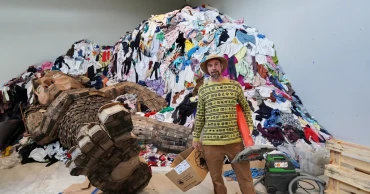
Danish artist Thomas Dambo brings recycled trolls into museum debut in Copenhagen
Danish recycling artist Thomas Dambo, known for building giant wooden troll sculptures from discarded materials across the world, has brought his fantasy-inspired creations indoors for the first time in a museum exhibition.
The new show titled “The Garbage Man” at the Arken Museum of Contemporary Art near Copenhagen features a story-driven installation where mischievous trolls secretly take over the museum, reshape it and fill it with waste, including a giant human figure made of trash as a warning about human consumption and pollution.
Dambo, 46, said the exhibition continues his long-running message about waste and environmental responsibility, but in a more experimental indoor setting where he can use materials such as electronics, cardboard and clothing that would not survive outdoors.
2 months ago

Japanese climber who conquered all 14 highest peaks says joy matters more than records
Japanese climber Naoko Watanabe, who has successfully climbed all 14 of the world’s highest mountains, says mountaineering is not only about breaking records but also about enjoying adventure, meeting people and experiencing different cultures.
The 44-year-old climber is also the first woman to summit K2, the world’s second-highest mountain, three times.
Despite her achievements, Watanabe describes herself as an ordinary person who happened to set records while climbing the Himalayas during her holidays.
She said mountain climbing gives her peace of mind and helps her escape the pressures of Japan’s highly demanding and conformity-driven society.
Watanabe is now preparing for another trip to Nanga Parbat in June. Known as the “killer mountain,” Nanga Parbat is the world’s ninth-highest peak and one of her favorite destinations.
This time, she plans to travel with a group of amateur trekkers, most of whom will remain at the base camp instead of attempting the summit.
Watanabe said she wants people to enjoy the beauty of the Himalayas without feeling pressure to reach the top.
According to her, climbers should move at their own pace, take photographs, relax and enjoy conversations with Sherpa guides rather than focus only on hard climbing.
Born in 1981 in Onojo City in southern Japan, Watanabe developed a passion for adventure at an early age after joining a children’s adventure club encouraged by her mother.
She began climbing mountains at the age of three and later joined expeditions in China, Mongolia and Pakistan during her childhood.
Watanabe originally worked as a nurse and used her income to support her climbing activities. After becoming a full-time hospital nurse in 2009, she struggled to balance work and mountaineering and later switched to temporary nursing jobs to allow more time for climbing.
She said her medical background has helped her during difficult situations on mountains, especially when making quick decisions related to health and weather conditions.
During her first attempt to climb Mount Everest in 2011, Watanabe turned back just 150 meters below the summit because of worsening weather and concerns about oxygen supply. She later lost her eyesight temporarily and developed pneumonia, but safely returned.
Two years later, she successfully climbed Everest despite strong winds.
In October 2024, Watanabe became the first Japanese woman to summit all 14 mountains higher than 8,000 meters after climbing Mount Shishapangma.
Earlier in July 2024, she set another record by becoming the first woman to reach the summit of K2 three times, an achievement recognised by Guinness World Records.
Watanabe says she plans to continue climbing simply because it makes her happy.
She added that if she eventually climbs Himalayan mountains around 100 times, that could become her own unique record.
2 months ago

Fast-fashion giant Shein to acquire eco-friendly clothing brand Everlane
Fast-fashion giant Shein is set to acquire sustainable clothing brand Everlane in a surprise deal that brings together two companies with very different business models.
Everlane CEO Alfred Chang confirmed the acquisition in a letter to employees obtained by The Associated Press on Friday.
San Francisco-based Everlane did not disclose the financial details of the deal, while Shein declined to comment publicly.
Everlane was founded in 2011 by Michael Preysman and Jesse Farmer with a focus on affordable, environmentally friendly and ethically sourced clothing. The company became known for promoting transparency about factory conditions, worker pay and environmental impact.
The brand opened its first physical store in 2017 and gained popularity among shoppers looking for sustainable fashion alternatives.
However, the company later faced criticism over worker treatment and struggled to maintain strong sales as consumers increasingly looked for cheaper clothing options.
Retail analyst Bruce Winder said many eco-friendly brands, including Allbirds, found it difficult to keep consumer interest over time as affordability became a bigger concern for shoppers.
Investment firm L Catterton became Everlane’s majority owner in 2020. The firm also has stakes in brands including Birkenstock and Etro.
Meanwhile, Shein has grown rapidly since its founding in 2012 by selling low-cost trendy fashion popular with teenagers and young consumers. Most of its products are manufactured through a large network of factories in China, though the company later moved its headquarters to Singapore.
In his letter to staff, Chang said the partnership would give Everlane greater financial stability and allow it to continue operating independently while investing more in products, innovation and employees.
He stressed that Everlane would continue its commitment to sustainability and ethical standards, adding that the company’s leadership team would remain unchanged.
Industry experts say the deal comes at a difficult time for Everlane, which has reportedly faced falling sales and growing debt.
Retail analyst Neil Saunders said the acquisition could help Everlane survive financially, while also giving Shein an opportunity to expand beyond traditional fast fashion.
Saunders noted that new tariffs and trade restrictions under US President Donald Trump have created challenges for fast-fashion imports in the United States.
Analysts, however, say the partnership may confuse some loyal Everlane customers because of Shein’s reputation for mass-produced low-cost fashion.
“Ultimately, the deal likely saves Everlane, but that salvation comes at a price,” Saunders said.
Chang also acknowledged criticism surrounding the deal, saying recent media attention and social media reactions had been difficult for the company and its employees.
2 months ago
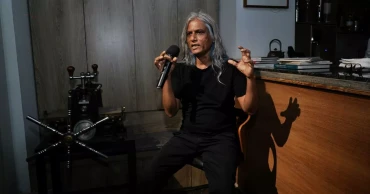
Cosmos Art Echo hosts 10th session featuring artist Mahbubur Rahman
Cosmos Art Echo, the artist talk initiative of Gallery Cosmos and Cosmos Atelier71, held its 10th session titled “The Story of an Angry Man Talking to a Wall” on Friday afternoon with internationally renowned Bangladeshi artist Mahbubur Rahman as the guest speaker.
The session was held from 5:00pm to 7:00pm at Cosmos Atelier71 Studio at Cosmos Centre in Malibagh, Dhaka.
Mahbubur Rahman, widely recognised for his multidisciplinary practice, conceptual depth and contribution to contemporary art discourse in Bangladesh, spoke extensively about his artistic journey, experimentation with different mediums, creative philosophy and the challenges of contemporary art practice.
Reflecting on his early years at the Faculty of Fine Arts, he said although many teachers and senior artists encouraged him to pursue sculpture, he was always deeply fascinated by painting.
He said sculpture appeared to him as more studio-oriented, while painting offered greater possibilities for interaction with people, exploration and movement.
The artist recalled how Asian Art Biennale exhibitions played a transformative role during his student years, describing them as “eye-opening” experiences that exposed him to global artistic languages and visual cultures.
He said Dhaka city itself functions like a “visual book” for him, where streets, neighbourhoods, people and professions continuously inspire his artistic imagination and storytelling.
Mahbubur Rahman said he often views urban spaces like Old Dhaka as cinematic sequences filled with narratives, textures and human interactions that later become reflected in his works.
Discussing artistic creativity, he spoke about Renaissance masters such as Leonardo da Vinci and Michelangelo, saying artists possess immense imaginative capacity capable of transcending boundaries between painting, sculpture, architecture and other forms.
He described the artistic process as similar to scanning and printing reality through the mind and hand, emphasising that artists should not remain trapped within comfort zones.
The artist also reflected on competition within society and the art world, saying artists often struggle due to limited platforms, lack of institutional support and highly competitive environments.
He shared memories of receiving the Asian Art Young Award but said he did not even attend the award ceremony, explaining that recognition itself was never his primary motivation.
Mahbubur Rahman further discussed his long engagement with folk traditions, rickshaw painting, collaborations with traditional painters from Nepal and Mithila artists, alongside his experimentation with figurative forms, textures and surface treatments in painting.
2 months ago
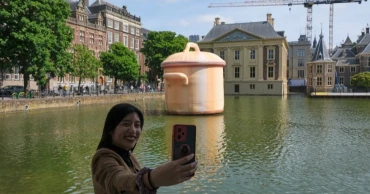
Giant inflatable artworks transform The Hague into open-air gallery
Giant inflatable artworks have turned parts of The Hague into a colourful open-air art space, with oversized installations appearing in parks, waterways, buildings and even a train station.
At the centre of the Dutch city, a 7-metre (23-foot) inflatable stew pot floats in a small lake in front of the Mauritshuis museum, which houses famous works including *Girl with a Pearl Earring*. The installation is part of the monthlong “BlowUp Jubilee” art exhibition featuring 24 inflatable pieces across the city.
The project was curated by Mary Hessing, who said the aim was to make art accessible to everyone while showcasing the city itself.
“I really wanted to show the area and show art to everybody,” she told The Associated Press.
The exhibition grew out of renovation work that began in 2021 on the Binnenhof complex, which includes the Mauritshuis and the Dutch parliament building. As the historic 13th-century site was closed to the public, the city began hosting public art events in surrounding areas.
The first “BlowUp Art” exhibition was held in 2022 with works from six artists. Later editions added more inflatable installations, and this year’s jubilee version brings back earlier pieces along with new creations.
Among them is a work by 21-year-old artist Eugenie Boon from Curaçao, titled *Koncha pa dilanti*, inspired by an island board game and scenes from everyday life.
British artist Steve Messam has also contributed with a large red spiky installation called *Crested*, placed atop a parking garage between old buildings in a tree-lined street.
“The idea was that this piece would hold its own amongst this wonderful architecture that we see around us,” Messam said.
The BlowUp Jubilee exhibition will run until June 21.
2 months ago
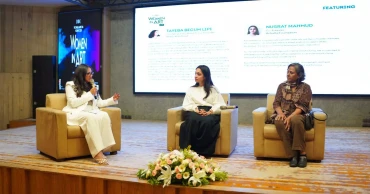
Women artists call for stronger art ecosystem at DAWC discussion
Women artists have highlighted the importance of strengthening cultural infrastructure through sustainable funding, mentorship, representation and institution-building to ensure the continued growth of Bangladesh’s art sector.
The observations came at a discussion titled “Beyond the Canvas: Women Shaping Art & Culture,” organised by the Dhaka American Women’s Club (DAWC) as part of its “Women in Art: A Silent Art Auction & Reception” programme held on May 19.
The conversation focused on how women are shaping the foundations that make culture possible through artistic practice, patronage and the creation of institutions in Bangladesh and beyond.
The speakers included Nusrat Mahmud, co-founder of Brihatta Art Foundation, and artist Tayeba Begum Lipi, co-founder of Britto Arts Trust.
Nahar Khan, Founder of Solis, moderated the session.
2 months ago

Cosmos Art Echo 10th session this afternoon on ‘The Story of an Angry Man Talking to a Wall’
Cosmos Art Echo, the artist talk initiative of Gallery Cosmos and Cosmos Atelier71, is set to present its 10th session titled “The Story of an Angry Man Talking to a Wall” this (Friday) afternoon.
Internationally renowned Bangladeshi artist Mahbubur Rahman will be the guest speaker at this special session.
He is recognised for his multidisciplinary practice, conceptual depth, and significant contribution to contemporary art discourse in Bangladesh and his role as Co-Founder of Britto Arts Trust.
The session will be held from 5:00 PM to 7:00 PM on Friday (22 May 2026) at Cosmos Atelier71 Studio, Cosmos Centre, 69/1 New Circular Road, Malibagh, Dhaka.
Cosmos Art Echo is hosting this session, continuing its commitment to dialogue, exchange, and critical engagement in contemporary art practice.
Launched under the Atelier71 Membership Programme, Cosmos Art Echo has been bringing together artists, thinkers, and audiences through regular conversations, alongside activities including art camps, workshops, film screenings, outdoor art events, and auctions.
2 months ago
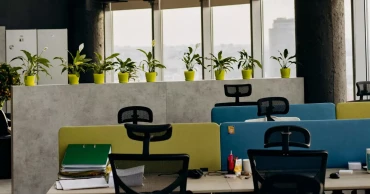
‘Office air’ trend highlights impact of long indoor work hours on health and appearance
A growing social media trend dubbed “office air” is drawing attention to how long hours spent in indoor office environments may leave people feeling and looking more tired, dull and less refreshed by the end of the day.
Online users have been sharing posts and videos with phrases such as “office air is ruining your makeup”, “office air is making your skin dull” and “office air is making you tired,” describing a widely felt experience among office workers.
The trend, which has gained popularity across social media platforms in recent months, often shows before-and-after comparisons of individuals at the start and end of their workday. Many users report visible changes such as faded makeup, oily or flat hair, dry skin and signs of fatigue.
Experts say these effects may be linked to poor indoor air quality, which can cause headaches, tiredness, difficulty concentrating, eye irritation and “brain fog” after prolonged exposure.
Dr Aravinda S N, Lead Consultant in Internal Medicine at Aster RV Hospital in Bangalore, said most modern offices are enclosed spaces with limited fresh air circulation, leading to a buildup of carbon dioxide, dust, allergens and volatile organic compounds (VOCs) from furniture and cleaning products.
“When carbon dioxide gets too high, particularly in packed meeting rooms, alertness can drop, and thinking skills get less sharp, so employees feel worn out and mentally sluggish,” he said.
He added that poor ventilation may also allow mould and other pollutants to accumulate, while increasing the risk of airborne infections in shared office spaces.
According to him, viruses can remain suspended in the air for longer in poorly ventilated environments, especially in air-conditioned and closed meeting rooms, increasing the risk of illnesses such as influenza, the common cold and COVID-19.
Dr Aravinda stressed the need for better ventilation, regular HVAC maintenance, air purifiers with HEPA filters and increased exchange of outdoor air to reduce airborne contaminants and improve workplace health conditions.
He said improved airflow can also help reduce indoor humidity and pollutants that irritate the respiratory system and weaken immunity, particularly in shared areas such as cafeterias, conference rooms and elevators.
Skincare specialist Dr Sunil Kumar Prabhu, Consultant Dermatologist and Aesthetic Physician at the same hospital, said prolonged exposure to air-conditioned environments can also affect skin and scalp health.
He said air conditioning reduces indoor humidity, causing the skin to lose moisture faster, which can lead to dryness, tightness, flaking and irritation.
Over time, this may weaken the skin barrier, reduce elasticity and contribute to the early appearance of fine lines, making the skin look dull or prematurely aged, he noted.
Dr Prabhu added that low humidity and poor ventilation may worsen conditions such as eczema, rosacea and sensitive skin by triggering itching, redness and irritation.
He also said indoor pollutants, dust, cleaning chemicals, temperature changes and stress can further aggravate skin sensitivity and flare-ups.
On scalp health, he noted that prolonged exposure to air-conditioned environments may cause dryness, itching, flaking and dandruff, while also leading to rough hair texture, frizz and breakage due to loss of natural oils.
He advised maintaining proper hydration, using gentle shampoos, regular conditioning and avoiding excessive heat styling to protect hair and scalp health.
Regarding skincare routines, Dr Prabhu said office workers often benefit more from barrier-repair-focused products rather than only lightweight moisturisers.
He recommended ingredients such as ceramides, hyaluronic acid, glycerin, niacinamide and fatty acids to help restore moisture balance and strengthen the skin barrier.
He also cautioned against common mistakes such as skipping moisturiser, poor hydration, neglecting sunscreen indoors, over-washing the face, using harsh cleansers, wearing heavy makeup for long hours and ignoring sleep, nutrition and stress management.
A simple and consistent skincare routine, along with adequate hydration and gentle products, can help maintain healthier skin during long indoor work hours, he added. #From NDTV
2 months ago