lifestyle

Why a lone nihilist penguin from a 2007 documentary goes viral
A lone penguin, trekking across the icy expanse of Antarctica towards a massive snow-covered mountain, has unexpectedly become a symbol of resilience and defiance.
The brief clip, originally from the 2007 documentary Encounters at the End of the World, has gone viral, racking up millions of views and being widely shared across social media, reports NDTV.
Many commentators suggest the penguin chose the “road not taken,” showing more courage than humans confined to routine 9-to-5 lives.
The penguin’s image has inspired a wave of memes, with US President Donald Trump even sharing an AI-generated version of the penguin to fuel his Greenland annexation rhetoric.
ChatGPT also weighed in on the phenomenon. On the official ChatGPT Tricks handle, the bot noted that the clip isn’t simply about wildlife.
“It's about recognition. People didn't share the clip because it was strange. They shared it because the words said out loud what a lot of people have been thinking in silence,” the caption read.
The original story behind the nihilist penguin
The clip comes from Werner Herzog’s 2007 documentary, which captured an Adelie penguin walking away from its colony.
Instead of heading toward the sea, where the birds normally feed and thrive, the penguin ventured toward remote icy mountains.
Herzog described this inland journey as a “death march,” as survival was highly unlikely.
Dr. David Ainley, featured in the film, explained that even if the penguin were guided back to the colony, it would turn away and resume the “death march.”
Experts and Herzog have confirmed the penguin died shortly after its solitary journey, reportedly covering 70 km alone before perishing in Antarctica.
Some social media users speculate heartbreak drove the bird, mourning the loss of its mate.
Why the nihilist penguin is trending now
In January 2026, the “Nihilist Penguin” memes exploded online.
Many people feeling burnt out, stuck, or emotionally drained relate to the penguin’s solitary trek into the unknown.
Viral posts show the penguin against Antarctica’s icy mountains with captions such as, “I am a bird, yet I can't fly, so I reached for the mountains hoping to touch the sky.”
6 months ago

Defying ageism can help you live longer, experts say
Challenging negative stereotypes about ageing is not just about fairness it can also improve health and longevity, experts say. Research shows that having a positive attitude towards ageing can make people feel younger and even live longer.
According to the World Health Organization, ageism – the harmful treatment of people based on their age – affects all age groups, though older adults are the most impacted. In the UK, one in three people experience age-based discrimination, while a US study found that 93% of adults aged 50 to 80 reported some form of everyday ageism.
“Ageism is personal. Yet many fail to recognise it as such,” said Parminder Raina, scientific director at Canada’s McMaster Institute for Research on Aging. He pointed out that phrases like “grey tsunami” wrongly portray ageing as a societal burden, when in reality, living longer is a public health success.
Studies suggest that internalised ageism – when people adopt negative stereotypes about their own age – can reduce self-confidence, discourage learning, and even harm physical and mental health. “Older people are capable, active, and contribute meaningfully to society. There’s no limit to what humans can do,” Raina said.
Positive perceptions of ageing can bring real benefits. Becca Levy, professor at Yale School of Public Health, found that people with optimistic views on ageing lived an average of seven and a half years longer than those with negative perceptions. They also showed better memory and lower risks of Alzheimer’s-related brain changes.
Experts emphasise that fighting ageism requires both cultural and individual action. Intergenerational contact, role models of healthy ageing, and community support are key. Hannah Swift, a social psychologist at the University of Kent, said, “We need to change societal norms about what people of different ages should do, wear, or achieve.”
Globally, some cultures continue to show respect for older adults. In Japan, Keirō no Hi, or Respect for the Aged Day, honours elders, while Native American communities regard older adults as “living libraries” preserving wisdom and traditions.
Read More: 5 simple lifestyle changes that may help slow biological ageing: Experts
Levy’s “ABC Method” encourages individuals to recognise ageist beliefs, identify where ageism causes harm, and challenge stereotypes. Research shows that fostering positive views of ageing and creating inclusive, multigenerational communities can help everyone live healthier, more fulfilled lives.
“Ageing is a privilege,” Raina said. “Embracing it, rather than fearing it, benefits us all.”
-Source From BBC
6 months ago

Stars and public bid farewell to fashion icon Valentino in Rome
Global fashion figures and the public gathered Friday at the Basilica di Santa Maria degli Angeli e dei Martiri in Rome to pay final respects to iconic designer Valentino Garavani. The funeral followed a two-day public viewing at the Valentino Foundation headquarters in the Italian capital.
Top fashion names including Tom Ford, Donatella Versace, and Vogue editor Anna Wintour, along with Hollywood star Anne Hathaway, attended the service. Fans outside the church wore or carried red accessories, honoring Valentino’s signature color.
Valentino, who passed away Monday at age 93 at his Rome residence, was celebrated for dressing generations of royals, first ladies, and celebrities including Jackie Kennedy Onassis, Queen Rania of Jordan, and Julia Roberts. His couture gowns have graced numerous Academy Awards, notably Roberts in 2001 and Cate Blanchett in 2005.
At the service, longtime partner Giancarlo Giammetti paid tribute, recalling their lifelong friendship and shared dreams. “I want to thank Valentino for teaching me beauty… Our journey will always continue,” he said emotionally. Valentino, often called the “last emperor” of Italian fashion, maintained his atelier in Rome while primarily showcasing collections in Paris, leaving an enduring legacy in the world of couture.
6 months ago

Bird murals bring Hong Kong’s migratory stories to life in Lantau’s forgotten village
Painted birds have begun appearing across the worn walls of Wang Tong Village, a quiet corner of Lantau Island in Hong Kong, turning abandoned homes into a trail of murals that spotlight both neglected places and the remarkable journeys of migratory species.
The project was conceived by Dominic Johnson-Hill after an ornithologist neighbor told him about the Amur falcon, which travels from Manchuria and stops in Lantau before continuing across Myanmar, India and Madagascar to South Africa. Johnson-Hill said the story changed how he saw the birds around him, not as permanent residents but as passing visitors.
Inspired, he looked at an empty house beside his own and imagined a red-billed blue magpie stretching across its wall, an idea that grew into what is now known as the Flock Project.
To translate the concept into art, Johnson-Hill brought in British muralist Rob Aspire, widely known as “The Birdman,” who is recognized for detailed and expressive bird paintings. The first mural was followed by more. A year later, Aspire returned to paint seven additional works.
Egypt’s Siwa Salt Lakes: why you float instead of sinking
Each bird was selected to match the surroundings through ecology, appearance or symbolism. A kingfisher appears near a stream where fishing has been banned, while a Swinhoe’s white-eye blends into walls close to trees where its call can still be heard.
Most of the paintings sit on abandoned houses, with one exception on Sunset Peak. There, at 868 meters above sea level, a long-tailed shrike is painted onto the rooftop of a 90-year-old stone home overlooking the mountains.
The project aims to gradually place more of Hong Kong’s native and migratory birds into view, integrating them into overlooked corners of the island as though they have always been part of the landscape.
The murals have started drawing hundreds of visitors, many from the city’s dense urban centre, who walk village trails in search of the painted birds. On weekends, some leave chalk arrows to guide others, turning the paths into a kind of informal treasure hunt. Organisers say building attention and appreciation can be a first step toward conservation.
Bali named world’s top travel destination for 2026 by TripAdvisor
Johnson-Hill has also created an online map for visitors and is considering the next phase, which will depend on whether new sites become available and whether conditions allow additional birds to be painted.
As the story suggests, birds come and go, and so do people. Villages may empty out, but their walls remain, now carrying painted birds and the memories they leave behind.
6 months ago

Egypt’s Siwa Salt Lakes: why you float instead of sinking
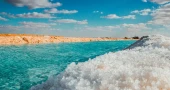
The Siwa Salt Lakes in Egypt’s Siwa Oasis are known for their striking turquoise water and for a rare experience: in many of the pools, it is extremely difficult to sink. Unlike some viral travel locations that disappoint in real life, these desert pools often look much like the photos shared online.
Located near Egypt’s border with Libya, the pools are shaped by the area’s geology and by salt extraction. As minerals are excavated from dried salt lakes, some basins later fill naturally with water from underground springs. In the intense desert climate, water evaporates quickly, leaving behind very high concentrations of mineral salts. That salinity makes the water denser, creating strong buoyancy, so swimmers tend to float on the surface soon after entering.
Some accounts say salt levels in certain pools can rise to extremely high concentrations — far higher than seawater — which further increases buoyancy and makes sinking unlikely.
Beyond their appearance, the Siwa lakes are also linked to the oasis’s long history. Reports note archaeological finds in the region dating back thousands of years. Locally, salt and salt-rich materials have traditionally been used in construction, including in structures such as the historic Shali Fortress.
Bali named world’s top travel destination for 2026 by TripAdvisor
Today, salt taken from the lakes and ponds is used in a range of products and in wellness practices. Many visitors and locals believe the mineral-rich water can help with skin and sinus problems, though these claims are largely based on tradition and personal experience.
Visitors are commonly advised to be cautious: avoid getting the water into your eyes and avoid shaving right before swimming to reduce irritation.
Why Mount Damavand, Asia’s tallest volcano, is so famous
To reach the lakes, travelers typically book day tours from Cairo or Alexandria or use local transport such as tuk-tuks for shorter trips. Alongside floating in the salt pools, tourists often visit Cleopatra’s Pool, the Oracle Temple, the Shali Fortress area and the Mountain of the Dead tombs. Siwa became more accessible after a highway opened in the 1980s, bringing the once-isolated oasis onto Egypt’s travel map.
#With inputs from NDTV
6 months ago

Valentino partner recalls designer’s legacy of elegance and respect for women
Legendary Italian fashion designer Valentino Garavani devoted his life to creating outfits that celebrated women’s beauty and dignity, his longtime partner Giancarlo Giammetti said on Tuesday, following the designer’s death at the age of 93.
Speaking to journalists outside Valentino’s headquarters in Rome, Giammetti said the designer always believed fashion should enhance women rather than overshadow them.
“He often said, ‘It’s not my fault, I just love beauty,’” Giammetti said. “From a creative point of view, he taught us to respect women.”
Valentino, who founded his fashion house in 1960, dressed some of the world’s most famous women, including Elizabeth Taylor, Nancy Reagan, Sharon Stone and Julia Roberts. He was known for creating iconic red-carpet looks and for his signature shade, widely known as “Valentino red”.
Giammetti said Valentino’s lasting legacy was the belief that fashion exists to embellish, not to ridicule. His business partner’s vision and craftsmanship helped turn the Valentino label into one of the world’s most recognisable luxury brands.
Valentino’s body will lie in state from Wednesday at the Valentino Garavani and Giancarlo Giammetti Foundation, next to the designer’s historic atelier in central Rome.
On Tuesday, admirers gathered outside the foundation, laying red roses in tribute. Among them was 21-year-old fashion student Luca Bonilli, who said Valentino had been a source of inspiration.
“It is a great loss. Even for those who are not deeply interested in fashion, he was an important figure,” Bonilli said.
Valentino’s funeral will be held on Friday at the Basilica of Saint Mary of the Angels and of the Martyrs in the Italian capital.
With inputs from NDTV
6 months ago

Bicycling could cut emissions in Global South with policy support: Study
After collecting feedback from bicyclists and other stakeholders across four cities in Bangladesh, India and Ghana, a new study shows policymakers devising ways to cut emissions in their countries must meet people where they are and not rely on the same policies that have worked in richer countries.
In many high-income countries, bicycling on city streets is becoming more common— being promoted and invested in both for its health benefits and its benefits to our environment and climate.
The new study published in Nature Cities shows that policies that address the needs of bicyclists are far less common in low- and middle-income countries.
Read More: Europa likely unsuitable for life despite hidden ocean, study finds
This, despite the fact that 49 of the top 50 countries with the most polluted air are located in the Global South and 82 percent of CO2 emissions over the remainder of the century are projected to occur there.
The study evaluates the current state of bicycling in the Global South and what can be done to increase its use as a tool for reducing emissions and improving air quality.
“There is enormous potential for bicycling to be used as a way to reduce harmful pollution and greenhouse gas emissions from the transportation sector in low- and middle-income countries,” says Kavi Bhalla, one of the study’s co-authors and an Associate Professor in the Department of Public Health Sciences at the University of Chicago’s Biological Sciences Division.
“But just because certain policies work to boost bicycling in cities in the United States or Europe doesn’t mean the same policies will be successful in countries in the Global South, where the context is much different. Our study digs into that local context so policymakers can better design policies to fit their local needs.”
Read More: Rising medicine prices threaten healthcare for marginalised communities, warns study
Bhalla and his co-authors including those from Bangladesh studied bicycling in four similar low- and middle-income cities: Delhi and Chennai (India), Dhaka (Bangladesh), and Accra (Ghana).
The locations they chose are all rapidly densifying and expanding cities with flat terrain, heterogeneous traffic, and marked by very hot summers and seasonal flooding. The authors gathered both “in the moment” feedback and interview testimony from more than 550 bicyclists and other stakeholders.
They discovered that bicycling is a mode of everyday transportation for some. But the typical rider was a low-income man cycling a long distance to work each day, with fewer low-income women also riding bicycles to travel shorter distances and on quieter neighborhood roads.
But the conventional belief was, once someone could afford an automobile, they would no longer use a bicycle.
Those who did bicycle faced harsh and risky road conditions. Along with needing to cope with extreme heat, heavy rains and flooding, they also needed to navigate roads that were built to accommodate high-speed automobiles.
In the few areas where separated bicycle lanes existed, they were often either blocked by parked cars or vendors, taken over by motorcyclists escaping roadway traffic, or built in affluent neighborhoods where few people actually bicycle.
It is of little surprise that roadways were built without bicyclists in mind. Planning documents rarely acknowledged that people bicycled at all, and when they did it was often in reference to recreational use within beautification projects.
Additionally, the responsibility of bicycling infrastructure is spread among many different agencies, while bicycle distribution policies were aimed at improving access to school for low-income girls.
Bicycling cultures persist despite these barriers, sustained by informal and precarious support systems. Non-profit organizations provide tools like air pumps and water at basic public comfort stations. Meanwhile, small street-side bicycle repair shops, often no more than footpath stalls, provide maintenance and sell second-hand bicycles.
Yet, many have downsized over the past decade and must regularly negotiate with police and regulatory authorities simply to continue occupying public space.
“What we saw was not a lack of bicycling, but a lack of institutional support,” says Rahul Goel, one of the study’s co-authors and an assistant professor at the Indian Institute of Technology (IIT), Delhi.
“Bicycling continues largely because of informal systems that keep bicycling viable from day to day. These systems are essential, yet they are increasingly fragile and invisible to policymakers, even as motorized traffic and regulatory pressures make cycling harder to sustain.”
Drawing on this analysis, the study concludes that large-scale increases in bicycling could meaningfully reduce greenhouse gas emissions and other pollution from the transport sector in low- and middle-income countries.
However, rather than importing models from high-income settings, the authors argue that policies should start by addressing the everyday needs, constraints, and risks experienced by current bicyclists.
“If we begin by making bicycling safer and more workable for those who already rely on it, we can create conditions that make bicycles a viable option for many more people and help prevent a shift toward private motor vehicles as incomes rise,” says Smruthi Bala Kannan, who led the work as a post-doctoral researcher at the University of Chicago before joining the Madras Institute of Development Studies as an Assistant Professor.
Read More: Bangladesh solar power projects fail to draw investors for rigid terms: Study
6 months ago

Iconic designer Valentino dies at 93
Valentino Garavani, the celebrated Italian fashion designer whose glamorous gowns dressed generations of royals, first ladies and Hollywood stars, has died at the age of 93.
The Valentino Garavani and Giancarlo Giammetti Foundation said in a statement posted on social media that the designer died at his residence in Rome on Monday. No cause of death was disclosed.
Universally known simply as Valentino, he was famed for his high-glamour creations, often in his signature shade of “Valentino red”, and remained a dominant force on international runways for nearly half a century.
“Valentino Garavani was not only a constant guide and inspiration for all of us, but a true source of light, creativity and vision,” the foundation said.
Adored by generations of royals, first ladies and movie stars, Valentino dressed icons ranging from Jacqueline Kennedy Onassis and Julia Roberts to Queen Rania of Jordan and Diana, Princess of Wales. He once said, “I know what women want. They want to be beautiful.”
Although Italian-born and based in Rome, Valentino regularly unveiled his collections in Paris, establishing himself as a global symbol of elegance and timeless style.
Tributes poured in from across the fashion world. Italian Prime Minister Giorgia Meloni described him as “an indisputable maestro of eternal style and elegance of Italian high fashion.” Designers, supermodels and celebrities also expressed their sorrow, hailing him as a master of his craft.
Born on May 11, 1932, in Voghera in northern Italy, Valentino trained in Milan and Paris before founding the Valentino fashion house on Rome’s Via Condotti in 1959 with his longtime partner Giancarlo Giammetti, who managed the business side of the empire.
His career spanned from the early 1960s to his retirement in 2008, during which he became the designer of choice for red-carpet events, dressing Oscar winners including Julia Roberts and Cate Blanchett.
Valentino’s empire later expanded into ready-to-wear, menswear and accessories, and the brand was sold in 1998 for an estimated 300 million dollars. He continued designing for another decade before stepping down.
A public viewing will be held at the Valentino Garavani and Giancarlo Giammetti Foundation on Wednesday and Thursday, while his funeral is scheduled for Friday in central Rome.
6 months ago

Bali named world’s top travel destination for 2026 by TripAdvisor
Bali has been crowned the world’s best travel destination for 2026 in TripAdvisor’s Travellers’ Choice Awards: Best of the Best, beating a list of global favourites including London, Dubai, Hanoi, Paris and Rome.
The ranking is based on the volume and quality of traveller reviews collected throughout 2025, reflecting feedback from real visitors across the globe.
Bali Governor Wayan Koster said the recognition highlights the island’s enduring appeal despite challenges such as waste management, traffic congestion and fluctuations in visitor numbers.
“Bali has secured the highest position in the world, proving that these issues cannot weaken its standing as a top global destination,” he said in Denpasar, according to Antara.
Why Mount Damavand, Asia’s tallest volcano, is so famous
Tourism Minister Widiyanti Putri Wardhana said the award shows continued confidence among international travellers.
“Being chosen as the world’s best destination by TripAdvisor proves that Bali remains a major magnet for global tourism,” he said in a statement.
TripAdvisor described Bali as a “living postcard”, known for its white sand beaches, coral reefs and historic World War II shipwrecks.
Along with the top global ranking, Bali also earned several other honours. It was ranked first among the best honeymoon destinations, placed in the top 10 for cultural destinations and solo travel, and listed among the world’s top 20 trendiest cities.
The island is popular for its diverse attractions, from the green rice terraces and art markets of Ubud to the calm beaches of Seminyak and Nusa Dua. Adventure lovers often hike Mount Batur for sunrise views, while visitors explore iconic temples such as Tanah Lot and Uluwatu.
Greenland in winter and summer: A land of ice, adventure, and stunning landscapes
Snorkelling and diving hotspots like Amed and Nusa Penida also draw travellers with their clear waters, coral reefs and rich marine life.
With its blend of natural beauty, culture and relaxation, Bali continues to attract travellers from every corner of the world.
#With inputs from NDTV
6 months ago

China’s “Are You Dead?” app highlights loneliness among young people
A new app in China, bluntly named “Are You Dead?”, is taking the country by storm, offering young people who live alone a way to check in with friends or relatives and confirm they are alive. The app costs 8 yuan (about $1.10) per check-in.
Developed by three young Chinese in their 20s, the app has quickly become the most downloaded paid app on China’s Apple App Store. It is also gaining popularity in countries like Singapore, the Netherlands, Britain, India, and the United States.
The app’s simplicity—a single button to send a proof-of-life alert—is aimed at those who live far from family and struggle with loneliness. Developer Ian Lü, 29, said it especially suits introverts who find it “unrealistic to message people every day just to tell them you’re still alive.”
China’s rapid urbanization has left more than 100 million single-person households, as young adults move to cities for work and education, often far from parents and grandparents. Users like Yuan Sangsang, 38, see the app as a way to reassure relatives in the event of an unexpected death, while others enjoy it as a humorous social check-in.
The app has sparked discussions around cultural taboos: the word “death” is largely avoided in Chinese society. Following public pressure, the developers briefly pulled the app from the App Store and proposed a new name, “Demumu”, though they later decided to crowdsource another name, offering a reward of 666 yuan ($96) for suggestions.
Commentators say the app’s popularity reflects a mix of practical concern and the desire to feel seen and understood in a fast-paced, isolating society.
6 months ago