lifestyle

Paris Couture Week highlights craftsmanship, fantasy and innovation
Paris Haute Couture Week concluded on Thursday with designers blending bold creativity, fantasy and advanced technology, as major fashion houses sought to revive the luxury industry after a two-year slowdown.
The week's most anticipated event was Pierpaolo Piccioli's debut couture collection for Balenciaga, attended by celebrities including Demi Moore, Cynthia Erivo and Gigi Hadid. Piccioli showcased dramatic balloon-shaped gowns and feathered designs before closing the show with Hadid in a striking rooster-feather creation. He received a standing ovation alongside his atelier.
Across four days, 30 fashion houses, including five first-time participants, explored themes of body transformation, fantasy and innovation. Designers experimented with revealing, concealing and reshaping the human figure while incorporating new materials and technologies, even as they stressed the enduring value of handcrafted couture.
Major labels including Balenciaga, Dior, Chanel and Armani Privé introduced collections under new creative directors, hoping to boost demand in the recovering luxury market.
Technology also featured prominently. Balenciaga used 3D body scans and lab-grown silk, while Iris van Herpen incorporated thousands of hand-blown glass beads and experimental techniques. Schiaparelli combined handcrafted silicone and unusual materials to create sculptural designs.
Despite embracing technological innovation, designers consistently emphasised that haute couture remains rooted in craftsmanship, with handmade artistry continuing to define fashion's most exclusive creations.
22 days ago
Cosmos Art Echo: Art Talk features Bishwajit Goswami’s journey of transformation
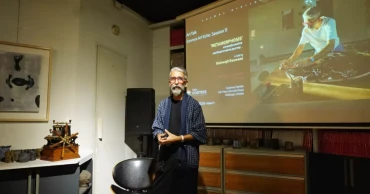
Gallery Cosmos and Cosmos Atelier71 hosted the 11th session of its artist talk series, Cosmos Art Echo, on Saturday, featuring the artistic transformation of distinguished Bangladeshi artist, art educator, curator and researcher Bishwajit Goswami.
The session, titled "Metamorphosis," was held at the Cosmos Atelier71 Studio at Cosmos Centre in Malibagh, bringing together artists, students, art educators and cultural enthusiasts for an in-depth discussion on transformation in artistic practice, cultural identity and contemporary visual language.
Through his multidisciplinary and research-based practice, Bishwajit reflected on his lifelong artistic evolution, saying nothing had been able to stand in the way of his journey of transformation.
Bishwajit Goswami’s practice centers on six foundational elements—Ma, Mati, Manush, Bhasha, Swadesh and Prokriti—representing mother, soil, people, language, motherland, and nature.
Through multidisciplinary approaches, he investigates how these interconnected elements shape collective identity. His practice emphasizes collaboration, site-responsive methodologies, and sustained dialogue with artisans and communities across local and international contexts.
Both his artistic and curatorial works advocate shared authorship, repositioning traditional forms within contemporary frameworks through processes of exchange.
Goswami said his creative practice is deeply rooted in nature, drawing inspiration from natural phenomena such as the tides, the roar of the sea and the first light of day entering his studio.
Reflecting on his role as an educator at the Faculty of Fine Arts, he described teaching as a continuous learning process, saying the enthusiasm and energy of young students, including watching them paint on large canvases, remain one of his greatest sources of inspiration.
He stressed that art should communicate with everyone- from rickshaw pullers to schoolchildren- and said he was proud that his wall-paintings were protected following the July movement because ordinary people felt connected to them.
Speaking about his curatorial works, Bishwajit said he focused on presenting the richness and strength of Bangladeshi culture to international audiences, citing his work with the Victoria and Albert Museum as an example.
23 days ago
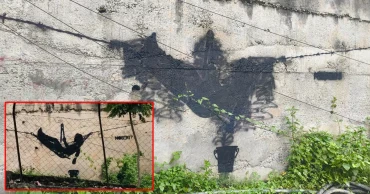
HOBEKI?’s first international Subodh graffiti disappears from Sikkim after 5 days
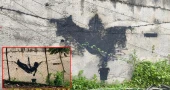
The first known international appearance of HOBEKI?’s iconic Subodh graffiti has disappeared from a wall in Rangpo, Sikkim, only five days after it was first reported.
The large stencil mural, which appeared near the Majitar Nala Bridge on the Gangtok–Rangpo Road around June 30, 2026, immediately attracted widespread attention across both Bangladesh and India. Its emergence marked the first documented appearance of HOBEKI?’s work outside Bangladesh and generated extensive discussion in newspapers, television, online media, and social media on both sides of the border.
HOBEKI? crosses borders: Subodh appears at Gateway to Sikkim
Several Indian news outlets interpreted the work from different perspectives. Some viewed it primarily as a remarkable example of contemporary street art, while others questioned its appearance in a sensitive border state and discussed possible security implications. The mural quickly became the subject of public debate, with discussions extending beyond art into questions of borders, identity, diplomacy, and public space.
ARTCON, an art agency documenting the artist's practice, has now learned that the mural has been removed. As of publication, no individual or authority has publicly claimed responsibility for its removal, and no official explanation has been issued. The circumstances surrounding its disappearance therefore remain unknown.
The removal is, in one sense, consistent with the inherently temporary nature of street art. Graffiti created on outdoor walls is constantly exposed to weather, redevelopment, repainting, political poster campaigns, and advertising. Bangladesh itself has witnessed numerous examples of significant graffiti works disappearing within days or months of their creation.
HOBEKI?‘s work, however, occupies a distinctive position within South Asian street art. The artist’s anonymity, highly recognisable visual language, and refusal to explain individual works have made each new Subodh mural an event in itself. Every appearance generates public curiosity, multiple interpretations, and, at times, controversy. That same combination has also meant that several of the artist’s earlier murals in Bangladesh have disappeared shortly after attracting public attention.
Social thinker Professor Manosh Chowdhury observed that politically sensitive public art often creates discomfort for certain sections of society and that graffiti carrying strong symbolic meaning has repeatedly disappeared in different contexts.
Expressing a complex reaction to its rapid destruction, Prof. Chowdhury noted that it triggers a "complicated emotion because this is a painting most people were not even supposed to see in person given its location, yet it was erased so quickly."
He reflected that while multiple works by 'Hobe Ki' or the 'Subodh series' have remained intact on several walls in Dhaka, others did not last long. However, because of its strategic location and the significance it had gained, the feeling is even more intricate, leaving a strange sense of loss.
The Sikkim mural itself invited interpretation without providing any explicit explanation. It depicted Subodh lying in a hammock woven from barbed wire, holding a wire cutter, with a bucket resting below and the Teesta River nearby. As with all of HOBEKI?’s works, the artist offered no statement explaining its meaning.
ARK Reepon, art analyst and founder of ARTCON, noted that although the wall has now been erased, the conversation it initiated continues. He observed that as with many significant works of street art, the mural’s physical life proved brief, but its cultural afterlife may prove considerably longer.
23 days ago
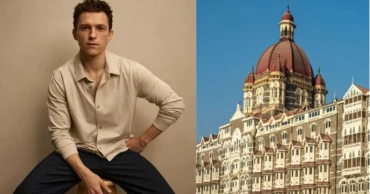
Tom Holland arrives in Mumbai for The Odyssey premiere, stays at Taj Mahal Palace
Hollywood actor Tom Holland has arrived in Mumbai ahead of the Indian premiere of Christopher Nolan's much-awaited film The Odyssey and is staying at the iconic Taj Mahal Palace Hotel.
Videos shared on social media showed the Spider-Man star leaving Mumbai's Kalina Airport in a black car before heading to the luxury hotel. Although his face was not clearly visible, fans quickly identified him. This is Holland's second visit to India after his trip in 2023.
Christopher Nolan, producer Emma Thomas and actor Matt Damon have also arrived in Mumbai for the film's promotional events.
The Odyssey will be the first Christopher Nolan film to have its premiere in India. Universal Pictures International has included Mumbai as an official stop on the movie's global promotional tour, alongside London, Paris and New York.
The Taj Mahal Palace's most luxurious accommodation, the Tata Suite, offers two bedrooms, a spacious living room, a formal dining area, a meeting room for up to 15 people, a private office, lounge, spa with sauna, private gym, butler's pantry and the option of connecting to an additional bedroom.
The suite combines historic architecture with luxury interiors, featuring heritage furniture, artwork and cultural collectibles.
A social media video by Indian-Australian content creator Priya recently showcased the suite, highlighting its apartment-style layout, multiple living spaces, walk-in wardrobe, conference room and wellness facilities.
She claimed the suite costs Rs 50 lakh per night, but published reports suggest the actual rate ranges between Rs 7 lakh and Rs 12 lakh per night, depending on the booking.
Based on the ancient Greek epic by Homer, The Odyssey follows the legendary journey of Odysseus as he tries to return home to Ithaca after the Trojan War. The story traces his 10-year voyage, filled with mythical creatures, gods and dangerous challenges after the Greeks' victory over Troy.
The film features an ensemble cast including Anne Hathaway, Zendaya, Samantha Morton, Lupita Nyong'o, Elliot Page, Mia Goth, Charlize Theron, Benny Safdie, John Leguizamo and Robert Pattinson.
Filmed at locations around the world using IMAX technology, The Odyssey is being promoted as the first feature film shot entirely with IMAX cameras. It is scheduled for worldwide theatrical release on July 17.
Source: NDTV
23 days ago

Hong Kong restaurants begin welcoming dogs as city eases long-standing ban
Dog owners in Hong Kong can now take their pets to selected restaurants after the city eased a decades-old restriction, marking another step toward creating a more pet-friendly environment.
From Thursday, more than 900 approved restaurants have been allowed to admit dogs under the first phase of the new policy.
Since 1994, only guide dogs and dogs performing official duties had been permitted inside restaurants under Hong Kong's food business regulations.
The move is part of the city's broader efforts to become more animal-friendly. Hong Kong has already allowed pets on certain ferry routes and some rural metro services, while public hospitals have also begun permitting pet visits for patients receiving palliative care.
Government figures show that more than 240,000 households in Hong Kong own over 400,000 pet cats and dogs, representing about 9% of all households.
At Wan Land Cafe, owner Kelvin Chan has displayed a sign announcing that dogs are now welcome inside. Previously, pets were limited to the outdoor seating area, which was uncomfortable during Hong Kong's hot and humid summer.
Although Chan does not expect a major increase in customers, he believes the policy will help build a more pet-friendly and inclusive society.
He acknowledged that while many dog lovers support the change, some people may need time to adjust to dining alongside pets. He hopes responsible behaviour by pet owners will gradually make others more comfortable with the idea.
"It could become part of our lives," he said.
Regular customer Franco Li welcomed the new arrangement, saying his Shiba Inu, Piku, can now stay beside him while he eats and interact with other dogs.
"This is such a great step forward for civilization," Li said.
Ahead of the rule change, some pet owners enrolled their dogs in special "dog dining etiquette" workshops to help them behave properly in restaurants.
Dog trainer Heyton Lee, who has worked with dogs for 19 years, said demand for the training increased before the new measure took effect.
His two-hour sessions recreate a restaurant setting, teaching dogs to remain calm around people and other dogs. Owners also learn hand signals commonly used to guide their pets' behaviour.
Lee said the training helps dogs become more comfortable in public places and reduces anxiety when interacting with strangers.
Under the new rules, dogs must be kept on a leash no longer than 1.5 metres (5 feet), held by an adult or tied securely. They are not allowed on tables and cannot eat directly from reusable utensils used by people.
Dogs classified by the government as fighting breeds are not permitted in participating restaurants. Restaurants are also prohibited from preparing meals for dogs but may sell pre-packaged pet food.
Many restaurants have made preparations to welcome pets, hoping the policy will attract more customers.
Old Fung Teahouse, a dim sum restaurant, spent more than HK$10,000 (US$1,276) on improvements, including installing an air purifier, creating a separate dining area for pet owners, and providing pet strollers and cleaning supplies. The restaurant expects the move could increase business by up to 15%.
Mainland Chinese tourist Ma Ke praised the restaurant's approach, saying the separate seating area helps customers who are less comfortable around dogs while allowing pet owners to enjoy dining with their animals.
24 days ago
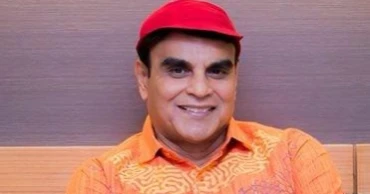
Ognipother Kobi to be produced on Poet Mohan Raihan
A full-length documentary titled Ognipother Kobi is being produced on the life, literary works, political ideals and social contributions of Bangla Academy Award-winning poet Mohan Raihan.
The documentary is being directed by acclaimed documentary filmmaker Masud Karim under the banner of the Bangladesh Documentary Filmmakers Association.
The film will chronicle various stages of Mohan Raihan's life, including his birth, childhood, upbringing, literary career, political engagement, social commitment and contributions to the Bengali language and culture. It will also explore his influence on contemporary literature, society and intellectual thought.
The first phase of filming has already been completed at several locations in Dhaka, including Dhaka College and the University of Dhaka. The remaining scenes will be shot in Sirajganj, the poet's birthplace, during the next phase of production.
The documentary features reflections on Raihan's life and literary achievements by several prominent academics and cultural figures, including Professor Emeritus Serajul Islam Choudhury, the late Professor Abul Kashem Fazlul Haq and noted dramatist Mamunur Rashid, along with other distinguished personalities.
Masud Karim has previously directed documentaries on legendary actor Soumitra Chatterjee, National Professor Anisuzzaman, journalist and writer Abdul Gaffar Choudhury, and The Bengali Language Movement in Assam, a historical documentary on the Bengali Language Movement in Silchar.
The premiere of Ognipother Kobi is scheduled to be held at the Bangladesh National Museum on August 1 to coincide with the 70th birth anniversary of poet Mohan Raihan.
The filmmakers said the documentary aims to introduce Mohan Raihan's life, literary legacy, ideals and lifelong struggles to younger generations while preserving an important chapter of Bangladesh's literary and cultural heritage for the future.
25 days ago
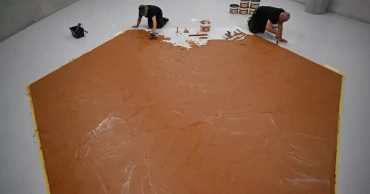
Peanut butter floor returns to Dutch museum to honour late artist Wim T. Schippers
A famous artwork made entirely of peanut butter has returned to a museum in the Netherlands as a tribute to Dutch conceptual artist Wim T. Schippers, who died last month at the age of 83.
More than 800 pounds of peanut butter — enough to make about 15,000 sandwiches — has been spread across the floor of Museum Boijmans Van Beuningen in Rotterdam.
The artwork, known as Pindakaasvloer (Peanut Butter Floor), was first created by Schippers in 1969. It will reopen to visitors on Friday as part of a two-month exhibition.
Besides his work as a conceptual artist, Schippers was also known for providing the Dutch voices of Ernie and Kermit the Frog in the Dutch version of Sesame Street. His artworks often used humour and absurdity to challenge traditional ideas about art.
Speaking to reporters during a previous exhibition of the work in 1997, Schippers said, "Isn't it fantastic that we are all standing here looking at peanut butter?"
The peanut butter floor was part of his "Floor Covering Series," which also included floors covered with broken glass and salt.
Food photographer and writer Mieke Weismann, who visited the exhibition as a teenager in 1997, said the strongest memory she had was the smell, recalling that the scent of peanut butter filled the museum.
It took two museum employees several days to spread 40 buckets of peanut butter over a 25-square-metre (270-square-foot) hexagonal floor area. Using drywall trowels, they applied the peanut butter in a layer about two centimetres (0.8 inch) thick.
Schippers never set strict rules for recreating the artwork, leaving its size, shape, thickness and even the type of peanut butter open to interpretation. Dutch peanut butter manufacturer Calvé supplied smooth peanut butter for the latest installation.
The artwork has attracted unusual attention in the past. During a 2011 exhibition, several visitors accidentally stepped onto the sticky surface.
At an earlier exhibition in 1997, a group placed 12 slices of bread and several packets of hagelslag — chocolate sprinkles commonly eaten on bread in the Netherlands — on top of the artwork.
Rather than criticising the act, Schippers reacted with humour, telling Dutch newspaper Volkskrant that it "doesn't look bad" and praising the careful way the sprinkles had been arranged.
25 days ago
Virtual taekwondo gains popularity ahead of Asian Games debut
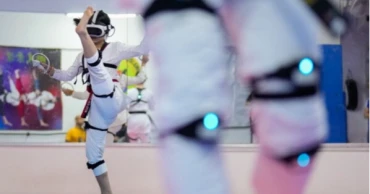
Virtual taekwondo is rapidly gaining popularity across Southeast Asia as it prepares to make its debut at this year's Asian Games in Japan, attracting athletes with its mix of martial arts and virtual reality technology.
Vietnamese athlete Nguyen Thanh Hien Linh remembers feeling completely lost when she entered her first virtual taekwondo competition in Singapore in 2024.
"I was just kicking into the air," said the 21-year-old, who is an elite national taekwondo champion. Despite her experience in traditional taekwondo, she had little understanding of the virtual format, its strategies or the technology involved.
Two years later, Nguyen claimed a gold medal at a virtual taekwondo competition in Malaysia, reflecting the sport's rapid growth in the region.
Initially seen as an experimental format, virtual taekwondo has developed into an organized competitive discipline. It was jointly created by World Taekwondo and Singapore-based technology company Refract Technologies, combining virtual reality with traditional taekwondo techniques to attract younger, tech-savvy athletes.
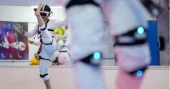
Competitors wear VR headsets that place them inside a three-dimensional digital arena, along with motion-tracking sensors attached to their spine, thighs and shins. Using their body movements, they control digital avatars in non-contact matches, where fast and accurately timed kicks reduce an opponent's virtual health bar.
Unlike traditional taekwondo, where athletes compete based on age, weight and gender, virtual taekwondo allows everyone to compete together in the same digital arena.
The sport was first showcased during Singapore's Olympic Esports Week in 2023 and hosted its inaugural World Championships there in 2024. Besides its Asian Games debut this year, it is also expected to feature in the 2027 Southeast Asian Games in Malaysia.
Athletes and coaches say the new discipline offers the physical demands of martial arts without the risk of direct contact injuries.
Singapore national athlete Brian Peh, 46, said he had never been interested in gaming before joining the 2024 championship with his son out of curiosity. Both won gold medals and have since taken part in several local and regional competitions.
Peh now teaches virtual taekwondo at his dojang, or training hall.
"I always tell parents: your kids love games. Do you want them using their hands to play, or using their legs?" he said. "When they put on the headset and start to fight, their energy is so high. They keep playing because they enjoy it."
Cambodian coach Vandy Yiv said the sport is attracting increasing interest from children and parents because there is little risk of injury. He noted that a local tournament earlier this year drew more participants in virtual taekwondo than in traditional events.
Many people initially assumed it was simply a video game but soon discovered it requires intense physical effort.
"Your whole body is moving. There is action, but no injury," Vandy said, adding that he hopes virtual taekwondo will eventually become an Olympic medal event.
Some competitors said they experienced dizziness when they first used VR headsets, but most adapted quickly. Teenagers, in particular, have embraced the game-like format. Matches are fast-paced, with one-minute rounds that require constant attacking pressure.
Nguyen said success depends on much more than simply throwing kicks.
"You have to guess first where your opponent is and move" before they do, she said.
Coaches say athletes still need strong physical conditioning despite competing in a virtual environment. Techniques such as front kicks, turning kicks and spinning kicks remain essential, but speed and timing are more important than the force of impact.
Malaysian coach Henry Lee said training focuses first on stamina, muscle endurance and flexibility before moving to techniques and tactics.
"Strength is about how fast your leg can lift and strike. Speed becomes your power," he said.
Lee, who is also an elite national taekwondo athlete, looks for competitors with strong physical ability as well as good "game sense," meaning the ability to judge movement and make quick decisions inside the virtual arena.
His 12-year-old student, Victoria Siow, said one of the biggest challenges is judging distance in an environment she cannot physically see.
"You have to work on your mind — when to kick, how far to move," she said. "It feels like a game and like a dream at the same time."
Raja Mardiah Idris, 45, who trains at the same club, said virtual taekwondo has given older athletes and women more opportunities to compete safely and equally. She also believes it offers children a healthier alternative to spending time on digital devices.
"When you wear the VR, everybody is the same," said Raja, a member of a state royal family. "You win through your technique, your strategy and your fitness."
She plans to retire from full-contact kyorugi sparring and concentrate on virtual taekwondo, hoping to represent Malaysia at next year's Southeast Asian Games.
Malaysia's national virtual taekwondo coach Tony Lee said the sport is still at an early stage. Although VR equipment remains expensive and not widely available, he believes rising demand will encourage more clubs to invest. Malaysia has already introduced national training programmes and coaching certification courses for the discipline.
"Virtual taekwondo is our future because young people like gaming," he said.
27 days ago
Harry's UK visit fuels speculation over Meghan, children
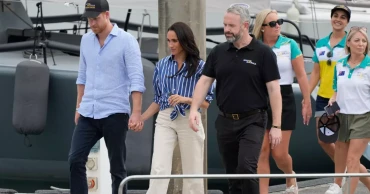
Prince Harry's upcoming visit to the UK has sparked widespread media attention, with speculation focused less on his charity work and more on whether his wife Meghan and their two children, Prince Archie and Princess Lilibet, will join him.
Harry, the younger son of King Charles III, is due to arrive in Britain on Monday for a series of charity events beginning Tuesday. However, British media have spent the past 10 days discussing whether Meghan and the children will travel with him and whether the youngsters will have a chance to spend time with their grandfather, King Charles.
The uncertainty centres on security arrangements. Harry has been seeking government-funded police protection for his family, arguing that it would be unsafe for Meghan and the children to visit the UK without it.
The ‘Times’ of London reported on Saturday that, with only days remaining before Harry's first public engagement, very little had been confirmed. The ‘Telegraph’ described the possible meeting between Archie, Lilibet and the King as a "now or never" moment.
Harry, a former British Army officer who served in Afghanistan, planned the trip to mark one year before the next Invictus Games, the international sporting event he founded for wounded and injured military veterans.
Alongside his charity engagements, Harry is also awaiting a High Court ruling in London on Tuesday in his privacy lawsuit against the publisher of the ‘Daily Mail’. The case, although not part of his official itinerary, has attracted significant media attention.
According to British media reports citing unnamed sources, Harry's decision on whether Meghan and the children will join him depends on whether the UK government agrees to provide police protection. Security has remained a key issue during every visit Harry has made to Britain since he and Meghan stepped down from royal duties and moved to North America six years ago.
British authorities maintain that Harry is no longer entitled to automatic state-funded security because he is no longer a working member of the royal family. Instead, security arrangements are considered on a case-by-case basis, similar to those for other public figures.
Harry, however, argues that his family continues to face security risks because of their royal status and says his children should not travel to Britain without adequate protection.
The decision lies with the Royal and VIP Executive Committee (RAVEC), the government body responsible for deciding who receives state-funded security.
The issue comes at a sensitive time for the royal family, which has faced renewed scrutiny over past links between the late financier and convicted sex offender Jeffrey Epstein and Prince Andrew, now known as Andrew Mountbatten-Windsor.
Royal commentator Tina Brown wrote on X that both RAVEC and the royal family were concerned about possible public criticism if taxpayers were asked to pay for security for Harry and his family.
Initial reports suggested Archie, 7, and Lilibet, 5, would accompany their parents to Britain. But those plans appeared uncertain after the ‘Daily Telegraph’ reported that RAVEC had again rejected Harry's request for security.
The ‘Times’[ later reported that Harry was deeply upset by the decision and had told friends he would not allow his children to be pursued by paparazzi in London.
By Sunday, reports indicated Meghan and the children would not accompany Harry when he arrives in London on Monday, although they could still join him later during the visit.
Despite the ongoing disagreements, Harry has repeatedly said he hopes to repair his relationship with his 77-year-old father, who is undergoing treatment for an undisclosed form of cancer. He also wants Archie and Lilibet, who briefly met King Charles during Queen Elizabeth II's Platinum Jubilee celebrations in 2022, to spend more time with their grandfather now that they are old enough to remember the experience.
Relations between Harry and the royal family have remained strained since he and Meghan stepped back from royal duties and settled in California, where they pursued commercial media projects.
The relationship deteriorated further after Harry published his memoir ‘Spare’, which included critical accounts of the royal family and allegations about the monarchy's relationship with the British media.
In the book, Harry accused some members of the royal family of leaking information about relatives to gain favourable media coverage. He was particularly critical of Queen Camilla, alleging that she shared private conversations with the press to improve her public image after her long relationship with Charles before he became king.
After losing a legal challenge over his security arrangements last year, Harry said he still hoped to reconcile with his family, while suggesting that he had been denied police protection because he chose to step away from royal duties.
"I would love reconciliation with my family. There's no point in continuing to fight anymore," Harry told the BBC. "I don't know how much longer my father has."
28 days ago
Zendaya embraces goddess-inspired style as she begins 'The Odyssey' promotional tour
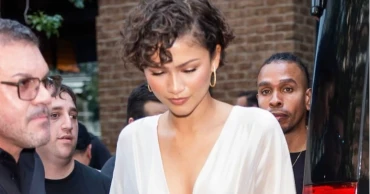
Actor Zendaya has launched the promotional tour for Christopher Nolan's upcoming film "The Odyssey", turning heads with a look inspired by her character in the movie.
Widely regarded as one of Hollywood's leading fashion figures, the Emmy Award-winning actress is known for "method dressing" by choosing outfits that reflect the roles she plays. She appears to be continuing that trend for The Odyssey.
For her first appearance promoting the film, Zendaya wore a flowing outfit from the Khaite Resort 2027 collection. The look featured an ivory draped blouse with a deep V-neckline, paired with a matching semi-sheer A-line midi skirt. A black leather cord belt with gold accents highlighted the waist.
Zendaya plays Athena in the film, a character traditionally depicted in flowing white garments. Fashion observers said her outfit appeared to be a modern tribute to the Greek goddess's signature style.
She completed the look with gold dangling earrings, her trademark pixie bob hairstyle and metallic python-print strappy sandals by Christian Louboutin, replacing her usual So Kate pumps. Her understated makeup kept the focus on the outfit's elegant silhouette.
The appearance marks the beginning of what is expected to be a closely watched promotional tour for The Odyssey, with Zendaya once again blending fashion with her on-screen role.
Earlier this year, Zendaya also drew attention for her bridal-inspired looks while promoting The Drama. Reports say she recently married longtime partner and fellow actor Tom Holland.
She also earned praise for a series of character-inspired fashion choices during the promotional campaign for Spider-Man: Brand New Day. With The Odyssey, Zendaya appears to be entering a new goddess-inspired fashion phase that is already attracting attention.
29 days ago