africa
RSF drone strike in Sudan kills 24, including children
A drone attack by Sudan’s paramilitary Rapid Support Forces struck a vehicle carrying displaced families in central Sudan on Saturday, killing at least 24 people, including eight children, doctors said.
The Sudan Doctors Network said the attack took place near the town of Rahad in North Kordofan province. The vehicle was transporting civilians who had fled fighting in the Dubeiker area. Among the dead were two infants, the group said.
Several others were injured and rushed to medical facilities in Rahad, where hospitals are facing acute shortages of medicine and equipment, similar to much of the wider Kordofan region.
The doctors’ group urged the international community and human rights organisations to take immediate steps to protect civilians and hold the RSF leadership accountable for what it described as grave violations.
There was no immediate response from the RSF, which has been fighting the Sudanese military for nearly three years for control of the country.
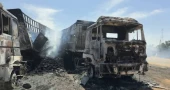
The attack came a day after an aid convoy of the World Food Programme was targeted in North Kordofan. The strike killed one person and wounded several others, said Denise Brown, the UN humanitarian coordinator in Sudan.
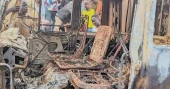
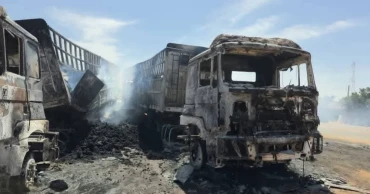
Brown said the convoy was on its way to deliver life-saving food assistance to displaced people in the city of Obeid when it was hit. The trucks were burned and the food aid destroyed.
“Attacks on humanitarian operations undermine efforts to reach people suffering from hunger and displacement,” Brown said in a statement.
She added that last week another drone strike landed near a WFP facility in Blue Nile province, injuring a WFP staff member.
The Emergency Lawyers group, which documents abuses in Sudan, blamed the RSF for the aid convoy attack. The Sudan Doctors Network described it as a serious breach of international humanitarian law and a possible war crime.
US adviser for African and Arab affairs Massad Boulos condemned the attack, saying the destruction of food aid and killing of humanitarian workers was unacceptable and called for accountability.
Kordofan has emerged as a key battleground in recent months. Earlier this year, the Sudanese army managed to break RSF sieges on two major cities in the region.
Sudan has been in turmoil since April 2023, when tensions between the military and the RSF erupted into open war. According to UN estimates, more than 40,000 people have been killed, though aid groups say the true toll is far higher.
The conflict has created the world’s largest humanitarian crisis, forcing more than 14 million people from their homes, spreading disease and pushing parts of the country into famine as fighting continues unabated.
5 months ago
Famine spreads to more towns in Sudan’s Darfur amid war
Famine is tightening its grip on Sudan’s western Darfur region, with two additional towns now confirmed to be suffering from extreme hunger, according to a global food security monitoring body, as the country’s devastating war continues unabated.
The Integrated Food Security Phase Classification (IPC) said on Thursday that famine conditions have been identified in Umm Baru and Kernoi in Darfur. The warning comes months after the group reported famine in el-Fasher, the region’s largest city, which has been under siege for about 18 months and at times overrun by Sudanese paramilitary forces.
Sudan has been engulfed in conflict since April 2023, when a power struggle between the national military and the Rapid Support Forces erupted into full-scale fighting. The war has displaced millions and pushed the country into what the United Nations has described as the world’s worst humanitarian crisis.
The IPC had earlier said famine was also present in Kadugli, a city in South Kordofan province, and warned that at least 20 other areas across Sudan were at high risk of slipping into famine.
The latest IPC report coincided with a deadly attack on Thursday in South Kordofan, where paramilitary forces struck a military hospital in the town of Kouik. At least 22 people were killed, including the hospital’s medical director and three other medical staff, according to the Sudan Doctors’ Network, which monitors the conflict. Eight others were wounded in the attack, though it was not immediately clear how many of the casualties were civilians.
As fighting continues across large parts of the country, humanitarian groups have repeatedly warned that access constraints, insecurity and collapsing health and food systems are accelerating hunger and preventable deaths, particularly in conflict-affected regions such as Darfur and South Kordofan.
5 months ago
Killings, abuse and kidnappings mark Ethiopia’s hidden conflict
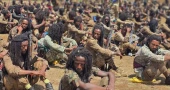
Sought by the Ethiopian government, Oromo rebel commander Jaal Marroo remains on the move to evade drone surveillance targeting him from the air.
Marroo heads the Oromo Liberation Army (OLA) from a network of remote forest hideouts in Oromia, Ethiopia’s largest region, home to an estimated 40 million people.
The government has labelled the former student a terrorist, accusing the OLA of carrying out ethnically driven attacks that have killed civilians. However, speaking in a rare interview from one of his concealed locations, Marroo denied allegations that his forces deliberately target civilians.
“Our war is not against the people,” he told The Associated Press. “It is against the brutal regime that has occupied and oppressed the nation for generations.”
The Oromo Liberation Army (OLA) has been fighting Ethiopia’s federal government since 2018, although the conflict has often been overshadowed by other crises, including the 2020–2022 war in the northern Tigray region. U.N. investigators have accused the group of grave abuses such as killings, rape and abductions.
Human rights organizations, while documenting violations by the OLA, say government forces have also committed serious abuses. Indiscriminate drone strikes, extrajudicial killings and enforced disappearances are described as key features of the counterinsurgency campaign.
“The research that we conducted puts both the OLA and the government forces in the middle of the conflict in terms of summary executions, in terms of torture, in terms of abductions, in terms of rape of women,” said Sarah Kimani, Amnesty International’s regional spokesperson. “Our report is able to point to both groups having been responsible for the atrocities that are being carried out in the Oromia region and that continue to be carried out against civilians in the region,” she told the AP.
Read More: Eritrea withdraws from regional bloc as UN expresses concern over tensions with Ethiopia
Civilians report widespread fear and displacement. Ayantu Bulcha said members of her family were killed after being accused of supporting the OLA, while others described harassment, extortion and ransom demands by armed groups.
“Movement from place to place has become increasingly restricted,” said Lensa Hordofa. “It’s almost impossible to travel.”
Access restrictions have limited reporting from Oromia, where aid delivery has been disrupted, schools closed and health facilities looted or destroyed. Analysts say insecurity persists despite recent government gains, leaving civilians trapped between multiple armed actors.
“Oromia is very insecure,” said International Crisis Group’s Magnus Taylor, citing criminal groups alongside the insurgency.
6 months ago
At least 200 die in mine collapse in Eastern DR Congo
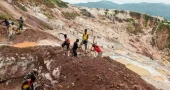
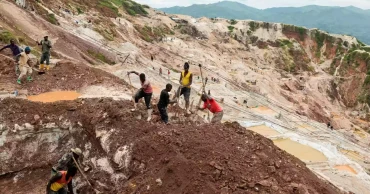
At least 200 miners have died following the collapse of multiple shafts at coltan mines in Rubaya, eastern Democratic Republic of the Congo, a spokesperson for the March 23 Movement rebel group confirmed Friday.
The majority of the victims were artisanal miners trapped underground, and the casualties also included women and children, the spokesperson added.
The collapses took place on Wednesday and Thursday across several coltan mining sites in Rubaya, an area under rebel control since April 2024.
At least 11 killed in minibus taxi-truck crash in South Africa
Coltan, or columbite-tantalite, is a key source of tantalum, a rare metal essential for manufacturing advanced electronics. The United Nations estimates that Rubaya’s mines alone supply around 15 percent of the world’s tantalum.
6 months ago
At least 11 killed in minibus taxi-truck crash in South Africa
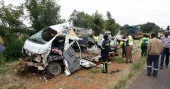
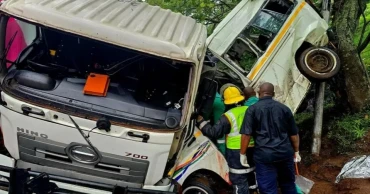
At least 11 people, including a schoolchild, were killed in a collision between a minibus taxi and a truck in South Africa, officials said Thursday.
The accident occurred in the eastern province of KwaZulu-Natal. According to Siboniso Duma, a provincial transport department official, the fatalities were reported at the scene based on preliminary information.
Garrith Jamieson, spokesperson for private paramedic service ALS Paramedics, confirmed that 11 people died and several others sustained critical injuries. The driver of the minibus was among those trapped in the wreckage.
Read More: 13 children killed as school bus collides with truck in South Africa
The deadly crash comes just over a week after a head-on collision between a minibus taxi and a truck killed 14 schoolchildren in the country.
6 months ago
Islamic State-linked attack in eastern Congo leaves 25 dead
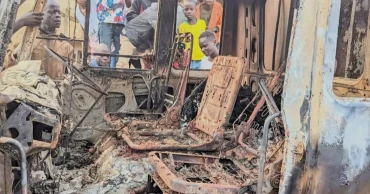
An assault by an Islamic State-affiliated armed group in eastern Congo killed at least 25 people early Sunday, a local human rights organization said.
The victims of the attack, blamed on the Allied Democratic Force (ADF), included 15 men who were burned to death inside a house and seven others who were shot dead in Apakulu village of Irumu territory in Ituri province. Three more people were killed in the Walese Vonkutu administrative area, according to the rights group.
“This tragedy happened around 4am and claimed at least 25 lives. This ADF incursion amounts to a real massacre,” said Christophe Munyanderu, president of the Convention for the Respect of Human Rights, which is based in Ituri.
There was no immediate response from the ADF regarding the reported attack.
Eastern Congo has seen a surge in violence in recent months, with repeated assaults by armed groups, including the ADF and the Rwanda-backed M23 rebels.
The ADF operates along the porous border between Uganda and Congo and has been responsible for numerous deadly attacks on civilians. The group originated as an insurgent movement opposing Ugandan President Yoweri Museveni before being driven into Congo following military pressure. In July last year, a wave of ADF attacks killed more than 100 people.
Ugandan and Congolese forces have been carrying out joint military operations aimed at dismantling the group.
6 months ago

Myanmar holds final election round with military assured of control
Voting began Sunday in Myanmar’s final round of a three-stage general election, capping a monthlong process that has already ensured the military and its allies will retain control of the national legislature.
Critics say the polls are neither free nor fair and are designed to legitimize the military after it ousted Aung San Suu Kyi’s civilian government in February 2021. The army-backed Union Solidarity and Development Party (USDP) has already won most contested seats, while 25% of parliamentary seats are reserved for the military, guaranteeing its majority. Senior Gen. Min Aung Hlaing, head of the current military government, is widely expected to assume the presidency.
Suu Kyi, now 80, is serving a 27-year prison term, and her party, the National League for Democracy, was dissolved in 2023. Opposition parties largely boycotted the polls, citing unfair conditions, while a new Election Protection Law has penalized public criticism of the vote.
The election is being held in three phases due to ongoing armed conflicts, and voting was not held in one-fifth of townships. Early results show the USDP and military together already hold nearly 400 of the 586 active parliamentary seats, well above the 294 needed to form a government.
Final results are expected later this week, with the new government set to take office in April.
6 months ago
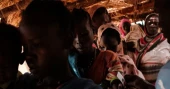
Gunmen abduct over 150 worshippers from 3 churches in Nigeria
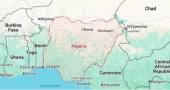
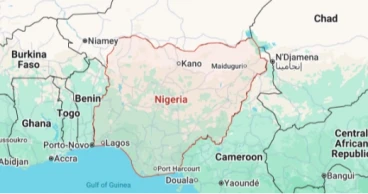
Gunmen abducted more than 150 worshippers during coordinated attacks on three churches in northwest Nigeria, a state lawmaker said on Monday.
The attacks took place on Sunday in Kurmin Wali, a community in Kaduna state’s Kajuru area, while services were underway at an Evangelical Church Winning All (ECWA), a Cherubim and Seraphim church, and a Catholic church, according to Usman Danlami Stingo, who represents the area in the state parliament.
“As of yesterday, 177 people were missing, and 11 have returned, leaving 168 still unaccounted for,” Stingo said.
Kaduna state police have yet to comment, and no group has claimed responsibility. Attacks of this kind are common in Nigeria, Africa’s most populous country, particularly in the northern region, where armed gangs and extremist groups frequently target remote communities with limited security.
13 children killed as school bus collides with truck in South Africa
Similar church attacks have previously sparked claims of persecution of Christians by U.S. officials, including former President Donald Trump. The U.S. carried out military strikes in Sokoto on December 25, reportedly targeting Islamic State operatives. The Nigerian government has rejected the term “Christian genocide” to describe the ongoing security crisis.
6 months ago
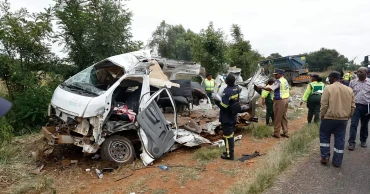
13 children killed as school bus collides with truck in South Africa
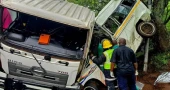
At least 13 schoolchildren were killed on Monday after a truck crashed into a school minibus in South Africa’s Gauteng province, police and emergency officials said.
Initial reports indicated that 11 children died at the scene, while two others later succumbed to their injuries at hospital. The privately operated minibus was carrying pupils to several primary and secondary schools in the southwest of Johannesburg when the crash occurred at around 7:00 am.
According to witnesses, the minibus was attempting to overtake stationary vehicles when it collided head-on with the truck. Police said an investigation has been launched into the incident and the truck driver will be questioned.
Read More: South Africa declares national disaster after deadly floods and severe weather
Gauteng Emergency Services said five injured passengers were taken to Sebokeng Hospital, while two others were transported to Kopanong Hospital for further treatment. The minibus driver was also injured and among those admitted to hospital.
President Cyril Ramaphosa expressed deep sorrow over the tragedy, saying national and provincial authorities would provide affected families and schools with psychosocial support.
“Our children are the nation’s most precious assets, and we must do everything possible - from obeying road rules to ensuring the quality and safety of school transport services - to protect learners,” Ramaphosa said.
Minister of Basic Education Siviwe Gwarube said many school transport accidents are linked to driver negligence and urged the Department of Transport to ensure vehicles used to carry schoolchildren meet roadworthiness standards.
6 months ago
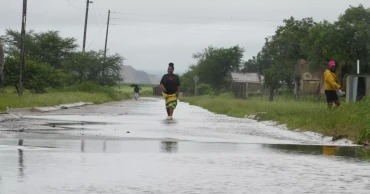
South Africa declares national disaster after deadly floods and severe weather
South Africa on Sunday declared a national disaster following torrential rains and flooding that have killed at least 30 people in the country’s northern regions and caused widespread damage to homes, roads, and bridges.
The declaration, made by the head of the National Disaster Management Centre, enables the national government to coordinate relief and response efforts. The hardest-hit areas are the northern provinces of Limpopo and Mpumalanga, though at least three other provinces have also been affected, the Ministry of Cooperative Governance and Traditional Affairs said.
Heavy rains have persisted across South Africa and neighboring Mozambique and Zimbabwe for weeks, resulting in severe flooding. Since late last year, more than 100 people have died across the three countries due to the extreme weather.
Uganda’s Museveni wins seventh presidential term with 71.65% of vote
In northern South Africa, the floods forced the closure of Kruger National Park and the evacuation of hundreds of tourists and staff from inundated camps. The Limpopo provincial premier estimated damages in the province at around $240 million, with numerous homes and buildings washed away.
South Africa has faced repeated flooding in recent years, including more than 100 deaths in the Eastern Cape last year and over 400 fatalities in KwaZulu-Natal in 2022.
6 months ago