africa
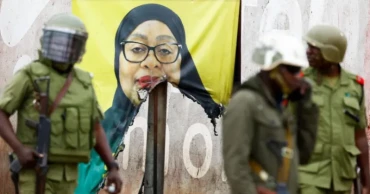
Tanzania cancels independence day amid post-election unrest
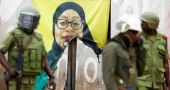
Tanzania has cancelled next month’s independence day celebrations, with the funds redirected to repair infrastructure damaged during recent election-related unrest, Prime Minister Mwigulu Nchemba said.
The announcement comes amid calls by opposition groups for demonstrations on December 9, marking the country’s independence, to protest killings that followed last month’s disputed presidential election. The opposition alleges hundreds were killed during a government crackdown, though the authorities have yet to release an official death toll and have established a commission of inquiry.
President Samia Suluhu Hassan won the election with 98% of the vote, a result widely described by opponents as a “mockery of democracy.” Key opposition figures were barred from contesting: Tundu Lissu remains detained on treason charges, which he denies, and Luhaga Mpina’s candidacy was rejected on technical grounds. Observers reported irregularities and signs of manipulation in the voting process.
An international coalition of lawyers and human rights groups has formally requested the International Criminal Court (ICC) to investigate alleged crimes against humanity during the unrest, including mass killings and the secret disposal of over 500 bodies. The submission, filed on November 13, was publicly released this week.
The government imposed a five-day internet blackout following the October 29 election and warned against sharing protest images. Graphic footage of the violence circulated online, with some verified by international media, though the government has dismissed such reports as misleading.
At least 240 people were charged with treason in connection with the protests, but President Samia later called for leniency, and many detainees have reportedly been released.
While announcing the cancellation of independence day events, Nchemba urged Tanzanians to engage in peaceful dialogue. “Let us not return to what we went through, because the consequences are irreparable,” he said.
President Samia assumed office in 2021 following the death of John Magufuli, becoming Tanzania’s first female president. Initially praised for easing political repression, critics say the political space has since narrowed.
Source: BBC
8 months ago
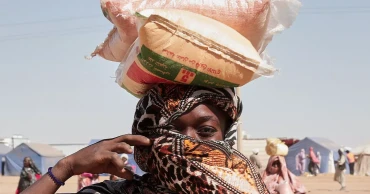
23 children die of malnutrition in Sudan’s Kordofan amid worsening famine
Twenty-three children died from malnutrition-related causes within a month in Sudan’s Kordofan region, a medical group said, highlighting the severe humanitarian collapse as fighting between the army and the Rapid Support Forces (RSF) intensifies.
The Sudan Doctors Network said the deaths occurred between October 20 and November 20 in the besieged city of Kadugli and the town of Dilling. It blamed “severe acute malnutrition” and a chronic shortage of essential food and medical supplies, worsened by a blockade that has cut off aid to thousands of civilians.
Famine was officially declared in Kadugli earlier this month. RSF fighters have surrounded the area for months, trapping tens of thousands of residents as they attempt to seize more territory from the Sudanese military. Dilling, also in South Kordofan, is facing similar hunger conditions, although not officially classified as famine due to missing data.
Sudan has been engulfed in war since April 2023, when a power struggle between the military and the RSF erupted into nationwide fighting. More than 40,000 people have been killed, according to U.N. estimates — a figure aid agencies say is likely far higher — and over 14 million people have been displaced. Disease outbreaks, mass displacement and widespread hunger have pushed parts of the country into catastrophic famine.
As of September, about 370,000 people in Kordofan and Darfur were already in famine conditions, with another 3.6 million on the brink, according to international hunger assessments.
The conflict intensified this year after the military pushed the RSF out of Khartoum. The paramilitary force shifted its focus to Kordofan and the Darfur region, capturing the strategic city of el-Fasher earlier this month. Aid groups and U.N. officials say the takeover triggered mass atrocities, forcing tens of thousands to flee to overcrowded displacement camps.
The World Health Organization reported that RSF fighters killed more than 450 people inside the Saudi Hospital in el-Fasher. Survivors and aid workers say fighters also went door to door, killing civilians and committing sexual violence.
New satellite images reviewed by Yale University’s Humanitarian Research Lab suggest ongoing efforts by RSF forces to dispose of bodies in el-Fasher, including at the Saudi Hospital grounds and in a nearby neighborhood where mass killings were previously reported.
The lab warned that the combination of apparent body disposal, the absence of traditional burials and a collapse of normal life raises serious concerns for civilians still trapped in the city. It said it is highly likely that most residents present before the RSF assault on October 26 “have been killed, have died, are detained, are in hiding, have fled, or are otherwise unable to move freely.”
8 months ago

Eswatini becomes first African nation to launch twice-yearly HIV prevention shot
Eswatini on Tuesday became the first country in Africa to receive lenacapavir, a twice-yearly HIV prevention injection that global health experts say could transform efforts to curb the virus across the continent.
The drug — developed by Gilead Sciences — has shown near-complete protection in trials. Its initial rollout is part of PEPFAR’s partnership with the Global Fund and will eventually expand to 10 high-risk African nations, aiming to reach at least 2 million people by 2027.
Gilead CEO Daniel O’Day called the launch “extraordinary,” noting it marks the first time a new HIV medicine has reached a sub-Saharan African nation in the same year it was authorized in the United States. The U.S. approved the injection in June.
Although the U.S. foreign aid budget has been sharply reduced under President Donald Trump — affecting key health programs in Africa — officials said demand prompted an increase in the number of doses distributed this year from 250,000 to 325,000. Zambia also received its first shipment Tuesday, and Gilead is seeking regulatory approval in Botswana, Kenya, Malawi, Namibia, Rwanda, Tanzania, Uganda and Zimbabwe.
Across Africa, more than 25 million people are living with HIV. In Eswatini — a nation of 1.2 million with the world’s highest infection rate — about 6,000 people are expected to receive the injection initially, with a focus on preventing transmission from mothers to newborns. Over 200,000 people in the country currently live with HIV, most supported through PEPFAR programs.
The rollout comes as Eswatini, the continent’s last absolute monarchy, faces criticism over human rights concerns and its participation in the U.S. third-country deportation program.
The World Health Organization cleared lenacapavir for use in July, and UNAIDS has described long-acting injectables as a vital new tool at a time when funding cuts could jeopardize progress. South Africa’s health minister, Aaron Motsoaledi, praised the drug as “groundbreaking” but warned that limited supplies could complicate its national rollout planned for April 2026. He also welcomed Gilead’s decision to slash the price from more than $28,000 per patient annually in the U.S. to about $40 for lower-income countries.
Still, the launch has revived long-running disputes over access and manufacturing. South African civil society groups have criticized Gilead for withholding voluntary licenses from local producers, despite the country’s role in key clinical trials.
8 months ago
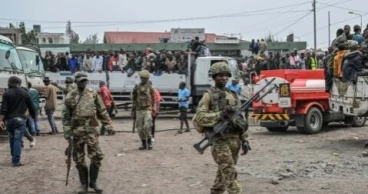
Islamic State-linked rebels kill 17 in eastern Congo
At least 17 people were killed when an Islamic State-affiliated rebel group attacked a hospital in eastern Congo, officials said Saturday.
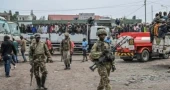
The Allied Democratic Forces (ADF) struck on Friday night in Byambwe village, Lubero territory, North Kivu province, Col. Alain Kiwewa, the local administrator, told The Associated Press. He said 11 women, including breastfeeding mothers, were found dead with their throats slit in hospital beds.
ADF fighters also assaulted nearby villages, according to civil society leader Samuel Kakule Kagheni, though casualty figures there remain unclear.
The ADF, which pledged allegiance to the Islamic State in 2009, is active along the Uganda-Congo border and frequently targets civilians. Other armed groups, including the Rwanda-backed M23 rebels, have also carried out deadly attacks in eastern Congo.
In recent months, the ADF has carried out multiple lethal assaults, including killing 52 people in August and nearly 40 worshippers during a church attack in Ituri province in July.
Originally formed in Uganda in the late 1990s amid opposition to President Yoweri Museveni, the ADF relocated to Congo in 2002 following Ugandan military action. Since then, it has been responsible for the deaths of thousands of civilians.
8 months ago
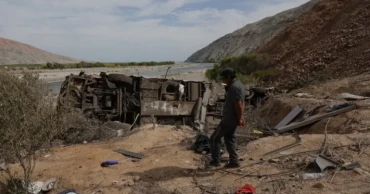
At least 37 killed in Peru bus crash into ravine
At least 37 people were killed when a bus traveling through the mountainous Arequipa region of Peru collided with a pickup truck and plunged about 200 metres (650 feet) into a ravine, officials said.
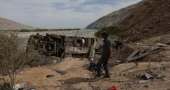
The bus, carrying around 60 passengers, was traveling from a mining district toward the city of Arequipa around 12:30 a.m. local time (05:30 GMT) on Wednesday when it hit the pickup and veered off the highway, according to public broadcaster TV Peru. Thirty-six passengers died on the spot, while one more later succumbed to injuries at a hospital. About 20 others were injured.
Authorities said the pickup truck driver tested positive for alcohol. Photos from the scene showed the front of the truck badly damaged and the bus lying on its side amid debris scattered over rocky terrain.
“This isn’t the first tragedy in this area. Years ago, another bus crashed at the same spot, killing 50 people,” regional health manager Walther Oporto told TV Peru.
Peru has a high rate of road fatalities due to reckless driving and difficult road conditions. Last year, the country recorded more than 3,000 deaths from traffic accidents. The Arequipa crash comes after similar bus accidents in July and August that killed at least 28 people, and a January incident in which six people died when a bus plunged into a river. With inputs from AL Zazeera
8 months ago

6 people die in a stampede during a military recruitment exercise in Ghana
Six people were killed Wednesday in a stampede at a military recruitment exercise in Accra, the Ghanaian military said.
The military said the rush was “triggered by an unexpected surge of applicants who breached security protocols” and arrived at the stadium before the scheduled start time. Several others were injured and taken to a military hospital.
8 months ago

Gabon court sentences former first lady, president’s son to 20 years in prison
A special criminal court in Gabon has sentenced former first lady Sylvia Bongo and her son, Noureddin Bongo Valentin, to 20 years in prison in absentia after finding them guilty of embezzling public funds and money laundering.
The court in Libreville handed down the verdict late Tuesday after a two-day trial and issued arrest warrants for both. They were also ordered to pay millions of dollars in damages for what prosecutors called “crimes against the Gabonese state.”
Valentin dismissed the proceedings as politically motivated, saying the verdict had been “predetermined” under President Oligui Nguema’s administration and calling the trial “a simple formality.”
Sylvia Bongo and her son were influential figures during former President Ali Bongo’s 14-year rule. Ali Bongo was ousted in a 2023 military coup after a disputed election, ending the Bongo family’s 56-year grip on power in the central African nation.
Prosecutors accused the two of exploiting the former president’s poor health to gain control of state finances. Witnesses described Valentin, who served as coordinator of presidential affairs, as the main decision-maker at the presidential palace after Ali Bongo suffered a stroke in 2018.
Following the coup, both were detained for 20 months before being allowed to leave the country. They now reside in London and hold French citizenship, refusing to participate in the trial.
During the proceedings, prosecutors presented evidence including images of two private jets allegedly purchased with laundered money, as well as property holdings in London and Morocco.
“They reigned unchallenged and tried to portray themselves as victims of the very system they built,” said Eddy Minang, prosecutor general at the Libreville Court of Appeal.
8 months ago

Armed men kill Malian TikTok influencer known for supporting military
A popular Malian TikTok influencer who often voiced support for the country’s military was abducted and publicly executed by armed men in Mali’s Timbuktu region, local officials said Monday.
Mariame Cissé, who had more than 140,000 followers on TikTok, was seized on Friday while visiting a market in Echel, said Yehia Tandina, mayor of Timbuktu. “The following day, around dusk, the same men brought her back to Independence Square in Tonka and executed her in front of a crowd,” he told The Associated Press.
Tonka, a village along the Niger River about 150 kilometers from Timbuktu, is known to be an area where al-Qaida-linked Jama’at Nusrat ul-Islam wa al-Muslimin (JNIM) operates. Although no group has claimed responsibility, Cissé had reportedly received death threats in the days before her abduction.
Local authorities said Cissé was not a member of the armed forces but often appeared online wearing military fatigues and expressing support for Mali’s ruling junta — content believed to have made her a target for extremists.
Mali has faced worsening violence since Islamist groups launched an insurgency in 2012. The military took power in a 2020 coup, followed by another in 2021, but insecurity has continued to spread across much of the country.
Armed groups, particularly JNIM, now control or influence large rural areas and have imposed a fuel blockade in parts of the landlocked nation, further straining daily life.
8 months ago
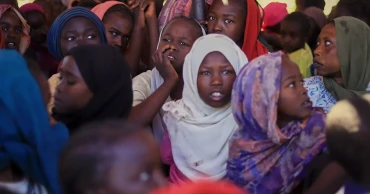
Thousands flee to overcrowded camps after Sudan’s paramilitary captures el-Fasher
Tens of thousands of Sudanese civilians have fled to overcrowded camps amid reports of atrocities by the Rapid Support Forces (RSF) following their capture of el-Fasher in the western Darfur region, an aid group said Saturday. The U.N. human rights chief warned that many others remain trapped in the city.
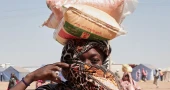
Displaced families arriving in Tawila, about 70 kilometers (43 miles) from el-Fasher, find little relief — with few tents and shelters cobbled together from tarps and sheets, according to a video released by Sudan’s IDPs and Refugee Camps group. Children can be seen running through the dusty landscape as adults share meager portions of food.
Since the RSF took control of el-Fasher from the Sudanese army on October 26, more than 16,200 people have fled to camps in Tawila, said Adam Rojal, a spokesperson for the aid organization. The International Organization for Migration estimated that around 82,000 people had escaped the city and nearby villages as of November 4, many traveling on foot to areas already overcrowded with earlier waves of displaced people.
The RSF and the Sudanese military have been locked in a brutal power struggle since April 2023. The war has killed at least 40,000 people, though the true toll is believed to be far higher. Nearly 12 million have been displaced, and almost half of Sudan’s population is now facing severe food insecurity, according to the World Health Organization (WHO).
Last week’s RSF takeover of el-Fasher followed an 18-month siege. The paramilitary group stormed the Saudi Hospital, killing more than 450 people, and carried out house-to-house attacks involving killings and sexual assaults, the WHO reported. The RSF denied targeting civilians or attacking the hospital, but survivor testimonies, satellite images, and videos depict scenes of widespread destruction.
Doctors Without Borders (MSF) said that 300 new arrivals reached Tawila on Thursday alone, describing “extremely high levels of malnutrition” among adults and children. Aid workers warn of dire shortages of food, medicine, and shelter materials. “Many families are surviving on one or two meals a day,” Rojal told the Associated Press.
U.N. Human Rights Chief Volker Türk said civilians remaining in el-Fasher are in grave danger.“Traumatized civilians are still trapped inside and prevented from leaving,” he said Friday in Geneva. “I fear that the atrocities — executions, rape, and ethnically motivated attacks — are continuing inside the city. Even those who flee face unimaginable cruelty along the escape routes.”
Fighting spreads beyond DarfurViolence has also intensified across Darfur and into Kordofan, turning both regions into new flashpoints in Sudan’s 19-month conflict. Earlier this week, a drone strike on el-Obeid, capital of North Kordofan, killed at least 40 people and injured dozens.
A Sudanese military official said the army intercepted two Chinese-made drones targeting el-Obeid on Saturday morning. He spoke on condition of anonymity because he was not authorized to speak to the media.
According to Jalale Getachew Birru, a regional analyst with the Armed Conflict Location and Event Data Project, the RSF’s capture of el-Fasher and its advance in Kordofan mark a major strategic gain — but also deepen the humanitarian catastrophe. He estimated that at least 2,000 people were killed across Sudan between October 26 and November 1.
“These developments not only worsen Sudan’s humanitarian crisis,” Birru said, “but also signal the RSF’s growing capacity to push toward central Sudan, potentially undoing the army’s recent gains and reigniting violence in areas that had remained relatively calm.”
On Thursday, the RSF said it had accepted a humanitarian ceasefire proposal put forward by a U.S.-led mediation group known as the Quad. The Sudanese army said it too welcomed the initiative — but only if the RSF withdrew from civilian areas and surrendered its weapons.
8 months ago
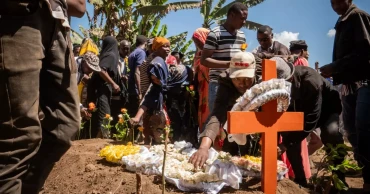
Tanzania charges hundreds with treason, issues arrest warrants for opposition leaders
Tanzanian authorities have charged hundreds of people with treason over protests linked to last month’s disputed elections, marking a sharp escalation of political tensions in the East African nation, where violence has claimed an unknown number of lives.
According to court documents released Saturday, dozens of additional suspects were charged with treason across several regions, a day after similar charges were filed against scores of demonstrators in the commercial capital, Dar es Salaam.
Police have also issued arrest warrants for several senior opposition figures who remain at large, including Brenda Rupia, communications director for the main opposition Chadema party, and its secretary-general, John Mnyika.
Chadema leader Tundu Lissu, who has been in detention for several months, also faces treason charges after calling for electoral reforms ahead of the October 29 polls.
Questions over death toll in post-election violence
Authorities have come under growing scrutiny over the death toll from the government’s crackdown on protests and riots surrounding the vote. Chadema claims that more than 1,000 people were killed and accused security forces of secretly disposing of bodies to conceal the true scale of the bloodshed. The Catholic Church in Tanzania has also reported that hundreds were likely killed.
President Samia Suluhu Hassan, who assumed office in 2021 following the death of her predecessor, was declared the winner with over 97 percent of the vote, according to official results. Sixteen candidates from smaller parties were allowed to contest after key opposition figures, including Lissu and Luhaga Mpina of the ACT-Wazalendo party, were barred from running.
Rights groups allege widespread abuses
Rights organizations, including Amnesty International, have accused Tanzanian authorities of creating a repressive climate before the polls, citing enforced disappearances, arbitrary arrests, and extrajudicial killings. The government has dismissed the allegations.
Meanwhile, the African Union said in a statement this week that its observer mission found the election failed to meet AU standards and international obligations for democratic polls. Observers reported ballot stuffing, multiple ballot issuance, and a generally hostile environment that was “not conducive to peaceful conduct and acceptance of electoral outcomes.”
Concerns over growing authoritarianism
Since the introduction of multi-party politics in 1992, Tanzania has largely been governed by the ruling Chama Cha Mapinduzi (CCM) party, which traces its roots to the country’s independence movement and maintains close ties with China’s Communist Party.
Critics say that while past leaders tolerated limited opposition within the one-party-dominant framework, President Hassan has adopted an increasingly authoritarian approach that runs counter to the youth-led democracy movements emerging across Africa.
Hassan’s overwhelming victory in the disputed polls extended the CCM’s six-decade rule, deepening concerns over Tanzania’s democratic backsliding and political freedoms.
Source: AP
8 months ago