Middle-East
Iran’s Araghchi on his way to Russia for talks on US-Israel war
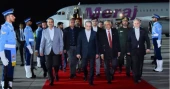
Iran’s ambassador to Russia has confirmed that Foreign Minister Abbas Araghchi will visit Moscow on Monday for discussions on the latest developments surrounding negotiations, the ceasefire and related regional issues.
Kazem Jalali made the remarks to Iran’s state-linked ISNA news agency, highlighting what he described as close ties between Tehran and Moscow, reports Al Jazeera.
He said Araghchi’s visit will focus on “the latest status of negotiations, the ceasefire and surrounding developments.”
Jalali also noted ongoing high-level contacts between the two countries since the start of what he referred to as the “Ramadan War,” the term used by Iranian officials for the US-Israeli conflict involving Iran.
He added that Iranian President Masoud Pezeshkian has spoken three times with Russian President Vladimir Putin since the escalation of hostilities began, underscoring continued diplomatic engagement between Tehran and Moscow.
Separately, Russia’s Foreign Ministry also confirmed Araghchi’s planned visit to Moscow in a statement carried by the state news agency RIA Novosti.
The visit comes amid continuing regional tensions following months of conflict and ceasefire efforts involving Iran, the United States and Israel, as diplomatic channels remain active but inconclusive.
3 months ago
Abbas-backed candidates dominate Palestinian municipal elections
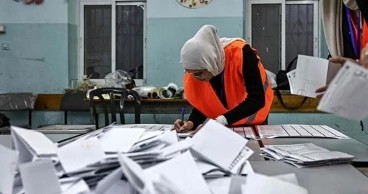
Loyalists of Palestinian President Mahmoud Abbas have won most municipal races in Palestinian elections, including seats in a rare vote held in the Gaza Strip, election officials said on Sunday.
The elections took place at what Palestinian Prime Minister Mohammed Mustafa described as a “highly sensitive moment amid complex challenges and exceptional circumstances,” as results were announced, reports Al Jazeera.
Saturday’s vote marked the first elections in Gaza since 2006 and the first Palestinian polls since Israel’s war in the territory began in October 2023.
In central Gaza’s Deir el-Balah, turnout remained low, with only about 23 percent of voters participating, according to the Central Elections Commission. In the occupied West Bank, turnout was reported at 56 percent.
The Gaza vote was largely symbolic and described by Palestinian Authority officials as a “pilot” election aimed at reinforcing the territory’s place in a future Palestinian state.
Hamas, which has controlled Gaza since 2007, did not field candidates and boycotted the West Bank polls. However, some Gaza-based lists were seen as informally aligned with the group.
Preliminary results showed that the Abbas-backed Fatah list secured six of the 15 seats in Deir el-Balah, while another list linked to Hamas sympathisers won two seats. The remaining seats went to independent local groups.
In the West Bank, Fatah-affiliated lists reportedly dominated many races, often running unopposed.
Officials said voter participation in Gaza was affected by ongoing conflict, displacement and damage to electoral infrastructure, with some ballot materials unable to enter the enclave due to restrictions.
Despite the difficulties, some residents said they voted to exercise their democratic rights amid the ongoing crisis.
3 months ago
Iran says US pressure undermining trust, complicating efforts to resume talks
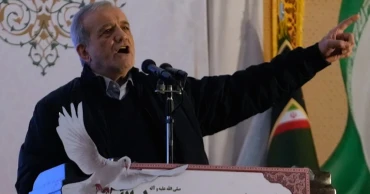
Iranian President Masoud Pezeshkian has said US pressure and hostile actions are eroding trust and making efforts to resume talks more difficult.
During a phone call on Saturday with Pakistani Prime Minister Shehbaz Sharif, Pezeshkian discussed recent political and military developments, efforts to uphold a ceasefire and ongoing diplomatic initiatives, according to a statement from his office on Sunday.
He said resolving disputes requires “common understanding” and conducive conditions for dialogue, noting that recent US sanctions, naval restrictions and military pressure are major obstacles to rebuilding trust.
Pezeshkian said Washington cannot pursue negotiations while intensifying pressure on Tehran, warning that such actions disrupt the environment needed for diplomacy.
Reaffirming Iran’s position, he said the country did not initiate the conflict and has no interest in regional instability. He added that Iran is ready to engage in talks only on the basis of mutual respect, rejecting negotiations under threats or coercion, and insisting on its rights under international law.
He also called for guarantees to ensure commitments are honoured and criticised US military deployments in the region as contradicting its stated support for a political solution.
Sharif said Pakistan would use its influence to support a “lasting and honourable” resolution, emphasising regional stability while respecting Iran’s sovereignty.
He added that Pakistan remains committed to acting as a facilitator for peace amid ongoing tensions and stalled negotiations.
3 months ago
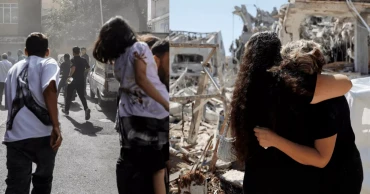
Iran reports 3,468 killed in 40-day war with Israel-US, 45pc civilians
Iranian state media on Sunday reported that civilians accounted for around 45 percent of those killed during a 40-day conflict involving Israel and the United States.
The official news agency IRNA, citing Iranian authorities, said the overall death toll reached 3,468, of whom 1,460 were civilians.
Jamshid Nazmi, senior adviser to the head of Iran’s Foundation of Martyrs and Veterans Affairs, disclosed the figures at a press briefing in Tehran, according to IRNA.
He said the civilian casualties included women, men, children and elderly people, adding that nationals from Lebanon, Palestine, Iraq and Pakistan were also among the dead.
At the same briefing, Farideh Oladqobad, a deputy head of the foundation, said 499 of the victims were women and 2,969 were men, while the military death toll stood at 2,008.
The report did not provide details on how the figures were verified or whether they had been independently confirmed.
Iranian officials said the fighting began on February 28 when Israel and the United States launched joint strikes on Tehran and other Iranian cities, reportedly killing senior military figures in the initial attacks.
Iran responded with missile and drone strikes targeting Israel and US military bases and assets across the Middle East, according to officials from both sides.
A ceasefire was reached on April 8, while follow-up talks held in Pakistan on April 11 and 12 ended without an agreement, previous reports said.
3 months ago
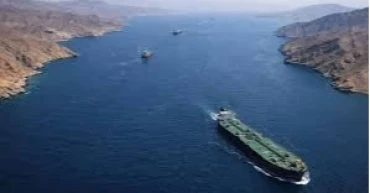
Hormuz Strait closure risks global humanitarian crisis: UN
The United Nations Office for Project Services (UNOPS) has warned that the continued closure of the Strait of Hormuz could trigger a global humanitarian crisis due to severe disruptions in fertiliser supplies.
UNOPS Executive Director Jorge Moreira da Silva said prolonged maritime disruptions risk pushing millions of people into a cycle of hunger and famine.
He noted that prices of key raw materials used in fertiliser production have surged to record levels, underscoring the urgency of restoring supply chains.
The UN agency stressed the need for immediate diplomatic efforts to address the situation and ensure the flow of essential goods.
3 months ago
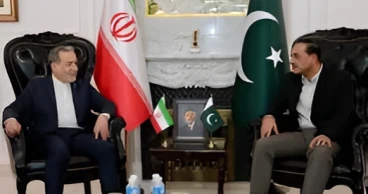
Trump cancels Witkoff, Kushner Pakistan trip for Iran talks
US President Donald Trump said he has instructed American envoys not to travel to Pakistan for further Iran talks, shortly after Iran’s top diplomat left Islamabad on Saturday evening.
Speaking to Fox News, Trump said, “They can call us anytime they want,” according to Reuters. The White House had earlier stated on Friday that US envoys Steve Witkoff and Jared Kushner would travel to Pakistan’s capital to revive ceasefire negotiations with Iran.
Two Pakistani officials told The Associated Press, speaking on condition of anonymity as they were not authorized to speak to the media, that Iran’s Foreign Minister Abbas Araghchi departed Islamabad on Saturday evening.
Iran vows to react if U.S. continues "blockade, banditry" in region
During his visit, Araghchi met Pakistan Army Chief Field Marshal Asim Munir and Prime Minister Shehbaz Sharif, discussing Iran’s “red lines” for negotiations. He said Tehran would continue engaging with Pakistan’s mediation efforts “until a result is achieved,” while insisting that any talks with the US would remain indirect.
Iran has repeatedly expressed mistrust of Washington after failed nuclear negotiations last year and earlier this year, which were followed by US and Israeli strikes.
Ahead of the expected talks, Islamabad was placed under tight security. Pakistan has been trying to bring both sides back to negotiations after Trump extended the ceasefire.
The White House earlier confirmed Witkoff and Kushner would meet Araghchi, but Iran insisted Pakistan would relay messages. Previous high-level talks and Geneva negotiations ended without agreement.
Tensions around the Strait of Hormuz continue to disrupt global energy supplies, with Brent crude nearly 50% higher than pre-war levels. Iran has attacked ships, while the US maintains a blockade. Germany is sending minesweepers to the Mediterranean amid the crisis.
3 months ago
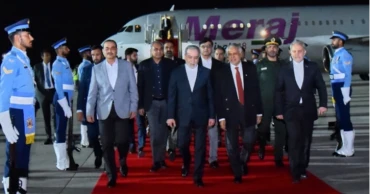
Tehran FM in Islamabad as US envoys prepare for talks amid dispute
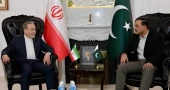
Iranian Foreign Minister Abbas Araghchi has arrived in Islamabad as part of a three-country tour amid ongoing diplomatic efforts involving the United States and Pakistan, while conflicting statements have emerged over planned Iran-US talks.
The White House said US envoys Steve Witkoff and Jared Kushner will travel to Islamabad for talks with Iran. However, an Iranian Foreign Ministry spokesperson said “no meeting is planned to take place between Iran and the US”, adding that Tehran’s “observations would be conveyed by Pakistan”.
Commercial flights resume at Tehran airport after two months
Pakistani mediators remain “cautiously optimistic” about the prospects of Iran-US engagement following Araghchi’s arrival in the Pakistani capital, says report.
The Iranian side has maintained that no trilateral meeting with the United States is scheduled, rejecting the US version of events. Tehran has also insisted that a key sticking point remains the demand for the complete opening of the Strait of Hormuz and an end to what it describes as a US blockade, while Washington has not indicated any willingness to lift restrictions.
Despite the disagreement, Pakistani officials said the ongoing presence of all sides reflects progress in behind-the-scenes diplomacy. They described the process as “relentless diplomacy” involving continuous engagement from multiple parties.
According to diplomatic sources, in the past 24 hours Pakistan has held separate discussions not only with Iran but also with Russia. Officials said Moscow is expected to be another stop on the Iranian foreign minister’s tour after leaving Pakistan.
While the situation remains at a stalemate, mediators in Islamabad believe continued shuttle diplomacy could help keep dialogue efforts alive between Tehran and Washington.
Source- Al Jazeera
3 months ago

Commercial flights resume at Tehran airport after two months
Commercial flight operations have resumed at Imam Khomeini International Airport for the first time since the outbreak of war between Iran and the United States and Israel about two months ago.
Iran’s state-run television said Saturday that flights from the airport are now operating to destinations including Istanbul in Turkey, Muscat in Oman and Medina in Saudi Arabia.
Flight-tracking platform Flightradar24 showed at least three Istanbul-bound flights departing the airport in the morning, confirming the partial restoration of international air connectivity.
Iran had earlier reopened parts of its airspace this month during a temporary ceasefire with the United States, allowing limited aviation activity to resume.
Authorities have not yet announced when full-scale international flight operations will be completely restored.
3 months ago
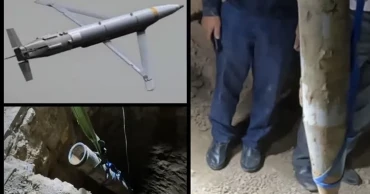
Unexploded ‘bunker buster’ bomb defused in Iran’s Yazd province
An unexploded GBU “bunker buster” bomb dropped during recent US-Israeli attacks has been successfully neutralised in Iran’s Yazd province, according to local authorities.
Iran’s semi-official Tasnim News Agency reported that the bomb was buried about 13 metres underground beneath a residential area after failing to detonate.
A deputy provincial governor for security in Yazd Province said the ordnance had struck the area during the conflict but remained lodged deep beneath the surface, posing a significant risk to residents, reports Al Jazeera.
He added that the high-risk disposal operation was carried out jointly by the Islamic Revolutionary Guard Corps and local law enforcement bomb disposal units.
Authorities did not report any casualties, and the situation is now under control following the successful removal of the device.
3 months ago
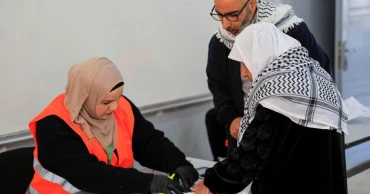
Palestinians vote in first elections since Gaza war
Palestinians in the occupied West Bank and parts of the Gaza Strip began voting on Saturday in municipal elections, the first since Israel’s war on Gaza began in October 2023.
According to the Ramallah-based Central Elections Commission, nearly 1.5 million voters are registered in the West Bank, while about 70,000 people are eligible to vote in the Deir el-Balah area of the Gaza Strip, reports Al Jazeera.
Polling stations opened at 7am (04:00 GMT), marking a significant political event amid ongoing conflict.
The elections are being held as many residents in Gaza continue to face severe humanitarian challenges, struggling to meet basic needs due to continued Israeli military operations.
Since the start of the war, at least 72,568 people have been killed and more than 172,338 injured in Gaza, according to available figures.
The vote is the first electoral exercise among Palestinians since the outbreak of the war, taking place under difficult security and humanitarian conditions.
3 months ago