
Hamas is considering a new proposal to disarm its fighters in Gaza, a significant concession that could pave the way for U.S. President Donald Trump’s plan to rebuild the war-torn territory.
The group’s response, expected in the coming days or weeks, will have major implications for Gaza’s 2 million residents, who have been living under a fragile ceasefire for nearly six months.
Hamas’ founding charter mandates armed resistance against Israel, and the group remains reluctant to relinquish its arsenal of rockets, anti-tank missiles, and explosives, central to its identity. While mediator-backed discussions are underway, Hamas officials have expressed dissatisfaction with aspects of the U.S.-proposed plan. The ongoing U.S.-Israel military campaign against Iran has further complicated progress.
Key elements of the Trump-backed 20-point ceasefire plan — including Gaza’s reconstruction, deployment of a U.N.-mandated international peacekeeping force, formation of foreign-trained Palestinian police, and establishment of a technocratic committee to manage Gaza — remain on hold until disarmament is agreed upon.
Nickolay Mladenov, director of the U.S.-backed Board of Peace, said a mediator proposal supported by Turkey, Qatar, and Egypt would begin with the decommissioning of Gaza’s most dangerous weapons, including rockets and explosives, gradually moving to personal arms. This staged disarmament would coincide with Israeli troop withdrawals.
Despite Hamas accepting the proposal “in principle,” officials have voiced concerns over insufficient guarantees that Israel will halt attacks and not reignite conflict. Senior Hamas official Bassem Naim criticized Mladenov for appearing overly aligned with Israel.
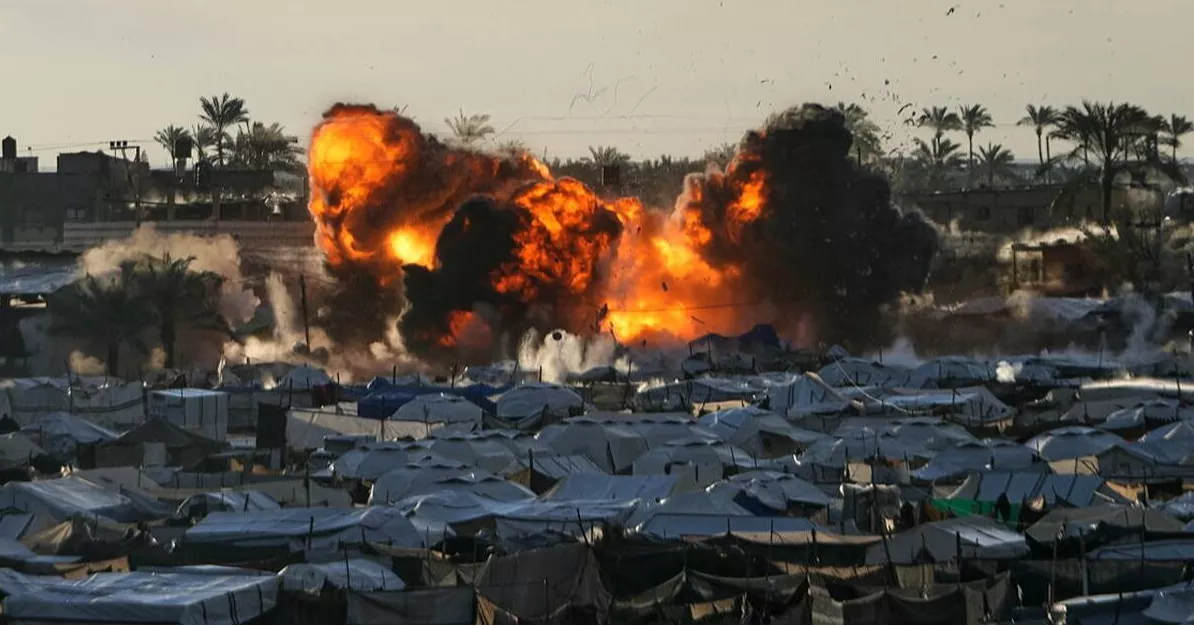
Delays in negotiations could extend Gaza’s humanitarian crisis. Israel’s two-year offensive, launched after Hamas’ October 7, 2023, attack on southern Israel, displaced around 90% of Gaza’s population and destroyed vast swaths of the territory. Without disarmament and swift reconstruction, the risk of renewed violence and prolonged suffering for civilians remains high.
Mike Waltz, U.S. ambassador to the United Nations, emphasized, “The future of Gaza … is entirely dependent now on Hamas decommissioning its weapons. We truly stand at an inflection point.”
The coming weeks are expected to be crucial in determining whether Gaza can transition from a devastated war zone to a rebuilt, stable territory.