middle-east
Trump suggests renaming Strait of Hormuz as ‘Trump Strait’ amid Iran war
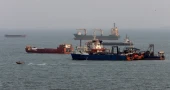
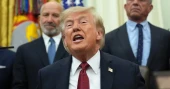
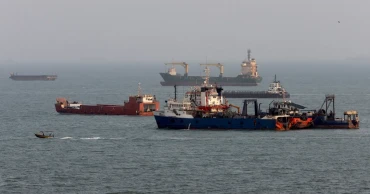
US President Donald Trump has suggested renaming the Strait of Hormuz after himself, again asserting that the strategic waterway is under US control despite near-daily Iranian attacks on vessels in the area.
Trump made the suggestion Wednesday, less than 24 hours after US forces struck several targets in Iran, killing at least four people, including two children, at a wedding in the southern city of Sirik.
“Now that we have it under USA control, should we change the name Hormuz Strait to TRUMP STRAIT???” Trump wrote in a social media post.
“Like America itself, it would be ‘hotter’ than ever before!”
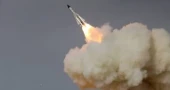
Iran responded to Tuesday’s US strikes by launching missiles at US bases in the region. The escalation sent oil prices up by around 4 percent.
Despite repeated claims by US officials that the Strait of Hormuz is open and that millions of barrels of oil are passing through the waterway each day, oil prices have not declined in recent weeks.
Iran, meanwhile, continues to maintain that the waterway is closed and remains under its control.
On Wednesday, Saudi Arabia accused Iran of striking an oil tanker, killing two people.
The United Kingdom Maritime Trade Operations (UKMTO), a monitoring agency affiliated with the British Royal Navy, has reported attacks on vessels in the Strait of Hormuz almost every day.
In the US, gasoline prices have also been rising. The average price reached $4.12 per gallon on Wednesday, according to the American Automobile Association (AAA), up from below $3 before the war began on Feb. 28.
When Trump and Israeli Prime Minister Benjamin Netanyahu launched the conflict by attacking Iran and killing its supreme leader earlier this year, Trump had said the war would last six weeks.
However, the promised quick end to what Trump initially described as a “little excursion” failed to materialise. The conflict entered its seventh month last week.
Trump has nevertheless continued to claim victory and control over the Strait of Hormuz, repeatedly saying that Iran has been militarily defeated despite its continued ability to strike US interests in the region.
Following Tuesday’s US strikes, Trump warned Tehran against retaliating, saying Iran would be “hit again at a much harder and higher level” if it responded.
Within hours, however, Iran’s military launched missiles and drones at US bases in Bahrain, Jordan and Iraq.
Trump’s “Trump Strait” proposal on Wednesday was the latest attempt by the US president to assert control over a conflict that critics say was a strategic miscalculation and is turning into a quagmire.
Last month, Trump said he considered the Strait of Hormuz to be “American territory.”
Last week, he also unilaterally renamed Lake Ontario, which borders the US and Canada, as “Lake America” amid ongoing trade tensions between Washington and Ottawa.
#From Al Jazeera
17 hours ago
Iran targets US allies in Gulf after overnight attacks
Iran targeted US allies in the Gulf for a second consecutive night, launching drone attacks at Kuwait and Bahrain after the United States carried out overnight airstrikes on Iran on Wednesday.
Following a series of attacks Wednesday, air raid sirens sounded in Kuwait early Thursday as the country's air defenses intercepted missiles and drones in what the Ministry of Defense described on X as a “blatant Iranian aggression.”
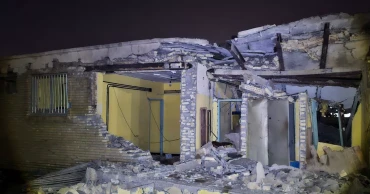
Iranian state media reported that one of the US strikes in Iran on Wednesday hit a wedding gathering, killing at least four people and wounding dozens.
Fighting between the United States and Iran has intensified this week after the US struck Iranian rocket launchers on an island in the Strait of Hormuz on Sunday. Washington said Iran was preparing to use the launchers to deploy mines in the strategic waterway. Iran responded by firing missiles at US bases in Jordan, all of which were intercepted.
Here is a look at the latest developments in the Iran war and the wider Middle East. Full coverage can be found here.
US strike hits a wedding party
The US Central Command said its strikes targeted Iranian military facilities, including air defense sites, radar systems and maritime assets.
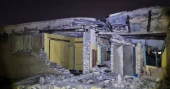
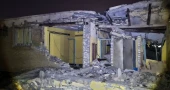
However, Iranian media reported that one of the US strikes hit a house in Kuhestak, a small coastal town overlooking the Strait of Hormuz, where a wedding was taking place.
Iran's state news agency IRNA and state television reported Wednesday that four people — two women and two children aged 4 and 16 — were killed and at least 68 others were wounded.
Shortly after the strike, Ahmad Nafisi, the province's deputy governor, told Iranian state television that five people had been killed. No explanation was given for the later revision of the death toll.
The US military said it was aware of the report but maintained that it “never targets civilians.”
Iran targets US allies in the Gulf
Bahrain said its air defense systems intercepted several Iranian attacks early Wednesday, although it did not provide further details.
Iranian state media reported that Iran's military launched drone attacks targeting US bases in Bahrain and the United Arab Emirates in retaliation for the overnight US strikes.
Iran's Foreign Ministry said the attacks were carried out in self-defense and in response to what it described as US violations of Iran's sovereignty.
21 hours ago
Iran fires on Gulf neighbors after US strikes end monthlong lull
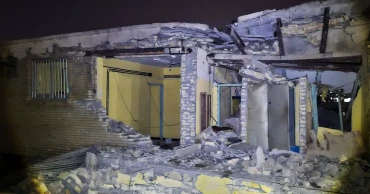
Iran launched missiles and drones at US allies across the Gulf early Wednesday, retaliating after overnight American strikes that Tehran said killed civilians, including people attending a wedding.
The fresh violence ended a monthlong lull in the six-month war, which has disrupted global oil markets, weakened Iran’s economy and increased political pressure on US President Donald Trump ahead of November’s midterm elections.
US strike hits wedding in Iran, kills 5 wounds at least 68
Iranian attacks targeted Jordan, Kuwait and Bahrain, while the UAE and Kurdish authorities in Iraq also reported intercepting Iranian drones. Kuwait said an Iranian drone struck a residential complex, causing a fire but no casualties. Iran-backed Hezbollah also launched two explosive drones at Israeli troops in southern Lebanon, causing no injuries.
Iran said a US strike hit a house hosting a wedding in Kuhestak, killing at least five people, including two women and two children, and wounding at least 68 others. The US military said it was aware of the report but “never targets civilians.”
Iran also reported that four Revolutionary Guard members and 10 Basij personnel were killed in US attacks.
The conflict has pushed Brent crude prices to around $95 a barrel, more than 30% above prewar levels. Despite US claims that the Strait of Hormuz remains open, only a limited number of ships are passing through the key waterway.
Iran’s currency also hit a record low, while renewed diplomatic efforts involving Pakistan have yet to produce a lasting ceasefire.
1 day ago
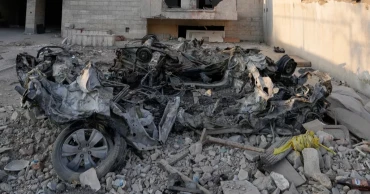
US strike hits wedding in Iran, kills 5 wounds at least 68
The US military struck targets in Iran on Tuesday as Tehran responded with missiles and drones against several locations across the region, marking another escalation in an intermittent war that has continued for more than six months.
One of the US strikes hit a home where a wedding ceremony was taking place, killing five people and injuring dozens, according to local officials.
US Central Command said Tuesday evening that it had completed its latest round of strikes against Iranian military targets, including air defense positions, radar systems and maritime assets.
The attacks followed US strikes on Sunday that ended a month-long pause in military action and raised fears that the conflict could escalate again. The war has contributed to a rise in global oil prices and created political challenges for Republicans ahead of November's midterm congressional elections.
US President Donald Trump said late Tuesday that he would not pressure Iran into returning to the negotiating table.
"I couldn't care less if they sign a worthless, to them, agreement. I like our position now much better, with almost total control of the Hormuz Strait, and their economy totally collapsing. They are just playing out the inevitable. When are the Iranian people going to rise up and fight?" Trump wrote on social media.
Trump had earlier appeared to shift toward pressuring Iran through economic sanctions. He warned that any Iranian retaliation against the latest US strikes would result in an even stronger response.
"If they retaliate, they will be hit again at a much harder and higher level," Trump said.
US Central Command said the latest strikes were carried out in response to Iranian attempts to target commercial vessels and US forces in the Middle East.
Trump gave an additional explanation in a phone interview with Fox News, saying US forces had targeted Iranian radar systems.
"They tried to rebuild their radar because they can't see anything," Trump said. "We waited until it was almost built and then we hit it."
Following the US attacks, Iran launched ballistic missiles toward Jordan. Iran's Revolutionary Guard claimed the missiles were aimed at a US base on Jordan's Gulf of Aqaba coast, according to Iranian state television.
Jordan's military said it intercepted 10 of the missiles, while the other three landed in unpopulated areas. Explosions believed to be interceptions of incoming attacks were seen over Aqaba.
Iranian state media reported that US strikes had hit civilian locations along Iran's southern coast, including a civilian airport.
A US strike also hit a house in Kuhestak in southern Iran where a wedding was being held, killing five people, including a child, and injuring at least 68 others, Ahmad Nafisi, deputy governor of Hormozgan province, told Iranian state television by phone.
"Make no mistake: these crimes will not go unpunished," Ebrahim Azizi, chairman of the Iranian parliament's National Security and Foreign Policy Committee, said on X.
US Central Command was aware of reports of civilian casualties, Capt. Tim Hawkins, a spokesperson, said. He noted that the reports "originated from Iranian state media."
"The US military never targets civilians, unlike the IRGC," Hawkins said.
The Kuwaiti Army said on X that its air defenses intercepted drone attacks following what it called "the criminal Iranian aggression."
Iran also said it launched a drone attack against US forces in Bahrain, but Bahraini authorities said all the attacks had been intercepted.
1 day ago
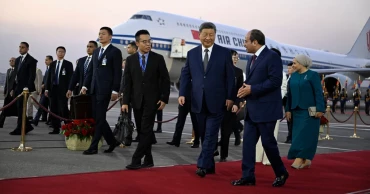
Xi visits Egypt as China seeks to expand influence across Mideast
Chinese President Xi Jinping's visit to Egypt this week may appear to be a routine opportunity for the two countries to strengthen their economic and diplomatic relations.
However, the meeting between Xi and Egyptian President Abdel Fattah el-Sissi carries broader significance as China, the United States' main global rival, seeks to deepen ties with one of Washington's key Middle Eastern allies and expand its influence in a rapidly changing region.
Xi is seeking to portray China as a stabilizing force in the Middle East while contrasting it with the United States, which has been militarily involved in the region for decades, with its six-month war with Iran being the latest example.
"China continues to build up its soft power reserves while the United States self-sabotages its own stock," Amr Hamzawy, director of the Washington-based Carnegie Middle East Program, wrote in a paper earlier this year with Kathryn Selfe, a former fellow at the program.
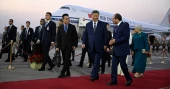
Xi arrived at Cairo airport on Tuesday evening, where Chinese and Egyptian flags were displayed. El-Sissi and military guards welcomed him with a red-carpet ceremony.
The two leaders are scheduled to hold talks on Wednesday, while Xi is also expected to visit the Grand Egyptian Museum near the pyramids of Giza.
Xi's first Mideast visit in years
Xi will spend three days in Egypt, marking his first visit to the country in a decade and his first trip to the Middle East since visiting Saudi Arabia in 2022. El-Sissi, meanwhile, has made several visits to China in recent years.
The two leaders marked 70 years of diplomatic relations on Tuesday by publishing articles in Egypt's state-run newspapers.
Xi said Beijing and Cairo should "expand the scope of pragmatic collaboration" through development. El-Sissi praised Chinese investments in Egypt and reaffirmed Cairo's support for Beijing's position that Taiwan is part of China's territory.
Egypt sees its expanding relationship with China as a means of diversifying its strategic partnerships.
In 2023, Egypt was invited to join the BRICS grouping of major emerging economies, which includes Brazil, Russia, India, China and South Africa and is widely viewed as a counterweight to Western-led institutions such as the G7.
The following year, Egypt signed agreements with China to cooperate under the Belt and Road Initiative, Xi's flagship policy aimed at developing infrastructure and transportation networks around the world.
China has invested more than $10 billion in Egypt, including in a business hub east of Cairo and an electric rail line serving industrial areas in the Nile Delta. Annual trade between the two countries is estimated at $20 billion, according to government figures.
By comparison, trade between the United States and Egypt totaled $15.7 billion in 2025. Egypt remains an important partner for US national security interests in the region, with close relations between the two countries' leaders.
China seeks stronger ties across the region
China has also sought to position itself as a bridge between Middle Eastern countries.
In 2023, Beijing brokered an agreement that restored diplomatic relations between Iran, its most important regional ally and oil supplier, and Saudi Arabia, a longtime US ally. The deal demonstrated China's ambition to challenge US influence in the Middle East.
Relations between Riyadh and Tehran have since deteriorated. Iran attacked Saudi Arabia and other Gulf countries as part of its retaliation against the United States and Israel, which launched the war on Feb. 28.
China has also sought to present itself as a regional mediator on other issues. Beijing has long supported a two-state solution to the Israeli-Palestinian conflict, which many Arab countries regard as central to regional stability.
Just before Hamas militants attacked Israel in 2023 and triggered the war in Gaza, Xi hosted Palestinian President Mahmoud Abbas and announced a "strategic partnership" with the Palestinian Authority.
Suez Canal gains importance amid Hormuz disruption
The Suez Canal, controlled by Egypt, has become an increasingly important alternative route for transporting energy supplies from the region as oil shipments through the Strait of Hormuz have been severely disrupted by the Iran war.
"China has good reason to strengthen ties with the country that controls the route still open," said Muhammad Zulfikar Rakhmat, a Middle East expert at Jakarta's Center of Economic and Law Studies.
Xi views Egypt "as a base to reach the wider Arab and African world, at a time when the U.S. has less attention to spare there," Rakhmat said.
In August, China and Egypt conducted a multiday air exercise at several bases across Egypt. It was the first combat exercise involving China's J-16 fighter jets and Egypt's French-made Rafale aircraft.
Xi's Cairo visit follows his participation in a two-day conference of the 10-nation Shanghai Cooperation Organization, a political and security grouping that is presented as a counterweight to US global influence.
The leaders of Russia, India, Pakistan and Iran attended the conference in Bishkek, the capital of Kyrgyzstan.
Xi's trip also comes after the Trump administration launched what it described as an "economic onslaught" targeting Iran's financial links around the world.
The sanctions seek to isolate Iran from its remaining economic partners, including China, which purchases more than 80% of Iranian oil shipments, generally through indirect channels.
1 day ago
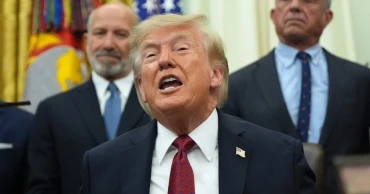
US strikes targets in Iran after alleged attacks on commercial shipping
The United States has launched fresh strikes on targets in Iran after accusing Tehran of attempting attacks on commercial vessels in the Strait of Hormuz, as hostilities resumed following a month-long pause in military action.
US Central Command said Tuesday that the latest strikes were carried out in response to recent attempts by the Iranian government to attack commercial shipping in the strategic waterway.
The renewed escalation follows a US military strike on rocket launchers on Larak Island in the Strait of Hormuz. Iran subsequently fired missiles at US facilities in Jordan, which were intercepted, while the United Arab Emirates said it had shot down an Iranian drone over its territorial waters.
US President Donald Trump on Monday warned that further military action could be necessary and said the United States would respond with greater force if Iran retaliated.
In a social media post, Trump said US forces were striking targets near the Strait of Hormuz and warned that any Iranian response would face a much stronger US attack.
He further said that, once the conflict was over, “very little” would remain of the Islamic Republic of Iran.
The US military has described the renewed operation as limited and aimed primarily at preventing Iran's Islamic Revolutionary Guard Corps (IRGC) from laying additional mines in the Strait of Hormuz.
In a statement posted on X on Monday, Central Command said US forces had taken “limited, precise action” against IRGC forces involved in mine-laying activities, which it described as an imminent threat to shipping.
The command said the action was intended to protect civilian mariners, commercial vessels and the free flow of global commerce through the strategically important waterway.
Central Command reiterated Tuesday that the US strikes were conducted only after what it described as Iranian aggression against commercial vessels and American troops in the region.
Meanwhile, Army Secretary Dan Driscoll is stepping down after about 18 months in the post. The White House announced his departure after he spoke with Trump about the current condition of the US Army, according to an Army official who spoke to The Associated Press on condition of anonymity.
Driscoll's departure is the latest among senior military leadership changes under the Trump administration.
2 days ago
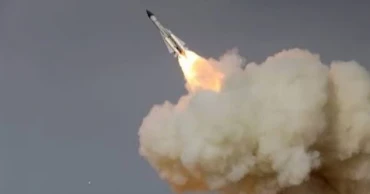
Iran claims retaliatory attack on U.S. bases in Jordan
Iran's Islamic Revolution Guard Corps (IRGC) said on Monday that its aerospace forces carried out retaliatory drone and ballistic missile strikes against U.S. targets at two air bases in Jordan earlier in the day.
The strikes were in response to the "U.S. and Israeli air aggression" against Iran's southern Larak Island in Hormozgan province on Sunday night, the IRGC said in a statement published by its official news outlet, Sepah News.
It identified the targeted air bases as King Hussein and Al-Azraq, saying that the strikes hit technical and maintenance infrastructure as well as hangars of fighter aircraft belonging to the United States, causing heavy damage.
The IRGC said the attack was a "punishment for the aggressor," noting that "aggression and crime will not solve the enemy's desperation to weaken Iran's control over the Strait of Hormuz."
It added that every military action by the "enemy" would be met with more "devastating" responses.
In a statement on Sunday night, the IRGC said that many Iranian military personnel and civilians had been killed or wounded in the attack on Larak Island.
3 days ago
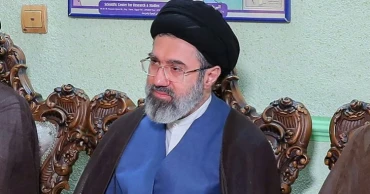
Tehran calls on Islamic nations to establish unity, reject foreign dominance
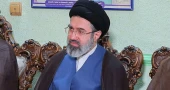
Iranian Supreme Leader Mojtaba Khamenei has called on the global Muslim community to unite and confront its "real enemy," accusing the United States and Israel of trying to create divisions among Islamic nations.
In a written statement, Khamenei warned that these adversaries strive to turn various racial, cultural, social, economic, political and geographical differences into pretexts for creating discord among Muslim people in Iran and other Islamic countries.
"From this perspective, they observe the fragmentation of the Islamic Ummah and the weakening of its forces, waiting for the opportune moment to impose their dominance over them," Khamenei said, urging against any action that could divide Muslims.
He questioned whether the Palestinian nation would be left defenseless and subjected to the oppression and crimes of occupiers if Muslims stood united, clenching their fists with strength. Khamenei also asked whether nations and governments around the Persian Gulf would have the courage to let corrupt, identity-less scoundrels from thousands of kilometers away covet their lands and assets if they established unity under the banner of Islam.
He urged Muslim heads of state to recognize their real enemy, understand its plans and confront it.
"The criminal rulers of America and the fake Zionist regime are sworn enemies of this unity and friendship," Khamenei stated, adding that they are not only enemies of the Islamic Republic, the Iranian nation and the vast front of Islamic resistance, but also harbor animosity toward the entire Muslim Ummah, including the nations of West Asia and North Africa.
With inputs from Al Jazeera
4 days ago
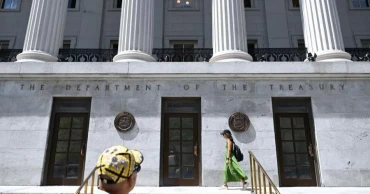
US announces new sanctions campaign targeting Iran
The U.S. Treasury Department on Friday proposed revoking Banque Misr UAE's correspondent banking access, launching a new sanctions campaign dubbed "Operation Economic Outcast".
The department's Financial Crimes Enforcement Network (FinCEN) labeled the bank a "critical node" for Iran's access to U.S. dollars. FinCEN alleged that between January 2024 and June 2026, the bank processed $1.8 billion for 103 companies suspected of operating within Iranian shadow banking networks.
U.S. Treasury Secretary Scott Bessent warned that Iranian enablers would lose access to the global financial system. Separately, the Office of Foreign Assets Control (OFAC) sanctioned Reza Mohammad Taeedi, general manager of Bank Melli's Dubai branch, for allegedly facilitating billions of dollars in transactions for the Islamic Revolutionary Guard Corps' Quds Force.
Bessent had announced the campaign on Monday, pledging to sever Tehran's remaining economic lifelines.
Iranian Foreign Minister Seyed Abbas Araghchi condemned the operation as "economic terrorism" and called on the United Nations to denounce the U.S. actions.
5 days ago
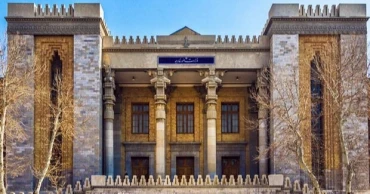
Tehran urges nations to reject ‘illegal’ US sanctions
The Iranian Foreign Ministry on Friday urged the international community not to join Washington's unilateral sanctions against Iran, condemning them as a violation of international law.
In an official statement, the ministry denounced U.S. sanction policies, calling them "in violation of the UN Charter, international humanitarian law and human rights".
Tehran accused the United States of weaponizing the dollar to intimidate other nations into adopting "interventionist" policies against Iran. The ministry called on all countries to reject the sanctions and refuse to recognize any impacts or situations resulting from what it termed "these illegal actions".
The appeal follows remarks earlier this month by U.S. President Donald Trump, who declared that the United States would launch "the most crushing economic operation ever" against Iran, characterizing the campaign as "economic warfare and isolation on an unprecedented scale". U.S. Treasury Secretary Scott Bessent subsequently announced a wave of new sanctions designed to further isolate Iran.
6 days ago