postal ballots

Postal Ballots: 56 VIPs, 198 female inmates cast votes till Monday
A total of 56 VIP inmates across the country cast their votes through postal ballots till Monday.
In addition, 198 female inmates cast their votes as part of the ongoing voting process ahead of the National Parliamentary election scheduled for February 12, prison officials said.
With this, the total number of inmates who have voted through postal ballots over the past seven days rose to 5,067.
According to official data, 1,521 inmates cast their votes on February 3, followed by 988 on February 4. On February 5, the number stood at 1,138, while 420 inmates voted on February 6.
On February 7, a total of 471 inmates participated in the postal ballot voting. Of them, 448 were male and 23 were female inmates. Among the voters that day, 16 were classified as special inmates.
A total of 295 and 234 inmates participated in the postal ballot voting on February 8 and 9 respectively.
8 months ago

Bangladesh Election: Over one million vote through postal ballots
More than one million people, including expatriates have cast their votes through postal ballots till Monday night under ‘Out-of-Country Voting (OCV) and ‘In-Country Postal Voting (ICPV)’ project in the referendum and 13th parliamentary election scheduled to be held on Thursday (February 12).
A total of 1,035,687 people, including 512,331 expatriates from more than 120 countries across the world, voted through postal ballots till 9pm on Monday, according to the statistics of the Election Commission.
The people who already voted through the postal ballots also include 523,356 government employees working outside their constituencies, polling officials and prisoners.
Among the 512,331 expatriates, the highest 158,731 Bangladeshis cast votes through postal ballots from Saudi Arab, while 49,569 from Qatar, 48,291 ones from Malaysia, 45,274 from Oman, 23,877 from United Arab Emirates (UAE), 25,963 from Kuwait, 22,016 from UK, 17,547 from the USA, 16,828 from Bahrain, 14,103 from Italy, 12,253 from Singapore and 10,200 from Canada.
The highest 62,708 expatriates cast votes in Cumilla district, while 49,732 in Chattogram, 46,344 in Dhaka, 33,860 in Noakhali, 23,645 in Chandpur and 23,127 in Sylhet.
The Election Commission, led by Chief Election Commissioner AMM Nasir Uddin, introduced an IT-supported hybrid postal balloting system, combining digital registration with manual voting, for expatriate Bangladeshis living in more than 120 countries for the first time.
The new postal balloting system is also being used by government employees working outside their constituencies, polling officials and individuals under legal custody within the country.
A total of 1,528,131 voters, including 767,233 expatriates under OCV programme and 760,898 government officials, polling personnel and prisoners under ICPV programme, were registered for postal voting.
A total of 127,298,522 voters (in 299 constituencies) are eligible to cast their ballots in this election. Of them, 64,620,077 are male voters, 62,677,232 are female voters and 1,213 are third-gender voters.
The country has a total of 127,711,899 voters (in 300 constituencies) –64,825,154 males, 62,885,525 females and 1,220 third-gender.
The Election Commission announced the election schedule on December 11 last year to hold the 13th parliamentary election and the referendum on the July National Charter (Constitutional Reform) Implementation Order simultaneously on February 12, 2026.
8 months ago

Bangladesh Election: Over 273,000 expats yet to vote
More than 273,000 Bangladeshi expatriates are yet to cast their postal ballots, with six days left before the February-12 national election and referendum, officials said.
The Election Commission has sent the ballots to 767,188 registrant expatriates staying in 123 foreign countries through the postal services.
Of them, 12,170 ballots couldn’t be supplied due the voters’ address related problems and the ballots finally returned back to Bangladesh.
Among the rest 755,018 postal ballots, 481,725 expatriates already completed their voting process, while 273,293 others have not yet to exercise their voting rights till 3pm on Thursday (February 05) in the upcoming elections, according to the statistics of the Election Commission.
Even 228,973 expatriates still didn't receive the ballots in different countries. Most of the ballots that still have not been received might not return to the returning officers concerned within the stipulated time of 4:30pm on February 12 next, said EC officials.
Over 4 lakh expats cast votes through postal ballot till Monday
The EC, headed by Chief Election Commissioner AMM Nasir Uddin, introduced the IT-supported hybrid postal balloting system with the combination of digital registration and manual balloting for the first time in the country for the expatriate Bangladeshis living in more than 120 foreign countries.
“A total of 766,862 postal ballots reached different destinations throughout the world for Out-of-Country Voting (OCV) and of them, 526,045 ballots were already received by the registered expatriates in various countries,” said Brig Gen (retd) Saleem Ahmad Khan, Team Leader of the Election Commission’s OCV-ICPV project on Thursday.
Among them, 447,346 ballots were already dropped in post offices or postal boxes by the expatriates in different countries. But the returning officers so far received only 120,802 ballots sent by the expatriates.
Besides, the Election Commission is using the new postal balloting system for the government employees working outside their respective constituencies, the polling personnel and the people under legal custody inside Bangladesh.
The Commission has sent a total of 760,898 ballots to different destinations under the In-Country Postal Voting (ICPV) since the distribution of the postal ballots.
‘We’ve taken risk of hybrid postal balloting with courage’, says CEC Nasir
Of the ballots, 291,294 ones were received by designated voters, while 228,184 voters already cast their votes and the returning officers concerned received 29,244 returned postal ballots under IPCV.
The Election Commission on December 11 last announced the election schedule to arrange the 13th parliamentary election and the referendum on the July National Charter (Constitutional Reform) Implementation Order simultaneously on February 12, 2026.
8 months ago
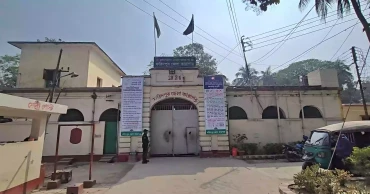
Jail inmates among 18,000 voters in Faridpur to cast votes by postal ballots
A total of 17,988 voters including inmates of Faridpur district jail will cast their votes through postal ballots in the national election.
Among them, 52 inmates and 13 jail officials and employees will exercise their franchise through the postal ballot system.
Of the 52 jail inmate voters, two are women.
Jail sources said Faridpur district jail currently houses 1,244 inmates including 51 women.
Read More: Bangladeshi expats cast 458,000 postal votes ahead of Feb-12 polls
Out of the total inmates, 52 expressed interest in voting by postal ballot.
Of them, 10 are under trial prisoners while 42 are convicted prisoners.
The two female voters are also convicted prisoners.
Jail Superintendent Md Nazrul Islam said jail inmates and under-trial prisoners were encouraged to participate in the election following the Election Commission’s announcement.
“Applications were collected from interested inmates and all required procedures have been completed. Preparations are also underway to set up two voting booths for inmates and one separate booth for officers and employees inside the jail,” he said.
Faridpur Deputy Commissioner and Returning Officer Md Kamrul Hasan Mollah said “We have already completed all special preparations. We hope that, following Election Commission guidelines, voters will be able to participate in the postal voting process smoothly for the first time,” he said.
Read More: Political parties urged to pledge separate road safety law in election manifestoes
8 months ago

Over 4.25 lakh expats cast votes in Feb-12 elections
More than 4.25 lakh expatriate Bangladeshis living in different countries across the world have so far cast their votes in the upcoming national election and referendum scheduled for February 12.
“As of 10:30am on Tuesday, a total of 425,788 expatriate voters completed their voting process and of them, 370,322 ballot papers have been dropped in post offices and post boxes in different countries across the world,” said Brig Gen (retd) Saleem Ahmad Khan, Team Leader of the Election Commission’s OCV-ICPV project.
He said a total of 766,862 postal ballots reached different destinations throughout the world for Out-of-Country Voting (OCV) and of them, 493,920 ballots have already been received by the registered expatriates in various countries.
The Election Commission has already received as many as 21,508 returned ballots as of Tuesday morning.
Meanwhile, the Commission has sent some 63,600 ballots to 18 districts under the In-Country Postal Voting (ICPV) since the distribution of the postal ballots started on Monday.
The EC, headed by Chief Election Commissioner AMM Nasir Uddin, introduced the IT-supported hybrid postal balloting system with the combination of digital registration and manual balloting for the first time in the country for the expatriate Bangladeshis living in more than 120 foreign countries.
Many Bangladesh’s journalists face voting exclusion despite new postal ballot system
The Commission also is using the new postal balloting system for the government employees working outside their respective constituencies, the polling personnel and the people under legal custody inside Bangladesh.
A total of 1533,684 voters registered to vote through the postal ballots under the OCV and ICPV systems.
The registrants include 772,542 expatriates and 761,142 government employees, polling personnel and prisoners.
Among the 772,542 expatriates, the highest 239,186 were registered from Saudi Arabia, while 84,292 from Malaysia, 76,139 from Qatar, 56,207 from Oman, 38,574 from the United Arab Emirates (UAE), 35,386 from Kuwait, 32,414 from the United States of America (USA), 31,046 from the United Kingdom (UK), 24,444 from Italy, 19,719 from Bahrain, 18,129 from Singapore, 14,681 from Canada, 11,702 from South Korea, 11,158 from Australia, 9,173 from Maldives, 8,892 from Japan, 8,399 from France, 8,232 from Portugal, 6,063 from Germany and 5,445 from South Africa.
The number of registrants from other countries is less than 4,000.
Among the voters who registered from inside the country, 575,200 are government employees, 169,643 officers engaged in election duty, 10,010 Ansar and VDP members, 6,285 are prisoners and the rest 240 ones were not approved on different grounds.
On December 11, the Election Commission announced the schedule to hold the 13th parliament election and the referendum on the July National Charter (Constitutional Reform) Implementation Order simultaneously on February 12 next.
8 months ago
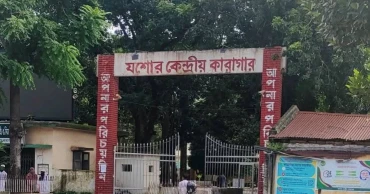
Breaking new ground: Jashore prisoners to cast votes via postal ballots
For the first time in its history, 129 prisoners at Jashore Central Jail will be able to exercise their right to vote through postal ballots.
The inmates have already completed online registration, and all arrangements have been made to facilitate their voting.
Abid Ahmed, the Superintendent of Jashore Central Jail, said, “Online registration for prisoners began in the first week of December and concluded on 31 December. By the end of this period, a total of 129 prisoners had successfully registered to vote.”
Sources at the jail said that when prisoners were informed about the opportunity, many expressed interest.
They, however, said some were unable to register online due to not having a national ID card or for other reasons.
A few also chose not to apply, anticipating the possibility of being granted bail. In the end, 129 prisoners completed online registration by December 31.
Once they receive their postal ballots, the inmates will also be provided with booklets containing information about the candidates and their symbols for their respective constituencies. This will allow them to make informed decisions.
The jail authorities have ensured a suitable environment for voting within the facility.
The Election Commission will send separate envelopes to registered prisoners. Each package will include instructions for voting, designated spaces for signatures, and the ballot paper. Prisoners will cast their votes and seal the envelopes themselves.
Subsequently, the sealed envelopes, along with a copy containing their signature, will be handed over to jail authorities, who will dispatch them to the post office. The postal service will then deliver them to the Election Commission, which will count them alongside votes from the relevant constituencies.
Even if a registered prisoner is released on bail, they must vote at the designated booth inside the jail. After voting, they will be allowed to leave the facility.
“The jail authorities are providing maximum support to ensure registered prisoners can cast their votes. The opportunity to vote via postal ballot for the first time has generated considerable enthusiasm among the inmates,” Abid Ahned added.
Meanwhile, Deputy Commissioner Ashek Hasan, who is also the Returning officer, told UNB, “All possible assistance is being provided to the jail authorities to ensure smooth voting. The administration is working sincerely to ensure prisoners can exercise their voting rights without any hindrance.”
8 months ago

BNP seeks candidates’ names, symbols on postal ballots
BNP on Thursday asked the Election Commission to use the constituency-based postal ballots inscribing the names of candidates and symbols for the In-Country Postal Voting in the upcoming national election scheduled for February 12 next.
The party sought a clear explanation from the Election Commission over the recent viral video regarding the postal ballots sent to Bahrain and how the postal ballots were sent to expatriates as it is a victim of flaw that took place in case of the out-of-country voting system.
A four-member BNP delegation, led by its Standing Committee member Salahuddin Ahmed, placed their proposals and concerns on a number of issues at a meeting with Chief Election Commissioner AMM Nasir Uddin at Nirbachan Bhaban in the city's Agargaon area.
Briefing reporters after the meeting, Salahuddin Ahmed said they discussed several important issues related to the code of conduct as well as the postal voting process.
He said they proposed the same ballot paper used for general voting in a constituency—containing the names and symbols of all contesting candidates—should also be used for postal voting in that constituency. “We have made a clear and logical proposal that postal ballots should include the names and symbols of all candidates of the respective constituencies, just like general ballots.”
Read more: Tarique Rahman to meet Prof Yunus this evening
The BNP leader said the Commission assured them the proposals would be considered.
Raising concern again over the recent viral video over the postal ballots sent to Bahrain, Salahuddin said the proper consideration is not applied in the preparation and distribution of the postal ballots for expatriates.
“Those who were involved in the preparation and distribution of these postal ballots or those who were responsible for these issues must give an explanation. The Election Commission must give an explanation,” he said.
The BNP leader said videos circulating on social media show that 200 to 300 postal ballots in a single residence and ballot papers are being seized in some places, while in other cases, voting has already begun, even though the postal balloting is scheduled to start on January 22.
He also claimed there are instances where ballots issued in one person’s name are being received by someone else, describing the situation as a clear violation of rules.
Noting that this is the first time expatriate voting is being exercised through postal ballots in Bangladesh, he said some initial mistakes could have occurred. “But the problem is that we are becoming victims of these irregularities. We are being affected. We believe certain actions have been taken in favour of a particular political party. This is no longer an assumption; evidence is emerging,” he alleged.
“A clear explanation must be given on how all the ballots sent to these expatriates were sent,” the BNP leader said.
BNP also drew the Commission’s attention to restrictions on voter slips under the code of conduct.
Salahuddin said voter slips should contain information such as voter number, candidate name and symbol to help voters easily identify their preferred candidates.
“Currently, voter slips cannot contain party names, symbols or candidate photographs. We believe these restrictions should be reconsidered,” he said, adding that the Election Commission has the authority to amend the code of conduct if it deems necessary.
Salahuddin said every candidate distributes voter slips and voters are capable of making their own choices. “We should simplify the election process so that maximum voters can participate.”
He mentioned that BNP Acting Chairman Tarique Rahman recently postponed a planned visit at the request of the Election Commission, showing respect to the Commission. “That visit was neither political nor intended for election campaigning.”
Read more: BNP raises concerns over cancellation of candidacies for dual citizenship
A BNP delegation, led by BNP's Central Election Steering Committee Chairman Nazrul Islam Khan, on Tuesday also raised concern before the Election Commission over the viral video regarding the distribution of postal ballots in Bahrain.
Nazrul Islam alleged that the video circulating on social media shows leaders of a particular political party handling a large number of ballot papers in Bahrain.
He said the EC told them that the issue has come to their notice and already contacted the Bangladeshi ambassador in Bahrain.
The Commission assured the BNP team that further investigation would be conducted and action would be taken based on the findings.
Later on Wednesday, EC Senior Secretary Akhtar Ahmed clarified a viral video showing a large number of postal ballots delivered to a single address in Bahrain, saying the incident resulted from differences in the country’s postal delivery system and did not involve any irregularities in the voting process.
He said Bangladesh’s postal ballots are being sent through the Universal Postal Union (UPU) with the assistance of the Bangladesh Postal Department.
“This has happened in the case of Bahrain as the postal systems of some countries including the Middle East are different. There, about 160 ballots have been left in one place in one box,” he said.
Akhtar Ahmed explained that the delivery system there is similar to student hostels, where letters are kept at a designated place and recipients collect their own mail from there.
“Some 160 (postal) ballots were placed in a box. Later, the expatriate Bangladeshi brothers opened the box and divided it among four or five people—whoever lives in the room next to them takes it or delivers it,” he said.
The EC Secretary said a video of the process was recorded and circulated, which he personally thinks should not have been done. “From what we understand, someone posted the video out of excitement at receiving a ballot paper. If you observe carefully, there is no evidence that any envelope was opened.”
9 months ago
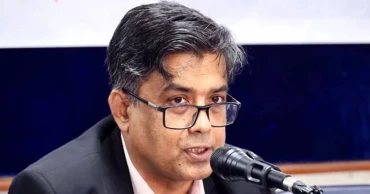
Over 1.53m voters register for postal balloting: Shafiqul Alam
A total of 1,533,682 voters have registered to cast their votes through postal ballots, as registration for postal voting ended on Monday, Chief Adviser’s Press Secretary Shafiqul Alam said on Tuesday (January 06, 2026).
“A total of 1,533,682 voters have registered for postal voting. Of them, 761,140 are from within the country, while 772,542 are members of the Bangladeshi diaspora,” he told reporters at a media briefing held at the Foreign Service Academy.
Voters inside the country registered for postal ballots as they will be engaged in election duties and therefore unable to vote at their designated polling stations, he said.
Alam said members of the Bangladeshi diaspora are participating in the postal voting process for the first time.
Read more: Bangladesh Polls: 164 file appeals over nomination decisions in 2 days
The Press Secretary said the country has witnessed an unprecedented response to its first-ever online postal ballot registration, marking a significant step toward inclusive and participatory elections, particularly for expatriate voters.
Chief Adviser Professor Muhammad Yunus described the response as a ‘historic event’, Alam said.
Noting that the global average inclusion rate for diaspora voting in countries with long-standing systems is 2.7 percent, Alam said Bangladesh has surpassed 5 percent participation in its very first year.
He said the Election Commission’s postal voting model is now being closely observed by international stakeholders, including the European Union, UNDP, and several European countries.
The Election Commission has stated that postal ballots will be sent out and cast starting January 21, once the final list of candidates is confirmed.
The Chief Adviser emphasised that this initial experience will be crucial for expanding diaspora participation in future elections, Alam said, adding that with an estimated 1.5 crore Bangladeshis living abroad, the long-term goal is to ensure voting access for all eligible expatriates.
Regarding government initiatives to raise public awareness about the polls, particularly the referendum, Alam said the ‘Super Caravan’ campaign began on December 20 with a convoy of 10 vehicles under the title ‘Vote’r Gari’.
Citing an overwhelming public response, he said the number of vehicles will be increased from 10 to 30, and coverage will expand from 300 to 495 upazilas, including hard-to-reach island districts such as Bhola and Hatiya, where feasible.
The newly added vehicles in the ‘Super Caravan’ will operate from January 9 to January 31 and will screen 30 television commercials (TVCs) related to the elections and the referendum, he added.
Noting that the Election Commission’s preparations are progressing in full swing, Alam said training for 75 percent of security personnel, including police, Ansar, Coast Guard, and Border Guard Bangladesh, has already been completed, with the remaining training to conclude soon.
“We hope all concerned will remain fully prepared for voting,” he said, adding that training on CCTV monitoring and body-worn cameras is underway and expected to be completed by January 31.
To ensure rapid responses to any election-related disruptions, the Ministry of Home Affairs is developing a dedicated mobile app that will allow incidents of violence or irregularities to be reported instantly from anywhere in the country.
Monitoring control rooms will be established at the upazila, district, and divisional levels, along with a central control room in Dhaka, he added.
Alam said that Religious Affairs Adviser Dr AFM Khalid Hossain informed the Chief Adviser that his ministry recently held a meeting with 500 eminent Islamic scholars to involve mosque imams in election-related awareness campaigns, particularly focusing on the referendum.
At a meeting with the Chief Adviser at the State Guest House Jamuna, Dr Khalid said initiatives have been taken to encourage imams across the country to inspire people through their Friday sermons to cast a ‘Yes’ vote in the referendum.
Over 15 lakh people register for postal voting: EC
The initiative has received positive feedback, Alam said, noting that the meeting emphasized involving teachers from around 77,000 maktabs, imams from approximately 400,000 mosques nationwide, and priests from other places of worship, including temples and churches.
In addition, the Ministry of Religious Affairs is printing thousands of informational leaflets for distribution across the country, he added.
9 months ago

EC to send SMS urging govt officials to register for postal voting
The Election Commission (EC) has instructed the relevant authorities to send SMS alerts to all government officials and employees, encouraging them to register for voting through postal ballots ahead of the upcoming parliamentary election and the referendum on the July Charter.
The instruction was given in a letter signed on Wednesday (December 17) by KM Ali Newaz, Additional Secretary of the Election Commission and Project Director of the OCV–SDI project.
According to the letter, government officials and employees working inside the country, as well as officers and employees of the armed forces who receive salaries through the iBAS++ system, will be able to cast their votes through an IT-supported postal ballot after completing registration via the “Postal Vote BD” app.
The registration process will remain open until December 25, 2025, the letter said.
Read more: EU deploys election observation mission to Bangladesh
The 13th parliamentary election and the referendum will be held simultaneously on February 12, 2026.
The EC has instructed the authorities concerned to send SMS messages to all military and civilian government officials and employees who are drawing salaries through the iBAS++ system, requesting them to complete their registration through the app by the stipulated deadline.
The SMS text will be “All government officials and employees (military and civilian) are requested to complete registration through the ‘Postal Vote BD’ app by December 25, 2025, to cast votes through IT-supported postal ballots.”
The Commission said postal ballots will be sent by mail to the registered voters’ addresses. After casting their votes, voters will have to return the ballots in the provided return envelopes to the respective returning officers.
Though the postal balloting system has been in the laws for a long time, it was never practised in the previous elections.
Read more: ‘In-Country Postal Vote’ registration to continue till Dec 25: EC
This is the first time the Election Commission has introduced an IT-supported hybrid postal balloting system, enabling expatriates, government staff, polling personnel, and the persons who will be in the legal custody to exercise their franchise through a combination of digital registration and manual voting.
Among them, the probable polling personnel who are not in the government services, and the prisoners will be able to register after December 17 to 25 for voting through the postal ballots in the upcoming election.
So far 46,701 government officials and employees registered through the app to vote in the February-12 election after the announcement of the election schedule announced on December 11.
The Election Commission said postal ballots will be sent by mail to the registered voters’ addresses. After casting their votes, voters will have to return the ballots in the provided return envelopes to the respective returning officers.
The EC also said that instructions in this regard have already been sent to the Secretary of the Finance Division.
According to the election schedule, the deadline for the submission of nomination paper is December 29, while the scrutiny of nomination paper is on December 30-January 4 and the last date for the withdrawal of candidature is January 20. The election campaign will start on January 22 and continue till 48 hours before the balloting period (7:30am on February 10).
Read more: February election to lay strong foundation for democracy: Rizwana
10 months ago