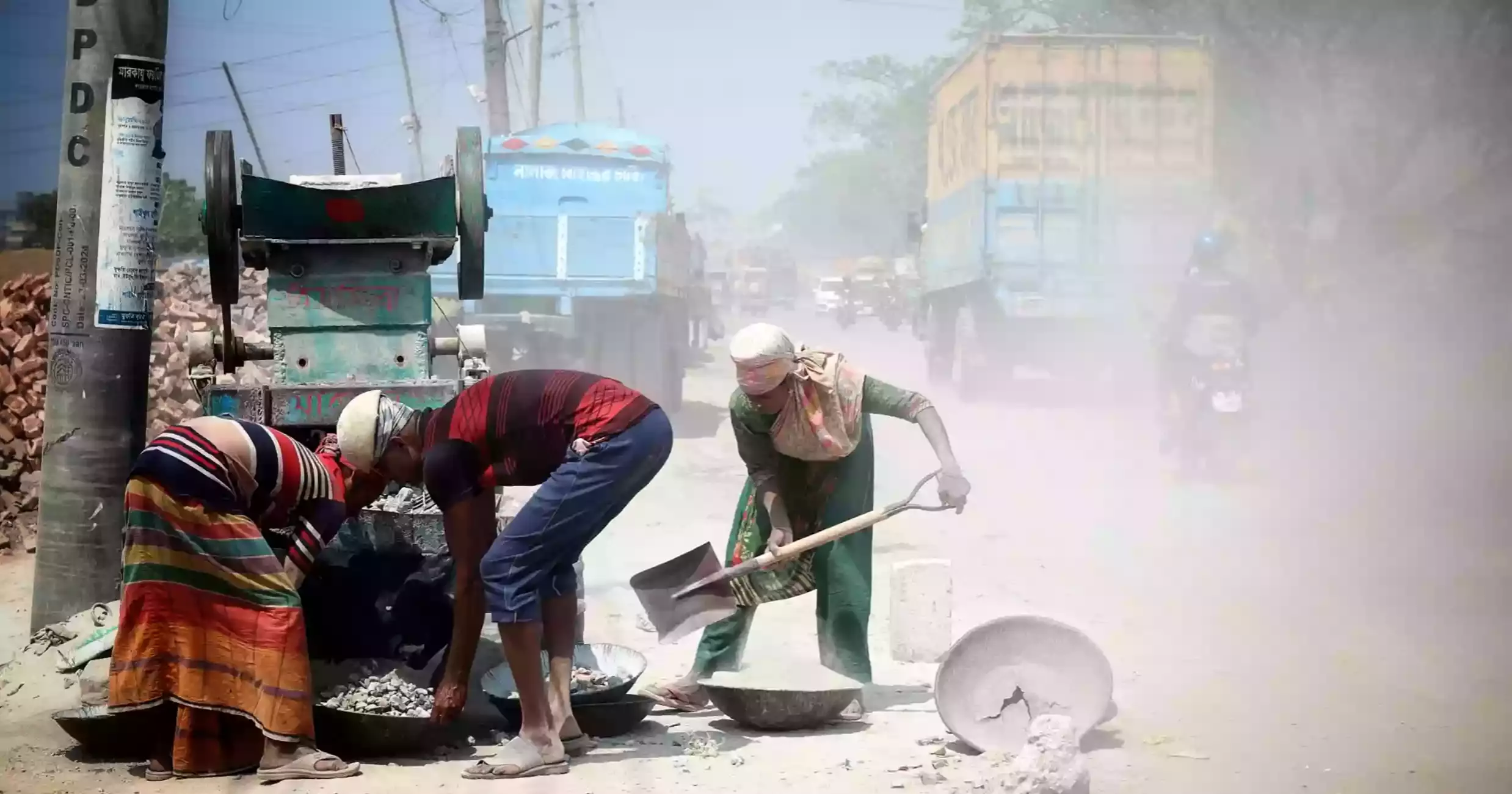
For millions of Dhaka residents, the most basic necessities—food, air and water—have become a daily health gamble, exposing them to risks they can hardly avoid, according to experts.
From toxic chemicals in everyday food items to dangerously polluted air and bacterially contaminated water, public health experts say the capital is facing continuous threats with long-term consequences for millions.
Toxic Food on Tables
Food safety researchers have repeatedly detected formalin, calcium carbide, artificial colours, excessive pesticide residues and antibiotics in fruits, vegetables, fish and dairy products sold in Bangladesh’s markets.
These substances are linked to liver and kidney damage, hormonal disorders and increased cancer risks, experts said.
They warn that chronic exposure is silently fuelling a rise in non-communicable diseases.
Professor Khaleda Islam of the Institute of Nutrition and Food Science said long-term exposure to food contaminants is contributing to Bangladesh’s growing health burden.
Read more: Expose tobacco industry’s deceptive tactics to safeguard public health: Experts
“Nearly one in four adults now suffers from hypertension while diabetes affects about one in three,” she said, noting that dietary contamination is a significant but often overlooked factor.
Unsafe agricultural practices, premature fruit ripening and the widespread use of chemicals to keep produce looking artificially fresh are blamed for the contamination.
Breathing Dirtiest Air
Dhaka continues to rank among the world’s most polluted cities with concentrations of PM2.5 and PM10 particles regularly exceeding international safety limits several times over.
Brick kilns, unregulated construction, ageing and unfit vehicles and open waste burning are the major contributors, according to environmental experts.
Doctors warn that prolonged exposure increases the risk of asthma, respiratory infections, heart disease and stroke.
“Dhaka’s air pollution has been steadily rising for more than a decade, affecting both physical and mental health,” said Prof Dr Ahmad Kamruzzaman Majumder, chairman of the Centre for Atmospheric Pollution Studies (CAPS).
Read more: Unhealthy air quality recorded in Dhaka on Friday
“During the dry months particularly from November to March hospital visits increase sharply as asthma and respiratory patients suffer the most. If hazardous elements persist in the air, the risks can extend even to cancer,” he said.
Unsafe Water, Unseen Dangers
Despite improvements in coverage, safe drinking water remains a daily concern in many areas.
Tests frequently detect E. coli and other harmful bacteria, while some underground sources contain elevated levels of arsenic and ammonia.
Leaking pipelines, ageing infrastructure and inadequate treatment facilities are largely responsible, experts say.
Adding to the concern, a 2025 study titled ‘Antimicrobial resistant enteric bacteria are widely distributed among environmental water sources in Dhaka, Bangladesh’ found widespread antibiotic-resistant bacteria in freshwater sources.
Read more: Dhaka’s air quality continues to be ‘unhealthy’
Researchers detected resistance genes such as blaTEM, mcr-1, qnrB and sul-1, indicating that water pollution is not only causing infections but also threatening the effectiveness of antibiotics.
Systemic Failure
Environmental and public health experts argue that the overlapping crises point to years of systemic neglect. Bangladesh has long ranked near the bottom of global air quality indices.
Acknowledging the scale of the challenge, Environment Adviser Syeda Rizwana Hasan said meaningful improvement would take time.
“A country that ranks 179th out of 180 cannot jump to the 50th position in one year,” she said, adding that legal and administrative reforms are underway.
“If Bangladesh works consistently for five to seven years and reaches around the 70th position the next elected government will have a foundation to build on,” she said.
Civil society voices, however, stress that governance and citizen responsibility must go hand in hand.
“We expect city administrators to play an effective role in building a liveable city, but change must also begin with ourselves,” said Ibnul Syed of the Pran Prakriti Protibesh Poribesh Rokkha Jatiyo Committee.
Architect Iqbal Habib, vice-president of Safety Awareness Foundation, recently warned that Bangladesh is “building a disabled city” unless environmental priorities are urgently mainstreamed into urban planning.
Read more: Toxic harvest: Food safety slipping away in Bangladesh
During a cleanup drive recently, Dhaka South City Corporation administrator Mohammad Mahmudul Hasan echoed a similar sentiment, saying that social changes are possible only when citizens fulfil their responsibilities.