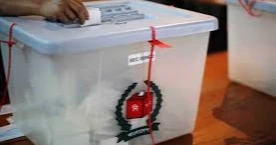
Some 500 foreign election observers, alongside over 55,000 local observers, from different countries and international organisations have expressed interest in monitoring Bangladesh’s upcoming national election and referendum, scheduled to be held simultaneously on February 12.
According to the Election Commission (EC), a total of 55,454 local observers from 81 domestic organisations have applied to observe the polls. Among them, 7,997 observers intend to monitor the election centrally, while 47,457 others plan to observe the voting process at local levels across the country.
No hide-and-seek, elections to be transparent: CEC
On the international front, the European Union (EU) has planned to deploy up to 200 observers for the election. Of them, 56 observers, led by EU Election Observation Mission (EU EOM) Chief Observer Ivars Ijabs, already are in Dhaka.
The Election Commission has invited representatives from around 50 countries and international organisations to observe the polls.
Responding to the invitation, 23 foreign observers from 10 countries and one organisation have confirmed their participation so far.
Among the confirmed visitors is Pakistan’s Chief Election Commissioner Mohammad Jalal Sikandar Sultan, who will visit Bangladesh accompanied by his spouse Rabab Sikandar and Mohammad Nadeem.
Other confirmed observers include two representatives each from Russia, Turkey, the Philippines, Georgia, Maldives, Bhutan, Sri Lanka, South Africa, Indonesia, and the Organisation of Islamic Cooperation (OIC).
Besides, 28 observers from the Asian Network for Free Elections (ANFREL) have applied to the EC. The ANFREL team includes nationals from Sri Lanka (7), the Philippines (7), Indonesia (4), Maldives (2), Cambodia (2), Thailand (1), Malaysia (1), Mongolia (1), the United States (1), Myanmar (1) and Poland (1).
Meanwhile, at least 43 foreign journalists, along with two local counterparts, from more than two dozen international media outlets have sought accreditation from the Election Commission to cover the general election and referendum.
The media organisations include TVE (Spain), GEO News (Pakistan), Reuters, NHK Japan, Al Jazeera Arabic, Diplomat Magazine (Netherlands), ABC Australia, Radio 357 (Poland), DSTV Darjeeling (India), Pakistan TV Digital, and Ei Muhurte Digital Media (Kolkata, India).
Besides, 25 members of the Commonwealth Observer Group, including 17 foreign observers and eight support staff, have expressed interest in monitoring the election. Of them, six have applied for visas on arrival, for which clearance has already been granted by the Home Ministry.
The Commonwealth observers include nationals from Ghana, Malaysia, Mauritius, Sierra Leone, Sri Lanka, the United States, South Africa, Fiji, Antigua and Barbuda, Canada, Zambia, the United Kingdom, Singapore and Uganda.
The remaining eight members are Secretariat staff from the Commonwealth, including nationals from the UK, Sri Lanka, Nigeria and India.
Besides, 25 international freelance observers, including the former Chief Election Commissioner of Nepal and representatives from organisations such as Voice for Justice, SAARC Human Rights Foundation, Conservative Friends of Bangladesh (UK), Hansard Research UK, Immigrants International Inc, UK Parliament, Africa House London, and O.P. Jindal Global University (India), have also shown interest in observing the polls.
EC Director (Public Relations) Ruhul Amin Mallik said the number of foreign observers this time may exceed 500, with around 200 expected from the European Union alone.
In 2024, the EC accredited 517 persons from 40 international observer organisations and 20,256 local observers from 84 organisations to observe the 12th parliamentary election.
In the 11th parliamentary election in 2018, some 25,900 local observers from 81 organisations and 38 foreign observers from FEMBoSA, AAEA, OIC and the Commonwealth monitored the polls, alongside officials from foreign missions and embassies stationed in Bangladesh.
The European Union and the United States, however, did not send observers to the 2018 and 2014 elections and later raised questions about the credibility of the two elections.
In 2014, observer presence was significantly lower in the 10th parliamentary election, as most political parties boycotted the polls and the election to 153 out of 300 constituencies went uncontested. Only four foreign observers and 8,874 local observers from 35 organisations observed the lopsided election.
In contrast, the 9th parliamentary election in 2008 witnessed the presence of a record 593 foreign observers and 159,113 local observers.