Bangladesh Polls
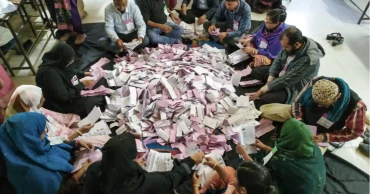
Bangladesh Polls: Vote counting underway; early results show who’re leading
Preliminary results from 12 out of 185 polling stations in Thakurgaon-1 (Sadar) constituency show BNP Secretary General Mirza Fakhrul Islam Alamgir leading.
He has secured 12536 votes so far. His nearest rival, Jamaat’s candidate Delwar Hossain, has received 9,359 votes.
Counting is underway, and the results from the remaining polling stations are awaited.
‘Perhaps my last vote,’ says octogenarian voter in Faridpur
In Thakurgaon-2 constituency, results from 18 out of 104 polling stations have been reported so far, showing Dr. Abdus Salam of the BNP, symbol Sheaf of Paddy), leading with 21,636 votes.
Maulana Abdul Hakim of Bangladesh Jamaat-e-Islami has secured 18,944 votes in these early returns.
Preliminary results from Gazipur-3 and Manikganj-3 constituencies show the BNP’s ‘Sheaf of Paddy’ candidates taking early leads as counting continues.
In Gazipur-3, results from 10 out of 180 polling centres show the BNP candidate (Sheaf of Paddy) securing 8,462 votes, while the ‘Rickshaw’ symbol candidate has received 6,110 votes so far.
Election officials said counting in the remaining 170 centres is underway.
Meanwhile, in Manikganj-3 (Constituency No. 170), results from 38 out of 151 centres indicate a significant lead for BNP candidate Afroza Khanam Rita (Sheaf of Paddy), who has secured 41,149 votes.
Her rival Sayed Noor of Bangladesh Khelafat Majlish (Rickshaw) has received 16,799 votes, while independent candidate Ataur Rahman Ata (Football) has obtained 3,853 votes.
Returning officers said the figures are unofficial and partial, and the final outcome will be declared after completion of vote counting in all centres.
Vote counting underway; Chief Adviser thanks nation for peaceful election, referendum
8 months ago
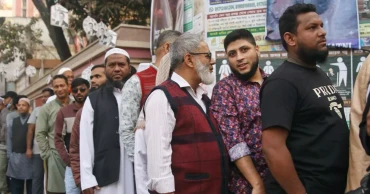
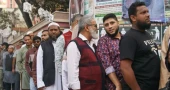
Bangladesh Polls: EC reports about 33% turnout by noon
The voter turnout is 32.88 percent throughout the country till 12:00pm in the first half of the ongoing nine-hour balloting of the parliamentary election and referendum, according to the data of the Election Commission.
“We’ve gleaned the data from 32,789 out of 42,651 polling stations. According to the data, the voter turnout is 32.88 percent,” said EC Senior Secretary Akhtar Ahmed while briefing reporters at 1:10pm in the city’s Nirbachan Bhaban.
The balloting began at 7:30am and will continue uninterrupted till 4:30pm. The balloting is being held in 299 out of 300 parliamentary constituencies across the country amid a peaceful environment.
Hidden cameras on police, drones deployed to prevent chaos: EC
8 months ago
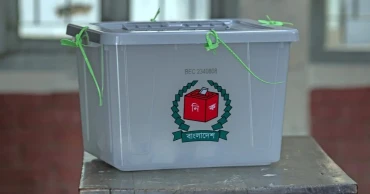
Bangladesh heads to polls Thursday; a historic turning point
In what is being hailed as the country's most significant democratic exercise in decades, Bangladesh is set to hold its 13th parliamentary election on Thursday.
People are going to place their hopes on a fair and competitive election that could restore true democracy, choose the country’s leaders for the next five years and give them a strong public mandate to reform long-criticised systems.
The voting will be held from 7:30am to 4:30pm without any break at 42,659 polling stations in 299 out of 300 constituencies across the country amid the presence of nearly one million security personnel and another one million polling staff.
The election to Sherpur-3 constituency was cancelled following the death of a contesting candidate.
The voters would choose 299 public representatives out of 2,028 candidates on Thursday from 299 constituencies, including nominees of 50 political parties and independent contenders, in the 13th national election.
In a brief televised address to the nation aired on Bangladesh Television (BTV), Chief Election Commissioner (CEC) AMM Nasir Uddin on Wednesday called upon the nation to extend full cooperation and maintain a spirit of harmony to ensure a free, fair and peaceful election.
A total of 127,298,522 voters (in 299 constituencies) are eligible to cast their ballots in Thursday’s elections. Of them, 64,620,077 are male voters, 62,677,232 are female voters and 1,213 are third-gender voters.
The country has a total of 127,711,899 voters in 300 constituencies.
Two major political parties – BNP and Bangladesh Jamaat-e-Islami— are in the electoral race seeking public mandate to govern the country for the next five years. But Awami League is not in the electoral race this time after 30 years as the party boycotted the 15th February election held in 1996.
Chief Election Commissioner AMM Nasir Uddin on Wednesday reaffirmed their unwavering commitment to delivering a peaceful, credible and participatory election.
“I wish to reaffirm the election commission's unwavering commitment to delivering a peaceful, credible and participatory election,” he said while briefing international election observers and foreign journalists in the city.
The briefing was arranged at a city hotel on the eve of the Referendum 2026 and 13th Parliamentary Election to be held on Thursday (Feb 12).
The CEC said transparency in the voting and counting process will be ensured. “Voters irrespective of gender, age or background are encouraged to participate freely,” he said.
The CEC said ballots are issued only after proper identification and voting is conducted in secrecy in accordance with the prescribed rules. Any electoral dispute will be addressed strictly in accordance with established legal and constitutional procedures, he added.
“Transparency remains a cornerstone of our election management,” he said, adding that approximately 330 international observers and more than 160 international journalists are independently covering the elections.
Noting that special emphasis was placed on voter registration, he said, “Through a nationwide voter list update, approximately 4.5 million new voters have been enrolled, including 2.7 million women, bringing the total number of registered voters to over 127 million with a high level of data accuracy.”
About the postal balloting system, Nasir Uddin said for the first time, the commission has introduced out of country voting through it supported postal ballots for Bangladesh diaspora voters.
“Despite a limited preparation and outreach period, the response has been encouraging with approximately 0.8 million expatriate voters completing registration,” he said.
At the same time, in-country postal voting has been undertaken for eligible categories of voters, he added.
Explaining the polling process, he said the presiding officers assisted by assistant presiding officers and polling officers will manage polling operations and vote-counting at the polling stations in the presence of candidates or their authorized agents as well as accredited observers and journalists.
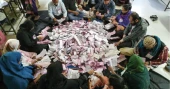
After the close of polling, counting will be conducted at the polling stations under the supervision of the presiding officers, he said.
“Results will be announced at the polling stations upon completion of counting and subsequently compiled and publicly declared by the returning officers,” Nasir Uddin said.
Candidates
A total of 50 political parties out of 59 registered ones are in the electoral race, while 2,028 candidates are contesting from 299 constituencies, including 1,755 nominated by political parties and 273 independent candidates.
Of the contestants, only 81 are women, as some 30 political parties, including Jamaat-e-Islami, did not field a single female candidate in the polls.
The highest number of candidates—291—are from BNP, while the party supports its electoral partners’ contenders in eight other constituencies. Jamaat candidates are running in 228 constituencies, while the party supports candidates nominated by its electoral allies in the remaining constituencies.
Besides, 253 candidates are from Islami Andolan Bangladesh, 192 from Jatiya Party, 90 from Ganaodhikar Parishad and 32 from the youth-led newly formed National Citizen Party (NCP).
Thursday’s elections will be unique with several new features. A referendum—the fourth in the country’s electoral history—is being held simultaneously with a national election for the first time.
Besides, an IT-supported hybrid postal balloting system, combining digital registration and postal ballots, has been introduced alongside the manual balloting system for the first time in the country’s electoral history.
Besides, the in-person voting period will be nine hours instead of eight hours, army personnel with magistracy power have been deployed on election duty, voter slips with candidate names or symbols can be distributed, and EC officials—three regional election officers—are acting as returning officers for the first time alongside 66 others, including Dhaka and Chattogram divisional commissioners and 64 district deputy commissioners.
CCTV cameras, body-worn cameras and drones are also being used at polling stations to monitor the balloting on Thursday.
Security Personnel
Nearly 958,000 members of law enforcement agencies are on the electoral duty across all 299 constituencies and beyond. In addition, around 2,100 executive magistrates and 657 judicial magistrates are engaged on election duties to ensure the electoral code is maintained.
The security personnel include 100,000 Army personnel, 5,000 Navy personnel, 3,730 Air Force members, 37,453 BGB personnel, 3,585 Coast Guard members, 187,603 police members, 9,349 RAB members and 570,000 Ansar and VDP members.
The armed forces, BGB, Coast Guard, RAB, police, Armed Police Battalion (APBn) and Ansar Battalions work as mobile and striking forces to maintain peace and order in the election areas, while BGB, RAB, APBn and Ansar battalions operate on district, upazila and thana levels as well as the Coast Guard are in coastal areas.
Outside the metropolitan areas, a team of 16–17 police and Ansar members are deployed at each normal polling station, while 17–18 personnel are at every vulnerable polling station.
In metropolitan areas, 16 security personnel –police and ansar members-- are at a normal polling station and 17 personnel at each vulnerable polling station.
In remote areas of 25 districts, a team of 16–18 police and Ansar members are at each polling station.
Election Commissioner Brig Gen (retd) Abul Fazal Md Sanaullah on Tuesday shared a statistics with journalists that from December 13 to date, law enforcement agencies have recovered around 850 weapons across the country. “The prima facie of bringing these arms, we believe, to be misused during the elections.
He said, vested quarters want to carry out violence and they have not stopped their activities. But we’re aware of it.... here we can appreciate our law enforcement agencies for what they have done till now.”
Sanaullah, however, said the EC is satisfied with the overall law and order situation so far, describing it as better than at any previous time, despite a few isolated incidents.
“The Election Commission is satisfied with the law and order situation we have so far. It would have been better if the isolated incidents that have occurred had not happened. We are in a better situation than at any time in the past,” he said.
Vehicle Movement
The movement of five types of vehicles — motorcycles, trucks, microbuses, taxi-cab and motorcycles — will remain suspended on Election Day. Of these, movement of motorcycles would be restricted for midnight on February 10 until midnight on February 13,
Postal Voting, Observers, Journalists
More than one million people, including half a million expatriates from more than 120 countries across the world, have already cast their votes through postal ballots.
Regarding postal voting, as of Wednesday afternoon (3:40pm), 1138,192 voters cast votes including 526,376 expatriates through the postal ballots. Of them, 963,318 postal ballots have already reached the returning officers. The remaining ballots are currently in transit. If any postal ballot would not be reached by 4:30pm Thursday, the ballot won’t be counted.
The people who already voted through the postal ballots also include 611,816 government employees working outside their constituencies, polling officials and prisoners.
Polling Staff
A total of 69 returning officers, 958 assistant returning officers, 43,078 presiding officers, 247,862 assistant presiding officers and more than half a million polling officers are engaged in election duties.
In-person voting will be conducted at 42,659 polling stations, while counting of postal ballots will take place at 299 other stations. Altogether, there are 42,958 polling stations in 299 constituencies.
Of the in-person polling stations, around 50 percent are treated as general centres, while the remaining 50 percent are being marked as vulnerable centres.
The progress reports on polling will be shared at regular intervals, with results expected to be announced in phases. Counting of votes for both the parliamentary election and the referendum will begin simultaneously at the polling stations to avoid confusion or unrest.
The EC expects most results are likely to be available by midnight, except for a few distant polling stations.
8 months ago

Bangladesh Polls: UN urges zero tolerance for violence against women
Ahead of the national election in Bangladesh, the United Nations on Wednesday said it notes 'concerns' raised by women’s groups and civil society organizations on violence and harassment of women candidates and voters, including digital violence.
The UN called on all stakeholders, including political leaders and their parties and supporters, to adopt a zero-tolerance approach to intimidation, harassment and any other form of violence against women throughout the electoral process.
This applies equally to women candidates and voters, whose participation and safety are essential to inclusive democratic processes, said the UN in a statement.
As Bangladesh prepares for the 13th national election on February 12, the United Nations underscored that safe, inclusive and meaningful participation in public life is a fundamental right.
This includes the rights of all women and girls, including women with disabilities, women from minority communities, gender diverse people, and others who may face heightened barriers, discrimination or gender-based violence.
Women in public life, including political leaders, activists, journalists and human rights defenders, are reporting increased incidents of cyberbullying, deepfakes, coordinated harassment, and image-based abuse, including AI-altered and sexualised content, said the UN.
It has consistently advocated for women’s meaningful representation and leadership with all stakeholders and is supporting the Bangladesh Election Commission to boost women’s electoral participation and representation.
"It is essential that all voters, including women, can participate as candidates and voters without intimidation, discrimination, online abuse or fear of reprisals," said the UN.
It said they are confident that authorities will continue to take steps to uphold security and the rule of law, and to ensure the safety and rights of every individual.
"The United Nations remains committed to supporting the authorities to ensure the safety and rights of every individual," the statement reads.
8 months ago
Bangladesh Polls: Control room opened to ensure smooth voting
The Ministry of Public Administration has opened a control room to address complaints and information received from field administrations regarding the national election and referendum.
The decision was announced in a notice signed by Deputy Secretary Shariful Islam on Tuesday night.
According to the notice, the control room has been set up at Room 1802 of Building No. 1 of the ministry. The designated contact number is +8802226641118.
The control room will operate from February 10 to February 14 in two shifts daily, from 9:00am to 2:00pm and from 2:00pm to 8:00pm. Concerned officials and staff members of the ministry will perform duties in the control room during the period.
A joint secretary will remain in charge of coordination each day, while two to three officials and staff members will be assigned per shift.
The notice further said that officials on duty will communicate with the Ministry of Home Affairs, the Election Commission or the relevant returning officers as necessary to take appropriate action based on complaints or information received from the field administration.
The move comes as part of efforts to ensure proper coordination and timely response during the election period.
8 months ago

Bangladesh Polls: BB imposes 96-hour freeze on NPSB internet banking
Bangladesh Bank has directed all scheduled banks and mobile financial service (MFS) providers to suspend internet banking fund transfer (IBFT) transactions through the National Payment Switch Bangladesh (NPSB) for 96 hours ahead of the national election.
The central bank, however, said MFS operations will continue on a limited scale during the period, allowing essential transactions while the temporary restriction on IBFT remains in place as part of election-time precautionary measures.
According to the central bank’s directive issued on Sunday, the restrictions will take effect from 12:00am Monday night and remain in force until 11:59pm Thursday.
During this period, all NPSB-based peer-to-peer (P2P) internet banking transactions will remain completely suspended. As a result, customers will not be able to use real-time internet banking services, which normally allow transfers of up to Tk 50,000 per transaction and a maximum of Tk 500,000 per day.
Bangladesh Bank directs MFS providers to halt online gambling transactions
MFS transactions, however, will continue with limitations. Under the temporary measures, customers will be allowed to send a maximum of Tk 1,000 per day to another user through P2P transfers, with a daily transaction cap of 10.
These restrictions will not apply to merchant payments and utility bill payments, which will continue under existing rules.
The directive, sent to the chief executive officers, managing directors and directors general of banks and MFS providers, also instructed MFS operators to form dedicated quick response cells to receive and resolve election-related complaints.
Bangladesh Bank further asked MFS providers to keep all transactions under round-the-clock close monitoring during the restricted period and to promptly report any suspicious or unusual transactions to the respective police stations.
While services for general customers will remain suspended or limited, banks and MFS providers have been instructed to extend necessary cooperation to the Election Commission and law enforcement agencies as required.
The central bank said normal transaction facilities through these channels will be fully restored after the stipulated period.
8 months ago
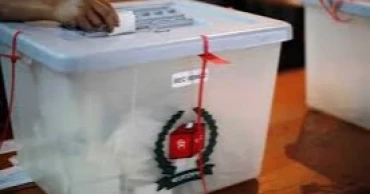
Strong observer interest in Bangladesh polls: 500 foreign, 55,000 local
Some 500 foreign election observers, alongside over 55,000 local observers, from different countries and international organisations have expressed interest in monitoring Bangladesh’s upcoming national election and referendum, scheduled to be held simultaneously on February 12.
According to the Election Commission (EC), a total of 55,454 local observers from 81 domestic organisations have applied to observe the polls. Among them, 7,997 observers intend to monitor the election centrally, while 47,457 others plan to observe the voting process at local levels across the country.
No hide-and-seek, elections to be transparent: CEC
On the international front, the European Union (EU) has planned to deploy up to 200 observers for the election. Of them, 56 observers, led by EU Election Observation Mission (EU EOM) Chief Observer Ivars Ijabs, already are in Dhaka.
The Election Commission has invited representatives from around 50 countries and international organisations to observe the polls.
Responding to the invitation, 23 foreign observers from 10 countries and one organisation have confirmed their participation so far.
Among the confirmed visitors is Pakistan’s Chief Election Commissioner Mohammad Jalal Sikandar Sultan, who will visit Bangladesh accompanied by his spouse Rabab Sikandar and Mohammad Nadeem.
Other confirmed observers include two representatives each from Russia, Turkey, the Philippines, Georgia, Maldives, Bhutan, Sri Lanka, South Africa, Indonesia, and the Organisation of Islamic Cooperation (OIC).
Besides, 28 observers from the Asian Network for Free Elections (ANFREL) have applied to the EC. The ANFREL team includes nationals from Sri Lanka (7), the Philippines (7), Indonesia (4), Maldives (2), Cambodia (2), Thailand (1), Malaysia (1), Mongolia (1), the United States (1), Myanmar (1) and Poland (1).
Meanwhile, at least 43 foreign journalists, along with two local counterparts, from more than two dozen international media outlets have sought accreditation from the Election Commission to cover the general election and referendum.
The media organisations include TVE (Spain), GEO News (Pakistan), Reuters, NHK Japan, Al Jazeera Arabic, Diplomat Magazine (Netherlands), ABC Australia, Radio 357 (Poland), DSTV Darjeeling (India), Pakistan TV Digital, and Ei Muhurte Digital Media (Kolkata, India).
Besides, 25 members of the Commonwealth Observer Group, including 17 foreign observers and eight support staff, have expressed interest in monitoring the election. Of them, six have applied for visas on arrival, for which clearance has already been granted by the Home Ministry.
The Commonwealth observers include nationals from Ghana, Malaysia, Mauritius, Sierra Leone, Sri Lanka, the United States, South Africa, Fiji, Antigua and Barbuda, Canada, Zambia, the United Kingdom, Singapore and Uganda.
The remaining eight members are Secretariat staff from the Commonwealth, including nationals from the UK, Sri Lanka, Nigeria and India.
Besides, 25 international freelance observers, including the former Chief Election Commissioner of Nepal and representatives from organisations such as Voice for Justice, SAARC Human Rights Foundation, Conservative Friends of Bangladesh (UK), Hansard Research UK, Immigrants International Inc, UK Parliament, Africa House London, and O.P. Jindal Global University (India), have also shown interest in observing the polls.
EC Director (Public Relations) Ruhul Amin Mallik said the number of foreign observers this time may exceed 500, with around 200 expected from the European Union alone.
In 2024, the EC accredited 517 persons from 40 international observer organisations and 20,256 local observers from 84 organisations to observe the 12th parliamentary election.
In the 11th parliamentary election in 2018, some 25,900 local observers from 81 organisations and 38 foreign observers from FEMBoSA, AAEA, OIC and the Commonwealth monitored the polls, alongside officials from foreign missions and embassies stationed in Bangladesh.
The European Union and the United States, however, did not send observers to the 2018 and 2014 elections and later raised questions about the credibility of the two elections.
In 2014, observer presence was significantly lower in the 10th parliamentary election, as most political parties boycotted the polls and the election to 153 out of 300 constituencies went uncontested. Only four foreign observers and 8,874 local observers from 35 organisations observed the lopsided election.
In contrast, the 9th parliamentary election in 2008 witnessed the presence of a record 593 foreign observers and 159,113 local observers.
8 months ago
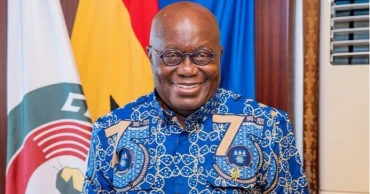
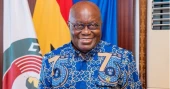
Bangladesh Polls: Ghana's ex-President to lead Commonwealth observer group
Nana Akufo-Addo, former President of the Republic of Ghana, will lead the Commonwealth observer group for Bangladesh’s 13th parliamentary election and the referendum on the July Charter.
The Charter is a post-uprising reform framework proposing political and constitutional changes. Both polls are scheduled for 12 February 2026.
The Commonwealth Secretary-General, Shirley Botchwey, announced the composition of the 14-member Observer Group in London, following an invitation from the Bangladesh Election Commission.
She reaffirmed the fundamental importance of 'credible, transparent and inclusive' electoral processes in strengthening democratic governance and supporting long-term stability.
The Secretary-General said as they deploy their team to observe the elections and referendum being held concurrently in Bangladesh.
‘We don't take any side,’ says US Ambassador Christensen
"Our presence in Bangladesh is guided not only by the responsibility to observe, but by a commitment to uphold the aspirations of the Bangladeshi people at this crucial moment in their democratic journey, acting independently and impartially to help ensure that their collective will is freely expressed.”
She extended her sincere appreciation to these eminent Commonwealth citizens who have dedicated the beginning of their new year to preparing for this significant assignment in support of the people of Bangladesh.
President Akufo-Addo will be joined by experts from across the Commonwealth, including professionals in politics, law, media, gender, and election administration.
The Observer Group will be supported by a Secretariat team led by Linford Andrews, Head and Adviser, Electoral Support Section.
The mandate of the Commonwealth Observer Group is to observe the electoral process and provide an independent assessment of whether the elections and referendum are conducted in a credible, transparent, and inclusive manner.
The Group will report on the conduct of the electoral process in line with the standards to which Bangladesh has committed itself, including its national laws.
Bangladesh, Afghanistan agree to boost ties through economic partnership
Upon completion of its mission, the Observer Group will submit a report containing its findings and recommendations to the Commonwealth Secretary-General.
The report will subsequently be shared with the Government of Bangladesh, the Bangladesh Election Commission, political parties, all Commonwealth governments, and made publicly available.
8 months ago
Bangladesh Polls: Last date for withdrawal of candidature expires today
Tuesday (January 20) marks the final day for candidates to withdraw their nominations in the upcoming national election, which is scheduled to be held on February 12.
Political parties that have fielded more than one candidate in any constituency must inform the respective returning officers of their final nominee by 5:00 pm on Tuesday.
Independent candidates and other candidates nominated by registered political parties will also be able to withdraw their candidacies within the same deadline.
The Article 16 (1) of the Representation of the People Order, 1972 states, “Any validly nominated candidate may, by notice in writing signed by him and delivered, on or before the withdrawal day, to the Returning Officer, either by such candidate in person or by an agent authorised in this behalf in writing by such candidate, withdraw his candidature.”
EC unveils fresh roadmap for Feb-12 election
The Article 16 (2) of the RPO states, “Where more than one candidate are nominated in the same constituency by a registered political party, the chairman or secretary or a person holding the same rank of the party shall inform, by notice in writing signed by him and delivered, either by himself or by any other person authorized by him in this behalf on or before the withdrawal day, to the Returning Officer, about the final nomination of a candidate and the other candidate of that party shall be ceased to be a candidate.”
The Election Commission on December 11 announced the polls schedule to arrange the 13th parliamentary election and the referendum on the July National Charter (Constitutional Reform) Implementation Order simultaneously on February 12, 2026.
According to the election schedule, January 20 is the final date for withdrawal of candidatures. The returning officers will publish the final list of candidates and allocate electoral symbols on January 21.
The election campaign will begin on January 22 and will continue until 7:30 am on February 10. Voting will take place on Thursday, February 12, from 7:30 am to 4:30 pm.
According to the EC, more than 2,560 aspirants submitted nomination papers to contest the upcoming national election from the country’s 300 constituencies by the December 29 deadline.
After scrutiny, returning officers declared 1,842 nomination papers valid and rejected 723 others.
Later, aggrieved aspirants and institutions including different banks filed a total of 645 appeals with the Election Commission, challenging the decisions of the returning officers over (acceptance or cancellation of) nomination papers filed by more than 600 aspirants.
Prof Yunus calls for unity for successful election, country’s future
During nine consecutive days of hearings from January 10 to 18 last, some 420 candidates regained their candidacies. Altogether, the number of valid candidates now stands at around 2,250.
8 months ago
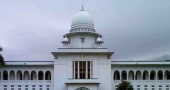
No legal bar to Pabna-1, Pabna-2 elections on Feb 12:SC
The Appellate Division on Thursday cleared the way for holding the elections in Pabna-1 and Pabna-2 constituencies on February 12 in accordance with the boundaries specified in the Election Commission’s September 4 gazette.
An Appellate Division bench led by Chief Justice Zubayer Rahman Chowdhury passed the order.
As per the order, Sathia upazila will constitute Pabna-1 constituency while Sujanagar and Bera upazilas will form Pabna-2.
Acting Attorney General Arshadur Rouf Additional Attorney General Anik R Haque stood for the EC while Barrister Imran Abdullah Siddique and Barrister HM Shanjid Siddiaue represented Jamaat-e-Islami and BNP respectively.
On January 14, the High Court fixed January 15 for hearing on the leave-to-appeal petition filed challenging the validity of the gazette issued by the Election Commission (EC).
On January 10, the Election Commission (EC) suspended the election in Pabna-1 and Pabna-2 constituencies until further order from the court .
The decision was taken in line with an order issued by the Appellate Division of the Supreme Court on January 5 over a dispute regarding the demarcation of the two constituencies, the parliamentary constituencies No 68 (Pabna-1) and No 69 (Pabna-2).
According to an EC circular issued on January 6, the commission decided to keep the elections scheduled for February 12 in the two constituencies suspended until further directives from the court.
On September 4 last year, the Election Commission published a gazette on the delimitation of the country's 300 constituencies bringing changes to the boundaries of 46 constituencies, including Pabna-1 and Pabna-2.
As per the gazette, the Pabna-1 was formed with the entire Santhia upazila, while Pabna-2 comprised Sujanagar and Bera upazilas.
EC suspends Pabna-1, Pabna-2 elections until further court order
But the EC on December 24 last issued a revised gazette to restore the previous boundaries of the two constituencies in compliance with an order of the High Court.
Following the High Court order, the Pabna-1 (Constituency No. 68) was formed with Santhia Upazila and parts of Bera Upazila, including Bera Municipality and the unions of Haturia Nakalia, Natun Varenga, Chakla and Kaitola.
The Pabna-2 (Constituency No. 69) was again formed with Sujanagar Upazila and the remaining areas of Bera Upazila, excluding Bera Municipality and the four unions—Haturia Nakalia, Natun Varenga, Chakla and Kaitola.
Later, Jamaat-e-Islami candidate for Pabna-1 Mohammad Najibur Rahman and the Election Commission filed separate petitions with the Appellate Division, seeking a stay on the High Court verdict.
On January 5, the Appellate Division stayed the effectiveness of the Election Commission’s revised gazette until leave-to-appeal petitions would be filed.
8 months ago