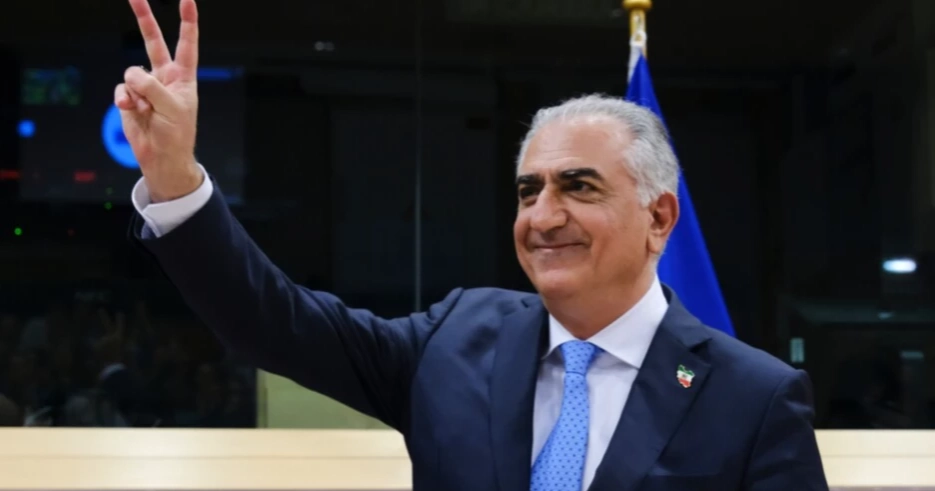
Iran’s exiled crown prince Reza Pahlavi, whose father was overthrown nearly five decades ago, is once again seeking a role in shaping Iran’s future as nationwide protests challenge the country’s Islamic rulers.
Pahlavi, 65, has lived in exile in the United States since the 1979 Islamic Revolution forced his father, Shah Mohammad Reza Pahlavi, from power after mass uprisings across the country. Though the monarchy was widely despised for corruption, repression and deep inequality, Pahlavi is now trying to position himself as an alternative to Iran’s struggling theocracy.
Iran’s supreme leader warns of harsh response as protests continue
He recently called on Iranians to return to the streets, helping trigger large demonstrations that began over economic hardship but have evolved into a broader challenge to the Islamic Republic. The protests come after years of unrest and a recent 12-day conflict with Israel that included U.S. strikes on Iranian nuclear facilities.
It remains unclear how much genuine support Pahlavi commands inside Iran. Some protesters may favor a return to monarchy, while others simply want an end to clerical rule. Iranian state media dismissed the unrest as the work of “monarchist terrorists” and accused Pahlavi’s supporters of violence.
Born into privilege in 1960, Pahlavi grew up in Tehran’s royal palaces and was educated at a private school inside Niavaran Palace. His father’s rule, strengthened by a 1953 CIA-backed coup, relied heavily on U.S. support and a feared intelligence service known for torturing dissidents. Rising oil wealth in the 1970s failed to prevent widening inequality, and millions eventually took to the streets against the monarchy.
As protests intensified, Pahlavi left Iran in 1978 for flight training in the United States. A year later, the shah fled the country and Shiite clerics consolidated power, establishing the Islamic Republic and executing thousands of opponents. After his father’s death in 1980, royalists in exile declared Reza Pahlavi the new shah.
Since then, Pahlavi has spent decades abroad, mainly in the U.S., trying to maintain influence. His efforts included a brief clandestine television broadcast into Iran in the 1980s. However, memories of his father’s rule, repression inside Iran and perceptions that he is disconnected from everyday life in the country have limited his appeal.
Younger Iranians, born long after the revolution, have grown up under strict social controls, economic crisis, corruption and sanctions. Pahlavi has sought to reach them through social media and foreign-based Persian-language media.
In recent years, he has spoken of a possible constitutional monarchy or another system chosen by Iranians themselves. He has also drawn criticism for his ties to Israel and for meeting Prime Minister Benjamin Netanyahu.
Iran protests intensify as citizens call for political change
Pahlavi argues the Islamic Republic is beyond reform and says only fundamental change can save Iran. Whether he can become a central figure in that transformation remains uncertain.