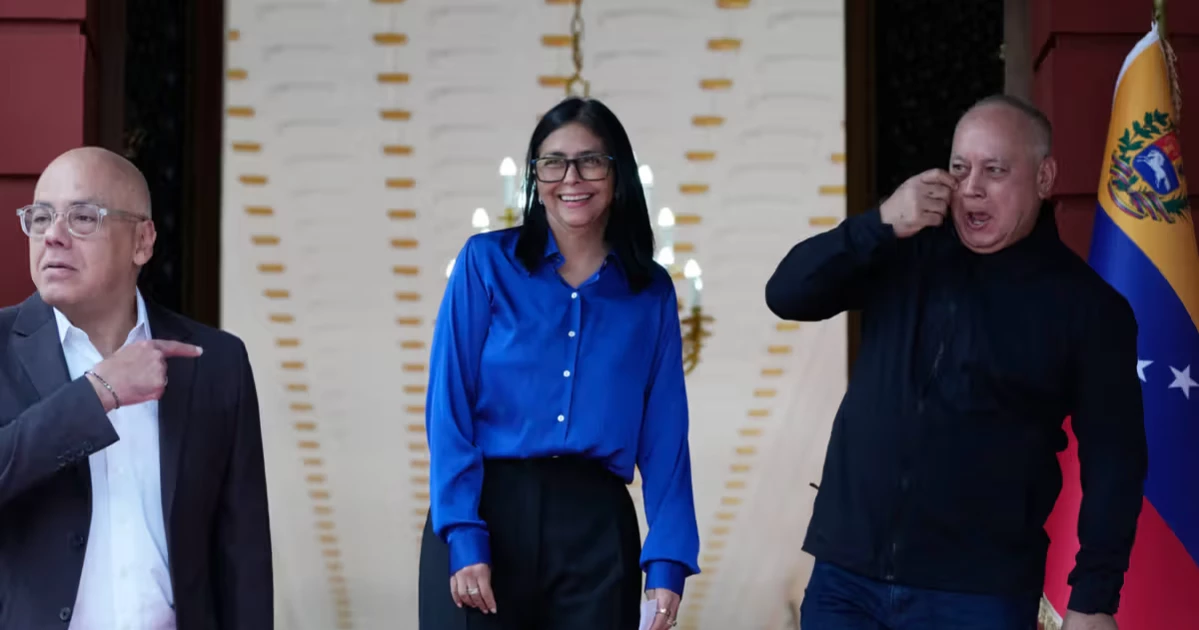
Venezuela’s acting President Delcy Rodríguez said Wednesday her government would continue releasing prisoners detained under former president Nicolás Maduro, describing the move as part of a “new political moment” following his removal by the United States earlier this month.
Speaking at her first press briefing since Maduro was captured by US forces and flown to New York on Jan 3 to face drug trafficking charges, Rodríguez said the process of freeing detainees “has not yet concluded” and signaled that more releases were planned.
Addressing reporters at the presidential palace in Caracas, she struck a conciliatory tone, promising a Venezuela that would allow political and ideological diversity while insisting that the rule of law would be strictly enforced.
A leading Venezuelan human rights group estimates that about 800 political prisoners remain behind bars, including politicians, soldiers, lawyers and civil society activists.
Rodríguez’s comments came after US President Donald Trump said he had held a “great conversation” with her, their first direct contact since Maduro’s arrest.
“We had a long call. We discussed a lot of things, and I think we’re getting along very well with Venezuela,” Trump said at the White House.
Unlike previous speeches that echoed Maduro’s anti-US rhetoric, Rodríguez avoided mentioning Washington directly, even as relations between the two countries shift rapidly.
She acknowledged that prisoner releases were under way, a move widely seen as encouraged by the Trump administration, but insisted that the process had begun under Maduro in December as a gesture toward dialogue and tolerance.
“Crimes related to the constitutional order are being evaluated,” she said, referring to detainees held on charges that human rights groups say are politically motivated. “Messages of hatred, intolerance and acts of violence will not be permitted.”
Flanked by National Assembly President Jorge Rodríguez and Interior Minister Diosdado Cabello, she took no questions and said Cabello was overseeing the release process, which critics say has been slow and opaque.
Venezuela’s leading prisoners’ rights group, Foro Penal, confirmed that at least 72 detainees have been freed so far, including political activist Nicmer Evans, journalist Roland Carreño and two campaign aides of opposition leader María Corina Machado.
However, Foro Penal says more than 800 prisoners remain in custody on political grounds and has criticised the government for a lack of transparency.
Rodríguez rejected such claims, accusing what she called “self-proclaimed nongovernmental organizations” of spreading falsehoods about Venezuela.
“There will always be those who want to fish in troubled waters,” she said, adding that her government was committed to letting “the truth be reported.”