primary healthcare
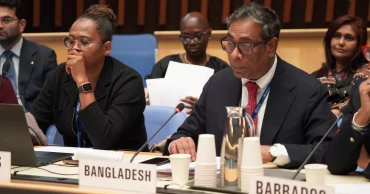
Bangladesh stresses primary healthcare, cancer prevention at Geneva forum
State Minister for Health and Family Welfare Dr MA Muhit has highlighted Bangladesh’s strong emphasis on primary healthcare as the foundation of universal health coverage and effective cancer prevention and control.
At the Commonwealth Health Coordination Forum in Geneva on Sunday , he reaffirmed government’s commitment to strengthening equitable and resilient cancer care systems.
Bangladesh Ambassador and Permanent Representative in Geneva Nahida Sobhan accompanied the State Minister during the event, said the Bangladesh Mission in Geneva.
The State Minister showcased Bangladesh’s ongoing initiatives, including national cancer management guidelines, expansion of cancer registries, HPV vaccination campaign for adolescent girls, community-based screening and early diagnosis, and strengthening oncology workforce and decentralized services.
He also emphasised the need for stronger Commonwealth cooperation in workforce training, digital health, research collaboration, and affordable cancer care.
The participation of the State Minister was facilitated by the Permanent Mission of Bangladesh to the United Nations Office and other International Organizations in Geneva.
5 months ago
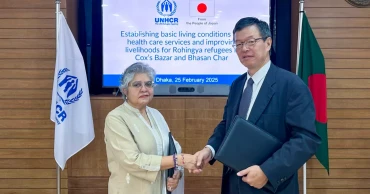
Japan, UNHCR sign $1.6mn deal to boost Rohingya support in Bangladesh
The government of Japan and UNHCR, the UN Refugee Agency, have recently signed a partnership agreement to improve living conditions, strengthen primary healthcare and empower Rohingya refugees in Bangladesh.
The contribution of USD 1.6 million [JPY 250 million] will support the construction of safer shelters in the Cox’s Bazar camps, the provision of essential medicines and medical supplies, and the engagement of refugees as community health workers.
It will also support the self-reliance of refugees in Cox’s Bazar and on Bhasan Char through opportunities for self-reliance.
“This agreement and contribution from Japan to UNHCR comes at a critical time, when fundraising for the Rohingya refugee response is essential. This project will help
empowering and improving refugees’ well-being on Bhasan Char and in Cox’s Bazar, while alleviating the pressure on the Bangladeshi host community,” said Saida Shinichi, Ambassador of Japan to Bangladesh.
“Japan will continue to work towards sustainable solutions for this humanitarian crisis and will keep cooperating with international organizations such as UNHCR,” he added.
“UNHCR is most grateful to the Government and people of Japan for their consistent
solidarity and active support to UNHCR and for our work for the Rohingya refugees in
Bangladesh,” said Sumbul Rizvi, UNHCR Representative in Bangladesh.
UN chief writes to CA; hopes ‘wider solutions’ for Rohingya, other minorities
“The Rohingya community is resilient and hardworking, and capable of managing their lives in asylum graciously granted by Bangladesh. All they need are opportunities,” she added.
As per the agreement, UNHCR will be able to build, maintain and repair safer shelters that can better withstand extreme weather. In Cox’s Bazar camps and on Bhasan Char, access to primary healthcare will be strengthened, focusing on both communicable and non communicable diseases, as well as mental health and psychosocial support.
Skills development and self-reliance will be enhanced to provide refugees, particularly women, with the capacity to support their communities and to help them prepare for a safe and sustainable return to Myanmar, once conditions are conducive.
Eight years into the crisis, the support from Japan is most timely as UNHCR and its
partners, along with the government of Bangladesh, prepare to launch the 2025 Joint Response Plan (JRP) for the Rohingya humanitarian crisis, to support Rohingya refugees and Bangladeshi people in neighbouring communities, said the UNHCR.
Dr Yunus, UN envoy discuss mobilising more donors for Rohingyas
Since the beginning of the emergency in August 2017, Japan has remained a steadfast supporter of the Rohingya refugee response in Bangladesh, contributing over USD 243 million to UNHCR and other UN agencies and NGOs in Bangladesh.
1 year ago

World Bank approves $200 million to help Bangladesh improve primary healthcare for common illnesses including dengue
The World Bank on Wednesday (August 30, 2023) approved $200 million to help Bangladesh improve primary healthcare services for treatment, prevention and referral for common illnesses including mosquito-borne diseases like dengue, and medical waste management in Dhaka North and South City Corporations, Chattogram City Corporation, and Savar and Tarabo municipalities.
The Urban Health, Nutrition and Population Project will establish a network of primary health centers offering a broad range of health, nutrition, and population services along with a direct referral system with secondary and tertiary-level facilities. About 2.5 million children under five in these urban areas will receive services, according to a release from the WB.
Read : World Bank’s cooperation sought to build power transmission lines from Nepal to Bangladesh
The credit is from the World Bank’s International Development Association (IDA), which provides concessional financing, and has a 30-year term with a five-year grace period.
The project will improve antenatal services for women, with a target of over 250,000 women receiving at least four checkups during pregnancy. It will also support hypertension screening and follow-up of about 1.3 million adults. To reduce out-of-pocket expenditure on medical care for the poor people, the project will renovate selected existing public health facilities, including government outdoor dispensaries, and family planning clinics.
The project will also focus on environmental health and preventive services like mosquito control, medical waste management, and behavior change communication to promote healthy lifestyles to prevent illnesses and mitigate the effects of climate change and air pollution on human health.
Read : Govt, World Bank ink $300 million financing deal for skill development, employment of rural youths
It will support the development and implementation of a multi-sectoral strategy to manage infectious disease outbreaks in cities and municipalities. To prevent dengue, the project will introduce a climate-based dengue early warning system and outbreak response capacities as well as take measures to clear breeding sites.
Abdoulaye Seck, World Bank Country Director for Bangladesh and Bhutan, said that Bangladesh has made remarkable progress in improving healthcare, particularly in rural areas.
“But urban areas have limited public healthcare facilities. Hence, poor people and slum dwellers are often forced to turn to more expensive private healthcare. Further, with high population density, climate change, and rapid urbanization, new health challenges are emerging, including an increase of dengue cases, infectious and non-communicable diseases," he said.
Read : Dengue: 7 more die, 2367 hospitalised in 24hrs
Iffat Mahmud, Senior Operations Officer at the World Bank and Task Team Leader for the Project, said that the impact of climate change on mosquito-borne and infectious diseases is often overlooked. An overreliance on fogging or spraying targeting adult mosquitoes and untargeted larval control is not an efficient use of resources.
“As mosquito lifecycle is influenced by climatic conditions, the project will strengthen the mosquito control laboratory and build capacities to implement innovative mosquito control measures and other community-based interventions,” the World Bank official said.
3 years ago