Iran-US talks
Iran-US talks to begin in Switzerland on Sunday, Pakistan says
Technical-level talks between Iran and the United States on implementing their interim agreement will begin on Sunday in Bürgenstock, Switzerland, with Qatari mediators also taking part, Pakistan said on Saturday.
In Washington, US Vice President JD Vance confirmed that senior American negotiators Jared Kushner and Steve Witkoff were already in Switzerland and were working on the technical aspects of discussions related to Iran's nuclear programme.
Speaking to Fox News, Vance said he expected to travel to Switzerland "sometime in the next couple of days," while noting that coordinating the negotiations remained delicate.
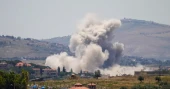
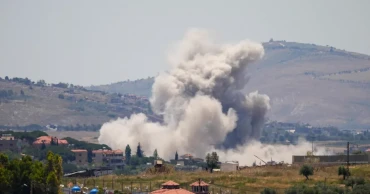
The announcement came as Iran sent mixed signals over the future of the interim agreement following continued Israeli attacks in Lebanon.
Earlier on Saturday, Iran's joint military command announced that it had again closed the Strait of Hormuz, accusing the United States of acting in bad faith and failing to stop Israel's military operations in Lebanon.
In a statement carried by Iranian state television, the military command warned that additional measures had been planned if what it described as "aggression" continued.
Shortly afterward, Iranian state media reported that the country's negotiating team was heading to Switzerland, a trip that had originally been scheduled for Friday.
However, Iranian Foreign Ministry spokesperson Esmail Baghaei indicated that substantial progress in the negotiations was unlikely unless Washington fulfilled its commitments under the interim deal.
"This trip is therefore about demanding that the other side fulfill its obligations," Baghaei said, adding that talks on a final agreement would begin only after key commitments were honoured.
He warned that failure to implement those commitments could jeopardise the entire memorandum of understanding reached between the two sides.
The interim agreement, signed earlier this week, had led to the reopening of the Strait of Hormuz and revived hopes for broader negotiations over Iran's nuclear programme and regional stability. However, several key issues remain unresolved, and tensions over the fighting in Lebanon continue to threaten the fragile accord.
3 months ago
Pakistan hopeful of Iran-US talks amid fragile ceasefire
Pakistan continued preparations on Tuesday for a second round of Iran-US talks in Islamabad, despite uncertainty over whether Tehran would participate, as a fragile ceasefire remained at risk.
Rhetoric from both sides stayed tense. US President Donald Trump warned of heavy military escalation if no agreement is reached before the ceasefire deadline, which he set for Wednesday. Meanwhile, Iran’s chief negotiator said Tehran has “new cards” yet to be revealed.
The two-week ceasefire, which began on April 8, is likely to be extended if negotiations proceed. US officials have indicated Vice President JD Vance would head the American delegation, but Iran has not confirmed its participation. Iranian state television reported that no delegation had yet arrived in Islamabad.
The broadcast, often reflecting hard-line views within Iran, highlighted internal debate over how to respond to the recent US seizure of an Iranian container ship.
Control over the Strait of Hormuz remains central to the dispute. The US has imposed a blockade on Iranian ports to pressure Tehran, while Iran’s grip on the strategic waterway has driven global oil prices higher, with Brent crude nearing $95 per barrel.
Before the conflict, the strait was open to international shipping, and Washington is pushing for unrestricted passage to resume.
European officials, meeting in Brussels, are also assessing the impact on energy supplies after warnings of limited jet fuel reserves.
Although Iran acknowledged receiving new proposals from Washington, significant differences persist, particularly over its nuclear programme, regional influence and control of the strait.
Iranian parliamentary speaker and chief negotiator Mohammed Bagher Qalibaf accused the US of seeking Iran’s surrender, saying Tehran would not negotiate under threats.
Despite tensions, Pakistani officials remain optimistic that Iran will send representatives, allowing talks to proceed.
Foreign Minister Ishaq Dar has been engaged in diplomatic efforts, including discussions with Egypt and China, both key regional players. China described the situation as a critical transition between war and peace and urged all sides to remain committed to dialogue.
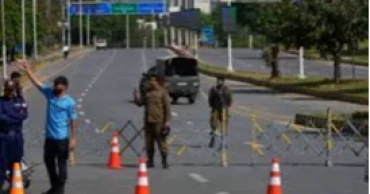
Security has been tightened in Islamabad, with increased deployments and patrols, suggesting preparations for possible high-level visits if progress is made.
Analysts say Pakistan appears ready to host senior leaders from both countries should negotiations advance toward an agreement.
Separately, diplomatic efforts are also underway elsewhere in the region. Talks between Israel and Lebanon are expected to resume in Washington, following rare direct contacts aimed at easing tensions and potentially reaching a peace deal.
The broader conflict has resulted in thousands of casualties across the region, underscoring the urgency of renewed diplomatic efforts.
5 months ago