Education
Mehendi festival for female students held at BAU
A Mehendi Festival was organised for female students at Bangladesh Agricultural University (BAU) under the slogan “Let the joy of Eid begin with the colours of mehendi.”
The event was arranged by energetic female students from six residential halls of the university with the patronage of branch Jatiyatabadi Chhatra Dal (JCD) convener Agriculturist Md Atikur Rahman.
The programme was held at the university helipad on Friday (Mar 6).
As a special attraction, an online competition was organised on social media where participants posted photos of their mehendi designs on Facebook using a hashtag. Winners were selected based on the number of likes, comments and shares on the posts.
Besides, a coupon-based lottery was arranged for participants, where 10 lucky winners received prizes.
Tasmia Fairuz, a first-year student of the Faculty of Agriculture, said she was delighted to experience such a colourful event on campus.
“We are very happy to have such a beautiful festival on campus. There is a festive atmosphere all around. Through this mehendi festival, the joy of Eid has already arrived on campus. As a newcomer, it is truly a wonderful feeling to experience such an arrangement,” she said.
Patron of the event and branch JCD convener Md Atikur Rahman said, “In rural Bangladesh, people used to pick mehendi leaves from trees and apply them on their own hands or on those of their loved ones. But in today’s busy urban life, that beautiful tradition is gradually fading away. BAU has always played a special role in preserving tradition and culture. Through this initiative, we are trying to revive that tradition and enjoy it together.”
BAU JCD joint convener Anika Tabassum Khan said there are plans to organise similar programmes on a larger scale in the future.
4 hours ago
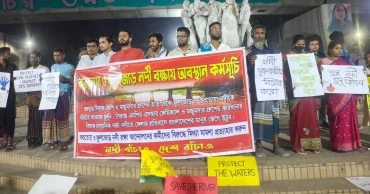
Youth protest at DU demands protection of Phuljor and Karatoa rivers
Young climate and environmental activists protested today in front of the Raju Sculpture at Dhaka University, calling for urgent measures to protect the Phuljor and Karatoa rivers in northern Bangladesh from industrial pollution.
The program was organized by environmental group YouthNet Global and included nearly fifty indigenous women, men, and children from Sirajganj.
Speakers at the event included Santosh Singh Babu, President of the Bogura District Committee of the National Indigenous Council; Sarbamitra Chakma, Executive Member of the Dhaka University Central Students’ Union (DUCSU); and Mocha. Ruku Khatun, General Secretary of Sufia Kamal Hall. The assembly was presided over by Sohanur Rahman, Executive Coordinator of YouthNet Global, while climate activist Seyam Sikder moderated the event.
Protesters demanded immediate investigation of industrial waste pollution, strict enforcement of environmental laws, accountability for responsible industries and individuals, and an end to harassment of environmental defenders.
Indigenous participants reported that industrial pollution has severely contaminated river water and the surrounding environment, threatening agriculture, fisheries, and local livelihoods. Many families have already faced hardships due to land grabbing and industrial waste.
The 55-kilometer Phuljor River supports the livelihoods of hundreds of thousands along its banks in Sirajganj and Bogura districts. Yet industrial waste has polluted the river, endangering aquatic biodiversity. Protesters specifically blamed chemical waste from several factories, including SR Chemicals and Majumdar Products, which they alleged were owned by the family of Golam Mohammad Siraj, the Bogura-5 Member of the Parliament.
“Protection of the Phuljor and Karatoa rivers is about preserving the lifeline of our communities. If the rivers die, our culture, our food, and our future will be lost,” said Santosh Singh Babu.
Faisal Biswas, a young environmentalist from Sirajganj, added: “Rivers are the lifeblood of our communities. Without effective action to stop pollution, we risk not only environmental disaster but also our livelihoods. We will continue this struggle until the rivers are safe.”
Sohanur Rahman, Executive Coordinator of YouthNet Global, said: “Rivers are living entities. Industrial waste is destroying our rivers and harming ecosystems. Bangladesh’s rivers form the foundation of our environment and livelihoods. Pollution in one river affects the entire ecosystem. Young people and local communities are uniting to demand effective measures to protect them.”
During the protest, several rickshawpullers joined in solidarity, singing songs about river protection. Md Khaleque, a rickshawpuller from Dinajpur, said: “A river is not just water, it is part of our lives. If the rivers survive, we survive.”
In a landmark 2019 ruling, the High Court of Bangladesh declared all rivers as “living entities” and appointed the National River Protection Commission as their guardian. Protesters stressed that this legal recognition must be enforced to save the rivers.
Environmental groups reported that on February 21 and 22, chemical discharges into the Phuljor River caused massive deaths of fish, crabs, frogs, snakes, and snails. Protests followed, including human chains and memorandum submissions to local authorities in Dhangar on February 24 and at Chandikona bus stand on February 25.
Subsequently, protesters staged a peaceful demonstration in front of SR Chemicals and Majumdar Products in Sherpur, Bogura. Participants claimed they were later targeted with extortion cases. Police arrested two activists, Touhidur Rahman alias Babu (45) and Ali Reza Biswas (50), from Sherpur Union market on Sunday night. They were presented in court the following day and released on bail. Other environmental defenders reportedly remain under harassment.
5 hours ago
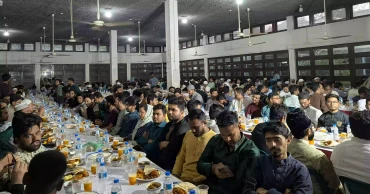
Student organisations gather at DUJA iftar, call for democratic campus
Leaders from various student organisations and cultural organisations gathered at an Iftar organised by the Dhaka University Journalists Association (DUJA), emphasising the need to strengthen democratic coexistence, healthy political practice and harmony on the campus.
Under the title—“Restoring Democracy: The Expected Campus” DUJA held a Iftar Mahfil at the cafeteria of the Student-Teacher Centre (TSC) of Dhaka University on Friday.
The programme was chaired by DUJA President Mohiuddin Mujahid Mahi and moderated by its General Secretary Mahadi Hasan.
Speakers at the event said that even during periods of authoritarian rule, DUJA remained a centre for democratic practice on campus and repeatedly highlighted the realities of fascist governance through journalistic efforts.
Speaking as the chief guest, Dhaka University Vice-Chancellor Prof. Niaz Ahmed Khan said representatives of different political views and organisations get the opportunity to come together every year through DUJA’s initiative.
"Although differences of opinion exist among political organisations on campus, such gatherings help bring them together under one roof and set a positive example", he said.
“We want political coexistence to always be maintained on campus. Students should have the opportunity to practise healthy politics and the university should become an open field for democratic practice,” Dr. Niaz added.
DU Pro-VC (Admin) Prof. Dr. Sayma Haque Bidisha said the Dhaka University Journalists Association often assists the university administration by providing important information and highlighting various mistakes and shortcomings, making university activities more dynamic.
Pro-VC (Education) Prof. Dr. Mamun Ahmed said such events create opportunities for dialogue among political, social and cultural organisations and help strengthen the democratic environment on campus.
Bangladesh Open University VC Prof. Dr. Obaidul Islam said campus journalists always stand for truth and justice and play an important role in protecting the stability of the university and safeguarding students’ interests.
Abu Shadik Kayem, vice-president of the Dhaka University Central Students’ Union (DUCSU), said the country and the dream of a democratic campus were achieved through the sacrifices of the July martyrs and their contributions must always be remembered.
He also demanded that the DUCSU election be included in the university’s annual calendar.
Leaders of various student organisations also highlighted the importance of maintaining a healthy political environment and coexistence on campus.
Nasir Uddin Nasir, central general secretary of Bangladesh Jatiyatabadi Chhatra Dal, said the “mob culture” created on campus should end with the upcoming student union elections.
He urged everyone to remain vigilant so that no unnecessary mob situation arises on campus and called for an end to “disguise politics.”
He also advised journalists to remain cautious about rumours spread through fake propaganda.
Sibgatullah Sibga, secretary general of Chhatra Shibir, said that despite ideological differences among political student organisations, their presence under one roof at the DUJA event reflected the beauty of student politics.
DUJA expresses concern over attack on journalists by law enforcement
Jabir Ahmed Jubel, central general secretary of Biplobi Chhatra Maitree, said the administration should play an active role in maintaining a democratic environment on campus and stressed the importance of considering the opinions of student representatives in university governance.
Among others present were Dhaka University Treasurer Prof. Dr. Mohammad Jahangir Alam Chowdhury, former journalists of DUJA, Jatiya Chhatra Shakti Central President Zahid Ahsan, Chhatra Paksha Central President Mohammad Prince, Convener of the DU unit of Chhatra Federation Armanul Haque, Islami Chhatra Andolan President Muntasir Ahmed, and President of Samajtantrik Chhatra Front (Marxist) Salman Siddiqui.
7 hours ago
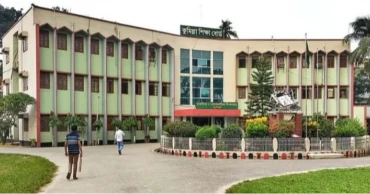
Poor HSC results lead to temporary suspension of teaching at 13 colleges under Cumilla Board
Due to poor HSC results, the Cumilla Education Board has temporarily suspended academic activities and recognition for 13 colleges under its jurisdiction.
The decision was communicated in a letter signed by Professor Runa Nasrin, Controller of Examinations of the Cumilla Board, on Thursday.
Confirming the move, Board Chairman Professor Md. Samsul Islam said, “Institutions that failed to meet operational standards and whose results were disastrous have been temporarily suspended.”
The letter from the examination controller revealed that colleges with pass rates between 0–5 percent in the 2025 HSC exams were deemed unsatisfactory. Following this, a meeting of the Examination Committee chaired by the Board Chairman on January 7 decided to suspend academic activities and recognition of 11th grade for these 13 institutions.
The 13 colleges affected by the Cumilla Education Board’s temporary suspension are Zindpur Union School and College in Nabinagar, Brahmanbaria; Torabganj High School and College in Komolnagar, Lakshmipur; Cambridge City College in Lakshmipur Sadar; Nidarabad Union School and College in Bijoynagar, Brahmanbaria; Shaityshala Adarsha High School and College in Brahmanpara, Cumilla; Suruj Memorial High School and College in Lalmai, Cumilla; Chanpur Adarsha High School and College in Bijoynagar, Brahmanbaria; Seba Gram Fazlur Rahman School and College in Ramgati, Lakshmipur; Jibgao General Haque High School and College in Matlab Uttar, Chandpur; Chouddagram Model College in Chauddagram, Cumilla; Ojra SES DP Model School and College in Daudkandi, Cumilla; Toha Smriti Girls High School and College in Komolnagar, Lakshmipur; and Sharifullah High School and College in Matlab Uttar, Chandpur.
College Inspector Professor Md. Nurunnabi Alam said, “These institutions repeatedly produced poor results in 11th grade and failed to improve despite repeated warnings. This action serves as an example for other institutions; similar measures will be taken against any that continue underperforming.”
He added that the suspension is temporary, and the colleges can resume academic activities once they meet the required standards.
7 hours ago
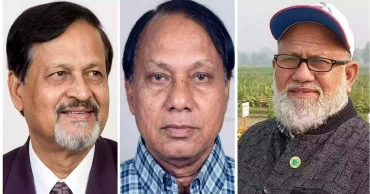
Three from BAU selected for Independence Award 2026
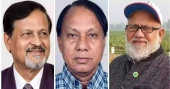
Two retired professors and a former student of Bangladesh Agricultural University (BAU) have been nominated for the prestigious Independence Award 2026 in recognition of their outstanding contributions at the national level.
Prof. Dr. Zahurul Karim will receive the award for his contribution to science and technology, while Prof. Dr. M A Rahim and former student of BAU Dr. Mohammad Abdul Baki will be honoured for their contributions to research and training.
According to a press release issued by the Cabinet Division of Bangladesh on Thursday, a total of 15 distinguished individuals including Begum Khaleda Zia and five institutions have been nominated for the Independence Award this year for their remarkable and outstanding contributions in various fields.
The press release stated that the award will be given in recognition of contributions in sectors including independence and the Liberation War, science and technology, research and training, literature, culture, social service, medicine, public administration and environmental conservation.
Dr. Zahurul Karim, a former professor of BAU, previously served as a scientist at the Bangladesh Agricultural Research Institute (BARI) and the Atomic Energy Centre, Dhaka. He also served as director general of the Bangladesh Rice Research Institute (BRRI) and later as executive chairman of the Bangladesh Agricultural Research Council (BARC), the apex body of the national agricultural research system. He is currently serving as president of the Bangladesh Academy of Sciences.
Professor Dr. M A Rahim served as a professor in the Department of Horticulture under the Faculty of Agriculture at BAU. He later worked as the chief executive and principal researcher at the BAU Germplasm Centre. At present, he is serving as the head of the Department of Agricultural Science at Daffodil International University.
Dr. Mohammad Abdul Baki studied at the Faculty of Engineering and Technology of BAU. He served as director general of the Bangladesh Rice Research Institute and also worked as chief scientific officer at the Farm Machinery and Postharvest Technology Division.
The Independence Award is the highest state civilian honour in Bangladesh. Introduced in 1977, the award is given to individuals and institutions for their significant contributions to the nation.
9 hours ago
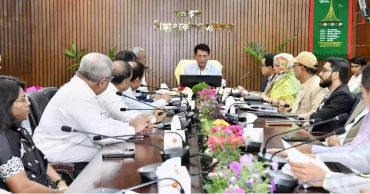
Govt to strengthen EED to improve education infrastructure: Education Minister
Education Minister ANM Ehsanul Hoque Milon on Thursday said the government will seriously consider expanding the organisational structure and manpower of the Education Engineering Department (EED) to make it more dynamic and capable of accelerating education infrastructure development.
“Currently, there are many ongoing projects related to education infrastructure and the EED must play a more active role in implementing them,” Milon said while addressing an important meeting with officials of the department in the EED.
He said the scope of EED’s activities could be expanded to the upazila level, similar to the Local Government Engineering Department (LGED) and other institutions.
The minister expressed hope that coordination among relevant institutions would improve further as they now operate under the same administrative framework, helping speed up development work.
Emphasising the need to ensure quality in construction, Milon said many newly built structures often become dilapidated within a few years.
“Contractors must be assigned work only after assessing their technical capacity, manpower and ability to complete projects within the stipulated time.”.
He also stressed the importance of effective monitoring mechanisms and necessary policy measures to maintain construction quality.
Highlighting the need for modern approaches in construction, the minister said the use of advanced technologies and innovative designs is essential. “The innovative ideas of the new generation of engineers and the use of modern technologies must be ensured so that construction work becomes sustainable, aesthetically sound and cost-effective.”
Milon also said such interactive discussions with officials would be held more frequently in the future to address challenges and take necessary initiatives through direct engagement.
1 day ago
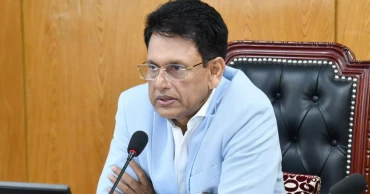
Education Minister orders introducing AI to stop lobbying in teacher transfers
Education Minister ANM Ehsanul Hoque Milon on Thursday directed the officials concerned to introduce AI-based automation in teacher transfer processes in schools and colleges to curb lobbying and ensure greater transparency.
The minister gave the directive at a view-exchange meeting with officials of the Directorate of Secondary and Higher Education (DSHE).
Various measures were discussed at the meeting to address administrative weaknesses within the Education Ministry and its affiliated departments.
He stressed the need for stronger coordination, open discussion and mutual cooperation to make the working environment more effective and service-oriented.
“We have to reduce unnecessary gaps within the administration and build a collaborative work culture so that the speed and quality of services in the education sector improve,” he said.
He urged officials to give opinions fearlessly and based on logic.
Emphasising prompt resolution of teachers’ administrative issues, Milon said teachers from different regions should not have to spend unnecessary time visiting offices.
“Matters related to salaries, allowances, pensions, leave, transfers, training and higher education must be disposed of within a specified timeframe.”
He also underscored the importance of expanding automation and digital systems to simplify and modernise service delivery.
“In future, a system can be developed enabling service seekers to easily identify the relevant desk or official according to the nature of their problems. There is no alternative to expanding online services.”
When officials highlighted certain limitations in existing online systems and software management, the minister directed them to resolve the issues promptly to make administrative activities more dynamic and transparent.
Senior officials of the Education Ministry and DSHE were present at the meeting.
1 day ago
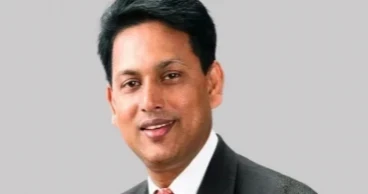
Education Minister vows tighter monitoring to boost quality of primary education
Education Minister ANM Ehsanul Hoque Milon on Wednesday announced closer monitoring and enhanced oversight to improve the quality of primary education, saying necessary steps will be taken to accelerate work and motivate all concerned.
“Education begins at the primary school level. So we must increase our focus right from the start. Without proper implementation of plans, it is not possible to achieve the desired outcomes,” Milon said while addressing a view-exchange meeting with officials at the Directorate of Primary Education.
Education Minister urges action from UGC to develop world-class universities
The minister said Prime Minister Tarique Rahman holds a weekly review meeting on education every Saturday, where progress of the week’s activities must be presented. “Ensuring dynamism and accountability in the education sector is now a demand of the time.”
Referring to various demands and grievances of officials and employees, Milon said, “There will always be demands, and it is not possible to fulfil all of them completely. The reasonable ones will be addressed in phases. No one will be deprived.”
Expressing optimism that the BNP government would increase budget allocation for primary education, the minister said the sector is likely to receive a higher budget this time. Initiatives will be taken to resolve justified complaints through detailed discussions and effective decisions.
Technical education must align with global labour market trends: Education Minister
The minister also stressed the need to strengthen activities up to the field level, saying greater dedication from all concerned would help improve education standards. “We need to focus on what we have done, what should be done and how we can further enhance the quality of education.”
He further noted that previous projects undertaken by the Education Ministry would be evaluated to assess how far their missions and visions were implemented. While earlier initiatives placed relatively more emphasis on infrastructure development, the focus will now shift to ensuring quality education.
The meeting was chaired by Director General of the Directorate of Primary Education Abu Noor Md Shamsuzzaman and attended by senior and field-level officials of the department.
2 days ago
Islamic University teacher hacked dead; murder suspect ‘attempts suicide’
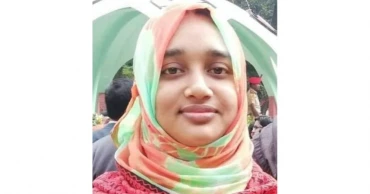
A female teacher of Social Welfare department of Islamic University (IU) in Kushtia was hacked to death allegedly by an employee of the department at her office on Wednesday.
The murder suspect who apparently attempted suicide was found injured with his throat slit on the spot .
The deceased was identified as Assistant Professor Asma Sadia Runa, chairperson of Social Welfare department and the injured was identified as Fazlur Rahman.
Resident Medical Officer of Kushtia General Hospital Dr Imam Hossain declared Runa dead when she was taken to the hospital in the afternoon.
According to university sources, a group of students entered the chairman’s office at the Faculty of Theology and Islamic Studies and found Runa lying in a pool of blood.
They also saw Fazlur Rahman inside the room with severe injuries in an apparent suicide attempt.
Upon receiving the information, members of the university’s proctorial body along with police rushed to the scene and rescued them, said witnesses.
They were first taken to the IU central medical centre and later to Kushtia General Hospital as their conditions deteriorated.
Islamic University students demand justice for murdered fellow student
“The exact motive of the murder is not known yet. We are looking into the matter,” said IU Proctor Professor M Shahinuzzaman.
Fazlur Rahman is undergoing treatment at the hospital.
2 days ago
Education Minister urges action from UGC to develop world-class universities
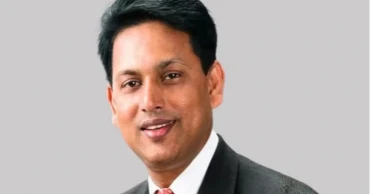
Education Minister ANM Ehsanul Hoque Milon on Wednesday called upon the University Grants Commission of Bangladesh (UGC) to take effective steps to develop internationally competitive universities stressing that quality higher education and research are key to transforming Bangladesh into a knowledge-based nation.
“BNP has always attached the highest importance to the education sector. Former Prime Minister Khaleda Zia and former President Ziaur Rahman worked to improve standards and address teachers’ concerns.
Inspired by their ideals, Prime Minister Tarique Rahman has placed education at the top of the government’s priorities,” the minister said while addressing a view-exchange meeting with the UGC chairman and members.
Milon said expansion of research activities, promotion of innovation and development of skilled human resources must be prioritised to meet global standards.
Describing the UGC as the central body of the country’s higher education system, the minister said the commission plays a crucial role in oversight, quality assurance and implementation of development plans.
“With the rapid increase in the number of public and private universities, the responsibilities and scope of work of the commission have expanded significantly. The UGC must therefore function in a more dynamic, effective and result-oriented manner,” he said.
Referring to the declining global rankings of Bangladeshi universities, the minister termed it a major challenge.
“We are a nation of 180 million people, yet we do not have a single university that meets international benchmarks. In this context, establishing a world-class postgraduate university and forming an effective research council to promote advanced research should be given top priority,” said the minister.
Milon also emphasised implementing a “reverse brain drain” initiative to bring back talented Bangladeshi academics and researchers working abroad and engage them in the country’s education and research sectors.
Urging UGC members and officials to adopt innovative and practical plans, the Education Minister said each official should set a clear vision and mission within their respective responsibilities and take concrete steps to improve higher education outcomes.
The minister requested the commission to submit a brief written report outlining its ongoing activities and future plans to help review progress and challenges in the higher education sector and take necessary measures.
Technical education must align with global labour market trends: Education Minister
At the meeting, UGC Chairman SMA Faiz and commission members discussed various aspects, challenges and prospects of the higher education sector and informed the adviser about steps taken to enhance academic standards.
Milon underscored the need for coordinated efforts by the UGC and all stakeholders to strengthen the country’s higher education system and elevate it to international standards.
2 days ago